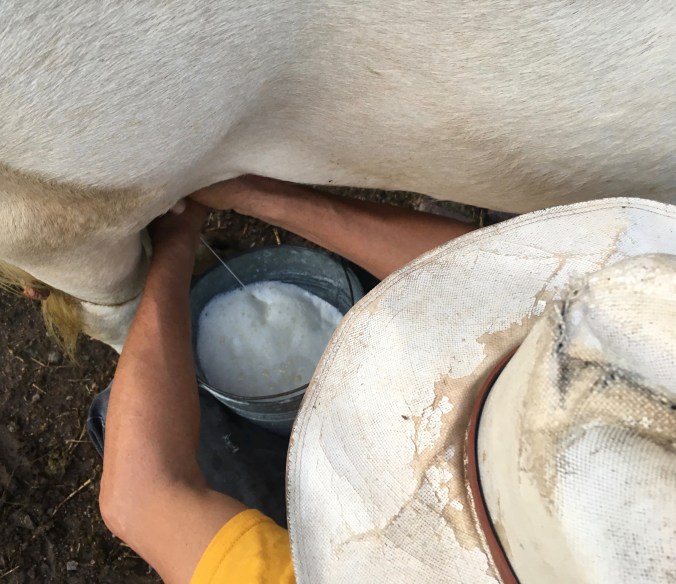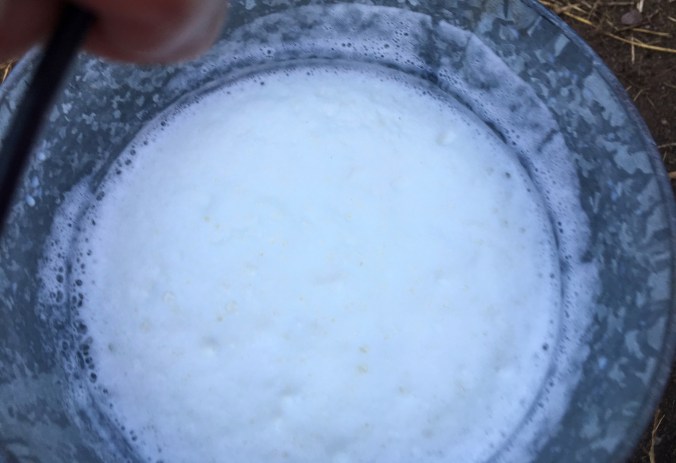
“Milk is a magic ingredient, literally the fat of the land, converted by the mammal into a complete food capable of sustaining life.”


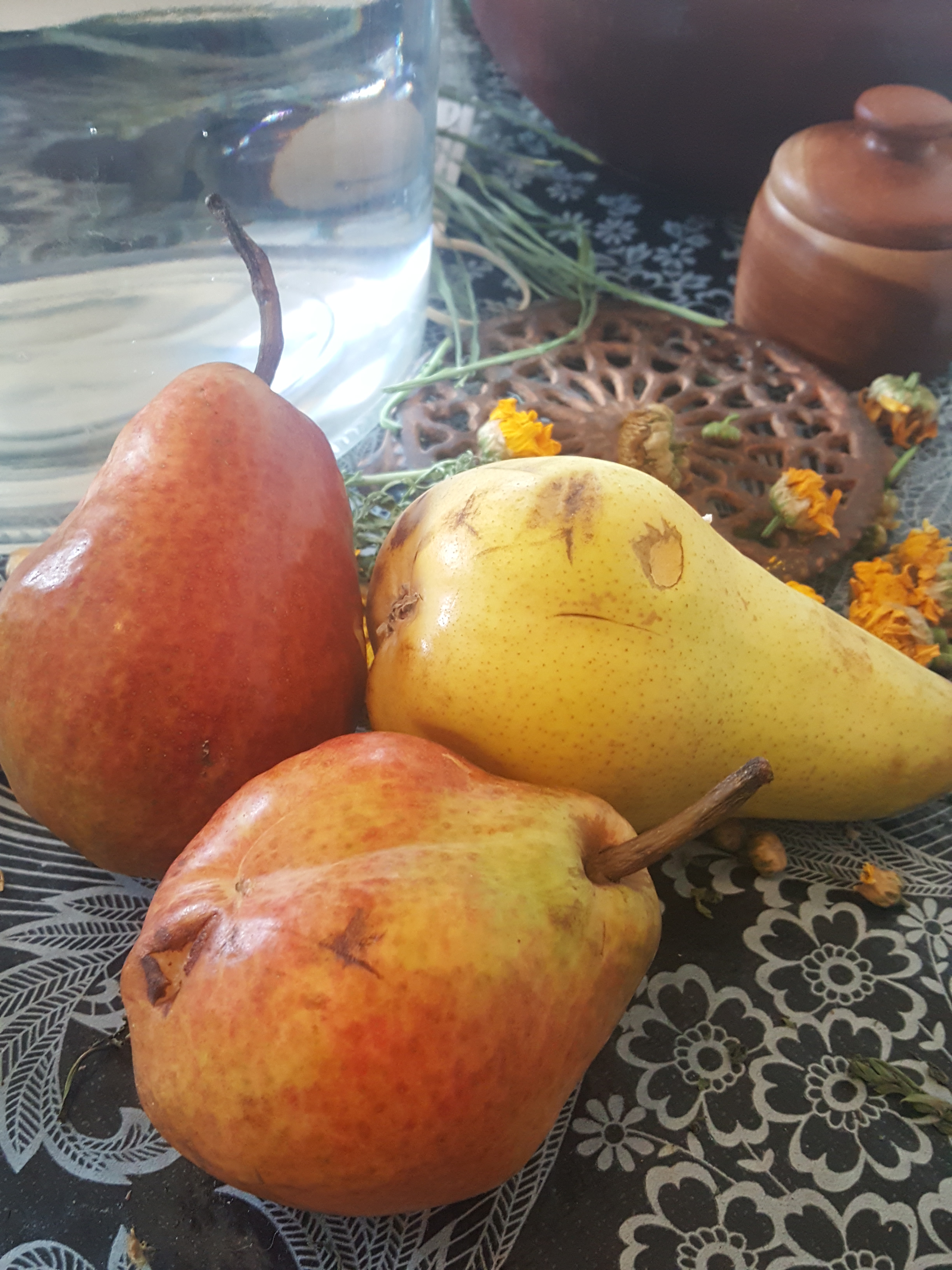
Hello, Amy here, preparing a dessert for some new friends completely new to the desert, passing through on their way to Costa Rica. A few pears that had seen some travel were sitting on the kitchen counter…
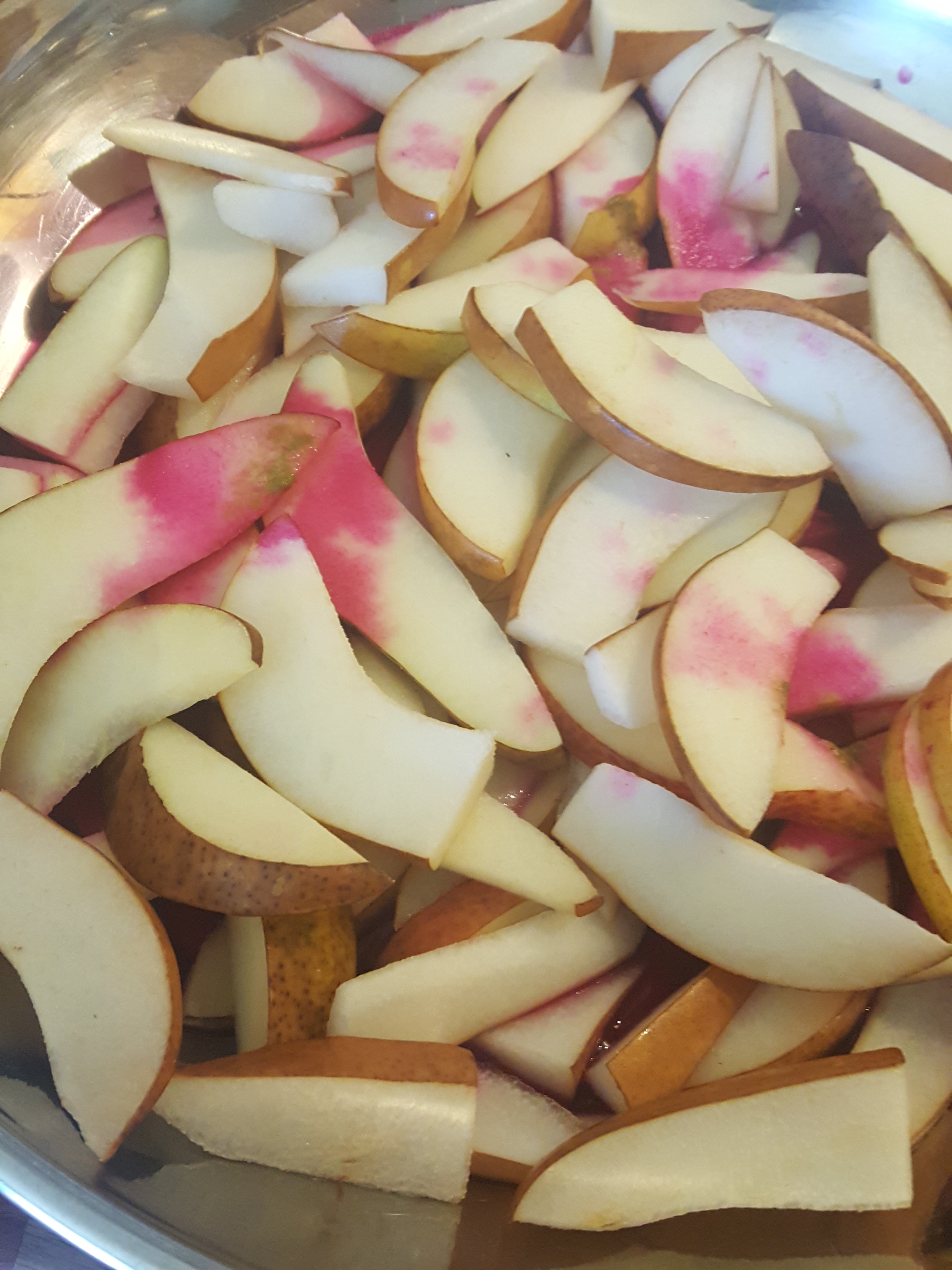
So I pared, sliced and put them in the oven with a few cubes of frozen prickly pear juice.
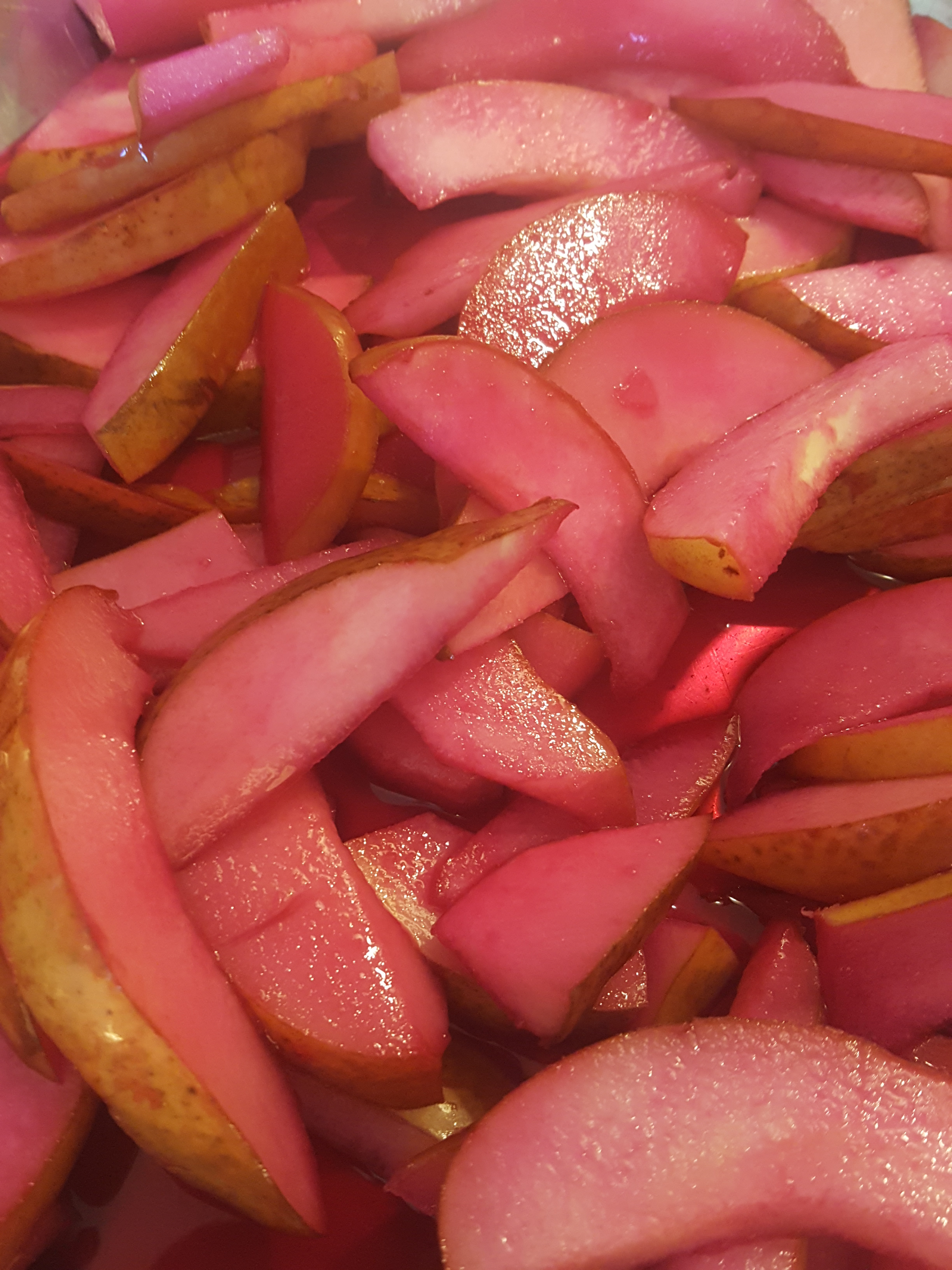
After baking and stirring, they looked like this!
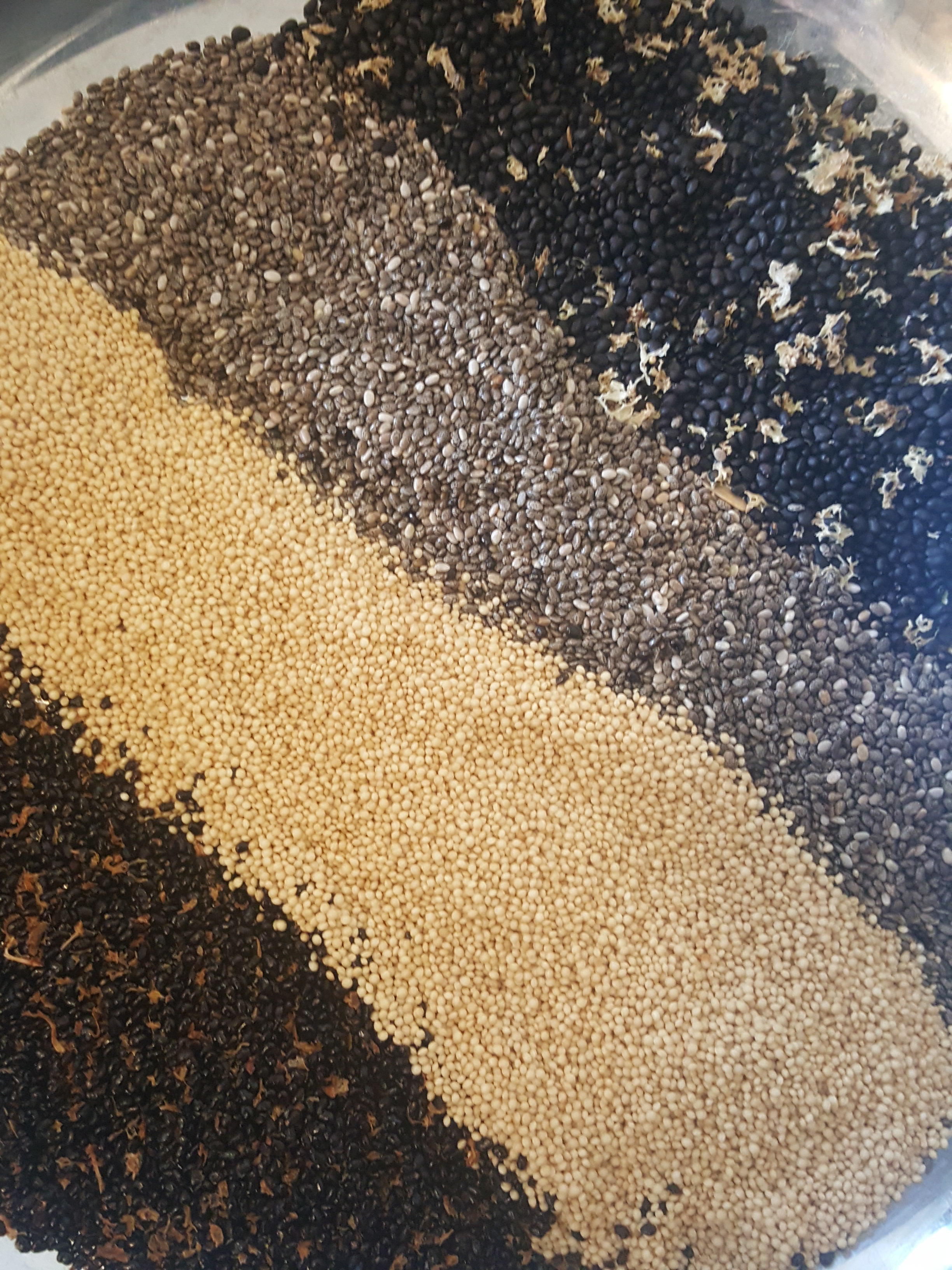
Then I made a crumble topping, staring with plenty of desert seeds, from left to right: saguaro, amaranth, chia, barrel cactus.
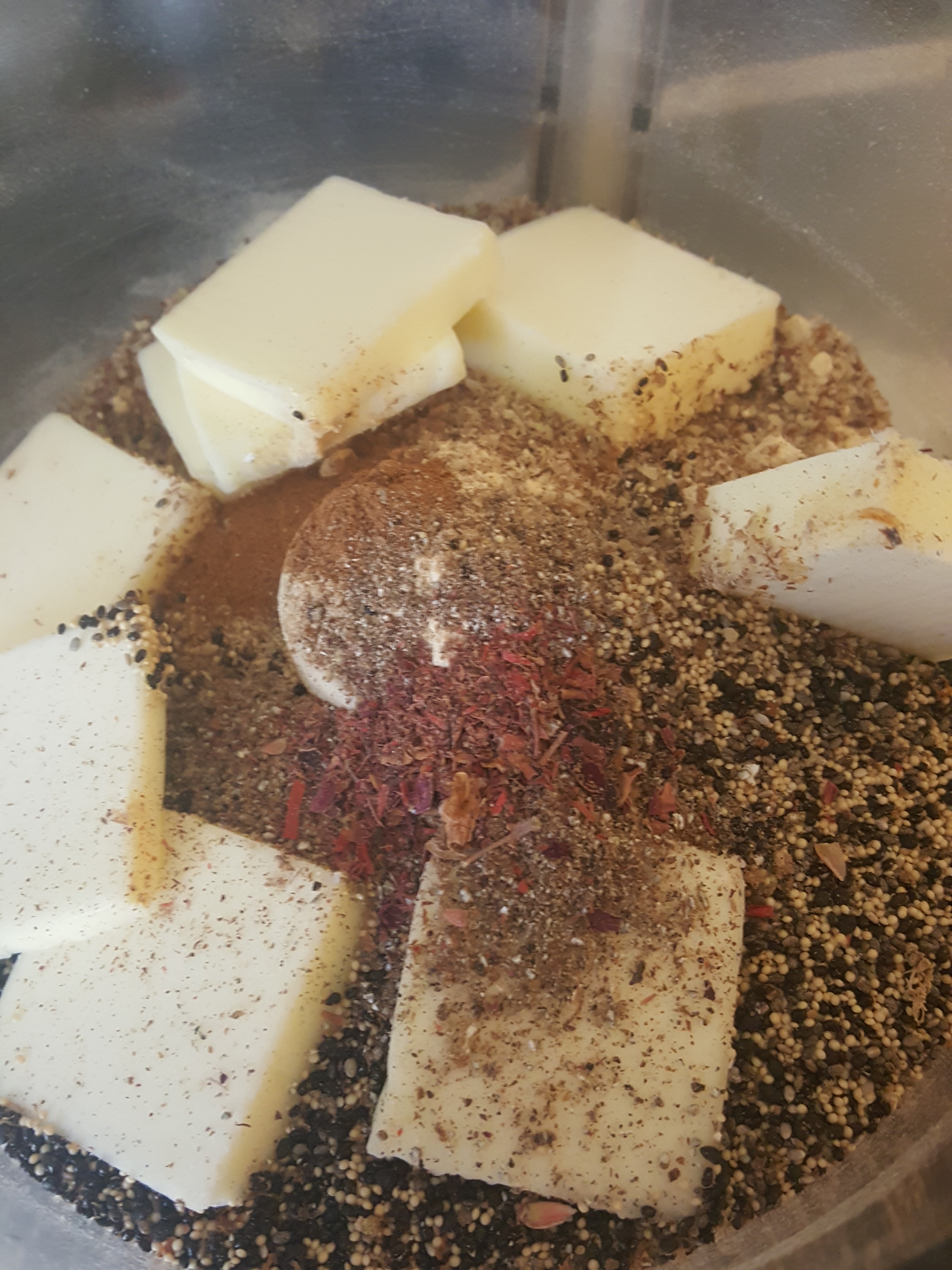
The bulk of the mixture was mesquite meal, rolled oats, pecan meal, butter, sugar (evaporated cane juice). For seasoning, I used cinnamon, cardamon, dried rose petals and dried ocotillo flowers.
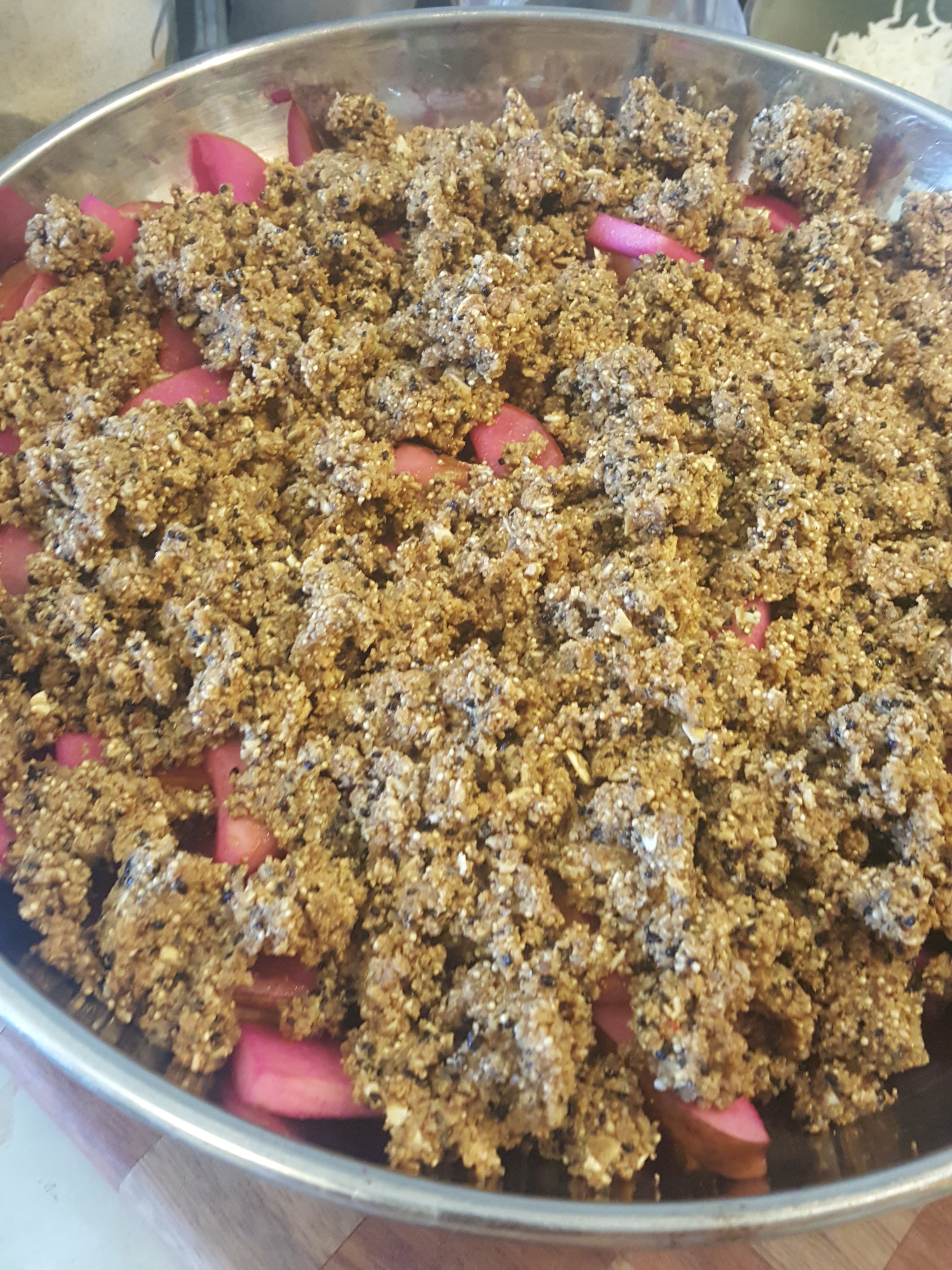
Once mixed, I crumbled the mixture over the pears and put back into the 350 degree F oven to bake until browned and crunchy.
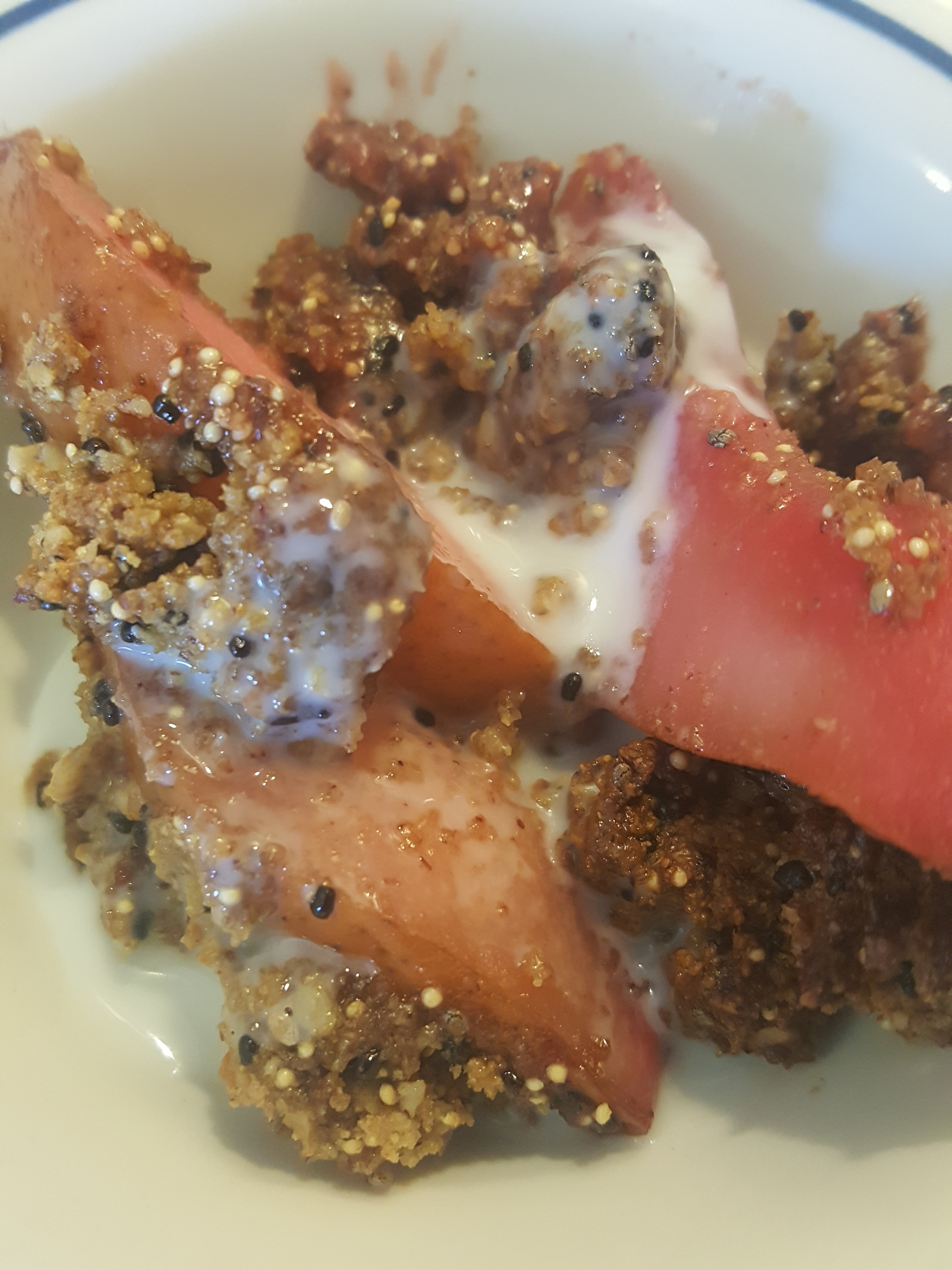
It is best served warm, here with a little homemade goat yogurt, but cream or ice cream works, too!
The recipe can be found in the Desert Harvesters’ Cookbook:
This recipe is so forgiving. I was short on oats so increased the pecans. I doubled the cardamom, traded evaporated cane juice for the brown sugar, substituted water for milk, changed the orange/apple juice to prickly pear, and doubled the seeds. Coconut oil works fine instead of butter for this, too.
Amy’s Apple Crisp
2 pounds apples, local organic heirlooms if possible (Or pears. No need to weigh!)
2 tablespoons orange, apple or prickly pear juice (or more)
Topping:
1 cup mesquite meal
1 cup rolled oats
1/2 cup seeds, like amaranth, chia, barrel cactus, saguaro
1/3 cup evaporated cane juice or brown sugar (0r less)
1/4 cup chopped pecans
1/4 teaspoon cinnamon
1/4 teaspoon cardamom
1/4 pound (1 stick) butter
2 tablespoons milk or water
Slice the fruit into a baking dish, add juice, and bake at 350 degrees while preparing the topping. Mix all the topping ingredients in the food processor, distribute over sliced fruit, and bake at 350-375 degrees F until browned. Enjoy!

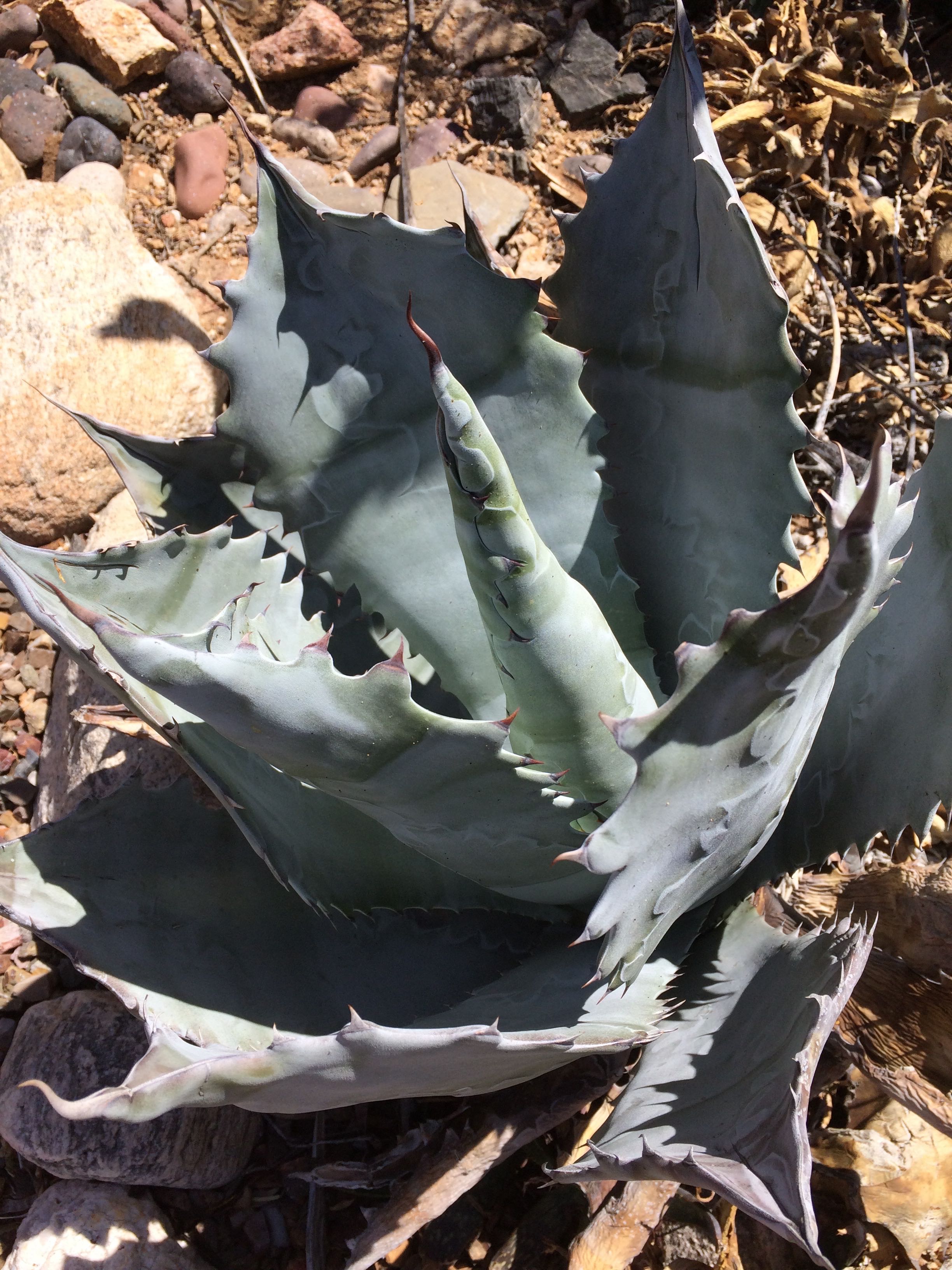
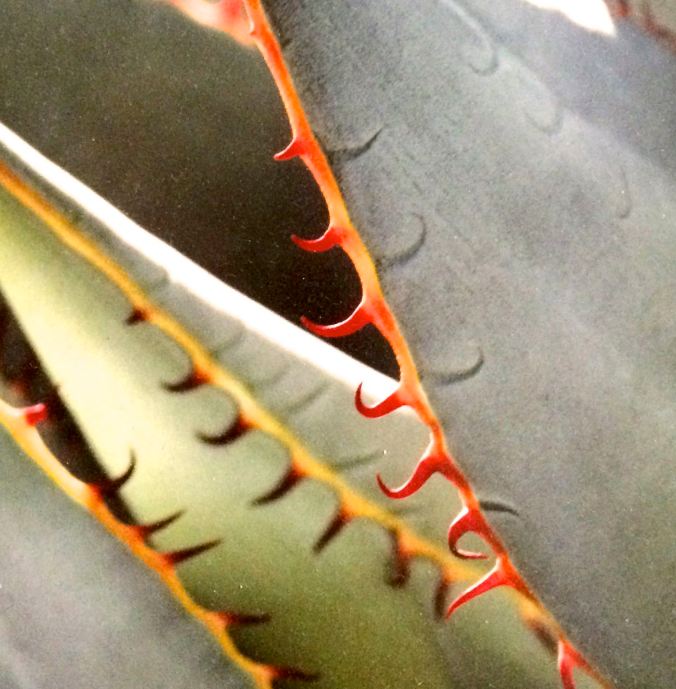
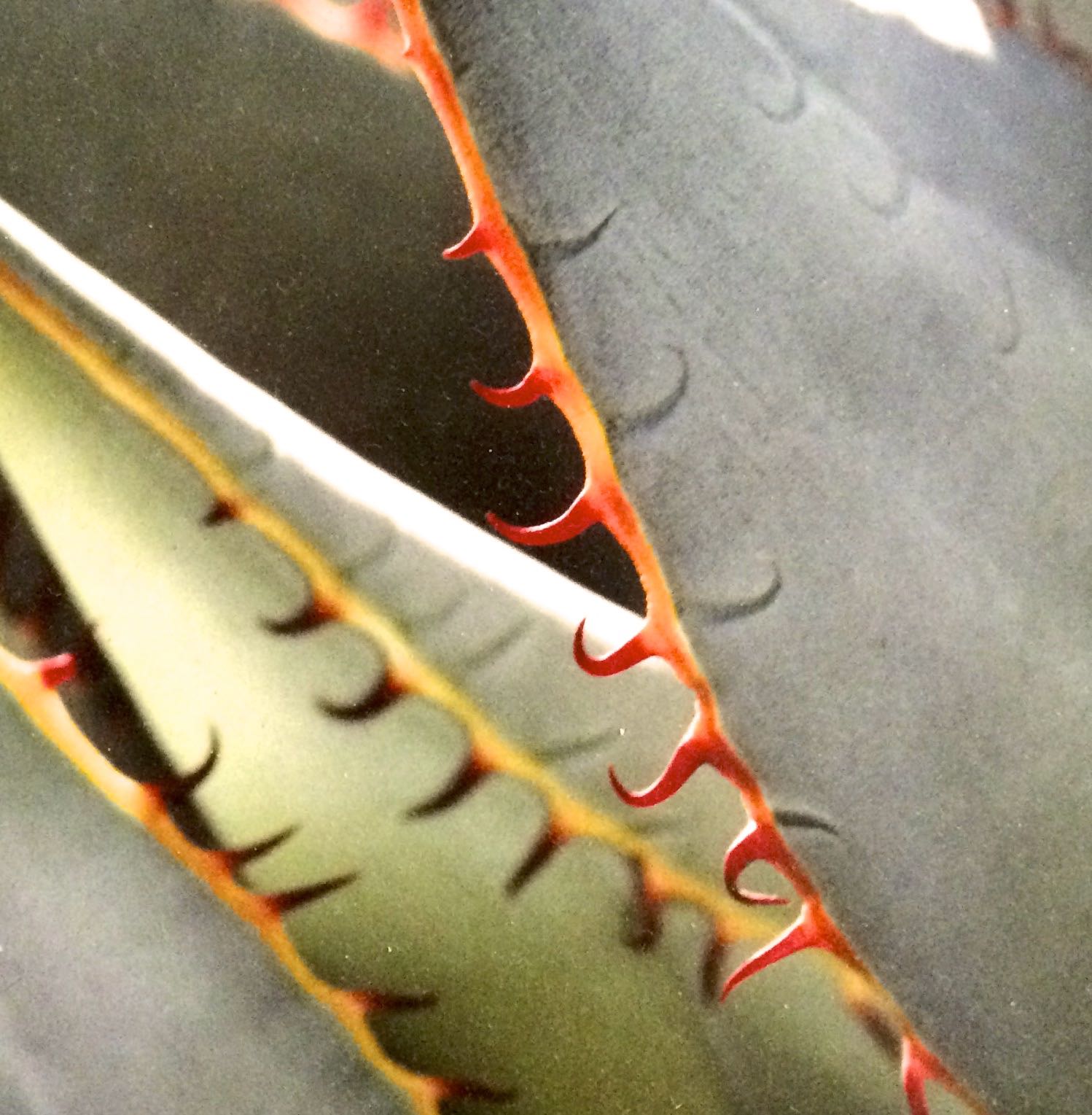
Glowing marginal teeth of Agave shrevei from central Sonora. Known there as lechuguilla ceniza (ashy color), and as totosali by the Warijio people, it was traditionally pit-baked for communal eating. (MABurgess photo)
Tia Marta here to take you on a visual tour of our strikingly beautiful Sonoran Desert century plants and cholla which have, for centuries, fed Sonoran Desert people–and continue to do so in interesting new ways! This is a “photographic appetizer” for the grand gastronomic and libation experiences planned for April into May–an invitation for you to participate in Tucson’s amazing Agave Heritage Festival and Cholla Harvest Workshops. [For a full schedule of the many culinary, ethnobotanical, artistic and musical agave events, go to http://www.agaveheritagefestival.com. For info on cholla harvests go to http://www.tucsonsbirthplace.org or call 520-907-9471.]
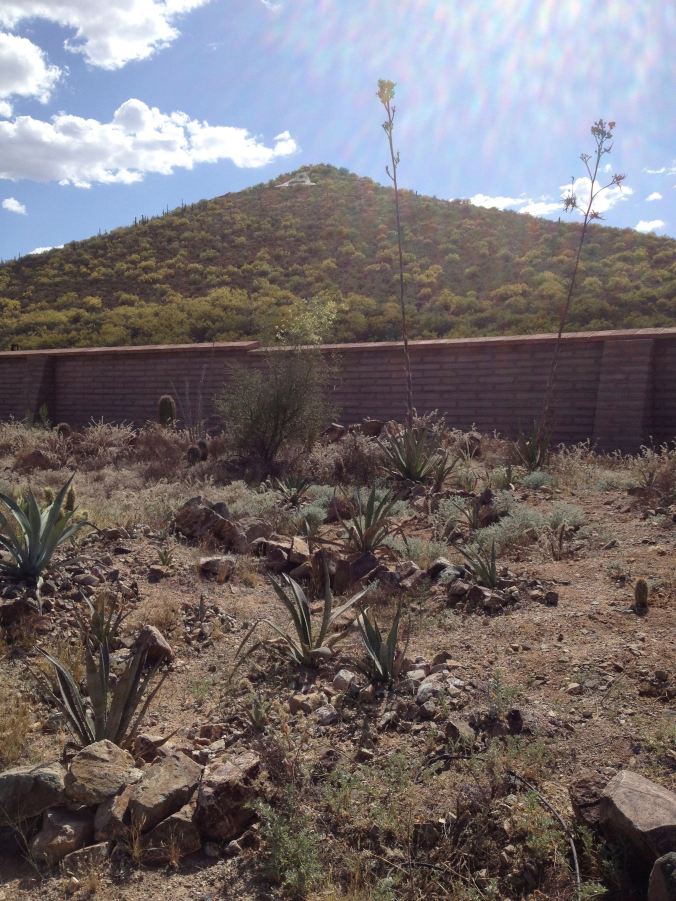
The Hohokam Century Plant, Agave murpheyi, is planted at Mission Garden to simulate a Hohokam archaeological site where ancient desert people farmed it. This will be one of the agaves to taste at the Mission Garden’s pit-roasting event as part of the Agave Heritage Festival. (MABurgess photo)
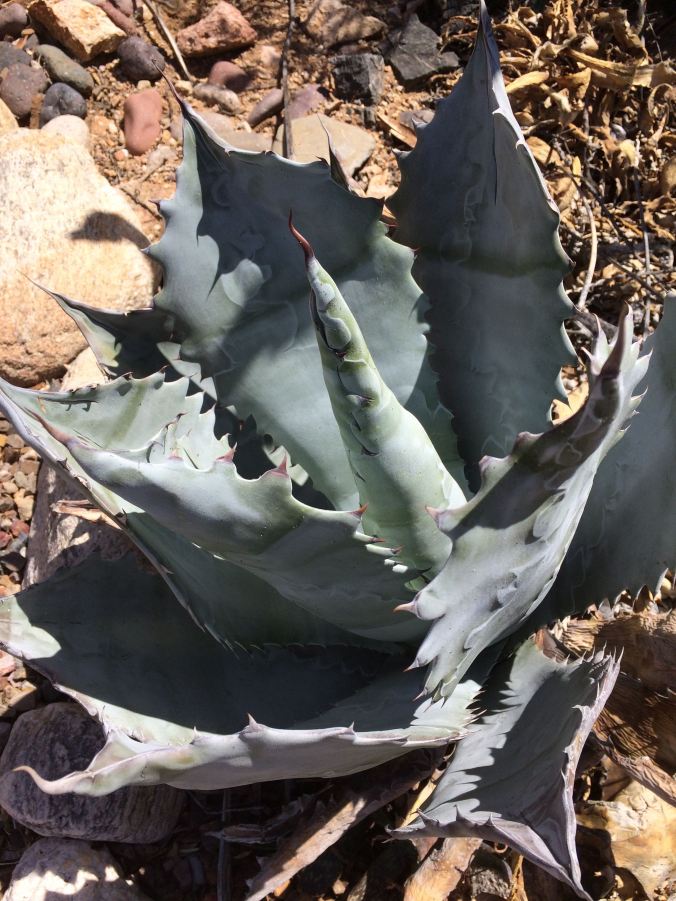
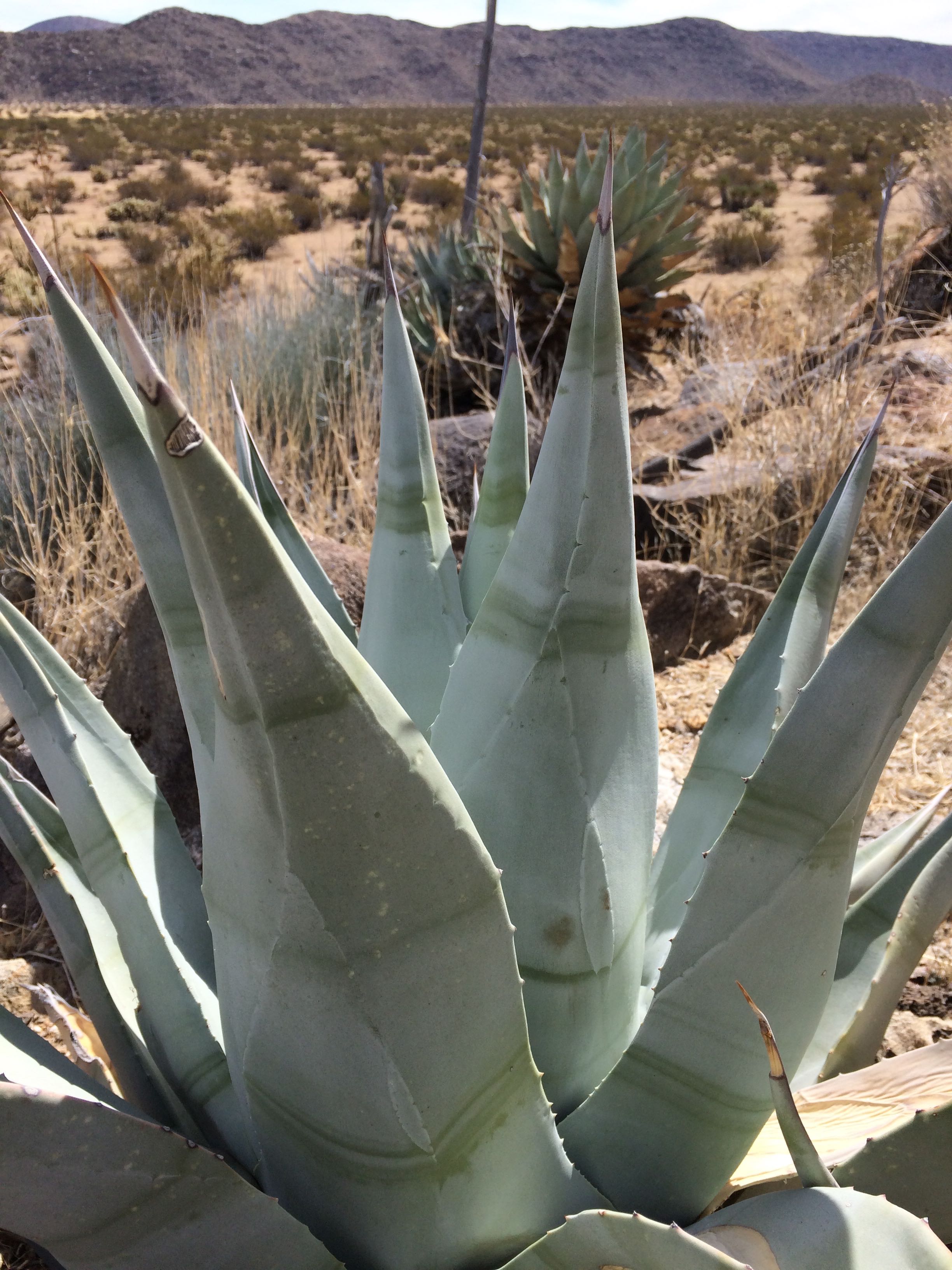
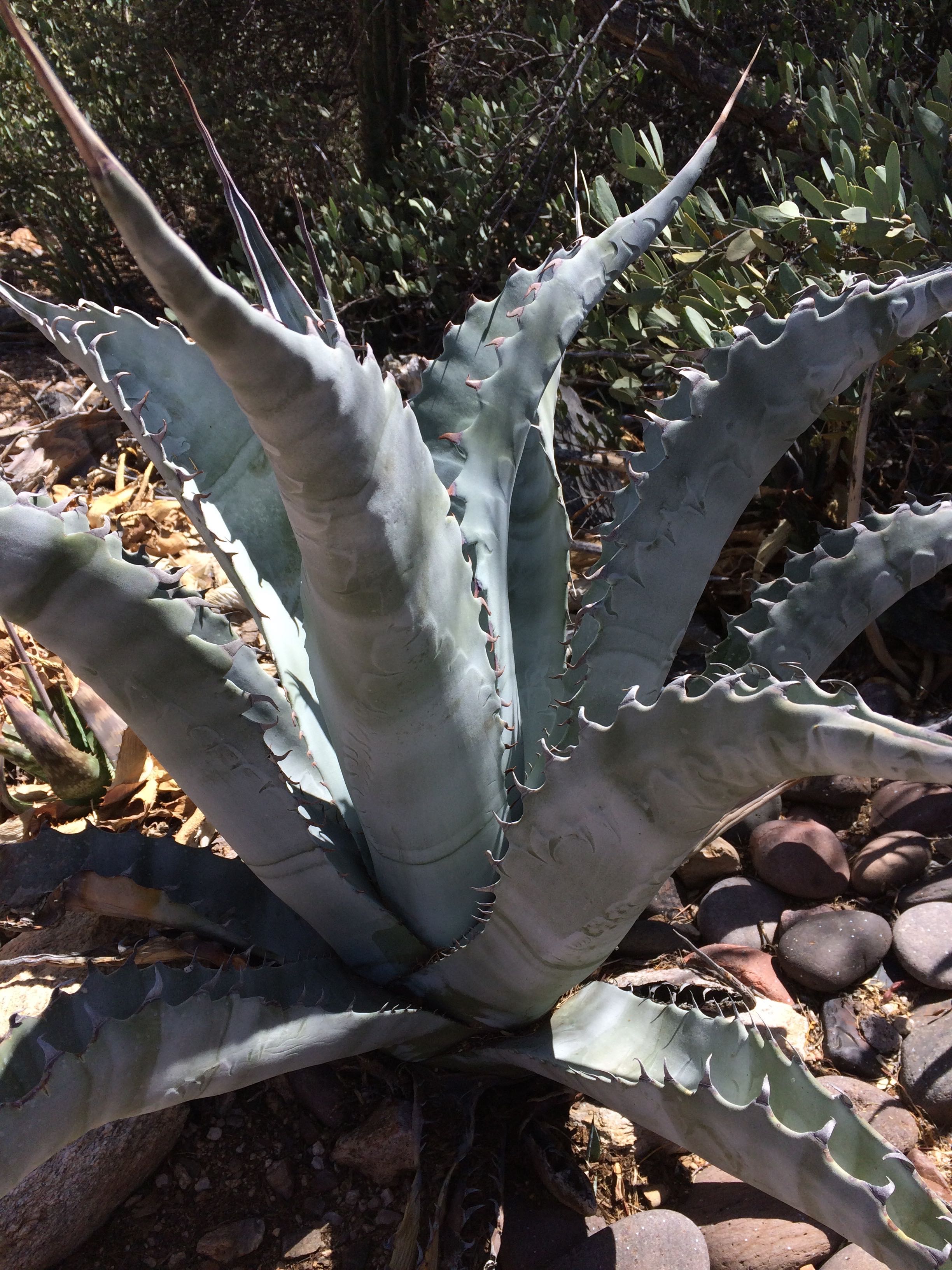
Mescal ceniza—Agave colorata–a sculptural Sonoran century plant, was traditionally pit-baked by Native People of NW Mexico. It gives a superbly attractive focal point in an edible landscape! (MABurgess)
Natives of the low Sonoran Desert region surrounding the Sea of Cortes, especially Yuman, Tohono O’odham (calling it a’ut) and Seri people (calling it ahmmo), traditionally used various varieties or subspecies of Agave deserti to cook as an important staple in their diet.
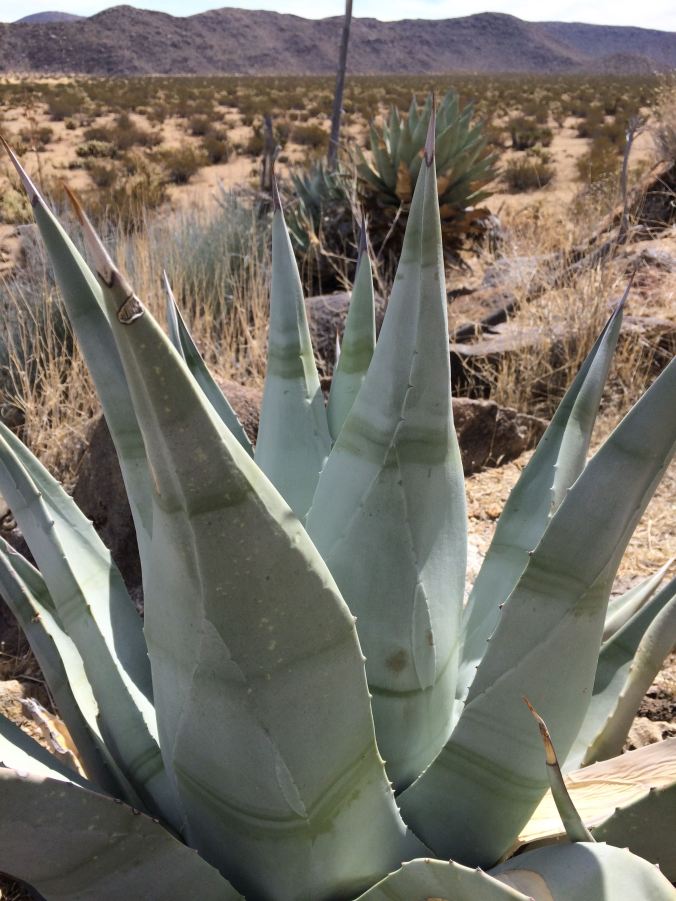
Agave deserti (this subspecies from the Anza-Borrego State Park in SE California) was pit-roasted by Native People, adding a rare and delicious sweet to their often sparse menu. (MABurgess)
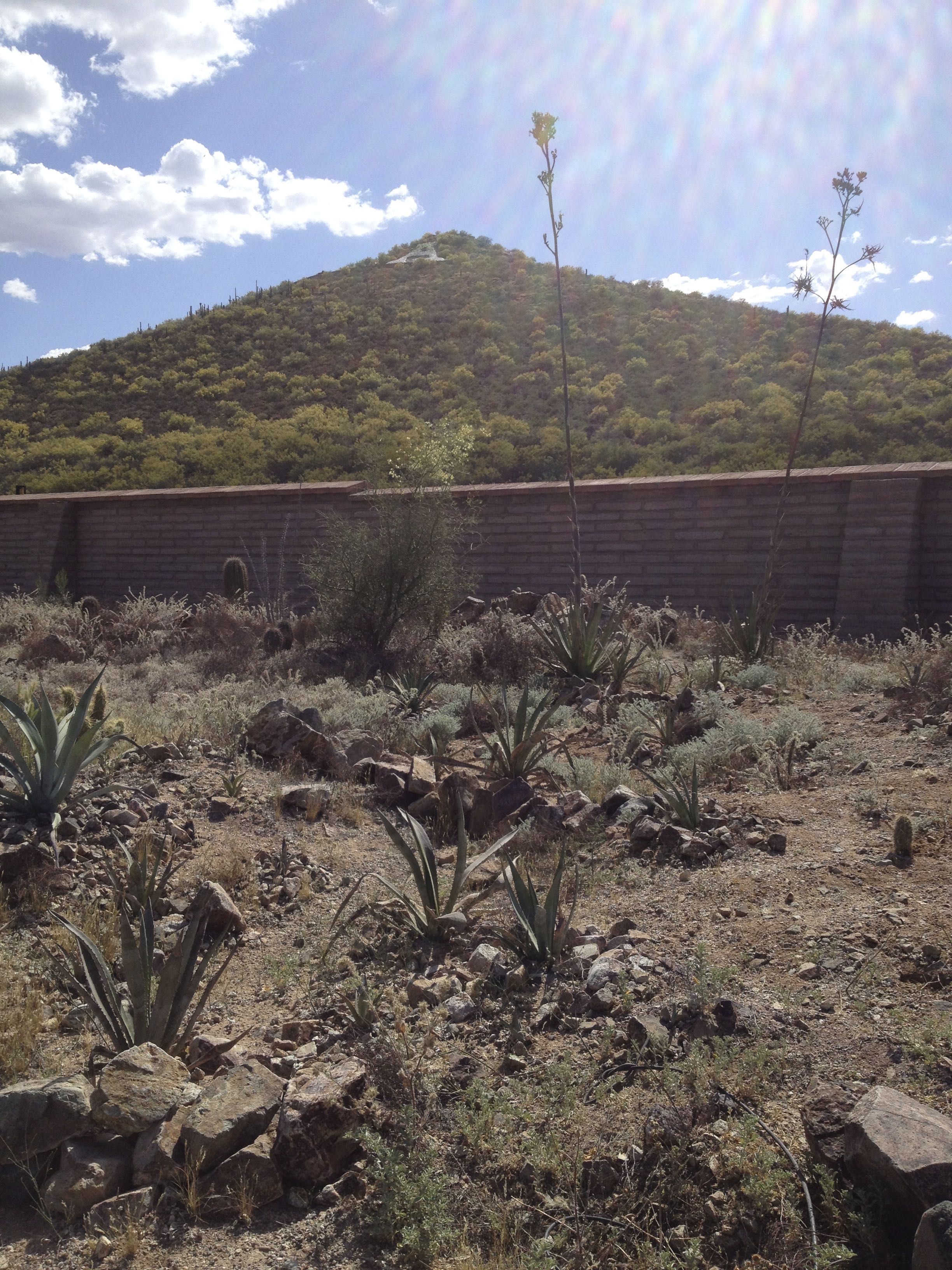
Agaves bloom only once– a magnificent flower show after a long lifetime–hence the name “Century Plant” as the 15-25 years before maturing seems like a century. Harvesters, mescaleros, watch year after year until they observe when the center of the leaf rosette begins to show the flower-stalk emerging, the signal the plant is changing its stored starches to sugars for blooming. (There is a giant agave in central Mexico, Agave salmiana, from which harvesters remove the young flower stalk to create a center “well.” Sweet sap, agua miel, wells up daily, for weeks. Cooked down and concentrated, that’s the so-called “nectar” being sold as a sweetener to gringos. Good sweetness–nice product–wrong name. Nectar is what pollinators drink from flowers; agave sweetener is made from internal sap.)
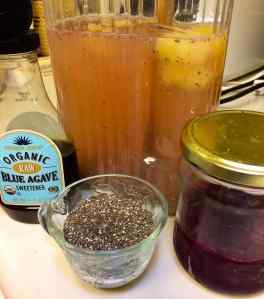
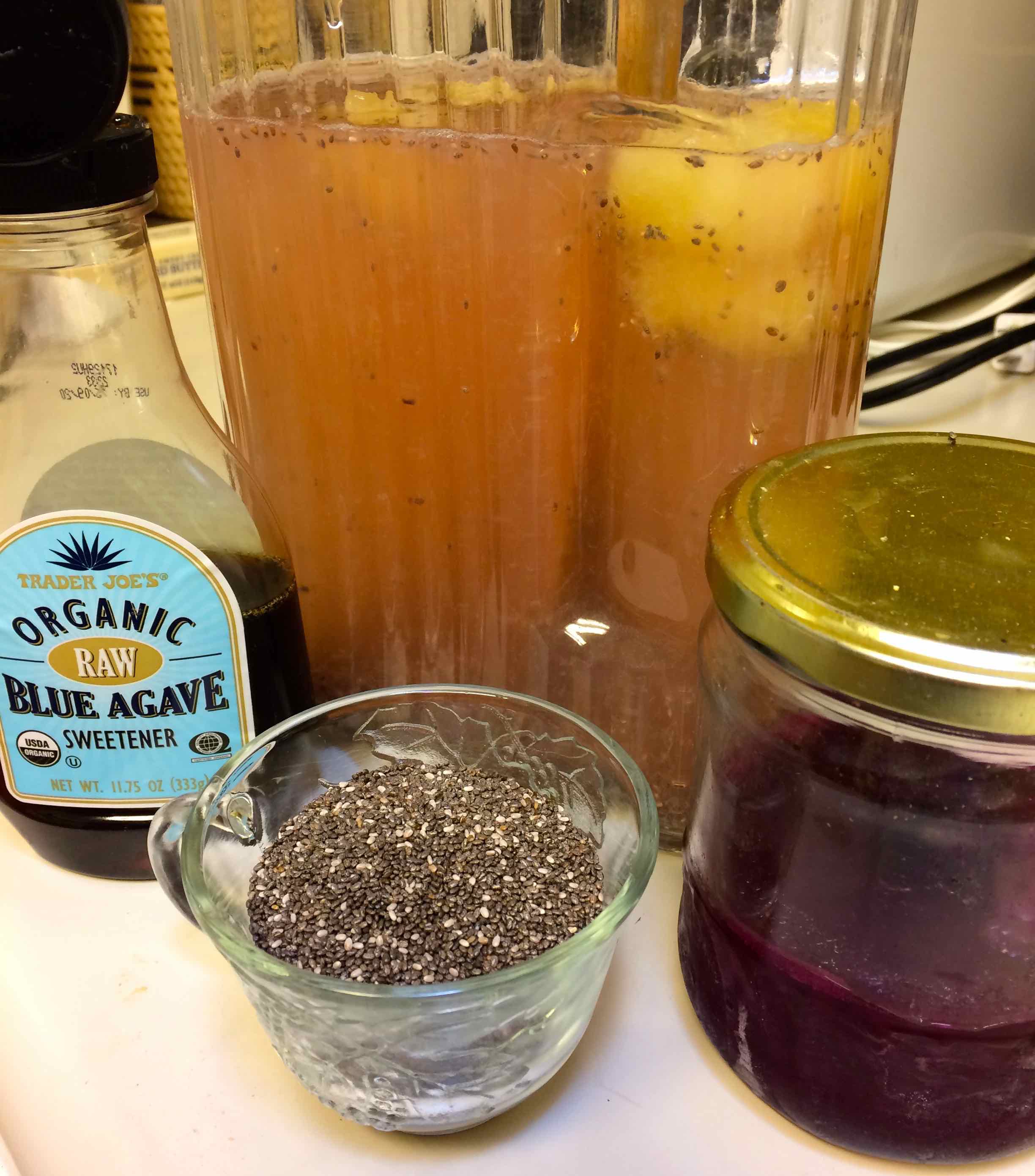
Agave “nectar”–really sap–makes a healthy sweetener for my prickly pear and chia lemonade. (MABurgess)
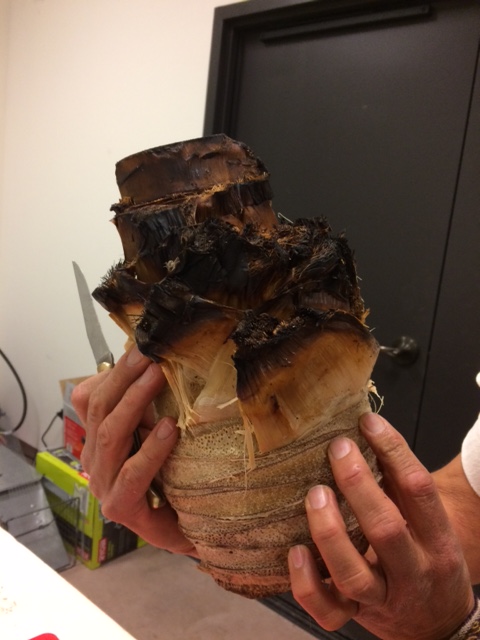
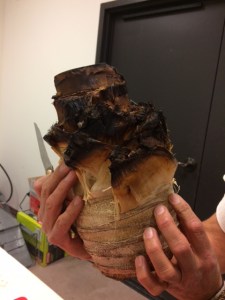
When the agave is about to bloom, to make roasted agave (for maguey or mescal), the whole mature plant is harvested, thick leaves chopped off (used for fiber), and the center or head, the cabeza that looks like a pineapple, is roasted in a rock-lined pit. Cooking often takes 2-3 days and nights. Once roasted, the fibrous pulp is a nutritious, sweet, chewy treat with complex healthy carbohydrates.
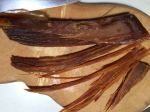
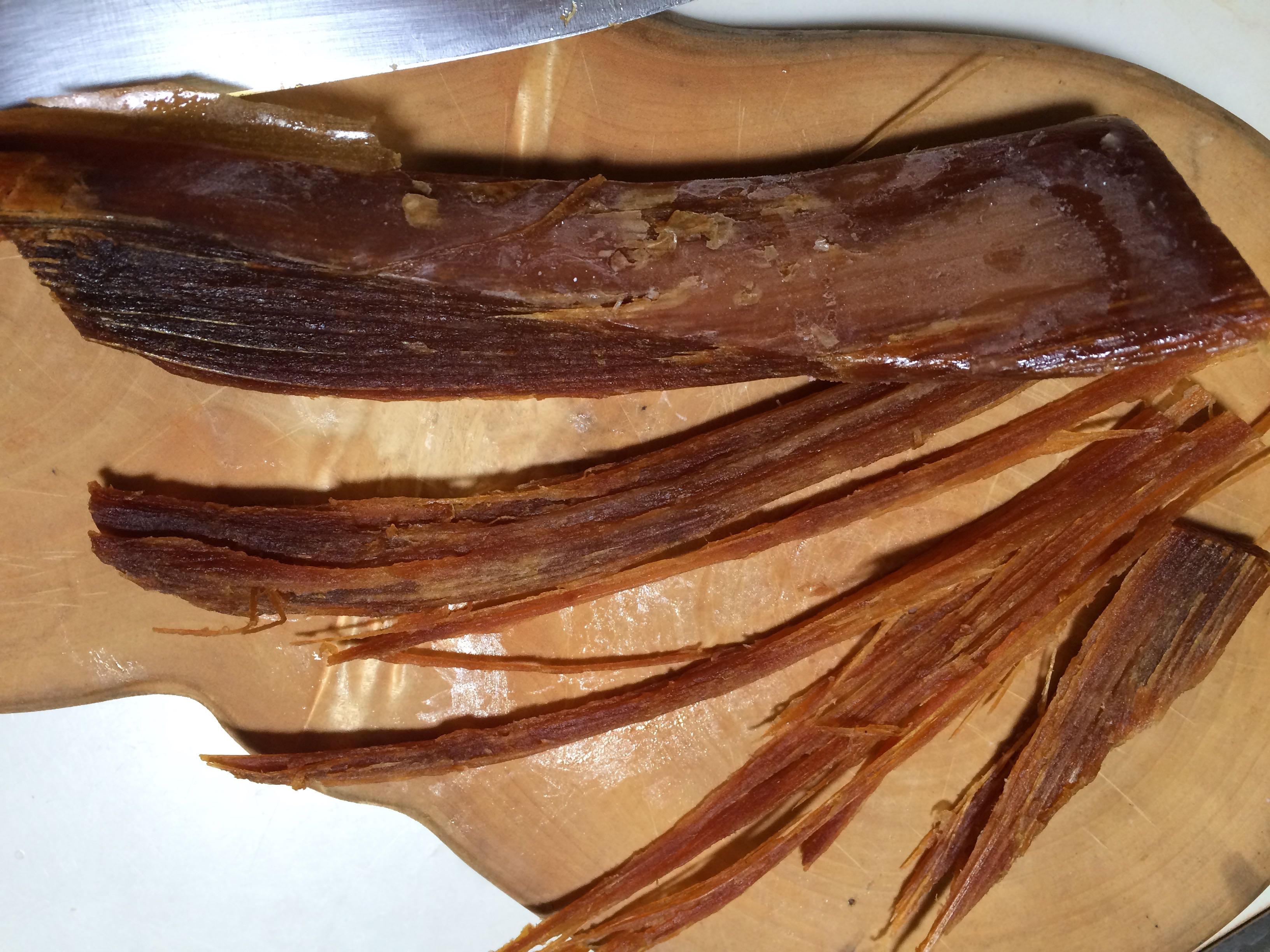
Roasted agave (maguey) leaf base ready to eat, showing fiber and pulp. Wish you could taste its smokey flavor! (MABurgess photo)
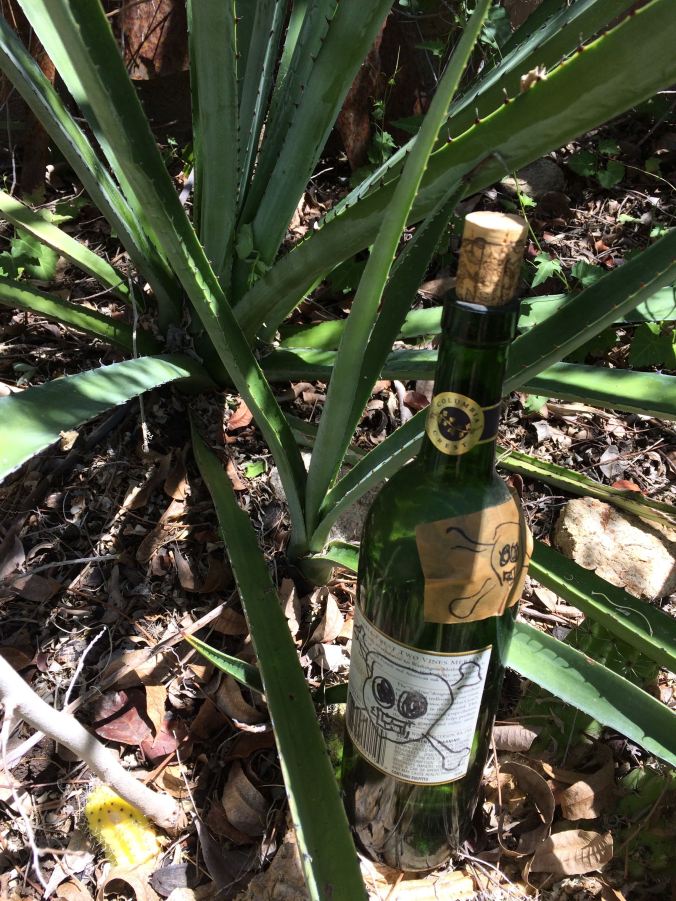
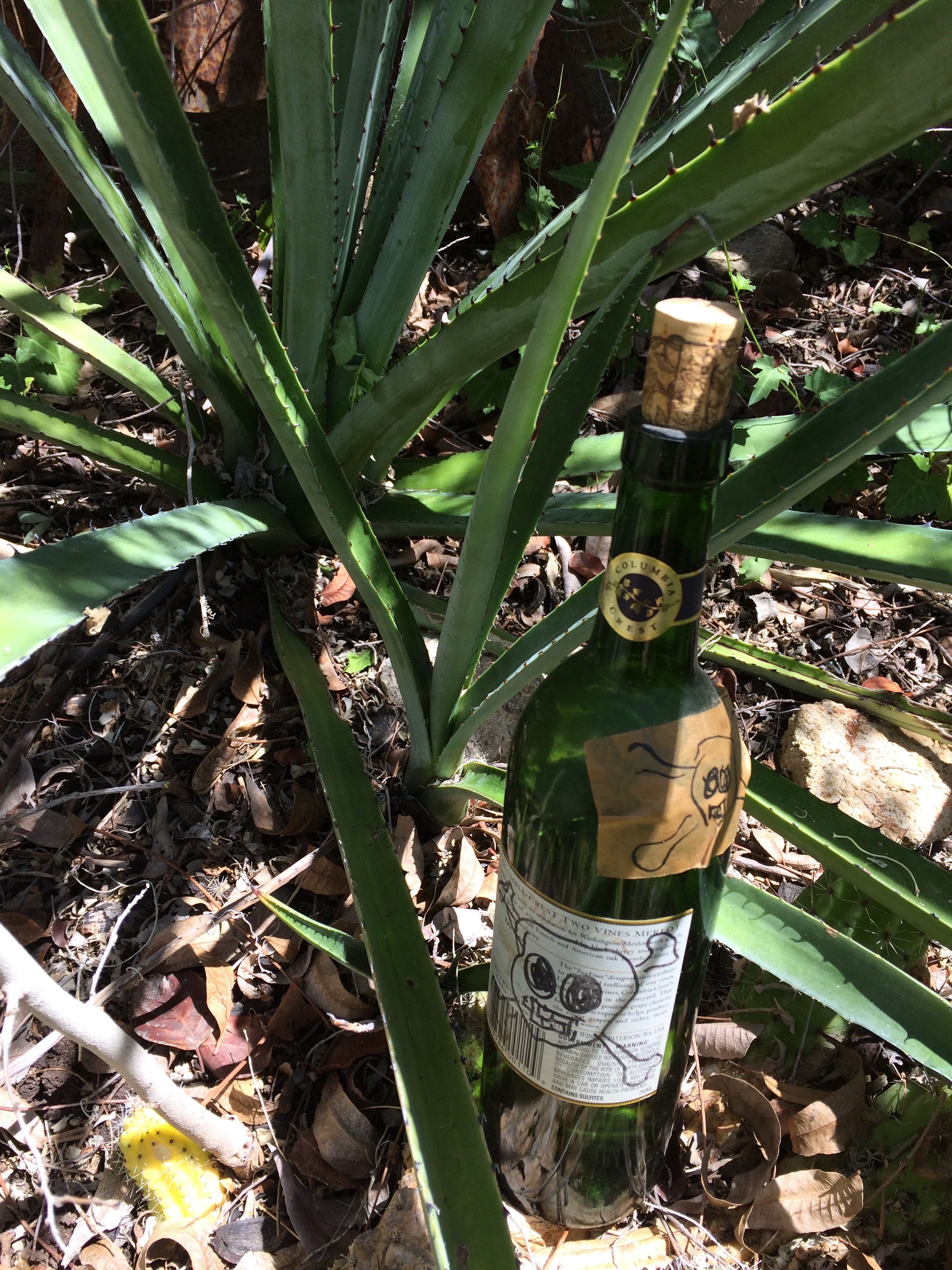
Bootleg Sonoran bacanora mescal, made in backyard stills from Agave angustifolia, rests in the succulent linear leaves of its unassuming century plant source. Importers are now bringing this indigenous Sonoran mescal, bottled legally, into the US–now available at unique saloons such as EXO Coffee and specialty liquor stores. (MABurgess)
If you haven’t tasted mescal, the distilled spirit made from roasted and fermented agave, you have a treat coming. In a particular district of Jalisco, Mexico, it is made from Agave tequilana –the blue agave–known only from there by the more familiar name tequila! Select Sonoran Desert Agave species produce mescals that some connoisseurs consider even better than tequila. At the Agave Heritage Festival you can taste several such spirits, to make that determination for yourself!
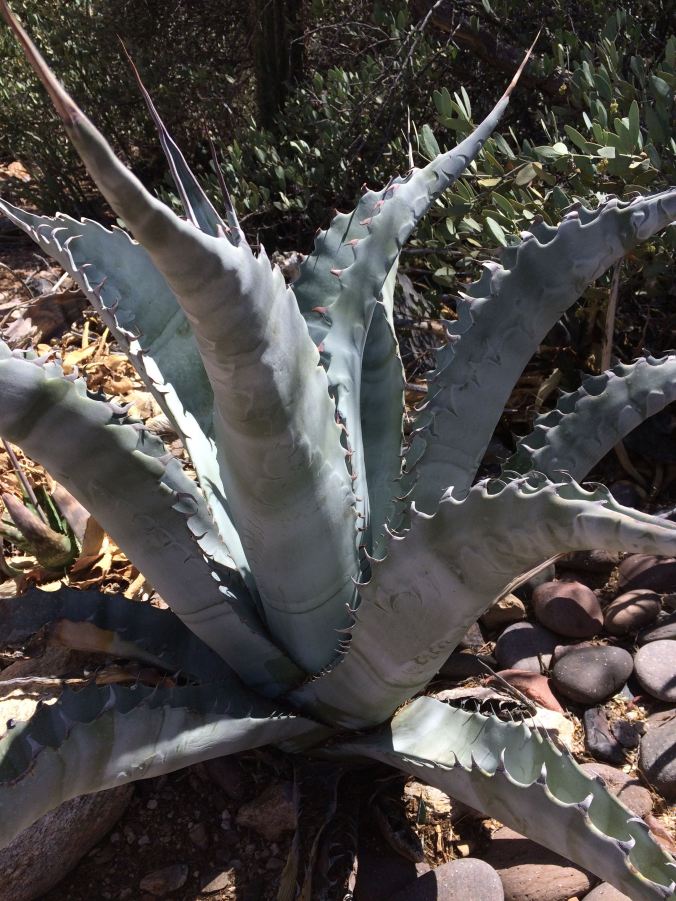
The beautifully cross-banded, fountain-shaped Agave zebra, from the hottest mountains of NW Sonora, was known for making mescal by local Sonorans prior to the 1950s. Its stripes and fountain-form adds dramatic accent to an edible landscape. Young agave plants can be purchased at Tucson’s primo succulent plant source, Plants for the Southwest for growing your own. (MABurgess photo)
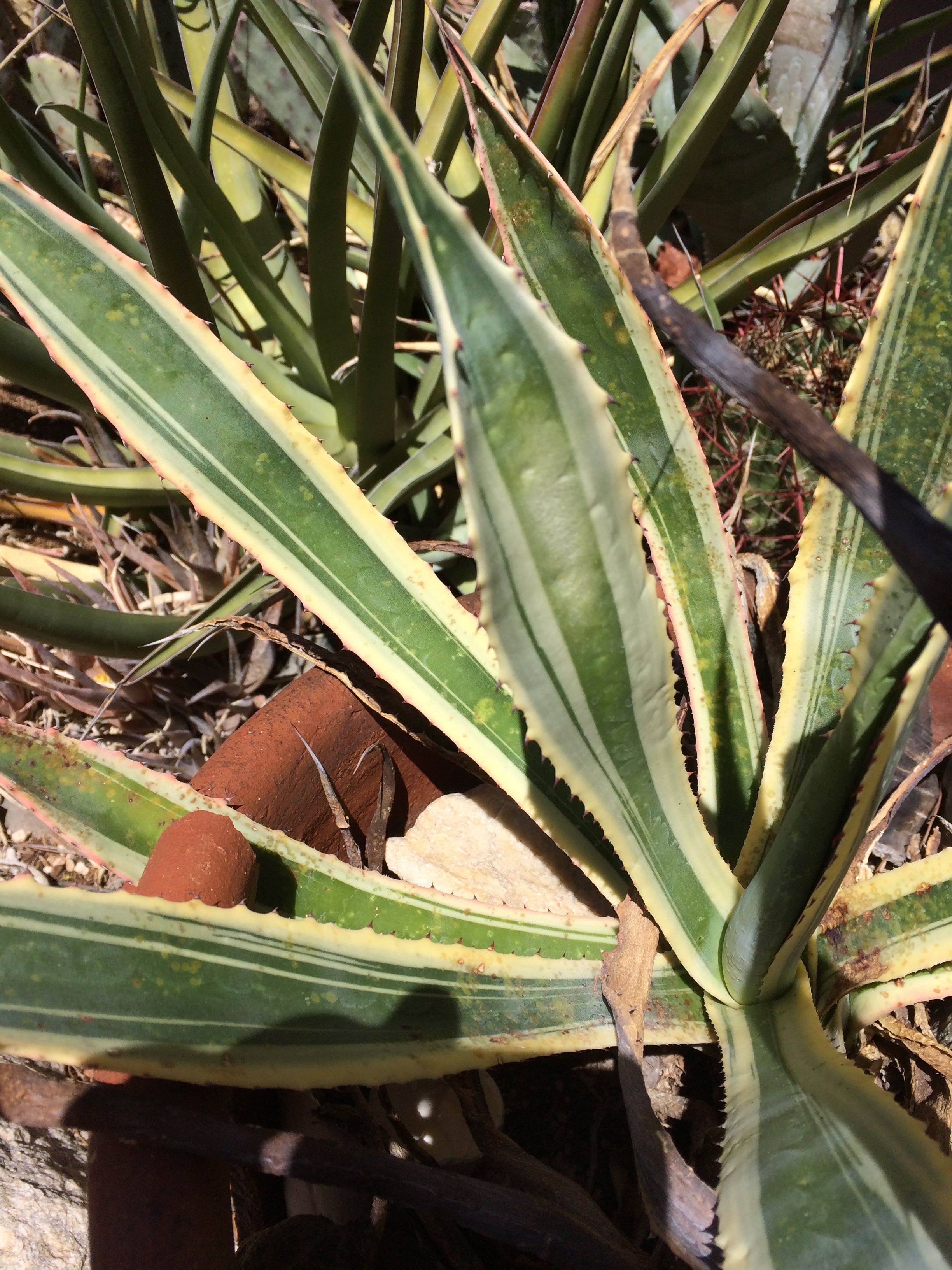
Variegated Agave americana makes a vivid desert ornamental. It may have been one of several agaves cultivated by ancient people of the Southwest. (MABurgess photo)
At this year’s Agave Heritage Festival, at celebratory, culinary, artsy and educational events–from Mission Garden to Maynard’s Market, Desert Museum to Carriage House Tucson, Tohono Chul to Tumamoc Hill, UA to Pima College, with horticulturalists, scholars, artists, musicians–we will delve into the lore and many gifts of the Agave family. Learn hands-on–even tastebuds-on— from esteemed experts, ethnobotanist Jesus Garcia, Southwest foods authors Carolyn Niethammer and Gary Paul Nabhan, culinary artists Chef Janos Wilder, Barry Infuso, and Don Guerra, scholars Karen Adams and Maribel Alvarez, to name just a few! Sign up soon at http://www.agaveheritagefestival.com, giving yourself a gift while supporting such special organizations as NativeSeeds/SEARCH, Friends of Tucson’s Birthplace, Arizona-Sonora Desert Museum, and Tohono Chul Park.
Alongside the Agave events, as the succulent season progresses, there are other desert foods to harvest and taste in new recipes, inspired by both traditional knowledge and ideas for sustainable desert living into the future. Cholla buds and nopalitos from several cactus species will be featured in upcoming workshops. To call up lots of neat info from past http://www.SavortheSouthwest.blog posts, insert the word “cholla” into the search-box above for a feast of ideas, then……
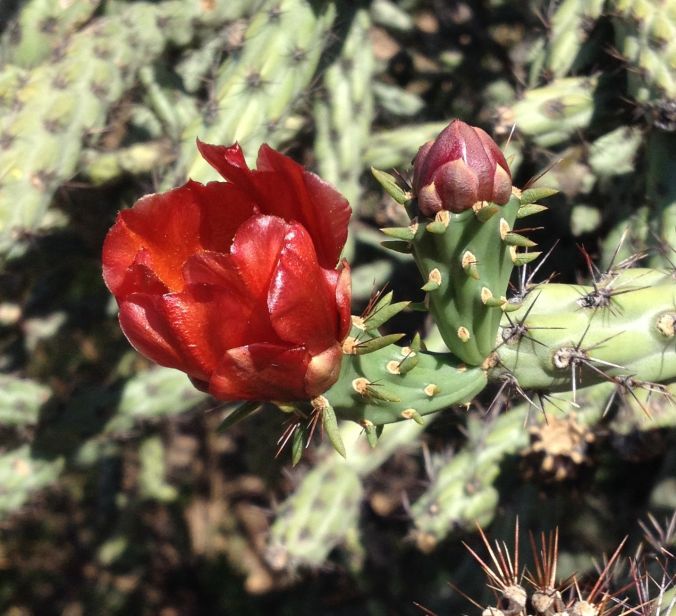
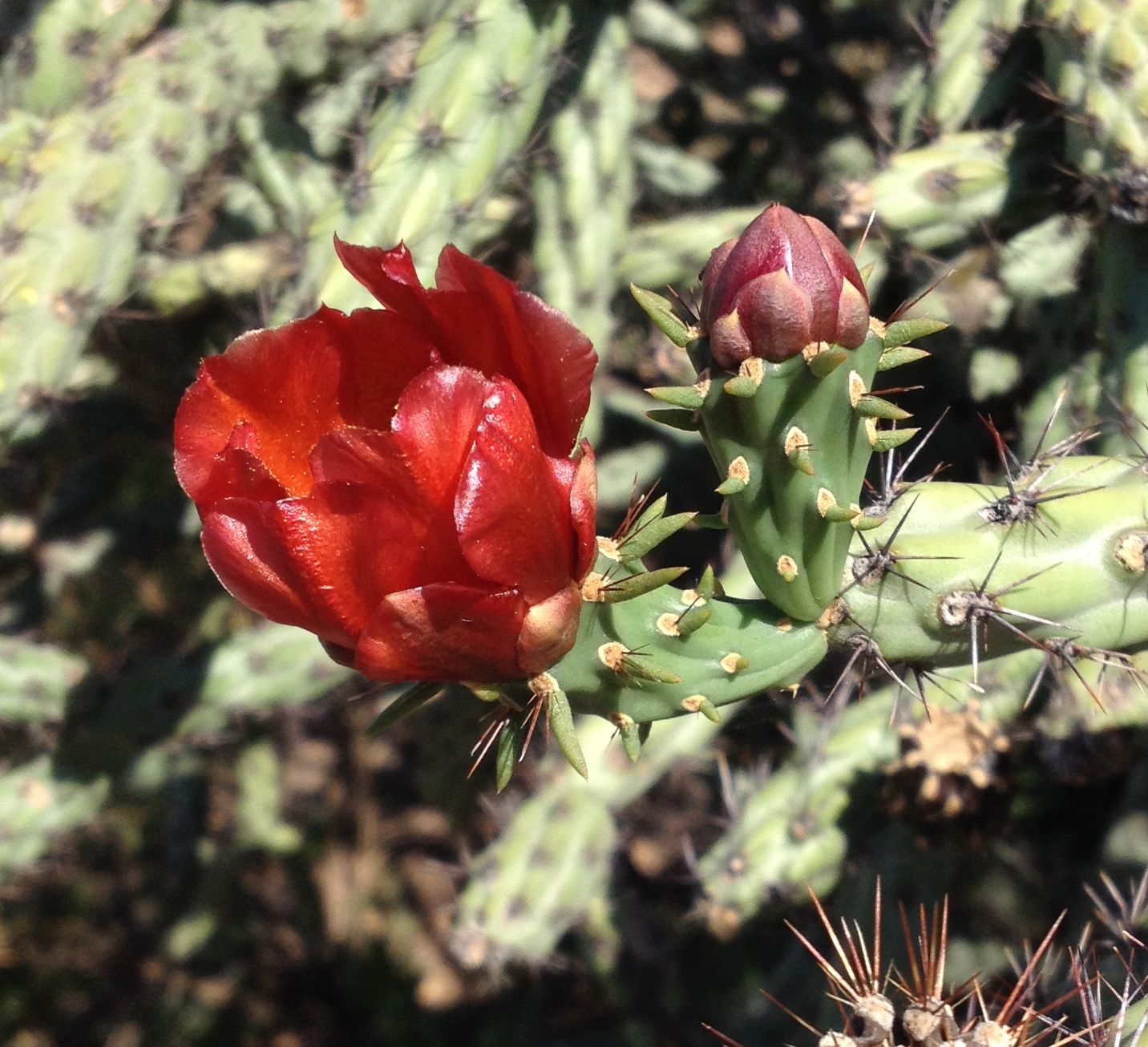
Vivid flower of staghorn cholla (Cylindropuntia versicolor) with spiny bud ready to harvest. Learn how to carefully pick, de-spine, cook and prepare this super-food in wondrous recipes at Mission Garden and Flor de Mayo workshops. (MABurgess photo)
As cholla cacti begin to bloom, it’s time to harvest the buds! Join me Friday, April 20, 2018, at the Mission Garden Cholla Harvest Workshop — Sign ups at http://www.tucsonsbirthplace.org. Or, on Saturday, April 21, come to Flor de Mayo’s Cholla Harvest on Tucson’s west side–contact www.flordemayoarts.com and 520-907-9471. Cooking School classes are happening at Janos’ Carriage House, http://www.carriagehousetucson.com, and Gastronomy Tours downtown are being scheduled at the Presidio Museum, http://www.tucsonpresidio.com.
I hope you have enjoyed my Photo Gallery and that you may enjoy many a succulent Sonoran Desert dish and libation this season–more ways to honor Tucson as an International City of Gastronomy!
May we all toast the spirit of Agave Goddess Mayahuel!
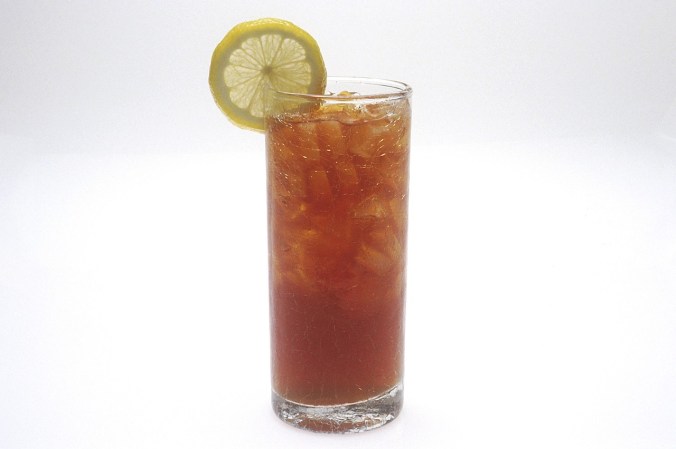
Savor Sister Linda here this first week on April 2018. Let’s talk about Nature’s Wisdom today through the lens of ranching.
On our ranch, we don’t have a calving “season” – where breeding is controlled and the calves arrive at pretty much the same time; and when they come, they do so under the supervision of humans. There are many benefits to this way of ranching.
And there are many different ways of ranching; all of which have their pros and cons. On our ranch, we let the cows and bulls work out their love lives on their own, and so they calve all year long. I’ve been fascinated learning about how cows give birth on wide open range land, and where they can show both domesticated as well as instinctive traits.

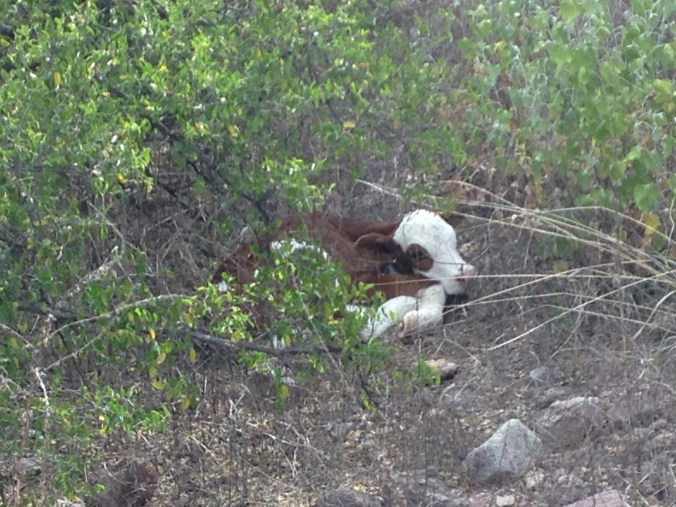
One day old calf tucked under the brush by her mother for visual protection.
When a cow calves on open range, she does a few things to protect her young. I’ll save you from the photos of the mother eating the placenta – which among other things reduces the scent that might alert predators. She then moves her young a short way a way, and visually hides it under cover of brush.

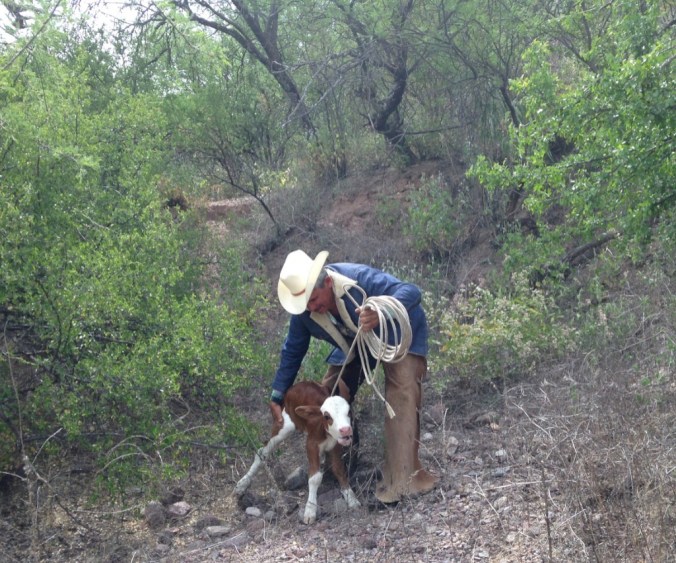
Calves are as vulnerable as they are adorable at one day of age. We found this little girl tucked under the brush and took her and her mother back to the corrals near the ranch house to provide her a bit more protection. This photo was taken May 11th, 2015.
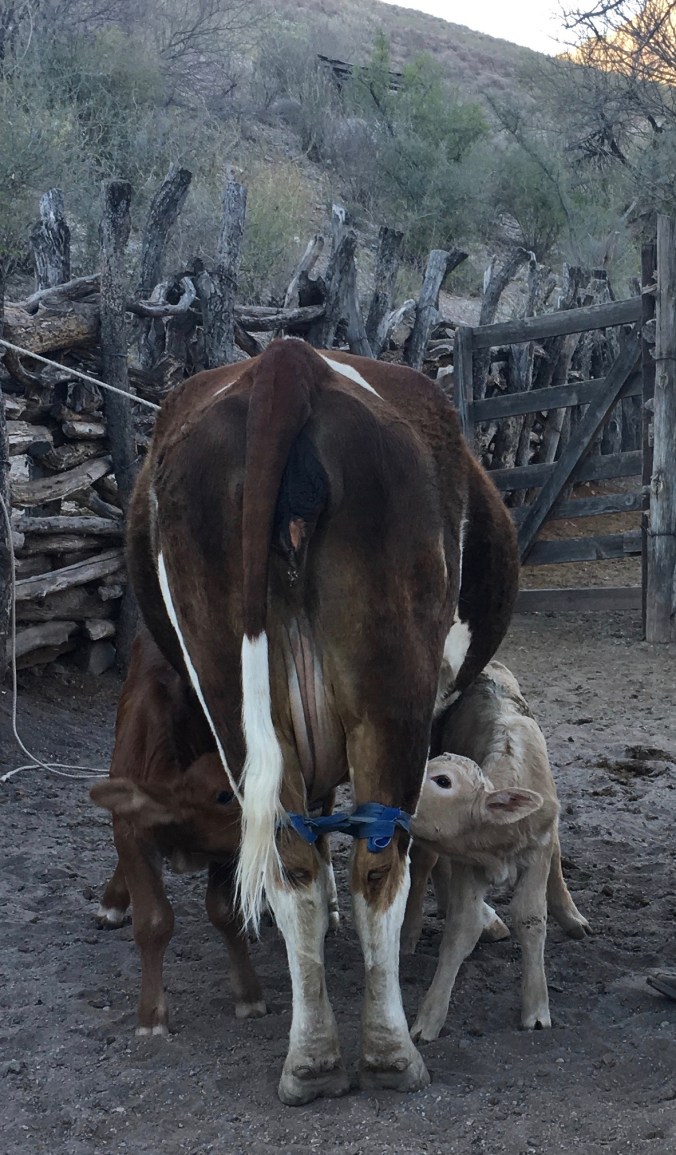
Fast forwarding to present day, this little calf has grown up and is now a mother herself. She has a wonderful udder – exceptional really – with a rich capacity to provide milk to her young. In the photo below, she is nursing her own calf (the darker calf on the left) and a second calf (on the right in photo) whose mother is ill and not producing milk. I’ve been asked why her back legs are tied; it is so she doesn’t kick. This photo was taken the second day she was nursing the 3-4 day old calves at the same time.


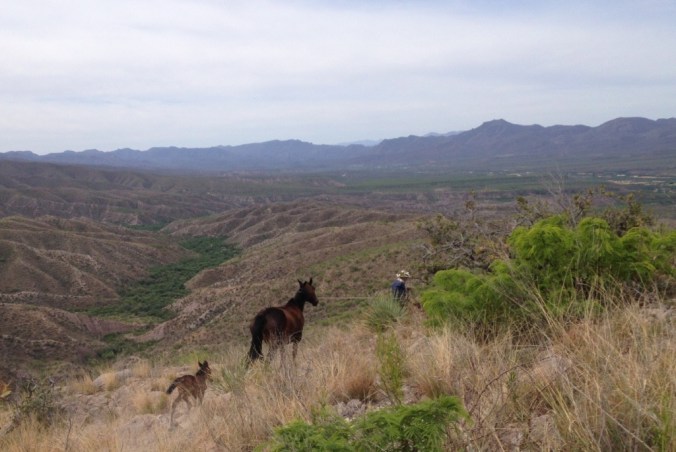
The same year, May 2015, as the calf, we discovered this little foal hidden under brush, as well . Leading the mare with a rope, the little one follows in tow, back to the ranch for extra protection.
I don’t have a recipe offering today – but did find myself eating cookies and milk while I was writing ….. so consider making your favorite cookie recipe and pair it with a cold glass milk. There are so many “milks” available these days.
Thank you for reading and have a wonderful April. We’ll meet again in May!
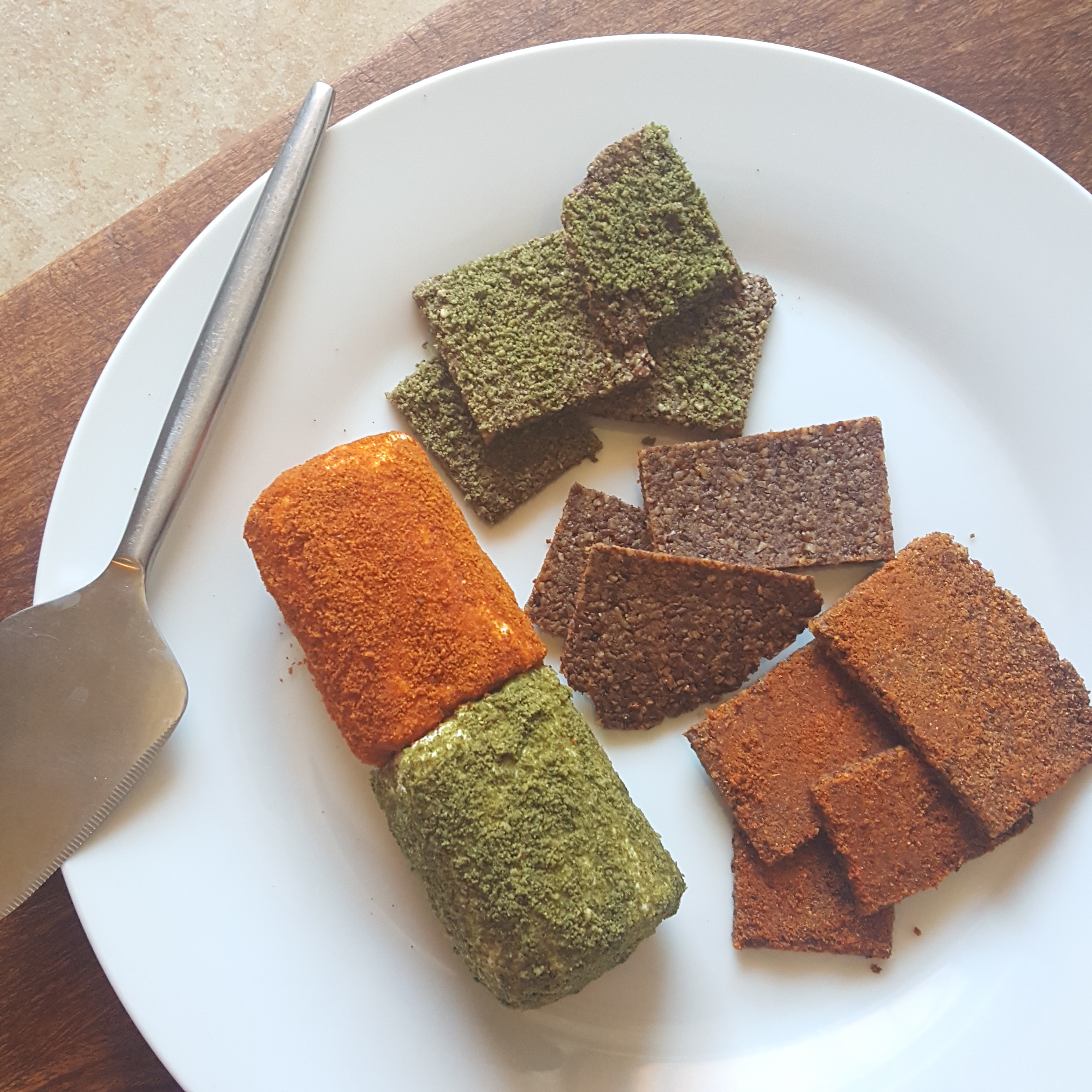
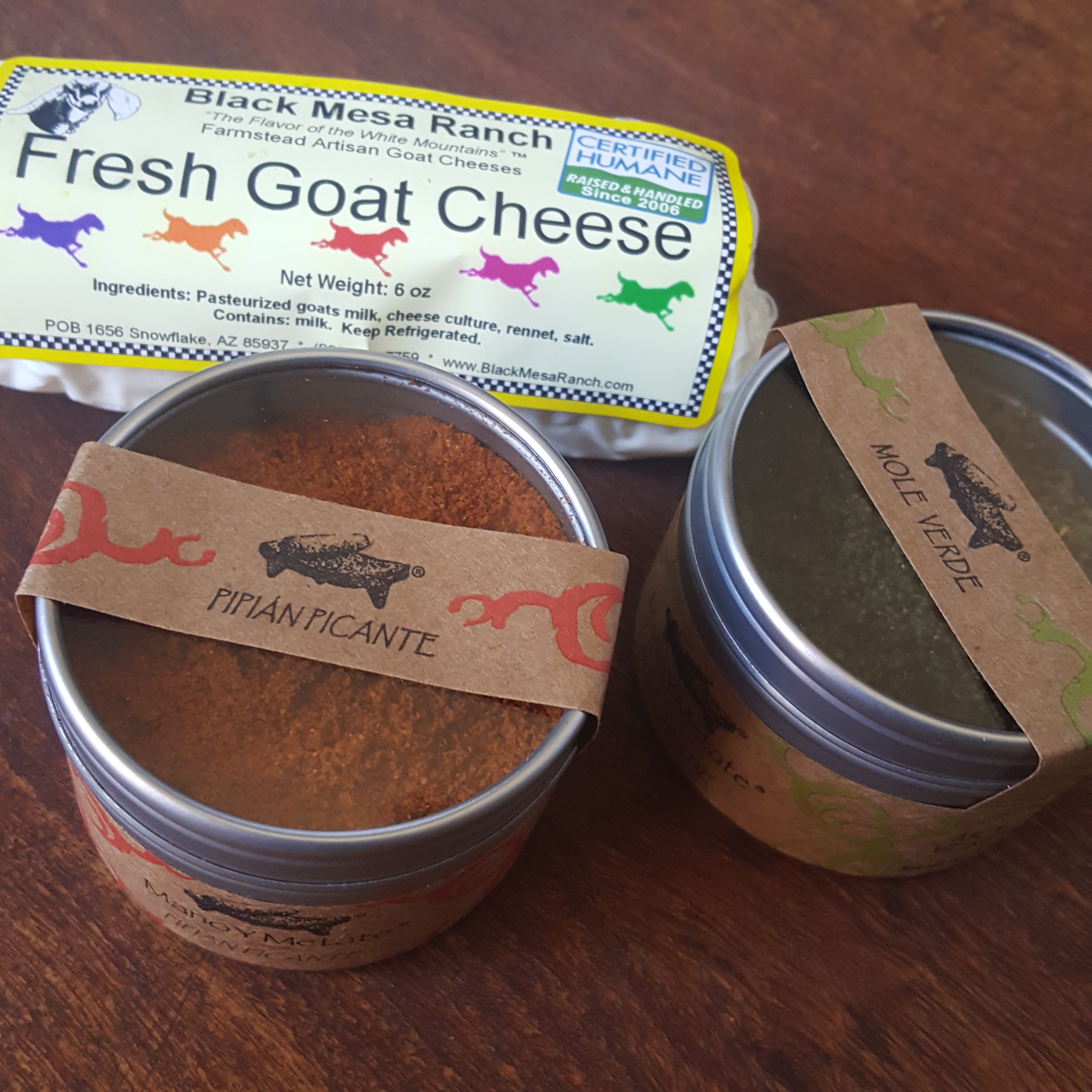
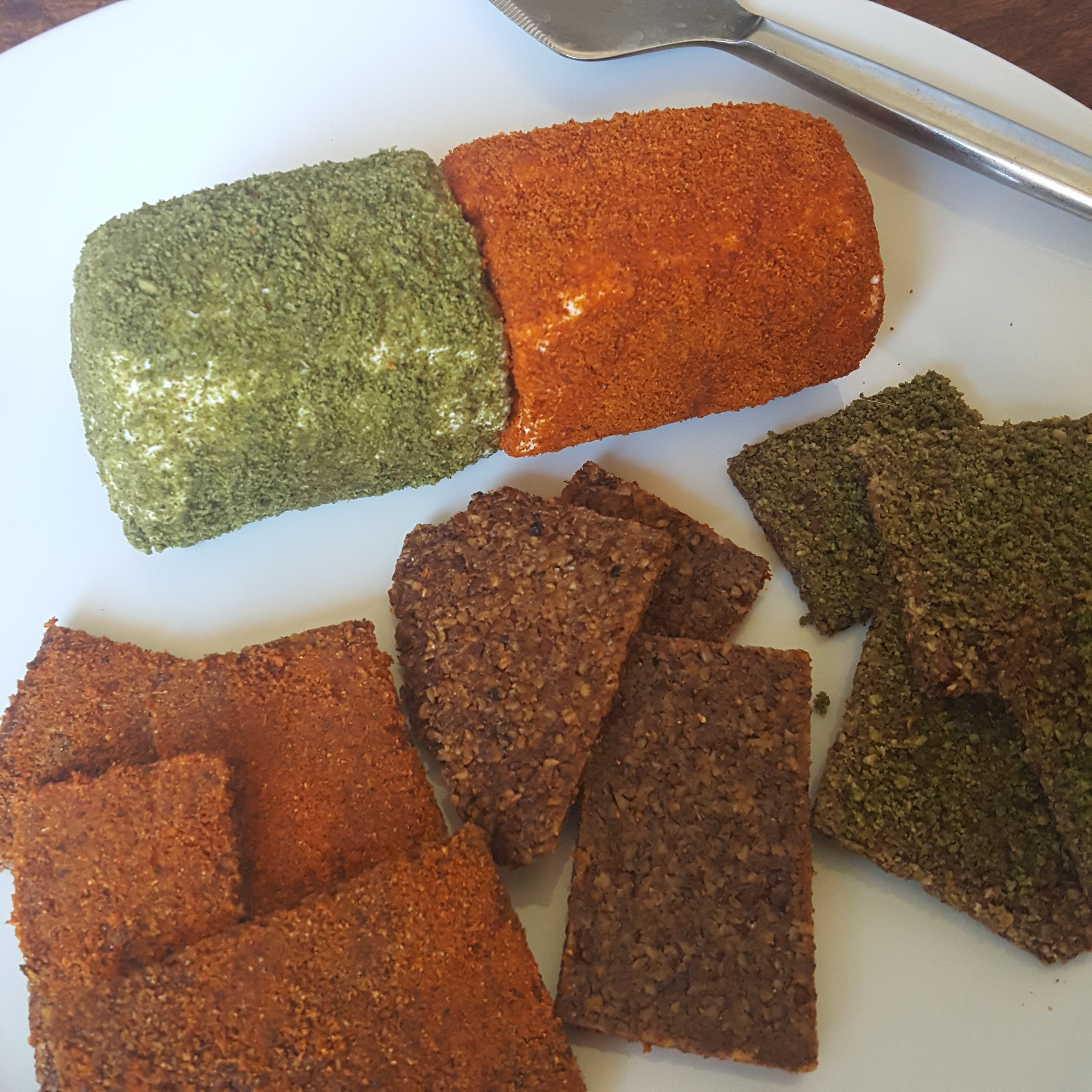
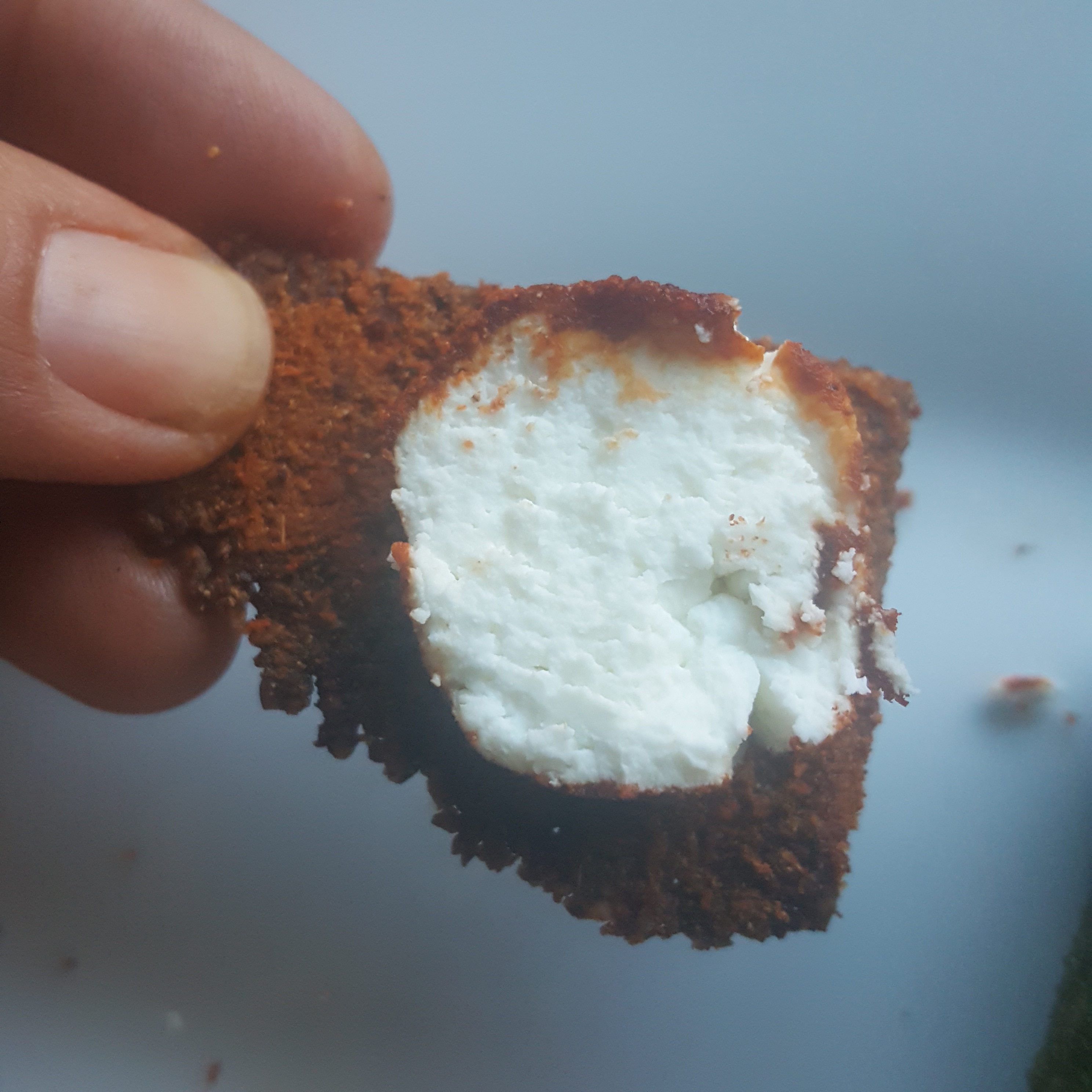
Happy spring! Amy here, riding the waves of rushing spring activity. At Tucson CSA this week, we saw the first fresh chevre of the season from Black Mesa Ranch.
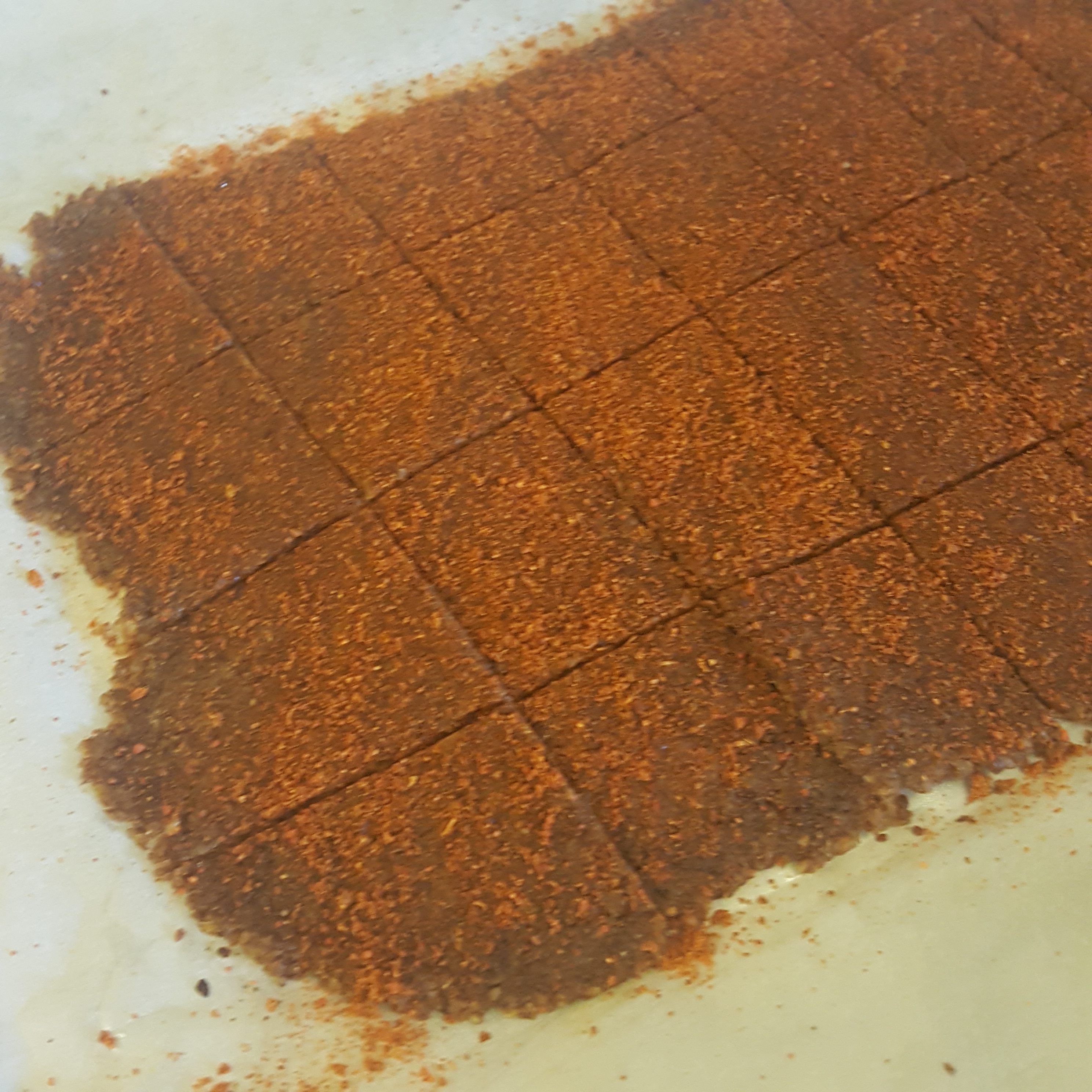
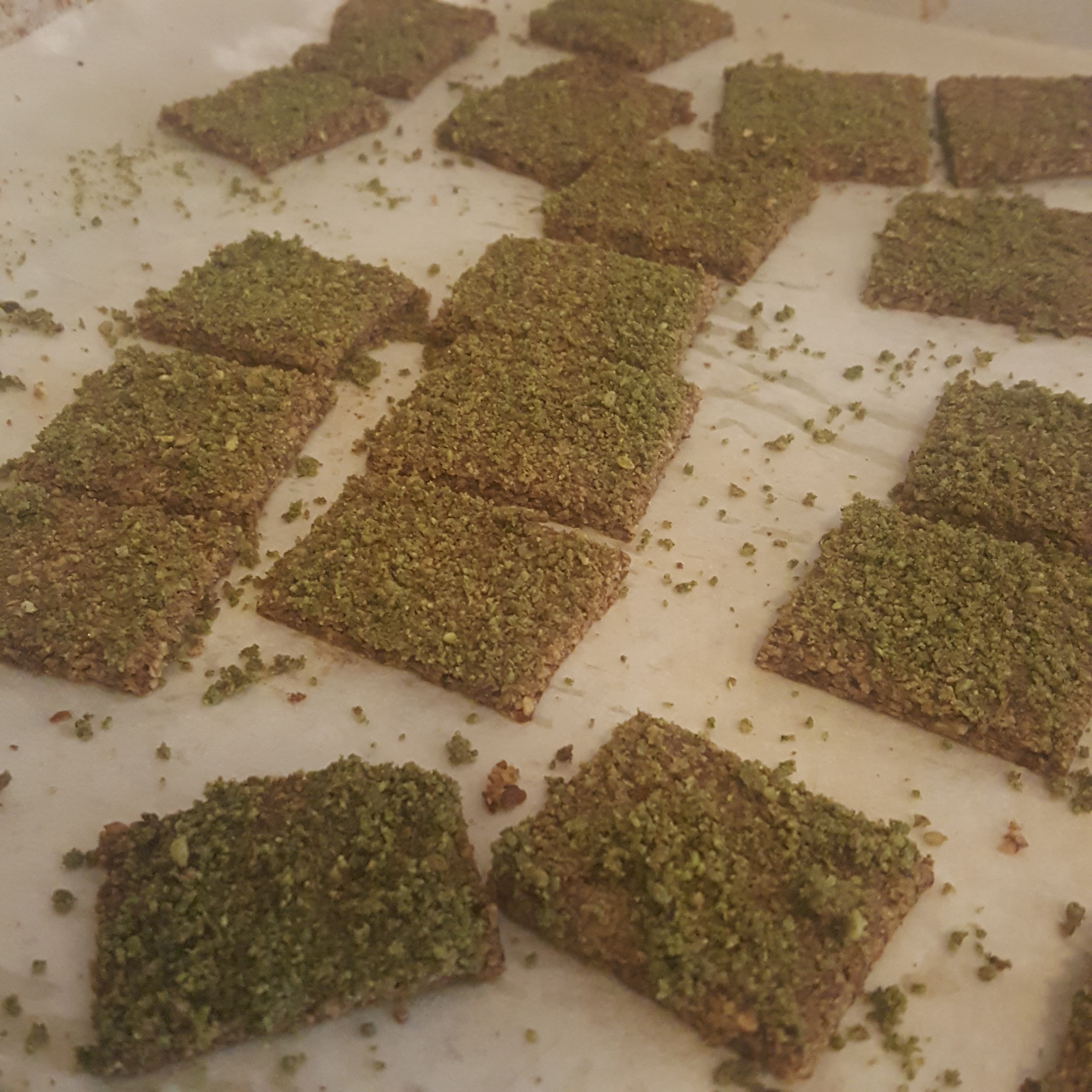
Later in the season, David will send us cheese rolled in herbs, or green chile, or chipotle. Since this chevre was plain, I decided to roll some in Mano Y Metate Mole Verde powder and some in Pipian Picante.
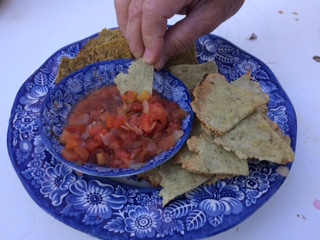
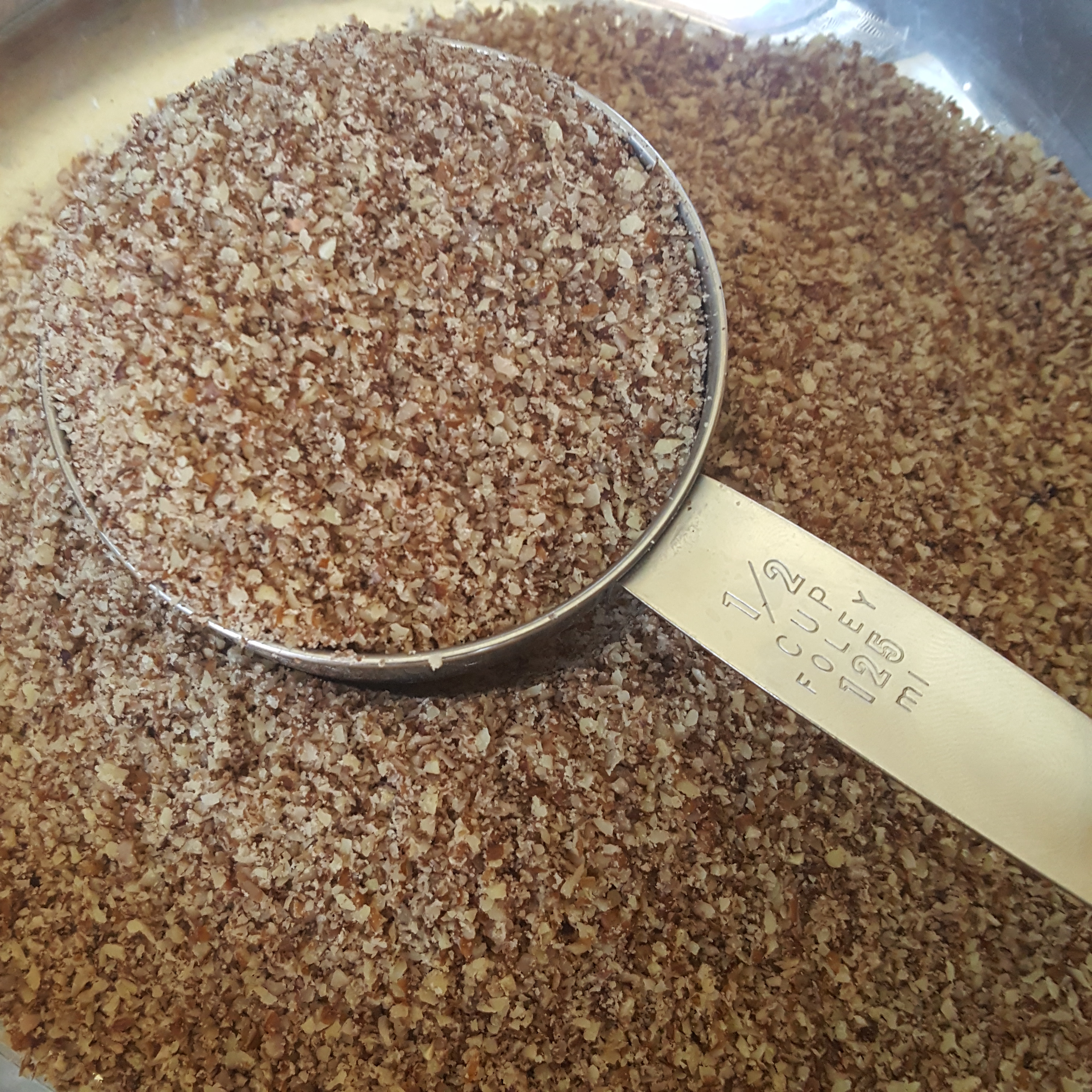
To accompany it, I wanted to make something special. Pecan crackers are delicious yet easy, and can be made with entirely local ingredients. Green Valley Pecan Company in Saguarita, just south of Tucson, sells finely ground pecans, which I use in the Mole Negro. Almond meal works just as well as pecan in this recipe. In other batches, I’ve added some mesquite meal, acorn meal, barrel cactus seed, chia seed, sesame seed, amaranth seed, and/or cracked wheat. Use what you collect!
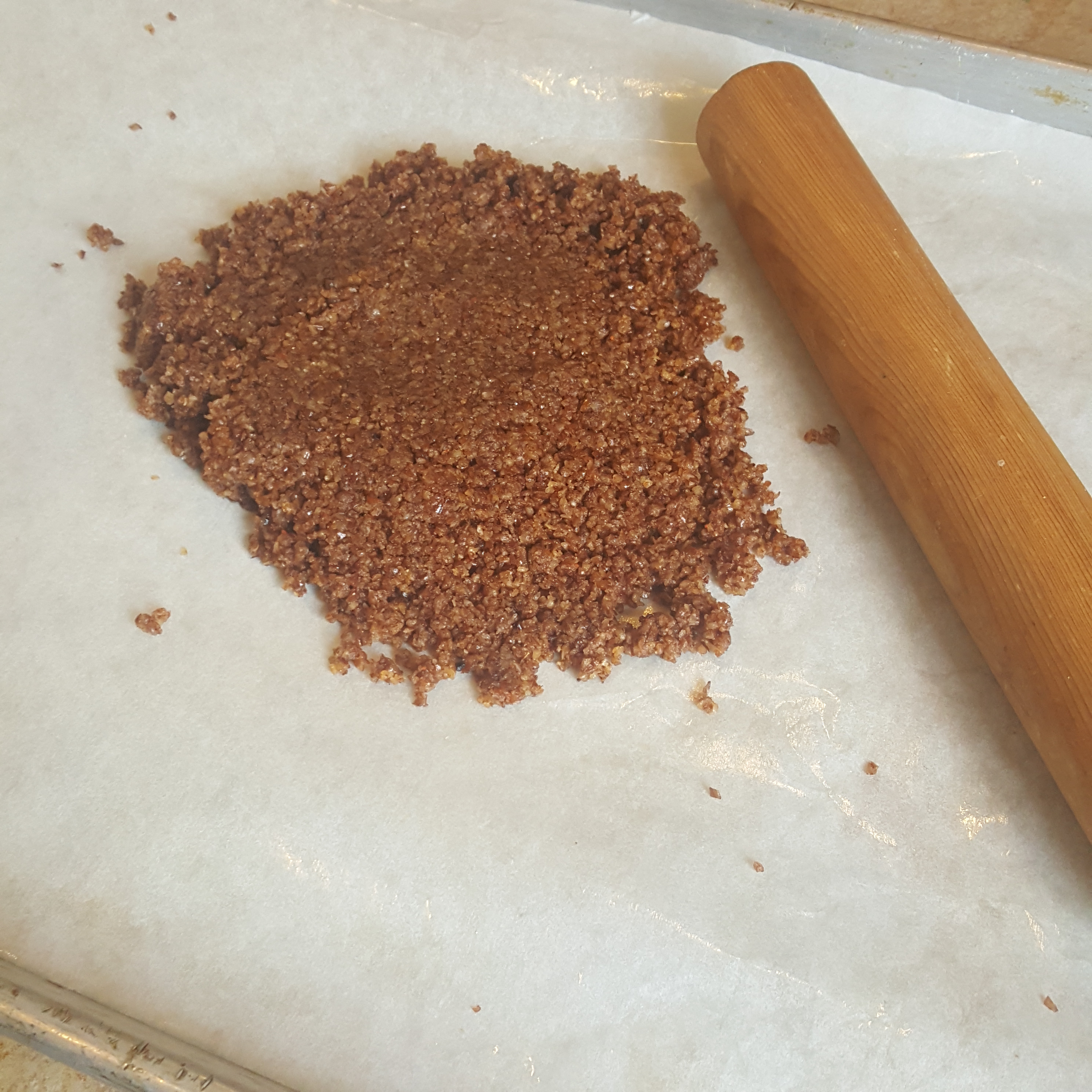
For this batch, I mixed 2 cups pecan meal with an egg and a tablespoon of olive oil. No need to measure; as long as it comes together into a dough that can be rolled, it works. Normally I add salt, but this time I added 2 teaspoons mole powder.
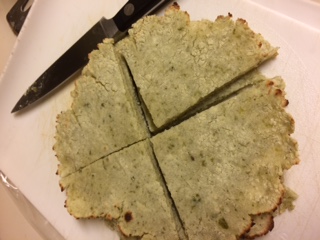
Roll the dough onto a piece of parchment paper on a baking sheet as thin as possible, and cut into squares with a pizza cutter.
Top with salt, seasonings, or Mole Powder and bake at 350 degrees F for 10 to15 minutes, depending on thickness. I usually let them get a little brown, so they will be crispy. Towards the end, they can burn quickly.
After baking, re-cut and separate the crackers. Cool and enjoy! Store any left in a dry place.
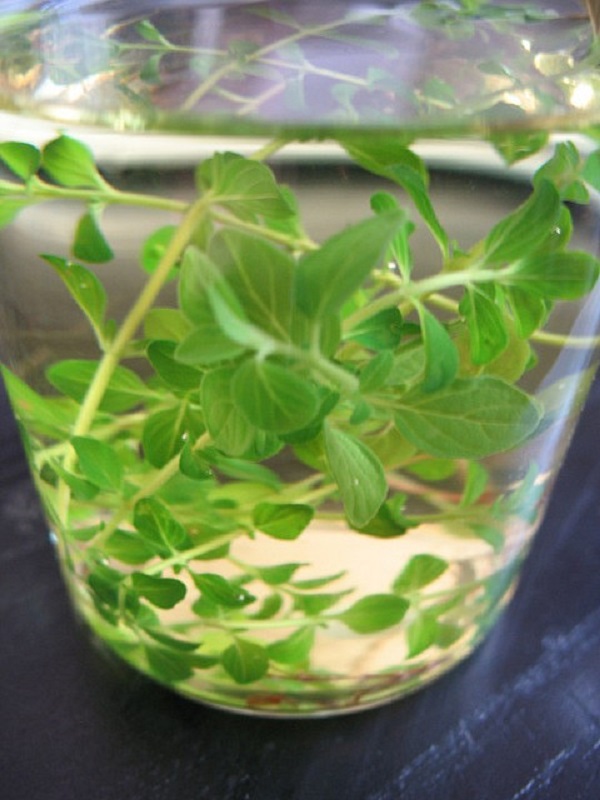
Mint is one of those plants that want to spread everywhere in the garden, and that can be a good thing if you use a lot of mint – like I like to. Mint is useful for all manner of beverages, from mint tea to mint julep to crème de menthe, or you can use it to make jelly, various sauces, make tabouli, throw some in salad, in wine,,,, the list goes on, but you get the idea. Oh, and mints are used medicinally and for bath and beauty products too.

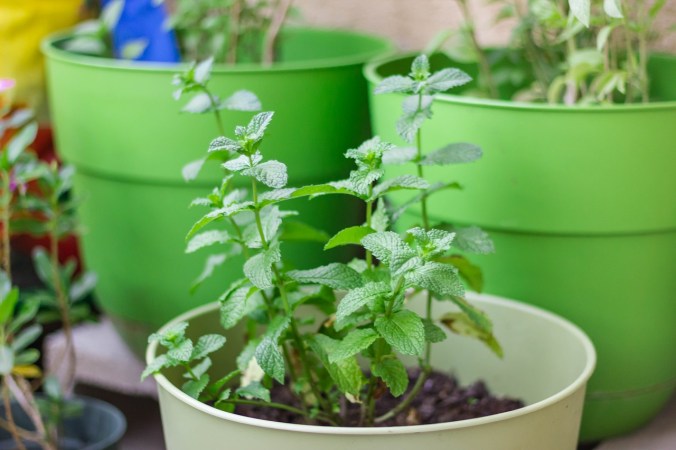
Mint gets a bad rap because it can spread in the garden and crowd out other, less aggressive, plants. The solution is to grow your mint in pots – and make sure those pots are up off the ground so the mint can’t creep out the drainage hole. I put my pots of mint up on bricks.

There are over 100 species of mint, plus many hybrids, and more being bred all the time – to offer new flavors – like “berries and cream mint” I spotted the other day in Rillito Nursery in Tucson. Since we are here to savor the Southwest, today I will talk about using mint for culinary purposes.
Mint and Sweets

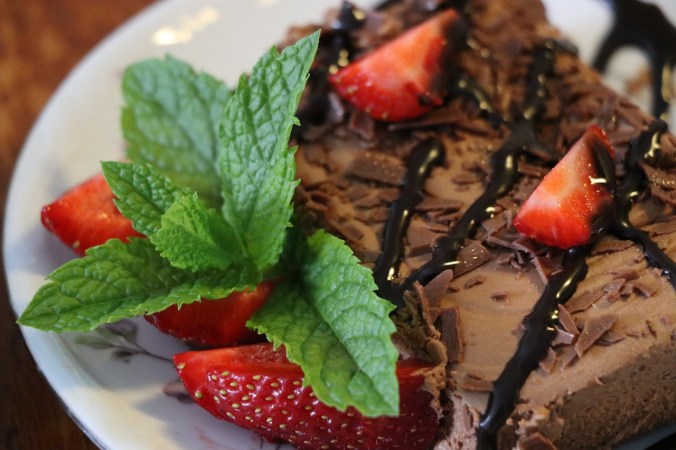
Mint is an herb that offers a tangy counterpoint to foods, especially sweets. A slice of luscious chocolate torte offered with sprigs of mint is one good example. Several bites of rich creamy torte followed by a nibble of mint offers a refresher for your palate, allowing you to savor the chocolaty flavor all over again when you bite back into it.

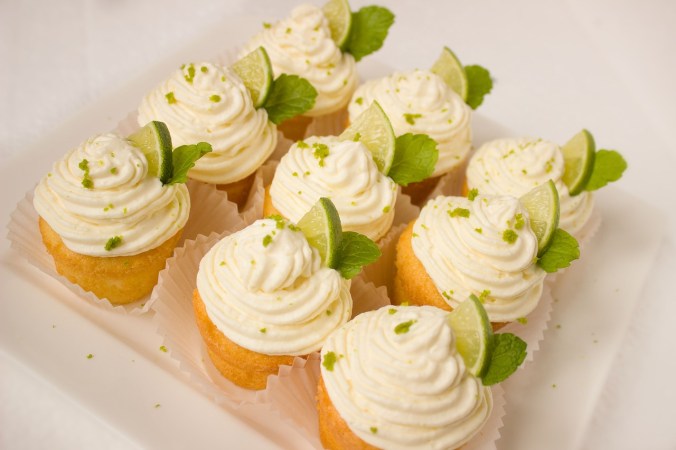
Mints work well with all manner of sweet things. Lime juice and chopped mint leaves combine to make a tangy and refreshing frosting on orange flavored cupcakes.
Mint and Fruit

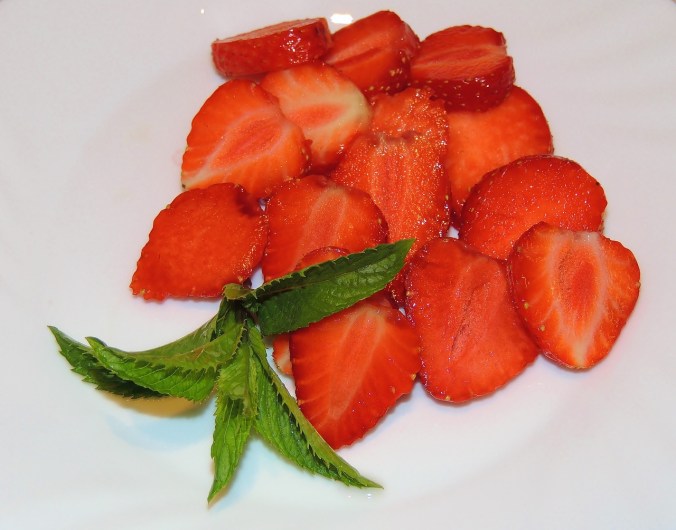
Mint pairs well with many fruits. Like savoring the torte, a few bites of strawberry followed with a nibble of mint offers a refreshing and more flavorful experience.

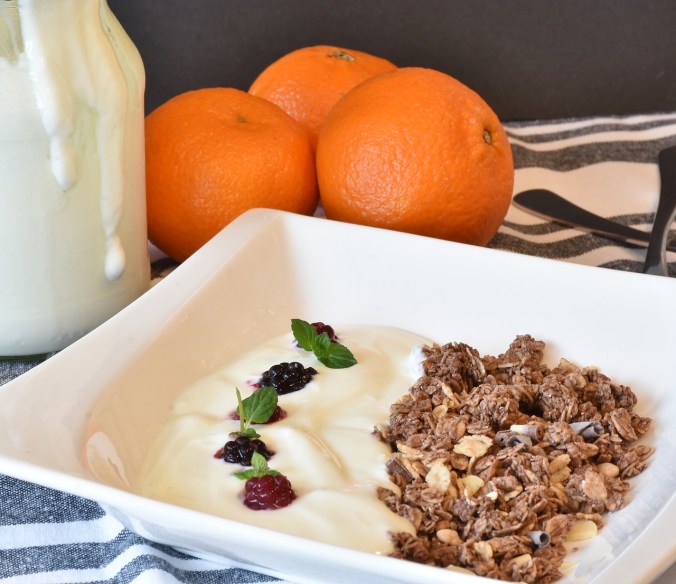
Don’t limit your mint use to dessert, wake up your morning yogurt and granola with a sprig or two of mint. Mint is said to aid digestion.
Mint and Drinks
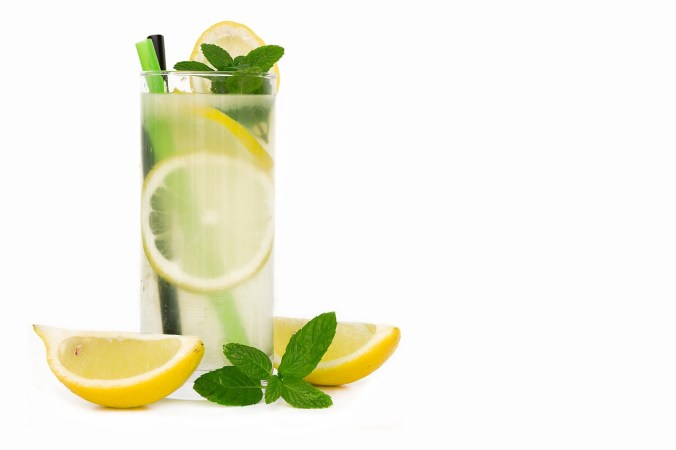
Summer is coming – perk up your lemon-aid and make it even more refreshing with some sprigs of mint.

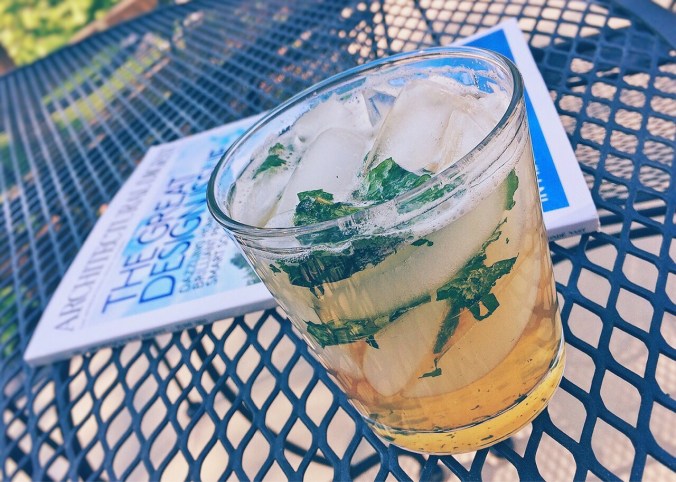
And last but not least, plan ahead for Kentucky Derby Day, and make some mint syrup to make mint julep with. Here is the recipe I got several decades ago from my friend Karen from Kentucky. Sorry that I don’t recall her last name, but I remember her sweet nature every year as we watch the Derby and sip minty drinks.
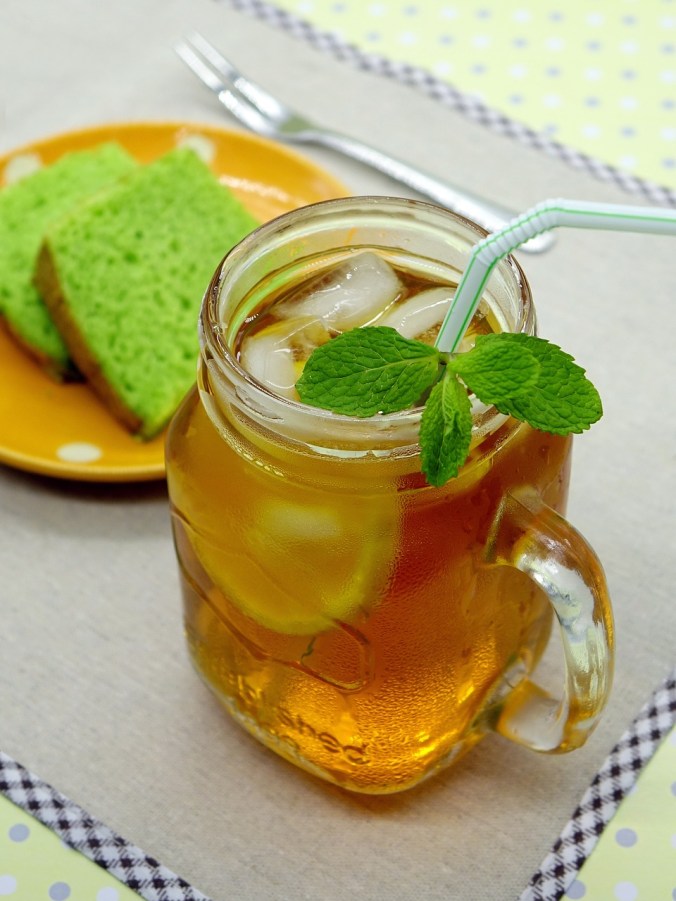
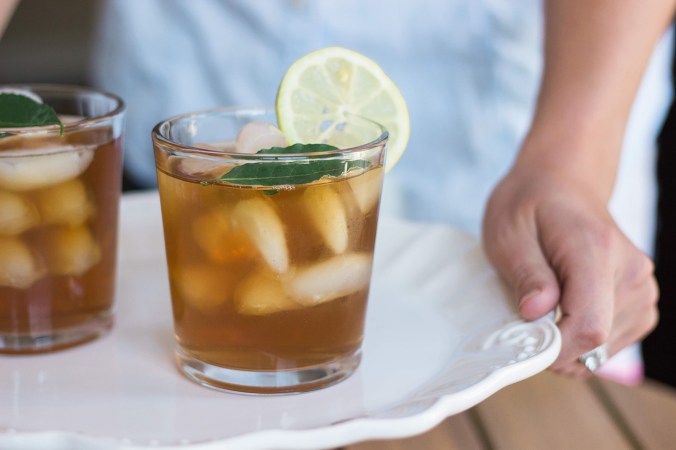
Mint syrup. In a mason jar, put one cup sugar, one cup compressed fresh mint leaves, and add one cup boiling water. Stir as needed to help dissolve the sugar. When cooled, store in the back of the fridge for up to a month. Mint syrup can be used for mint juleps but it’s also a dandy way to sweeten iced tea.
Mint julep. In a glass add 2 ounces of bourbon, ½ ounce mint syrup, sprigs of mint, and stir, bruising the mint leaves. Fill the glass with finely crushed ice. Optionally garnish with fresh mint. Sip and enjoy!
If you live in Southeastern Arizona, please come to one of my lectures. Look for me at your local Pima County Library branch, Steam Pump Ranch, Tubac Presidio, Tucson Festival of Books and other venues. After each event I will be signing copies of my books, including, “Southwest Fruit and Vegetable Gardening,” written for Arizona, Nevada and New Mexico (Cool Springs Press, $23).
© Article is copyright by Jacqueline A. Soule. All rights reserved. Republishing an entire blog post or article is prohibited without permission. I receive many requests to reprint my work. My policy is that you may use a short excerpt but you must give proper credit to the author, and must include a link back to the original post on our site. Photos are courtesy of Pixabay and may not be used.

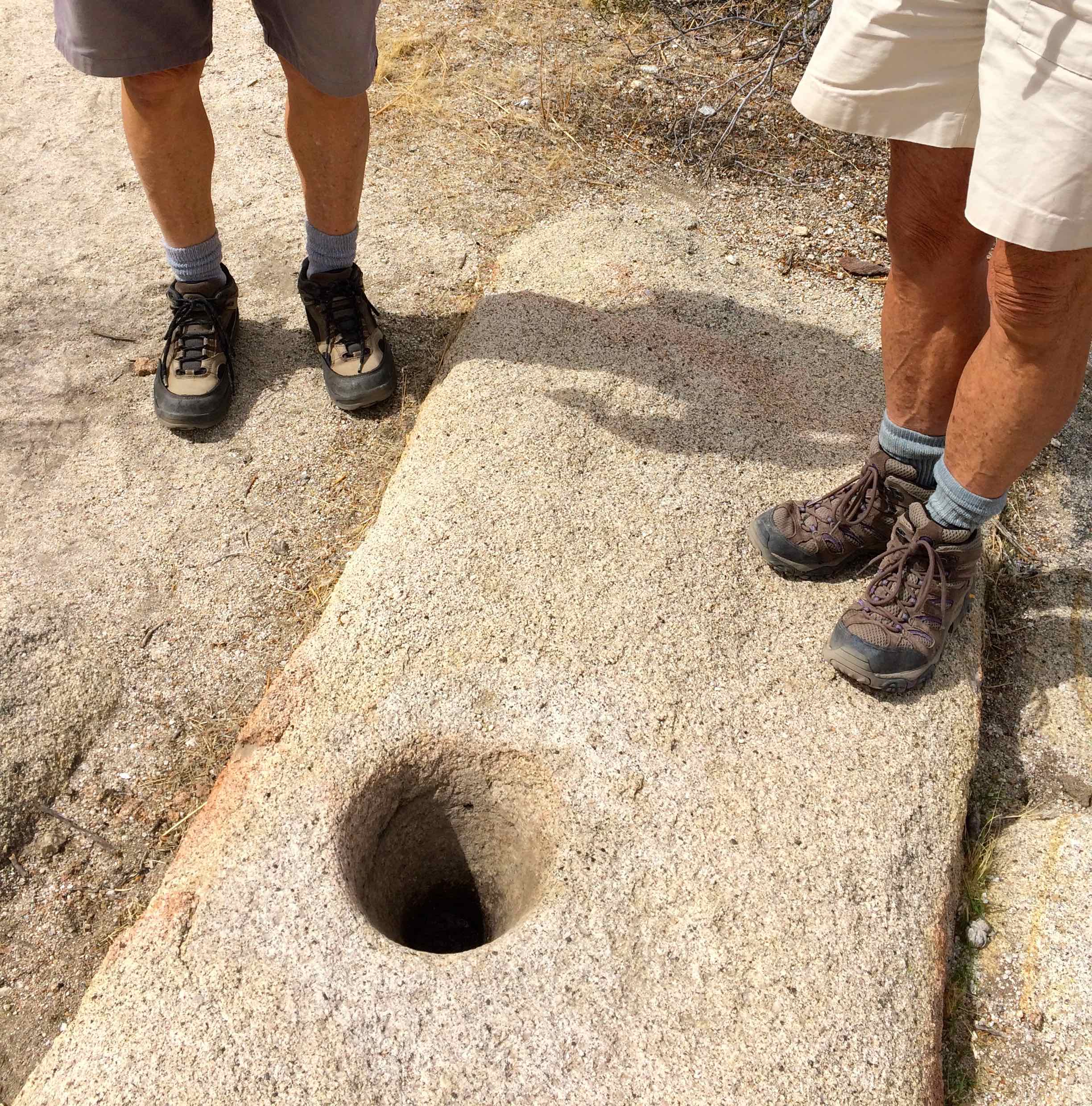
Bedrock mortar hole where ancient desert people milled mesquite, legume pods, and other seeds (MABurgess photo)
All around us in the desert–in our own Tucson Basin and beyond–there is evidence in the rocks that people long ago were gathering, processing, growing and eating bountiful desert plant foods. The same plants (mesquite beans, amaranth, chia, corn…) are providing us today with a smorgasbord of yummy ingredients for new culinary creativity. The pre-history and history of our diverse food cultures–not to mention the amazing inventiveness of our local chefs, farmers and gardeners–led UNESCO to name Tucson the first International City of Gastronomy in the US!
Tia Marta here to tell you about upcoming GASTRONOMIC TOURS created to celebrate our diverse local food heritage. Are you ready for total immersion in culinary bliss? Tucson’s Presidio Museum is sponsoring tours of our food heritage in the heart of Old Town. Look for announcements about The Presidio District Experience: A Progressive Food Heritage and History Tour.

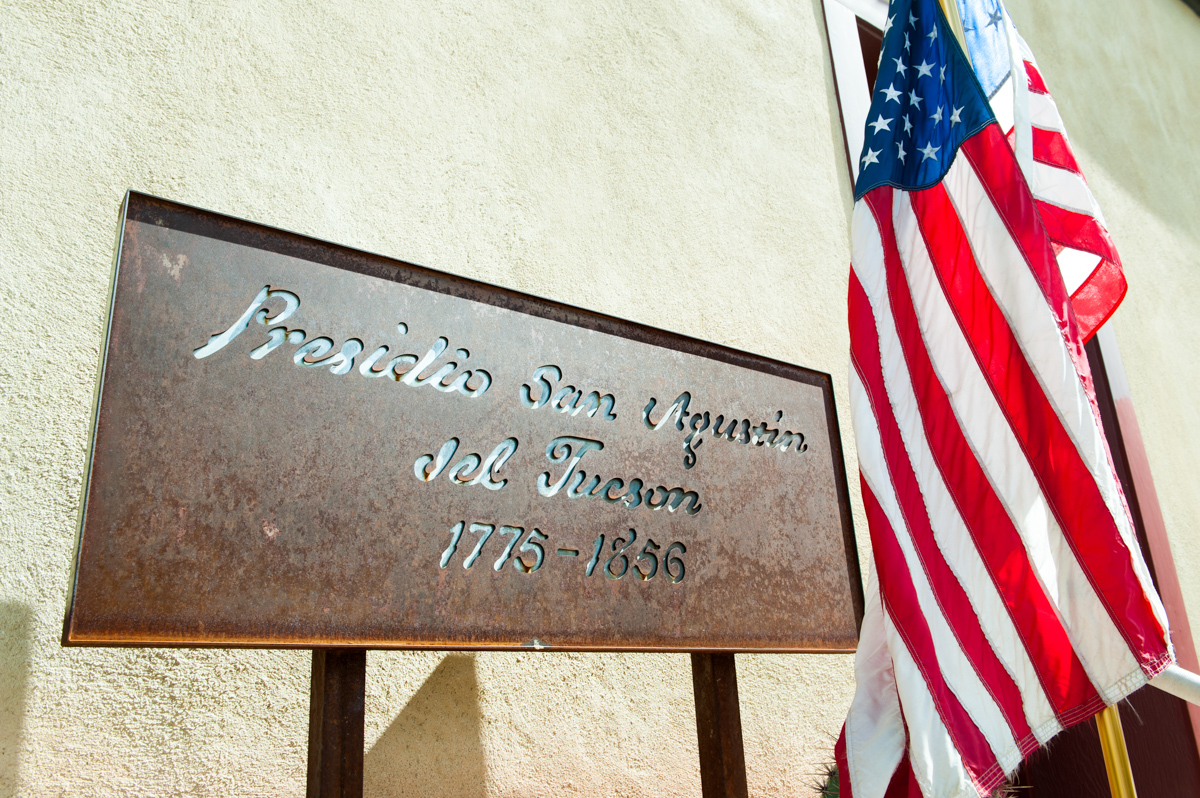
Tucson’s Presidio San Augustine Museum–a living-history treasure at the center of downtown where visitors can envision life of 18th century Spanish conquistadores and their families on the new frontier.
In the style of progressive dinners or “round-robins” the tour will begin at the Tucson Presidio Museum, developing a sense of Tucson’s setting and cultures over the recent 10,000 years. Participants will enjoy samples of traditional wild-harvested desert foods, then surprising Spanish introductions. Next tourers venture forth afoot to taste Hispanic and Anglo family traditions plus nouvelle cuisine desert-style at some of our one-of-a-kind historic restaurants. Past meets present in a symphony of taste sensations with spirits, entree, bebidas or dessert at each new venue.
These tours are educational-plus! Feeding not only body and satisfaction-center, knowing Tucson’s gastronomic history feeds the mind and soul as well. Tours are scheduled for Sunday afternoon, March 25, April 8, 15 or 29, from 1pm-3:45pm. Check out http://www.tucsonpresidio.com , go to the event calendar and click on Heritage Tour for details and registration for each date.

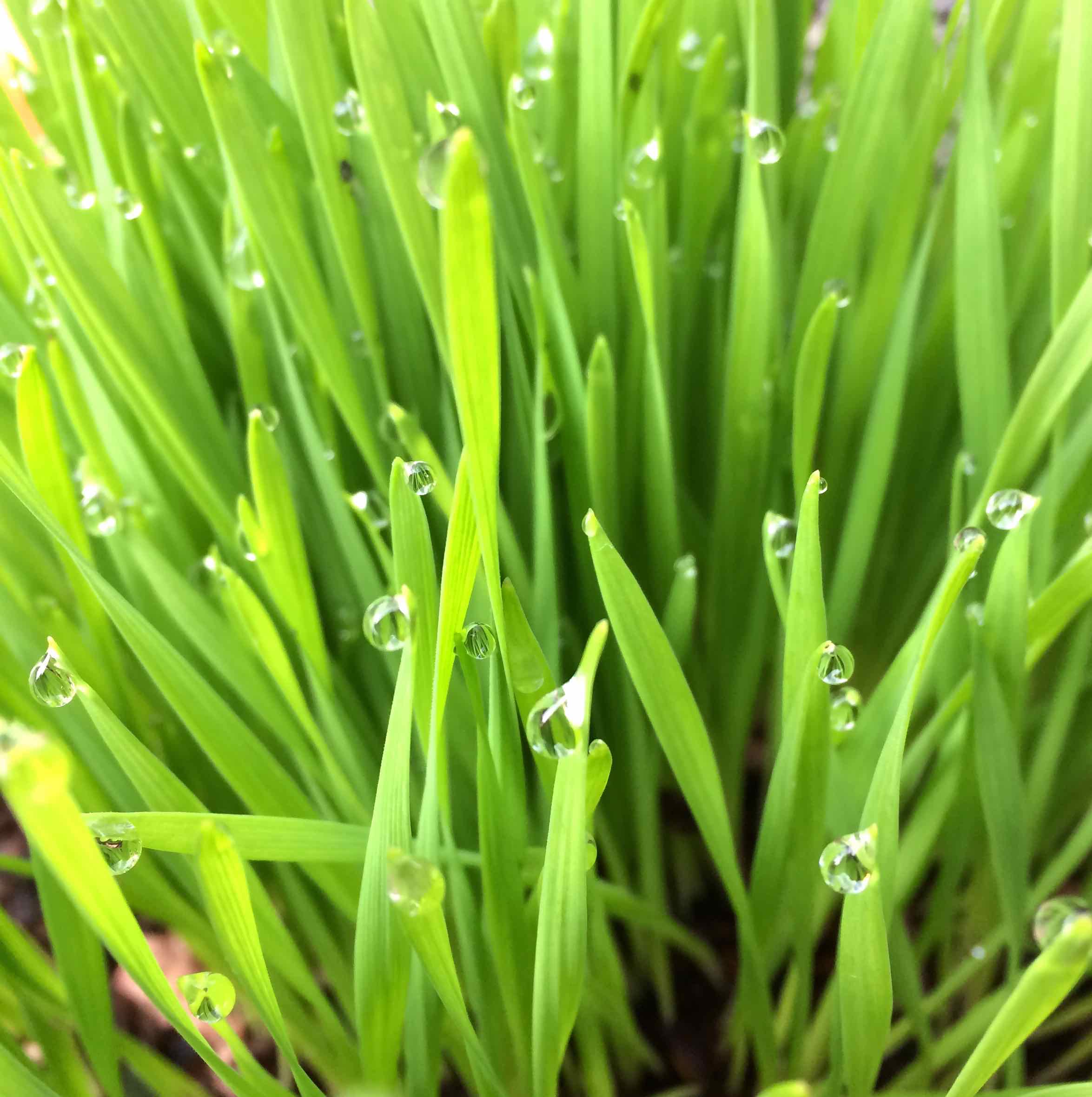
Seedlings of heirloom white Sonora wheat seed from NativeSeeds/SEARCH and BKWFarms, planted early Feb and gladly doused by mid-February rains, growing rapidly, to be harvested in May (MABurgess photo)
Now, with the goal of merging plant knowledge with many food cultures into one tasty recipe, I’d like to share a quick and easy idea to enhance a pot luck or dinner for a few: Muff’s Multi-Heritage Biscuits.

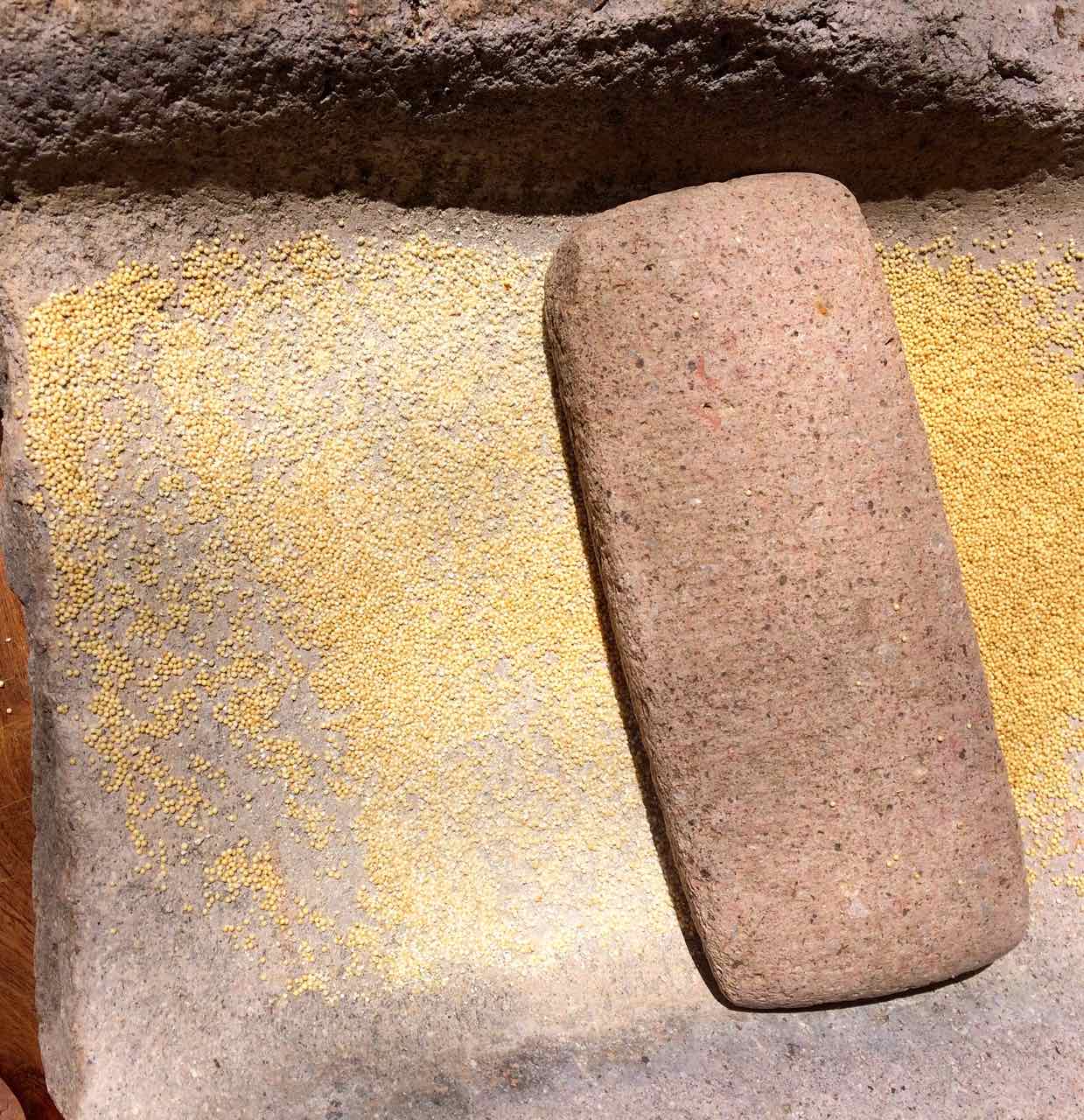
A traditional milling of amaranth with stone mano on a metate. Today, hard amaranth seed can be easily ground in a grain mill or coffee mill. Traditional Tohono O’odham gatherers ate “rain spinach” or juhuggia i:wagi (Amaranthus palmeri) when summer rains started, then harvested these ollas of small seeds from the spiny stalks later when the weeds dried. Plan to harvest your wild amaranth (aka pigweed) seed next September if monsoon rains are good. Amaranth grain is 15-18% protein and high in iron, fiber and phytonutrients! (MABurgess photo)

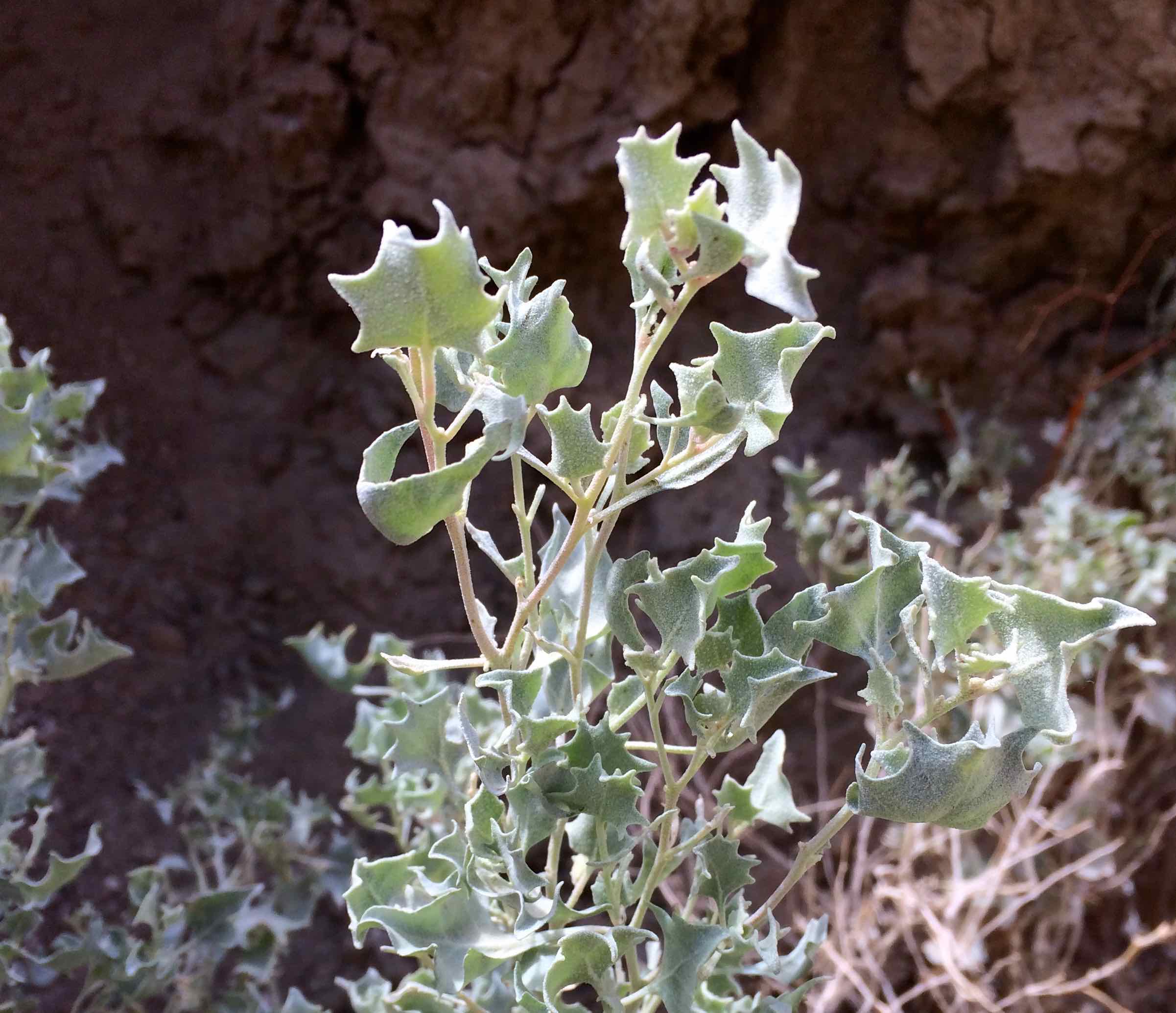
One of many species of Sonoran Desert saltbush, traditionally used by Tohono O’odham. It can be dried and pulverized as baking powder. (Atriplex hymenolytra) (MABurgess photo)
Bringing together Amaranth, Mesquite, and sea salt from Tohono O’odham traditional fare, and Hispanic White Sonora Wheat introduced by Missionary Padre Kino, in a very Anglo-style biscuit from my Southern background, here is a fast, tasty, local and nutritious complement to any meal:
Muff’s Multi-Heritage Biscuits
You will need:
1/2 cup mesquite flour [from NativeSeedsSEARCH or desert harvesters.org]
1/2 cup amaranth flour [home-milled from NativeSeedsSEARCH’s whole grain, or Bob’s Red Mill amaranth flour]
1 cup white Sonora wheat flour (or Pima Club wheat flour) [from Ramona Farms, San Xavier Coop Association, or NativeSeedsSEARCH]
2 1/2 tsp baking powder
3/4 tsp sea salt
1/3 cup butter
3/4 cup milk (or sour milk, rice milk, soy milk)

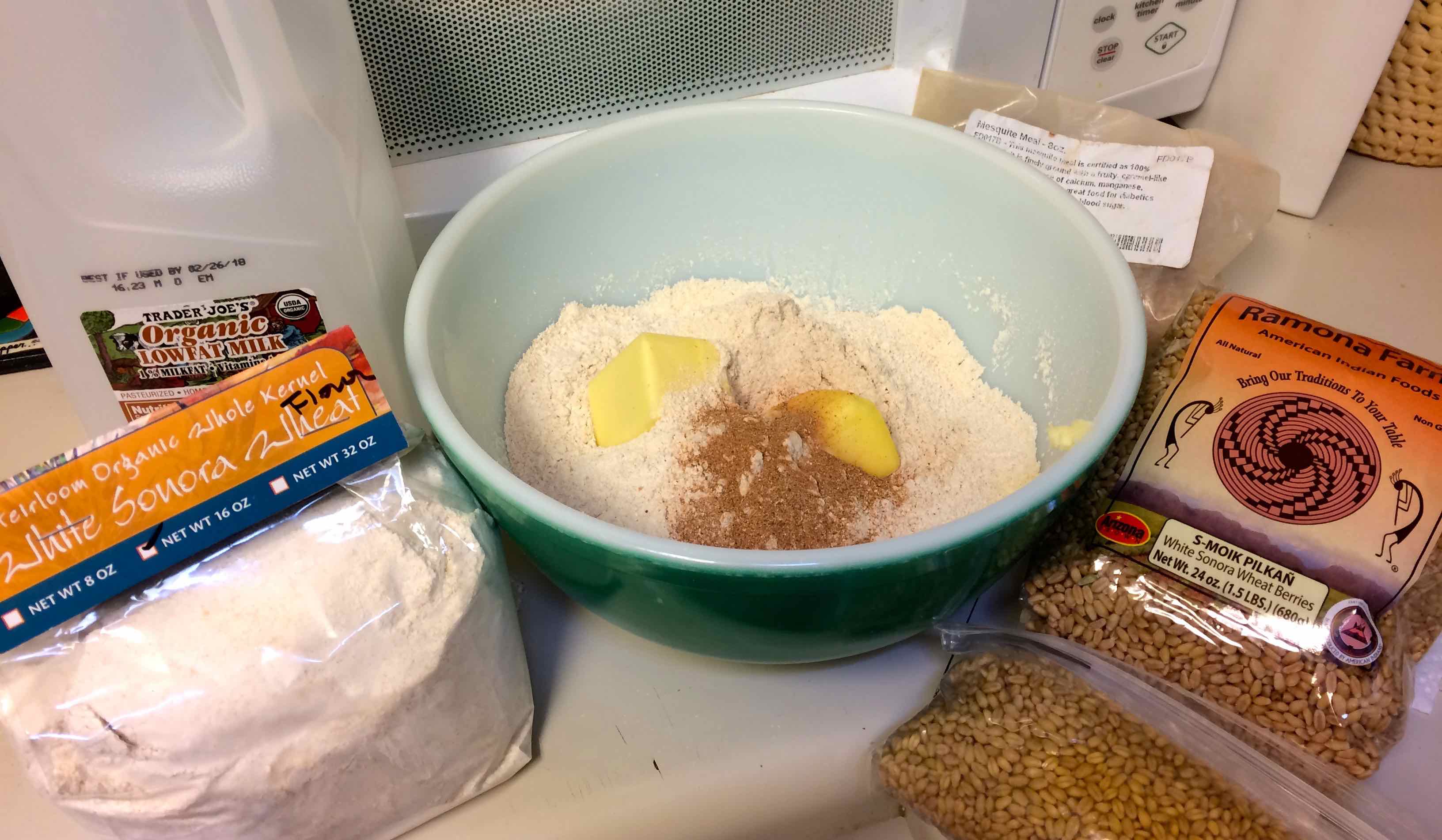
Mixing organic white Sonora wheat flour from BKWFarms, plus amaranth flour, roasted mesquite flour, and butter for Muff’s Mixed Heritage Grain Biscuits (MABurgess photo)
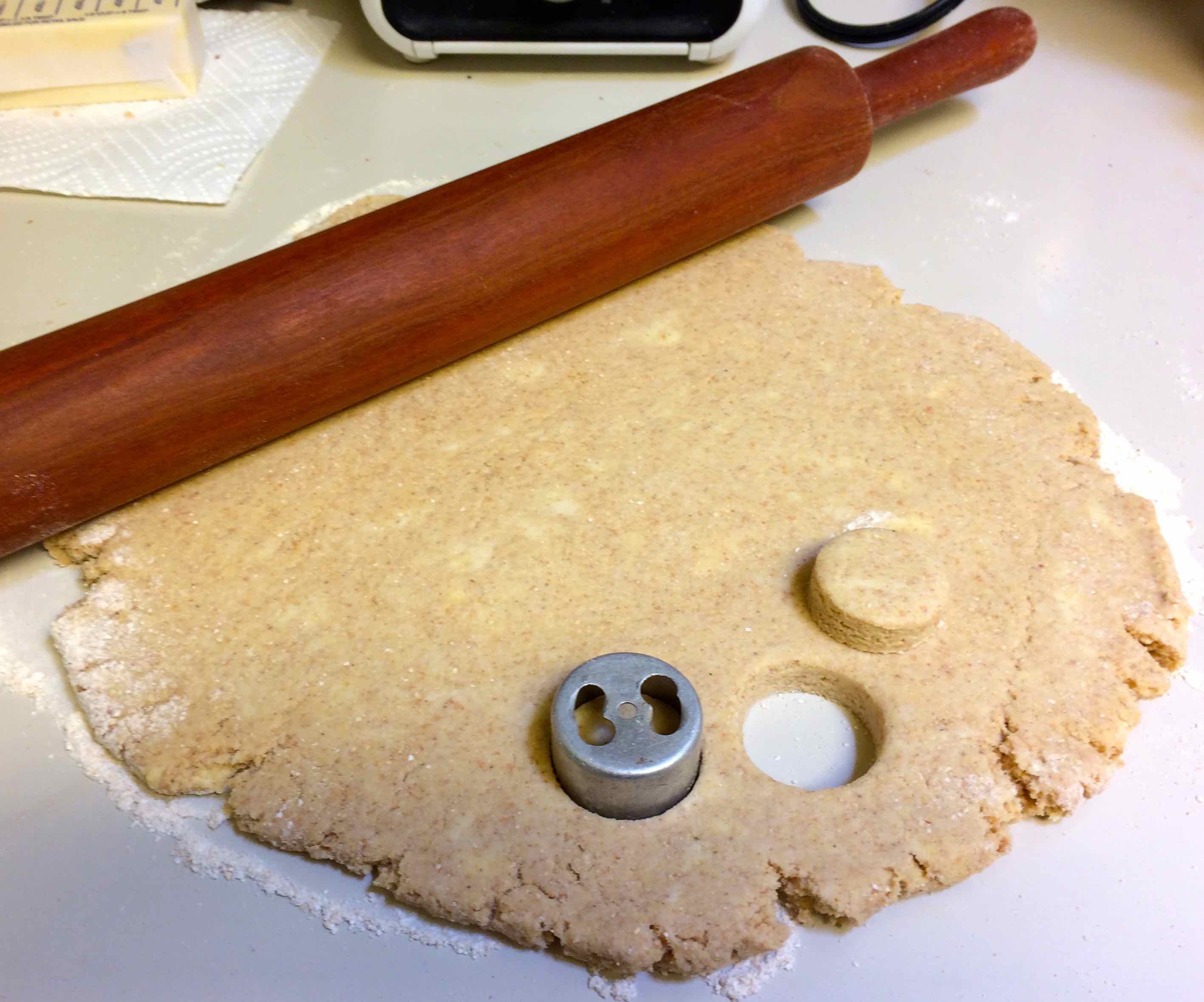
Preheat oven to 450 degreesF. [You can use a solar oven but it will not get quite that hot. Solar biscuits come out harder–reminiscent of cowboy hard-tack.]. Sift together flours, baking powder, and sea salt. Cut in the butter to small pellet size. Add milk. Stir until soft dough forms. Either drop by spoonfuls onto cookie sheet for “bachelor biscuits” OR, turn the dough ball out onto a floured board. Knead a few turns. Pat or roll lightly to about 1/2-inch thickness. Use any shape cookie cutter to form biscuits–small for bite-size, large for cowboys, initialed for kids. Bake on ungreased cookie sheet 12-15 minutes until barely golden. Serve hot, rejoicing in the diversity of heritage foods still available from local farmers or in nearby desert!

Rolling out mesquite, amaranth, white Sonora wheat biscuit dough with Mayo Indian palo chino rolling pin purchased from NativeSeedsSEARCH (MABurgess photo)

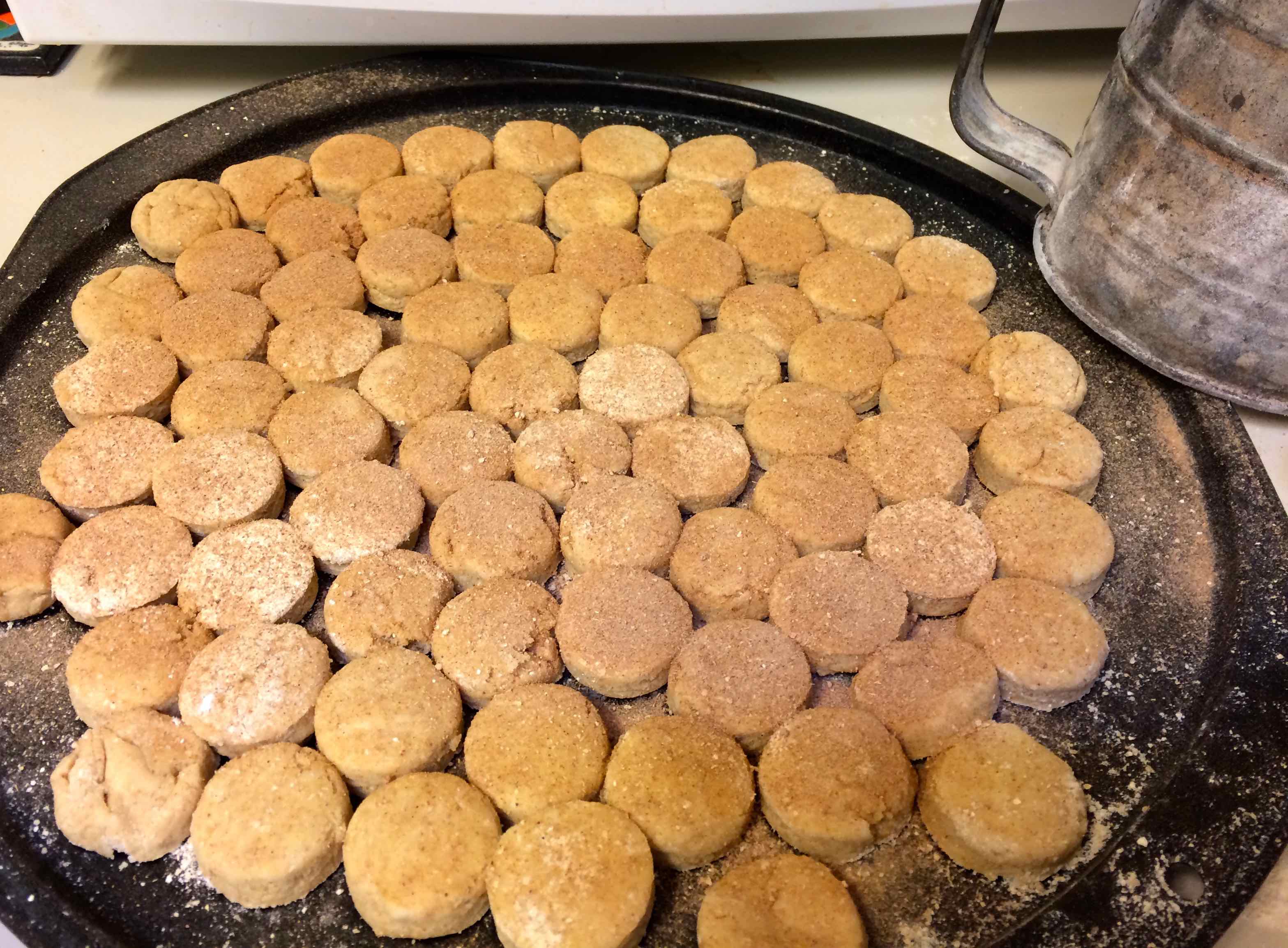
Muff’s Mixed Heritage Grain (Mesquite-Amaranth-White Sonora Wheat) Biscuits hot from the oven (MABurgess photo)

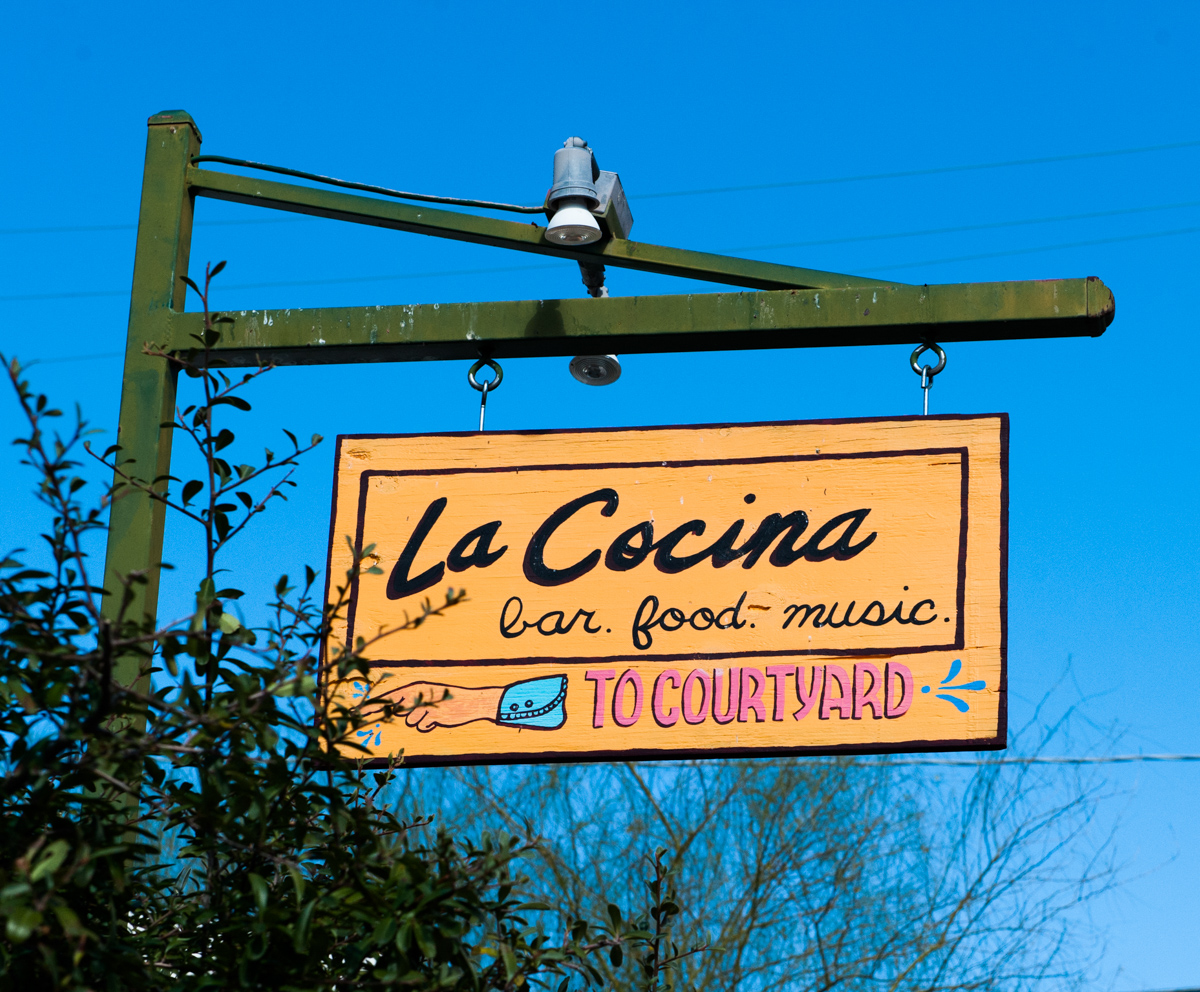
A landmark in the heart of Tucson’s Old Town, this restaurant, shops and music venue occupy the oldest existing structure in the neighborhood, across Court Street from Tucson Presidio Museum

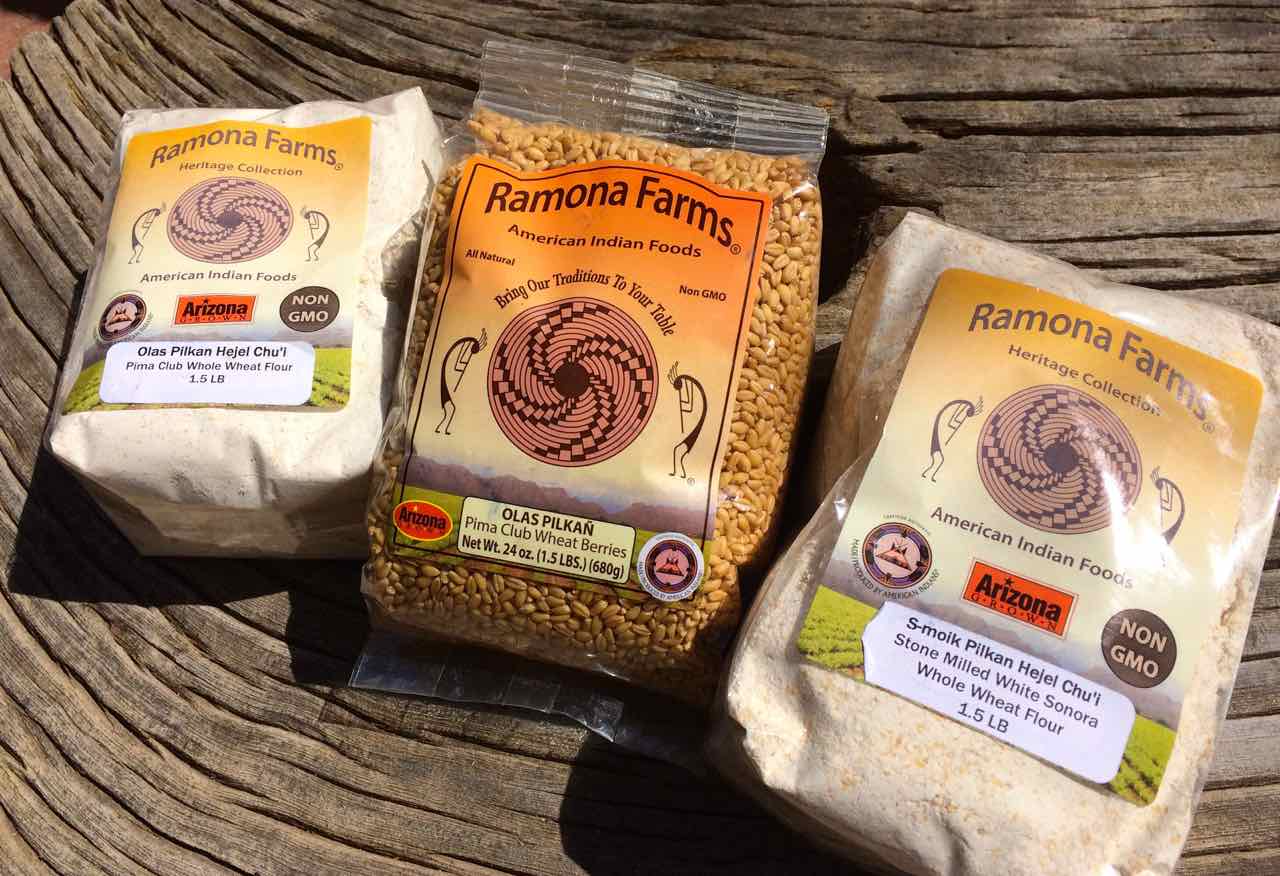
Two heirloom wheat flours introduced by Missionaries (White Sonora “S-moik Pilkan” and Pima Club “Oras Pilkan”) grown by a traditional Piman farmer at Ramona Farms; also grown at San Xavier Coop Association and organically at BKWFarms Inc in Marana (available at NativeSeeds/SEARCH store) (MABurgess photo)
You can find many traditional desert foods and artworks depicting these botanical and culinary treasures at http://www.flordemayoarts.com. Flor de Mayo native heritage foods can be purchased at ArtHouse.Centro in Old Town Artisans at LaCocina Courtyard, NativeSeeds/SEARCH store and online catalog http://www.nativeseeds.org, at Tumacacori National Historic Site, Tucson Presidio Museum Shop, Saguaro National Park Bookstore, and Tohono Chul Park Museum Shop. Join us at Mission Garden (http://www.tucsonsbirthplace.org) Saturday, March 31, 2018 for a public tour by Herbalist Donna Chesner and ethnobotanist Martha Ames Burgess about Desert Foods as Medicine.
Hoping to see you in Old Town for a gastronomic tour this spring! Plan now for some of that immersion experience in local culinary bliss….
It’s Carolyn today bringing you a simple recipe to help you shine in a social situation. We’ve all had the experience of politely asking what you can bring when invited to a dinner party. “How about an appetizer?” the hostess (or host) suggests. Oh oh, now what? We know the perfect appetizer should be both delicious and amusing. Chips and dip? Way too trite. A vegetable tray? Healthy, but nobody eats them.
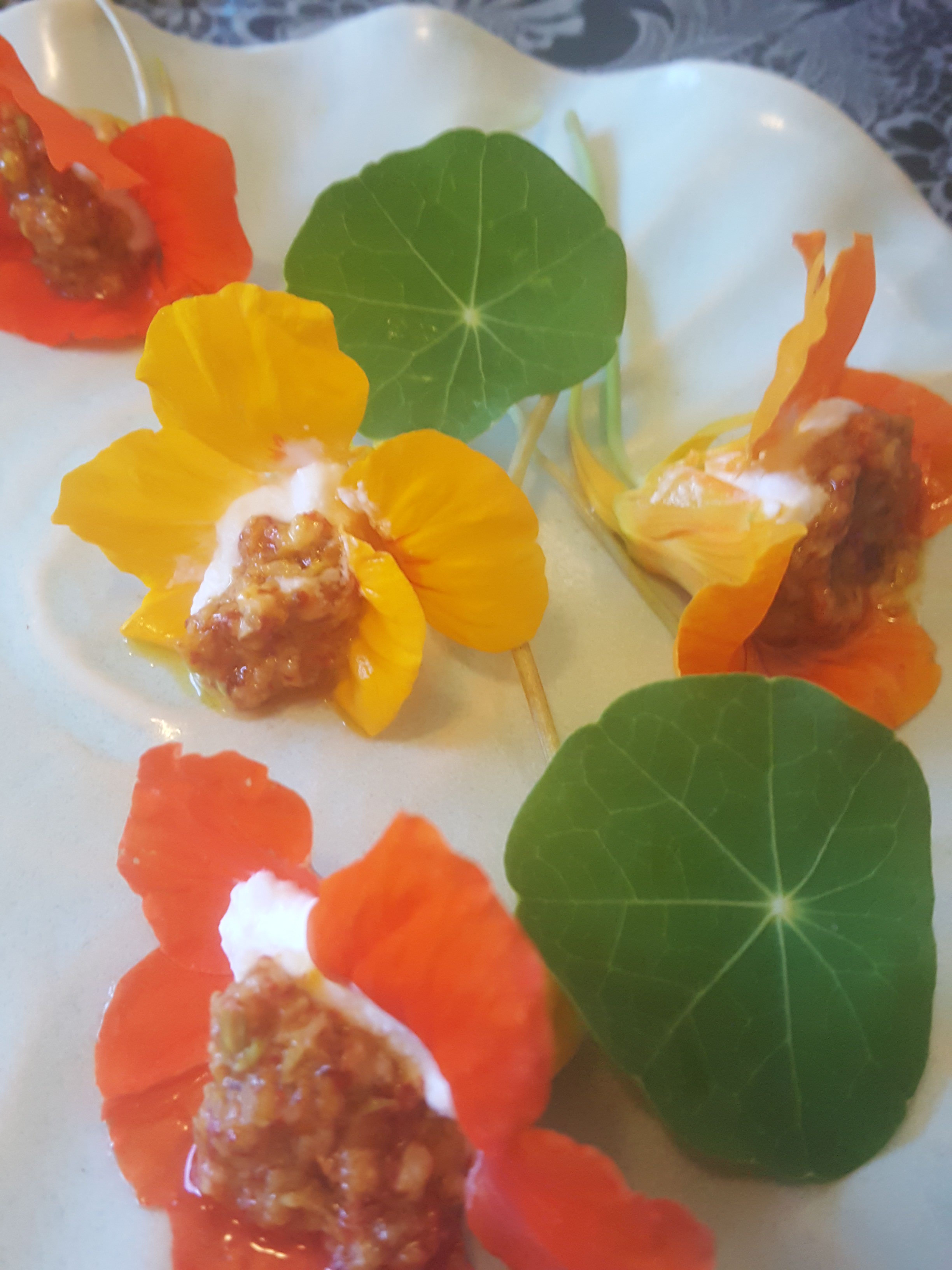
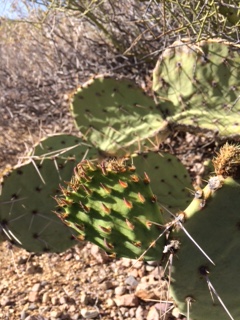
These Wild Seed Cheese Appetizers are the perfect solution. They are a good conversation starter and you can star as a savvy wild-food expert. The appetizers come together very quickly if you already have a stash of seeds; not too bad even if you have to hunt up some barrel cactus fruit. Barrel cactus are one of the easiest wild foods to gather: they are usually about knee-level, the plants have vicious thorns but the fruit is free of spines, and as Savor Sister Jacqueline told us in an earlier Savor post, they can bloom up to three times a year, making ample fruit available. If you happen to have some saguaro seeds, they will work as well. And like all seeds, they bring great nutrition. After all, in that tiny package they contain all the nutrition necessary for starting another whole plant.
This is what you are looking for is a cactus that looks like the one in the top photo. No need to use tongs to gather. When you get home, first wash the fruit and cut each in half and this is what you’ll see:
You can dry the seeds in the fruit or scoop them out and spread them on a cookie sheet. If you are trying to rush the process, toast them for a few minutes in a dry frying pan. When dry, the seeds will have a little white material. Shake the seeds in a bowl and the white matter will rise to the top and you can blow it off. If you are including the seeds in something like cake or muffins, just ignore the white and it will disappear into the batter.
The appetizer recipe is basically a cheese-butter-flour mixture most easily made in a food processor. If you don’t have a food processor, you can combine the ingredients with a heavy spoon and some elbow grease. Chile powder adds a delicious zip to the cheese balls. I used chipotle powder, but you can use chiltepine or another flavoring of your choice.
Now here’s a use for that melon-baller that’s been bouncing around in your drawer unused for years. Using it to scoop up the dough made perfect sized appetizers.

Scoop out small balls of cheese dough with a melon-baller. I you don’t have one, use a spoon and roll dough into balls.
Put about a half cup of seeds in a small dish and press each ball of cheese dough into the seeds. Then line them up on a cookie sheet to bake.
And the finished appetizers, ready to serve.
There is a necessary warning before I go further. These little devils are so delicious you will be tempted to just take a bottle of wine to the party and keep these at home, all for yourself. Rich, spicy. So yum. Here’s the recipe:
½ pound shredded cheddar cheese
½ pound (2 sticks) soft butter
2 ½ cups flour (can use part whole wheat or non-wheat flour)
1 teaspoon salt
½ to 1 teaspoon chipotle powder or cayenne
¼ cup barrel cactus or saguaro seeds
Preheat oven to 350 degrees F. Mix all ingredients except the seeds. This is most easily done in a food processor, but can also be done with a heavy spoon and some elbow grease. Roll small balls using a melon-baller if you have one. Put seeds in a shallow bowl. Press each cheese ball into the seeds deeply enough so that they adhere. Bake on ungreased cookie sheets at 350 degrees F. for 13-15 minutes. Makes 4 dozen.
____________________________________
Carolyn Niethammer writes cookbooks showcasing the use of edible wild plants of the arid Southwest. They include The Prickly Pear Cookbook, Cooking the Wild Southwest, and American Indian Cooking, Recipes from the Southwest. You can buy them through Native Seeds/SEARCH, Amazon, or ask your independent bookstore to order them for you.
Happy March everyone! Savor Sister Linda with you today in the Old Pueblo writing to you under a gorgeous full moon!

Mandala Magic Meal
I woke up yesterday thinking about mandalas. Don’t ask me why; these things have a way of arising unbidden. As I was preparing breakfast, I thought it might be fun to “peer into” the mandala shapes available to us food wise. We could talk about mandalas for centuries, and people have done so for just that long, but for our purposes here, lets just give ourselves permission to simply inspired by The Gist of the Thing.
I find I reconnect with more primal parts of myself when I am in nature. Food is (or was, until we started messing with it) from nature for most of our evolution. It amazes me that we humans feel so disconnected from the natural world – and as basic a thing as our food sources – when it is from nature that we come.
Now that the light is returning to this part of the world, the hens and turkeys are laying eggs again. Do you know the feeling of cold hands with their stiff, uncoordinated fingers? In the late winter/early spring, when the mornings are still very cold, I reach cold-stiff hands underneath warm lay hens. Fingers wrap around almost hot eggs, and the effect thaws more than my hands. This simple act reconnects “modern me” with a deeper, more instinctual self .
Whether we grow harvest, forage, or prepare our own food, we can reconnect us with seemingly lost parts of ourselves. Which is of course, what a mandalas are reported to do; reconnect us with parts in need of kinship.
My favorite egg-boiling method:
Place eggs (a few days old; fresh eggs are harder to peel) in an uncovered pot. Bring the water to a roiling boil, and let it boil for about three minutes. Place a lid on the top of the pot, and turn off the heat. I wait about 10 minutes for the heated water to finish boiling the eggs. I find the texture and flavor richer and more pleasant, (than the “roiling and boiling” method for ten minutes where eggs feel too hard and the flavor duller than it needs to be)

These eggs have just beed removed fro the hot water and are now in a cold water bath to make peeling them easier.

Arrange your eggs however you would like and fill them with flavors that speak to you. You really don’t need a vintage dish like this – the eggs themselves are tiny mandalas.

Being a Wild Chile Addict, I crush one chiltepin over each egg.
Mandalas are all around us – just peer into the center of a flower. Or cut open an apple (see top photo). Or grapefruit. Or Tomato. Or …..
A wee bit more about Mandalas from Carl Jung himself:
In 1938, I had the opportunity, in the monastery of Bhutia Busty, near Darjeeling, of talking with a Lamaic rimpoche, Lingdam Gomchen by name, about the khilkor or mandala. He explained it as a dmigs-pa (pronounced ”migpa”), a mental image which can be built up only by a fully instructed lama through the power of imagination. He said that no mandala is like any other, they are all individually different. Also, he said, the mandalas to be found in monasteries and temples were of no particular significance because they were external representations only. The true mandala is always an inner image, which is gradually built up through (active) imagination,(C.G.Jung – Psychology and Alchemy, Princeton University Press, 1993, paragraph 123.)
It is not without importance for us to appreciate the high value set upon the mandala, for it accords very well with the paramount significance of individual mandala symbols which are characterized by the same qualities of a – so to speak – “metaphysical” nature. Unless everything deceives us, they signify nothing less than a specific centre of the personality not to be identified with the ego. ( Psychology and Alchemy, Paragraph 126.)
Hello, Amy here on a cool, rainy day in Tucson! For an upcoming potluck, my classmates have requested I bring a dish with “my spices”. For this group, it needs to be vegetarian, so I’m making my friend Barb’s black bean, sweet potato dish. She says it’s her mix of a couple recipes, a stew and a chili. It is always a hit and I know it will wait patiently in a slow cooker from morning until lunch break.

I started with a collection of veggies from my Tucson CSA share and a tin of Mano Y Metate Mole Negro.
In the fall Crooked Sky Farms sent us dry beans, and roasted chiles that I squirreled away in the freezer. Recently the shares have included Beauregard sweet potatoes, yellow onion, cilantro, I’itoi onion, and bountiful celery! Normally I love celery leaves, but I used very few today because these were so strong. I’ll dry them to use as a seasoning.
Once defrosted, I peeled, stemmed and seeded the chiles, saving all the juice.
I started by cooking the onion in oil. Then went in a clove of garlic and the celery, sweet potato, and chile. After all was soft and starting to brown, I added a tin of Mole Negro.

When all was smelling delicious, I added a can of tomatoes and some water.

Previously, I had sorted and soaked a pound of beans. I cooked them in a slow cooker until tender.
Then into the veggies with the cooked beans and all their broth. Simmer for a bit, salt to taste, and done! Garnish with cilantro and I’itois.