Heirloom Beans for Holiday Feasts!

Colorful Christmas lima, also known as Chestnut lima, will keep some of its purple color and its shape in cooking.  Photo by Muffin Burgess

Colorful Christmas lima, also known as chestnut lima, will keep some of its purple color and its shape in cooking. Photo by Muffin Burgess

Among beans, Christmas Lima is a giant not only in size but in flavor!  This heirloom Phaseolus lunatus is dramatic mottled purple and white, and lends itself to many colorful dishes.  Try a holiday tip from the Heirloom Bean Queen “Tia Pan Dulce”—sure to please vegetarian and omnivore alike:  Curried Christmas Limas!

The evening before cooking, sort and wash ½ lb of dry Christmas Limas.  Presoak overnight in plenty of water (at least a qt) as they will swell.  Next day give remaining water to your compost and add a qt of fresh drinking water.  Simmer limas without salt until they test tender (1 ½-2hrs stove top; 2-3hrs solar oven; 3-5 hrs crock pot).  Some people prefer them al dente.  I like them soft and done through but not mushy.  Reserve the bean liquid.

Saute ½ cup chopped onion, ½ cup chopped celery, ½ cup thin-sliced winter squash, and ½ cup chopped sweet pepper in olive oil and stir in 2 tsp curry powder.  (My favorite curry powder is from Santa Cruz Chile and Spice Co, available at most southern Arizona groceries.  If you are ever in the Tubac area give yourself an olfactory adventure by visiting the SC Spice Co outlet just south of Tumacacori Mission Nat Hist Park.)

Add cooked limas to the veggie curry stir-fry adding either veggie stock or the reserved bean liquid as needed.  Simmer on low heat until flavors are blended (about 1/2 hr) and salt to taste.  Serve with brown rice or polenta for a complete protein complement.

(Here’s another idea to try with cooked Christmas limas:  If they keep their shape as individual beans when done, you can serve them as veggie hors d’oeuvres with toothpicks dipped in your favorite sauce.  Try BBQ or Asian or chilpotle sauce.  They are better than meatballs and much healthier!)

If you want to GROW Christmas limas for yourself, save a few seed out of the bag you find at Sunday’s Heirloom farmers’ market or at the Native Seeds/SEARCH store (3061 N Campbell, Tucson).  Plant them in April where they can vine their way up a trellis in dappled light or into a low-growing tree.  They are long-season, so plan on tending them thru heat of May and June until the monsoons give them a boost.  You will be climbing the tree or trellis to harvest big pods in the fall, ready for homegrown holiday cookery next year.

Bright and beautiful Four Corners Gold beans are used in the traditional winter ceremony by the Zuni.  These beans are truly light-returning and life-renewing.  photo by Muffin Burgess

Bright and beautiful Four Corners Gold beans are truly light-returning and life-renewing.  photo by Muffin Burgess

An important heirloom for the season– used by Native cultures of the Southwest since time-immemorial to celebrate the Winter Solstice—is the festive yellow and white Four Corners Gold Bean (aka Zuni Gold).  It will lend itself to any hearty dish you may want to have simmering in a crock pot ready to drive off any chill from ski-ing, hiking, cycling, or dog-walking thru these short wintry days.  Try them in a bean soup with an oxtail from Jojoba Beef at the farmers’ market; or as chile beans with Native Seeds/SEARCH’s amazing chilpotle chile powder; or as a dip mashed with a Tarahumara bean masher, dashes of Red Devil tabasco sauce and 1 tsp of cumin powder.

"Moon Beans" spiced with Pipian Rojo Mole from Mano y Metate makes an exceptionally festive vegetarian dish!  photo by Muffin Burgess

“Moon Beans” spiced with Pipian Rojo Mole from Mano y Metate makes an exceptionally festive vegetarian dish! photo by Muffin Burgess

My grandmother always served us black-eyed peas for New Year’s telling us grandkids that the number of them we ate was the number of dollars we would make in the new year.  In her tradition of black-eyed peas, as New Year’s approaches, I like to fix a Southwestern version of black-eyes:  Moon Beans!   For a festive flavor try moon beans with pipian rojo mole as a centerpiece dish, adding the prepared mole powder from Mano y Metate in the last half hour of bean cooking.

Solar-cooked Moon Beans can be downright celestial.  If December 30 or 31 is going to be sunny, and if you know you will be “hanging out” available for re-orienting your solar oven every ½ hour or hour, soak your Moon Beans the night before, change the water next day, and in a saucepan with plenty of drinking water add a ham hock and/or chopped onions and veggies to your Moon Beans.  A few hours of solar cookery will provide a New Year’s home-made feast worth a million dollars.

Happy Holiday-time with Heirloom Beans– and Bon appetit from Martha Burgess!  http://www.flordemayoarts.com

Winter Veggie Gardeners’ Alert!

Hi, I’m “Tia Marta” (Martha Ames Burgess) and I am honored to be welcoming you from my green patch of garden in the desert with some ideas for your own planting!

Amazing–our Sonoran Desert has THREE totally different seasons for growing delicious foods.  Here comes “winter”– time to try these cool-adapted tantalizers:

Protein-packed Pulses

Peas–Peas to all who come here!–fresh peas, sweet Oriental peapods, dry peas for soup, flowering sweetpea…..winter is time to enjoy peas in the low desert.    I recommend these heirloom Tohono O’odham peas from Native Seeds/SEARCH (NSS store 3061 N.Campbell Ave, Tucson) www.nativeseeds.org, or Pima peas from San Xavier Coop Association (520-295-3774).

Keep the faith--soon your Tohono O'odham green peas and I'itoi's onions will be emerging!

Keep the faith–soon your Tohono O’odham green peas and I’itoi’s onions will be emerging!

Lentils—if you have a space protected from little herbivores and heavy freezes try any kind of lentil.

Fava beans aka “habas”—these large meaty beans lend themselves to marinated dishes or roasted for crunchy snacks.  Plant in dappled sun protected from wind as they can grow tall with care.  Available from Flor de Mayo booth at Sunday St Phillips farmers market and at NSS.

Here's an idea for watering your garden rows with either ditches or leaky hose

Here’s an idea for watering your garden rows with either ditches or leaky hose

Luscious leafy greens:

Spinach, kale, kolrabi, chard, fennel, Brussels sprouts—seed racks are full at every hardware.  A good place for organic seed is NativeSeeds/SEARCH.  Sunday’s farmers market also has starts and seeds.

Tarahumara mostaza roja—prolific, tastes great steamed, stir-fried or in salad.  Find it online at www.nativeseeds.org.

Tarahumara mostaza roja will give you fresh delicious greens and flowers late winter into spring!  (photo by Rod Mondt)

Tarahumara mostaza roja will give you fresh delicious greens and flowers late winter into spring! (photo by Rod Mondt)

Lamb’s quarters—aka “chuales” and “orach,” these spinach relatives can grow in a low-desert garden or harvested wild, providing cool season greens.  Find purple orach seed at Mission Garden, Friends of Tucson’s Birthplace (FOTB) www.tucsonsbirthplace.org, and NSS.

Sensational Spices/Healing Herbs:

Cilantro (coriander)—for salsa & salad–produces all season until spring hits, then save coriander seed!    (available from FOTB or NSS)

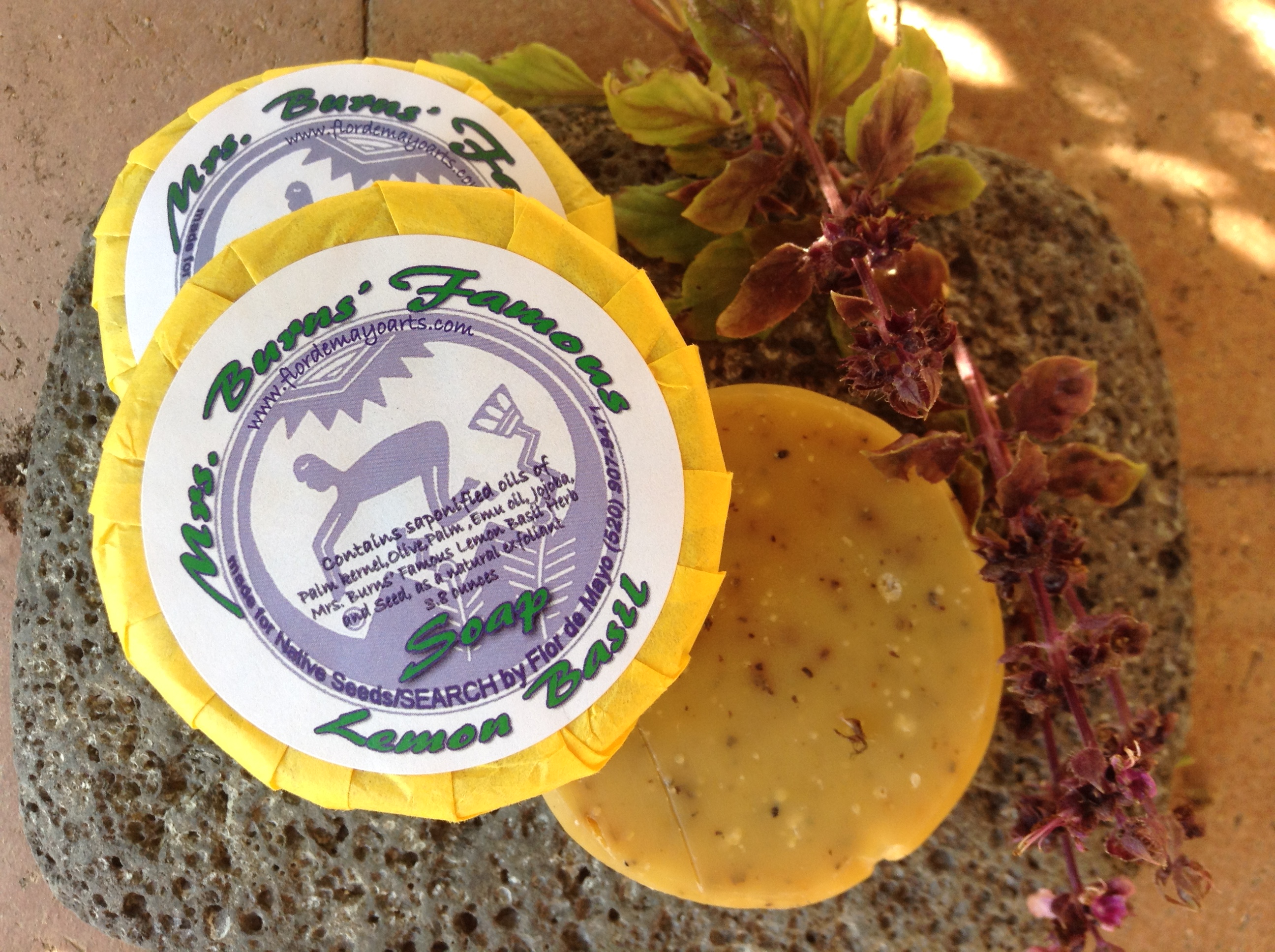
Mrs Burns’ famous lemon basil—versatile!   This fragrant basil leaf makes great tea, salad garni, lemon chicken, amazing pesto, honey.  When weather gets hot, basil blooms–bees will thank you with a precious gift to beekeepers.  (NSS and Johnny’s Seeds)

Look what I made with Mrs. Burns' Lemon Basil--a luscious scented herbal soap! (photo by Jan Willkom)

Look what I made with Mrs. Burns’ Lemon Basil–a luscious scented herbal soap! (photo by Jan Willkom)

Swain heirloom dill—butterflies will appreciate the flower umbels rising in your garden.  Save seed  and “dill weed” foliage for pickling and dressing–a good producer from NSS.

Raging Root Crops:

White, red, purple potatoes—Here’s a trick an old gardener taught me:  before cooking, take thick peelings from your favorite grocery potatoes and plant them.  Each peeling will have an “eye.”  No need to use huge potato chunks!  Keep mounding soil around your potato plants as they grow.

Onion sets—give yourself a headstart—plant “sets” are available in almost any nursery or home-store.  Intercrop them to deter unwanted pests.

I’itoi’s onion—the best for low desert, a small shallot also great for chives.  Find ready-to-plant bulblets at NSS.

a savory harvest of I'itoi's onions--a delicious shallot

A plentiful harvest of I’itoi’s onions at Mission Garden–a delicious shallot (photo by Bill O’Malley)

Here’s wishing you joy in your winter garden and great tastes at your table!  By late winter you will be reaping nutrition and flavor from your labors.

Be sure to check out the new issue Vol 3 of Edible Baja Arizona for more winter gardening ideas  (see pp 115-118).

I invite you to find native foods–and native foods in art– at my Flor de Mayo booth at Sunday St. Phillips Heirloom Farmer’s Market and on my website www.flordemayoarts.com

Pear and Mesquite: A Perfect Combo

Mesquite Ginger Pear Tart Ready for the oven.

Mesquite Ginger Pear Tart Ready for the oven.

Hello everyone.  This is Carolyn Niethammer and this is my week for the Savor the Southwest blog.

With mesquite millings happening all over Arizona, it’s time to plan for what you’ll make with your delicious mesquite meal.  Pancakes are fine for mornings at home, but when you are headed for a holiday potluck, something a little special is required to show how attuned you are to our desert foods. This Mesquite Ginger Pear Tart fills the bill.  I adapted the recipe from an old Joy of Cooking recipe for an apple cake. This is better! Ginger, a warm spice, always goes so well with mesquite.

I give you the recipe at the bottom, but here are the steps.  Works best if you have a springform pan so you can remove the sides of the pan from the finished cake without disturbing the topping. However if all you have is a regular cake pan, just carefully tip it over onto a plate, then flip it back.  You may have to reposition a few nuts, but it will taste great.

First make the batter.  Use your fingers to push it to the edges of the pan.

Spread the cake batter with your fingers.

Spread the cake batter with your fingers.

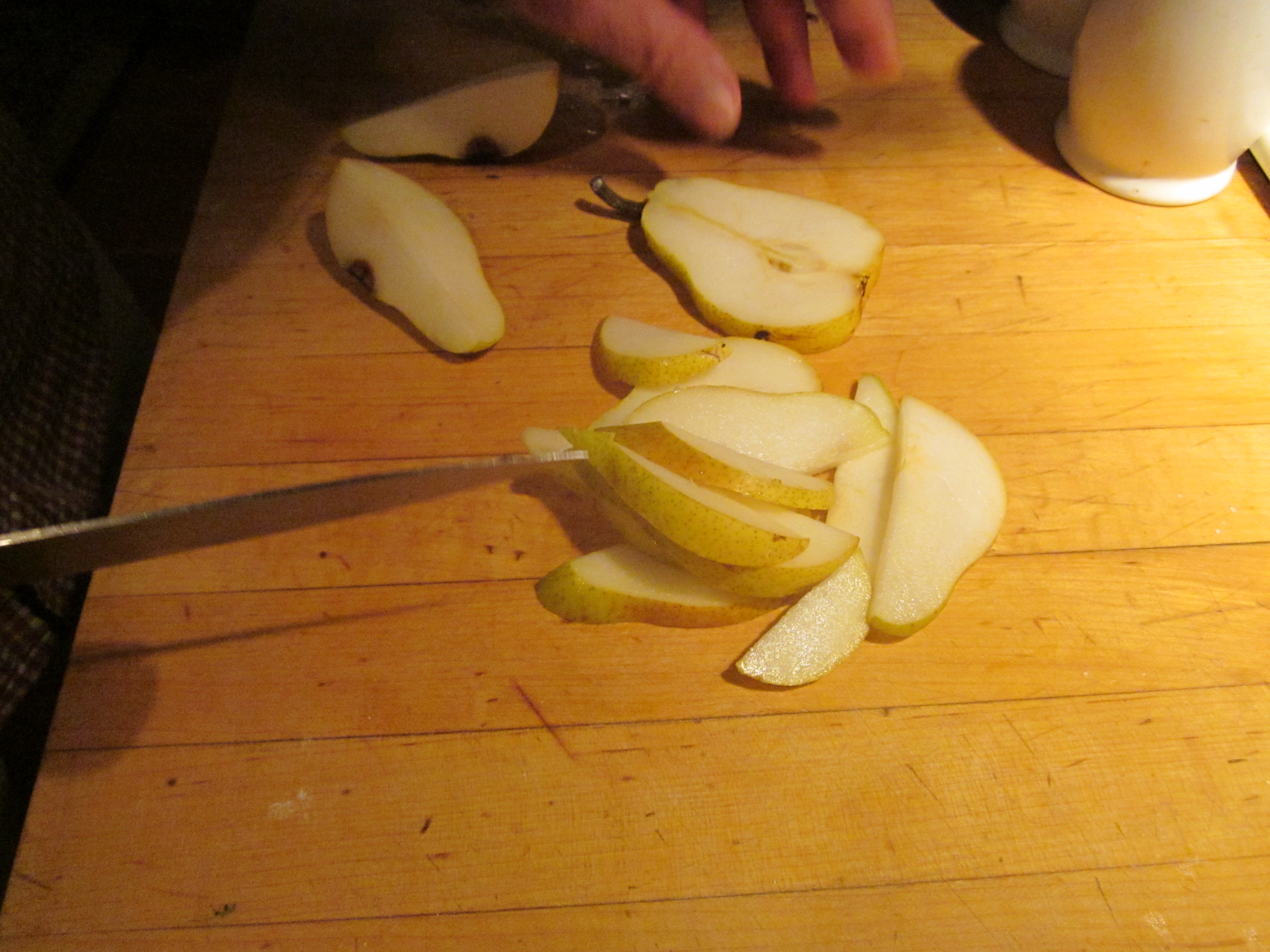
Cut a perfectly ripe pear into quarters, then into nice even slices.

IMG_0938

Arrange the pear slices on top of the batter.

Make a pretty pinwheel pattern with the pear slices.

Make a pretty pinwheel pattern with the pear slices.

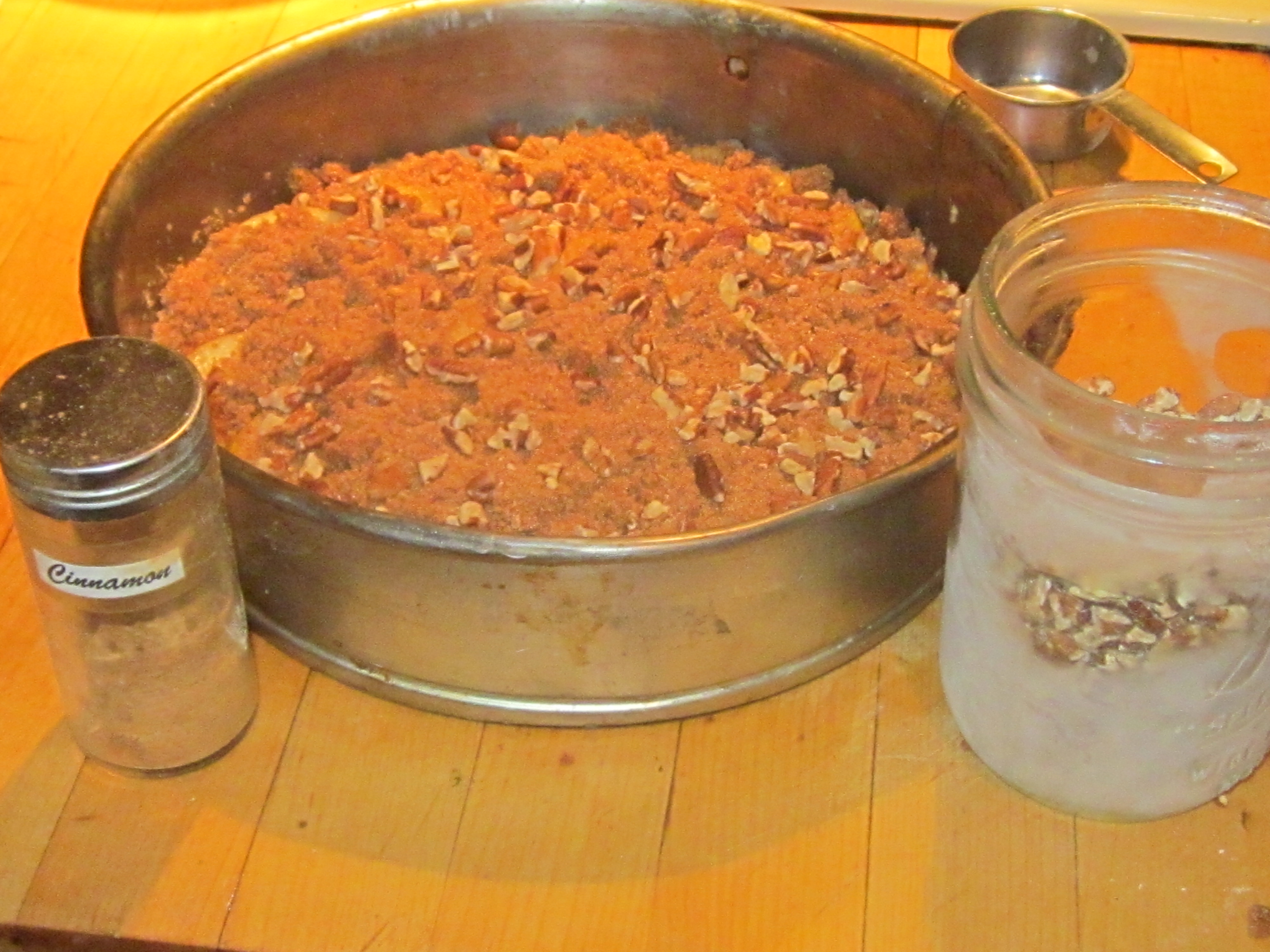
Mix the topping and sprinkle over the pear slices.

Crumbly topping will add sweetness and crunch to your cake.

Crumbly topping will add sweetness and crunch to your cake.

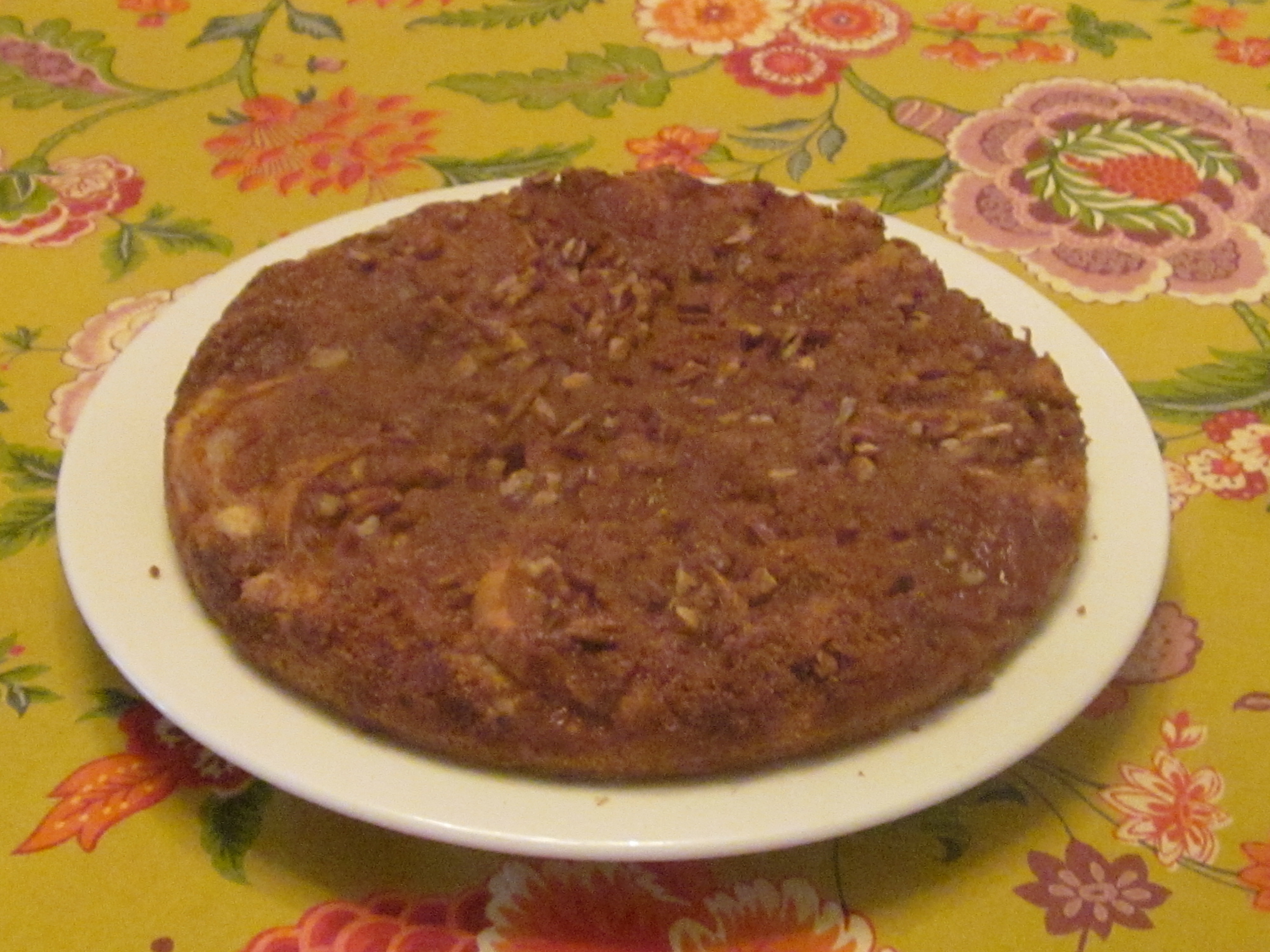
After baking, cool and remove from the springform pan.

Fragrant Mesquite Ginger Pear Cake.

Fragrant Mesquite Ginger Pear Cake.

Now that you know the method, here’s the recipe:

Mesquite-Ginger Pear Cake

1 cup flour

¼ cup mesquite meal

3/4 teaspoon ground ginger

¼ teaspoon salt

2 tablespoons sugar

3 tablespoons butter

1 egg

½ teaspoon vanilla

¼ cup milk

2 large pears, sliced

Topping:

½ cup sugar

¼ cup mesquite meal

3 tablespoons melted butter

¼ cup chopped pecans or walnuts

Prepare a 8- or 9-inch springform pan by lining with a buttered piece of paper cut to fit the pan. Preheat oven to 425 degrees F.

In a medium bowl, combine flour, mesquite meal, salt and sugar.  Fluff with a fork until well combined. Add the butter and rub with your fingers or cut with a pastry blender until butter is worked in.

In a glass measuring cup, put the ¼ cup milk and then beat in the egg and vanilla. Stir into the dry ingredients to make a stiff batter.  Press into the prepared pan with spatula or your dampened fingers. Arranged sliced pears in a circular pattern on top of batter.

In a small bowl, mix the ½ cup sugar, mesquite meal, and melted butter.  Sprinkle evenly over cake and pears. Top with chopped nuts. Bake in preheated oven for about 25 minutes. Remove sides of pan and cool. Serve with a dollop of whipped cream.

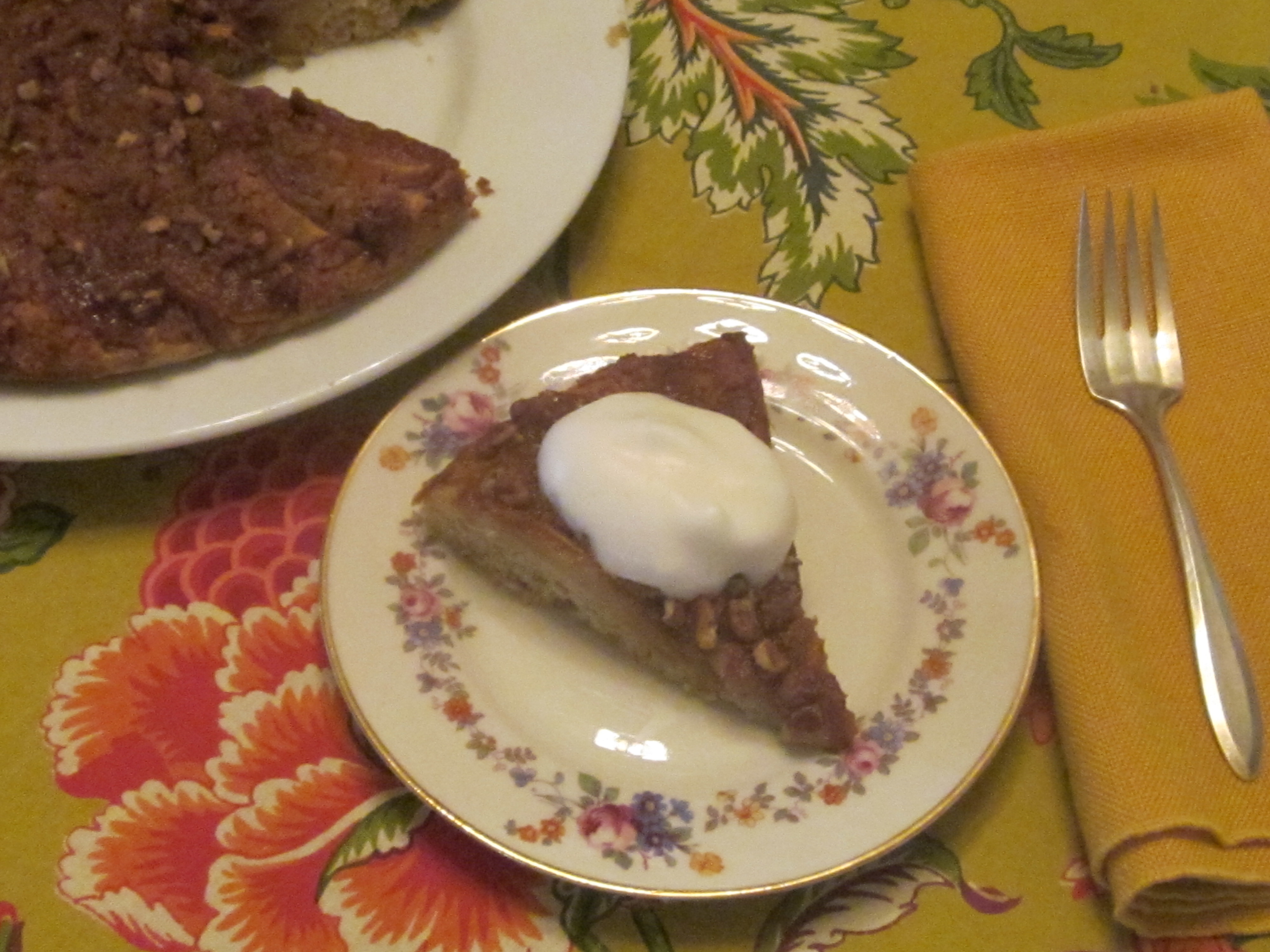
Delicious slice of Mesquite Ginger Pear Tart.

Delicious slice of Mesquite Ginger Pear Tart.

********************

Looking for more ideas to use your mesquite meal? Check out Cooking the Wild Southwest: Delicious Recipes for Desert Plants.  It includes recipes for 23 easily identified and gathered plants that grow all over the Southwest.

Welcome to Savor the Southwest ! Savoring Honeycomb

Blog Post # 1

This is Tia Linda, one of several “food friends” who will be collaborating on this blog, and the lucky soul who gets to welcome you to Savor the Southwest, a blog Savoring the wild plants, herbs, and animals that grow here in the Southwest.  The focus for my part of the blog is to converse with you about the animals and insects that we live among.  You might already be raising animals, or may flirting with the idea.  Some of my posts may be “notes from the hive”. Some will come from the corrals;  some from the coops. And all will have an offering of some relevant food or recipe.

This week we greet Halloween,  Dia de los Muertos, and less well known, from the Celts Countries, Samhain.   Samhain  means the “End of Summer” and is considered the years third and final harvest. It is generally celebrated on October 31st, but some traditions prefer November 1st.  Originally a “Feast of the Dead” it was celebrated by leaving food offerings on altars and lighting candles. Extra chairs were set out as an invite to the spirits of loved ones to come home while the veil between worlds thinned.   Symbols at Samhain included apples, Jack-o-lanterns, and gourds, among others.

Image

“Apis Mellifera Becomes Apis Calavera”  (a quilt by me).  On display at Raices Taller 222 Art Gallery here in Tucson; proceeds will be split equally between Raices (to support one of our best local art venues) and Xerces Society (for quality bee research and protection)

Dia de los Muertos, whose roots are traced back to an Aztec Festival, is celebrated throughout modern Mexico as well as the Southwest.  Favorite foods and beverages of departed loved ones are placed at private alters or gravesides. In the spirit of both Dia de los Muertos and Samhain (and Asian and Afirican cultures have similar rituals)  my offering this year extends beyond the human family to the insect world. Because of my love of bees, and because they are so crucial to our food supply, I am Remembering the vast number of honeybees colonies that have died in the past few years of Colony Collapse Disorder. By setting out honeycomb at my beehive alter, I am both welcoming them home and acknowledging their place – very significant place – in the interconnectedness of all things.

Image                                             So the first food offering to you from this blog is:  Honeycomb.  I offer it both as a food of interest,  as well as to the departed bees that may visit my alter. If you have never eaten honey straight from the honeycomb,  you have a real treat in store.  It is the purest form of honey that we can eat. It is not processed by human hands at all. In fact, the last “hands” to touch it were those of the worker bees, as they placed the wax capping over hexagonal cells holding the honey.

What do you do with the wax? You can swallow it;it will pass right through your system. Or just spit it out. Some people like to chew it like gum. Find a local beekeeper and taste honey from the plants/trees that live in your environment. Mainstream markets will be unlikely to have comb honey, so visit your farmers markets and local health food stores. And consider getting to know the local beekeepers around you.  More than that,  consider becoming a beekeeper yourself!  It will  transform you from being “just” a food consumer, into being a food producer – even if you keep just one hive. Small scale beekeepers play a powerful role these days … but that is for a future post!

Bye for now.