Election Bread—Savoring an old Recipe

No matter who your candidate was this momentous month, by fixing this festive treat called “Election Bread,” we can at least toast the democratic process AND local heirloom foods all in one delicious slice!
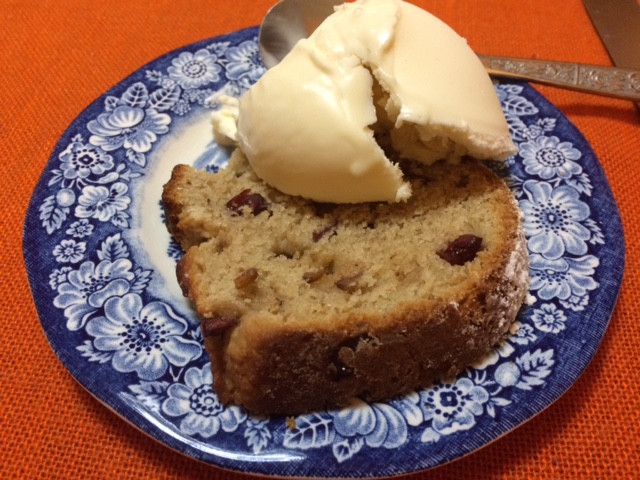
Ames Family Election Bread served joyously as a dessert

Ames family traditional Election Bread served joyously as a dessert topped with natural vanilla ice cream

Tia Marta here to share an Election Bread recipe inspired from my own family tradition served around election time each November. On the internet you might find historical variations of it with the moniker “Election Cake.” Technically it is a fruity yeast bread—probably one of the precursors of holiday fruit cake, reminiscent of Italian panettone–a nice addition as weather cools and fruits ripen. In the “old days” they say this Election Bread was baked to attract people to the polls on Election Day and fortify them for the trip home.

I gleaned our Ames Family Election Bread recipe from a cherished little cook’s notebook which my 80-year-old great Aunt Rina wrote for me when I was just learning to cook—yikes, some decades ago. My new adaptation of it reflects our home turf in the flavor-filled Sonoran Desert.
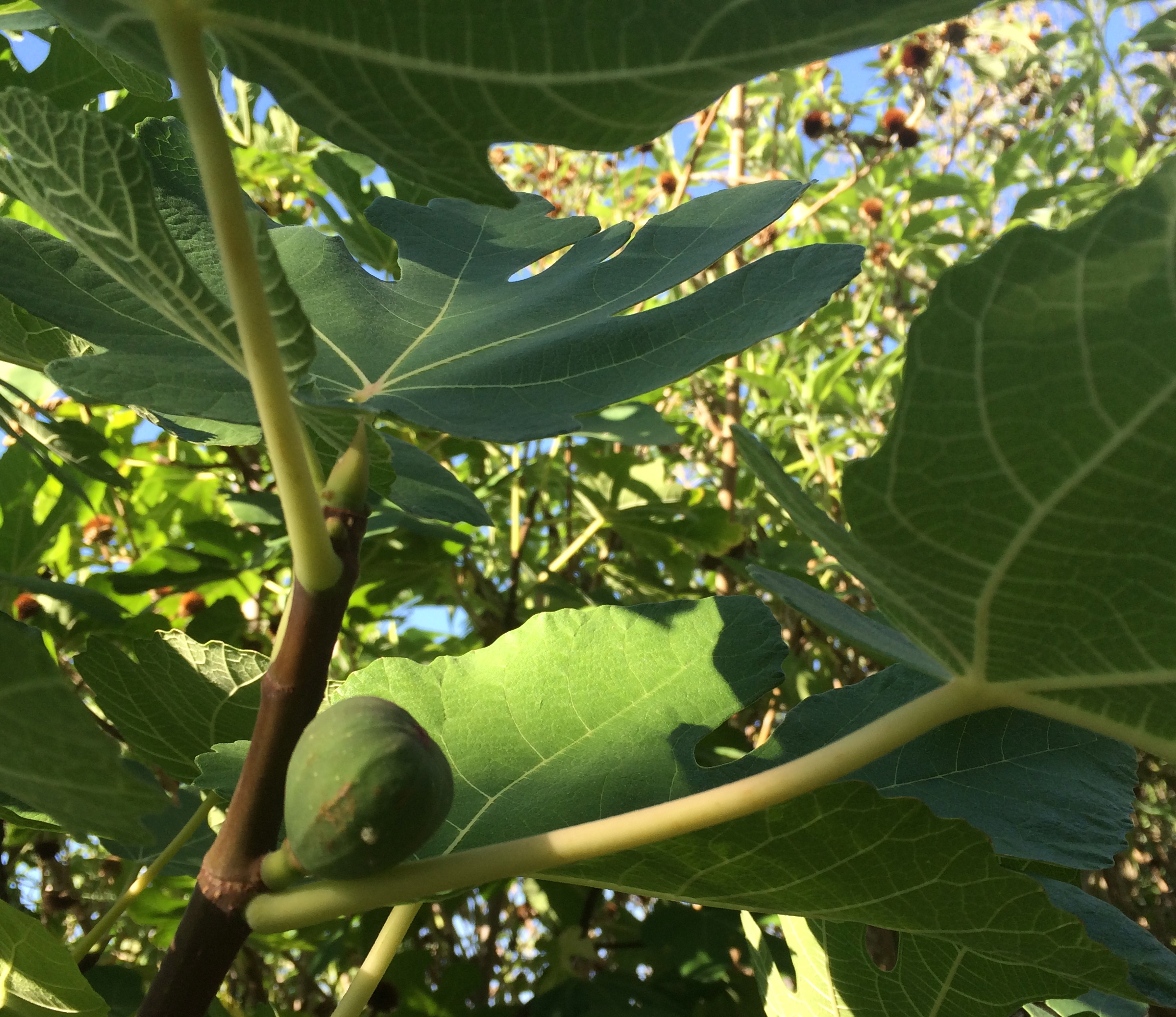
Heirloom Sosa-Carrillo fig (a Padre Kino introduction) from Mission Garden now producing in my yard (MABurgess photo)
Heirloom Sosa-Carrillo fig (a Padre Kino introduction) from Mission Garden now producing in my yard (MABurgess photo)

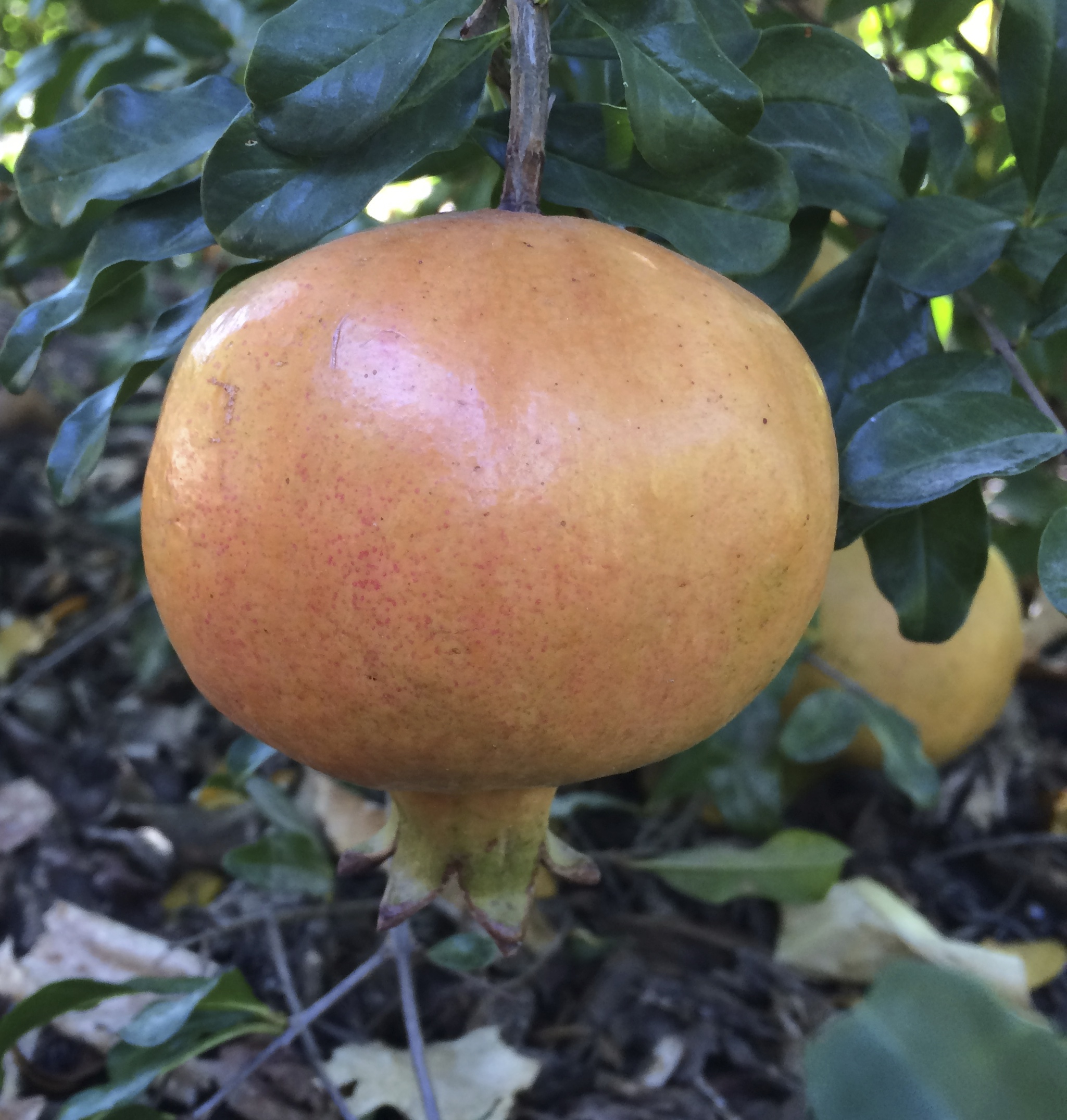
Heirloom pomegranate from Mission Garden, Tucson (MABurgess photo)

Heirloom pomegranate from Mission Garden, Tucson (MABurgess photo)

But here in Baja Arizona, instead of waiting for fall, I had to begin prep a few months ago by harvesting ripe heirloom figs, pomegranates and apricots as they ripened.  Father Kino’s figs grace my yard and the other two yummy fruits, grown at Tucson’s Mission Garden at the base of A-Mountain, were purchased at the Thursday Santa Cruz farmers’ market.

Preserving them for later use, I dried the fruits in my solar oven with the lid slightly opened, allowing humid air to escape.
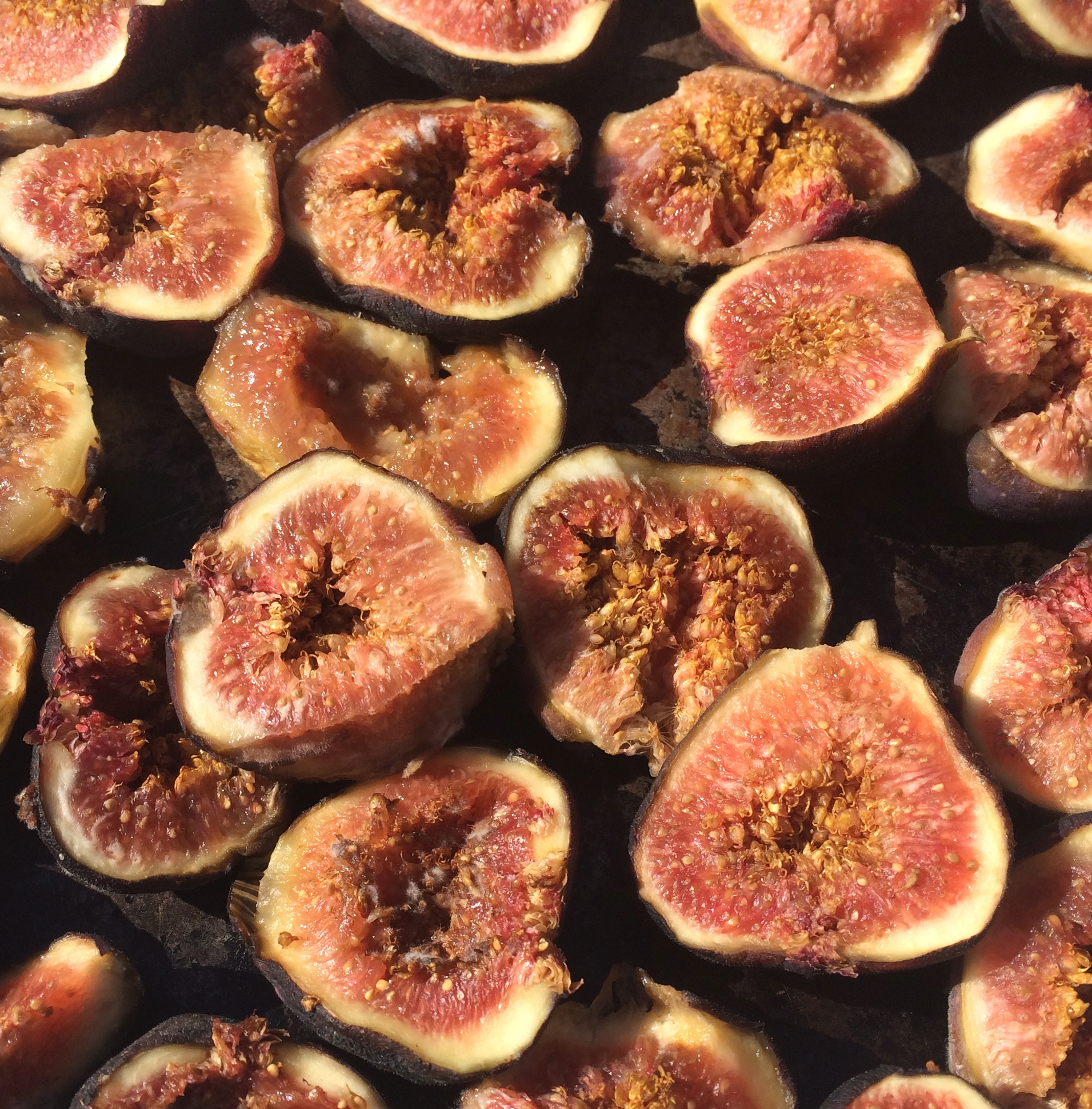
 

Fresh Mission figs cut ready for drying in the solar oven

Fresh Mission figs cut ready for drying in the solar oven

Sun-dried figs get even sweeter and more flavorful than when they are fresh!

Sun-dried figs get even sweeter and more flavorful than when they are fresh!

Celebrating our International City of Gastronomy, I rejoice in using flours grown and milled locally by BKWFarms in Marana, Arizona, to bake this rich bread.  Other ingredients I sourced close to home as well — Tucson’s precious mesquite-smoked Hamilton whiskey, homegrown heirloom fruit propagated at Mission Garden, agave nectar in place of sorghum molasses — from the bounty of Baja Arizona’s foodscape, its green thumbs, and its creative local “food-artists.”
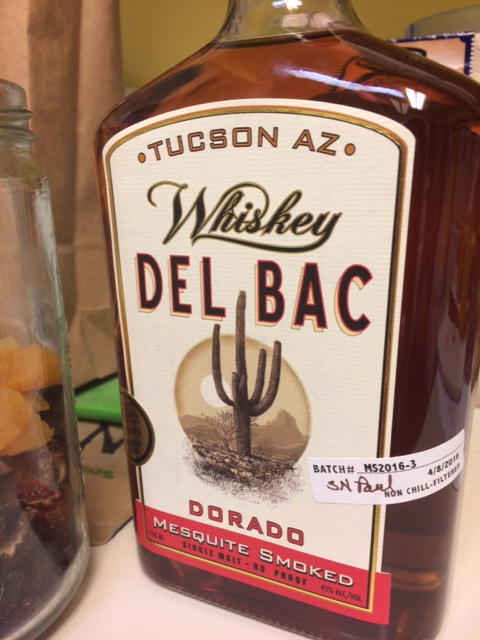
Tucson's best whiskey from Hamilton Distillers--made with organic local malted grain dried using local mesquite.

Tucson’s best whiskey from Hamilton Distillers–made with organic local malted grain dried using local mesquite.

Bread teaches us patience.  It is a beautiful meditation so take time to enjoy the process. There are tasks for this recipe to be done on two consecutive days.  At the very least, in between texts and emails, radio news and phone calls, take time out to go to the kitchen, check the status of your “rehydrating” fruit, or check your yeast sponge, take a nip, etc.  Bread is a living gift and this Election Bread in particular brings many quite lively foods together.  Be not daunted–become one with the yeasts!

If you are already into sourdough baking and have live starter, take method A.  If you are beginning with dry yeast, take method B.  Both will give olfactory pleasure from the git-go.


RECIPE FOR AMES FAMILY ELECTION BREAD

Day 1—Making the Pre-ferment –method A–Using Sourdough Starter
1 cup whole milk, warmed to ~ 70º F
¼ cup active starter — fully hydrated
2 ¼ cups all-purpose or whole wheat pastry flour *

OR Day 1 — Making the Pre-ferment — method B– Using Yeast
1 1/8 cup milk, warmed to ~70º F
1 tsp instant dry yeast
2 ¼ cups plus 2 Tbsp organic all-purpose or whole wheat pastry flour *

Pre-ferment Instructions:  In a bowl, combine milk and sourdough starter or yeast. Mix thoroughly until starter or yeast is well dispersed in the milk mixture. Add flour and mix vigorously until the yeast mixture is smooth. Scrape the sides of your bowl to use all yeast. Cover the bowl with a damp towel or plastic wrap. Allow your sponge to rest and ferment 8-12 hours at room temperature. When ready to use, your pre-ferment will have bubbles covering the surface.

Also Day 1–Pre-Soaking Dried Fruits

1 cup dried fruits, coarsely diced in 3/8-inch or ½-inch pieces **
1-1 ½ cup whiskey, bourbon, brandy, or non-alcoholic fruit juice ***

Instructions for Pre-soaking Dried Fruit:  To prepare dried fruits for your bread, soak them overnight, or for several days beforehand, in a lidded jar. Measure your dried fruit then cover with liquor or liquid of choice. (To speed up the soaking process put diced fruit in a small sauce pan, warm over low heat for a few minutes, remove from the heat, and allow fruit to soak, covered, for several hours.) Until the fruit is totally softened, you may need to add more liquid to keep fruit submerged.

Before adding fruit to your dough, strain the liquid off of the fruit. Use this fruity liquid as a cordial, or to make a simple glaze after bread is baked.

Freshly mixed dough in greased and floured bunt pan
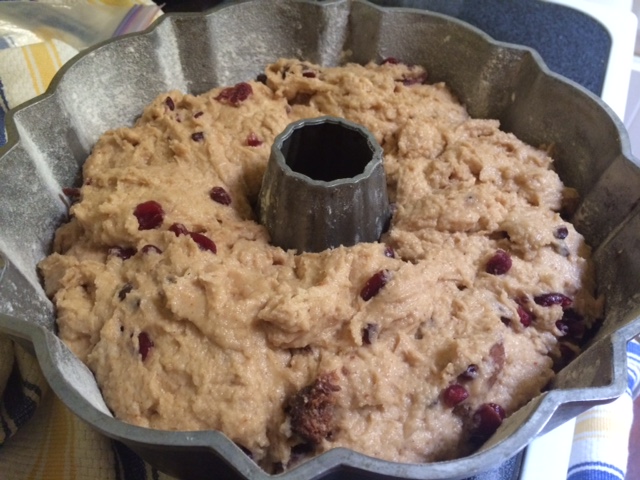
Freshly mixed dough in greased and floured bunt pan

Proofing Election Bread dough--after covering and allowing dough to rise to almost double size--fruit bites visible

Proofing Election Bread dough–after covering and allowing dough to rise to almost double size–fruit bites visible

*** My secret to this “fruit marinade” is the smokey flavor of local Whiskey del Bac!  Using spirits results in a fabulous liqueur “biproduct” to enjoy later.  But, remember the words to that song “Oh we never eat fruitcake because it has rum, and one little bite turns a man to a bum……..”  For the tea- totaler, any fruit juices will work for re-hydrating the dried fruit chunks:  try apple cider, prickly pear, pomegranate juice, cranberry.  Then save the liquid after decanting as it will have delicious new flavors added.


Day 2 –Preparing Dough, Proofing, Baking Election Bread

Ingredients:  
1 cup unsalted butter
¾ cup unrefined organic sugar
2 eggs
1/3 cup whole-milk yogurt
¼ cup sorghum molasses, agave nectar, or honey
Your Pre-ferment –yeast mixture or sourdough mixture from Day 1
2 ¼ cups all-purpose or whole wheat pastry flour combination *
1-2 Tbsp mixed spice blend—your choice cinnamon, allspice, nutmeg, mace blend
¼ tsp ground coriander –optional
¼ tsp ground black pepper –optional
1-2 tsp salt
2 Tbsp sherry or another spirit- optional
2 cups rehydrated local fruit from dried/preserved fruits, decanted

* Create your own combination of pastry flours. My Southwest pastry flour mix to total 2 ¼ cups is:
½ cup organic all-purpose flour
¼ cup mesquite pod milling dust
1 cup organic BKWFarms’ hard red wheat flour                                                                                                                                          ½ cup organic heirloom BKWFarms’ White Sonora Wheat flour  (heirloom flours available at NativeSeeds/SEARCH and http://www.flordemayoarts.com)

** My Election Bread fruit mix honors the Kino Heritage Fruit Tree Project. You can purchase heirloom fruit seasonally at Santa Cruz Farmers’ Market. For this recipe I used:
1/3 cup diced dry figs
1/3 cup diced dry apricots
1/6 cup dry pomegranate “arils”
1/6 cup dry cranberries (a bow to East Coast food)
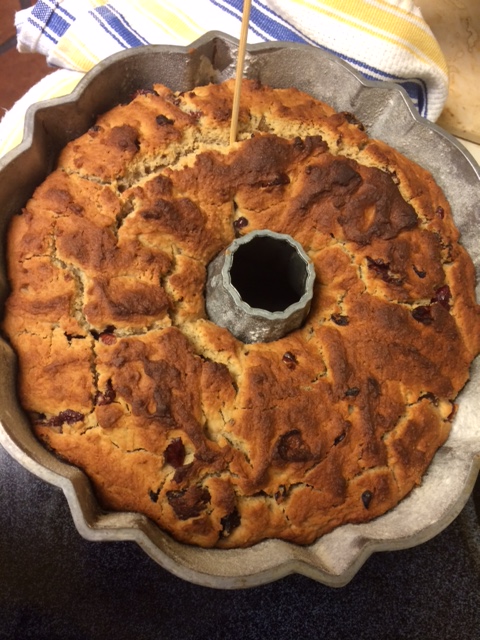
You can test to see if dough is done thru using a wooden kabob skewer or cake tester. Listen to hear if bubbles are still popping in the dough.

You can test to see if dough is done through by using a wooden kabob skewer or cake tester. Listen to hear if bubbles are still popping in the dough.

Day 2–Instructions for Election Day Bread Baking

a) Cream the butter well; add sugar, mixing until light and fluffy. Add the eggs one at a time with mixer (or spoon) on medium speed. Mix in the sorghum/honey and yogurt. If you have a dough hook mixer you can use it or good old elbow grease. Add the pre-ferment (starter or sponge) and mix slightly.
b) In a separate bowl, sift together all of the dry ingredients. Mix as you add dry ingredients into liquid ingredients, being careful not to over-mix.
c) Gently fold in the rehydrated fruit (then optional sherry).
d) Grease (with butter) and flour a bundt pan or round cake pan. Divide the dough evenly into the cake pan. Proof (i.e. let the dough rise) covered in a warm place for 2-4 hours, until the dough has risen by about ⅓ of its volume.
e) Preheat oven to 375F. Bake at 375° F (190° C) for 10 minutes. Reduce oven temperature to 350° F (177° C) and continue baking for about 25-35 minutes, or until a tester comes out clean. Let cake cool completely before cutting and eating.         Enjoy this sweet bread either plain or topped with a simple glaze.

If you are new to yeast bread baking, it would be fun to connect with a friend to chop fruit or get hands gooey together, or to have one person read directions while the other mixes. We always do it as a family and it’s so much more fun to add humor and gossip to the mix–or even a little political emoting.
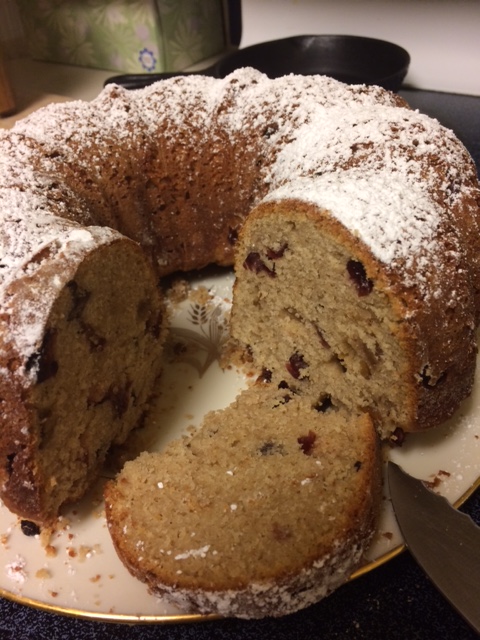
Sonoran Desert style Election Bread with local grains and local fruits--Ah the aromas!

Sonoran Desert style Election Bread with local grains and local fruits–Ahhhh, the aromas and rich history of Baja Arizona in a single slice!

During the coming holidays, you could try this easy bread for a great party treat, for breakfast, or for a colorful dessert topped with whipped cream or ice cream.
And feel free to play with the recipe, adding your own tastes, honoring your own family’s food culture and history and your own sense of place!
Buen provecho from Tia Marta!

On Color and Water.

“Water is H20, hydrogen two parts, oxygen one, but there is also a third thing, that makes it water, and nobody knows what that is.” D.H.Lawrence, Pansies.

img_4368

Linda here with you today, writing on a  downright cool November morning in the Old Pueblo.

I came across a bag of discounted, fresh cranberries this week. I picked it up and took it home, still not quite sure what I might do with it. It just felt nice to have a little color around as the days get cooler and darker.

Color can take us places.  And to actually drink it in gives me a little infusion of energy: a surprising  jolt of joy.

Cranberry Ginger Water.

Today’s recipe is Oh So Easy to make. It is Oh So Tasty on the Tongue. Cranberries are pollinated more and more often by a combination of bumblebees and honeybees. I like this partnership, and feel it worth mentioning as the humble bumblebee and its role in pollination is often overlooked. More food producers are finding that a combination of native pollinators with honeybees is more powerful than using just honeybees alone. While not a Southwest food, Cranberries are a food native to North America. For hard core food geeks, follow the link to explore more. Note: it is because cranberries are a native food that producers use a native pollinators!

Cranberries: The Most Intriguing Native North American Fruit

APSnet Feature. November, 2000

 Ingredients:

-Water in a standard size pot with tight fitting lid.

-1 8oz bag of fresh cranberries. I have been seeing them on sale in stores.

-2 Tablespoons worth of Fresh Ginger root, cut up in pieces.

img_4348

Rinse 8 oz of fresh cranberries.

img_4361

In a covered pot, boil the cranberries and ginger for about 15-20 minutes, or until the berries are quite soft. Turn off heat and with lid still on, let the flavors infuse while it cools.

img_4350

I love the way the water “Becomes cranberry”!

img_4353-1

Strain the mixture into a vessel that can show off the color.

img_4372

Place the vessel in front of a window to really savor the color. Somehow this also enhances the flavor as well.

Remember this is a basic recipe – and you can use it as a spring board! Drink it warm or cool. Add honey and drink it warm. Add one or two crushed dried chiltepin for some spice. Add a little “spirit” to it….. enjoy it. And while you Sip In all this color, you might joyfully ponder the native bees that pollinated it’s cranberry flowers –  and the water and sun the plants utilized to grow.

____________________________________________________________

It is fun to remember water and its role not just in our lives, but in the lives of  our fellow creatures.

img_5209

HoneyBees use water to cool their hives – they use tiny bee tongues.

img_4522

I love this photo of a hen teaching her chick to drink.

img_0270

A peaceful moment


Chapulines (Grasshoppers) con Mole

20160924_080146

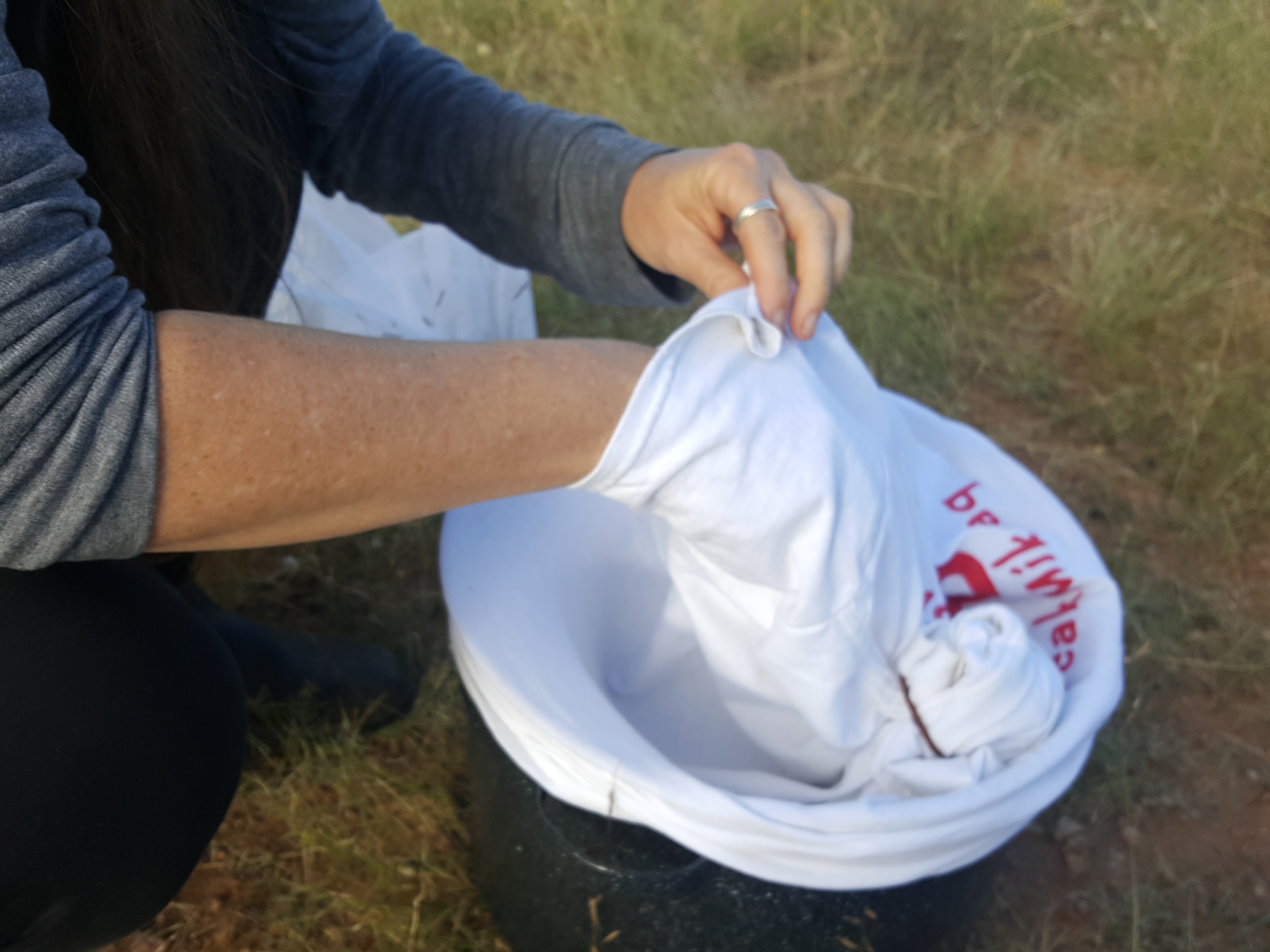
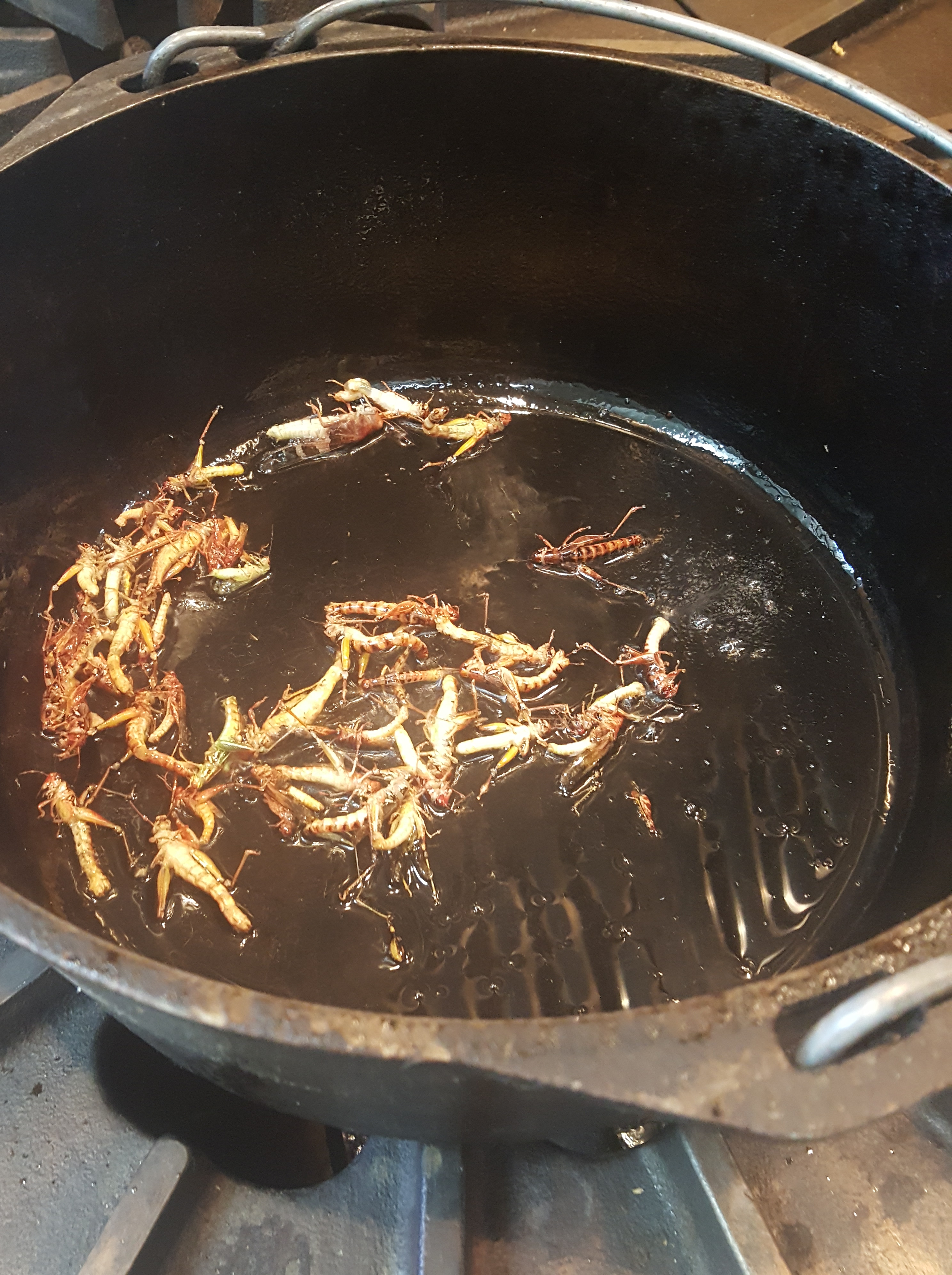
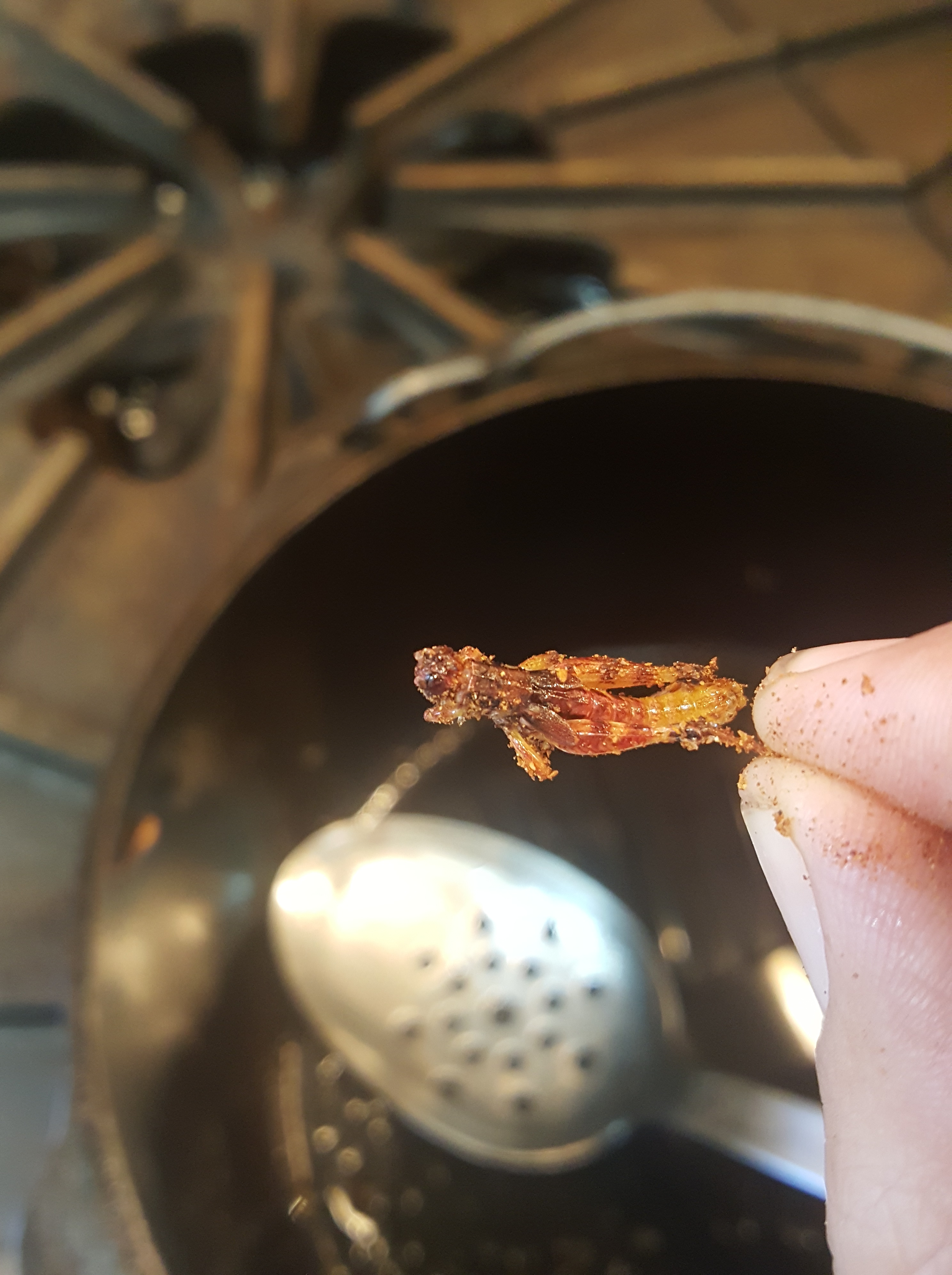
On a late season prickly pear harvesting trip, my friend Nicole and I found few tunas but lots of grasshoppers. I’ve always wanted to try chapulines, but never had the opportunity. Nicole learned how to harvest them this summer, so we attempted ourselves.

Catching them is the trick! When the sun is up, they are fast. We managed to flush some out of the grass into a clearing, toss a big straw hat over one, and grab it by hand. We bagged three, not even enough for one taco. As the sun set, they stopped jumping but were too hard to see in the grass in the low light. We returned with nets. In the cool early morning they weren’t active enough to jump into the nets but were easier to see; we tossed the net over one, and grabbed it by hand. As the day warmed, they got too fast for that method, and sweeping the grass with the net was more successful. Yes, it’s slow, but fun. Plus a beautiful day in the desert.

Nicole fashioned an way to hold our catch without letting any escape when we caught another.

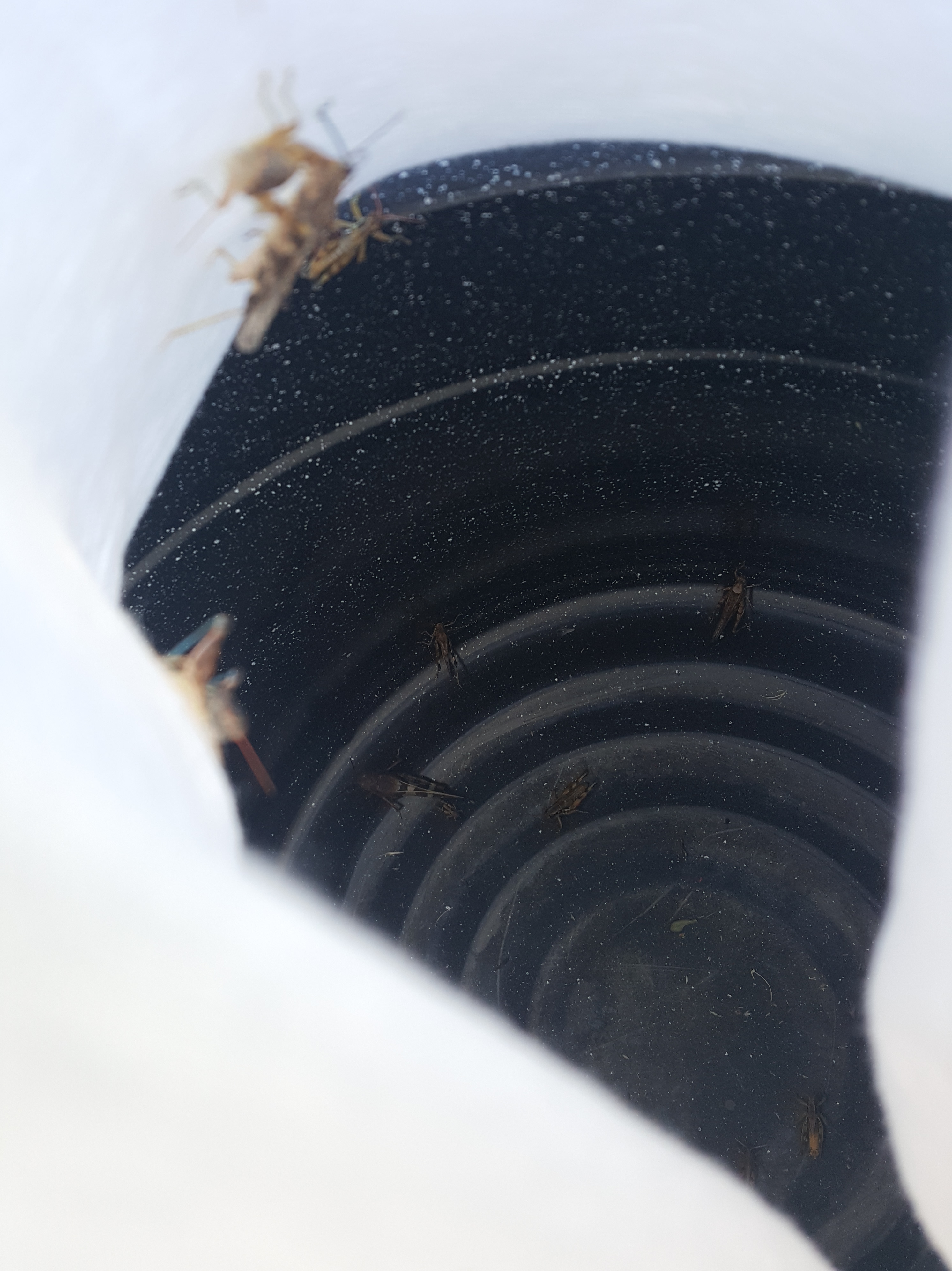
20160924_080408

Here they are inside. While they hopped around, they emptied their digestive tracts.

20160924_080353

At home we put the whole container in the freezer.

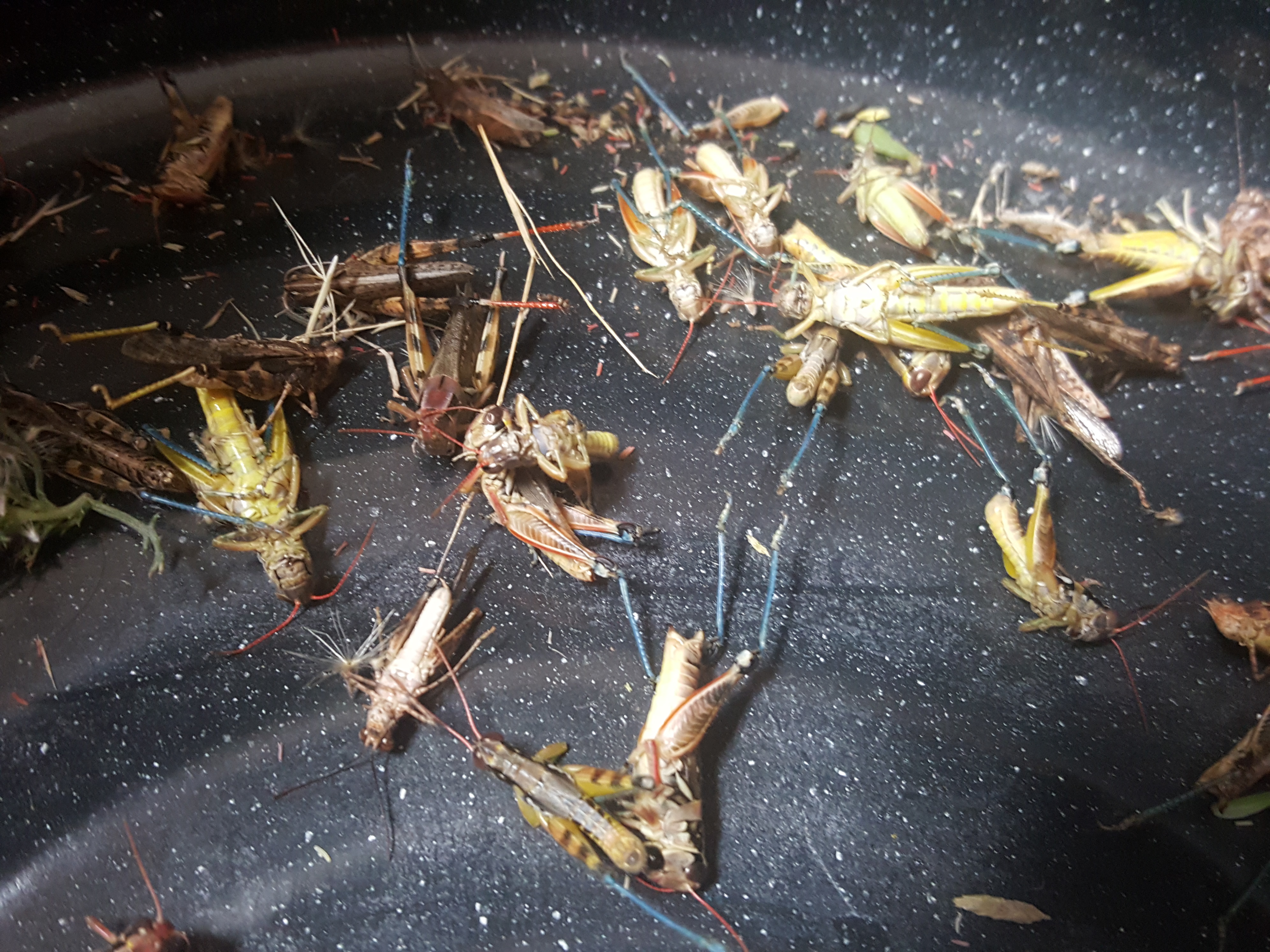
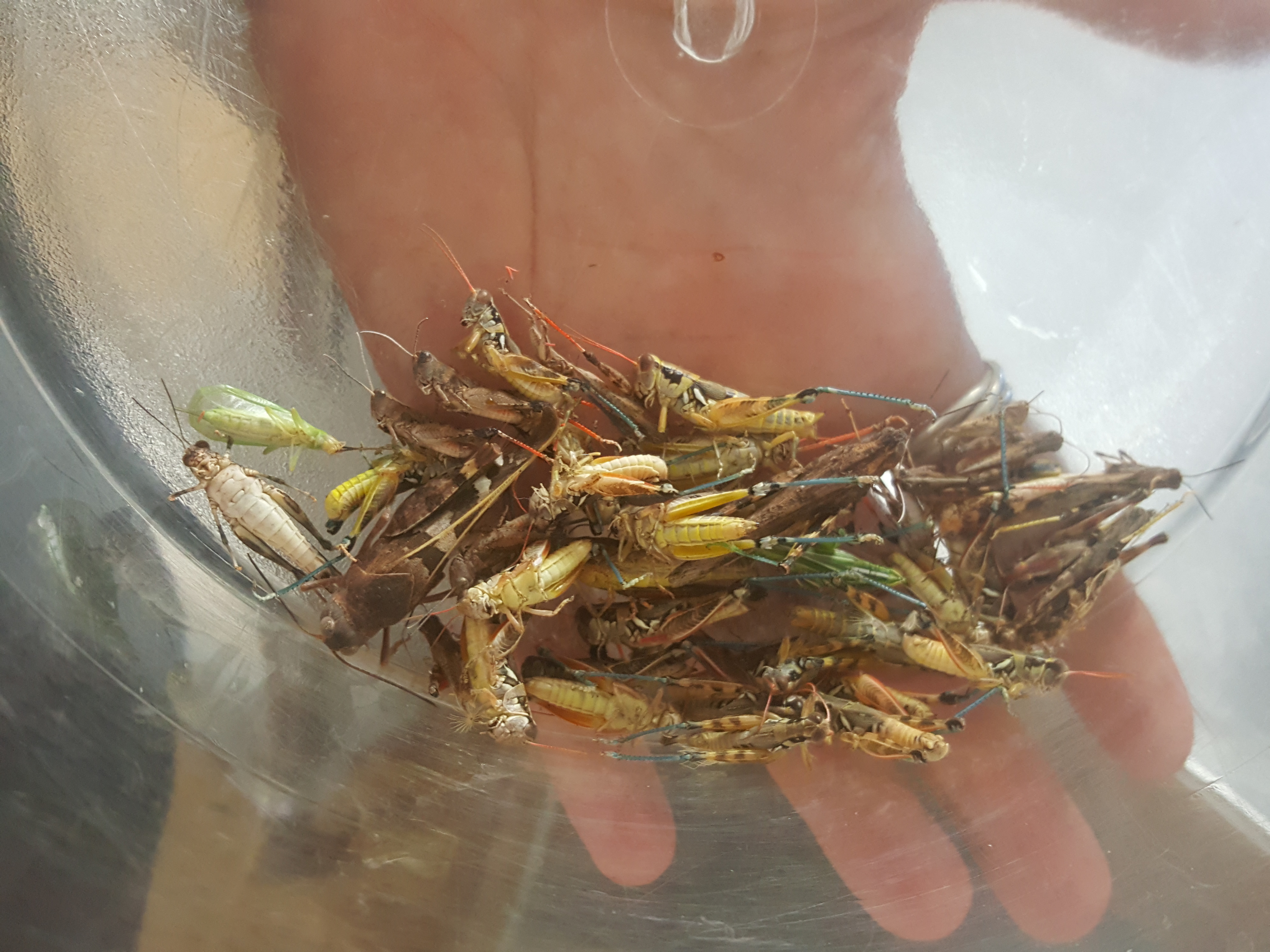
20160924_093610_001

Then we picked them out of the grass seeds and debris. So beautiful.

20160924_093906

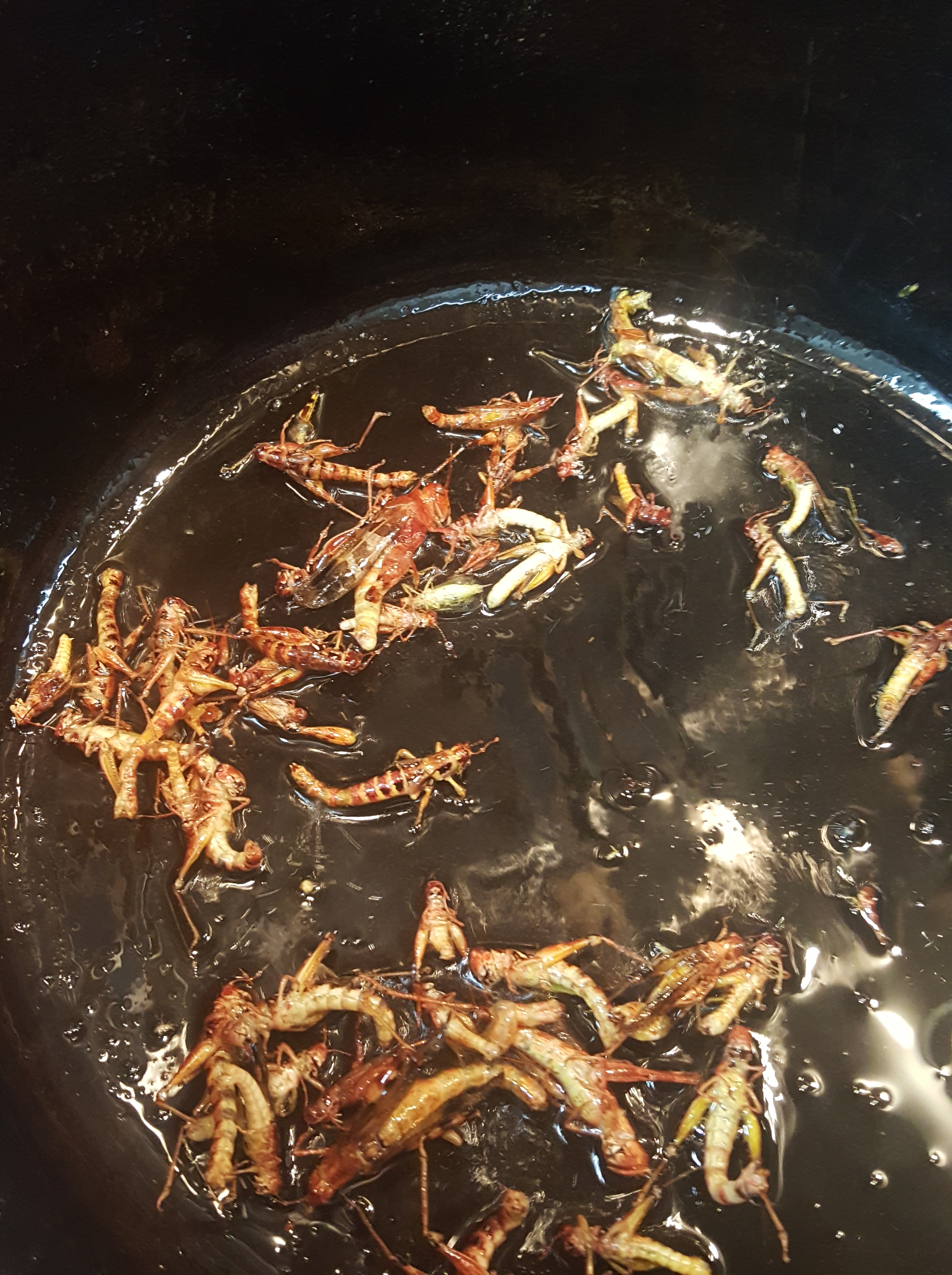
We melted a little duck fat a cast iron pan and fried the chapulines.

20160924_093938

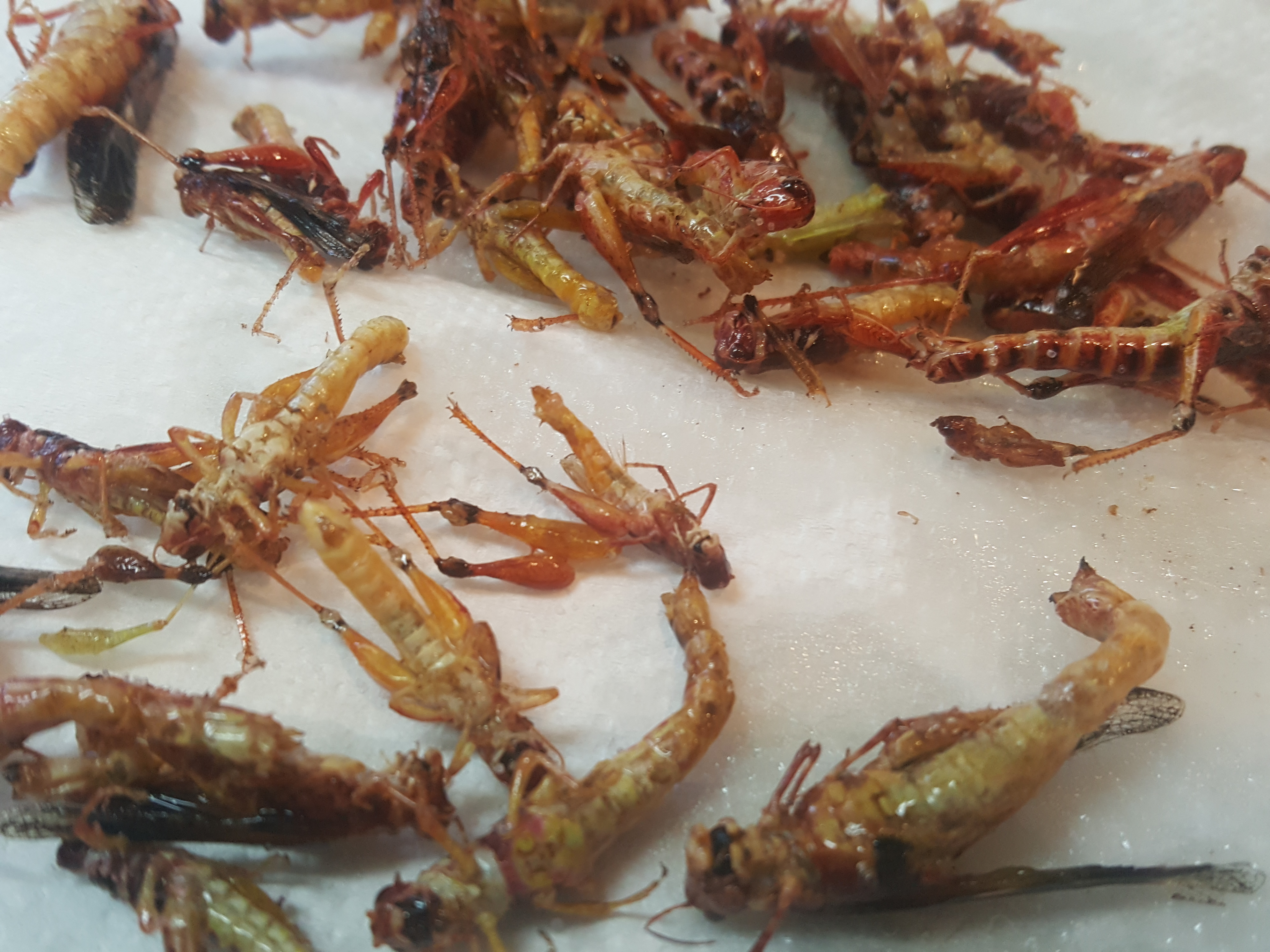
This is when they turned from animals to food, and the only moment in the process that made me a little uncomfortable. We let them get really crispy.

20160924_093953

But after all that work, I needed to at least try them. Nicole knew from previous experience to eat the small ones whole, but remove the wings and legs from the larger ones.

20160924_094229

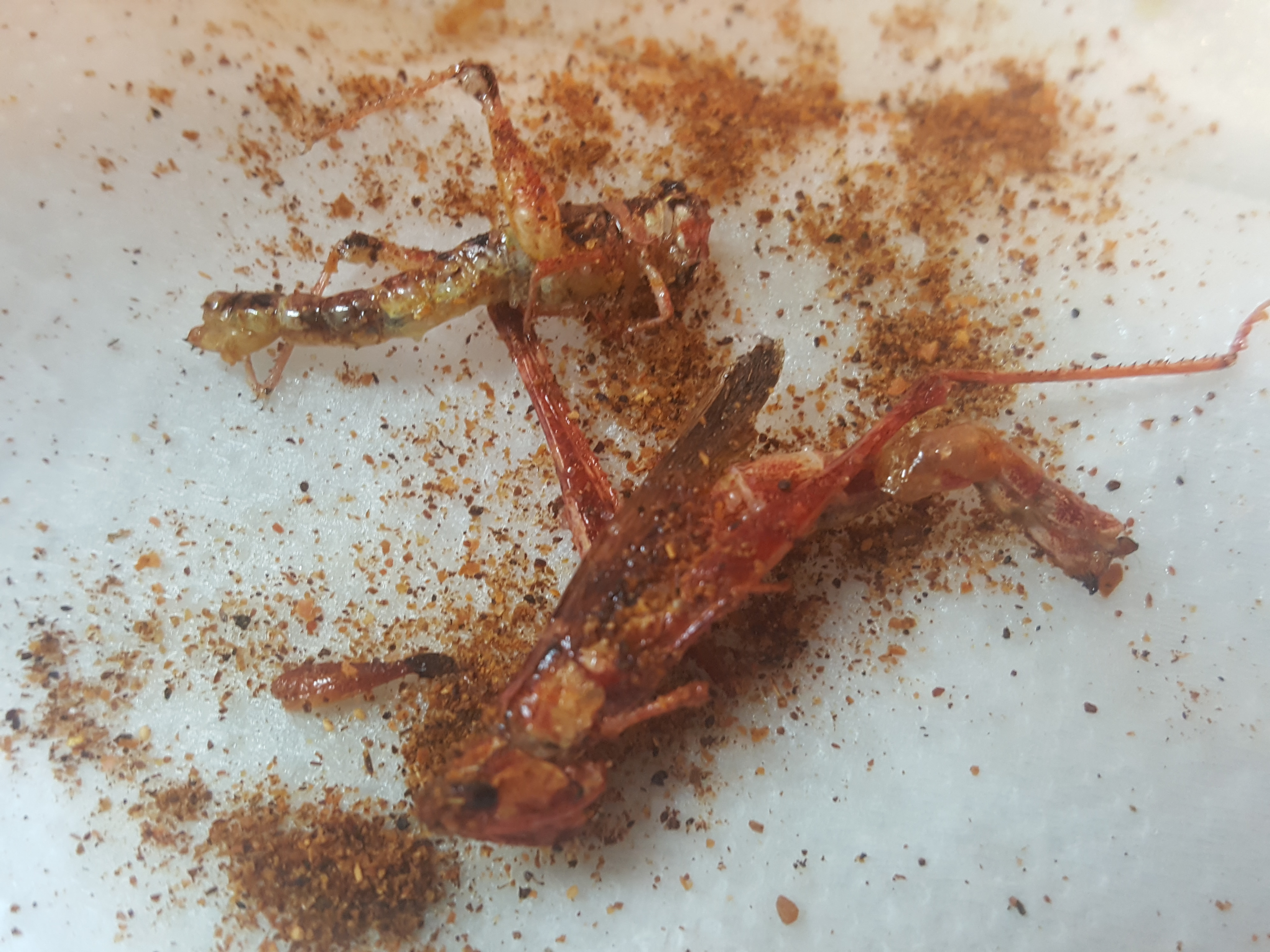
YUM!!!! Crispy fried meat. Then we dusted them with Mano Y Metate mole powder, of course.

20160924_094826

20160924_095149

Delicious, abundant, local, free. We’ll do that again!

Family Traditions


img_2418Linda here, just off the plane from a great family roots trip with my father. Hearty and strong at 87 yeas of age, we tromped though grave sites and Historical Society’s records to uncover what we could. We talked with older relatives, read through old letters,  were guided by local historians. Much of the conversation happened around meal tables.

So it was that I enjoyed the best applesauce of my life this week. It was made especially for us by an 86 year old farmer relative. It’s flavor had both simplicity and spark – and immediately wooed me.

Apples are a fruit of the fall. and applesauce is easily made. And it can be amended to the tastes you/your loved ones prefer quite easily, by simply choosing  tart or sweet apples. You can use your culinary wand and add traditional ingredients like cinnamon – or think outside the box and try adding red chili powder. You can also sway the texture this way or that, depending on how you thin or chunky you like it.


img_3448-1

Here is Cousin Mary’s Applesauce Recipe. Play with it with a bit this fall as the abundance of apples is upon us, and make it your own. Enjoy the aroma as you work with the apples! Note there is no sugar in this recipe.

Ingredients (4 people worth)

6-8  Apples – sweet or tart or a mix.

Water

How To:

Thinly peel about 6 or 8 apples (sweet variety if you like sweet, tart variety if you like tart); remove the core and cut each apple into about 6 or so pieces. Put the apples in a pan on the stove burner with about 1/2 cup of water, 3/4 cup if you like it thinner. Then cook this until the apples are soft but not too mushy. (They will turn dark if you cook them too much.)  While apples are still warm, use any type of masher (such as a potato masher) and mash to the consistency of chunkiness that you desire. The apple sauce freezes well also.

Significantly, as she shared this recipe with me, she interwove how her deceased husband, enjoyed it, that he liked sugar in his, what he ate it with etc. Hardly a sentence went by without such a caveat. Which reminded me: Fall is a time when many traditions – all over the globe – remember their ancestors.  Often a favorite food is set out by an alter, or even the grave of the person(s).  Consider making a favorite family food tradition that a deceased loved one especially liked, and make it this fall. Smell the aromas, savor the flavors, delight in the color and texture of that special food that your loved one enjoyed.


img_3451She paired the apple sauce with home made Bacon Quiche.

img_3442

One of the traditions near and dear to my own heart is beekeeping. I discovered that at least two of my great great grandfather’s kept bees. One also had fruit trees in a small orchard, and had seven hives. Upon his death, it appears that his widow obtained at least one of the hives, and his son another. I love the idea that she kept those bees – or maybe had been the beekeeper all along?

If you are interested in learning about keeping honeybees, there are a few spots left in Jaime de Zubeldia’s beekeeping class later this month. Here are the details:

Introduction to Natural Beekeeping – Saturday and Sunday, October 22nd and 23rd, 2016

 Want to be a bee keeper but don’t know where to start? How about a full weekend of hands on instruction with one of the Southwest’s most experienced bee keepers? This two day introductory beekeeping workshop in Avra Valley just west of Tucson, Arizona will get you started.   

Location:  The San Xavier Coop Farm.  Final directions and info for the day will be sent  about a week before the date of the workshop.  The San Xavier Coop Farm is located approximately 15 minutes south of downtown Tucson near the San Xavier Mission on the Tohono O’odham reservation.  Time: 9AM-4PM each day.  Cost: You must register for BOTH Saturday and Sunday.  The early bird discount is $150 on or before October 2nd  and $175 after that date up until one day before date of the workshop.  This workshop is taught by master bee keeper  Jaime de Zubeldia. To register by check, money order, cash, or on-line credit card follow the registration directions at http://www.sonoranpermaculture.org/courses-and-workshops/ or contact Dan at dorsey@dakotacom.net 

Dan Dorsey: Sonoran Permaculture Guild

Phone: 520- 624-8030

http://www.sonoranpermaculture.org


Our Living Giving Heirloom Pomegranate

Brought by the Padres to Baja Arizona during the Mission Period, this desert-adapted Sonoran White Pomegranate can continue to feed us visually, nutritionally, esthetically (photo MABurgess)

Brought by the Padres to Baja Arizona during the Mission Period over 350 years ago, this desert-adapted Sonoran White Pomegranate can continue to feed us visually, nutritionally, sustainably  (photo MABurgess)

It is thought that the so-called “apple,” the fruit of knowledge of good and evil which Eve shared with Adam in the Garden of Eden, was actually a pomegranate.   Now, thankfully, since Eden, we are all “fallen” and can enjoy pomegranates with no guilt!   Tia Marta here, inspired deeply by the recent article in Edible Baja Arizona by Dena Cowan about the comeback of heirloom Sonora White Pomegranate being celebrated at Tucson’s Mission Garden.  (This is a must-read:  http://ediblebajaarizona.com/sonoran-white-pomegranate .)

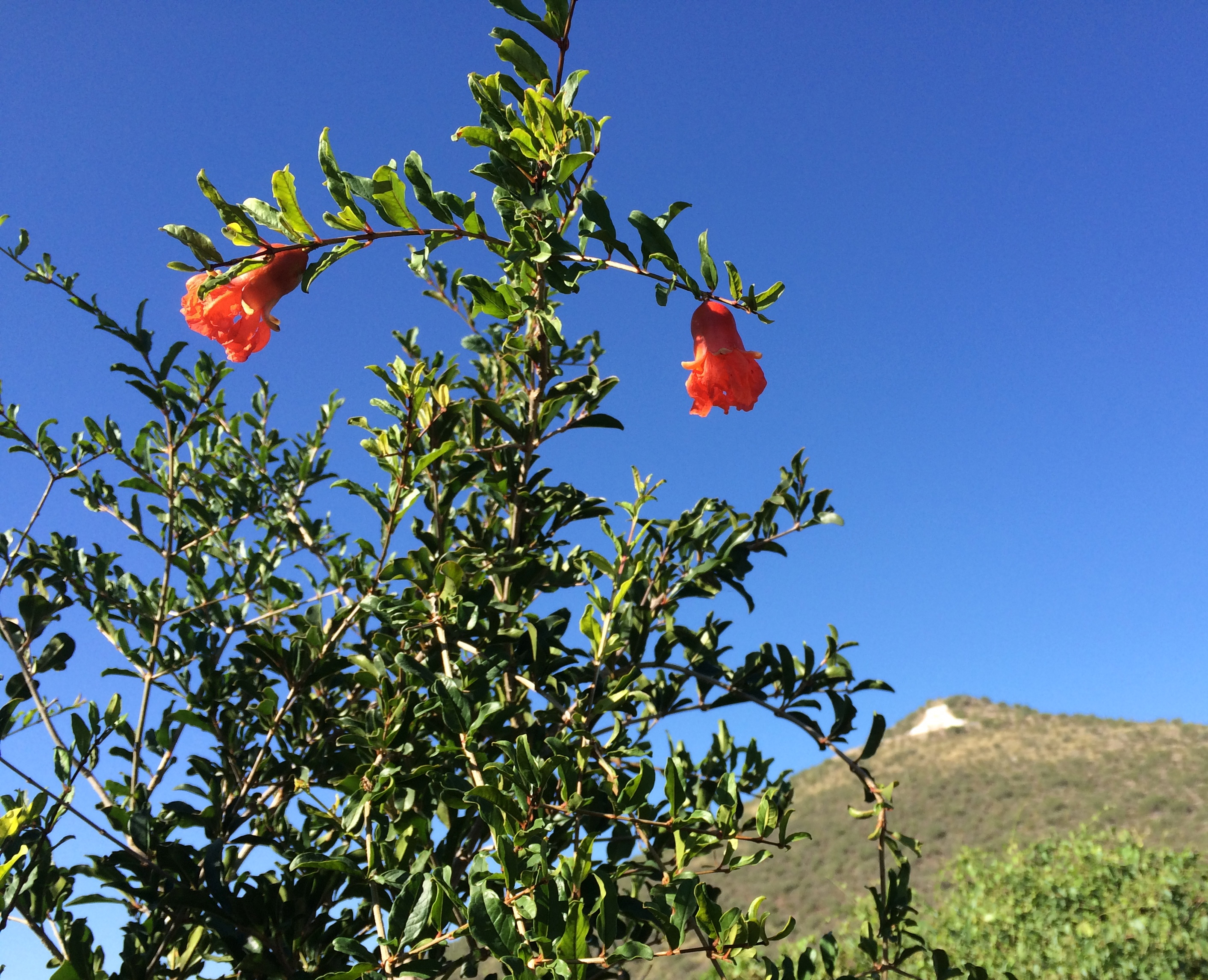
Heirloom Sonora white pomegranate blooms and fruits all summer at Tucson' Mission Garden (photoMABurgess)

Heirloom Sonora white pomegranate blooms and fruits all summer at Tucson’ Mission Garden at the base of   “A”-Mountain (photoMABurgess)

One of the first joys of pomegranates is esthetic, making pomegranate (particularly our local heirloom Sonoran White) a primo candidate for edible landscaping.  Its rich green foliage is cooling to eyes and spirit.  Its glorious, shiny red flowers decorate the trees all summer, followed by sensuous round beige fruits that become rosy as they ripen like Christmas ornaments hanging on the tree.

Sensational flower of Sonoran White Pomegranate--an extra bonus for edible landscapers (MABurgess photo)

Sensational flower of Sonoran White Pomegranate–an extra bonus for edible landscapers .  (Check out the shape of pomegranate flowers to see the design influence in Spanish silver work which in turn inspired Dine/Navajo  “squash blossom” jewelry.) (MABurgess photo)

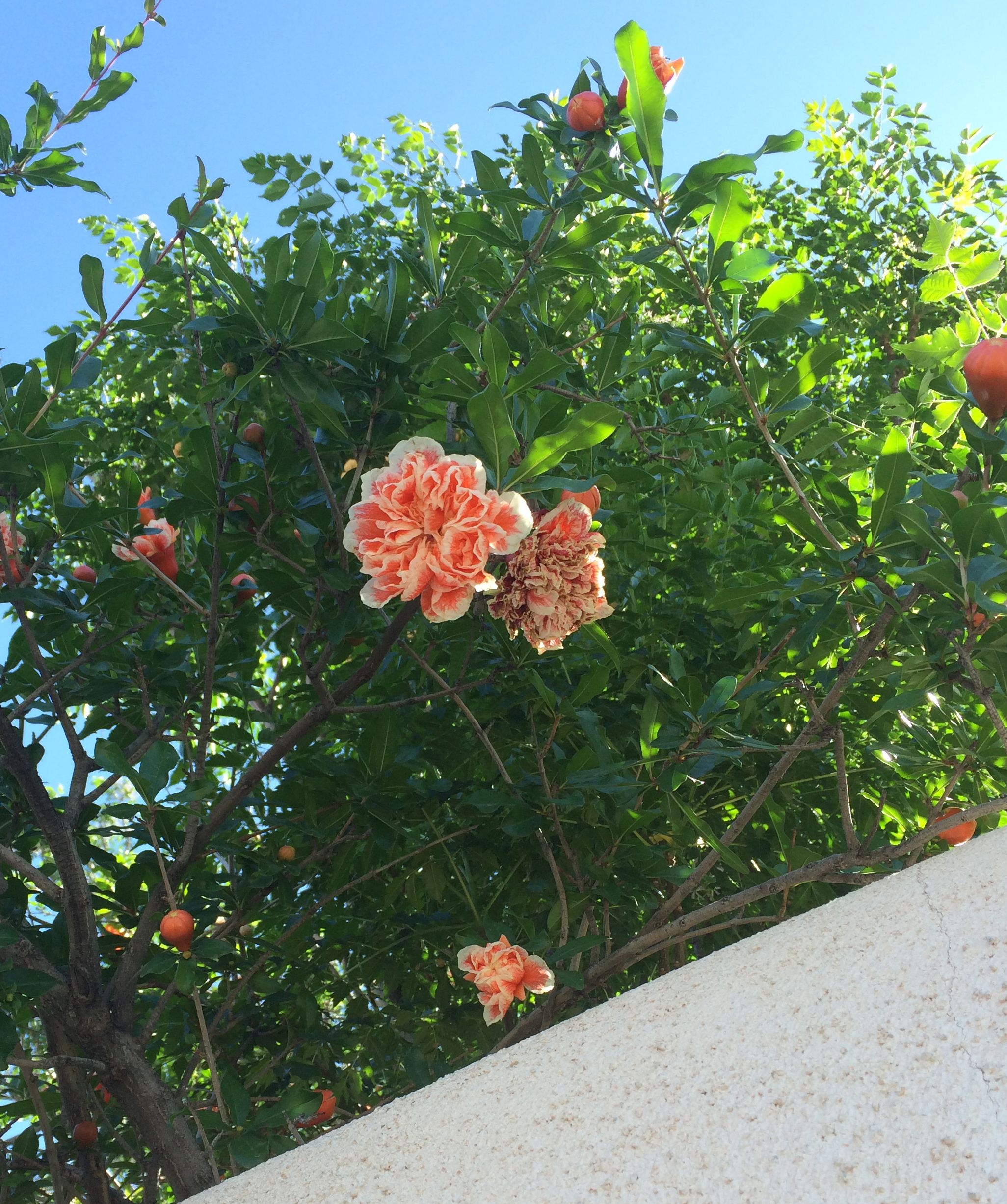
Peeking over the wall of Cordoba House in Tucson's historic neighborhood is a double flowered pomegranate (MABurgess photo)

Peeking over the wall of Cordoba House in Tucson’s historic Presidio Neighborhood is a double flowered pomegranate (MABurgess photo)

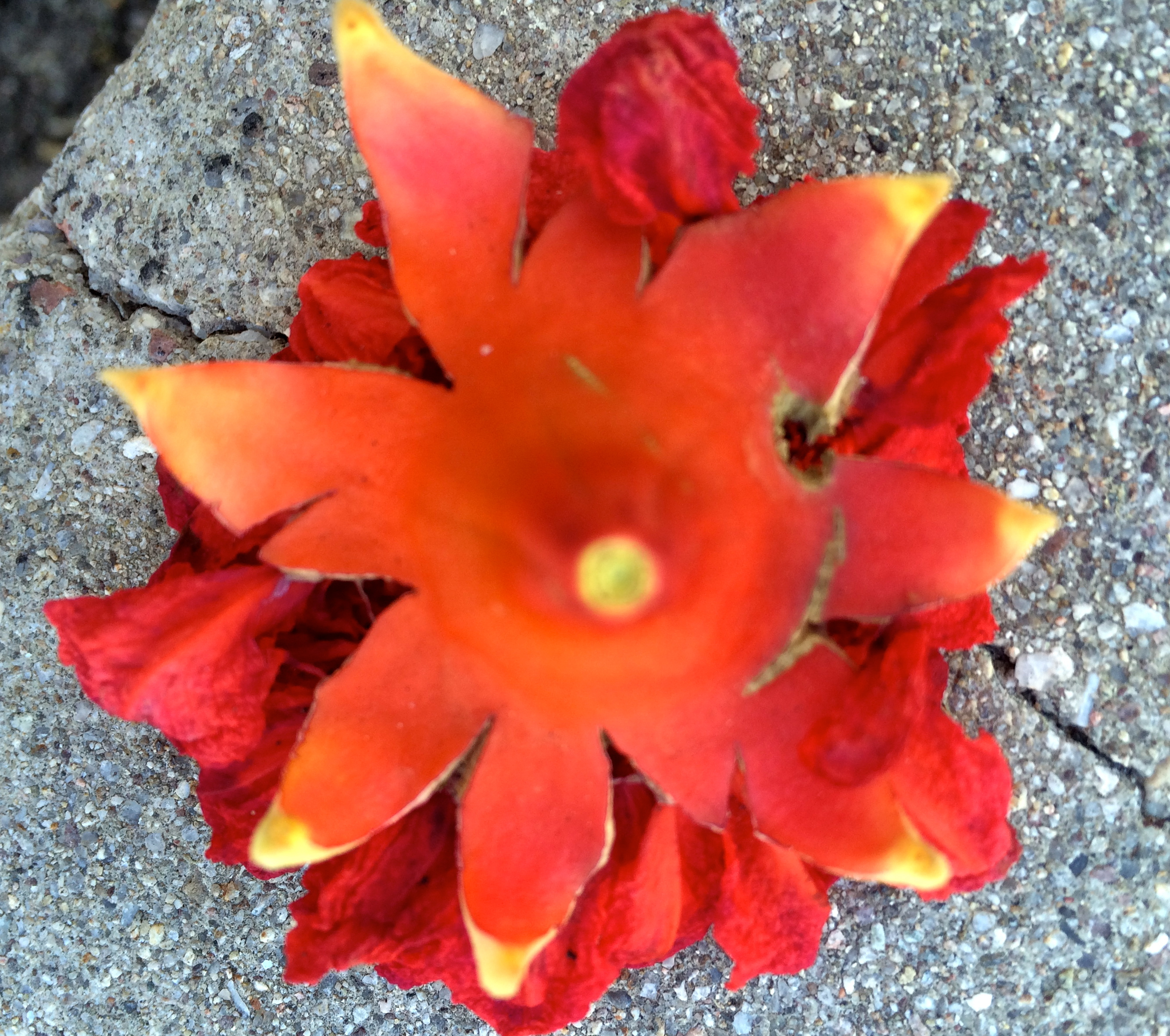
A "fallen star" --a pomegranate flower on the pavement continues as a radiant bouquet (MABurgess photo)

A “fallen star” –a pomegranate flower on the pavement continues as a radiant bouquet (MABurgess photo)


Prepare to share your plentiful crop of Sonoran White Pomegranate with other frugivorous creatures. True bugs can be pests. No prob--damage is limited. (MABurgess photo)

Prepare to share your plentiful crop of Sonoran White Pomegranate with other frugivorous creatures. True bugs like these leaf-legged bugs (Coreidae) can be pests. No prob–damage is usually limited. (MABurgess photo)

The structure of pomegranate fruits, with its separate juicy cells or arils, normally prevents insect damage from destroying an entire fruit.  Just cut off the effected area and the remaining arils still will be perfect for eating.

Traditional Sonoran style for opening an heirloom Sonoran White pomegranate (MABurgess photo)

Traditional Sonoran style for opening an heirloom Sonoran White pomegranate (MABurgess photo)

Jesus Garcia, founder of the Kino Heritage Tree Program at Arizona-Sonora Desert Museum and Mission Garden (and traditional knowledge-keeper of important Sonoran folkways), teaches how to cut the top off of a pomegranate to clearly see the septa or membranes that separate the five or six groupings of juice cells (arils), each containing a seed.  In most modern cultivated pomegranates, there is a hard bitter seed that must be “discarded,” making eating less than perfect.  Amazingly, the Sonoran White has small, tender seeds that present no problem–just eat the arils whole and enjoy!  (No spitting necessary.)

Traditional way of opening the Sonoran White Pomegranate for happy access to arils (MABurgess photo)

Subdivide the fruit along its easy membranes.  This is Garcias’ traditional way of opening the Sonoran White Pomegranate for happy access to “arils” –the juicy beads or sarcotestas (MABurgess photo)

I always thought that pomme -grenade was named for the city of Granada, but actually it is the other way ’round.  The Spanish city was re-named Granada when the Moors brought the fruit there from the MiddleEast and it made a big splash.

Technically the pomegranate  (Punica granatum) does not have many familiar relatives to us in its family of loosestrifes (Lythraceae).  It is so different from other plants that some taxonomists place it in its own family Punicaceae.  Pomegranate fruit is a berry, with each seed surrounded by sweet juice in little discrete cases called sarcotestas.  (There must be a better name for these delicious little beads of bliss!)

Nutritionally pomegranate has sweet advantages, providing antioxidants,  folate, vitamins C and K, plus manganese, phosphorus and potassium.

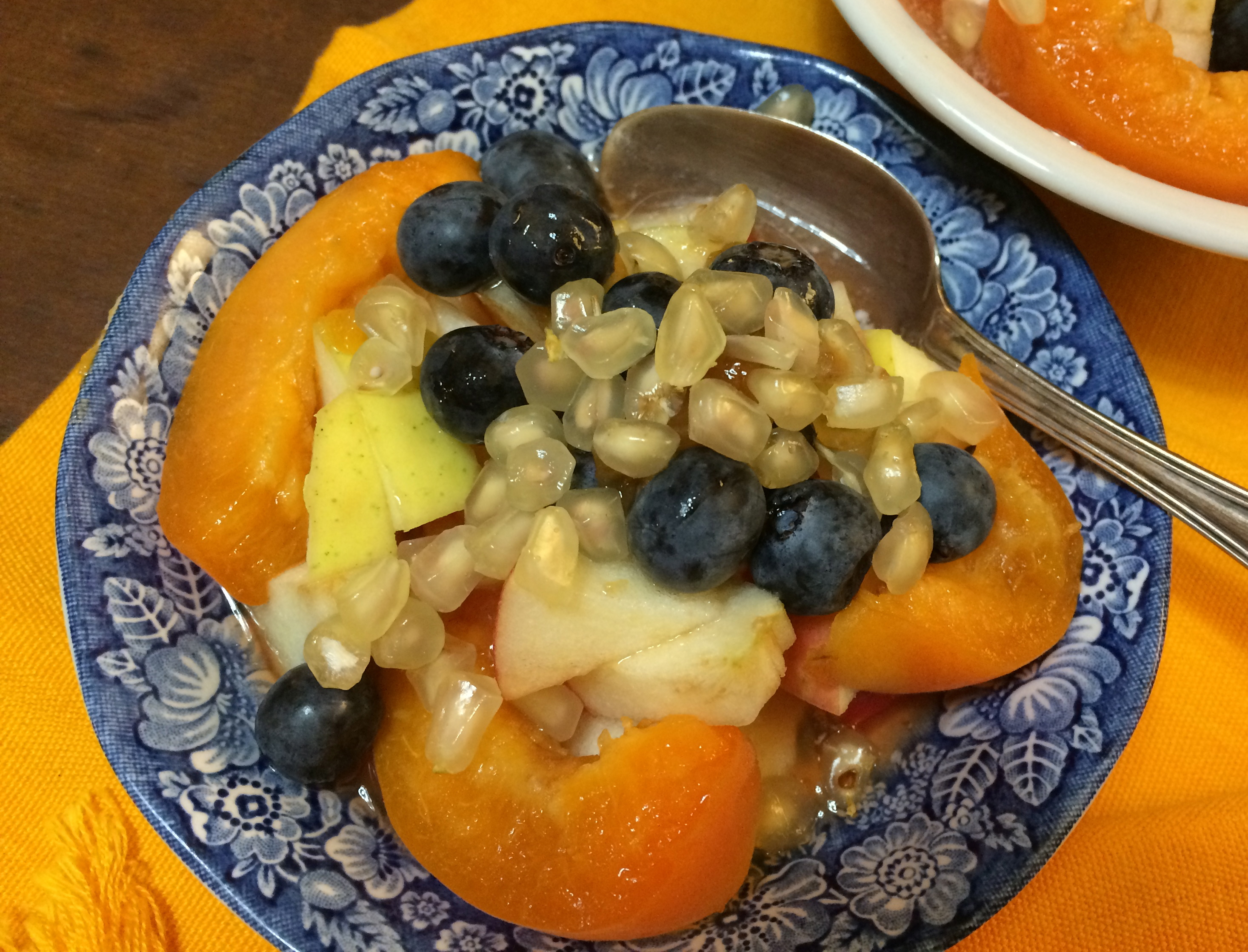
Fruity dessert topped with juicy clear Sonoran White Pomegranate seed-cells (MABurgess photo)

Fruity dessert topped with juicy clear Sonoran White Pomegranate seed-cells (MABurgess photo)

Sonoran White Pomegranate can be juiced to drink straight or add to other drinks. (Talk about a nutritious addition to margaritas!) The simplest, most delightful way of enjoying our clear Sonoran White seed-cells is simply snacking by the handful.

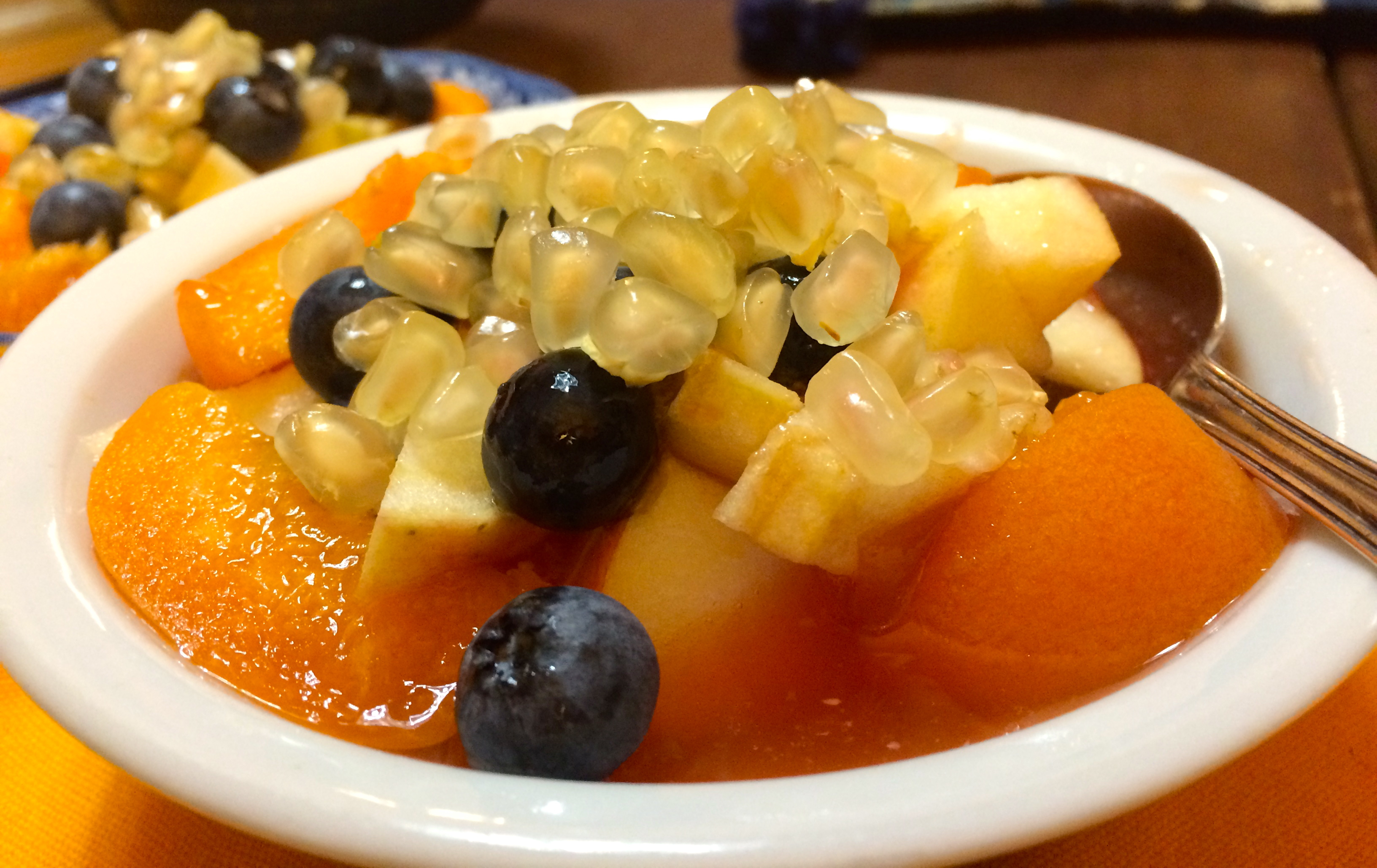
I make a luscious dessert with vanilla yogurt topped with slices of fresh apricot, local apple, and blueberries, and crowned by the sweet seed-cells of Sonoran White Pomegranate.  Rejoice in this ancient gift brought by the Missionaries to Baja Arizona–a desert survivor, well-adapted to carrying us into climate change in arid lands!

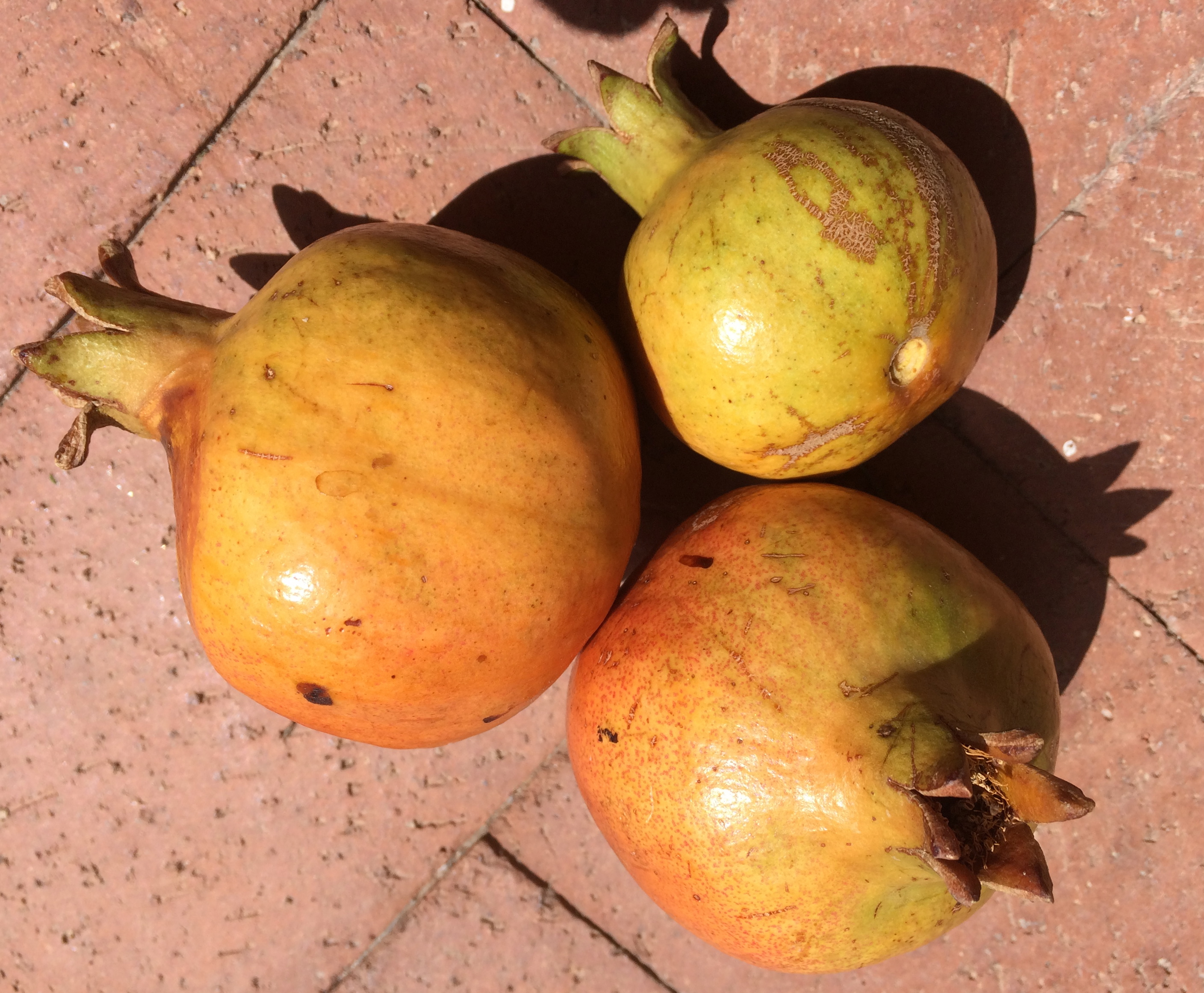
Let your Sonoran White Pomegranate fruits remain on the tree until you see a rosy blush--then you know they are getting sweeter!

Let your Sonoran White Pomegranate fruits remain on the tree until you see a rosy blush–then you know they are getting sweetest! (MABurgess photo)

Sonoran White Pomegranate tops this southwestern dessert (MABurgess photo)

Sonoran White Pomegranate tops this southwestern dessert (MABurgess photo)

Friends of Tucson’s Birthplace will be sponsoring a Pomegranate event this month–September 24, 2016– at the Mission Garden.  Come learn all about our local heirloom treasure, the Sonoran White Pomegranate, how to grow it in our own gardens, and how to prepare it in zillion delectable ways.  For details call 520.777.9270 or email missiongarden.tucson@gmail.com (www.tucsonsbirthplace.org.)  Let’s keep this living and giving food-heirloom alive and well in our gardens into the future!


Two Ingredient Super Salsa

Linda here on this hot, humid day, wondering how on earth we arrived at September.

IMG_2780 (1)

This Salsa is Super Simple. And Powerful. Not only in the way it explodes onto your tongue, but also in how easy it is to digest. I find the two ingredient version of this easy on my stomach and not as “pesado” (heavy) as the salsa with more ingredients.

I’ll admit that, in the beginning of my affair with chiltepin,  my bias was to add more flavor to this salsa. So I added oregano and garlic and tomatoes and some salt.(see last photo)

But, having dabbled and experimented, I have returned to the very, stripped down, basic recipe.   I adore it.   Sometimes people add a bit of salt too – which up’s the ingredient count up to a staggering 3.

This recipe was taught to me my a dear friend from Sonora, Mexico. It is the basic chiltepin salsa that you will find in nearly every household there.

IMG_2776

Warm a skillet. No oil.

IMG_2779

Put in a tablespoon (or more!) of chiltepin, move the chilies around and immediately turn off the heat. You are essential toasting the chiles. The aroma is intoxicating for the Lover of chiles. Be careful of your face, as sometimes these little chilies will “pop”.

IMG_2782

In a food processor blend the warm chiles with just boiled water. I used less than a cup of water.

Note: Make sure to use a lid while you blend. And when you remove the lid, take care! I almost had my socks blown off me.  Like a true explosion, the aroma alone can force you backward, away from the blender/food processor to catch your breath.  I was warned about this, but didn’t take it seriously, because I am an arrogant chile eater with an over confident sense of my tolerance for this chiles’ “heat” and didn’t think that the oils in the chiles that wafted out of the blender would actually affect me.

I mention this to you in case you too might need reminding to keep your senses about you as you wade into the world of this 9000 year old chile. And chiltepins “heat” works differently than domesticated chiles. The heat FLARES quickly on the tongue and inside of your cheeks, and then subsides. Most domesticated chiles’ heat seem to “work” in reverse.

IMG_2803

Place in a glass jar. This salsa has a thinner consistency than many salsas north of the border.


IMG_2805

Great on chips, quesadillas, eggs, beans, rice ………..


IMG_2800

If you cant resist adding “more” to it, play around with the flavors/ingredients s of your choice and blend away until you create the flavor and consistency that speaks to you. The  version in the photo above has Mexican oregano, fresh garlic, and roasted tomatoes in their pre-blended state.  There really is no “right” way to do this – enjoy robust experimenting until you get the taste and texture that delight both tongue and spirit!  (I roasted cherry tomatoes in a sauce pan like the chiles (no oil), but you could roast them in an oven, or, grill them over fire).  Then add them to your basic chile salsa. 


Barrel Cactus Provide Ample Seed for Cooking and Baking

Today’s post is by Jacqueline A. Soule.

Back in November 2014, I introduced you to the pleasures of using barrel cactus fruits (Lovely and Lemony – Barrel Cactus Fruit), and I think it is time to revisit the topic.

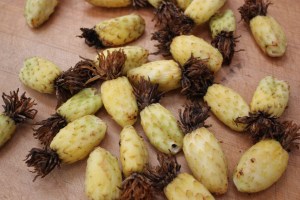
Barrel cactus is the generic term for a number of species of large barrel-shaped cacti.  The one with the most edible of fruit is the fish hook or compass barrel (Ferocactus wizlizenii).

Ferocactus wislizeni and zeph JAS 06

This species of barrel cactus is unlike many other species of cacti in that it often blooms two or even three times per year, thus providing you, the harvester, with ample fruits, often several times a year.
Ferocactus wislizeni fruit

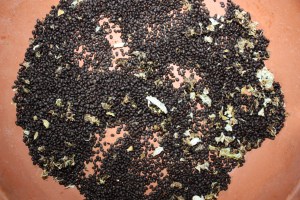
You can eat the lemony flavored fruit, but only in moderation.  Fruit is high in oxalic acid, which can be hard on human systems.  But the seeds are just fine to consume in quantity.  They are the size, texture and taste of poppy seeds and can be used anywhere you use poppy seeds.  They can also be cooked in with quinnoa or amaranth, or even eaten alone.

ferocactus fruit 1118

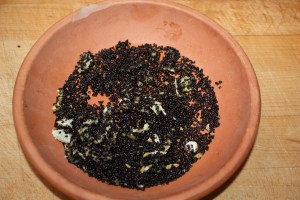
Barrel cactus seed are very simple to harvest in quantity because the seeds are easily removed from the fruit.

Harvest.
The average barrel cactus has 12 to 24 fruits ripe at once (unless the animals have been busy).  24 fruits yield roughly 1/4 cup of seed.

ferocactus fruit 1090
Prepare.  (10 minutes for 24 fruit).

Rinse the fruits.  This does two things.  First, this removes dust and contaminants (bird droppings etc.).  Second, the water softens the former flower petals on the top of the fruit, rendering them  gentler on tender fingers as you process them.

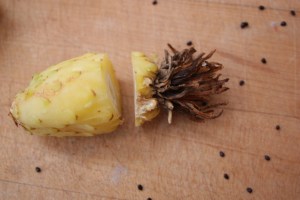
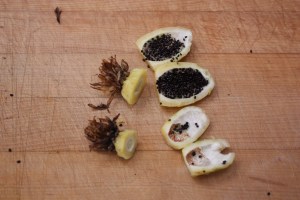
Cut tops off the fruits.  The seed filled chamber is surprisingly far down away from the flower petals.
ferocactus fruit 1099
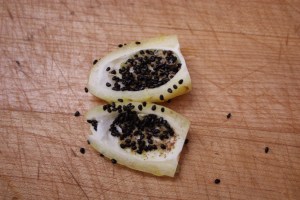
Cut fruits in half.

ferocactus fruit 1105
Scoop seeds into a terra cotta saucer.  Leave them 24 hours to dry.  This will help dry any bits of flesh clinging to them before you store them.  Alternatively you can put them right onto a baking sheet to toast them if you want to use them toasted.  I also keep a number untoasted and throw them in when I cook quinnoa or amaranth.

ferocactus fruit 1114

Processing tip:

ferocactus fruit 1091

Sometimes you find an empty fruit.  This is why we need our native pollinators!

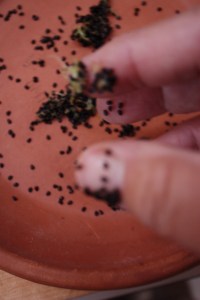
I like to make an assembly line and cut all tops off first, then cut all fruits open, then scoop all the seed. Why?  because the seeds inside the fruit may be gummed together and you want to leave the seed scooping to last, else you get sticky seeds everywhere and lose a portion of your crop all over everything.

ferocactus fruit 1095

JAS avatar

If you live in Southeastern Arizona, please come to one of my many free lectures.  Look for me at many branches of the Pima County Library, or possibly Steam Pump Ranch, Tubac Presidio, and more.  After each event I will be signing copies of my books, including the latest, (due out in September 2016) “Month-by-Month Guide to Gardening in Arizona,  Nevada and New Mexico (Cool Springs Press).

Mole Negro Grilled Burgers and Veggies

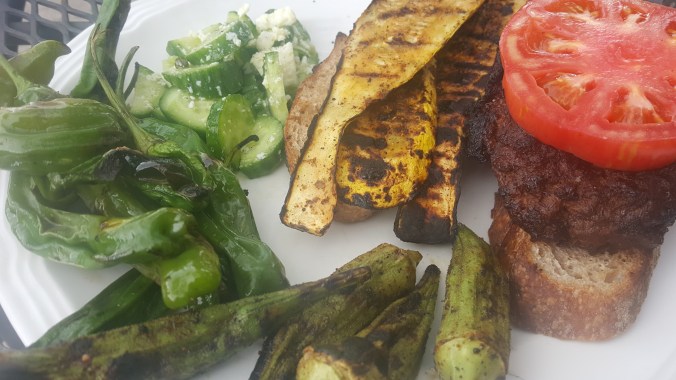
mealAmy here on a cloudy monsoon afternoon with a bounty of summer produce like long green chiles, Shishito peppers, okra, yellow squash and great tomatoes. It makes me want to grill and eat outside.
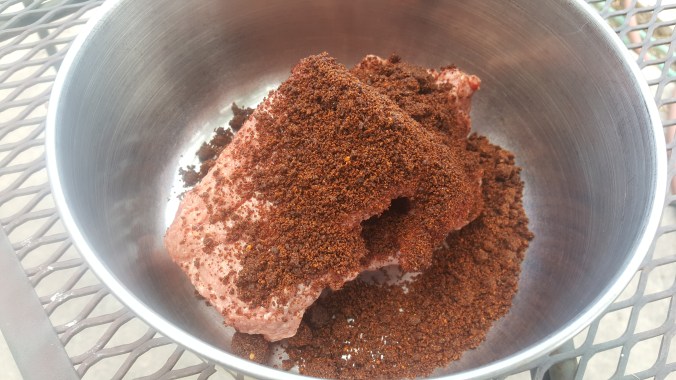
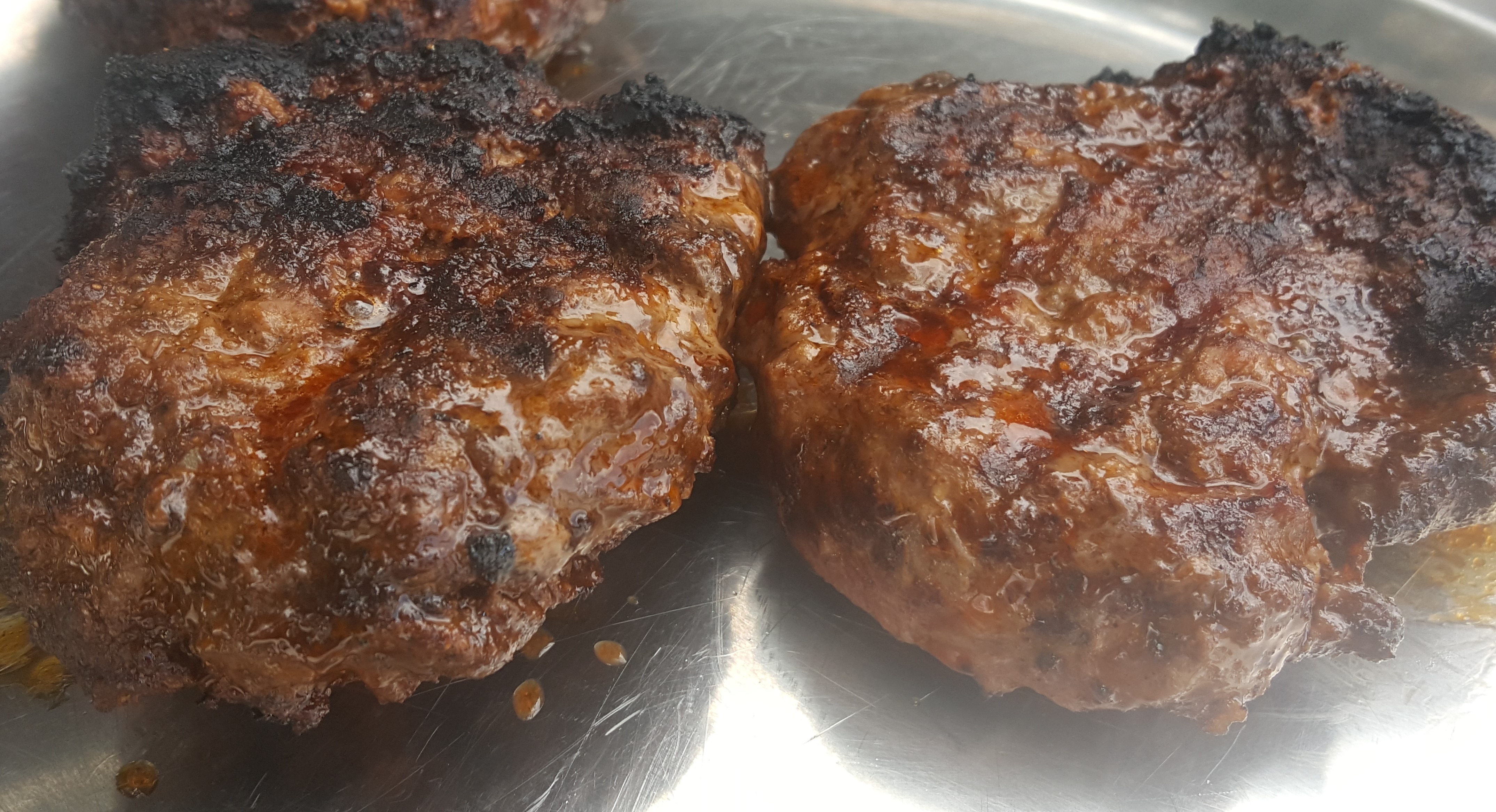
But my new friends want to try Mano Y Metate Mole, and the last thing I want is to make a formal meal. I wondered if burgers seasoned with mole powder would work…meat mix

Local pastured beef pairs well with the smoky, spicy, bold flavors Mole Negro in other forms, so that’s what I chose. I mixed the mole powder with not too lean meat and sent to the grill.

grilling burgers

cooked burgers

The juices from the cooked meat were infused with Mole Negro flavors. It exceeded my expectations.

tomatoes

I was thinking of a nice leaf lettuce to top burger, but that’s definitely not in season. Oh, tomatoes!

complete burger

Charred spicy meat, tomato, and a slice of sourdough whole wheat from Barrio Bread. Salt on tomato.

Without lettuce, I wanted something green in the meal. Wait, August means green chile!!!!!!

long green

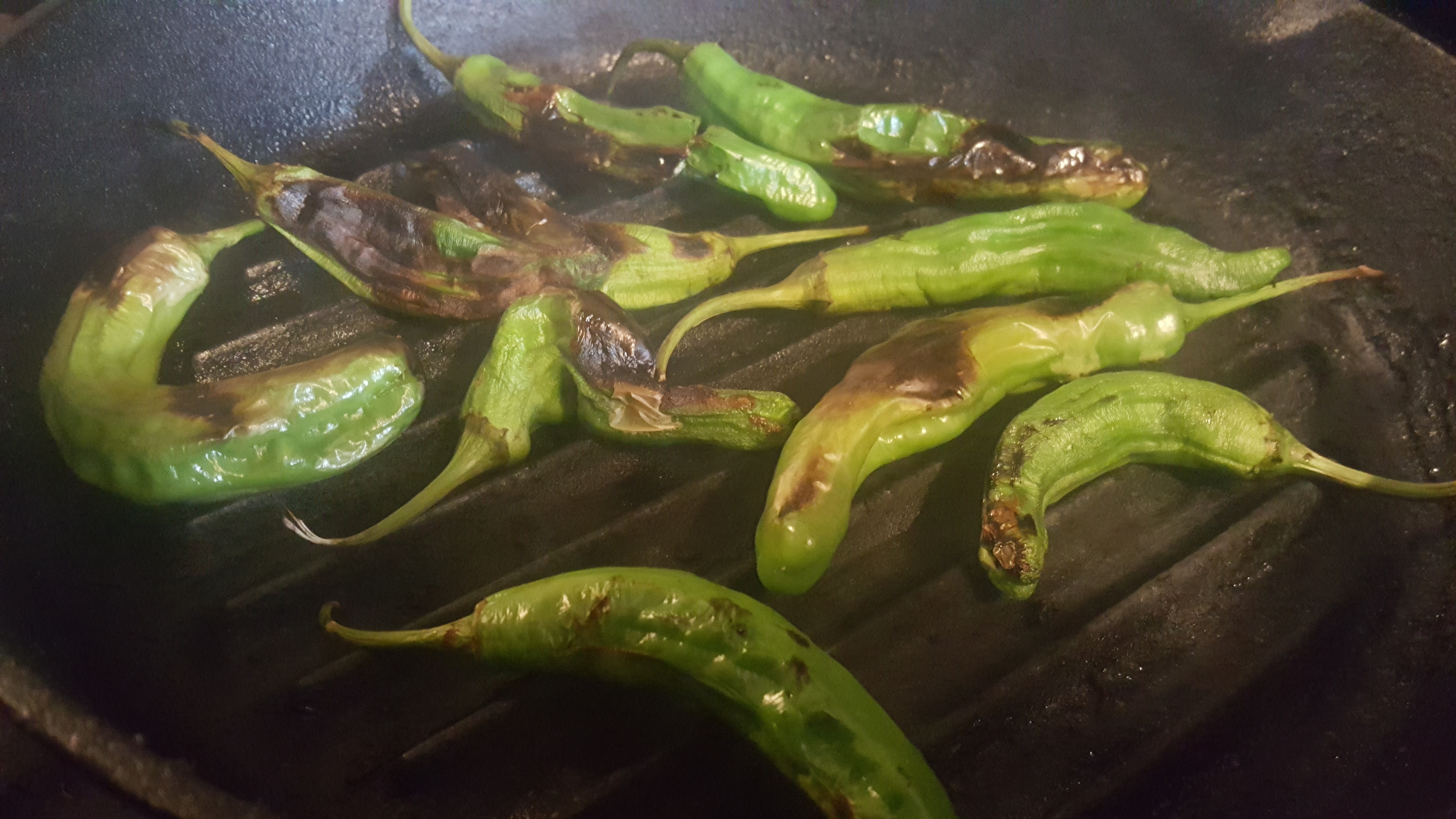
And Shishito peppers, too small for the grill but great in a grill pan. Most are completely mild, but about one in 20, surprise! The skin is so thin no need to peel, and the seeds so small no need to clean. Too easy and great flavor.

shishitoes

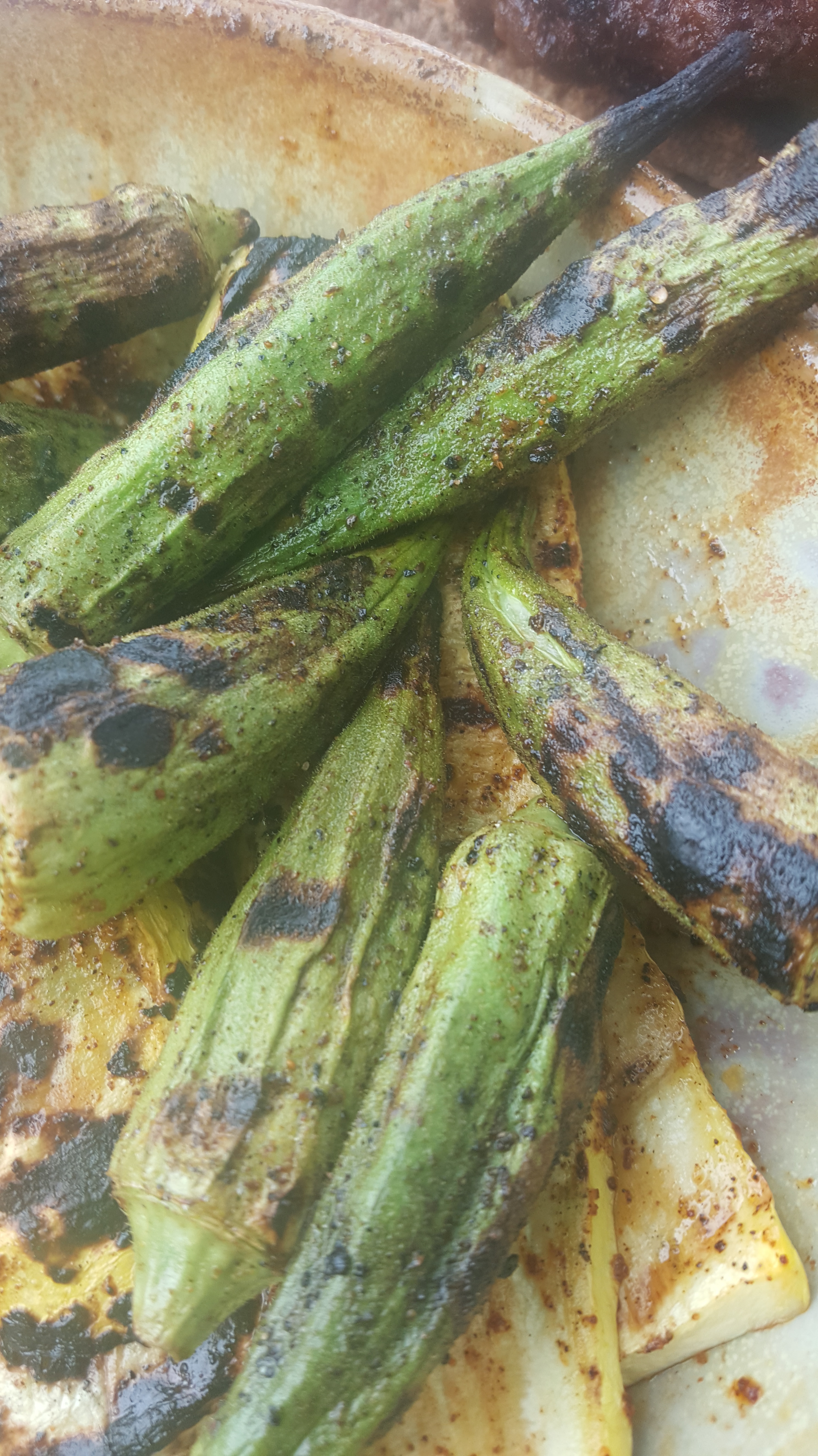
Also, I rolled some beautiful fresh okra in a splash of olive oil and Mole Negro powder.

grilling okra

cooked okra


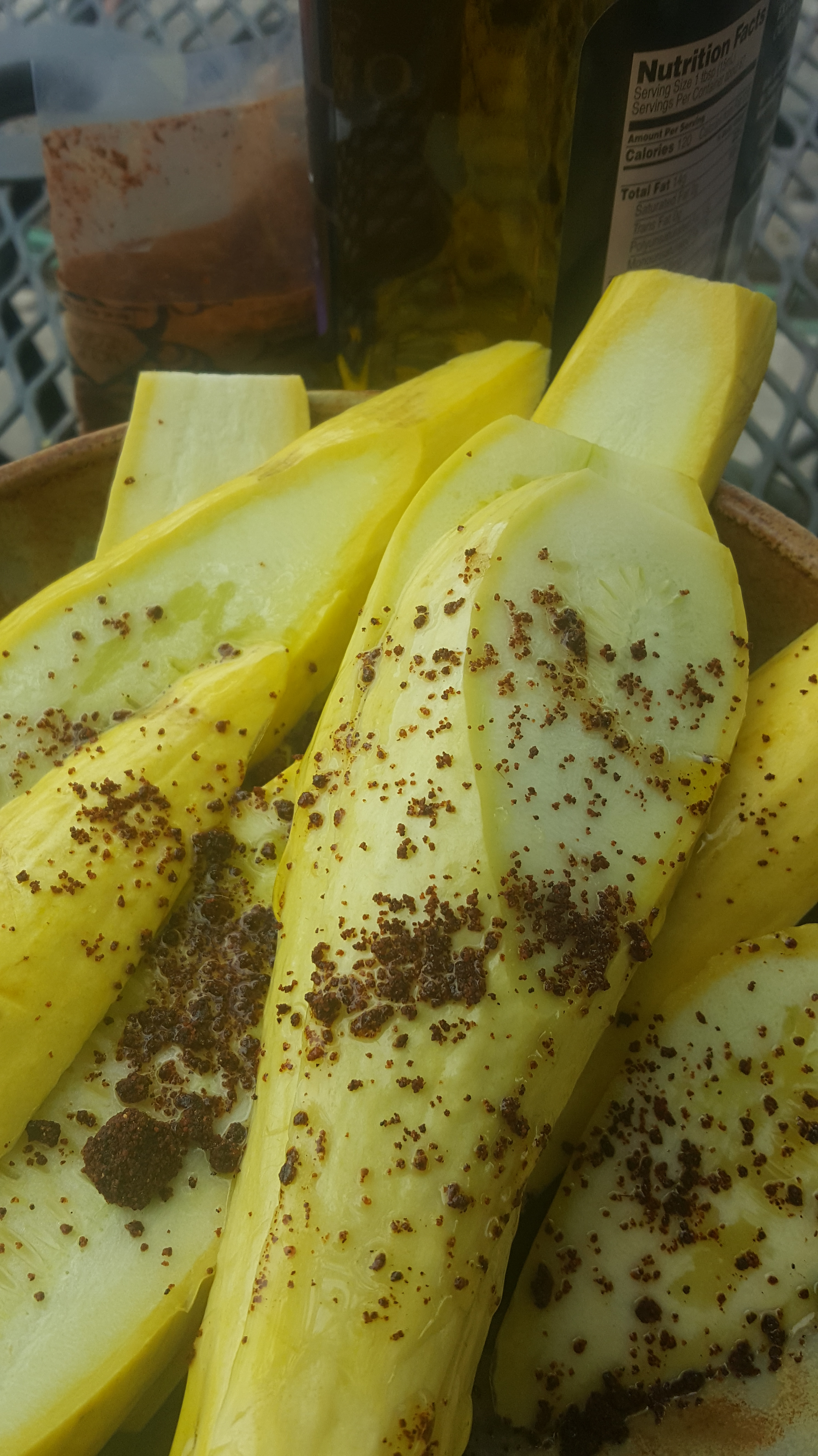
Grilled squash is one of my favorite foods in the whole world. I can’t grill without making some. First time with Mole Negro powder, though. It worked really well. Just toss with a splash of olive oil and sprinkle on mole powder to taste.

raw squash

grilling squashgriled squash2


cuke salad

For raw contrast, a quick cucumber salad with goat queso fresco, olive oil, black pepper and fresh basil.

Enjoy with prickly pear lemonade. Happy picnicking!

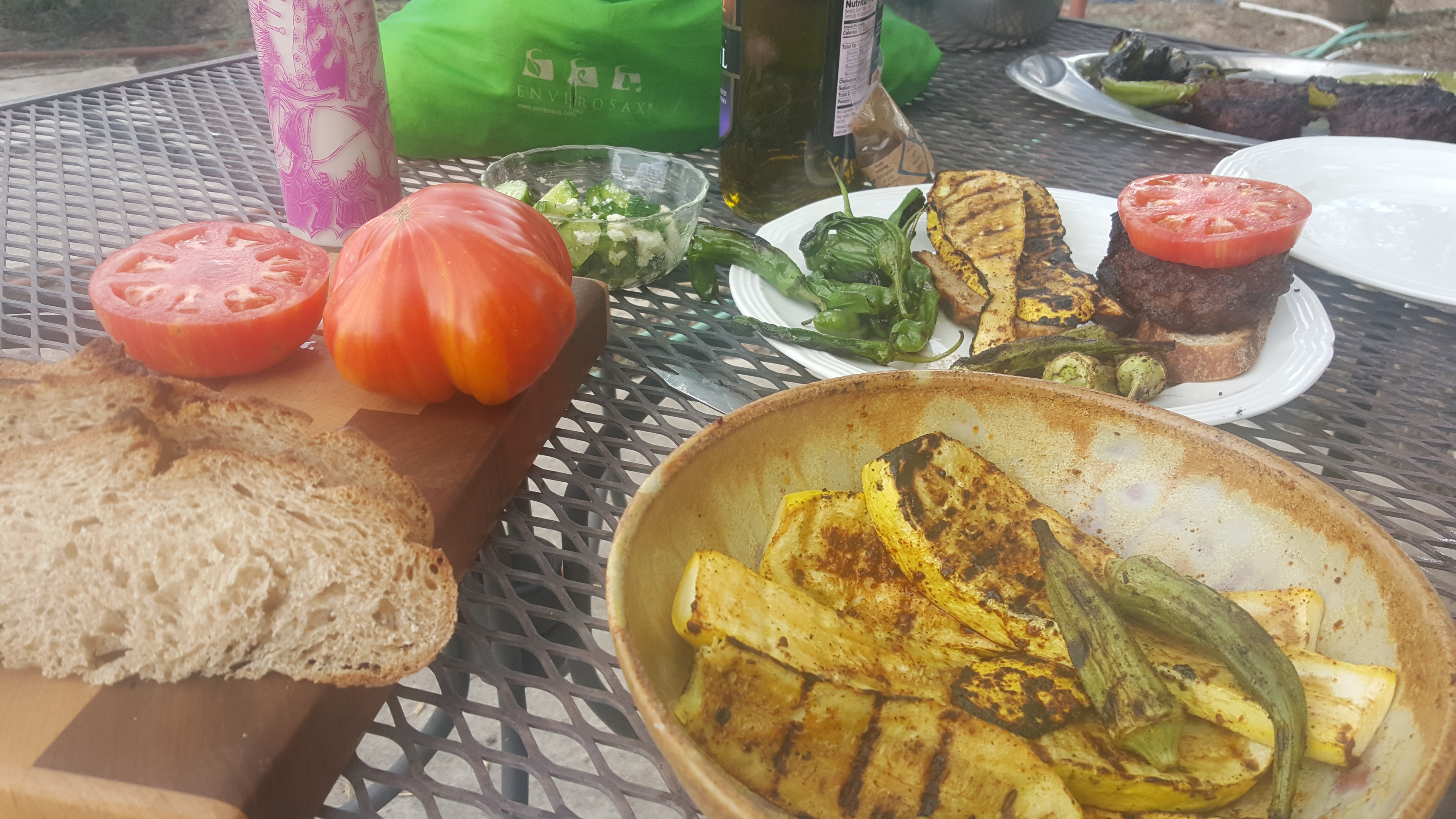
table

Mmmm….Ihbhai–the Marvelous Monsoon Prickly Pear

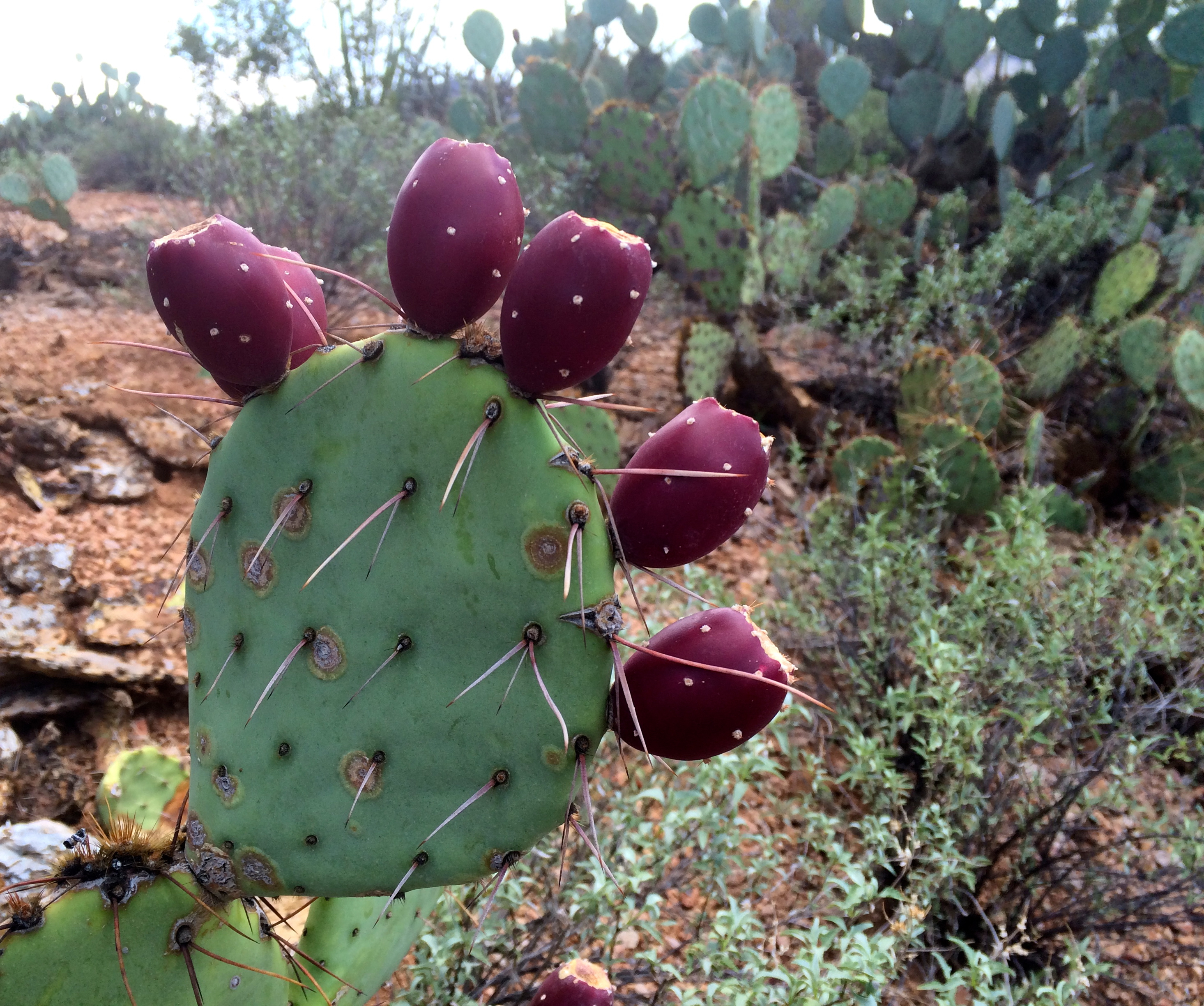
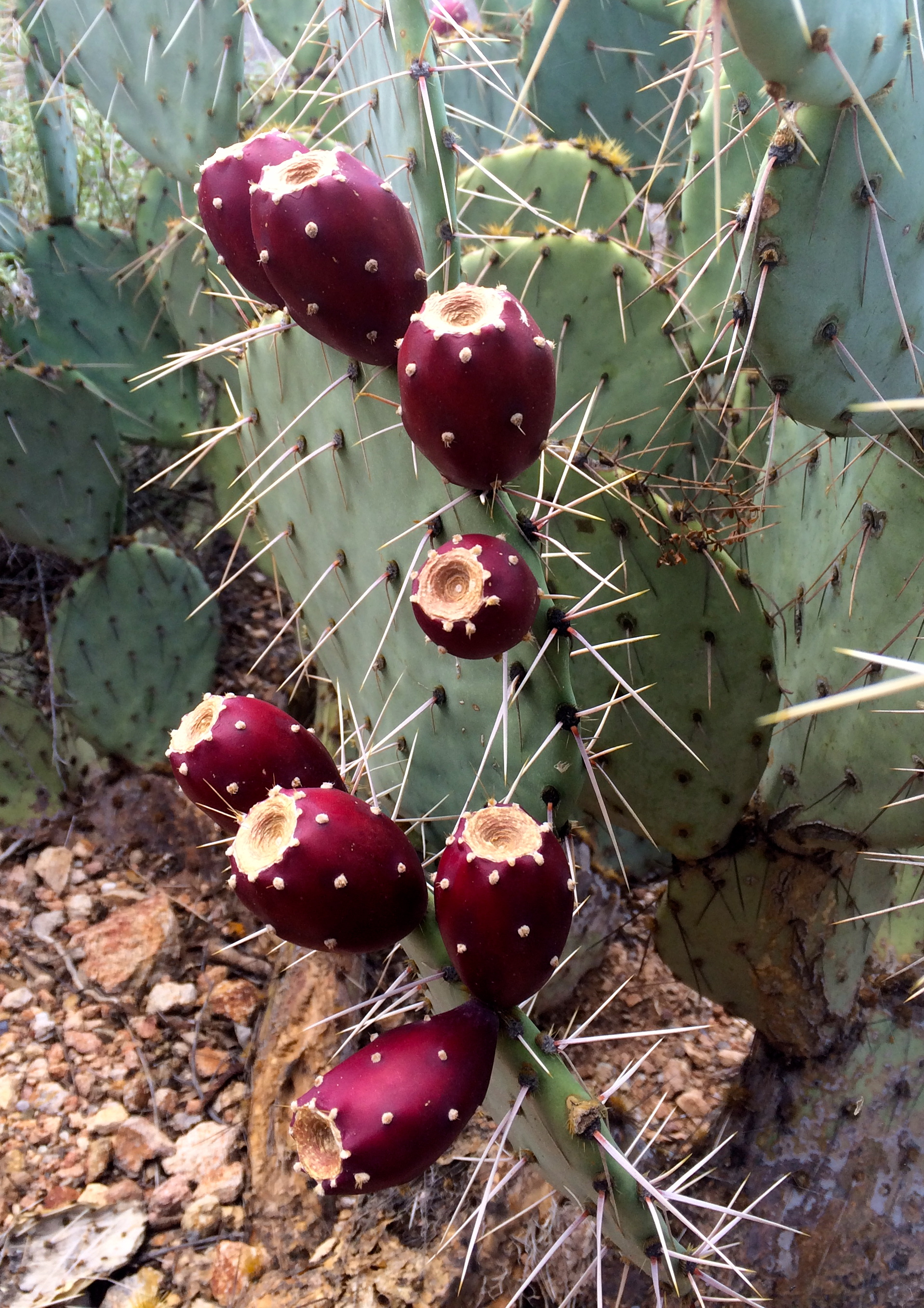
Prickly pear fruit in August monsoon ready to harvest

Prickly pear fruit in August monsoon—ready to harvest (MABurgess photo)

Welcome the late summer monsoon time of plenty!  You can feel life burgeoning.  The desert is vibrant with productive greenery.  Its birds and mammals are foraging in delight.  Spade-foot toads are up and singing their sheep-like song again!  It is time to pick prickly pears and put up their bounty for another year.

Tia Marta here to share encouragement for those who want to venture into desert harvesting (and an idea for  veteran-harvesters too.)

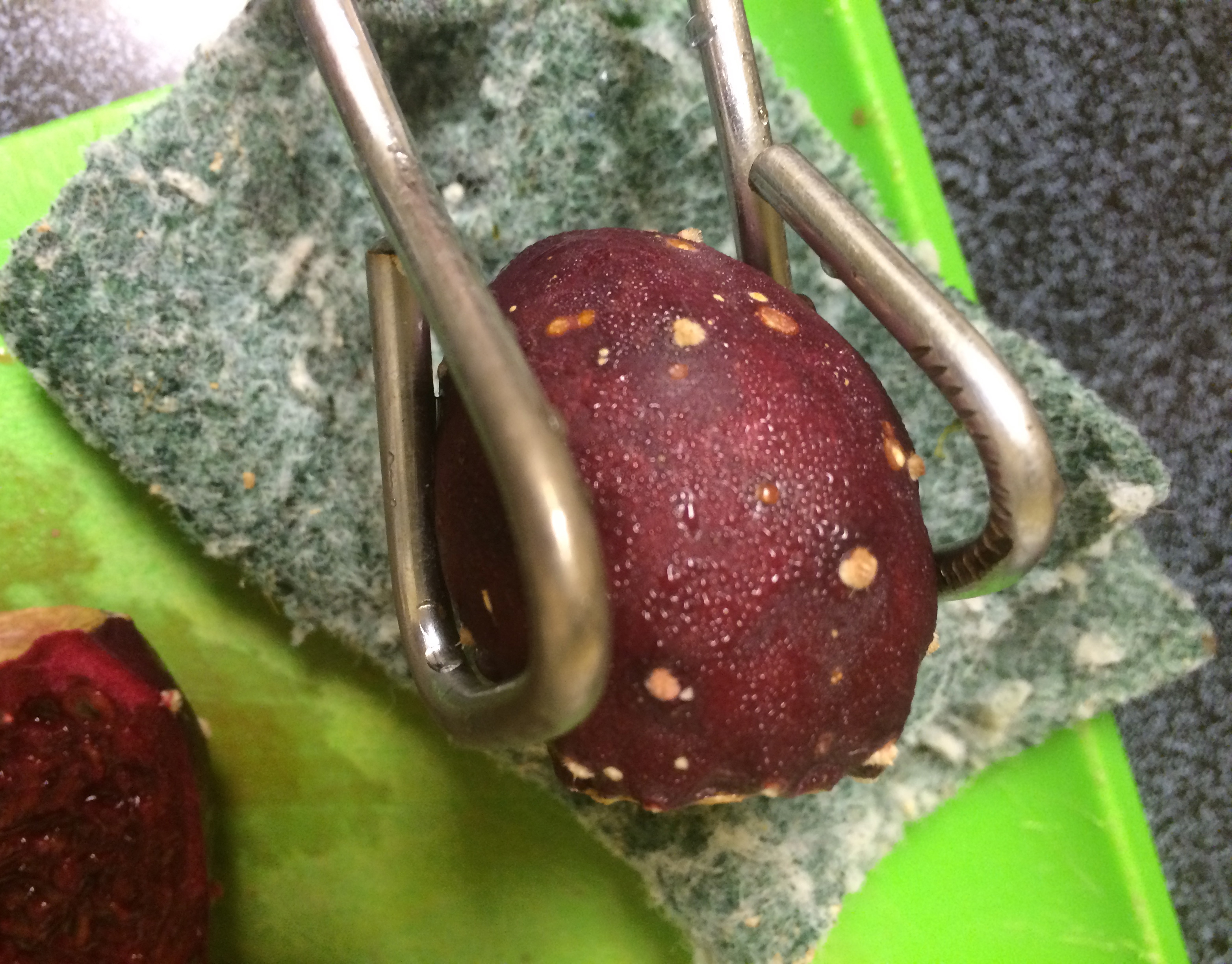
De-spining tunas with tongs and scrubbie

De-spining tunas with tongs and scrubbie

Be not afraid!  Just be aware.  When walking among spiny prickly pear cacti, don’t wear loose clothing or it is sure to pick up spines that return to haunt you in the oddest ways.  Use long, accurately-grabbing tongs for picking prickly pear fruits (aka “tunas”).  Go for the darkest purple fruits, leaving ones with a greenish base to harvest later, or for the wildlife.  Polkadots on the fruit (called areoles) are each covered with tiny hairlike spines called glochids.  Needless to say, they are a real  nuisance and pain.  Veteran harvesters get used to pulling glochids out of their skin with their incisors, which can be more accurate or faster than tweezers.  [For better or worse, I’m resigned to having a few festering little glochids in my fingers during the entire harvest season–like oh well, it’s worth it!]

I de-spine my tunas under running water with a scrubby (such as Scotchbrite) dedicated to that sole purpose.  I’m careful to only use one side of the scrubby while cleaning all my fruits, then, when done, it’s into the trash.  Some people swear by using heavy rubber gloves.  I prefer not to destroy gloves, preferring rather to have control that unfettered hands with tongs afford.

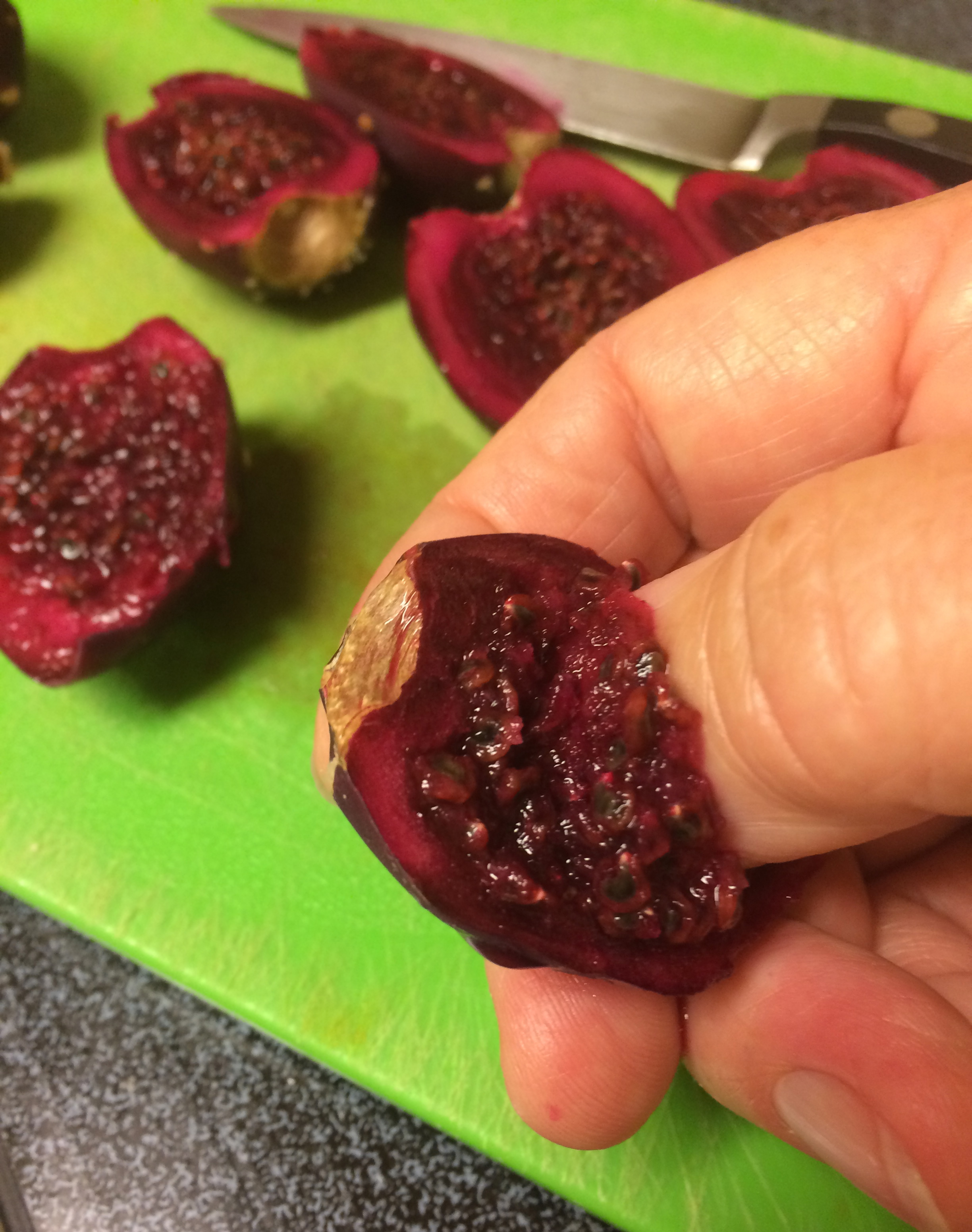
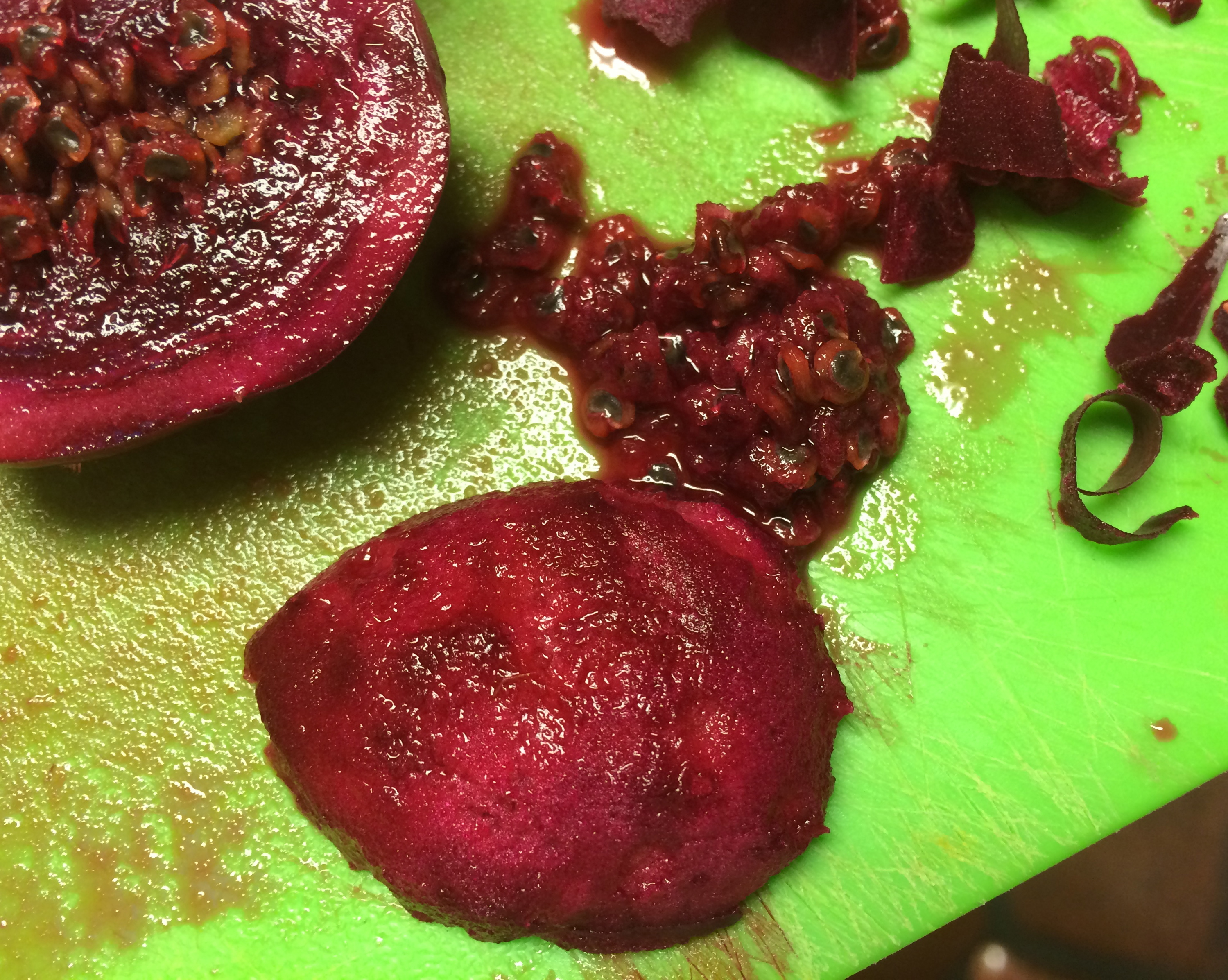
Scooping out seeds from prickly pear fruit cut in half

Scooping out seeds with back of thumb from prickly pear fruit cut in half

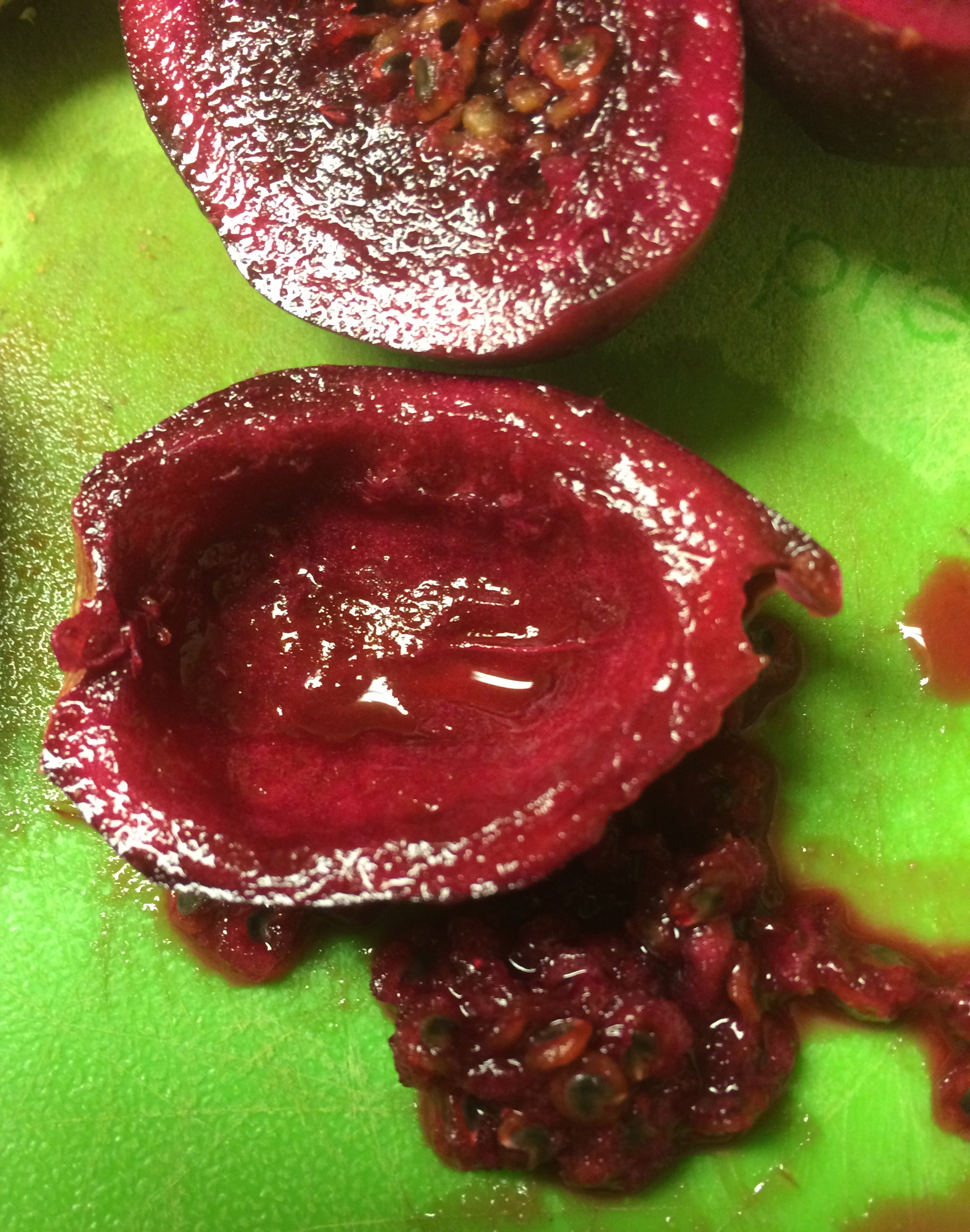
De-seeded half prickly pear fruit

De-seeded half prickly pear fruit–You can sieve good juice from masses of seed.

Peeled and de-seeded half tuna

Peeled and de-seeded half tuna

After de-spining, cut your tunas in half and scoop out the little hard seeds.  My Tohono O’odham mentor taught me to just use the thumb, as it can feel where the seeds are hiding.  Make sure ALL seeds are washed out, as you do not want to encounter them with your teeth in a pleasant bite of your coffeecake.

Inspired by Carolyn Niethammer’s Prickly Pear Cookbook (Univ. of Arizona Press), I’ve designed a Sonoran Desert prickly pear muffin and coffeecake recipe that celebrates the additional flavors and nutrition of mesquite meal and heirloom white Sonora wheat flour.

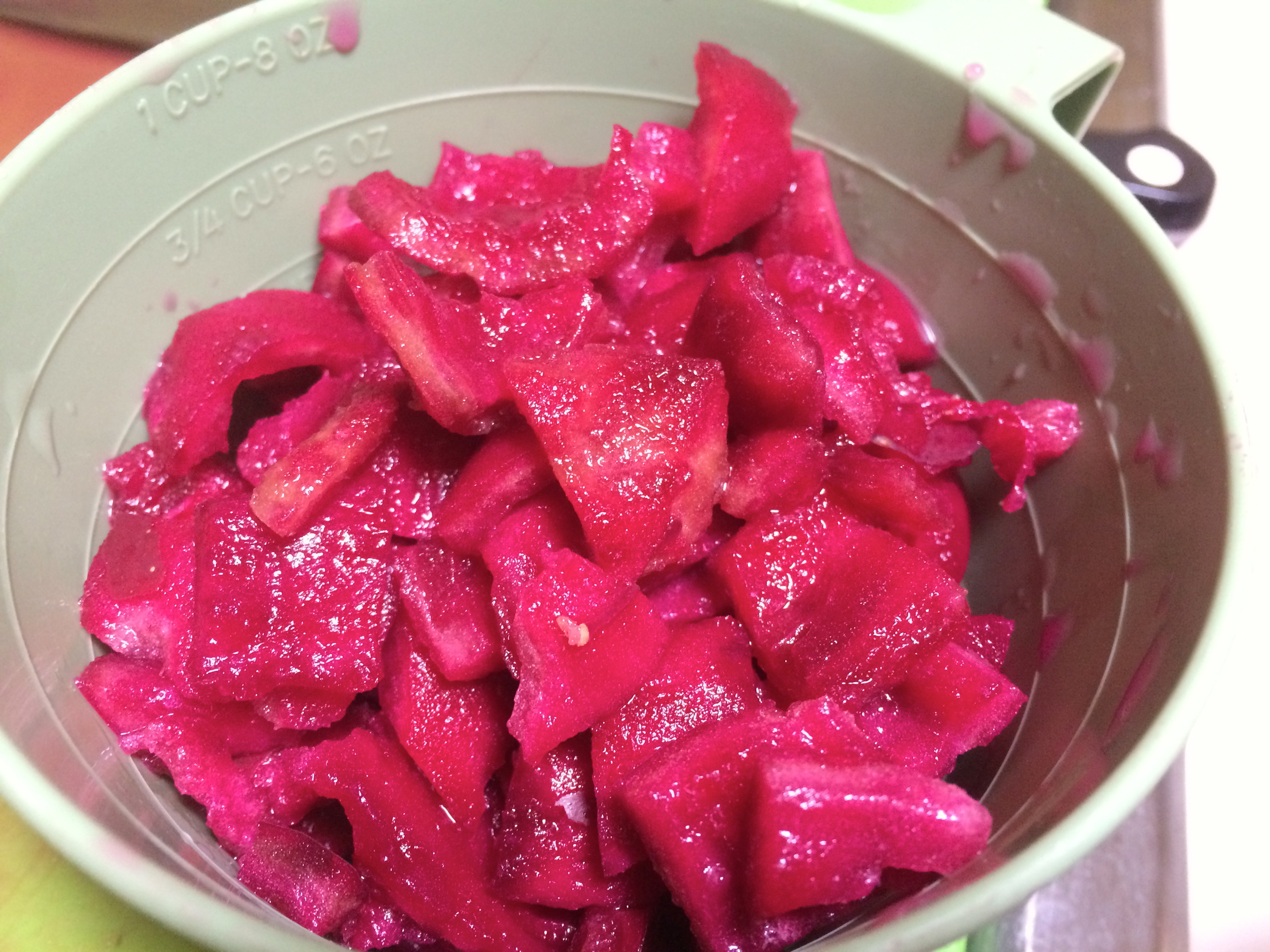
Prickly pear fruit chunks prepped for baking

Prickly pear fruit chunks prepped for baking

RECIPE:  Prickly Pear,-Mesquite-White Sonora Wheat Muffins and Coffeecake

                                                         (Ihbhai c Kui Wihog Pas-tihl)

Ingredients:

1/4 cup mesquite flour or meal

3/4 cup heirloom white Sonora wheat flour

1 cup all purpose flour

2 tsp baking powder

1/4 tsp sea salt

1/4 tsp cinnamon

1/4 cup butter melted, or oil

1/4 cup sugar OR agave nectar

1 lg or 2 small eggs

1/3 cup milk or almond milk or soy milk

1 cup fresh prickly pear chunks

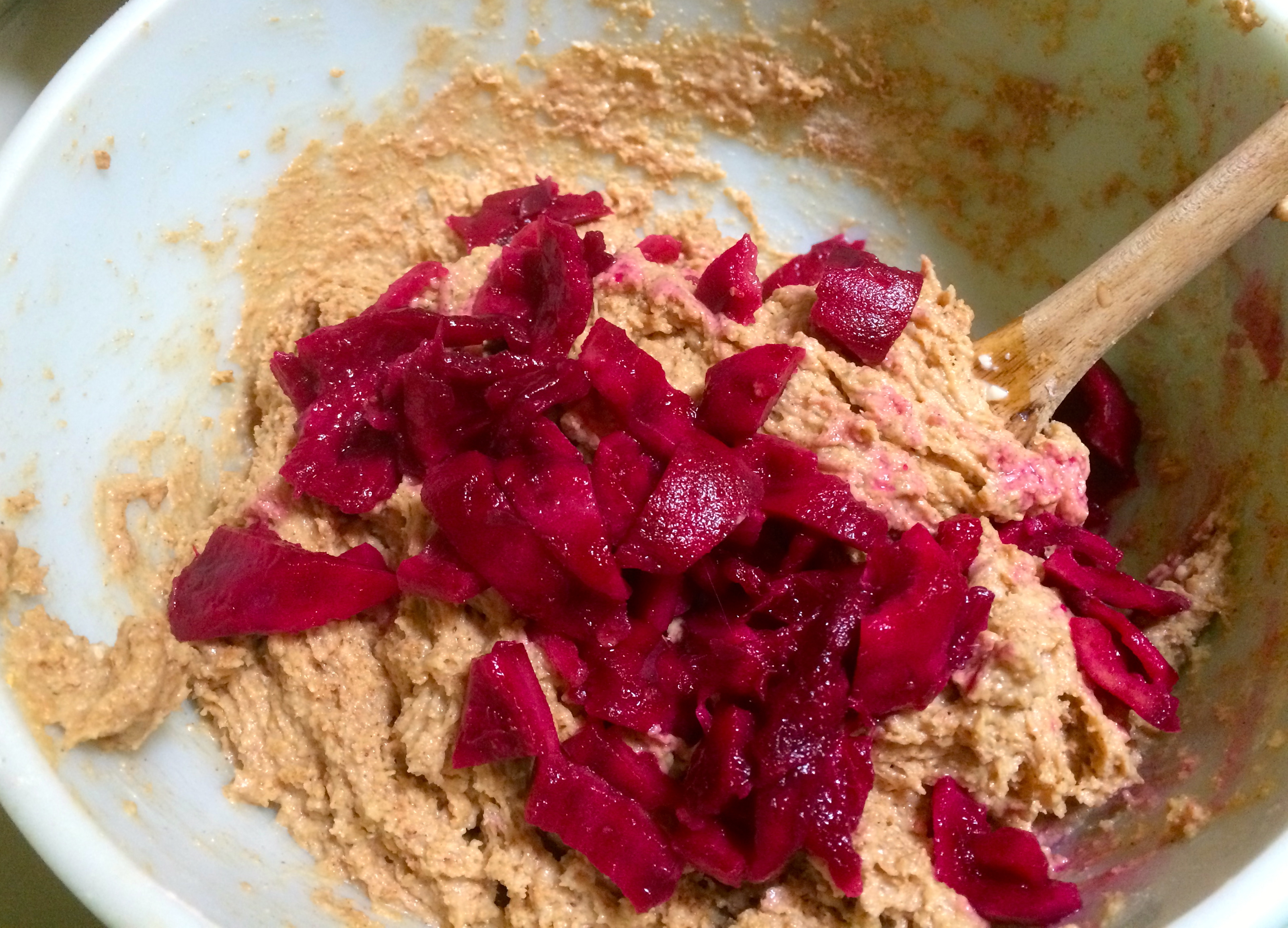
Directions:  Prepare fresh prickly pear chunks according to visual instructions above.   Preheat oven to 400 degrees F.  Grease and flour a small baking dish or 8-10 medium size muffin cups.  Sift all dry ingredients in a mixing bowl.  In a separate bowl, cream butter; add sugar or agave nectar; beat in egg(s).  Add wet ingredients into dry ingredients.  Fold in prickly pear chunks and any juice into batter.  Spoon batter into baking dish, patting gently, or into muffin tins filling to half.  Bake 20 minutes or until turning golden on top.  This coffeecake is not super-sweet.  It can be served hot with jam for breakfast and tea, or cool with a little scoop of vanilla yogurt or ice cream for dessert.  Great nutrition and natural flavors!

Into the batter go the tuna pieces!

Into the batter go the tuna pieces!

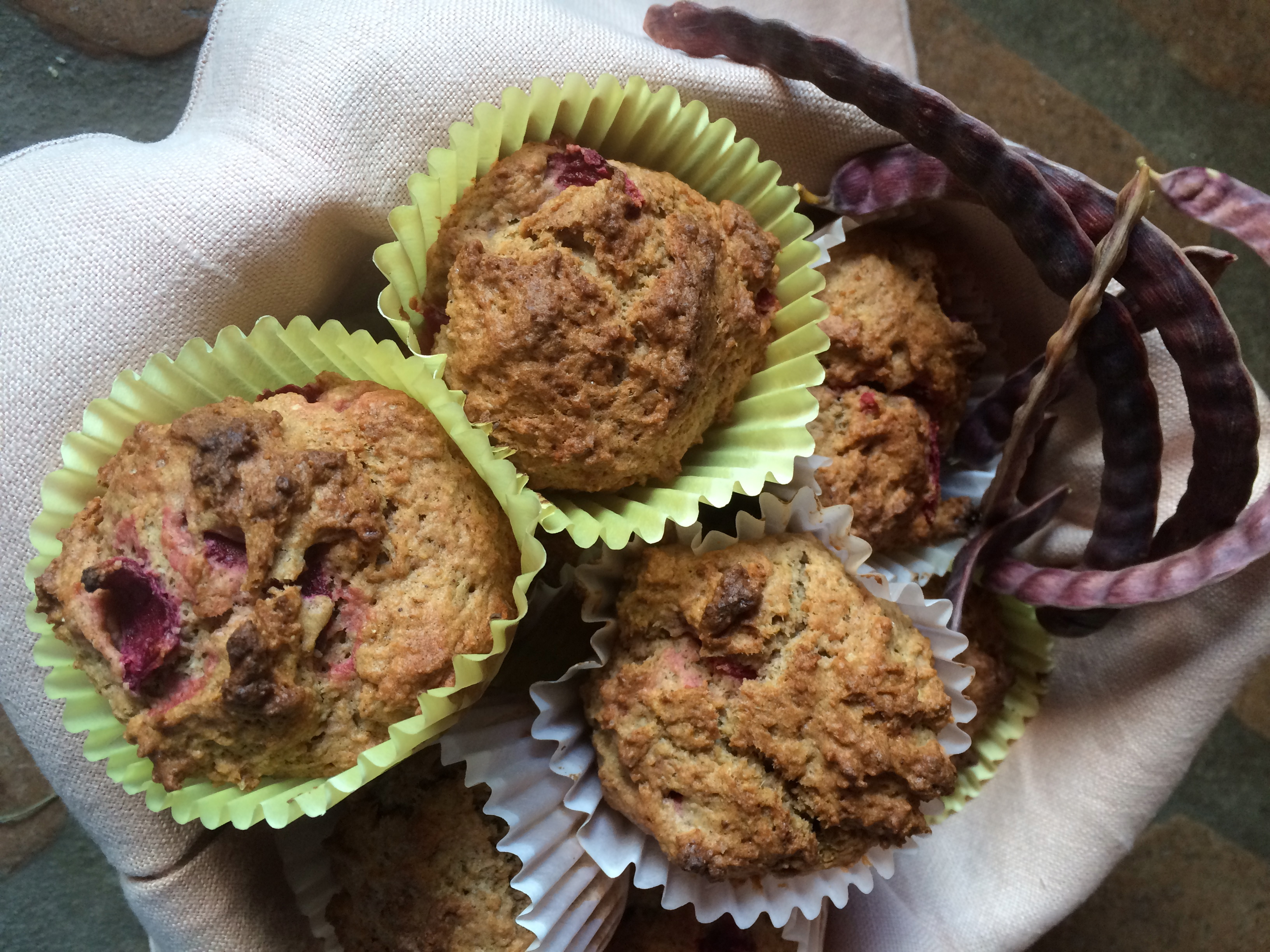
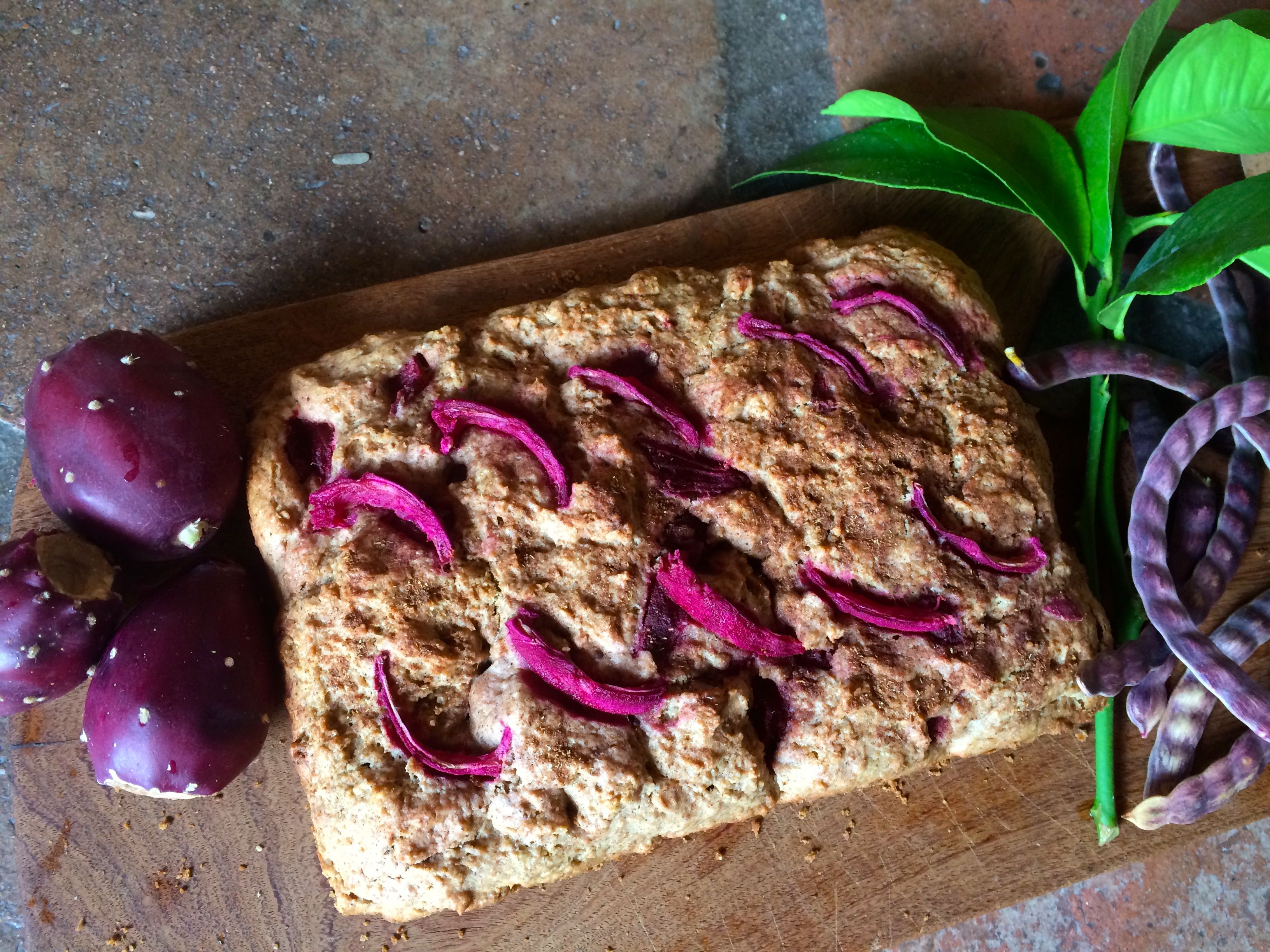
Prickly pear mesquite muffins (with purple mesquite pods)

Prickly pear mesquite muffins (with purple mesquite pods)

Prickly pear-mesquite coffeecake (Ihbhai Wehog Pas-tihl) ready to serve

Prickly pear-mesquite coffeecake (Ihbhai Wehog Pas-tihl) ready to serve


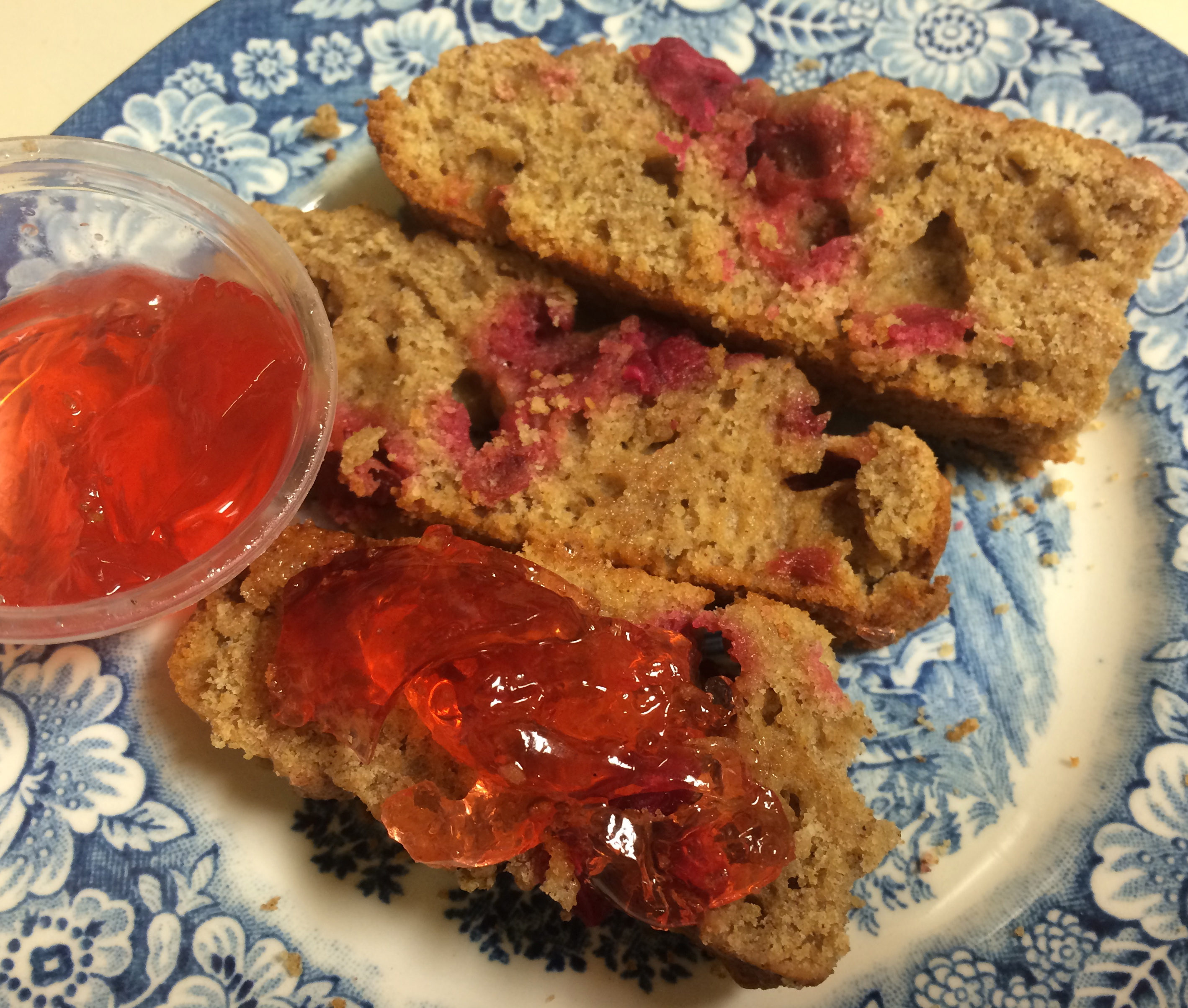
Gilding the lily?--No Way!--This Prickly pear coffeecake loves prickly pear jelly on top!

Gilding the lily?–No Way!–This Prickly pear coffeecake loves prickly pear jelly on top!

What a wonderful way to celebrate the season with desert wild-food gifts!  Enthusiastic thanks to Tohono O’odham families for sharing their traditional food ideas.

Luscious tunas washed by monsoon rains and ready to pick--carefully!

Luscious tunas washed by monsoon rains and ready to pick–carefully!

It’s up to YOU to harvest your own fresh ihbhai.  As for finding mesquite flour and heirloom white Sonora wheat flour, go to NativeSeedsSEARCH or http://www.nativeseeds.org; http://www.flordemayoarts.com; San Xavier Coop Association; http://www.desertharvesters.org; http://www.bkwazgrown.com;  or http://www.HaydenFlourMills.com.


On Anchoring and Expanding

Linda here. Rain fell this week in the Old Pueblo.   Intermittently gentle and torrential, it made sweet sounds as it hit the earth, and life here now feels anew.

IMG_1933

Two hummingbird eggs discovered – July 15th. 2016.


Hummingbirds construct their nests with spider webs both to anchor their nest securely to X or Y-shaped branches, as well as to allow the nest to expand without breaking, as the hatchlings grow.

(Check out March 6th & April 3rd, 2015 posts for more on spider silk and nest construction).

IMG_2018

These baby hummingbirds, have just hatched. The top one hatched one day before the bottom one. The bottom one hatched just hours before I took this photo, July 19th, 2016. You can still see the remnants of the egg shell. Note all the space they have at this point in time.

IMG_2164

July 30th – the nest accommodates their rapid growth.

IMG_2170

The very same hatchlings (can you see both beaks?) and the very same nest; this photo taken August 1st, 2016.  Spider Silk elasticity allows for  such nests to expand without breaking. And the nest is still well anchored –  able to handle the weight and movement of these robust and thriving birds.

It is funny what can anchor. And expand without breaking.

A superficial glance at a spiderweb and it appears deeply delicate.

Fragile.

Without much substance.

Nearly etherial.

Yet, as the photos show, spider silk anchors the hummer nests, so that they can ride out the tougher aspects of life, like wind and storm. The qualities of the webbing woven into the walls of the nest protects them from themselves – and the robust antics  of their gorgeous growing selves.

Paradox seems at play here:  that the qualities of flexibility and elasticity offers such strength.

IMG_2226

August 2nd, still expanding and going strong.

It is funny what can anchor us. And expand us.

A few months ago I subscribed to a meditation app called Headspace (https://www.headspace.com/)  . During my practicing this week, it occurred to me that the qualities of mind that meditation offers, function much like the webbing woven into a hummingbird nest. Again, at first glance, we can  easily miss the power of meditation to anchor and expand the mind. The practice of breathing. The practice lightening up. Of letting go.

Again, it is the very quality of lightness that has all the strength. By freeing the mind up a bit; by not taking every thought Oh-So-seriously;  or even ourselves so seriously, we are both anchored and expanded.  We can get down to the serious business of life a bit more playfully.  And perhaps, play our part in the web of life a bit more joyfully.