Spring Salad

cholla 2016

Amy collecting cholla buds

Some years, spring seems to last about a week in the desert, going from winter to summer too fast. When the weather is beautiful, we know to celebrate these days outside!!!!

blog 20160415_100732

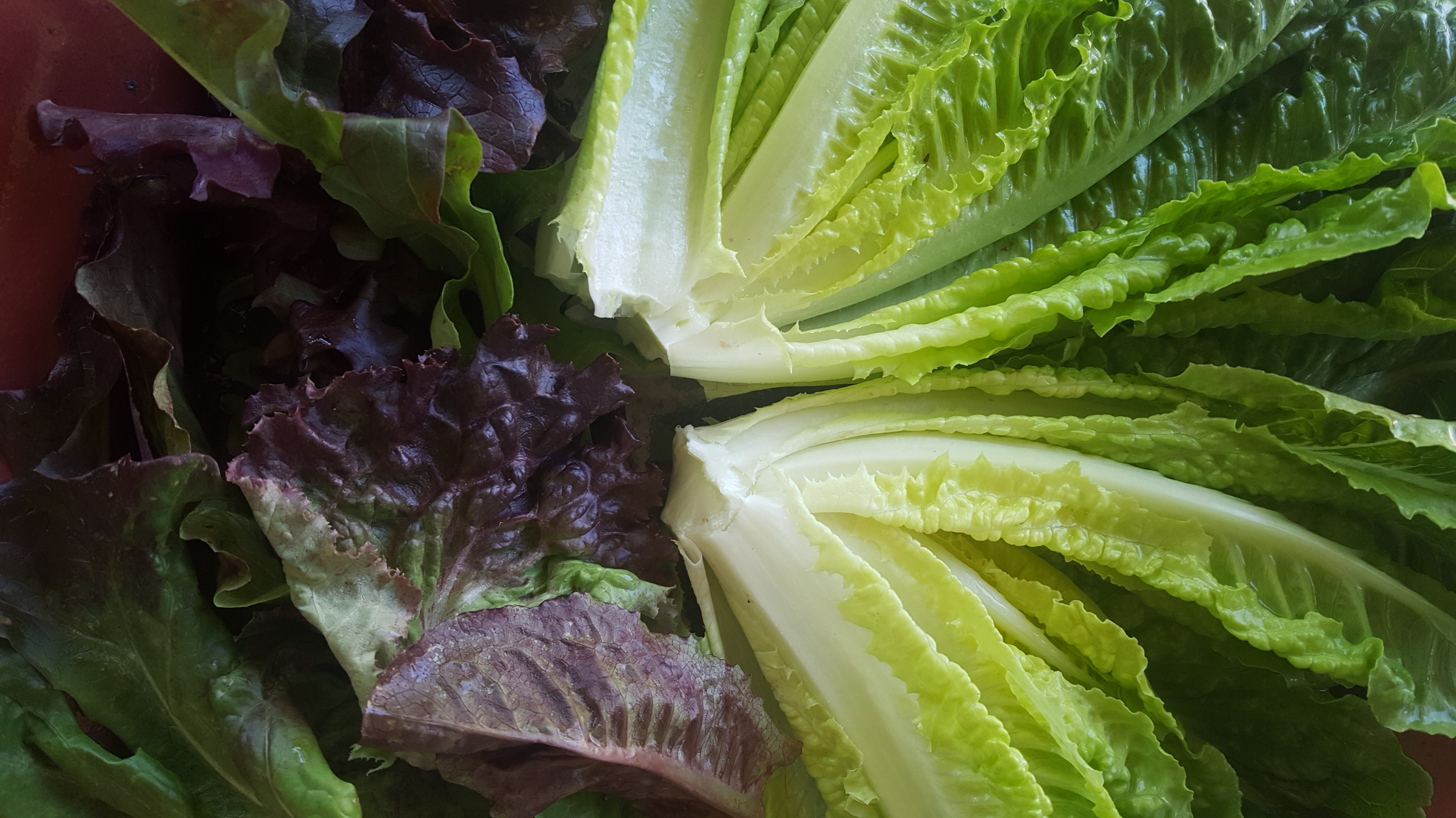
Romaine hearts and assorted red lettuces

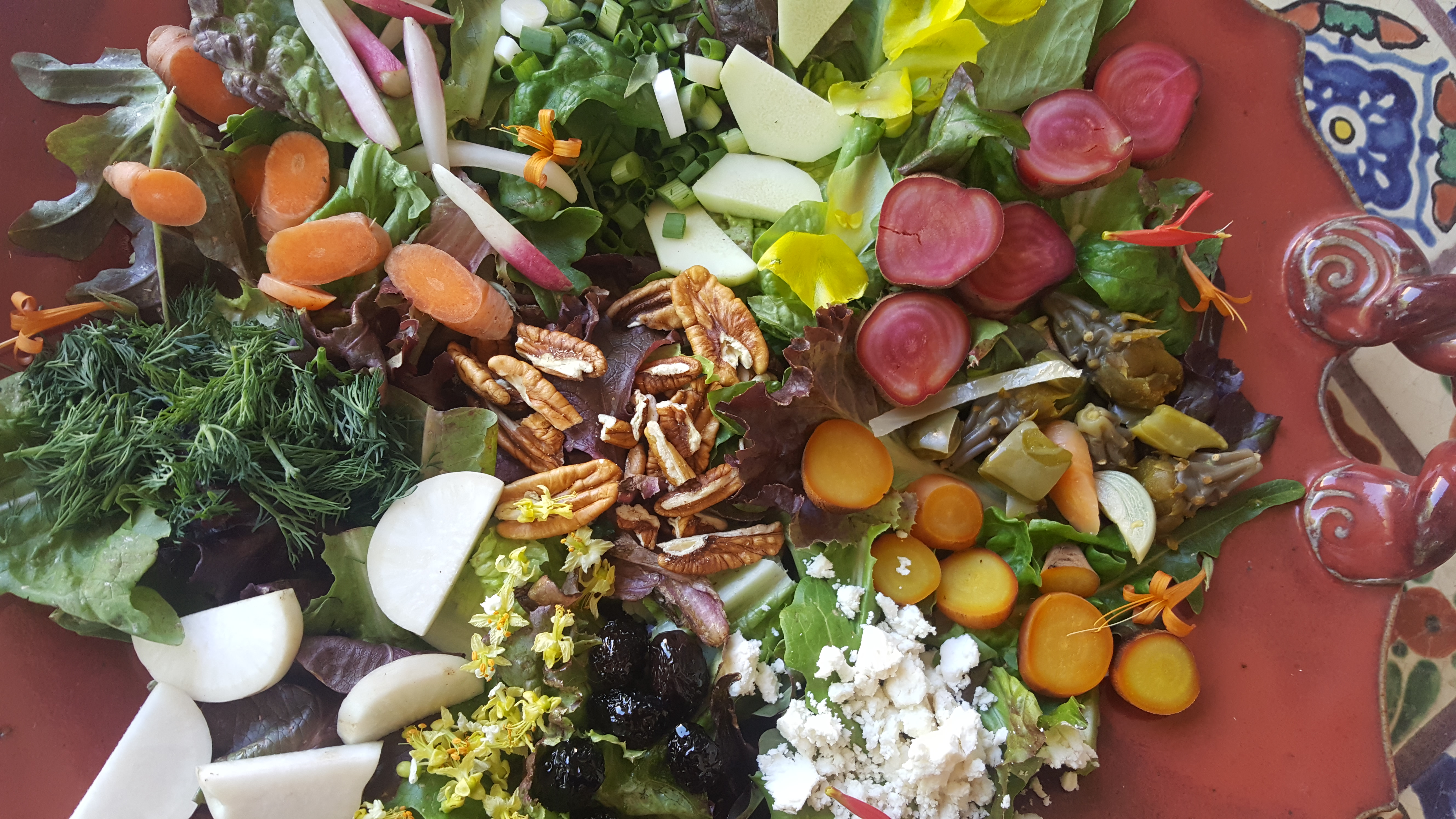
Winter lettuces are still around for a short time more, and the weather is finally warm enough that I feel like eating a salad. Here is a salad made with ingredients I had on hand. I traded for most items, the exceptions being the items I made. I hope this serves as an inspiration to go to a farmers’ market, use little bits of what you have in the refrigerator, go into the desert near your home, and forage in your yard.

blog 20160415_093007

Hakurei turnips, Chioggia and Golden beets, Carrots, Kholrabi, , and French Breakfast Radishes.

Hakurei “salad turnips” are so sweet and tender, they can win over stubborn turnip haters, and are a treat raw for turnip lovers.

I steamed and sliced the beets, peeled and sliced the kholrabi, and simply sliced the turnips, carrots and radishes.

I'itoi onions and dill.

I’itoi onions and dill.

For fresh herbs, I used dill and I’itoi onions. I like the green tops as much as the white parts.

Crusts of Small Planet Bakery Cottage Wheat make excellent croutons. Just chop, drizzle with olive oil, salt, and garlic powder (my guilty pleasure), then toast in a skillet until crunchy.

blog 20160415_104817

Heels of Cottage Wheat.

blog 20160415_104958

Cast iron skillet croutons.


blog 20160415_085613

Brined goat feta.

20150910_120612

Mango Salsa.

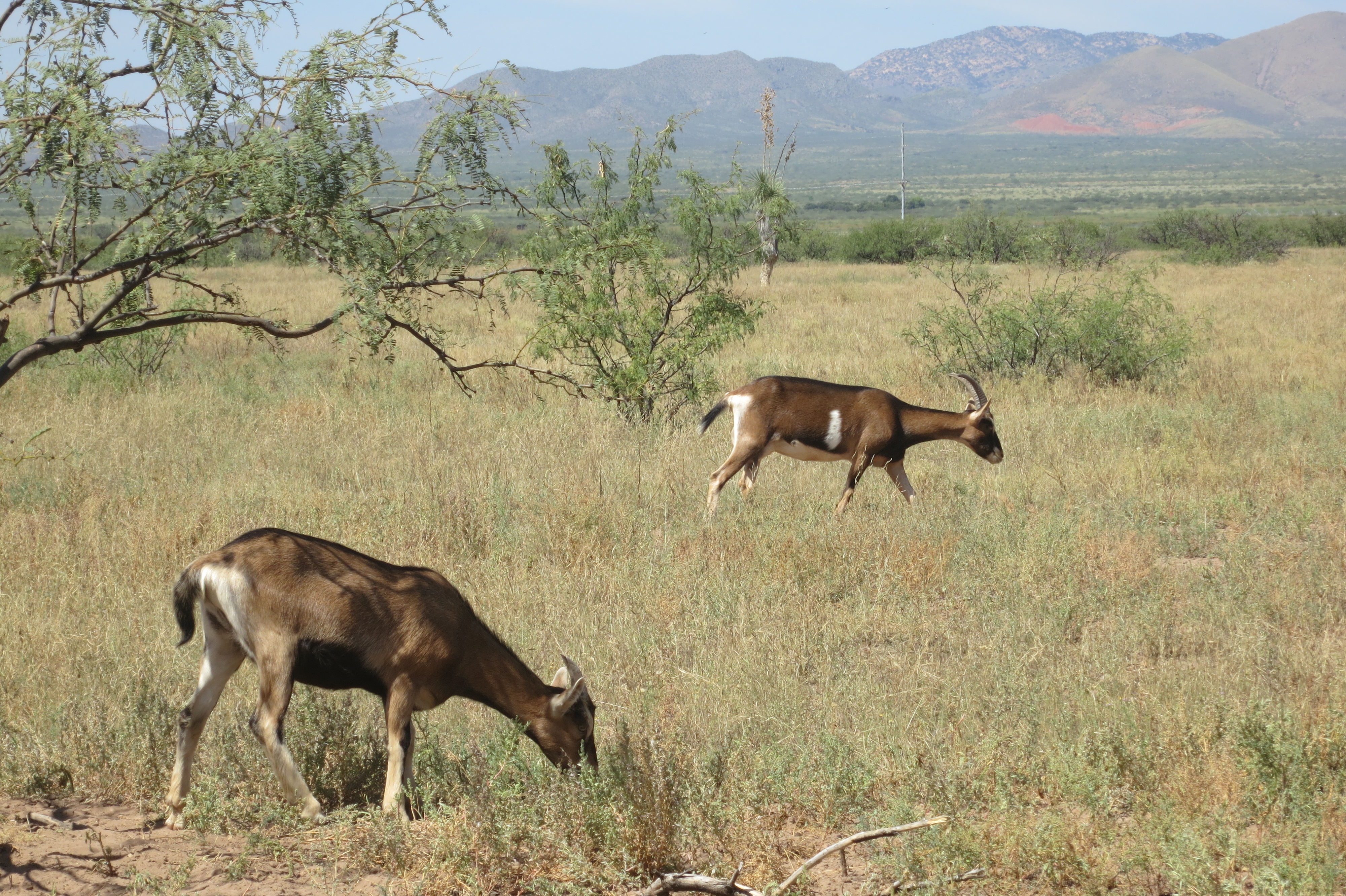
Last fall, I goat/house sat for a friend, and this is the feta I made from the milk. Mango the goat has mellowed over the years since I first learned to milk and she first learned to be milked.

IMG_3508

The heard on the grassland.


IMG_3517

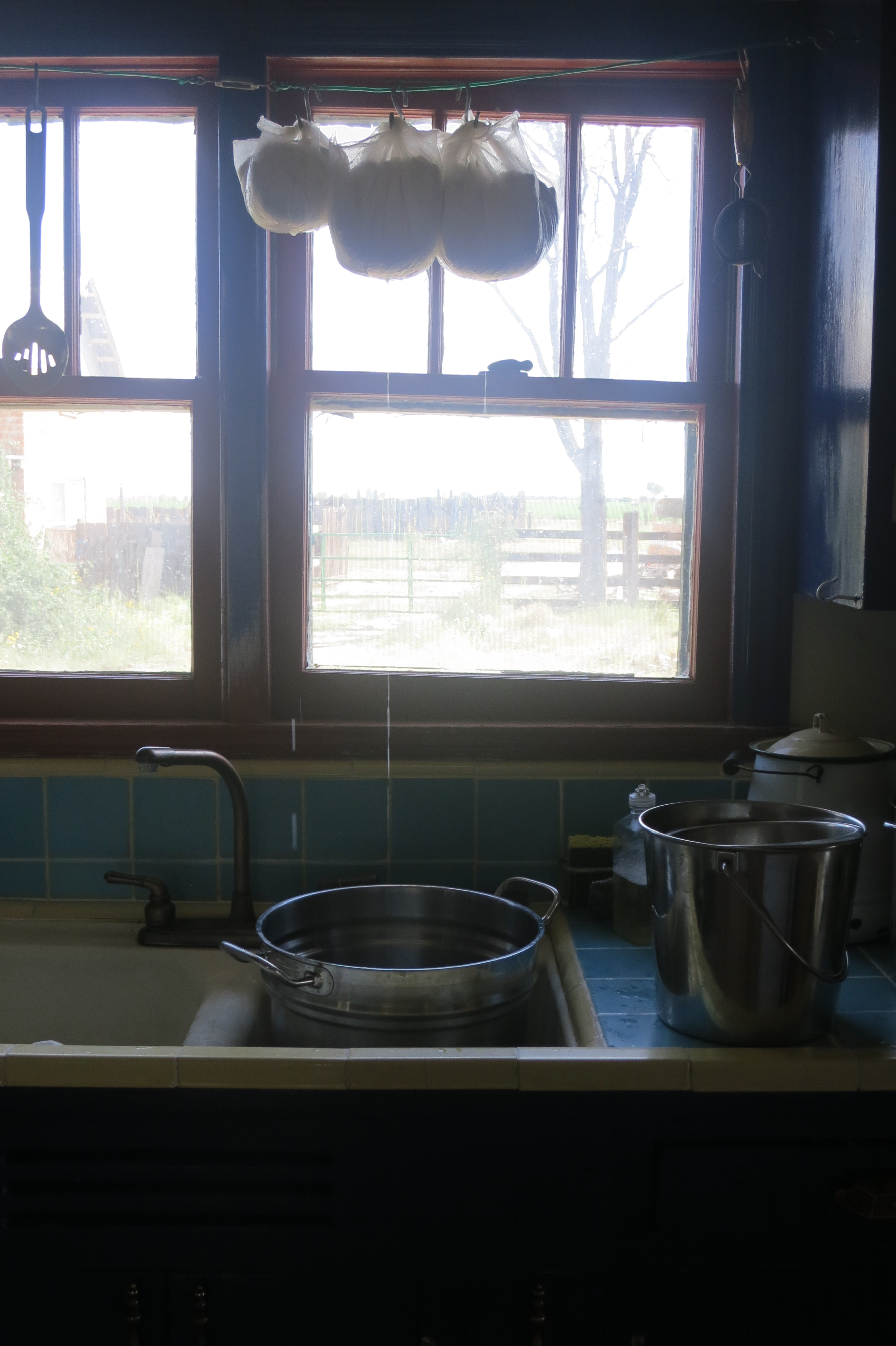
Fresh cheese curds draining whey.

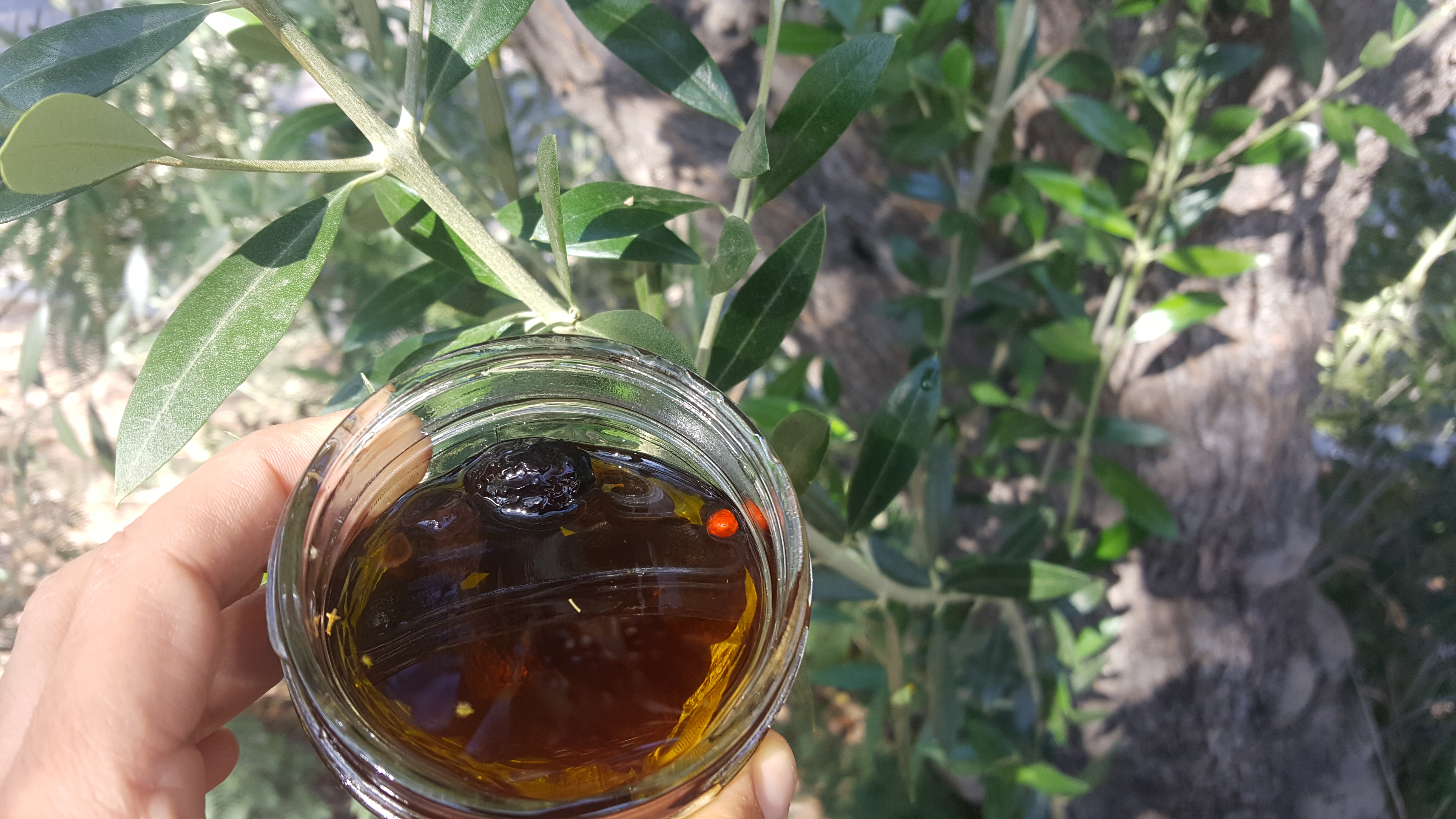
Solar cured olives from Bean Tree Farm.

Solar cured olives from Bean Tree Farm.

Pickles! Cholla buds and nopalitos en escabeche.

Pickles! Cholla buds and nopalitos en escabeche.

blog 20160415_103012

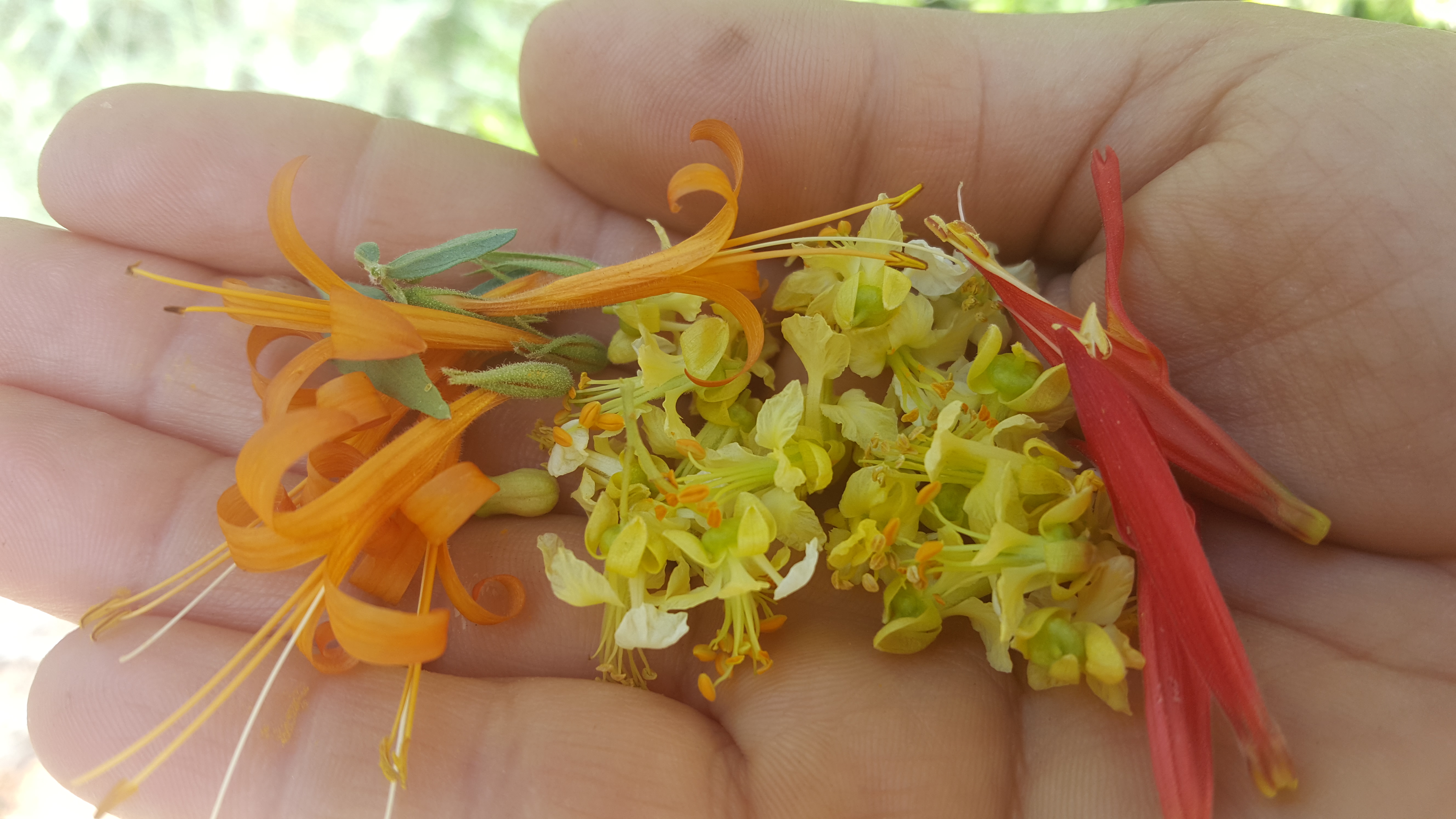
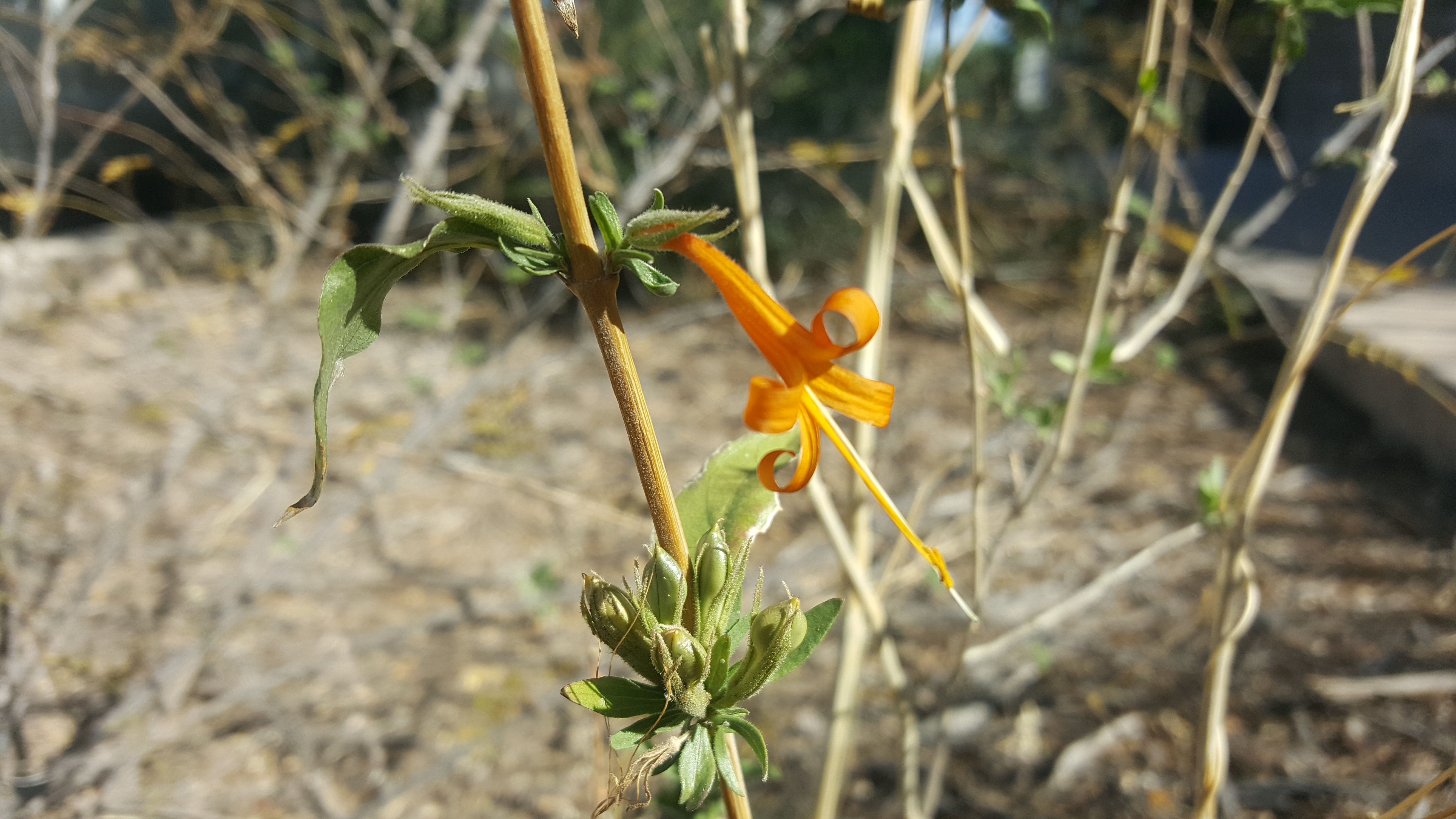
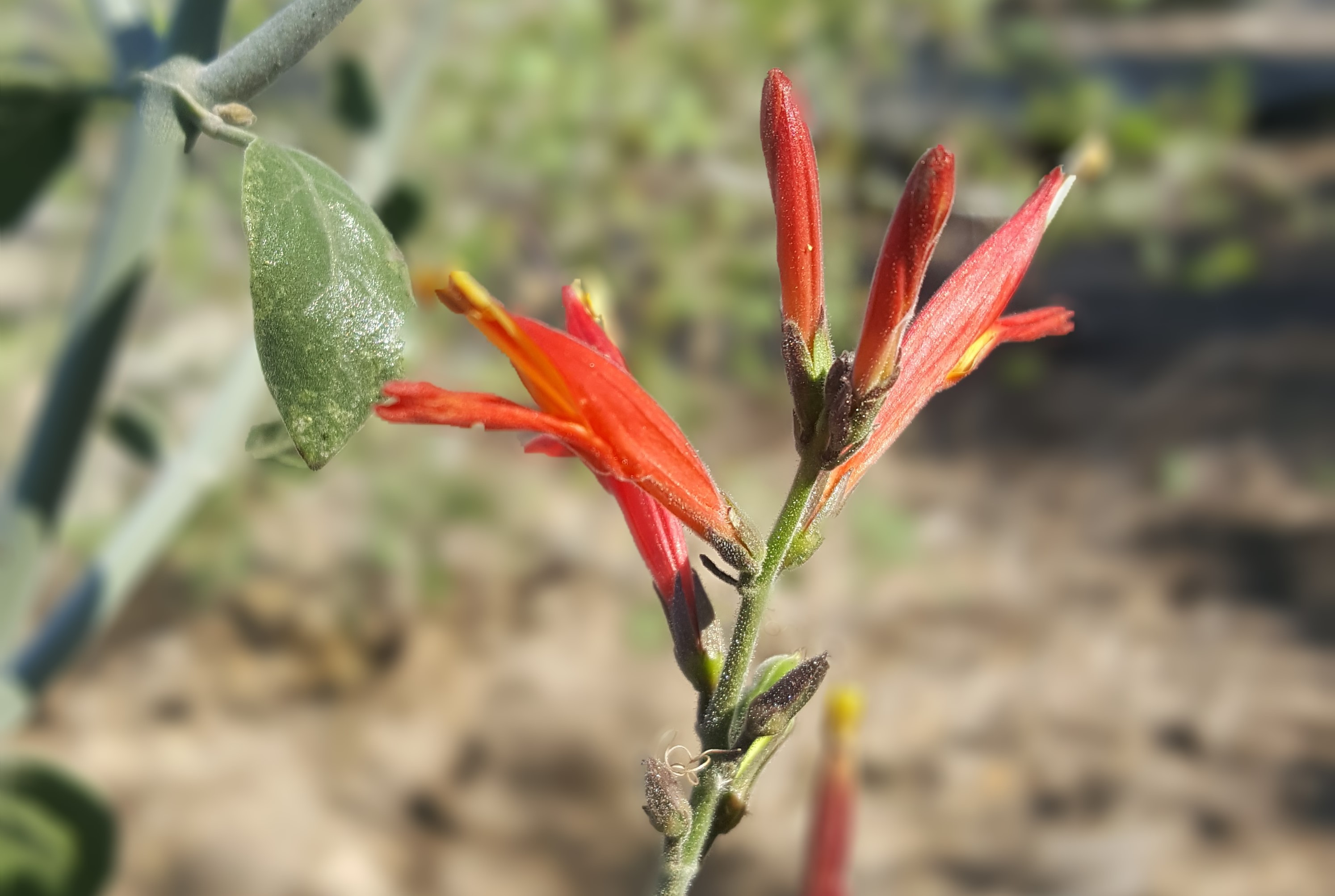
Fresh flowers for garnish.


blog 20160415_090830

Desert Honeysuckle, Anisacanthus thurberi.

blog 20160415_104348

Foothills Palo Verde, Parkinsonia microphylla.

blog 20160415_091001

Chuparosa, Justicia californica.

Prickly Pear Cactus flowers are a fleshy, vegetal garnish. Opuntia engelmannii

Prickly Pear Cactus flowers are a fleshy, vegetal garnish. Opuntia engelmannii

blog 20160415_103501

Dress with olive oil and lemon juice. Enjoy!


Beautiful Bay

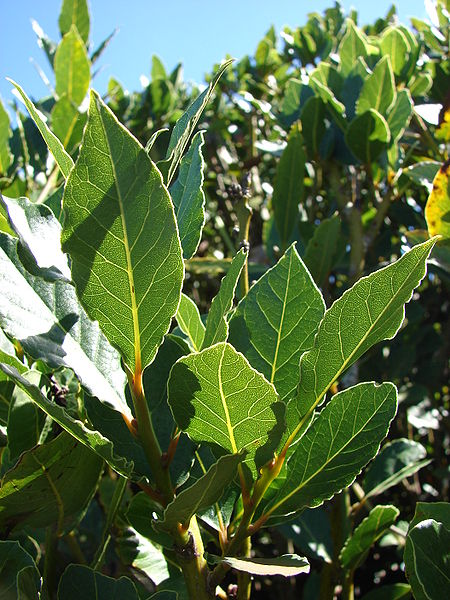
Laurus_nobilis_leaves_004Jacqueline Soule this week, to discuss an herb you can plant now. This herb is a large shrub/small tree that can even be used as a houseplant! I am speaking of bay (Laurus nobilis), also called laurel, or bay laurel. (In Spanish it is called laurel.) Bay is used for Craft, Culinary, Ornamental and Pest Control purposes.



Laurel_paintingHistory.

In ancient Greece and Rome, the bay tree was considered sacred to Apollo, the sun deity. Leafy branches of bay were woven into wreaths to crown the heads of kings and queens, priests, priestesses, poets, bards, and the victors of battles and athletic or scholarly contests. At the first Olympics in 776 B.C.E., laurel garlands were presented to the champions of each contest. During the Renaissance, doctors, upon passing their final examinations, were decorated with berried branches of bay. From this ancient custom derives the French word baccalaureate (from “bacca,” a berry, and “laureus,” of laurel); this has been modified into the term “bachelor” in referring to one type of college degree.


Laurus_nobilis_driedUses

Bay has been used medicinally for centuries. It has a reputation for soothing the stomach and relieving flatulence. Bay has also been used as an astringent, diuretic, narcotic, or stimulant. An infusion (tea) is prepared for these purposes.
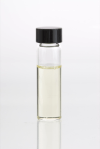
 

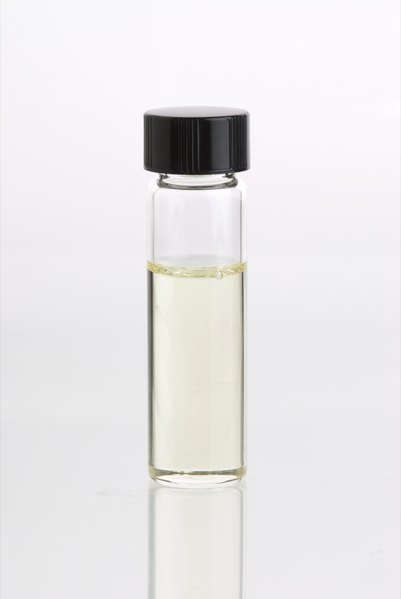
LaurusNobilisEssOilOil of Bay, extracted from the leaves, contains many components, including cineol, geraniol, and some eugenol. Studies of the purified essential oil have proven bactericidal and fungicidal properties. Use as a narcotic may be due to the eugenol found in bay (an oil also found in cloves), which has been shown to have sedative and narcotic effects in mice. Bay is used externally, and considered by some to be a healing agent for rheumatism. In such cases the essential oil is rubbed on the aching joints. A soothing bath soak is prepared from an infusion of the leaves, and added to the bath water. External use of bay may cause dermatitis in sensitive individuals. Always test a small patch of skin before widespread use.
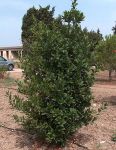
 

Laurus_nobilis_landscape_01Planting and Care.
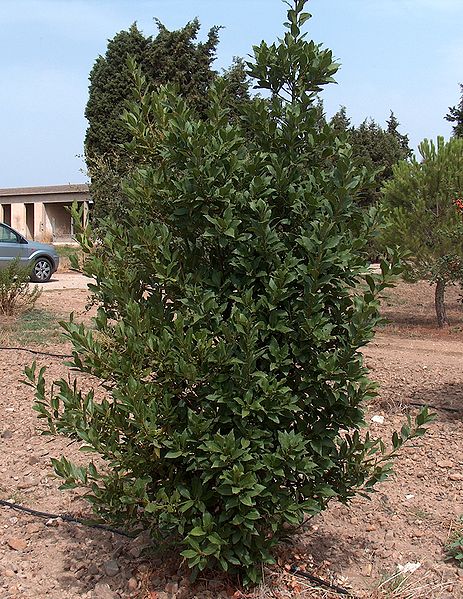
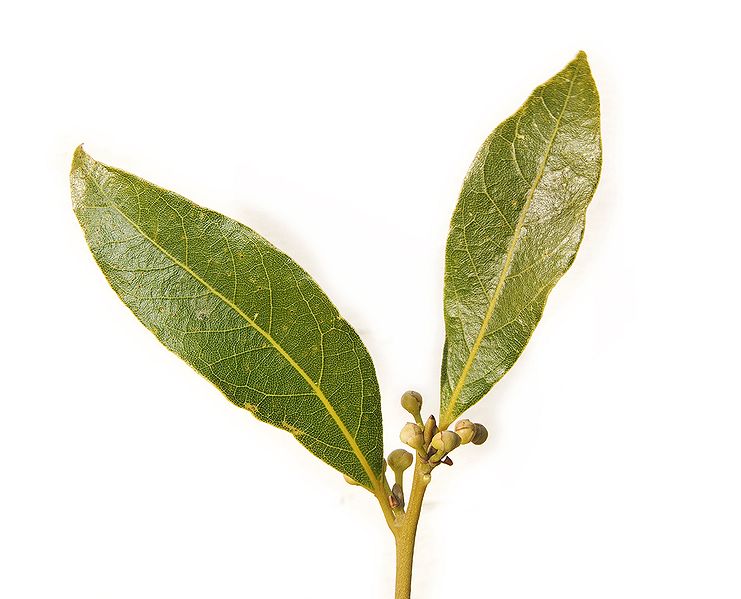
The bay laurel is an evergreen tree with glossy, deep green leaves. It grows well in arid climates such as Greece, Italy, southern France, and here in the Pimería Alta. Bay is a lovely tree for the yard or even poolside. Growing slowly to form a stately tree, in the very best conditions it will eventually reach 40 feet high (it takes decades). Like most herbs, soil with good drainage is required.
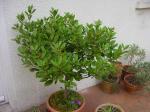
 

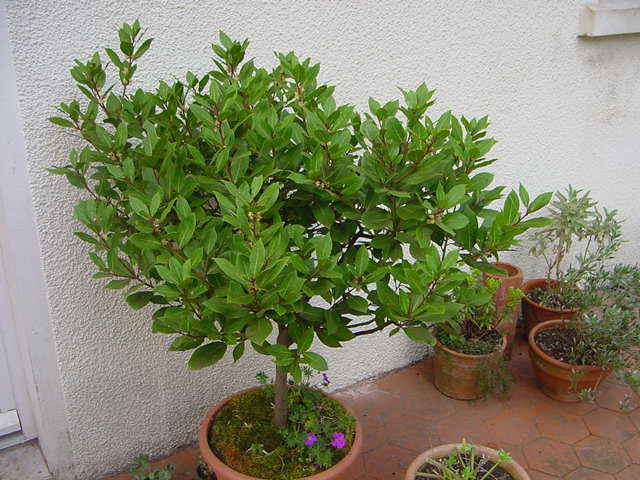
laurel-tree-5The only problem with bay is that young trees are frost tender, and must be protected much like a citrus tree. You can grow bay in a container when it is young and move it onto a protected porch for the winter. Plant it out once the plant has some size as it is less likely to freeze, or you can keep in a container for years.  Indeed, you can also grow bay indoors, if you have a well-lit space.

Be sure you buy true bay laurel. Landscape plants sold as “laurel” may be Prunus laurocerasus, also called the English or cherry laurel; a member of the rose family.
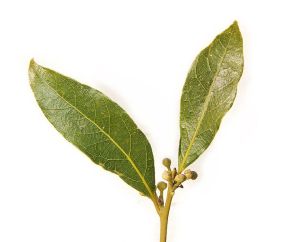
 

Laurus nobilis_lvs_01Harvesting and Use.
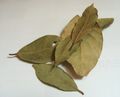
Bay as a flavoring herb is always used dried. There are several bitter tasting compounds which are lost with drying, leaving the flavorful and useful oils. Leaves are used whole and removed prior to serving as they leave a bitter taste if chewed. Add bay to your cooking, or prepare as an infusion base for soups.

Bay leaves are used as a pest repellent for flour weevils. Just add several leaves, ideally in a muslin bag, to your flour canisters. Change to fresh leaves every six months. Use the old leaves as organic mulch in the garden.

Bay leaves, either fresh or dried, can be used to create lovely long lasting herbal wreaths.


JAS avatarIf you live in Southeastern Arizona, please come to one of my lectures. Look for me at your local Pima County Library branch, Steam Pump Ranch, Tubac Presidio, Tucson Festival of Books and other venues. After each event I will be signing copies of my books, including the latest, “Southwest Fruit and Vegetable Gardening,” written for Arizona, Nevada and New Mexico (Cool Springs Press, $23).

© All articles are copyright by Jacqueline A. Soule. All rights reserved. Republishing an entire blog post or article is prohibited without permission. I receive many requests to reprint my work. My policy is that you may use a short excerpt but you must give proper credit to the author, and must include a link back to the original post on our site. Photos may not be used.

Glorious Garlic Chives

MICHO Mts near Uruzpan 6 Aug 90 050

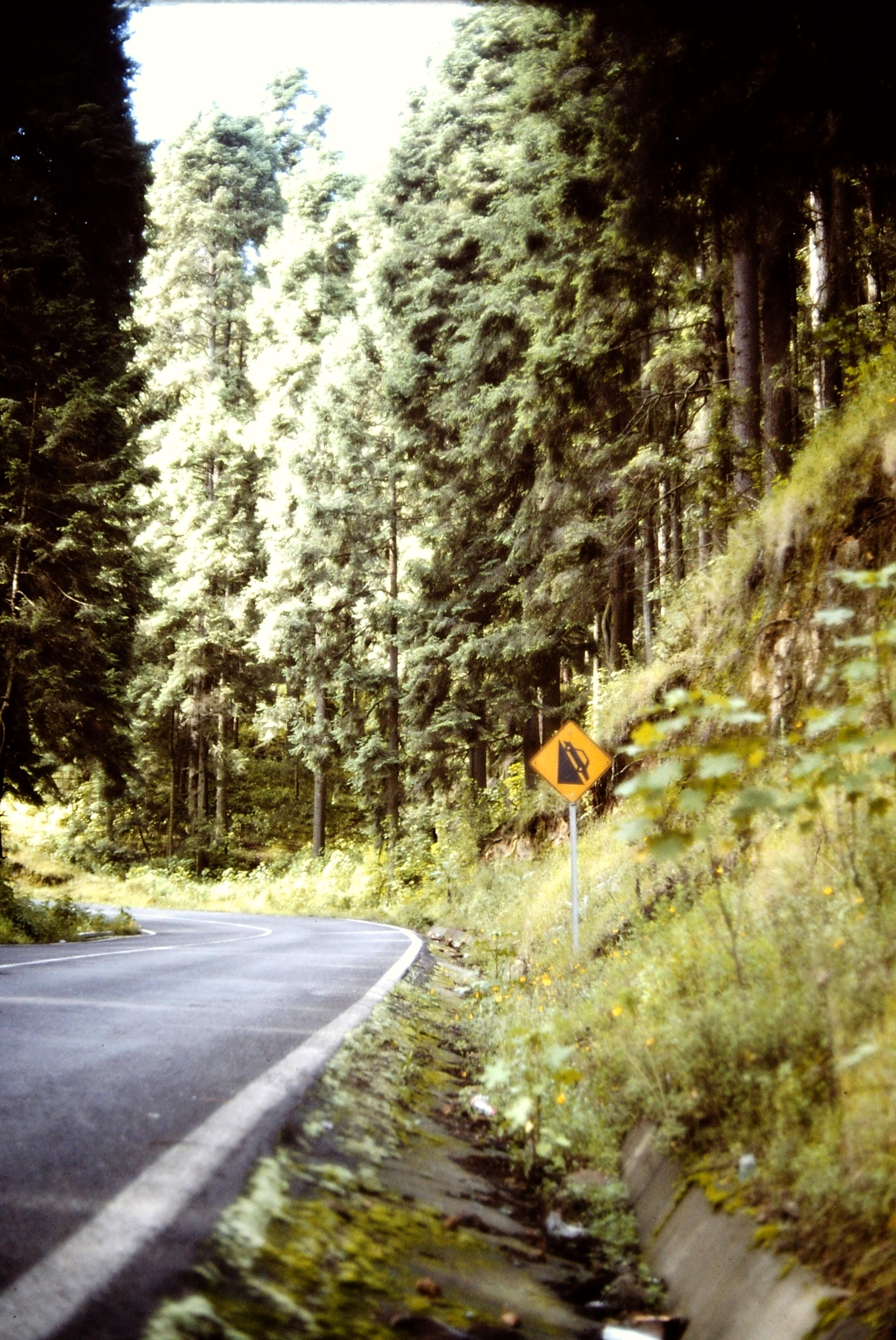
The mountains of Michoacan in 1990. That road sign is only a slight exaggeration.

Jacqueline Soule this week with a charming and easy-to-grow herb – garlic chives.  This herb offers a dish the hint of garlic and the fresh crispness of scallions. 

The first time I ate garlic chives that I know of was chopped and sprinkled on my soft tacos at a little roadside food stop in a forgotten town in Michoacan. The woman serving us was so taken with my questions about the plant that she sent her son scurrying home to dig up some bulbs to give me. Since I was on a plant collecting trip I had all the permits I needed to legally bring the bulbs back to the USA with me.  These tough perennials have been surviving in my gardens in various USDA zones and even indoors in pots for the next 30 plus years.

Allium tuberosum AMAP IMG_4640

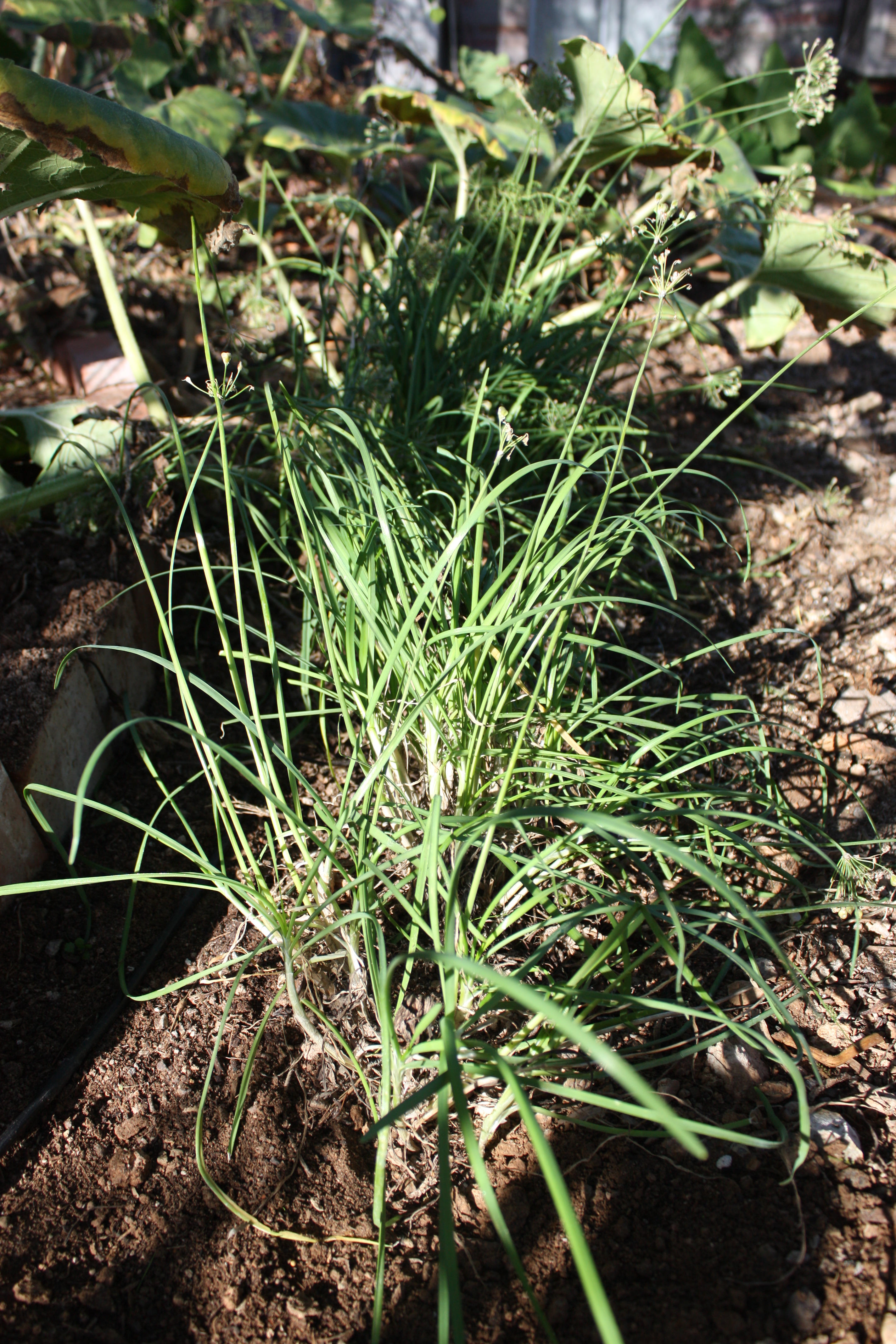
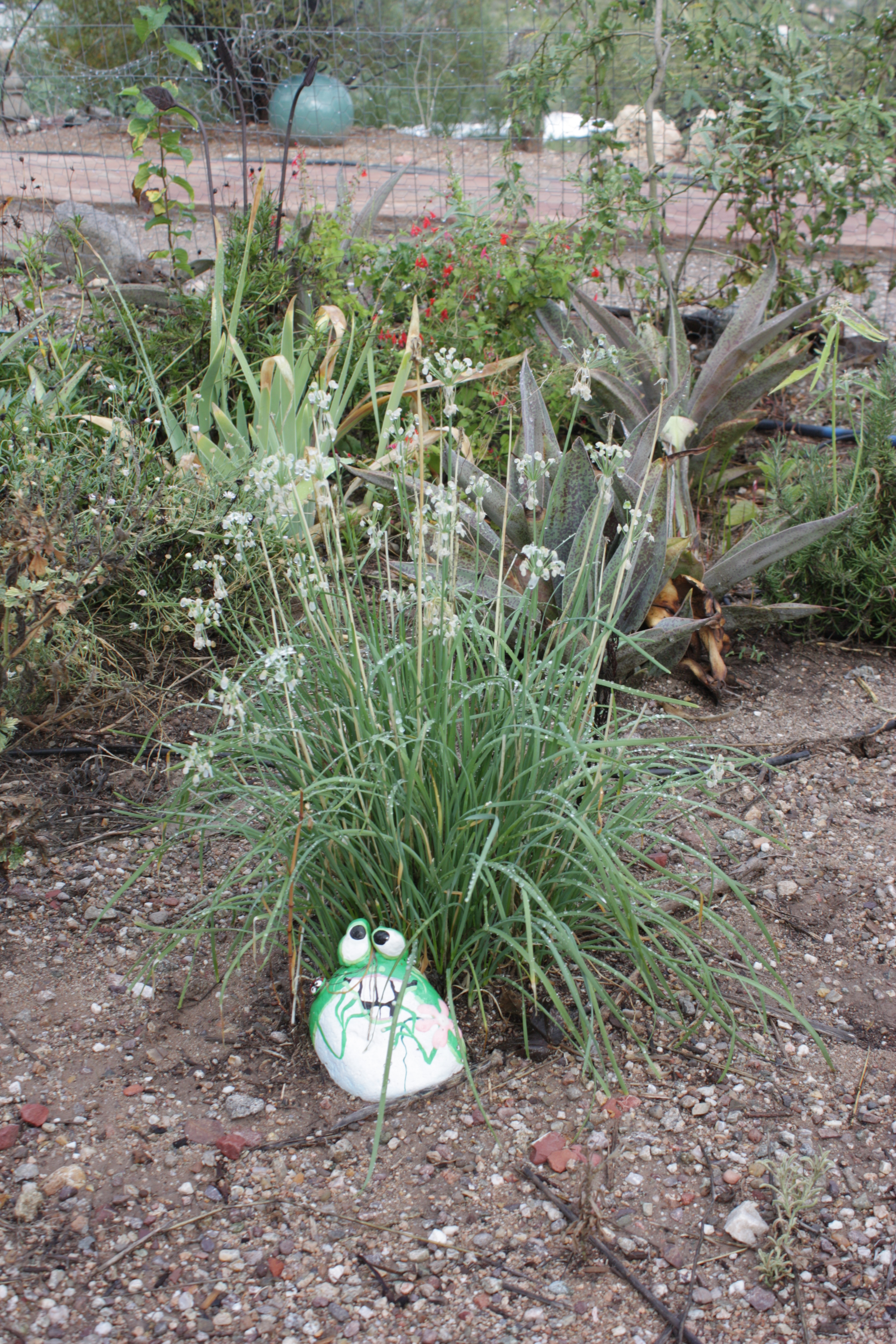
Garlic chives are tough plants that survive with little extra water and taste great.

Garlic chives (Allium tuberosum) make a graceful green statement in the landscape, are low water users, and bloom in September and October with a fireworks-like burst of white bloom on a tall stalk held above the grassy green leaves.

Allium tuberosum AMAP c_4763

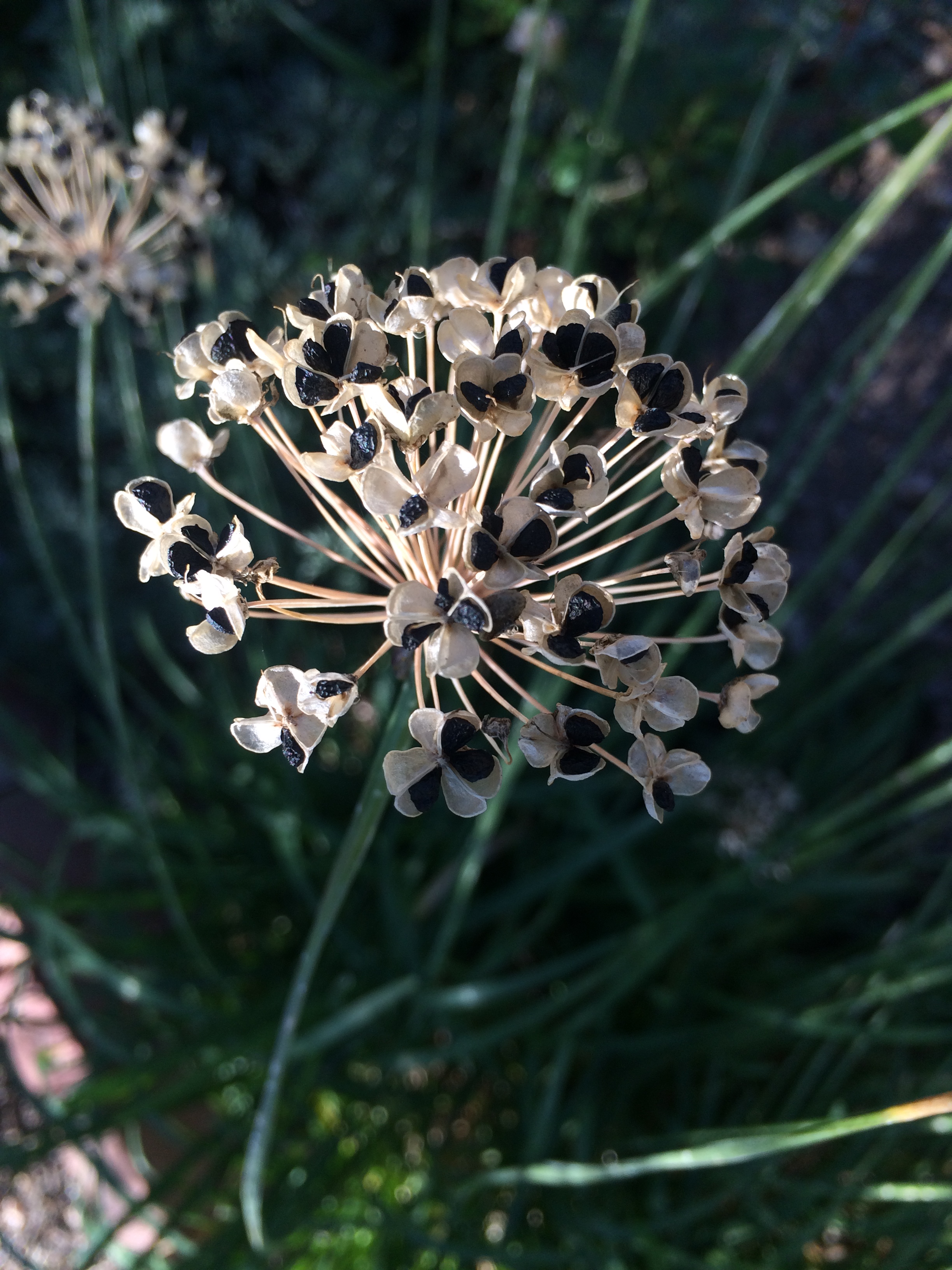
Blooms are white, followed by easy to harvest seed heads.

Originally from the Mongolian steppes, plants tolerate our alkaline soils and thrive in zones 10 to 4. Despite the tuberous name, the part you eat are the leaves. Harvest anytime to add raw or cooked to any dish where you desire a mild garlic flavor.

Allium tuberosum AMAP c_4761

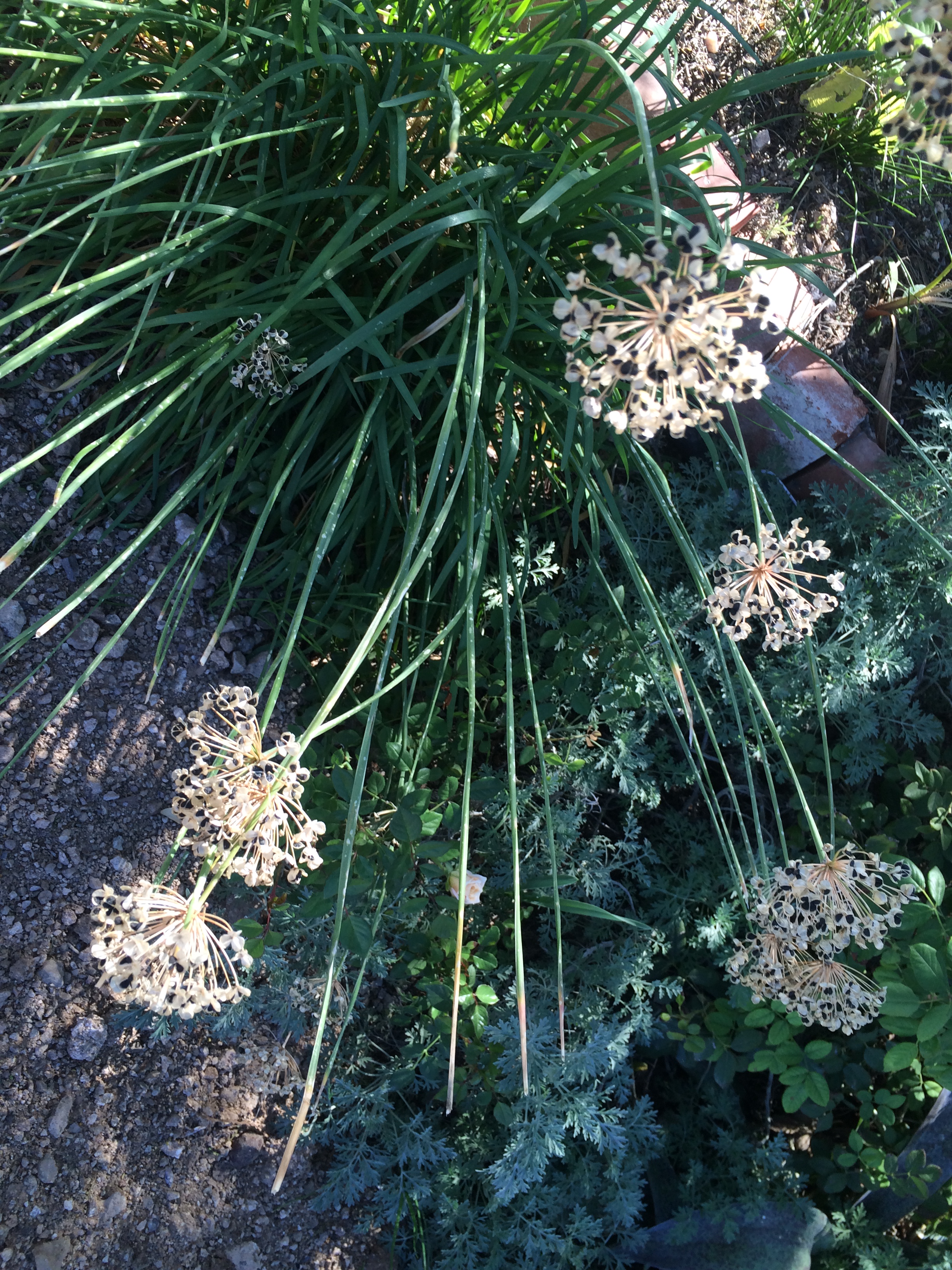
Garlic chives are equally edible when vegetative, in bloom or in seed – quite unlike many other herbs.

Use garlic chive leaves how you would use scallions. We like them in stir-fry and omelets, or just a few to give zing to salad. They are also great in soup, even in simple soup made to hydrate and warm on a cool winter day.

Plant grow readily from seed, and can spread through the garden, appearing in watered areas. It is easily removed if it comes up where you don’t want it. If you are trying to eat only plants that are in season, these are always in season! Garlic chives great addition to the garden, even if you never plan to eat any.

Allium tuberosum AMAP IMG_4590

No matter what your garden style, garlic chives can fit right in.

JAS avatarIf you wish tips on gardening in the Southwest, please visit my facebook page Gardening With Soule.  If you live in Southeastern Arizona, please come to one of my lectures. Look for me at your local Pima County Library branch, Tumacacori (Fruits & Herbs of the Old Missions, 12:30, Thursday February 4th, 2016), Steam Pump Ranch, Tubac Presidio, Tucson Festival of Books and other venues. After each event I will be signing copies of my books, including the latest, “Southwest Fruit and Vegetable Gardening,” written for Arizona, Nevada and New Mexico (Cool Springs Press, $23).

© This article and these photos are copyright by Jacqueline A. Soule. All rights reserved. Republishing an entire blog post or article is prohibited without permission. I receive many requests to reprint my work. My policy is that you may use a short excerpt but you must give proper credit to the author, and must include a link back to the original post on our site. Photos may not be used.

Pine – as an Herb and More

By Jacqueline A. Soule, Ph.D.

As December approaches, let’s look at an herb that many bring into their homes for the holiday season – the pine. Why not opt for a living Christmas tree (or Chanukah bush, as some of my friends call them)?  They are evergreen …. plus green.

christmas tree 685920_1280

Humans around the world have used pine as herbs for eons. They used whichever species of pine lived near them to treat just about every sort of affliction. Pine has especially used for the ailments that have truly plagued humankind, like internal and external parasites and the aches and pains of being human and getting older.

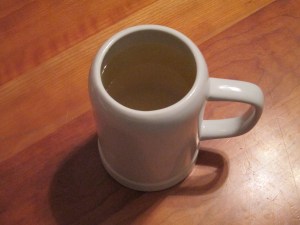
In almost every case pine needles or bark are used as a tea (infusion) to either drink or bathe tissues. For intestinal parasites, the tea was drunk, for external ones such as ringworm (a fungal infection) or lice, the tissues were bathed with pine tea. Pine oils and resins have also been extracted, purified, and used medicinally.

herb_tea_JAS_004

At this time, Commission E, a German-based group which scientifically studies herbal medicines, recommends using pine oils externally for rheumatic and neuralgic complaints, as well as for upper and lower respiratory tract inflammation.

Ideally, harvest and dry pine needles before use. This allows some of the more acrid compounds to evaporate. The active ingredients are predominately in the oils and are not lost by drying.

pine 1813622_1280

Modern housekeepers around the world use pine based cleaners to keep the house smelling clean and fresh, little realizing that this harkens back to a yesteryear tradition of using pine products, including turpentine, to kill off pests, treat colds, and dress wounds.

Pines can be grown here in Tucson. Once established, they will need extra water in the hot dry months, especially May and June. Indeed, pines are a very green landscape plant. They provide housing for wildlife, especially hawks and owls, plus shade your home helping reduce energy consumption for cooling. The needles can be used as a wonderful mulch for plants around your yard or garden.

pine 419642_1280

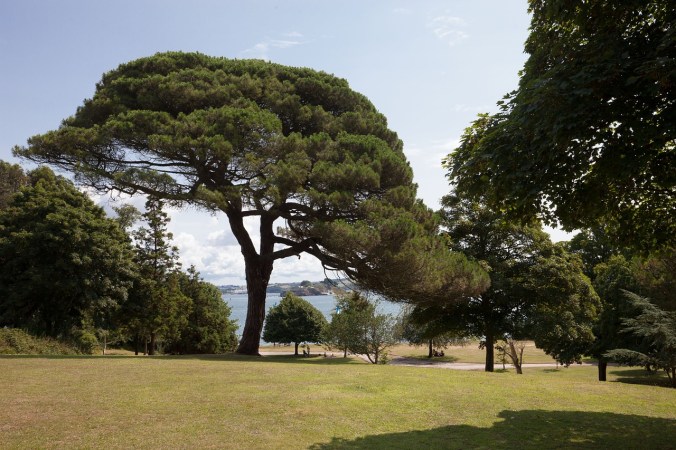
For a living holiday tree that you can plant in your yard, chose from the eldarica (Pinus eldarica) from Afghanistan or Aleppo (Pinus halepensis) from the Middle East.

What about a Southwestern pinyon pine? If you can find some – go for it! I do have to warn you, they grow in higher altitudes than Tucson and will be stressed by our comparatively hotter summers. Extra water should help them survive.

pine 544503_1280What about the pine beetle now attacking Tucson trees? The beetle is the six-spined engraver beetle, one of 11 species of insects living in the inner bark of pine trees. It typically infests the thicker-barked and deeply fissured main tree trunks of older trees. An obnoxious pest to be sure. It appears to only be an issue with larger mature trees. A young tree should be able to grow in your yard for many years. Be sure to keep it healthy with extra water in the dry months.

Dr. Soule is trained as a botanist. She teaches workshops on plants and writes science and garden articles. Jacqueline has been using, growing, researching and writing about herbs for over three decades.

JAS avatarIf you live in Southeastern Arizona, please come to one of my lectures. Look for me at your local Pima County Library branch, Steam Pump Ranch, Tubac Presidio, Tucson Festival of Books and other venues. After each event I will be signing copies of my books, including the latest, “Southwest Fruit and Vegetable Gardening,” written for Arizona, Nevada and New Mexico (Cool Springs Press, $23).

© This article copyright by Jacqueline A. Soule. All rights reserved. Republishing an entire blog post or article is prohibited without permission. I receive many requests to reprint my work. My policy is that you may use a short excerpt but you must give proper credit to the author, and must include a link back to the original post on our site. Photos may not be used.

# # # # #

Cozy Chamomile


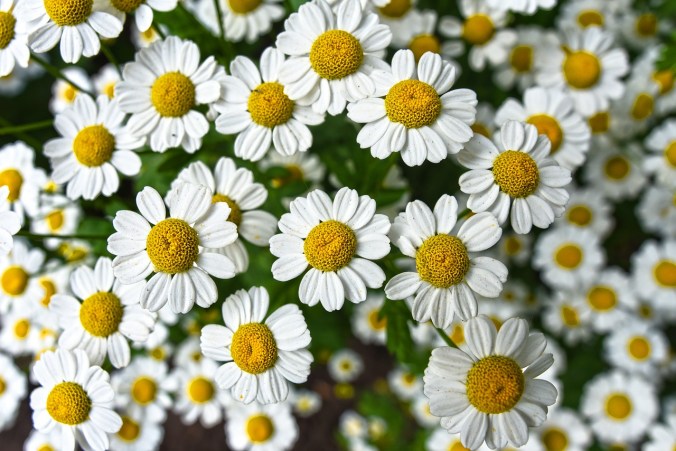
chamomile 3489847_1280Jacqueline Soule this week to discuss a pretty, plus pretty useful, herb to plant in your winter garden.  And, if you plant seedlings now, you should be able to harvest some within a month!  As cooler weather comes along, it is nice to curl up with a cup of chamomile tea – and here is how to have your own.

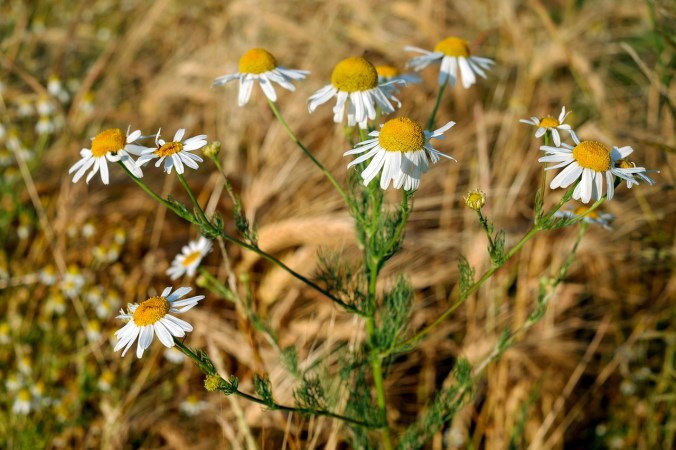
The herb known to most Americans as chamomile comes from two different species of plants. German chamomile comes from an annual plant (Matricaria rectita), while Roman chamomile comes from perennial plant (Chamaemelum nobile). They both have many of the same plant compounds in them, and work much the same way, the difference is in how you grow them. The French “chamomile” is a related plant (Achillea millefolium) but with different compounds and actions. In English, that last one is known as yarrow.

European people have used chamomile, in one form or another, to treat just about every sort of affliction, from hemorrhoids to hay fever, sleeplessness to sores, and tummy aches to tooth aches. In almost every case chamomile is used as a tea (infusion) to either drink or bathe tissues. For tooth ache folks used chamomile wrapped in muslin and placed on the afflicted tooth. Peter Rabbit’s mom gave him a cup of chamomile tea after his adventures, to soothe his stomach and calm his nerves.


herb_tea_JAS_001The flavinoid apigenin found in chamomile tea is thought to be responsible for its anti-inflammatory ability. Apogenin combined with another phytochemical called bisabolol are thought to work in concert to calm gastrointestinal spasms. Apogenin has been proven to bind to the same brain receptor sites that the drug Valium binds to, and are believed to exert a calming influence in much the same manner.

With recent scientific investigation, a number of uses have been validated. Chamomile is recommended by Commission E for the treatment of gastrointestinal tract inflammation, gastrointestinal spasm, irritations of the mucous membrane, skin injury or irritation, as a gargle or mouthwash to alleviate oral or pharyngeal inflammation, and to treat anxiety disorders. (Peter Rabbit’s mom was right on track!)

German chamomile can be grown very easily in the cooler months of winter, while the Roman chamomile is best planted in spring. Both need six to eight hours of sunlight per day. Like many herbs, they do best in well drained soil. Thus if you have caliche soils , consider growing them in pots with a cactus soil mix. The German chamomile will die in the heat, so replant some next year.

chamomile 774818_1280Harvest chamomile flowers and dry before use. This allows some of the more bitter tasting compounds to evaporate. The active ingredients are predominately in the oils and are not lost by drying.

Chamomile is green to grow in our area, even though it uses more water than native plants. It does reduce your carbon footprint by reducing the need to import chamomile. It can also help reduce your reliance on manufactured drugs. Headache? Take a cup of chamomile tea and lay down for a half hour rest. Far better for the environment than aspirin. Just remember that moderation is key in this and all herbs.

chamomile 2442331_1280

Note: the information in this article is for your reference, and is not intended to be used as a substitute for qualified medical attention.

JAS avatarIf you live in Southeastern Arizona, please come to one of my lectures. Look for me at your local Pima County Library branch, Steam Pump Ranch, Tumacacori, Tucson Festival of Books and other venues. After each event I will be signing copies of my books, including the latest, “Southwest Fruit and Vegetable Gardening,” written for Arizona, Nevada and New Mexico (Cool Springs Press, $23).
Text is copyright © 2015, Jacqueline A. Soule. All rights reserved. I receive many requests to reprint my work. My policy is that you may use a short excerpt but you must give proper credit to the author, and must include a link back to the original post on our site.

# # # # #

Cool Time for the Carrot Family

season fall at TBG 5791

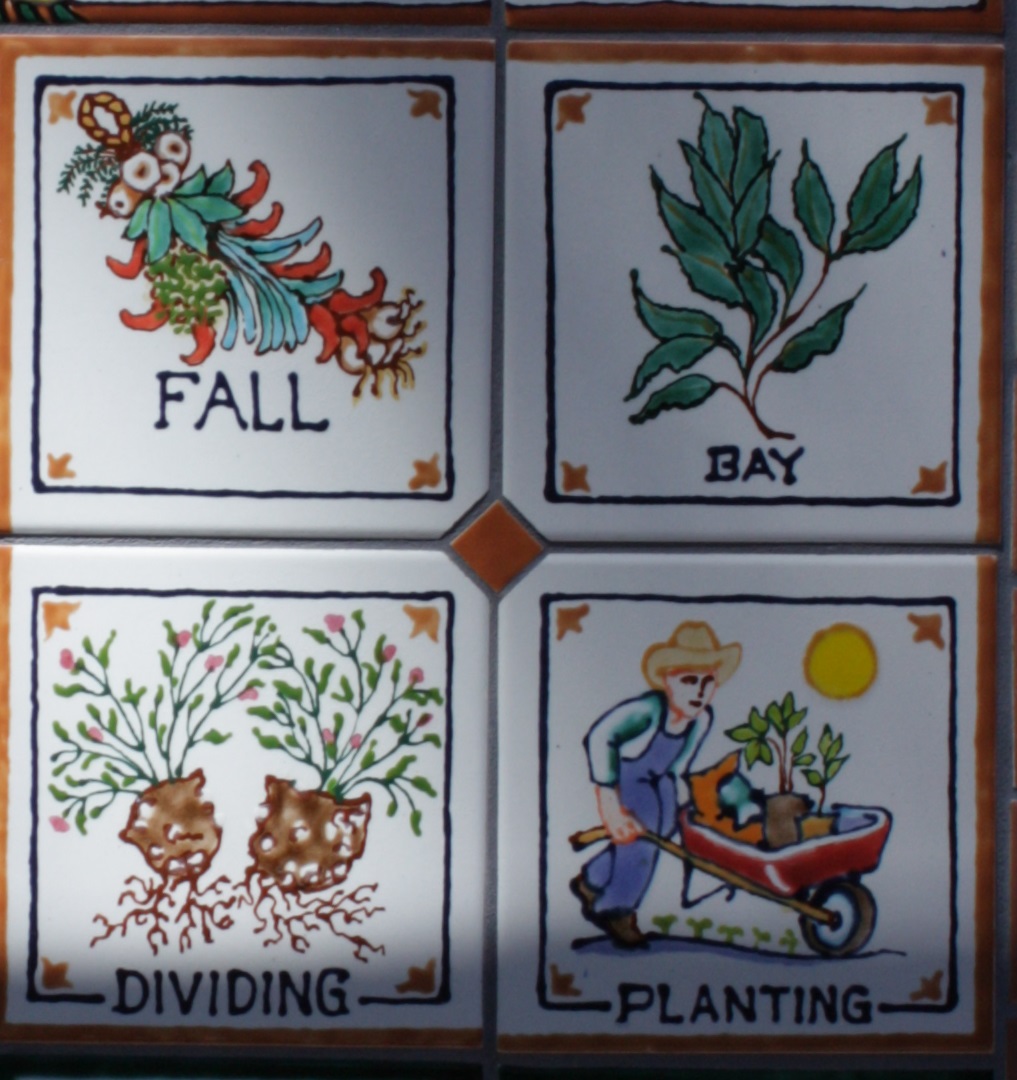
Fall is for planting! (From a mosaic in the Herb Garden at the Tucson Botanic Gardens)

Jacqueline Soule here to discuss some herbs to grow now that the Autumn Equinox has come and gone. Days are cooler and shorter, and that means it is time to plant the plants that will thrive in the cool season garden. This means a wide variety of leaf and root crops, most of them imported from the cooler areas of the Old World. Today let us look at a north temperate plant family that loves our winters – the Carrot Family.

caraway_fruit

Caraway seeds for rye bread, sure, but have you tried them in a marinade for chicken? Yummy.

The Apiaceae or Umbelliferae, commonly known as the celery, carrot or parsley family, is a family of mostly aromatic plants with hollow stems.  The family is large, with more than 3,700 species spread across 434 genera; it is the 16th largest family of flowering plants. Included in this family are the well-known plants: angelica, anise, asafoetida, caraway, carrot, celery, chervil, sweet cicely, coriander (cilantro), culantro, cumin, dill, fennel, hemlock (used to kill Socrates), lovage, cow parsley, parsley, parsnip, cow parsnip, sea holly, and giant hogweed.  Note that some of these are also deadly poison so this is one family you should only collect in the wild if you know what you are doing.

carrot seed_4342

The Pima County Library has a seed library where you can check out seeds of many cool season vegetables. 5 varieties per month per library card.


Plants. All members of the Carrot Family are a tad fussy about growing conditions. They do not transplant well so either seed them in place or be very careful to not disturb their roots as you plant.

dill_4335

Just when you think you know plants, seed people like Renee’s Garden come out with a new variety to try!

Soil. All carrot kin grow best in a well-drained, sandy, slightly acidic soil, rich in organic matter. That makes them best grown in containers in our area. Use a pot one and a half feet deep. Potting soil with some added sand makes a good growing media.

Coriandrum_sativum_foliage

Seedlings from the nursery are also an option for many of the carrot family herbs. Just be careful not to harm the roots.

Light. Six or more hours of winter sun is needed to do well.

Water. Keep the soil relatively moist during establishment. You can let all of these dry a little more between water once the plants get larger. Some people believe this makes their flavors stronger.

cilantro_4336

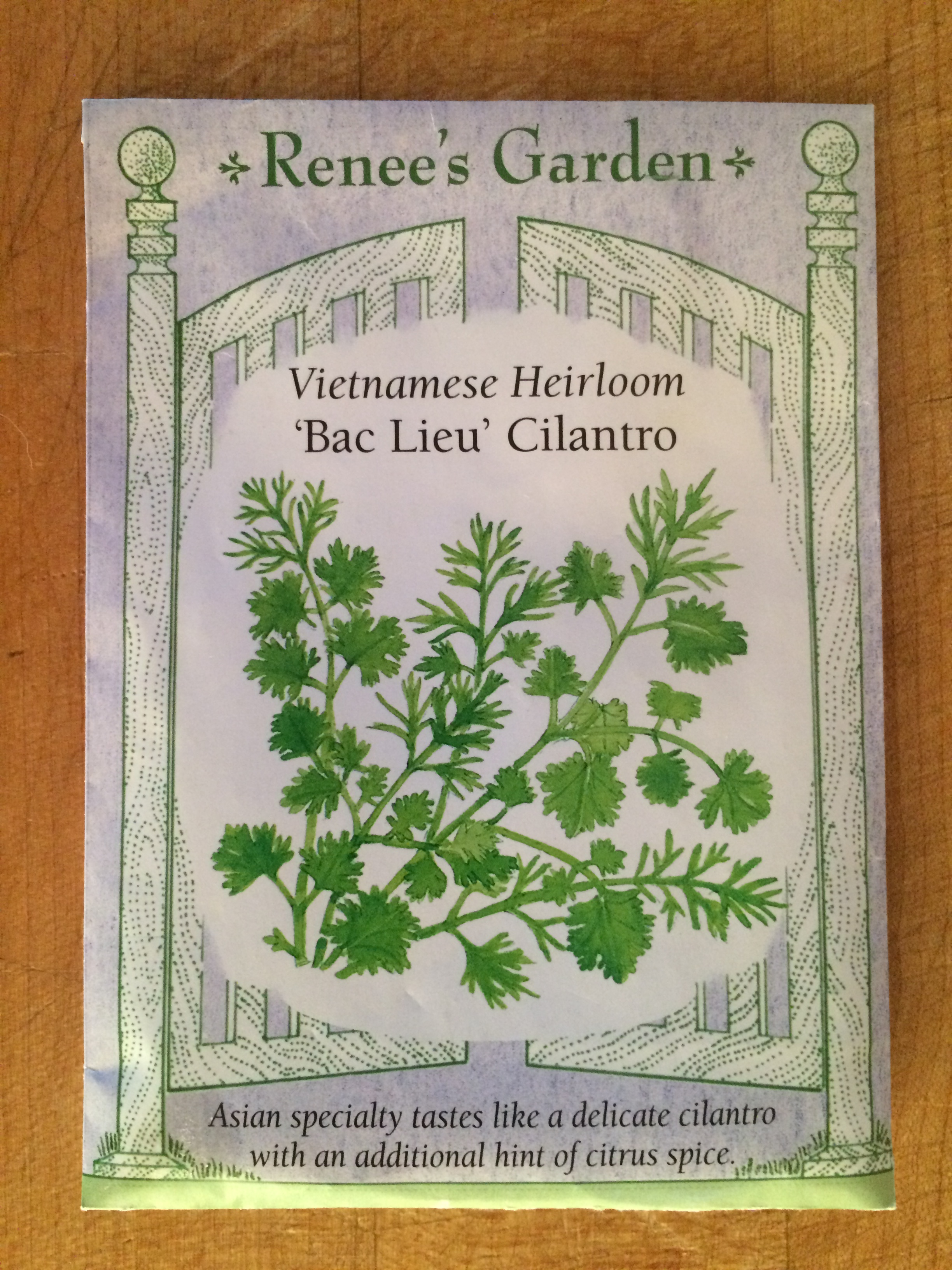
Another “new” Heirloom variety to try.

Fertilizer. These plants will get very lush and full with some fertilizer. However, if you amended your soil at the start you don’t need to purchase fertilizer. Plus, avoid fertilizing anything when frosts are a possibility. Come late February you could apply a half-strength general-purpose fertilizer.

Harvest and Storage. Carrots and parsnips are best harvested on based on the days to maturity on the seed package. Most of the herbs taste best when fresh but lose much flavor when dried. Freezing the leaves retains more flavor. Select healthy leaves, rinse, pat dry but leave some moisture. Chop into roughly quarter inch squares and freeze in a labeled plastic bag or yogurt container. This can be used directly from the freezer.

Seed is harvested after the plants “bolt” or flower in spring as it heats up and the days get longer. Pull up the entire plant once seeds start to dry and put it upside down in a paper bag in the shed or garage. They should be dry enough to store after 2 weeks.

Coriander_fruit_001

Cilantro seeds are the herb we call coriander. They ripen in plenty of time to use for making pickles this summer.


JAS avatarIf you live in Southeastern Arizona, please come to one of my lectures. Look for me at your local Pima County Library branch, Steam Pump Ranch, Tubac Presidio, Tucson Festival of Books and more. After each event I will be signing copies of my books, including the latest, “Southwest Fruit and Vegetable Gardening,” written for Arizona, Nevada and New Mexico (Cool Springs Press, $23).

All photos (except where noted) and all text are copyright © 2015, Jacqueline A. Soule. All rights reserved. I receive many requests to reprint my work. My policy is that you may use a short excerpt but you must give proper credit to the author, and must include a link back to the original post on our site. Photos may not be used.

A Useful Desert Broom

baccharis AMP_5239

People complain that they want more green in their landscape. Desert broom is one option for bright green foliage.

Desert broom is called escoba amarga in Spanish, and also called a weed by many.  But I advocate you take a moment to consider this shrub more fully.

Desert broom (Baccharis sarothroides) is a vigorous plant – often the first plant to grow on a cleared stretch of desert (or over the septic tank).  It can be useful to have such a tough plant in your landscape palatte.  Along with landscaping it is useful in a number of other ways.

baccharis seedling crop_6477

Sad to say – some people think the only good desert broom is a dead one.

Uses.

Desert broom has a history of use as a medicinal plant.  A decoction made by cooking the twigs of desert broom is used to treat colds, sinus headache, and in general “sore aching” ailments. The Seri use this when other medicinal plants are not available. The same tea is also used as a rub for sore muscles.  (Perchance Father Kino used some after one of his epic rides.)

Studies done on plant extracts show that desert broom is rich in leutolin, a flavonoid that has demonstrated anti-inflammatory, antioxidant, and cholesterol-lowering capabilities. Desert broom also has quercetin, a proven antioxidant, and apigenin, a chemical which binds to the same brain receptor sites that Valium does. However, many members of the Sunflower family also contain compounds that cause negative side effects, thus caution is advised.

baccharis seedling AMP_6330

Desert broom seedlings are often among the first plants to appear in a cleared area. The rabbits do not eat them.

As it’s name indicates, branches of desert broom do make a passable broom for sweeping the dirt floors of an adobe home.

Desert broom is so plentiful, and many of it’s seep willow cousins are used as dye, so I had to do the experiment. The result – yes! It does dye wool. Various mordants result in differing shades as seen below.  Other members of the Baccharis genus have excellent colorfastness.

baccharis dye on wool crop

Baccharis on wool with different mordants. I use the chemical symbols to mark my mordants. Al = alum, Cu = copper, FE = iron.

Desert broom can be used as filler in fresh and dried floral arrangements, with long lasting color and minimum mess since it has few leaves to lose.

baccharis AMP_5426

This plant gets chopped often for filler in my flower arrangements. Regular clipping helps keep it a dense and bushy.

Desert broom comes in separate male and female plants. The females release their tiny fluffy seeds at the same time a number of other plants release their pollen, thus the seeds of desert broom often get erroneously called an allergen. The pollen of the male plants is released in fall and can be allergenic.

IMG_2701

No, desert broom does not have yellow flowers. In this case a desert broom grew up through a Cassia.

Planting and Care.
Plants may be purchased at nurseries or can be grown from seed. Avoid over-watering in heavy soils as desert broom will drown.

Desert broom will accept shearing and can be trained into a decent, short-lived privacy hedge. Such a short lived hedge is helpful while the longer-lived, taller, non-allergenic, but slower growing Arizona rosewood (Vauquelinia californica) reaches hedge size. Desert broom can also be useful in the landscape since it grows in heavy clay or saline soils where few other plants thrive.

IMG_2708

These plants get sheared once a month by landscapers with power tools. Note that the native desert broom is growing more vigorously than the non-native cassia from Australia.

JAS avatar If you live in Southeastern Arizona, please come to one of my lectures. Look for me at your local Pima County Library branch, Steam Pump Ranch, Tubac Presidio, Tucson Festival of Books and more. After each event I will be signing copies of my books, including the latest, “Southwest Fruit and Vegetable Gardening,” written for Arizona, Nevada and New Mexico (Cool Springs Press, $23).

All photos and all text are copyright © 2015, Jacqueline A. Soule. All rights reserved. I receive many requests to reprint my work. My policy is that you may use a short excerpt but you must give proper credit to the author, and must include a link back to the original post on our site. Photos may not be used.

All That Bountiful Basil

by Jacqueline A. Soule.

Last month I wrote about basil  in these pages.  In my Gardening With Soule Blog I wrote about how to grow basil in the desert.  Now let’s look at more basil uses, and some plant care in our heat not discussed previously.


Hot Plants. 

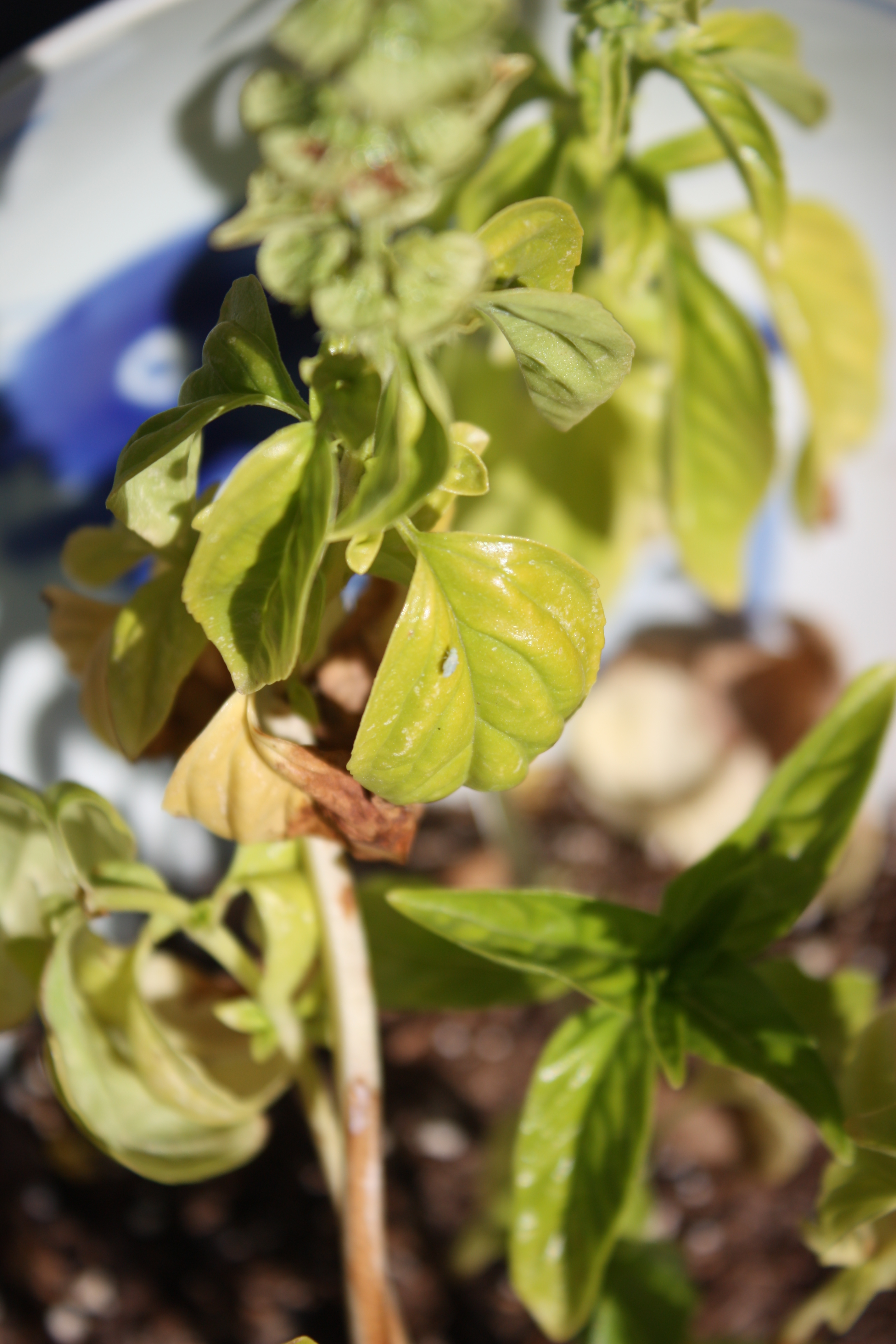
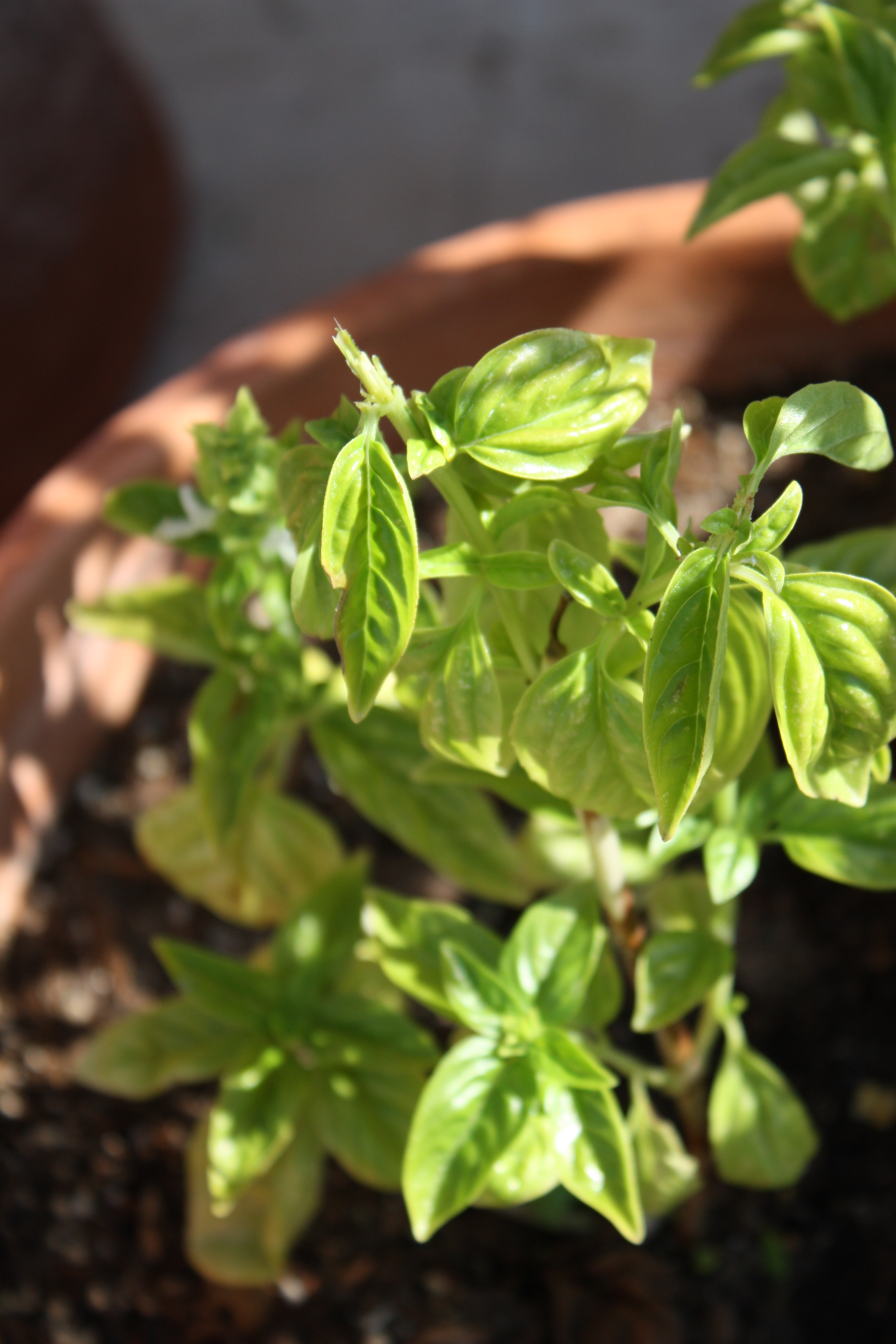
If you bought your basil plants at a big box store, chances are it is not an ideal variety of basil to grow here.  In the image below, the plant shows signs of both excessive light and heat stress with yellowing leaves and some sunburned and browned leaves.  Basil harvested from such a stressed plant will taste bitter, not really worth the water it takes to keep the plant alive.  If you did end up with a large leaved basil, consider growing it on a covered patio or under shade cloth.

basil habit 009

Some varieties of basil, like this large leaf cultivar, do not appreciate hot sun and high temps.

Basil Blooms.

If you want basil seeds, let your basil bloom.  Otherwise, you should remove and spikes of blooms – ideally before they get too big and use up the energy the plant could use making more luscious leaves instead of flowers.

basil pinch 001

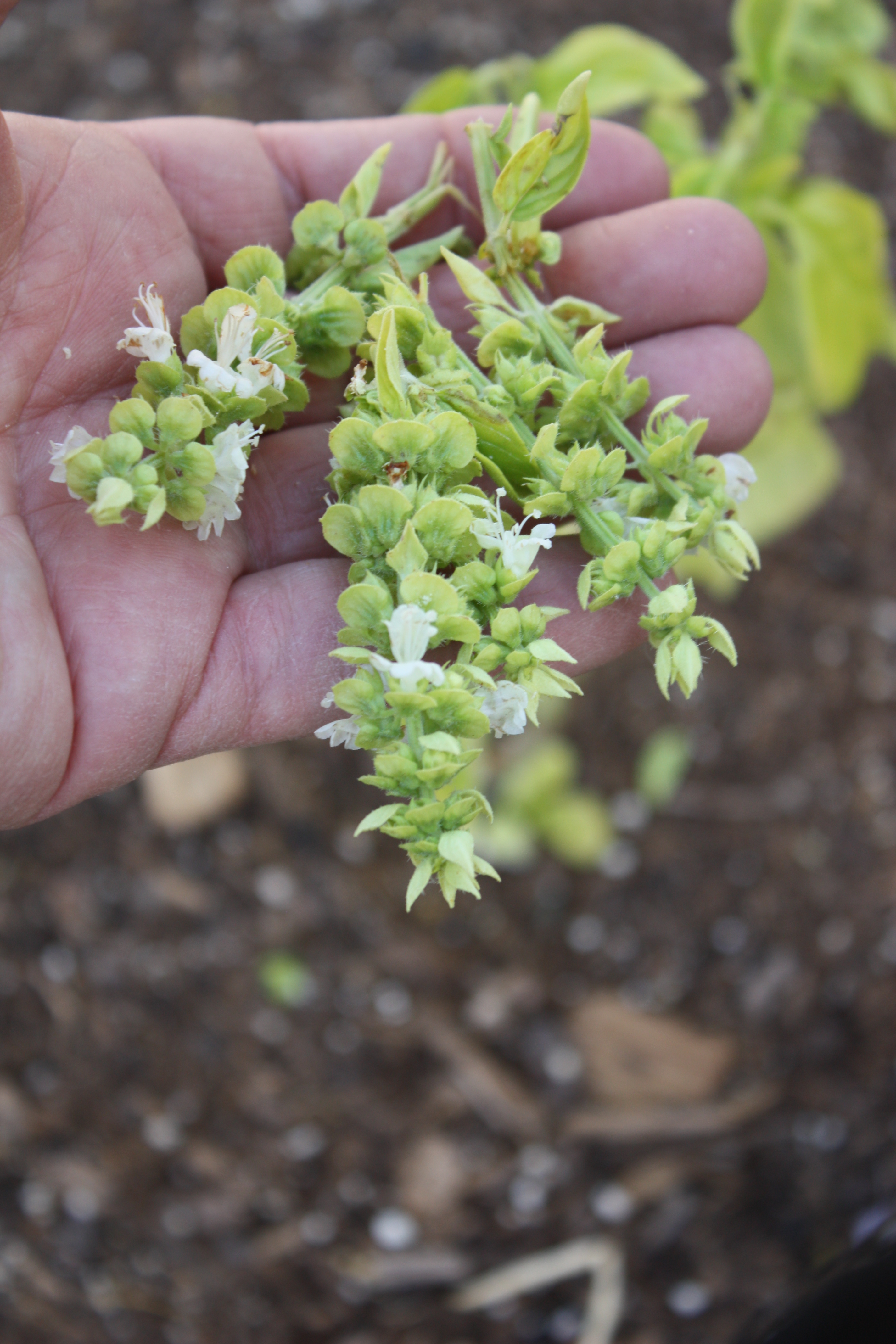
These spikes of basil blooms were pinched off the plant.

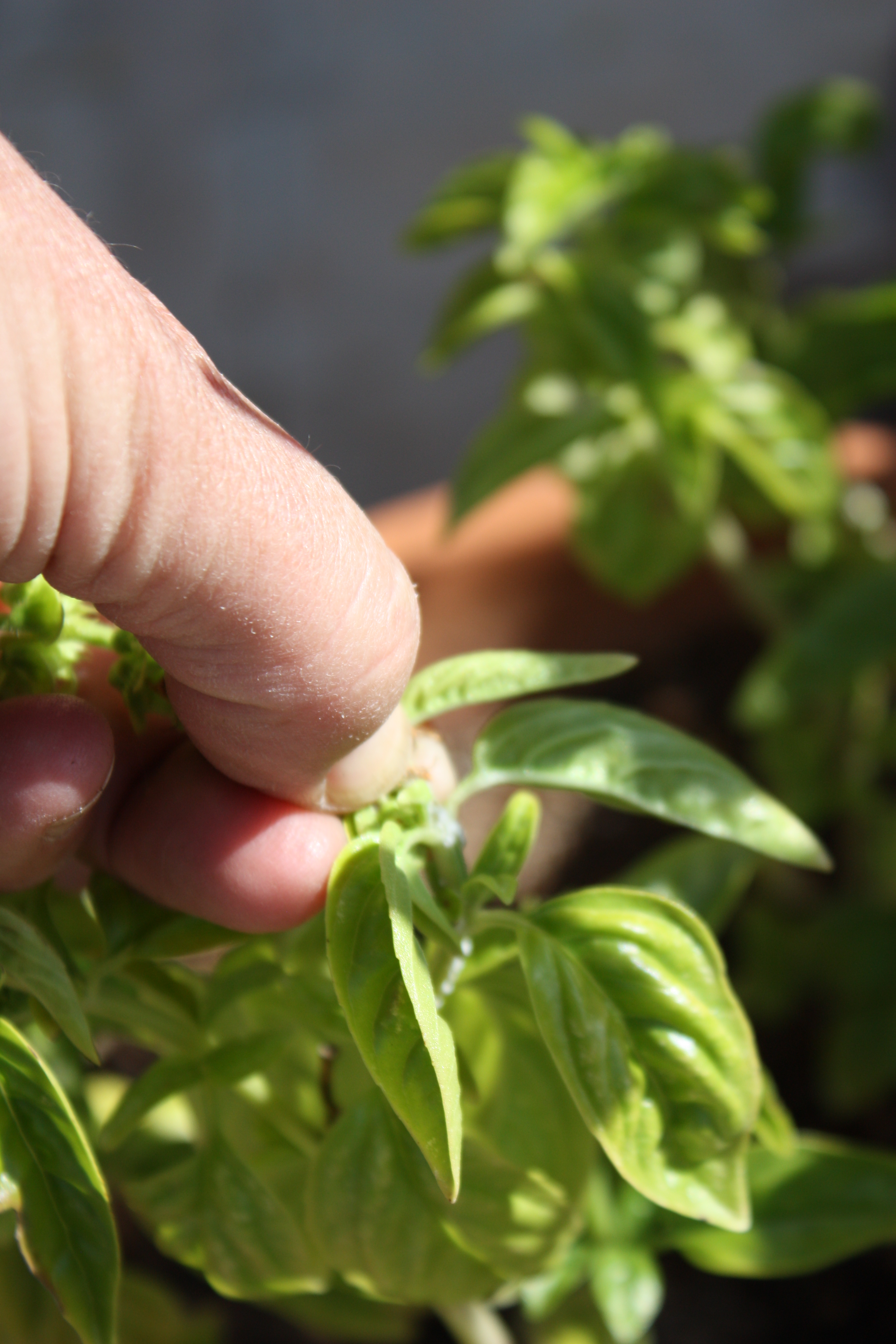
Remove the spikes of blooms by pinching them off.  Yes, you can use pruners or scissors or a knife, but scientific evidence shows that good old fashioned fingers are the best tool for the job.  Why?  Because when we cut, we cut through plant cells, but when we pinch, the plant ruptures between cell walls.  The plant heals more quickly when the damage is between the cells instead of right through the middle of them.

basil pinch 006

The best tool for removing basil blooms is your own hand.


basil pinched stalk 002

The plant heals more rapidly when hand pinched, even though a tidy-minded person might not like the ragged look to the pinch site.

Harvesting Basil.

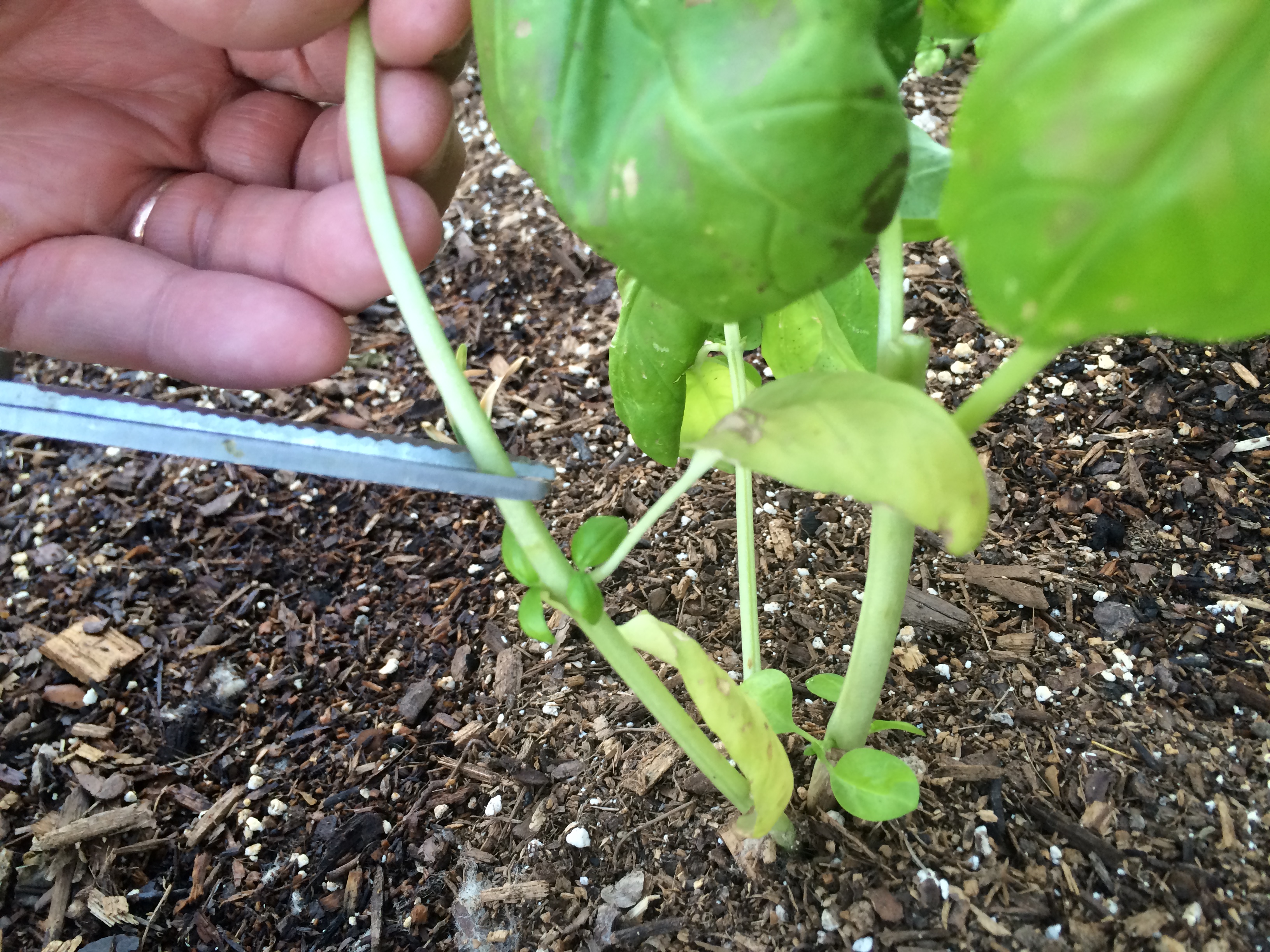
You can harvest basil leaves any time you need some.  If you are careful about it, your plant will just keep making more leaves, especially if you harvest just above a node of young leaves.


basil harvest_2678

Yes you should pinch your harvest – just like you pinch blossoms. The scissors are in the picture to indicate where to cut – just above a node of young leaves.


Using Your Basil.

Tons of ways to use basil, but I am fond of one I just learned – basil spreadable pseudo-cheese.  (I have to come up with a better name!)

You will need: a clean bandanna, a quart of plain Greek yogurt, a bowl, a colander, time, and some basil.

Put the colander into the bowl and line the colander with the clean bandanna.  Dump the yogurt into the bandanna and let this sit in the ‘fridge overnight.  The whey will drip out of the yogurt.  (You can leave it for 24 hours if you want.) From a quart of yogurt, I got almost a cup of whey.

This un-wheyed yogurt becomes thick and spreadable, almost like cream-cheese, and it does not stick to the bandanna!  It is not as creamy as cream cheese, but if you add flavorful herbs like basil, it is entirely tasty!

basil chop_6259

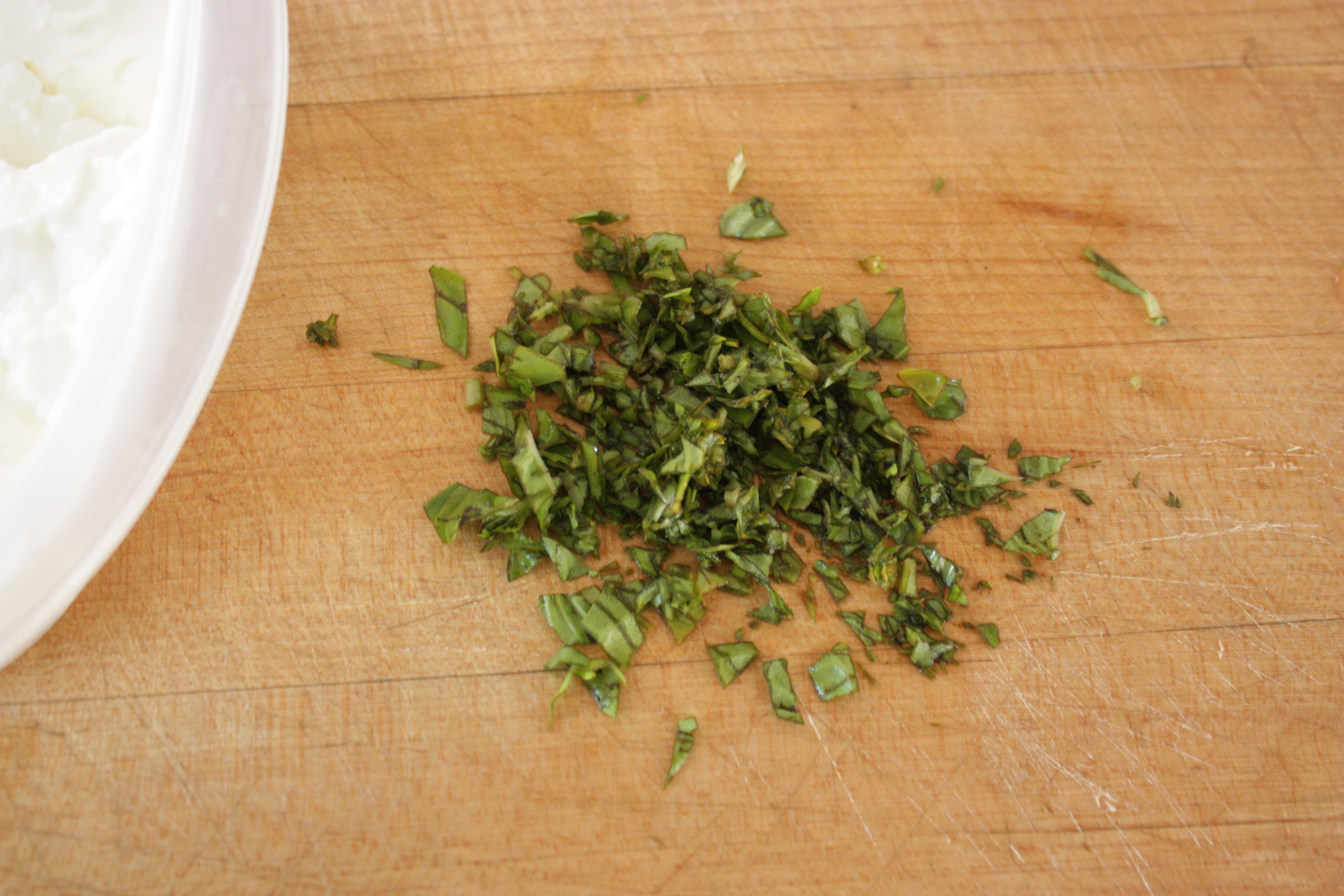
Chop your basil finely for this dish.


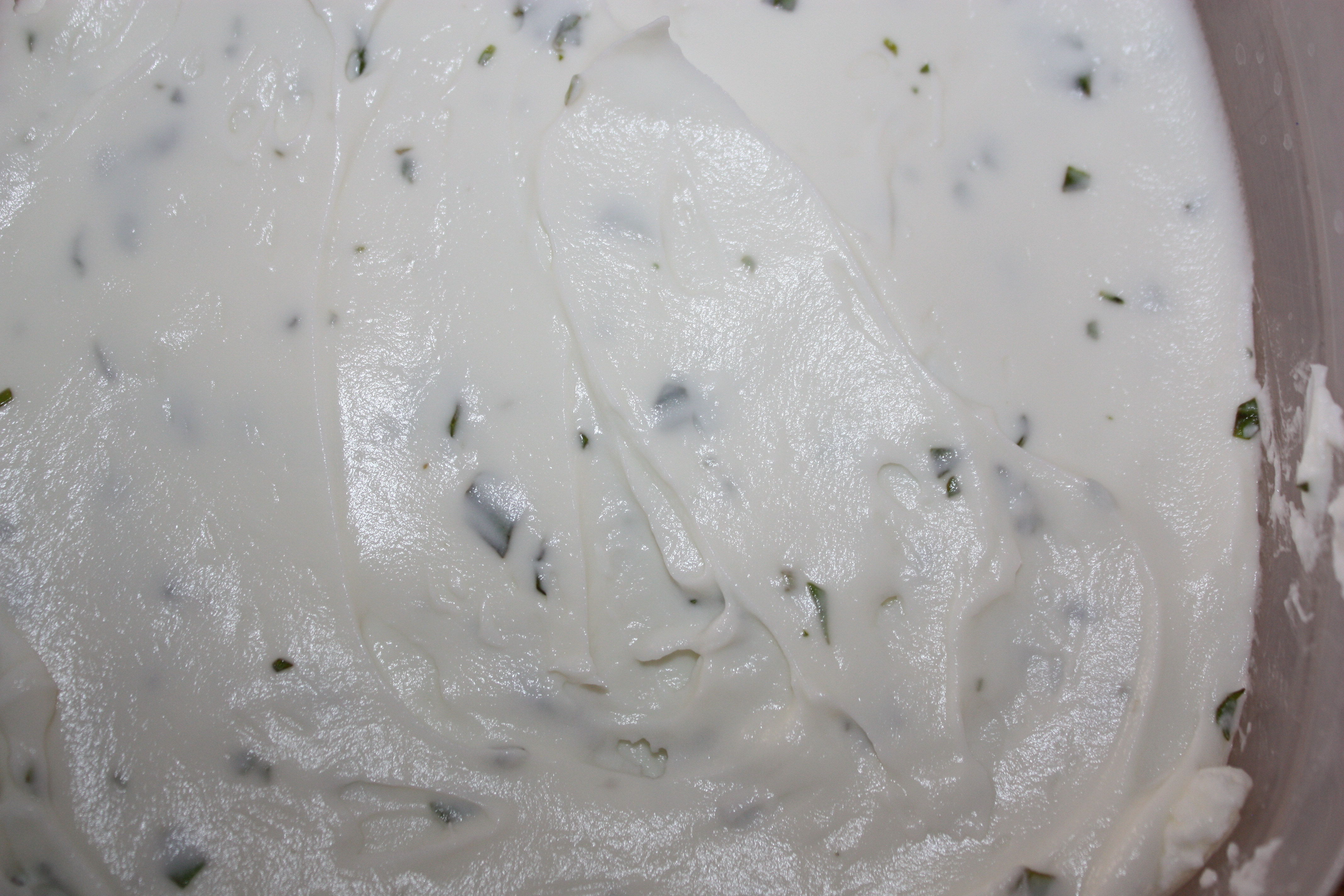
Dump your yogurt-cheese out of the bandanna.  Harvest some basil, chop it up, mix it into your yogurt, and let it sit for at least four hours to help the basil flavor to merge into the cheese.

basil chop_6262

Let your basil flavor infuse into the cheese for at least 4 hours. Longer is just fine.

Using the Whey.  

Since I got a cup of whey, I did not want to throw it away.  I tried a sip – not my cup of tea!  Since it is an animal product it shouldn’t go into the compost heap either.  I put it into a smoothy with sweet fruit and with a dollop of honey it was fine.


About Jacqueline Soule

JAS avatarJacqueline’s latest book “Fruit and Vegetable Gardening in the Southwest” (Cool Springs Press, 2014) is available at Tohono Chul Park and the Tucson Botanical Gardens. It is divided into warm season and cool season growing so you can easily select other plants to grow this summer.

All text and all photos (except where noted) are copyright © 2015 by Jacqueline A. Soule. All rights reserved. I receive many requests to reprint my work. My policy is that you may use a short excerpt but you must give proper credit to the author, and must include a link back to the original post on our site. Photos may not be used.


Bountiful Basil

basil-trio_renees garden_1

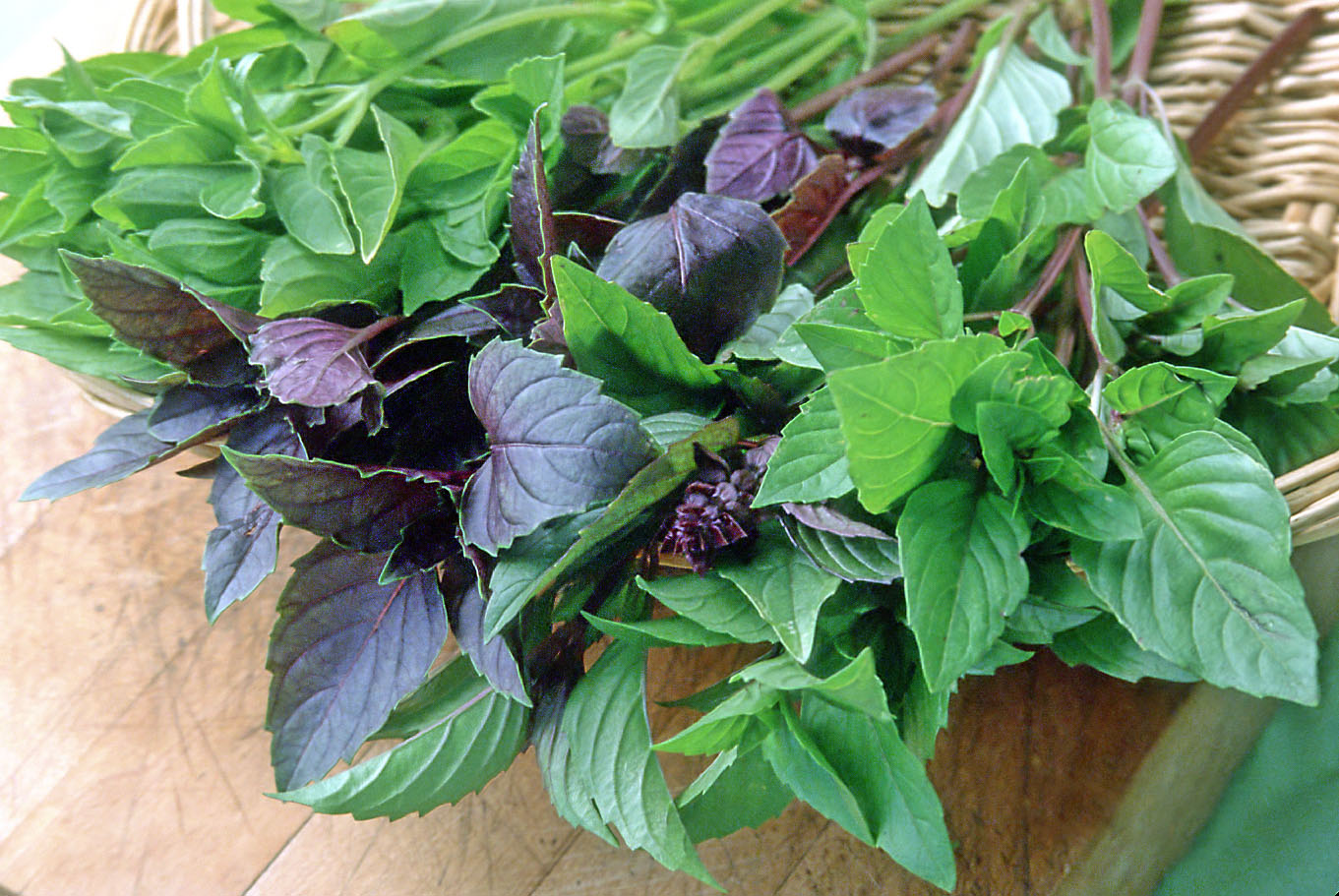
Basil comes in over 150 varieties. Here is a trio grown in Renee’s Garden. Photo courtesy of Renee’s Garden Seeds.


by Jacqueline A. Soule, Ph.D.

Summertime is basil-time in the Old Pueblo. As the nights turn to their sultry summer phase, the sun provides light for hours on end, and the soil temperatures become toasty warm – in other words, we enter our tropical phase of the year – and basil is truly delighted. Originally native to India, basil is genetically a tropical plant, even though it is now grown around the globe wherever (and whenever) it is warm enough.

basil lemon mrs burns famous nss

Mrs. Burn’s Famous Lemon Basil is a lemony flavored basil that grows well indeed in our climate. Photo courtesy of Native Seeds/SEARCH.

Basil is a real taste treat. It can be used in Italian cooking (like the pesto recipe below), fresh, in green salads, and it even has a reputation as a medicinal herb.

basil-saladleaf_renees garden

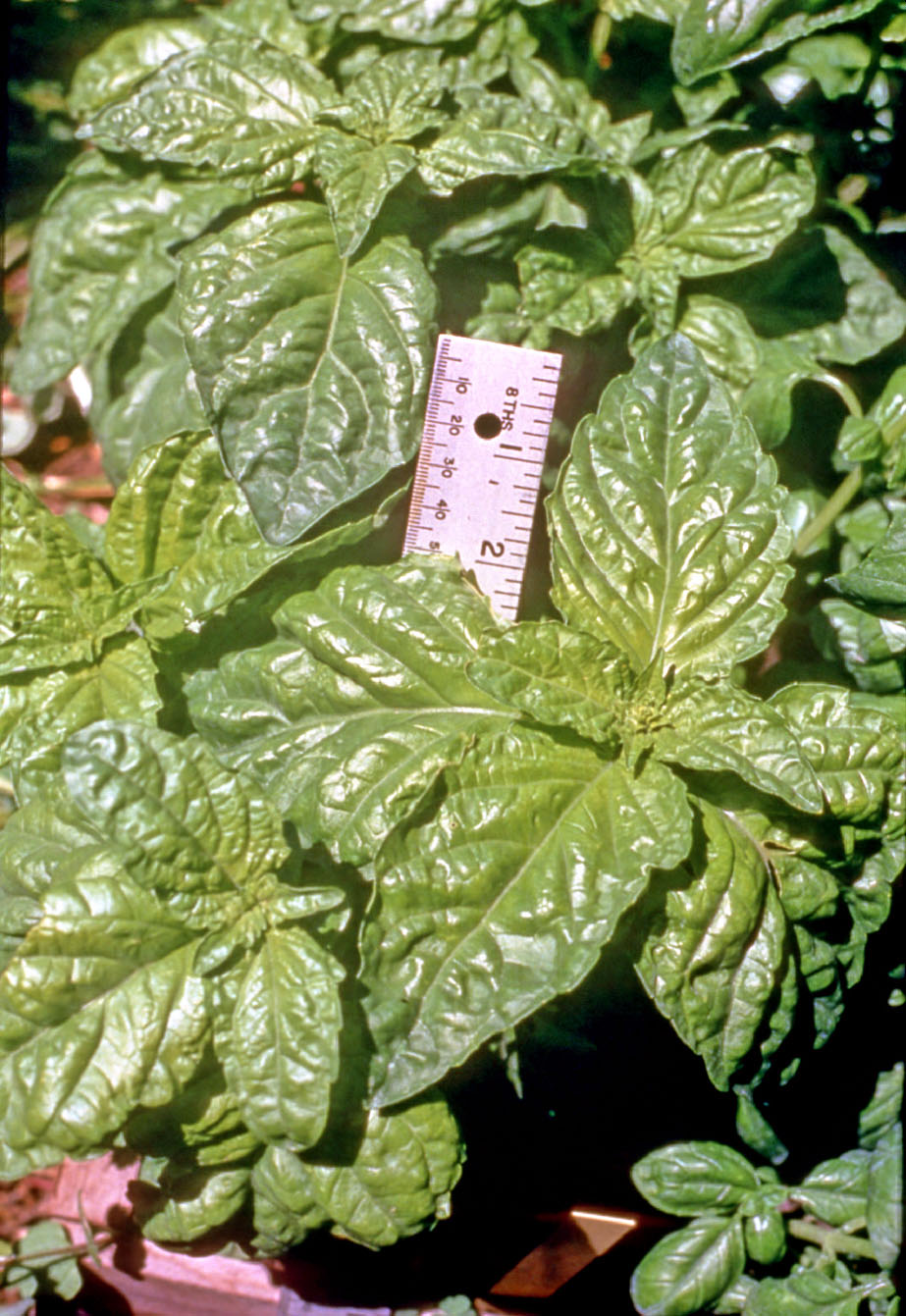
Salad leaf basil features large leaves. Not as strongly flavored as other basils, it does taste great in salads. Photo courtesy of Renee’s Garden Seeds.

Basil does grow well in the Tucson area, but it isn’t the easiest herb to grow. It has some very specific preferences if it is to thrive. I will put growing tips up on my Gardening With Soule blog on June 4th. Why wait? Because the 4th of each month is national “You Can Grow That” Day.

basil_PA_08

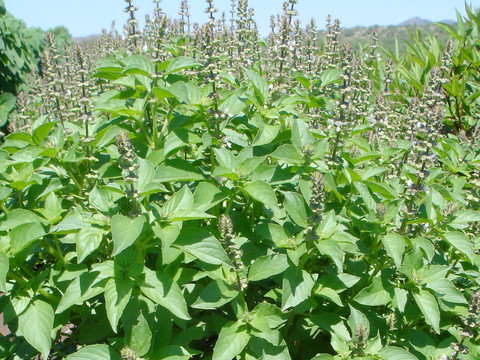
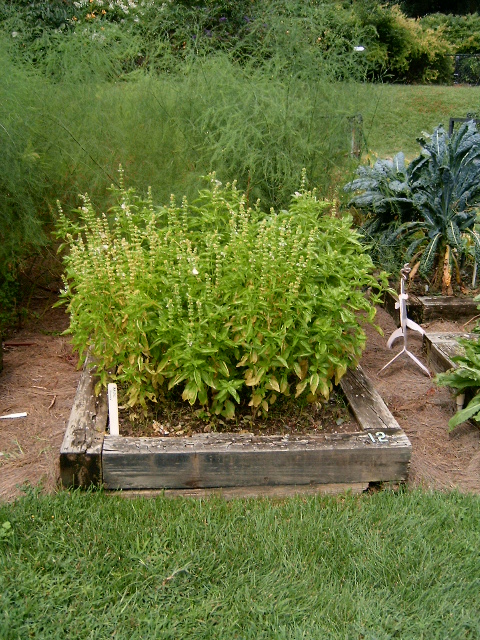
I was in Philadelphia and spotted a bunch of basil growing in a raised bed. Ideally, you want to pinch the blooms off to encourage more leafy growth.

The National Institute of Health reports that Americans consume too much salt. Cooking with flavorful herbs like basil could help you reduce your salt use and stay heart healthy.  Here’s an easy to make pesto to get you started.

Basil Pesto

4 oz. fresh basil leaves (a generous double handful)
1/4 cup pine nuts
2 cloves garlic, peeled (double amount of onion may be substituted if garlic is an issue)
8 tablespoons olive oil
1/4 cup grated Romano cheese
1/4 cup grated Parmesan cheese

1. Rinse basil and pat dry.
2. Toast pine nuts in an ungreased skillet over medium heat until golden. Cool.
3. Place cooled pine nuts, basil, garlic and olive oil in a food processor or blender and puree until creamy.
4. Stir in the cheeses and serve over pasta or rice. Also excellent with quinnoa or toasted tofu. Vegans can omit the cheese or use shredded soy cheese.


JAS avatarAbout Jacqueline Soule

Jacqueline’s latest book “Fruit and Vegetable Gardening in the Southwest” (Cool Springs Press, 2014) is available at Tohono Chul Park and the Tucson Botanical Gardens. It is divided into warm season and cool season growing so you can easily select other plants to grow this summer.

All text and all photos (except where noted) are copyright © 2015 by Jacqueline A. Soule. All rights reserved. I receive many requests to reprint my work. My policy is that you may use a short excerpt but you must give proper credit to the author, and must include a link back to the original post on our site. Photos may not be used.

Harvest Time for I’itoi Onions

Big clump of iItoi onions. All this from just one little onion planted last October.

Big clump of  I’itoi onions. All this from just one little onion planted last October.

I had to put my vegetable garden to bed for the summer early this year since we were leaving for a month.  No use having the housesitter water for the weeks we were gone as the hot weather would overcome the vegetables about the time we got home anyhow. The plants were at the end of their season, but still pulling them up was almost as painful as putting down a beloved pet. I go through this mourning every year when one by one the winter crops reach the end of their production – first the peas, then the broccoli, then the last of the lettuce and spinach even in the shade. The kale was still so hearty I simply could not consign it to the compose bin. After freezing some for soup and making as many kale chips as we could handle, I dug up the plants and put them in a pot to transfer to a friend.

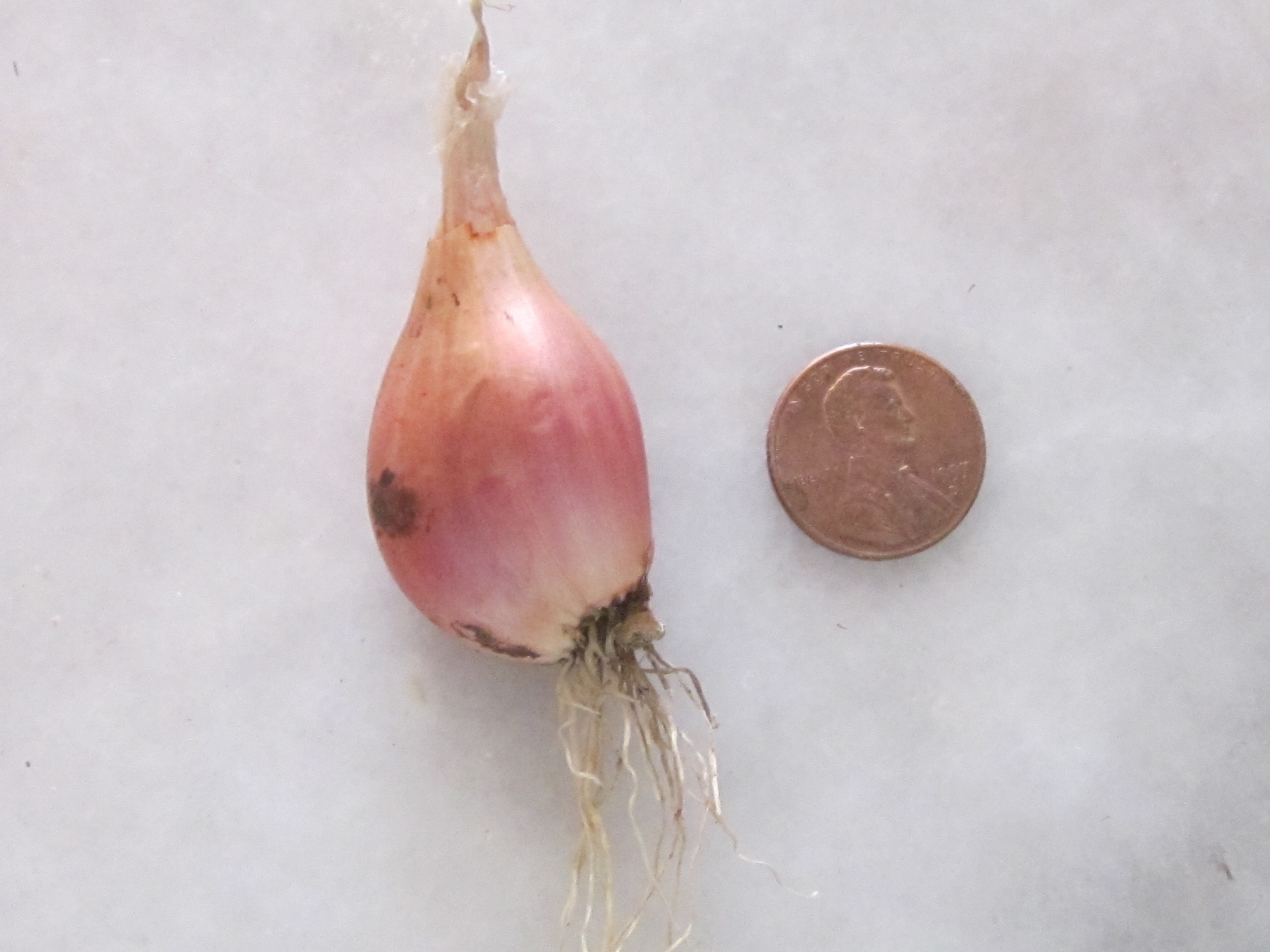
One chore involved pulling out the remaining I’itoi bunching (or multiplier) onions.  I’ve been using them all spring, but they are very prolific. One little onion that looks like this produced the bunch in my hands at the top of the page:

Lovely little iItoi onion with penny for size comparison.

Lovely little I’itoi onion with penny for size comparison.

I’itoi onions were brought to the Southwest in the 17th century by Spanish missionaries, but have become such a part of the Tohono O’odham biology that they are called by the name of their creation diety, Elder Brother, or I’itoi.  These little gems were beginning to die out when they were brought to Native Seeds SEARCH by a Tohono O’odham woman.  They are one of the plants in the Slow Food Ark of Taste. 

I’itoi onions (Allium cepa var. aggregatum) are easy to grow — in the fall, just plant each bulb about an inch below the surface and at least eight inches apart.  They will send up chive-like greens first that can be used until you decide they have multiplied enough and pull them up for use.  When you harvest the last clump in the summer,  put aside a dozen or so bulbs in a paper bag and set aside on a cool shelf to await fall.  (I find it amusing that the onions “know” when to start again — if I don’t get around to putting them back in the ground until later in September, I sometimes find that they have begun to sprout in anticipation.)

To prepare onions for cooking, first separate and clean off the dirt,  then peel.

Like most onions, these contain potassium, vitamin C, folic acid and vitamin B6. Onions contain substantially the same amount of vitamins and minerals when cooked.  I’itoi onions can be substituted for onions or shallots.  You can find them at farmers’ markets and from Crooked Sky Farms in Prescott and the Phoenix area and from Native Seeds SEARCH. Both of these places will ship to you as well.

A healthy row of iItoi onions.

A healthy row of iItoi onions.

You’ll have a ratio of green tops to bulb of about 10:1 so you’ll have to find a use for all the green onion tops.   When you’ve used all you can fresh, freeze them to add to soup stock later. You can also make delicious Chinese Onion Pancakes.

Savory pancakes using onion tops.

Savory pancakes using onion tops. (Photo from Serious Eats)

It’s easy, but rather than recount the recipe here, go to this link. These are the best directions I’ve found for making this delicacy and the author also gives a wonderful tutorial on the difference between adding cold and hot water to flour.

If you’d like a recipe to show off your onion harvest, this one is easy and delicious.

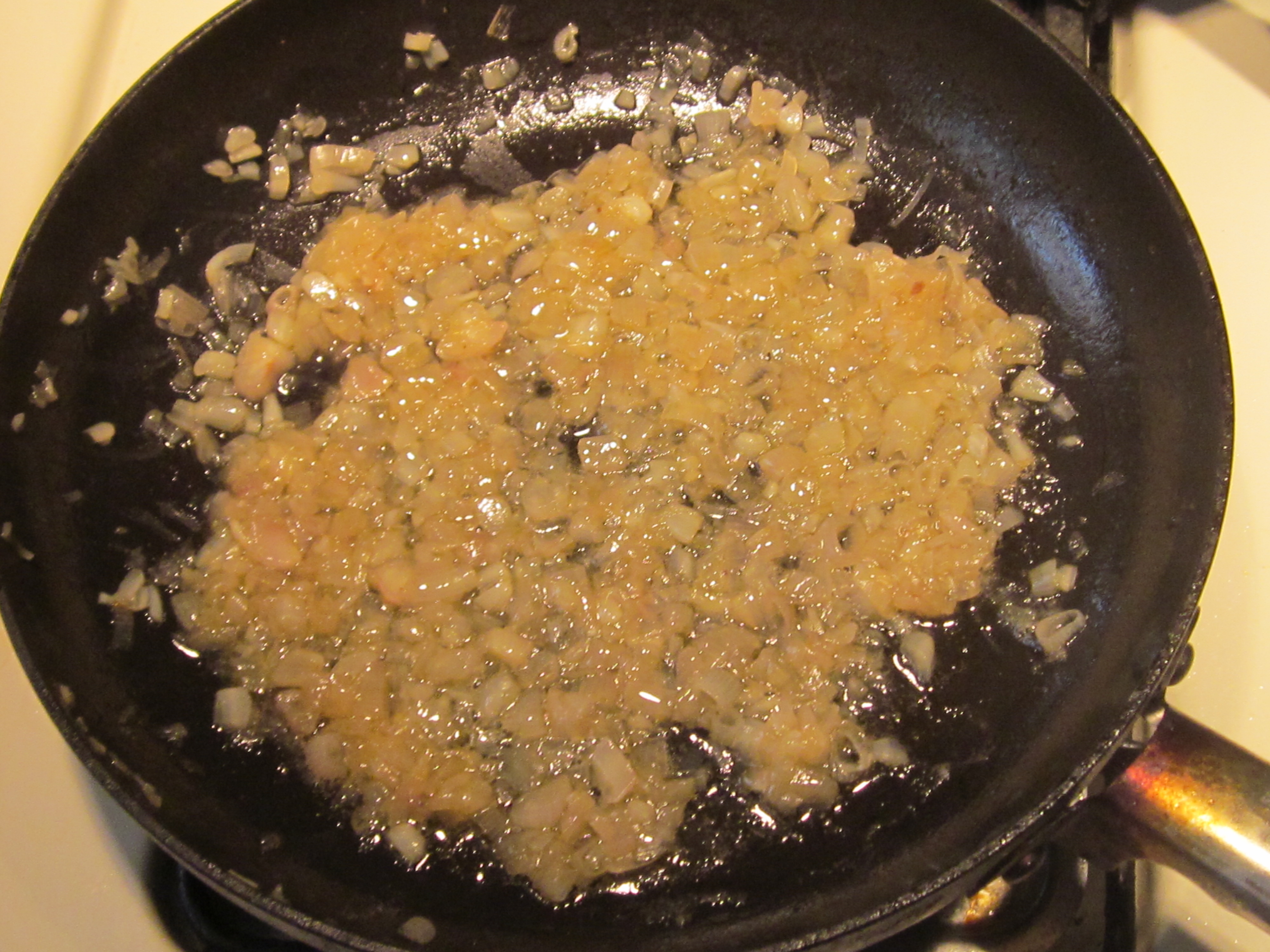
I'itoi onions cooking for Sweet and Sour sauce.

I’itoi onions cooking for Sweet and Sour sauce.

 Sweet and Sour I’itoi Onions

Here’s my recipe for sweet and sour I’itoi onions.  You can use red wine and red wine vinegar or white wine and white wine vinegar. Makes a great topping for grilled fish or chicken or mix it into steamed vegetables to add flavor.

1 cup cleaned and sliced I’itoi onions

1/2 cup water

2 tablespoons wine vinegar

2 tablespoons wine

1 tablespoon olive oil

1 teaspoon sugar or agave syrup

1/2 cup water (again)

In a large heavy frying pan, cook sliced I’itoi onions and water covered over very low heat for 10 minutes until soft.  Add wine, wine vinegar, olive oil and sugar or agave syrup.  Cook over very low heat for another 10 minutes.

My blog sister Jacqueline Soule wrote a column about I’itoi onions for the Explorer and finished with a recipe for I’itoi onion and goat cheese scones. You can see it here

**************************

If you are interested in wild and heritage foods of the Southwest, check out my cookbooks Cooking the Wild Southwest, Delicious Recipes for Desert Plants,   and the Prickly Pear Cookbook.  The books are also available through Native Seeds/SEARCH. For inspiration and directions on what wild plants are available in what season, watch a short video here.