Foes or Friends ? and Foes as Friends Fudge !

Aunt Linda here:

Walking home this humid evening, and exactly as I was gazing up at the gorgeous, dark grey, monsoon clouds, a tiny insect flew right into my eye. Ironically, I had been admiring the bats just above me, swooping and eating insects with both efficiency and drama.  The tiny bug now in my eye, had somehow escaped their skill, yet flew right into my moist eye, where it became stuck, wriggled a bit, and then met its end in involuntary blinking of eyelids.

Which got me thinking about life and death in the worlds of insects.
IMG_5842

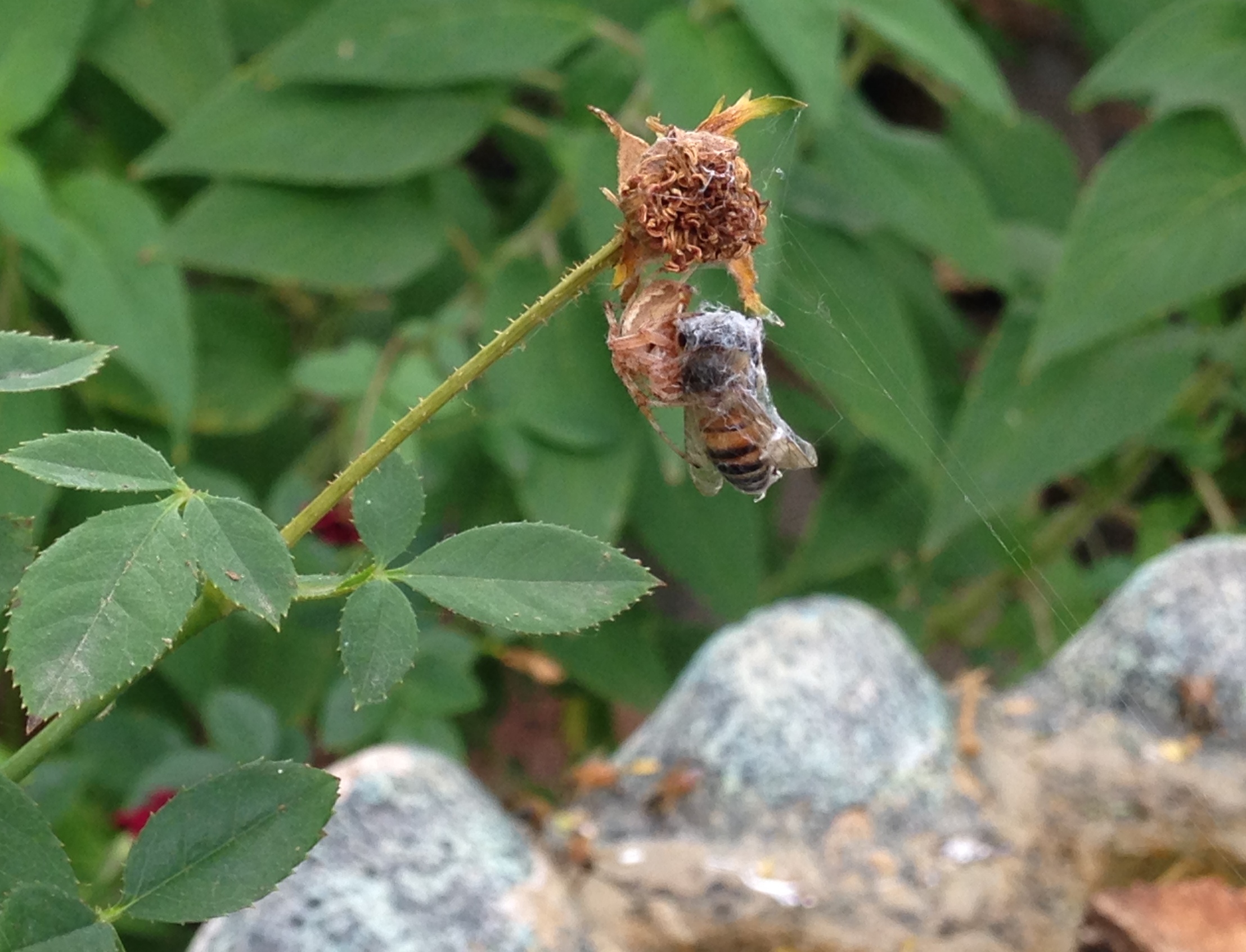
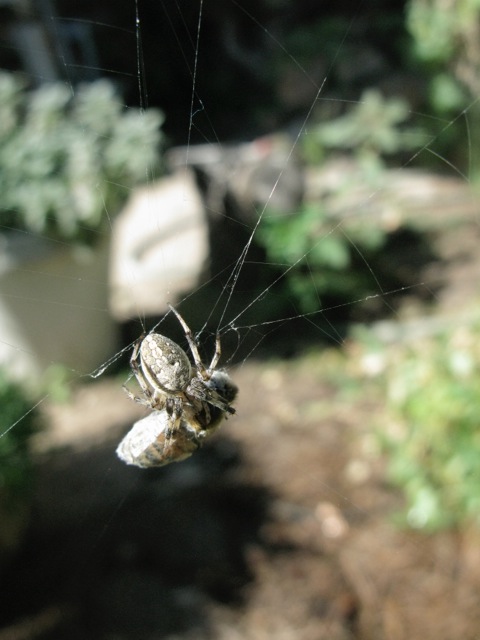
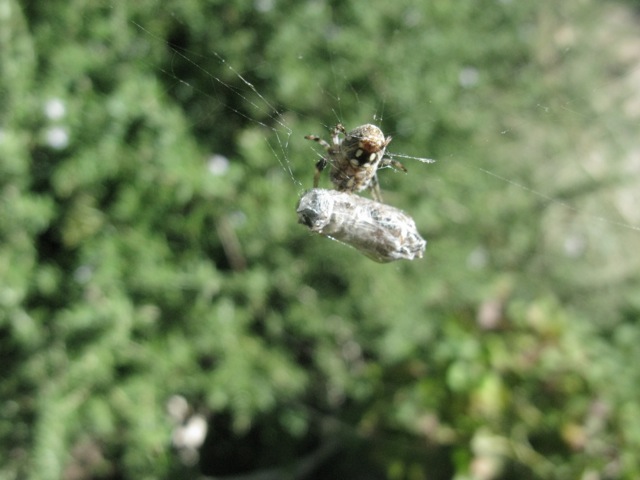
Over the past few days I have been watching one particular spider. Hiding itself under a similarly colored part of the plant, it is quite the hunter.  Strategically situated above the birdbath designated as a primary water sources for honeybees, it has cast its web, and quite efficiently catches and eat bees.

Now, if you find that you are a bit squeamish about these photos you are not alone.

Many in this culture have lives and palates and plates, very much disassociated from their food sources.   Much of our food had become de-animalized and is often unrecognizable from its original source. Insects have no distance between themselves and their sources of nourishment. This is perhaps one reason that we wince a bit when we see such raw feasting before us.
IMG_1246

I suspect that there may be more going on for us than that, however.  It is possible that we are rooting for the sweet bee. After all, it is a HONEY bee. It is fuzzy, and cute, and provides it’s own species (as well as ours)  with delicious honey!  It may be the one insect on the planet  — , (but I am not an entomologist, so please chime in with corrections or tweaks if you are one)  —   that actually enhances the flowers/plants from which it “takes” its food. It does not take a life as some insects do.  It does not harm one leaf or petal. It leaves plants “stronger” than they were before it’s visit to gather pollen and nectar.

So, perhaps, when we wince at scenes like the ones in this post, some part of us feels a metaphorical, or archetypal, pinging somewhere inside us. That of the Monster. Eating the Hero, or in this case, the Heroine.  Myths, children’s stories, and movies, are full of Monsters. And here, right in our own back yards, we find this multi-legged, relatively ugly (to all but the most arachnida-loving predator or human), weird eyed monster eating our Sweet Honey Bee.
IMG_1245

Ah.  But things in Life, and in stories/movies, are not always what they seem. The sweet honey bee has a sting and powerful venom that is not subtle. And spiders are amazing allies, weird appearances aside, as their diets keep overpopulation, and therefore disease, in check.  Even inside our homes, where we generally do not welcome spiders nor monsters, they are powerful allies for humans.  For several years now, I have allowed spiders to live and hunt in the corners and crannies of our old adobe home. (Being selective is obviously important; I don’t welcome black widows for example.)   Co-habitation with them is mutually beneficial. Our home provides them with a happy hunting ground with few predators, while they rid the house of SIGNIFICANT numbers of mosquitoes and flies. Getting a good night sleep without that incessant mosquito whine, is but one benefit.  For me, they are the equivalent of having a cat that is a skilled “mouser”.  Home spiders also eat fleas and flies and cockroaches.; some even eat black widows.
photo

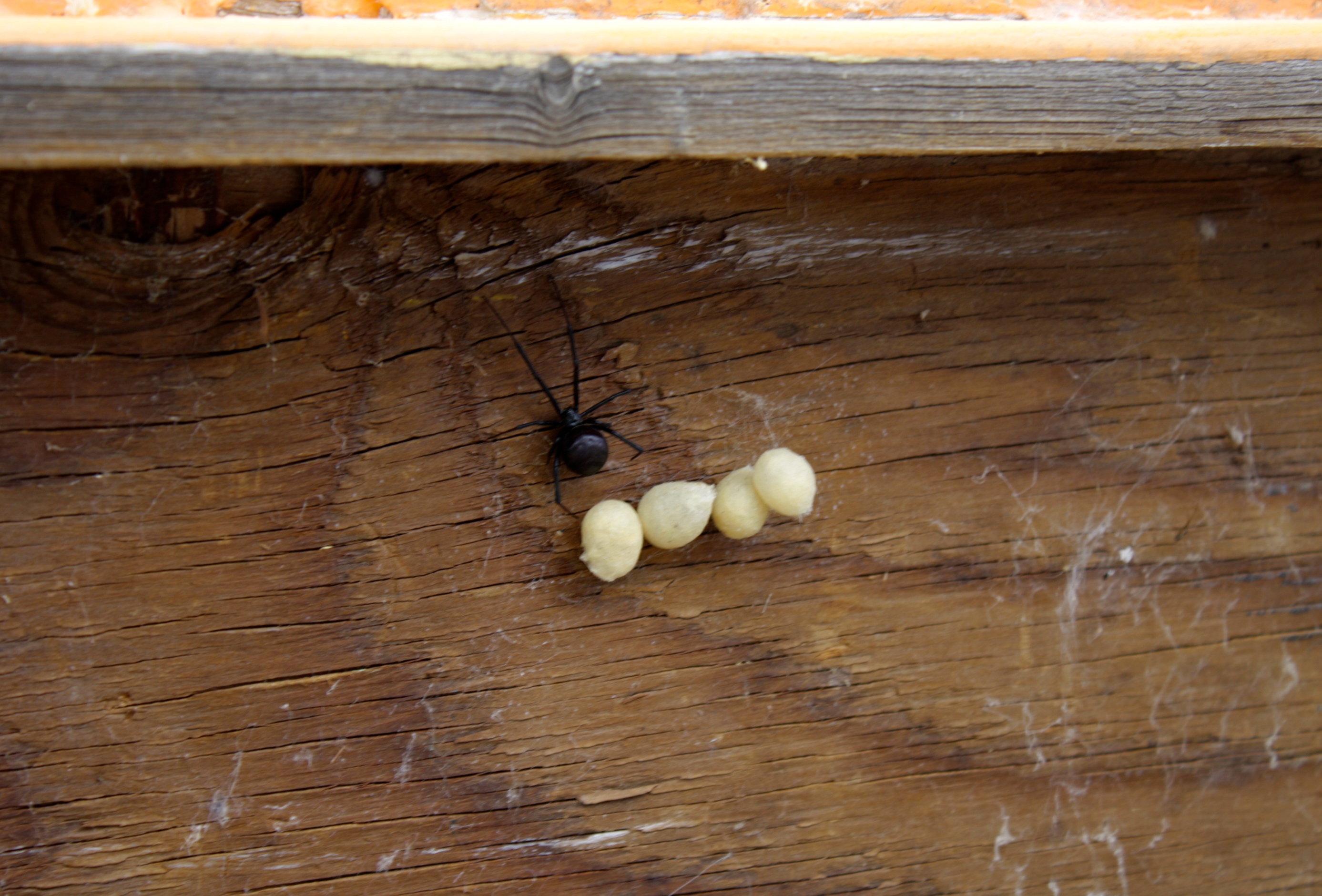
I wish I had a black widow-eating -spider in one of my hives.   In nearly 20 years of being in and out of hives, this is the only one in which I have a problem. (see photo above).  But for two consecutive years,  beginning about this time of year, when I open up the hives there they are. Black bodies, egg sacks, and bees all tied up in webs.  I admit to smooshing these red-8 abdominal spiders and their egg sacs with my hive tool. Yuck. Having a spider to do Black Widow Patrol for me would be so much nicer.

So, sometimes foes are foes; and friends are friends.  Othertimes, who/what we think of as foes are actually friends. When we can adjust our focus to include that possibility, now that is when the world can open up.
IMG_5998

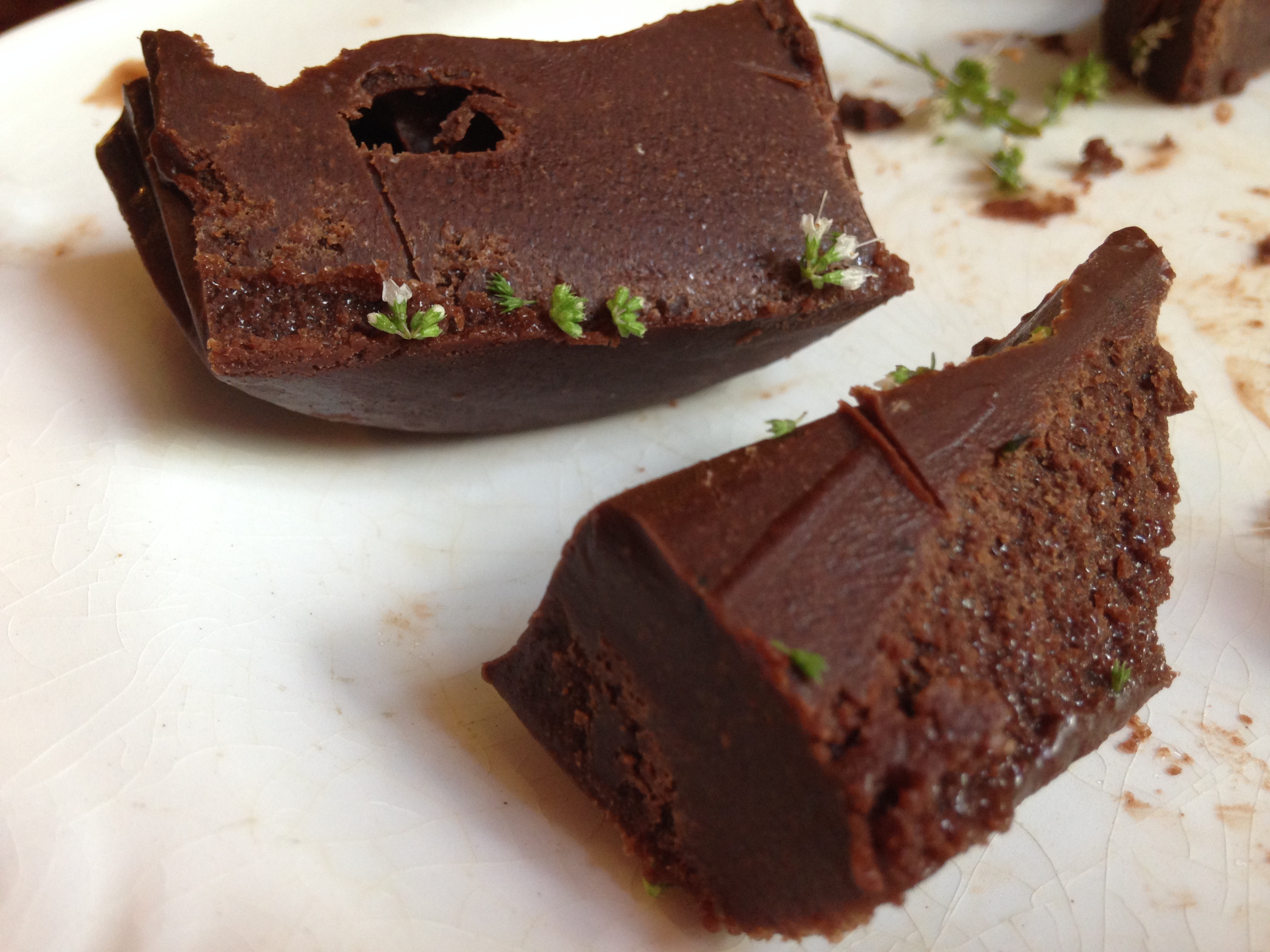
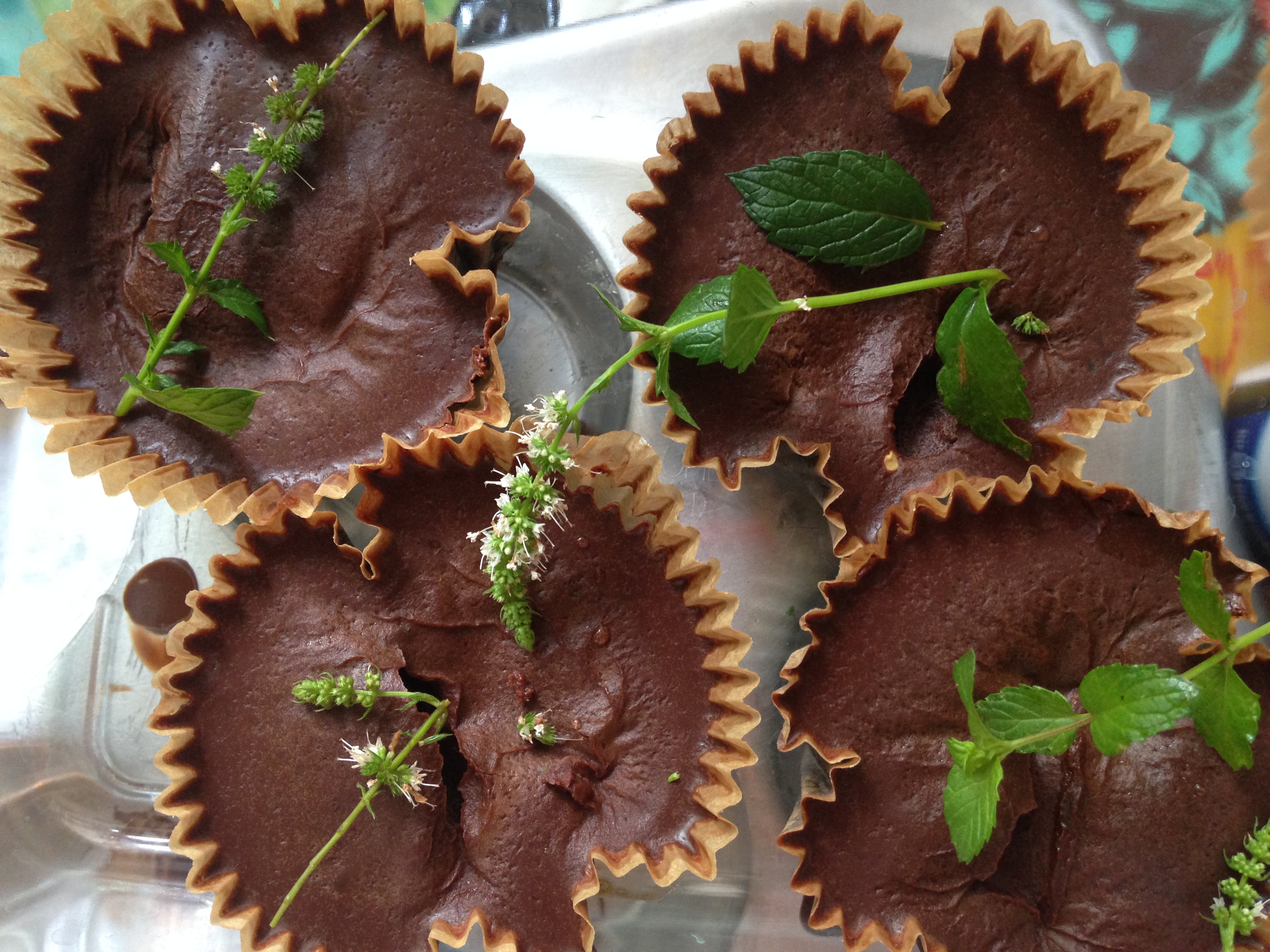
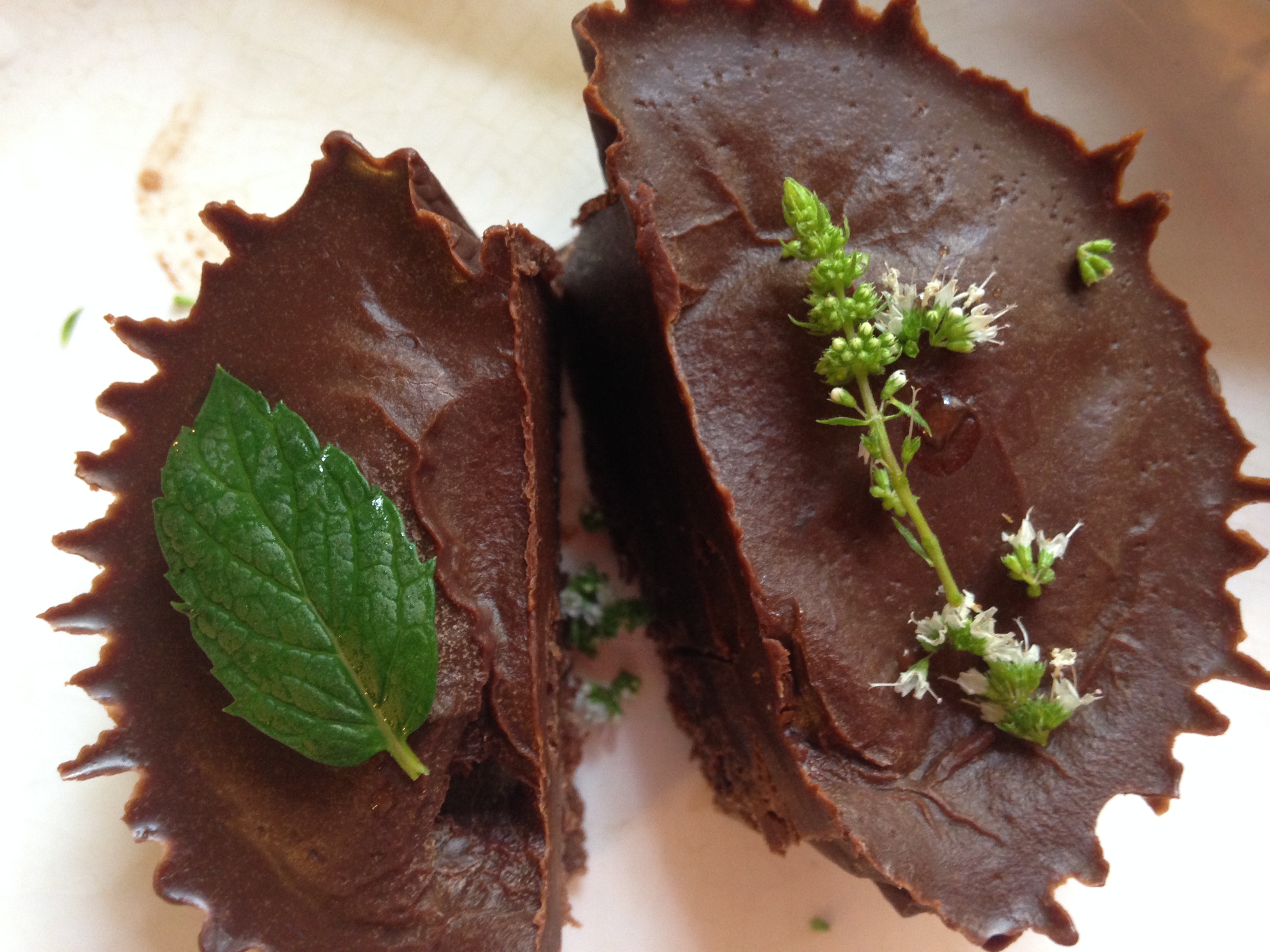
Foes as Friends Fudge: 

(makes five thick fudge rounds or 9 thin ones)

This fudge, I have to say, may be a Super Food.  It’s ingredients that are so healthy, that this fudge might even be considered medicinal.

Ingredients:

The Must Have ingredients

– 1/2  cup refined coconut oil, melted

– 1/3 cup of (local) honey (healthier than sugar; and honors insects)

– 1/2 cup cacao (unsweetened)

– 2 tablespoons almond butter (play around with this; try peanut butter)

–  a few tablespoons of fresh mint and a few mint flower (leave the lion share of flowers on the plant for bees)

Optional Ingredients:

– 3 Tablespoons Goji berry powder or berries (Goji Berries are also Wolf Berries, which grow right here in the South West and are considered a power food)

– 3 Tablespoons Cacao nibs

How to:

– Put all the ingredients (except the nibs) in an electric mixer (I used as Cuisinart but am sure you could use one of those submersible mixers and mix it al right together in a bowl) and blend.

– Place parchment paper in a cupcake or muffin pan; or if you want squares, place parchment in a pan. Pour mixture into the parchment/pan and freeze for 15 minutes for thinner rounds and 20 for thicker.

– Refrigerate.  Left at room temperature these will melt a bit.
IMG_5983

IMG_5997

Marvelous – and Medicinal – Mesquite

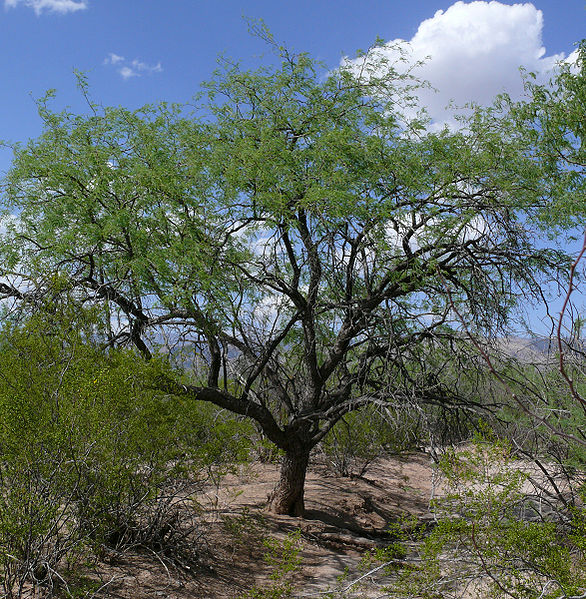
The tall stately velvet mesquite tree (Prosopis velutina) is not what most people think of as a herb! But this graceful tree with durable wood was used as a medicinal herb as well as a source of food, tools, and building materials.


prosopis_velutina_habit_001

The velvet mesquite can grow into a lovely tree especially when given minimal pruning.


Sore throats were treated with a hot tea blend of the clear sap plus inner red bark, while stomach aches were treated with a tea made from the leaves. Toothache was treated by chewing the root. For flagging appetite, a tea made from the leaves was taken before meals. Along with medicinal uses, the bark was used for baskets and fabrics, the wood used for tools, building and firewood, and perhaps most importantly, the pods are a protein-rich food.

.

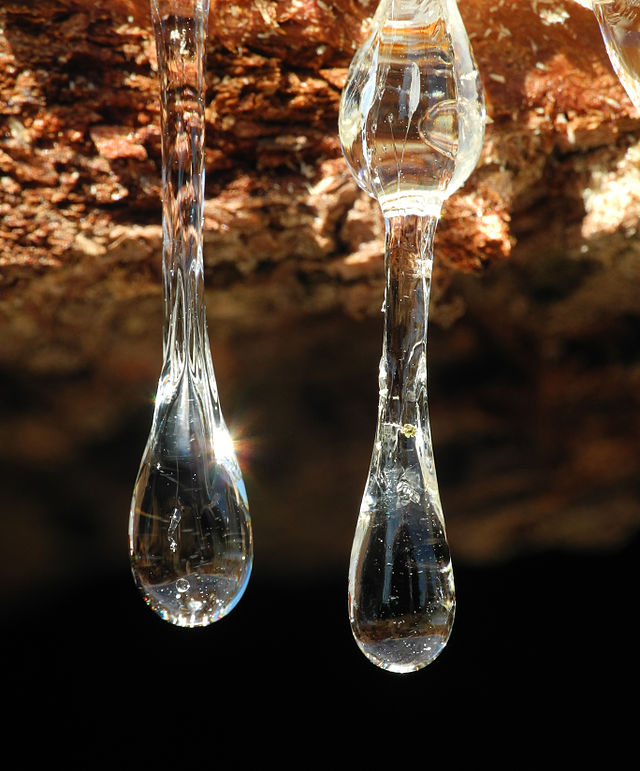
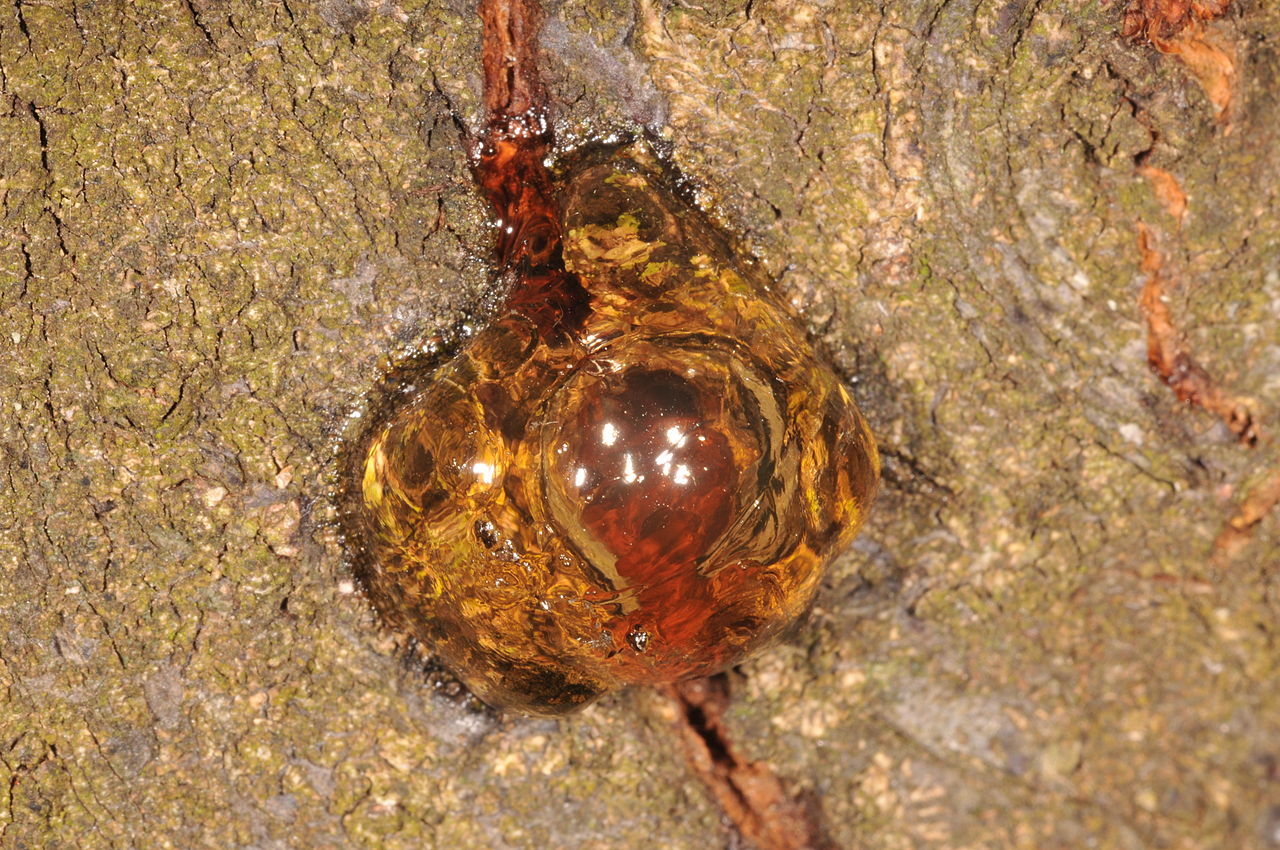
The clear mesquite sap (usabi in O’odham) is not only edible but a highly palatable treat, eaten right off the tree. It was often collected and saved, sealed in pottery vessels, and fed the ill (children especially) to help bolster flagging appetites.


resin by t. bresson

Mesquite trees can produce a clear-ish sap, like this cherry sap, that has a sweet flavor. Photo by T. Bresson.

.

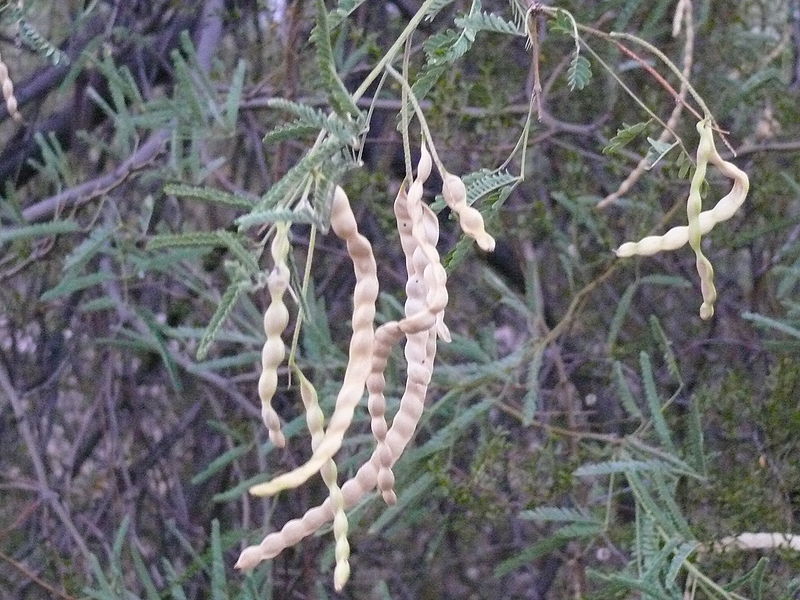
Mesquite seed pods (wihog in O’odham) were an important food source for the natives, and are becoming increasingly important today as research determines how healthful they are for humans. Mesquite pods, and their meal and flour, are considered a “slow release” food due to galactomannin gums which have been found to lower glycemic responses. Their glycemic index is 25 percent, compared to 60 for sweet corn, and 100 for white sugar. I believe some of my “Savor Sisters” will discuss this issue further. Today I am looking at the medicinal uses and how to grow this marvelous plant.

Prosopis_velutina_pods

Mesquite pods fresh off the tree are a tasty treat.

Of vital importance to a select number of folks was the use of mesquite against hair loss. This treatment was used by men only, and consisted of the black sap that oozes from mesquite wounds (not the clear sap) mixed with other secret herbs and applied to the scalp. Mesquite herbal soap for “macho” hair is still available in parts of Mexico..


resin_indet

. The dark sap that oozes from mesquite wood is said to be good against hair loss.

.

Planting and Care.

Our Sonoran Desert native velvet mesquite is slower growing than the grassland mesquite species from Argentina and Chile, but it is a far better choice for a number of reasons. Unlike the non-natives, velvet mesquite is well adapted to our climate, and it feeds the native animals. Leaves serve native butterfly larvae and Gambel’s quail. The pods nourish almost every Sonoran Desert inhabitant, from bunnies and squirrels to coyotes, javalina and humans. The velvet mesquite also has deep tap roots, making it much less likely than the non-natives to blow over in the swirling summer winds that often accompany the monsoon rains.

.

Since all mesquites can cross, it is now difficult to find pure velvet mesquite. If you go far from town you may get a pure species. Harvest a handful of seed pods, then plant them, pods and all, where you want your tree to grow. Water well and stand back. When about twenty little seedlings have several clusters of true leaves, select the one or two with the most velvety blue leaves. Keep watering but do not fertilize. We started a tree this way and in three short years it grew to a sturdy and robust 20 foot tall tree. In the same time frame, mesquite trees we planted from 15 gallon containers were scarcely any taller than when they were planted –about seven feet tall.

Prosopis_velutina_seeds

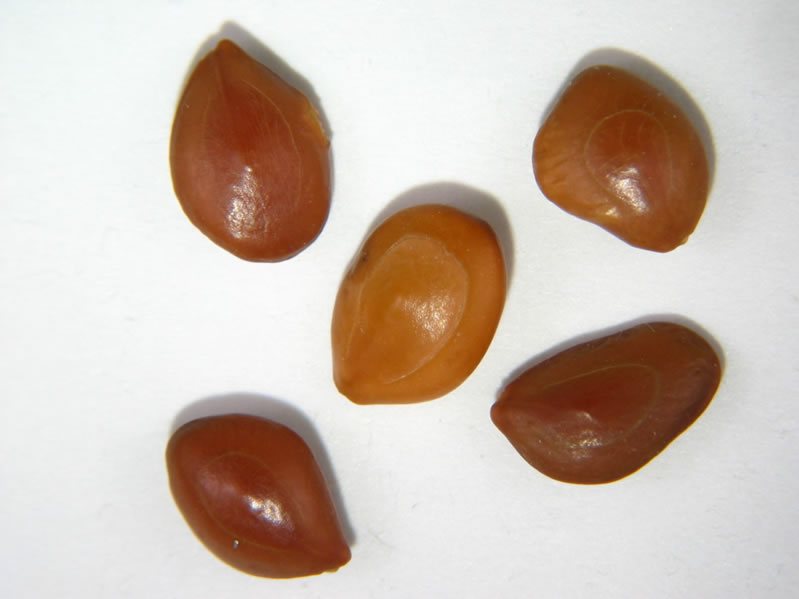
No need to remove the seeds from the pod prior to planting. Just put them into the soil, pod and all and keep evenly moist.

.

Mesquite are drought toleratant once they are established, but they grow more quickly and larger with a thorough soaking of root zone once every month or two during the warm months.

.

Do not fertilize mesquite trees or any plant in the pea family. They have a special relationship with bacteria that fix nitrogen out of the soil atmosphere. If you want to encourage more rapid growth of your mesquite, mulch it with an organic mulch, such as the leaves that have dropped off it or composted organic material from a nursery.

prosopis_velutina by MJ Plagens

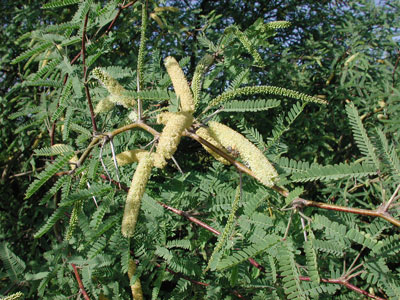
Mesquite blooms are many flowers on a single stalk, termed a catkin. Photo by M.J. Plagens.To learn more about the native animals that use mesquite trees, visit my blog this month at: http://nativeplantwildlifegarden.com/vital-velvet-mesquite/

.

To learn more about how native animals use this plant, visit my blog on: http://nativeplantwildlifegarden.com/vital-velvet-mesquite/

.

This article copyright Jacqueline A. Soule, 2014. The topic is covered more extensively in my book “Father Kino’s Herbs: Growing and Using Them Today” (2011, Tierra del Sol Press, $15). If you live in Tucson, I hope you will consider purchasing a copy locally at Antigone Books, Arizona Experience Store, Magic Garden, Mostly Books, or Rillito Nursery.

Wild Greens and Mole Enchiladas

blog1Hello, this is Amy Valdés Schwem, and I’m honored to be here with such esteemed plant and cooking women!

I love harvesting wild greens, but my day job is making mole as Mano Y Metate. Today I’m going to make enchiladas made with Mole Dulce and fill them with wild greens and summer squash. It won’t heat up the house, if you take the toaster oven outside! Enchiladas made with tomato sauce instead of chile are called entomatados, and those made with mole are enmoladas. So the menu can read: Enmoladas de Mole Dulce con Quelites y Calabacitas.

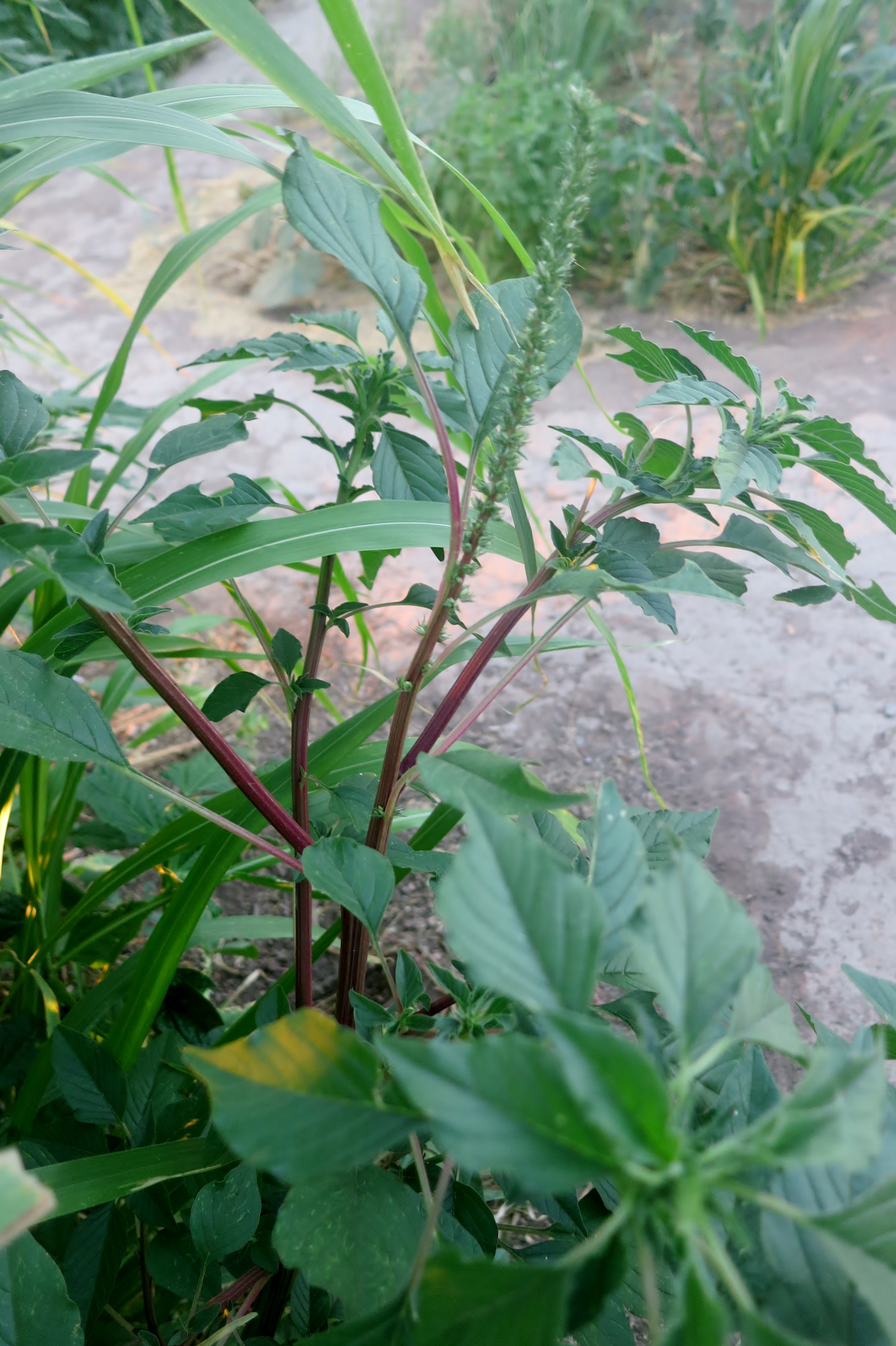
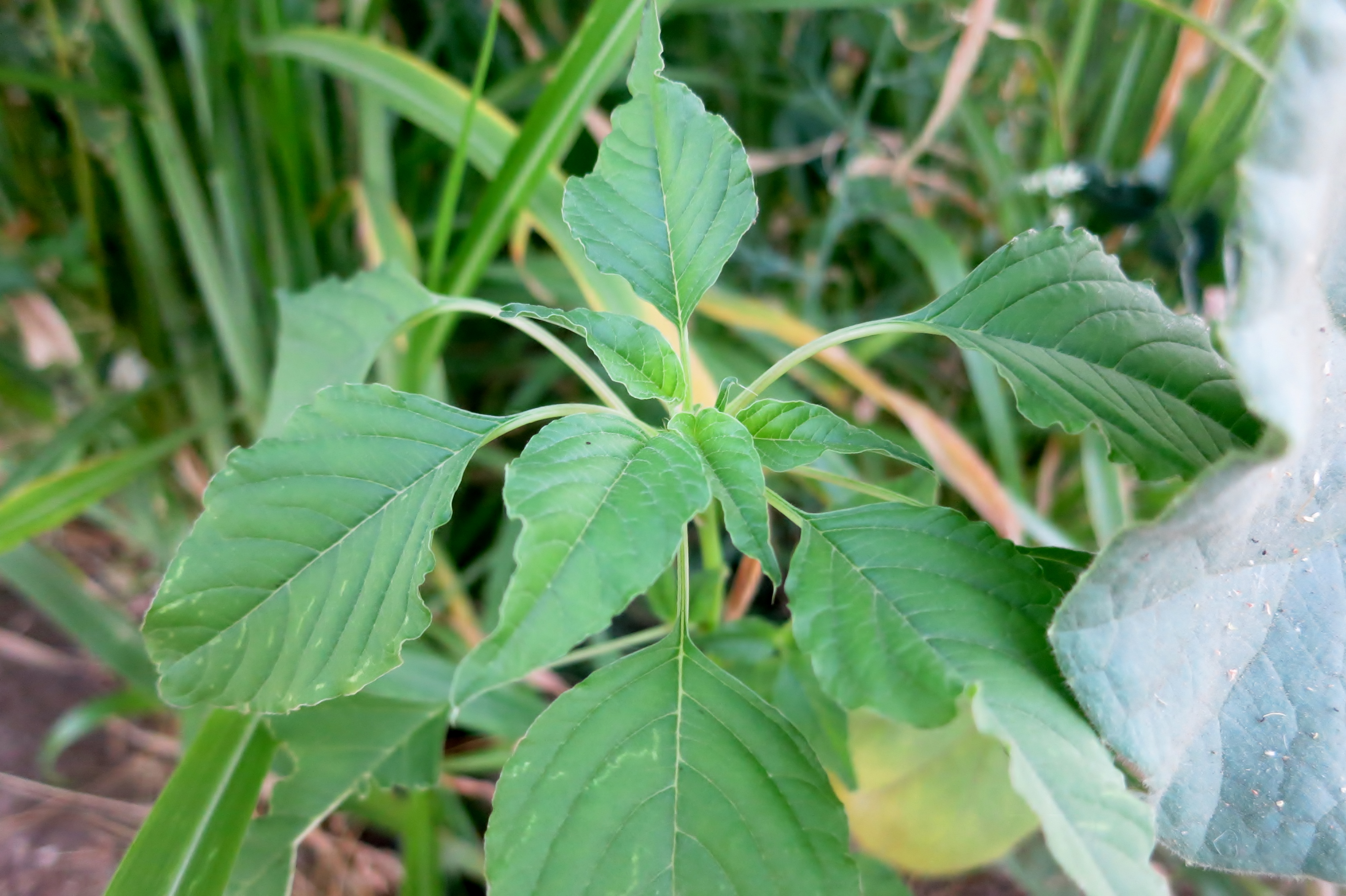
Quelites can refer to several unrelated wild greens, but to me they are wild amaranth greens, Amaranthus palmeri, also known as pigweed.

I grew up eating quelites with my maternal grandfather, and he knew no shame jumping fences to pick weeds. They make a few tiny black seeds, unlike its Mexican domesticated relatives that make enough blond seed to fill bulk bins at the health food store.

It is native to the southwest US and northwest Mexico, and its wild and domesticated relatives are enjoyed around the world both as a green and for its grain-like seed. It easily out-competes summer garden and field crops and is becoming resistant to glyposphate (Roundup). But you wouldn’t want to harvest from those over fertilized fields anyway, since it can absorb too much nitrate, making it unsafe for humans and animals. However, grown in native desert soil, they are safe and nutritious, high in vitamin A, vitamin C, and folate, among other vitamins and valuable minerals.

Some species and cultivars available at Native Seeds/SEARCH are used for dye and have red leaves, and some make a huge red inflorescence pretty enough to grow as an ornamental, even if the birds eat all the seed. I’ve never had much luck popping the seed I grew, but you can buy commercially popped seed, like miniature popped corn.

blog2 blog4

I just visited my closest community garden, Las Milpitas de Cottonwood, and found these beauties in the irrigated beds already in flower. If this was all I had, I would pick the smallest leaves from the stalks and use those.

blog5Hopefully you find quelites before flowering, shorter than a foot tall. I found a few plants in my yard where other things get watered. Many more will sprout with the summer rains.

blog7a


Last year I had so many from my Tucson Community Supported Agriculture share that I dried some, just like my great aunt Tia Lucy told me they used to do. I just plucked leaves from the stems and air dried them in the house. To use, I soaked in water overnight, then sauteed with the others. I’ll dry more this summer, for sure.

blog7b blog8


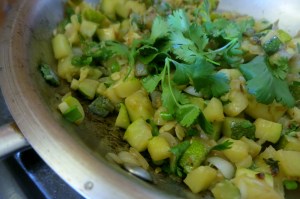
To prepare the fresh quelites, wash, chop tender stems and all, and saute with a little onion and garlic in oil. My grandfather always used bacon grease, so that’s what I did.

blog6


It’s also prime season for calabacitas, so use them if you don’t have any fresh or dried quelites. My grandfather also collected and cooked verdolagas for us, which would work here, too.


blog9a


Calabacitas, sauteed with onion and garlic. This filling with mushrooms and queso fresco, inside mole dulce enchiladas, is my brother’s signature dish. Well, one of his signature dishes.


blog9b blog9c


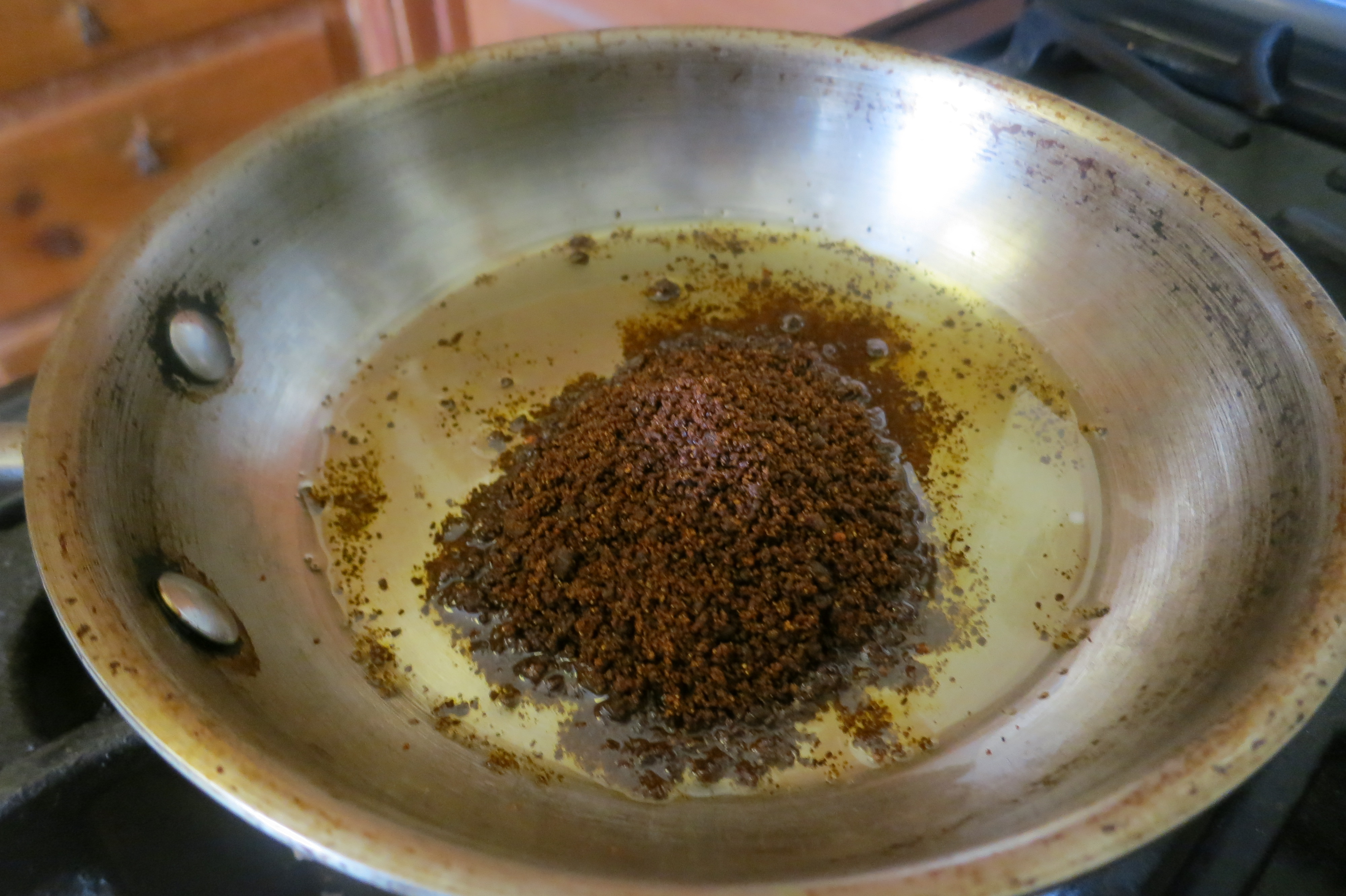
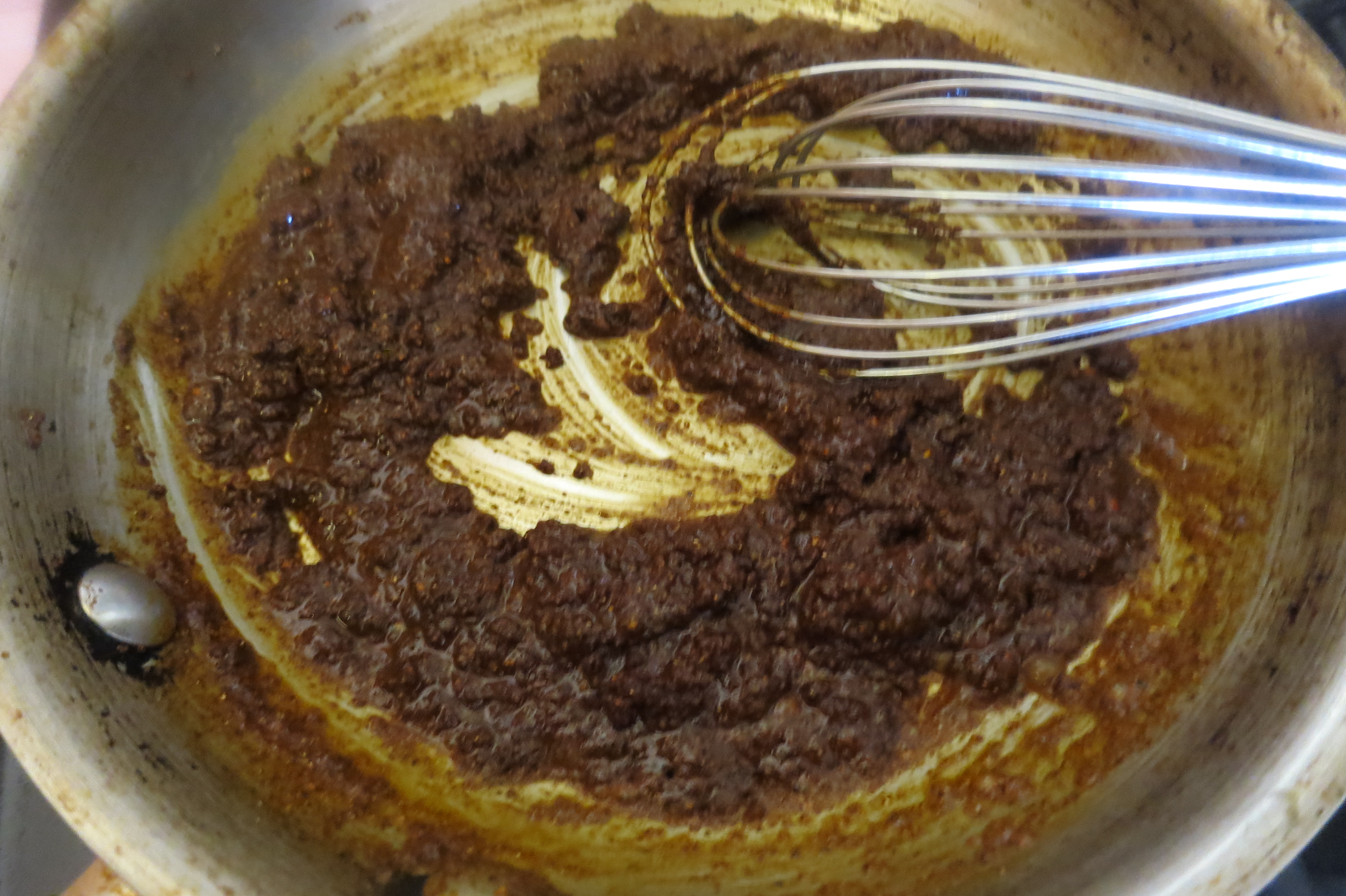
Now for the mole! For a half dozen enchiladas, to serve two people, I used about half of a tin of Mano Y Metate Mole Dulce powder, cooked in mild olive oil to make paste.

blog9d

Then I added about half a cup homemade chicken stock and a dash of salt, but veggie stock is great, too. Water doesn’t quite do it. Simmer until you have a nice sauce, adding more broth as necessary. There will be steam and good smells.


blog9f blog9g


The secret to enchiladas: start with thin corn tortillas and fry briefly in oil hot enough to sizzle, but not hot enough to make them crispy!!! DO NOT skip this step!

If the tortilla cooks too much, or if it breaks, just turn up the heat and make that one into a corn chip.

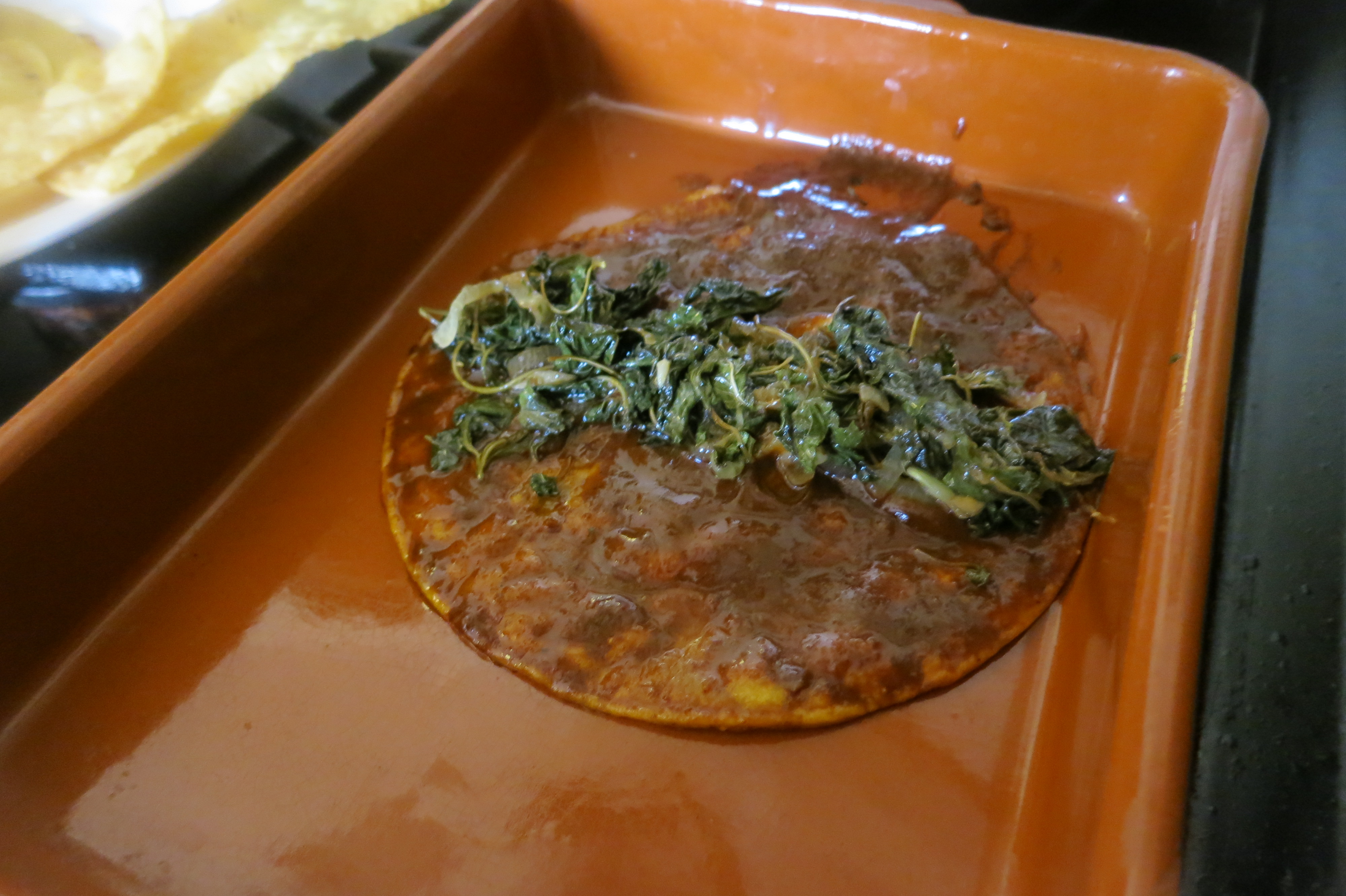
Dip the flexible tortilla in the mole dulce.

blog9h blog9i


Put quelites or calabacitas in the tortilla and roll.

blog9j blog9l


Top with homemade queso fresco and bake until heated though. My grandfather used the toaster oven outside on the patio in the summer to make enchiladas. No need to heat the house!

Depending on your oven, you may need to cover them with foil, but I didn’t. I like crispy edges. Serve with a cucumber, tomato salad dressed with a squeeze of lime, beans, and prickly pear grapefruit-ade.
Leftovers are best fried in a cast iron pan until crispy.

Mano Y Metate moles can be purchased from Martha Burgess of Flor de Mayo Arts at the Sunday Heirloom Farmers’ Market at St. Philip’s Plaza, Native Seeds/SEARCH, and ManoYMetate.com.


Enjoy Beans with Epazote

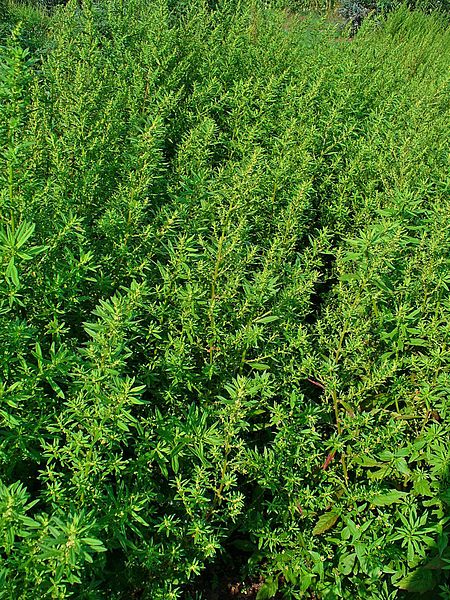
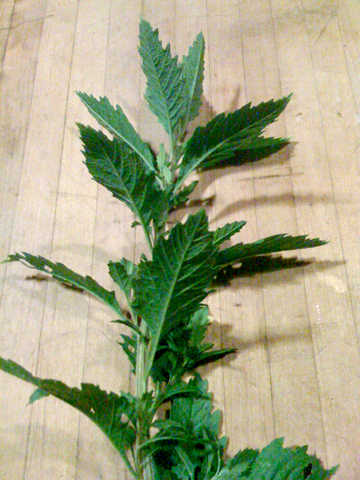
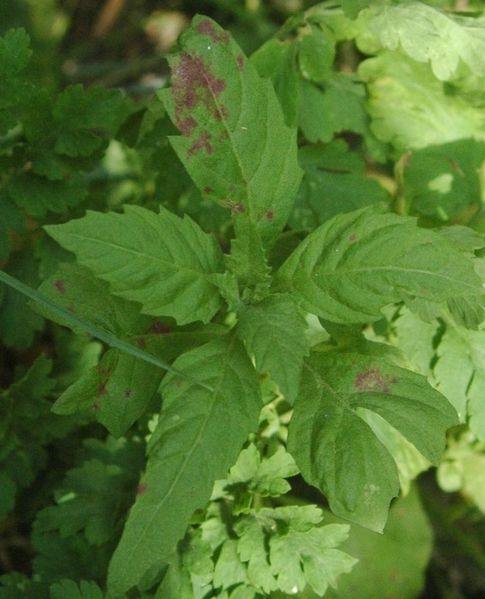
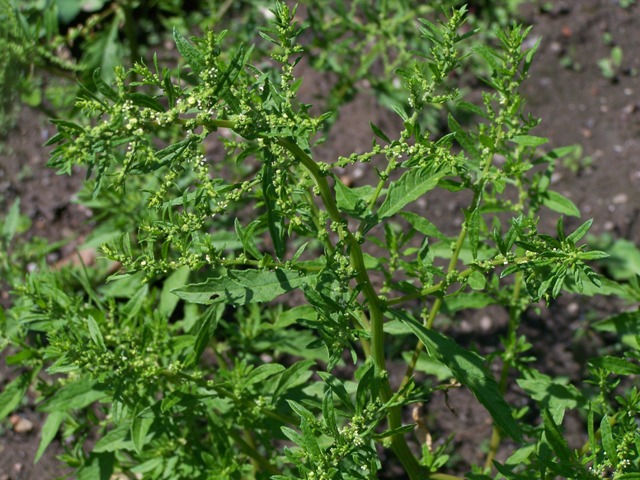
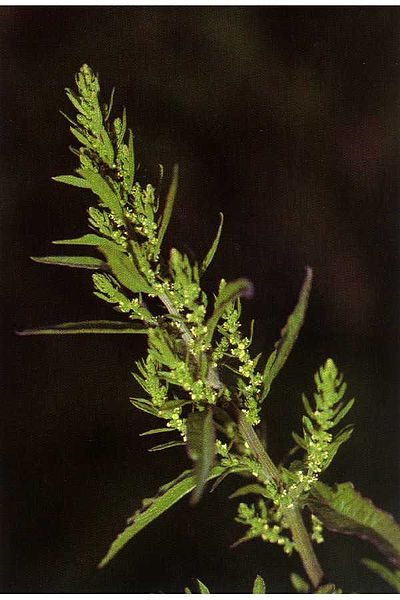
Chenopodium_Dysphania_ambrosioides_08_by H ZellEpazote (formerly Chenopodium ambrosoides, now renamed Dysphania ambrosioides) came to our area from Mayan lands. The name is the same in Nahuatl, Spanish, and English. Who says you are not multilingual?!

Epazote is a summer annual herb popular for culinary and medicinal uses. By the time of Contact, epazote had been cultivated for well over a thousand years in southern and southeast coastal Mexico. It was, and still is, a principle flavoring for a large number of Yucatan and Veracruz dishes, and is indispensable for cooking black beans.

Chenopodium Dysphania ambrosioides by iamtexture

Epazote, like the Old World herbs of cumin and ginger, has the unique ability to help break down hard-to-digest vegetable proteins. These difficult proteins are found most often in beans, peas, and members of the cabbage family. A few leaves of epazote cooked in the pot with the potential offender help break down these offending proteins while alo providing a delightfully piquant flavor to the dish.

This strongly scented herb is reported as a deer repellent. I can report that javalina, jackrabbits, cottontails and quail all avoid eating the plants. Medicinally, epazote has been used in an infusion as a vermifuge (against intestinal parasites), and in a decoction to help induce labor. These uses lead to one of it’s common names, wormseed.

Chenopodium Dysphania_ambrosioides_9061 by t voekler

Planting and Care. Plant epazote from seed in spring once night temperatures rise above the low 50’s. Seeds can take as long as four weeks to germinate. Plants will thrive through the warm season and freeze to the ground at 35 degrees, but often regrow from the roots.

Seed Sources. Check the Pima County Seed Library.  No need to drive there, go online to check for seed availability then reserve some sent to your local branch.  I have also found seed through Renee’s Garden Seed and Botanical Interests.

Soil. Epazote tolerates poor, even clay soil, but plants grow best in average, well-drained soil. Can be grown in containers that are at least eight  inches deep.

Chenopodium_Dysphania_ambrosioides  by S Doronenko

Location. Full sun is ok in the Southwest, but afternoon shade is appreciated by this tropical herb.

Water. Moderate.

Fertilize. Not necessary, but once a month with general purpose fertilizer will help make bushy plants. To really keep the plants bushy, you will need to pinch often. This is a technical term, really! (see “Care”).

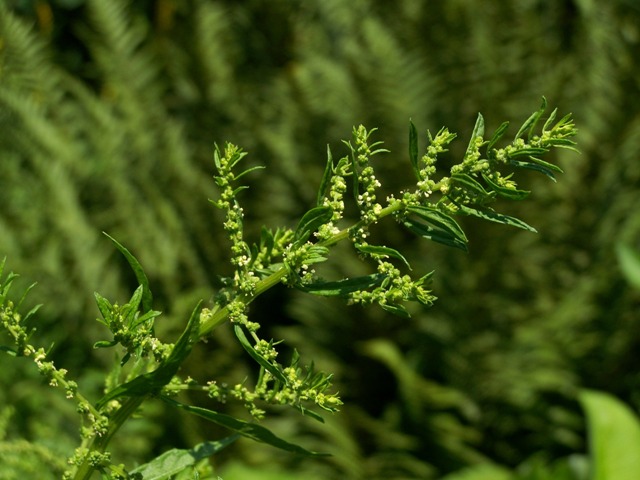
Habit & Care. Epazote can reach 5 feet, but will be scraggly. Pinch or clip off the growing tips often to keep it around 2 to 3 feet tall, compact, leafy, and looking attractive in the garden. Usually a single plant provides enough for the household. Epazote reseeds readily, remove the flowering stalks, or be ready to weed excess plants next year. Seed heads turn an attractive bronze in autumn, and finches enjoy the seeds.

Chenopodium_ambrosioides_9059

Harvest and Use. Epazote is used fresh for culinary purposes, and loses “digestive” properties when dried. Chop or mince leaves and add early to dishes that require long cooking, like beans, roasts, soups, or stews. Use one tablespoon minced leaves per cup of beans or to a two pound roast. Not used as a garnish, due to bitter taste. If you want to save epazote for winter use, chop up fresh leaves and freeze them.

Chenopodium_Dysphania_ambrosioides_courtesy of UDSA_01

Go Green. Use epazote to avoid using manufactured bean-digestive compounds. Having the plants in your yard saves packaging, shipping, and all the associated waste of resources inherent in manufactured goods. Even greener, epazote plants provide food for birds, a way to capture carbon, plus a lovely low green plant for your yard.

This article is exerpeted from my book “Father Kino’s Herbs: Growing and Using Them Today” (2011, Tierra del Sol Press, $15). I hope you will consider purchasing a copy locally at Antigone Books, Arizona Experience Store, Magic Garden, Mostly Books, or Rillito Nursery. You can visit my booth at the Arizona Feeds Country Store Spring Expo, Sat. May 3 (10-3), 4743 N. Highway Dr.

Edible Flowers of Spring

Ocotillo blossoms

Ocotillo blossoms

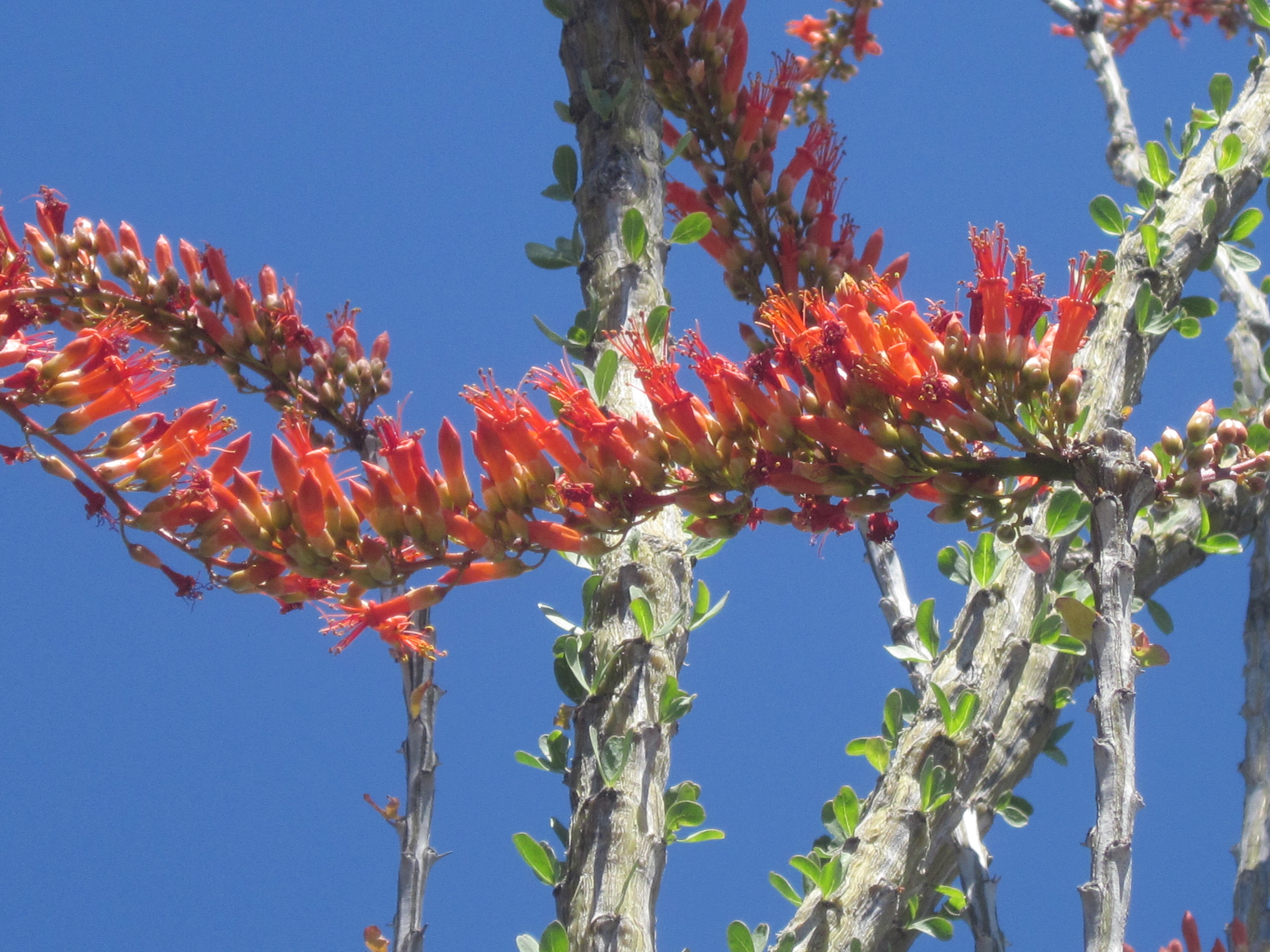
It’s Carolyn today. Two months ago Tia Marta wrote about gathering and preparing delicious cholla buds, but that is only the barest beginning of the edible flowers that can add fun and interest to our meals. Spring is the best time to find the biggest bounty of  beautiful munchibles.  Gather a bowlful of ocotillo blossoms, add water, and let it stand overnight. You’ll have a delicate juice. The flowers must be open for the nectar to leach into the water.  I wrote about the early Native American uses to ocotillo as a medicinal herb in American Indian Cooking: Recipes from the Southwest. 

Ford at Empire 015

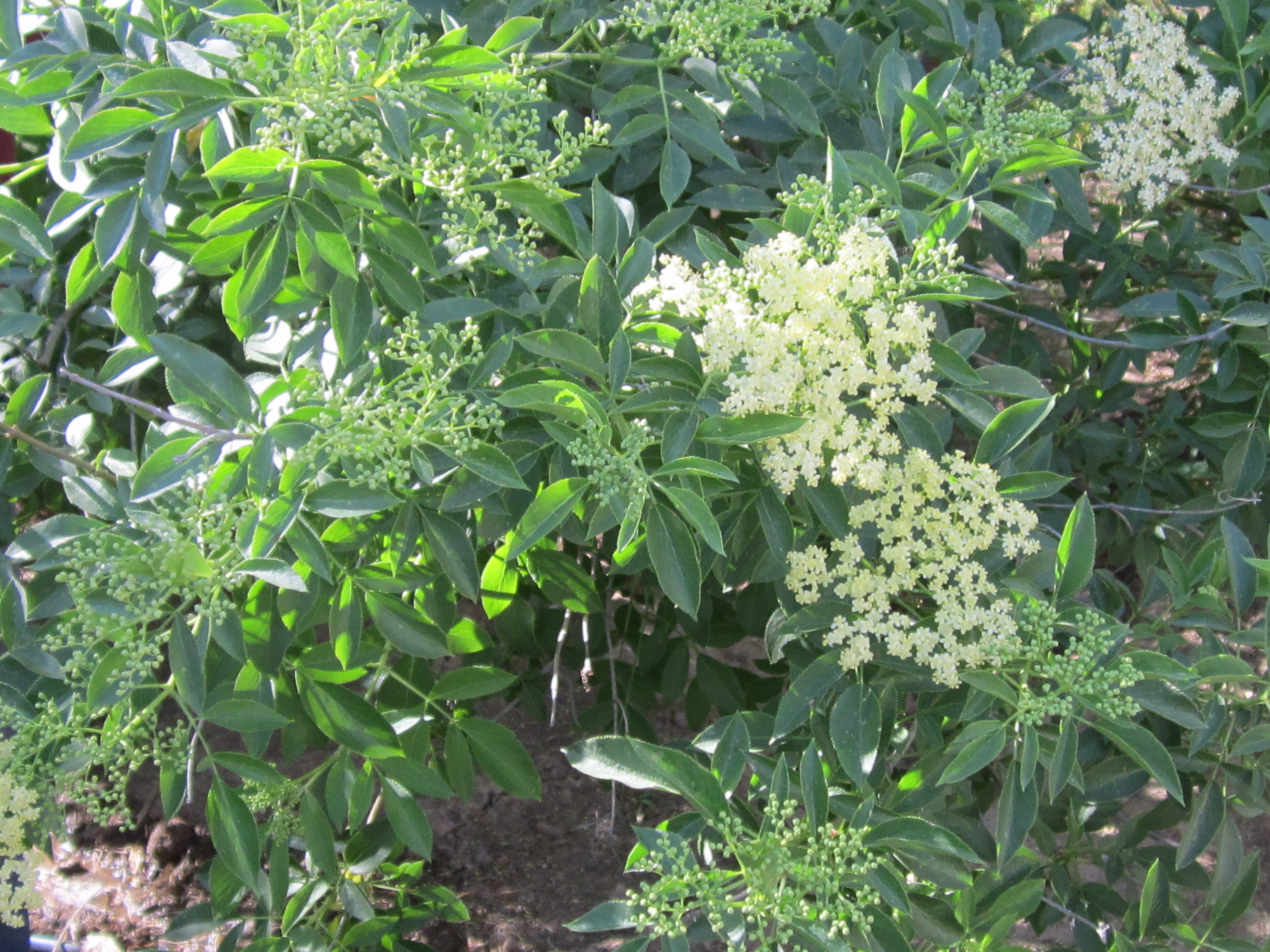
Blossoms on elderberry bush.

This is also the season for elderberry bushes to flower.  Sometimes called elderblow, the flowers make delicious fritters.  I have given full directions in my earlier blog Carolyn’s Southwest Kitchen and you can see it here.

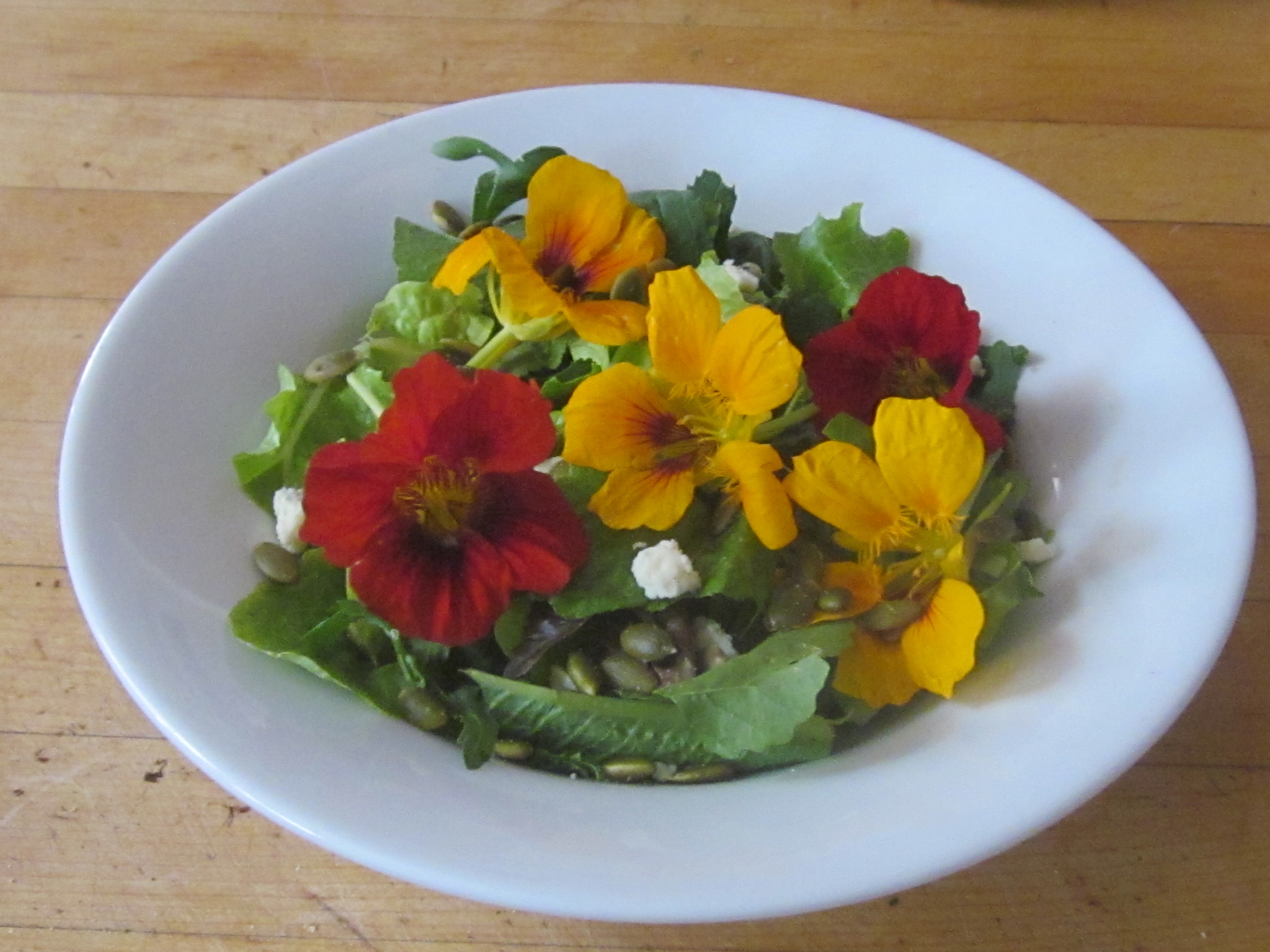
Moving from the desert to your own garden, you’ll find many edible flowers. Many of them make delicious additions to salads.  Among them are nasturtium flowers, which have bright, peppery flavor.

Two colors of nasturtium flowers on a fresh garden salad.

Two colors of nasturtium flowers on a  garden salad.

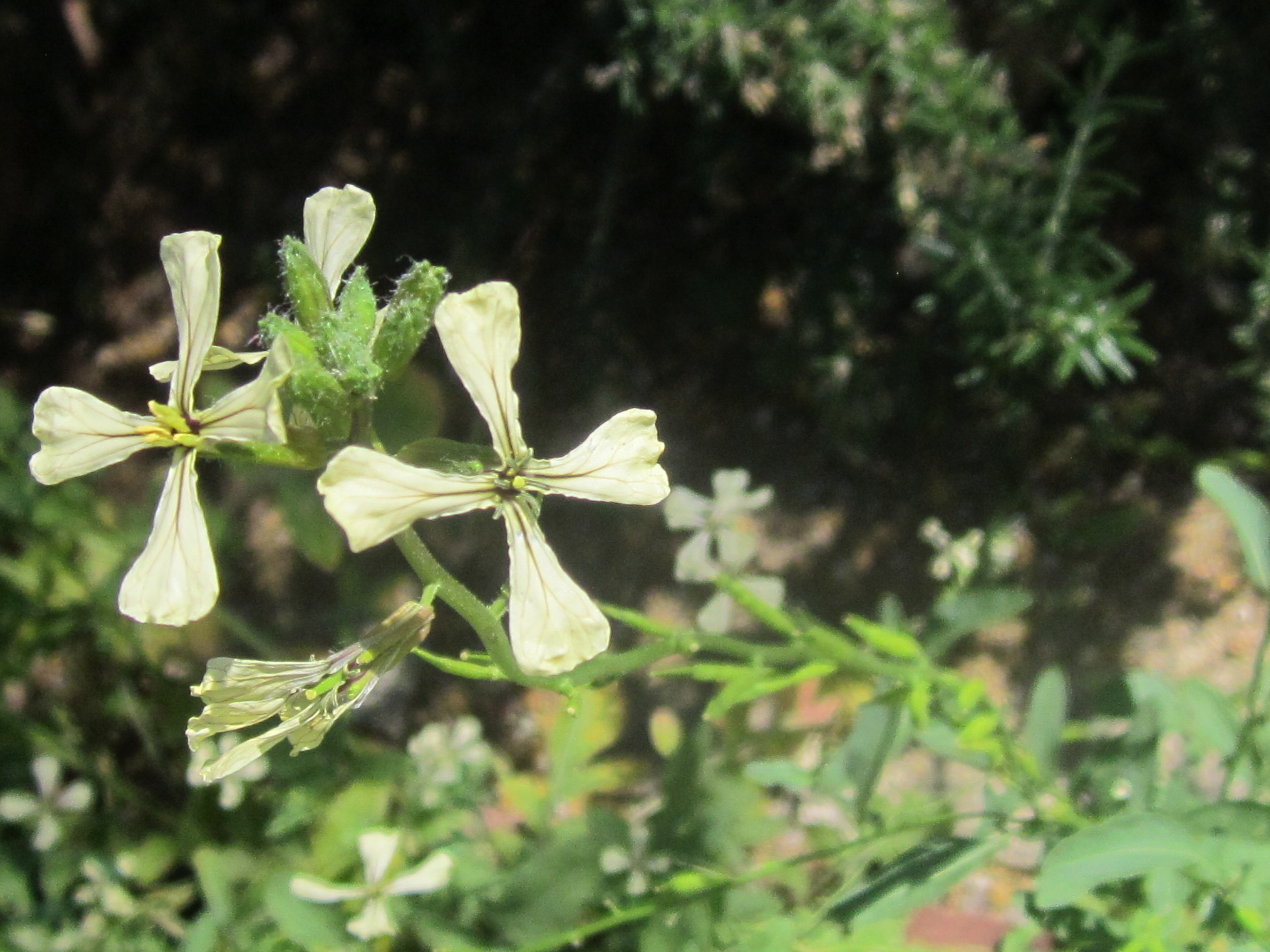
Arugula tends to bolt early and especially did so on this very hot spring on the Sonoron Desert.  But the flowers, though small, taste lovely, not quite as intense as the the leaves.

Arugula flowers

Arugula flowers


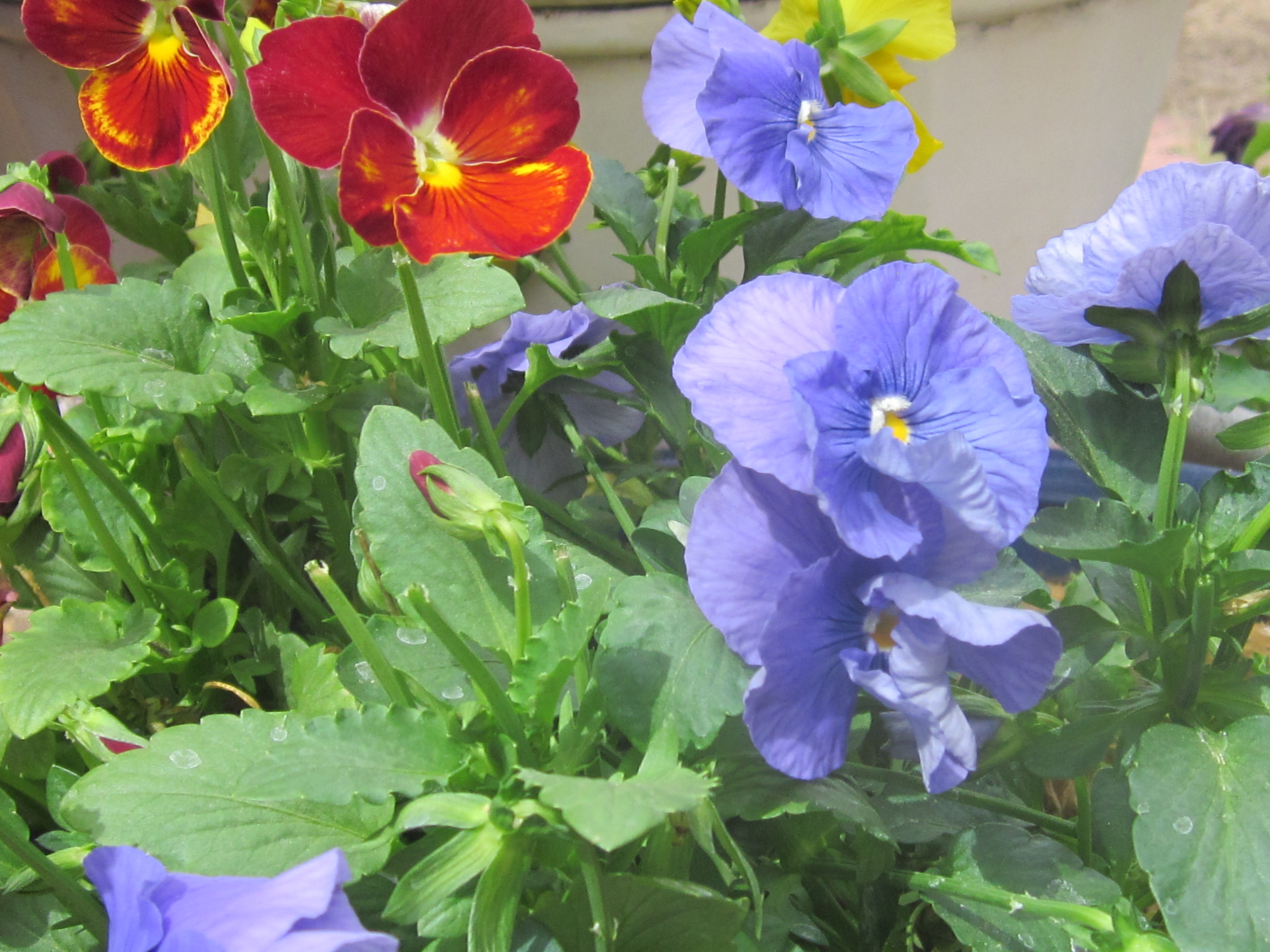
Other delicious salad additions are pansies and violas, their smaller cousins.

Pansies

Pansies

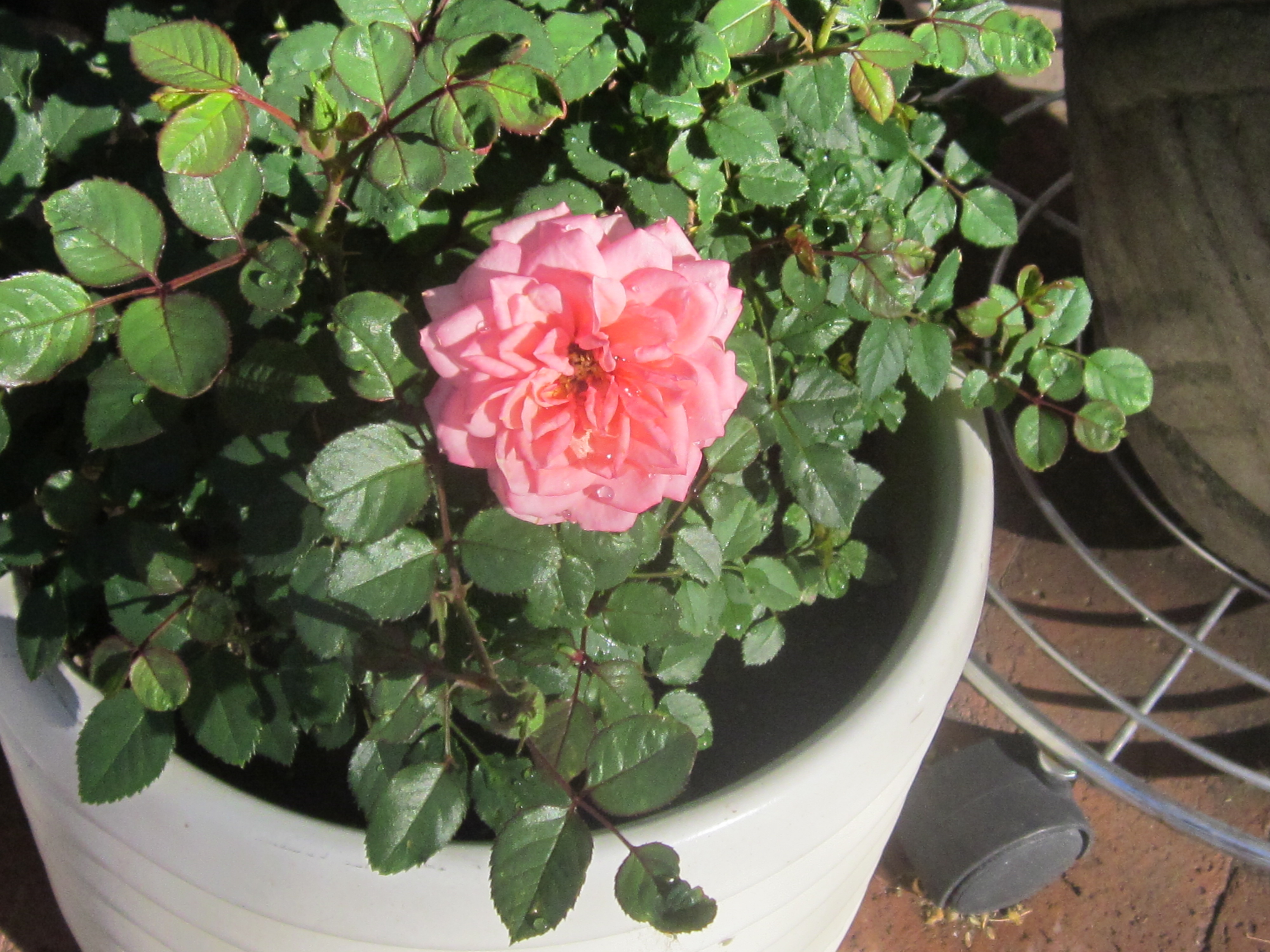
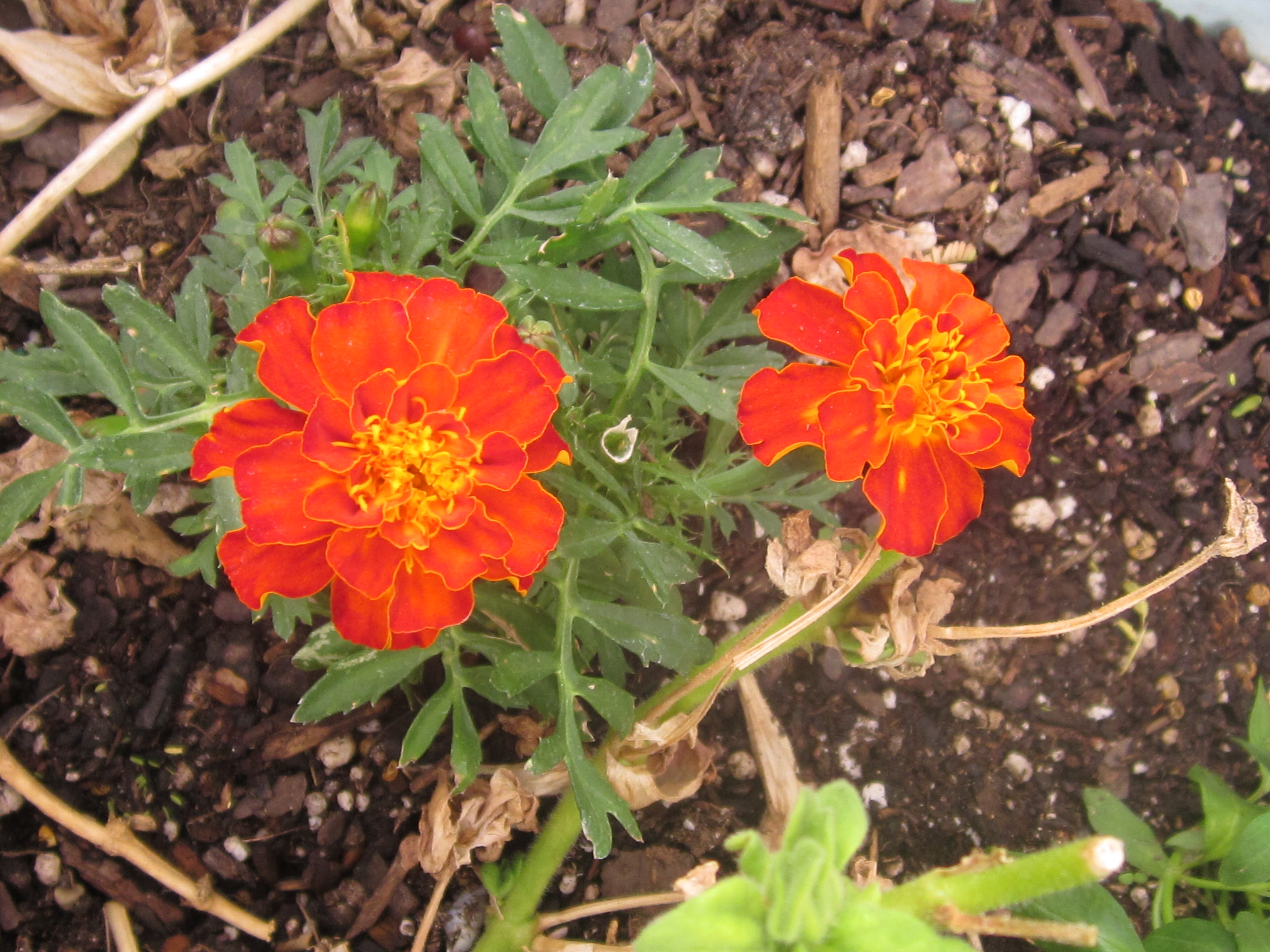
When I began gathering material for this post, I recalled a dish I made  years ago that involved sauteeing chicken with cinnamon and rose water and then finishing the dish with a sprinkle of small rose and marigold petals.  My friend Suzann and I served that at a wedding we catered for two naturalists.

Marigold

Marigold

Teacup rose

Teacup rose


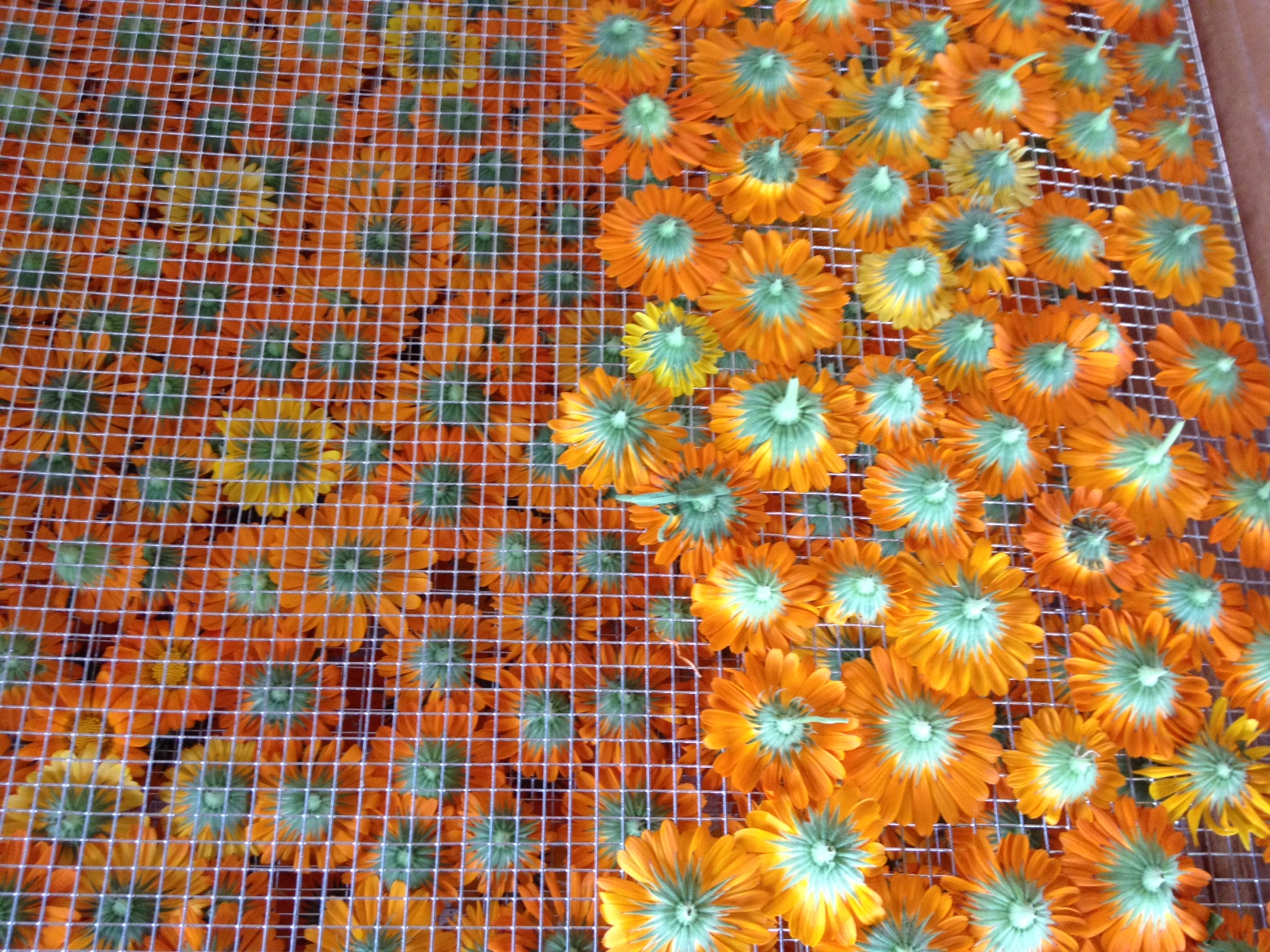
Dried edible flowers make wonderful and healthy teas. Tina Bartsch at Walking J Farm grows and dries calendula flowers for John Slattery  at Desert Tortoise Botanicals who uses them as one ingredient in his Desert Flower Tea. He combines them with desert willow flowers, ocotillo flowers, hollyhock flowers, and prickly pear flowers.  His website says that the tea is an anti-oxidant and good for tissue repair.  The tea is available at Native Seeds Search,  Tucson Community Acupuncture,  the Food Conspiracy. Calendula petals taste  tangy and peppery and add a golden hue to food. Calendula has been called “the poor man’s saffron.”

Calendula flowers drying

Calendula flowers drying


Desert Flower Tea

Desert Flower Tea


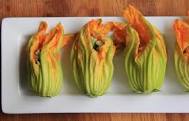
One of the most used flowers in cooking, particularly in Mexico, is the squash flower.  The male flowers will never develop into squash, so you can harvest some of them. When I was in Oaxaca a few summers ago, I took a cooking class from Chef Oscar Crespo and just had the best time.  One of the things we cooked was stuffed squash blossoms.  Here is the recipe.

Squash blossoms

Squash blossoms

FLORES DE CALABAZA RELLENAS DE QUESO
Cheese-filled Squash Flower Blossoms


12 squash flower blossoms, washed

½ cup (2.5 oz/80 g) fresh cheese, sliced into sticks

12 epazote leaves (optional)

1 cup all-purpose  flour

3/4 cup club soda

Oil for frying


Slice the cheese so that it fits in the blossoms. Remove the sepals and pistils (that’s the parts inside the petals), then cut the stem to 1¼ in . Fill the whole blossom with a slice of cheese and an epazote leaf. Push the cheese all the way in, and twist the petals to close.

Make a batter with the flour and club soda, starting with 1/2 cup of the club soda. Add more if necessary to make a thin batter like pancake batter.

Place the oil in a frying pan and bring to high heat, about 350 degrees. Dip the stuffed blossoms in the flour mixture. Fry them for 2 minutes or until golden brown, turning at least once. Remove from the oil and drain on absorbent paper.

These can be served accompanied with a red or green salsa or floated in a tomato  broth.

For more ideas on cooking squash blossoms, check here.  If you want more information on edible flowers, you can click here and here.

__________________________

Carolyn Niethammer writes books on the food and people of the Southwest.


Limoncillo

Savor Sister Jacqueline Soule posting today.

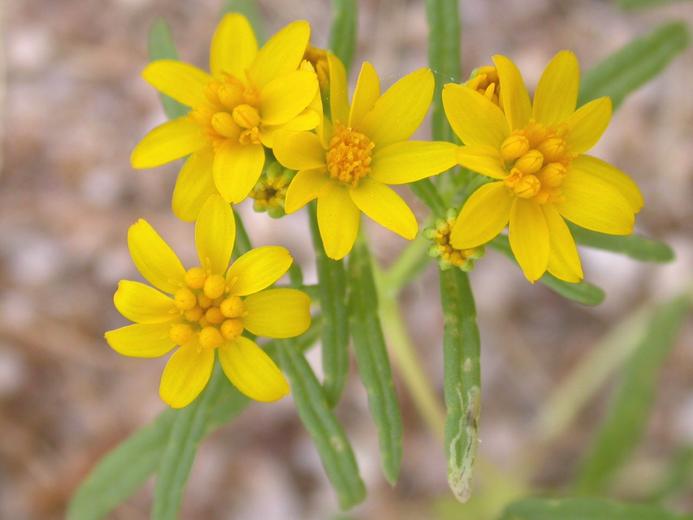
Chinchweed or limoncillo is known to scientists as Pectis papposa, a member of the Compositae family, now called the Asteraceae, and arguably the largest plant family out there.  If you aren’t “into” the Compositae, it is generally considered just another one of those DYC’s (Dratted Yellow Compositae).  (Well, we scientists don’t say “dratted” but we don’t want the parental controls to censor this blog.)

Pectis_papposa_flowers

Pectis papposa is just a “DYC” to some, but it can be so much more!

This sprightly summer blooming annual is found across the desert Southwest from New Mexico to California and northern Mexico (in the Sonoran and Chihuahuan Deserts) at elevations below 6000 feet.  With surprising promptness after the first summer rain, the desert floor is carpeted with the small yet bright yellow flowers – DYC’s.


Pectis_papposa_field

A carpet of Pectis papposa. Too lovely to trod upon!


Hopi, Zuni, and Havasupai all use the chinchweed plant as a condiment, especially to flavor meat.  There are also references to its use as a fresh green and potherb.  In Mexican markets, bundles of fresh or dried plants are sold as limoncillo and used as a culinary spice, generally to flavor meat. There are also references to its use as a dye plant.

Pectis_papposa_leaves

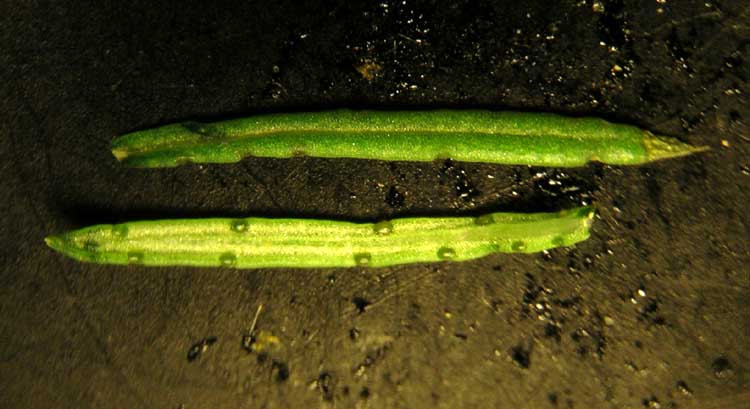
The leaves of limoncillo are dotted with a number of glands filled with flavorful oils.

Planting and Care.
Sow seeds of this charming summer annual anywhere in your yard you wish them.  Plants look especially lovely in a cactus garden, and appear to prefer well drained soil.  Since chinchweed is a summer annual, sow in the warmer months, from April onward.  Ideally have the seeds in the soil prior to the first monsoon rain, generally around San Juan’s Day or summer solstice.   This may be tough as seeds are generally not available in seed catalogs.  You may have to wild collect some of the herb this year, and while you are at it, collect seeds for your own next year.  Once you have some limoncillo your yard it seems to cheerfully find new places to tuck itself, including in areas of reflected light, which is often a tough site for plants to thrive in.


Pectis_papposa_habit

These tiny plants will find their way into unexplored corners of you yard. A weed only by common name, the seed is excellent food for native birds.


Harvesting and Use.
As a culinary spice, chinchweed may be used fresh or dried.  Simply chop up the fresh material or crumble the dried and sprinkle on meat.  If you like lemony chicken, then limoncillo is a great local herb to use!  Fresh cinchweed greens add a nice zing to stir fry, but I have not tried them cooked alone as a potherb (yet).  This will be part of my New Years resolution to grow and use all of the native plants in my Father Kino’s Herbs book (More on this at 30 minutes in on America’s Web Radio –  http://www.americaswebradio.com/podcasts/VeggieHourJan18.2014.mp3).  For dye, pluck the flower heads off and use them fresh or dried.  I could not find if there was a specific mordant.

Pectis_papposa_var_papposa_5_SS

Harvest the flower heads for dye and the leaves together with the flowers for culinary use.

Now I have thought of a new way to think of this DYC – it’s a Delightfully Yummy Compositae!  And I hope you will consider some for your yard.

Pectis_papposa_003

DYC stands for Delightfully Yummy Composite with Darling Yellow Crowns!

 [For another species of DYC flowering now, and some of its uses, please visit my blog on Native Plants & Wildlife Gardens – http://nativeplantwildlifegarden.com/brittle-bush-in-bloom/]

The information presented here is a sample of what appears in my book Father Kino’s Herbs, Growing and Using Them Today (Tierra del Sol Press, 2011).  Available through amazon.com.  Free public lectures on growing and using our wonderful native plants, at a number of branches of the Pima County Library.

Photos copyright free and courtesy of Wikimedia except where noted.  Article © 2014, Jacqueline Soule.  All rights reserved. I have received many requests to reprint my work. My policy is that you are free to use a very short excerpt which must give proper credit to the author, and must include a link back to the original post on our site. My photos may not be used.  Please use the contact me if you have any questions. JAS avatar

Welcome to Savor the Southwest ! Savoring Honeycomb

Blog Post # 1

This is Tia Linda, one of several “food friends” who will be collaborating on this blog, and the lucky soul who gets to welcome you to Savor the Southwest, a blog Savoring the wild plants, herbs, and animals that grow here in the Southwest.  The focus for my part of the blog is to converse with you about the animals and insects that we live among.  You might already be raising animals, or may flirting with the idea.  Some of my posts may be “notes from the hive”. Some will come from the corrals;  some from the coops. And all will have an offering of some relevant food or recipe.

This week we greet Halloween,  Dia de los Muertos, and less well known, from the Celts Countries, Samhain.   Samhain  means the “End of Summer” and is considered the years third and final harvest. It is generally celebrated on October 31st, but some traditions prefer November 1st.  Originally a “Feast of the Dead” it was celebrated by leaving food offerings on altars and lighting candles. Extra chairs were set out as an invite to the spirits of loved ones to come home while the veil between worlds thinned.   Symbols at Samhain included apples, Jack-o-lanterns, and gourds, among others.

Image

“Apis Mellifera Becomes Apis Calavera”  (a quilt by me).  On display at Raices Taller 222 Art Gallery here in Tucson; proceeds will be split equally between Raices (to support one of our best local art venues) and Xerces Society (for quality bee research and protection)

Dia de los Muertos, whose roots are traced back to an Aztec Festival, is celebrated throughout modern Mexico as well as the Southwest.  Favorite foods and beverages of departed loved ones are placed at private alters or gravesides. In the spirit of both Dia de los Muertos and Samhain (and Asian and Afirican cultures have similar rituals)  my offering this year extends beyond the human family to the insect world. Because of my love of bees, and because they are so crucial to our food supply, I am Remembering the vast number of honeybees colonies that have died in the past few years of Colony Collapse Disorder. By setting out honeycomb at my beehive alter, I am both welcoming them home and acknowledging their place – very significant place – in the interconnectedness of all things.

Image                                             So the first food offering to you from this blog is:  Honeycomb.  I offer it both as a food of interest,  as well as to the departed bees that may visit my alter. If you have never eaten honey straight from the honeycomb,  you have a real treat in store.  It is the purest form of honey that we can eat. It is not processed by human hands at all. In fact, the last “hands” to touch it were those of the worker bees, as they placed the wax capping over hexagonal cells holding the honey.
What do you do with the wax? You can swallow it;it will pass right through your system. Or just spit it out. Some people like to chew it like gum. Find a local beekeeper and taste honey from the plants/trees that live in your environment. Mainstream markets will be unlikely to have comb honey, so visit your farmers markets and local health food stores. And consider getting to know the local beekeepers around you.  More than that,  consider becoming a beekeeper yourself!  It will  transform you from being “just” a food consumer, into being a food producer – even if you keep just one hive. Small scale beekeepers play a powerful role these days … but that is for a future post!

Bye for now.

New Blog, New Voices

Welcome to our new shared blog of the food and plants of the Southwest.  We are a group of friends who for years,  have been learning from each other. Now we are going to extend our little community and share with you the knowledge and recipes we have been sharing with each other.  We all come to this subject with different personalities. Some of us are practical and straight-forward, others more philosophical. We’ll write in rotation.  But it won’t be just about us.  There are so many other people doing interesting work in local and wild foods, we hope to interview some of them along the way.  Occasionally we’ll ask someone to do a guest post.

We always invite your comments as we want to make this a community conversation.  Whenever I’m with a group of  Southwest foodies, I come away with something new, something that makes me go, “Wow, what a great idea. I never knew that.”  So share with us and the other readers your new ideas for edible wild plants or local animal foods.

Our first post that will arrive in a few days is about bees.

Here’s who we are:

Carolyn Niethammer

Carolyn Niethamm

Carolyn Niethammer writes about Southwest cuisine and edible wild plants of the Southwest. She is happiest when working in her flower or vegetable gardens, out on the desert gathering wild foods, or devising new recipes for the plants she has gathered.  Her five cookbooks range from the way Native Americans cooked wild plants to a collection of recipes devised by the Southwest’s top restaurant and resort chefs for incorporating the area’s iconic ingredients in delicious dishes.

Aunt Linda

Tia Linda (design by Jennifer Parker Designs all rights reserved)


Tia Linda is both an urban and a rural food producer. She ranches in the Sierra Madres foothills in Northern Mexico. She also keeps honeybees and fosters native bee habitat in the urban Southwest. She enjoys raising poultry, with a special fondness for heirloom breeds. She sees herself as an extension of the hives, flocks, and herds that she lives among.

Martha Burgess

Martha Burgess

Mentored by Tohono O’odham Elders, Martha Ames Burgess came into ethnobotany from the inside out, learning how to harvest, prepare, store, and eat many Sonoran Desert edibles, and to make use of desert plant “first aid”.  With O’odham farmers and Native Seeds/SEARCH cofounders, she was taught desert gardening with native heirlooms.  Her mission is to pass along this wildcrafting and gardening knowledge so that new Baja Arizona dwellers may better appreciate and adapt to our desert home, especially in these times of climate change.  She uses on-site outdoor teaching, poetry and art for sharing the awareness.

JAS avatarJacqueline Soule has been writing about plants in the Southwest since the 1980’s, and growing and using them since even before that.  An award-winning garden writer, she is delighted to be the instigator of this venture.  She welcomes you to her free lectures at the Pima County Libraries.