Lizard Tail Plants

yerba mansaIMG_6196 (4)

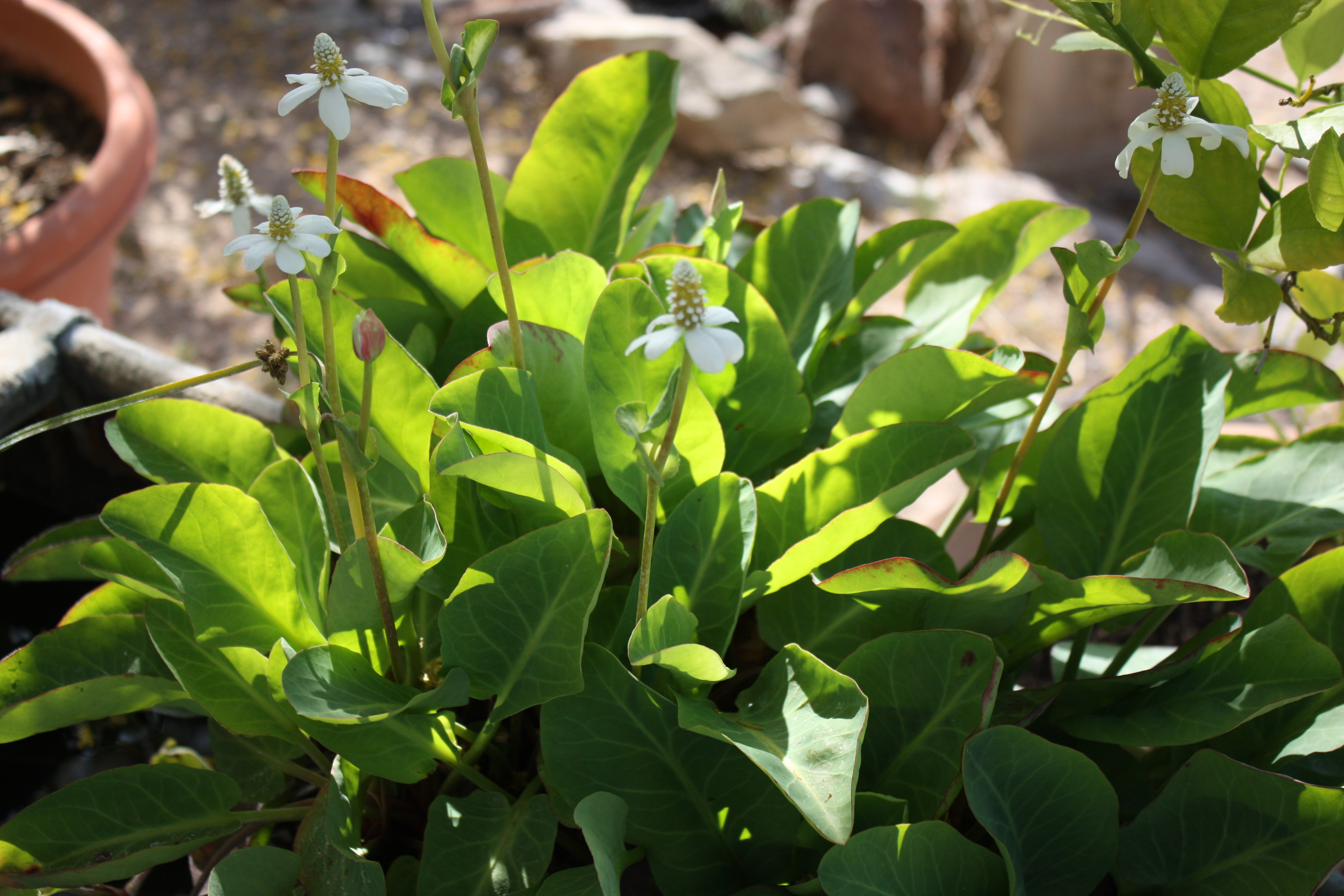
Yerba mansa is a member of a tiny plant family. Our Sonoran Desert has many such unique plants in it.

Jacqueline Soule here to tell you of a very unusual plant blooming in my garden right now – a member of the very unique Lizard Tail Family, the Saururaceae. This distinct plant family has only seven species in it, grouped into four genera. I am writing today about Anemopsis californica, also called yerba mansa.
yerba mansaIMG_6196 (1)

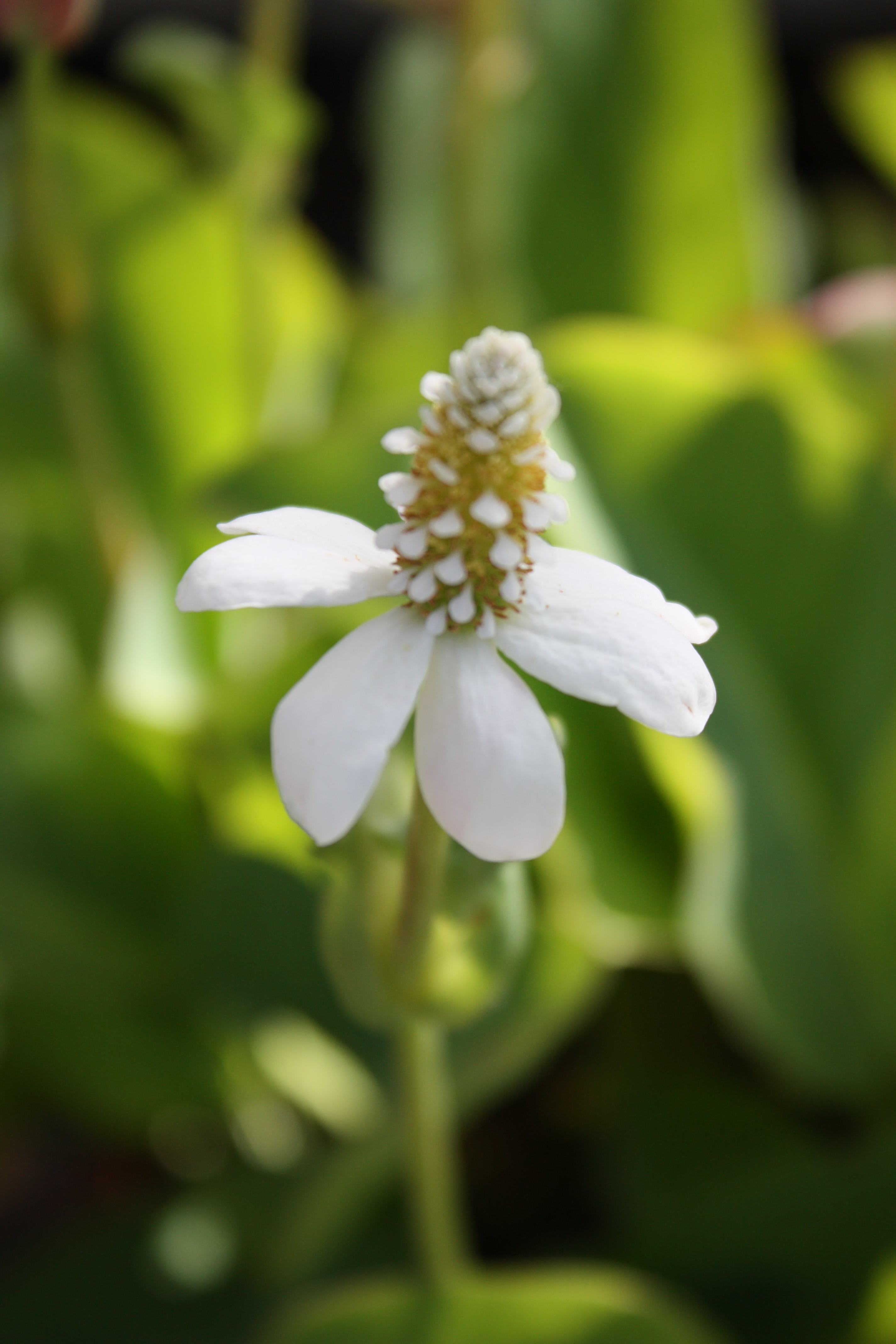
What looks like a single flower is technically a cluster of tiny flowers.

Medicinal.

Yerba mansa is used as a medicinal herb, but it also makes a pretty pond plant. All parts of the plant have a distinct spicy fragrance, a blend of ginger, eucalyptus, a touch of juniper and a dash of pepper. The roots are especially fragrant, reminiscent of a cross between camphor and eucalyptus with a hint of pepper. One of the active compounds in yerba mansa is methyleugenol, an anti-spasmodic, similar in chemical structure to compounds found in other medicinal herbs.
yerba mansa IMG_6212 (8)

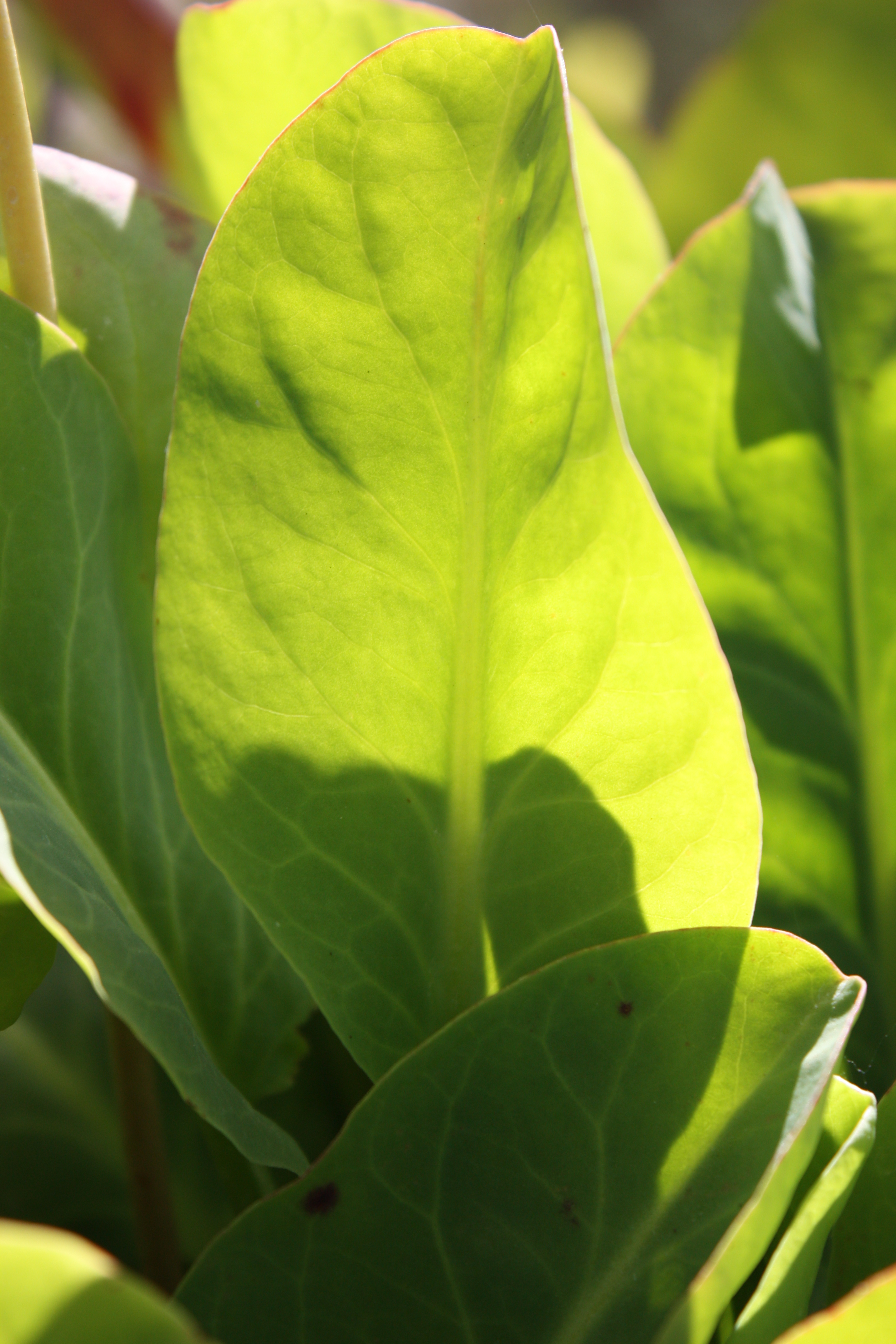
Even when they are newly emerged, the leaves bear a tracery of the red pigments they feature in fall.

Yerba mansa is versatile; it can be taken orally as a tea, tincture, infusion or dried in capsule form. It can be used externally for soaking inflamed or infected areas. It can be ground and used as a dusting powder. In New Mexico the leaves are used to make a poultice to relieve muscle swelling and inflammation. Spanish settlers in California used the plant as a liniment for skin troubles and as a tea for disorders of the blood.

Planting and Care.

While it is a pretty garden plant, yerba mansa would not appear in xeriscape books. It requires consistently moist soil and will not tolerate drying out between waterings. But by definition a xeriscape should include some oasis, and this is often a water garden.
yerba mansa IMG_6205 (3)

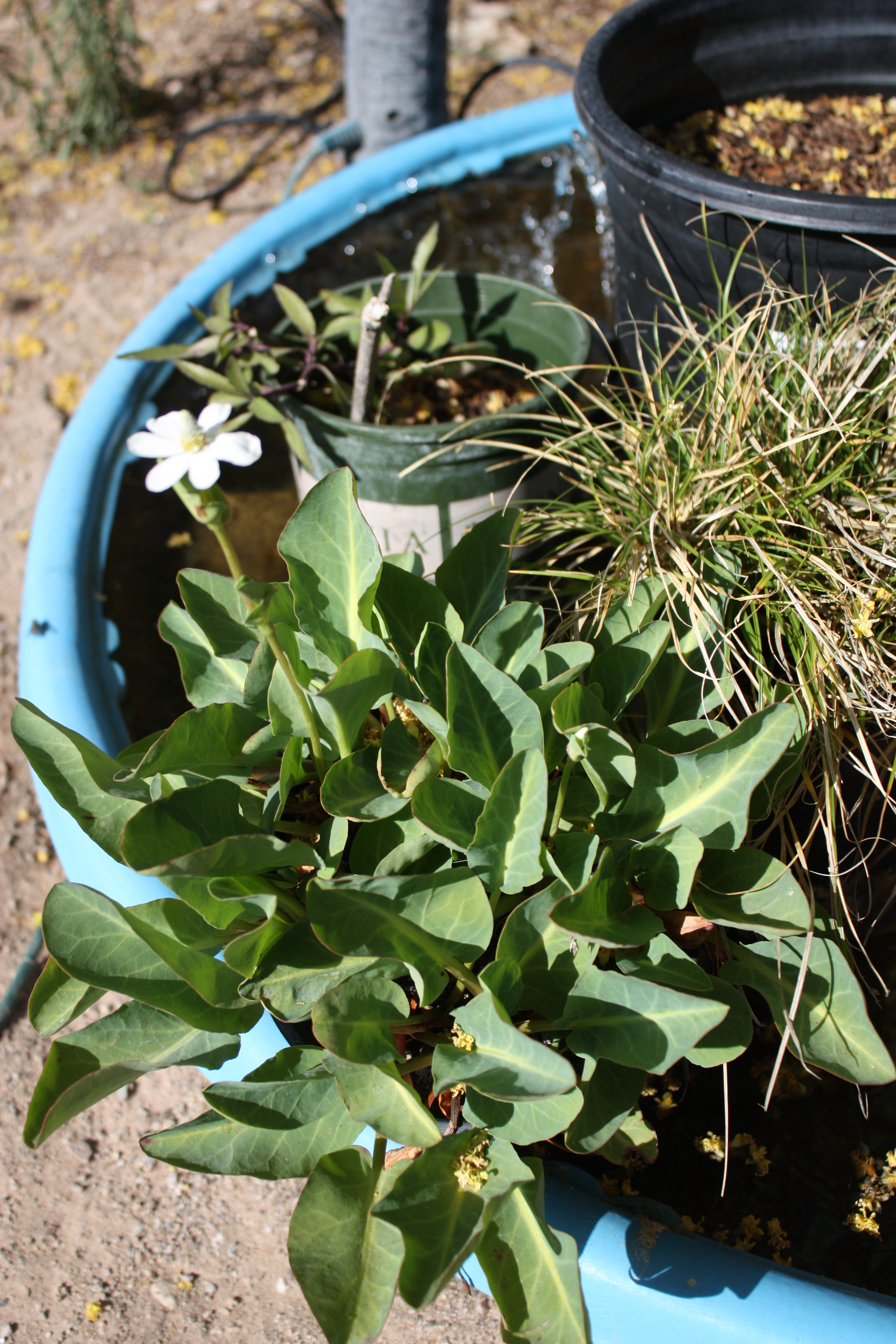
Yerba mansa features large leathery leaves when it gets ample water.

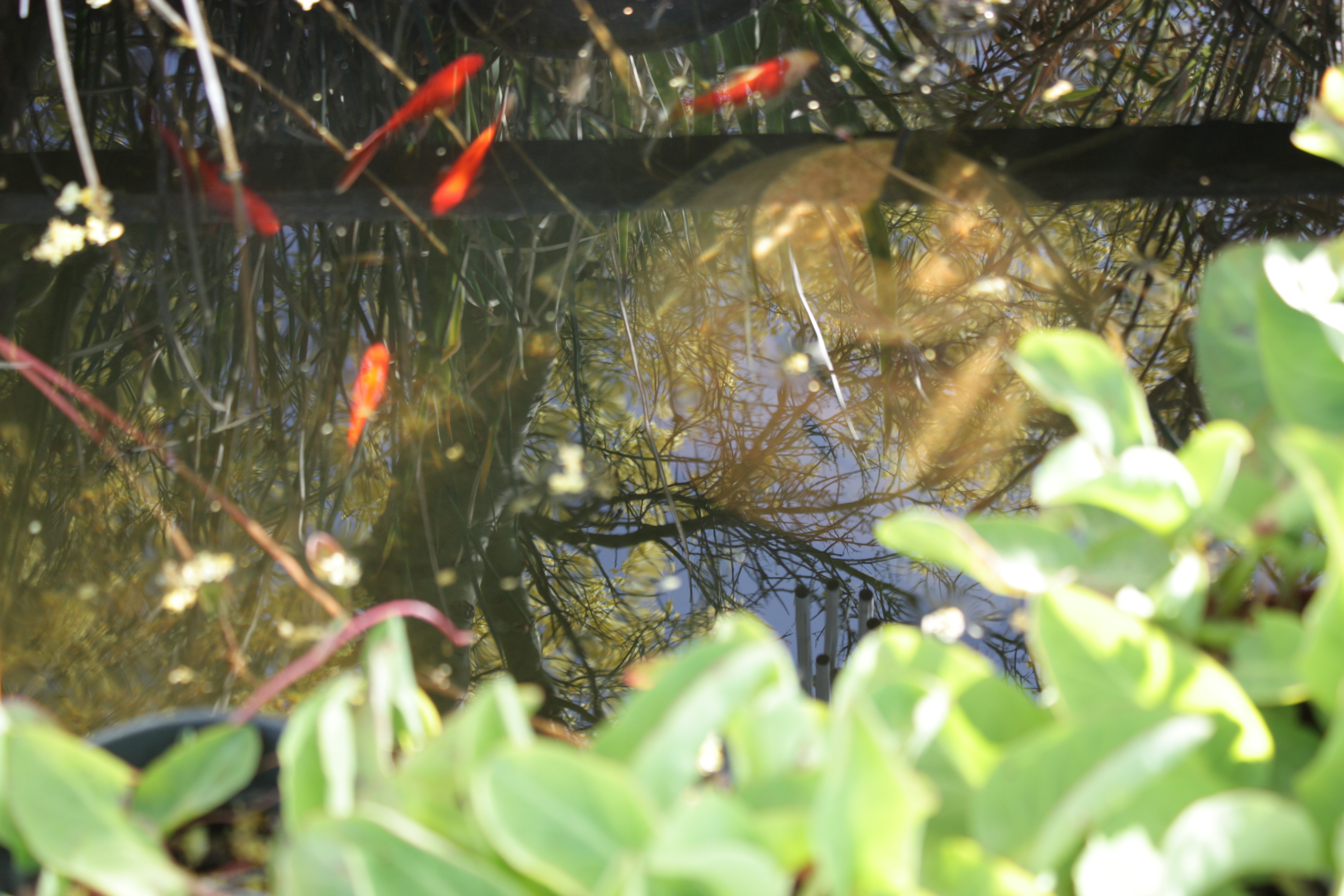
Yerba mansa is valuable in the water garden. Koi and other fish do not browse it like they do many other plants, thus it can readily spread and help clean the water. It also appears to help keep fish from getting bacterial infections such as Pseudomonas fluorescens (causing fin rot and fish dropsy) and fungal infections such as Saprolegnia.
yerba mansa IMG_6212 (19)

Great for the water garden, yerba mansa’s antibacterial properties can help keep your fish healthy.

Cooler autumn weather can bring blotches of maroon to the leaves and stems. If the temperatures are cool but not freezing, the entire plant may turn color. If the temperature falls below 20 F, the leaves die. Not to worry, the plant readily comes back from the roots. The plant is considered hardy to USDA Zone 5.
yerba mansa IMG_6212 (2)

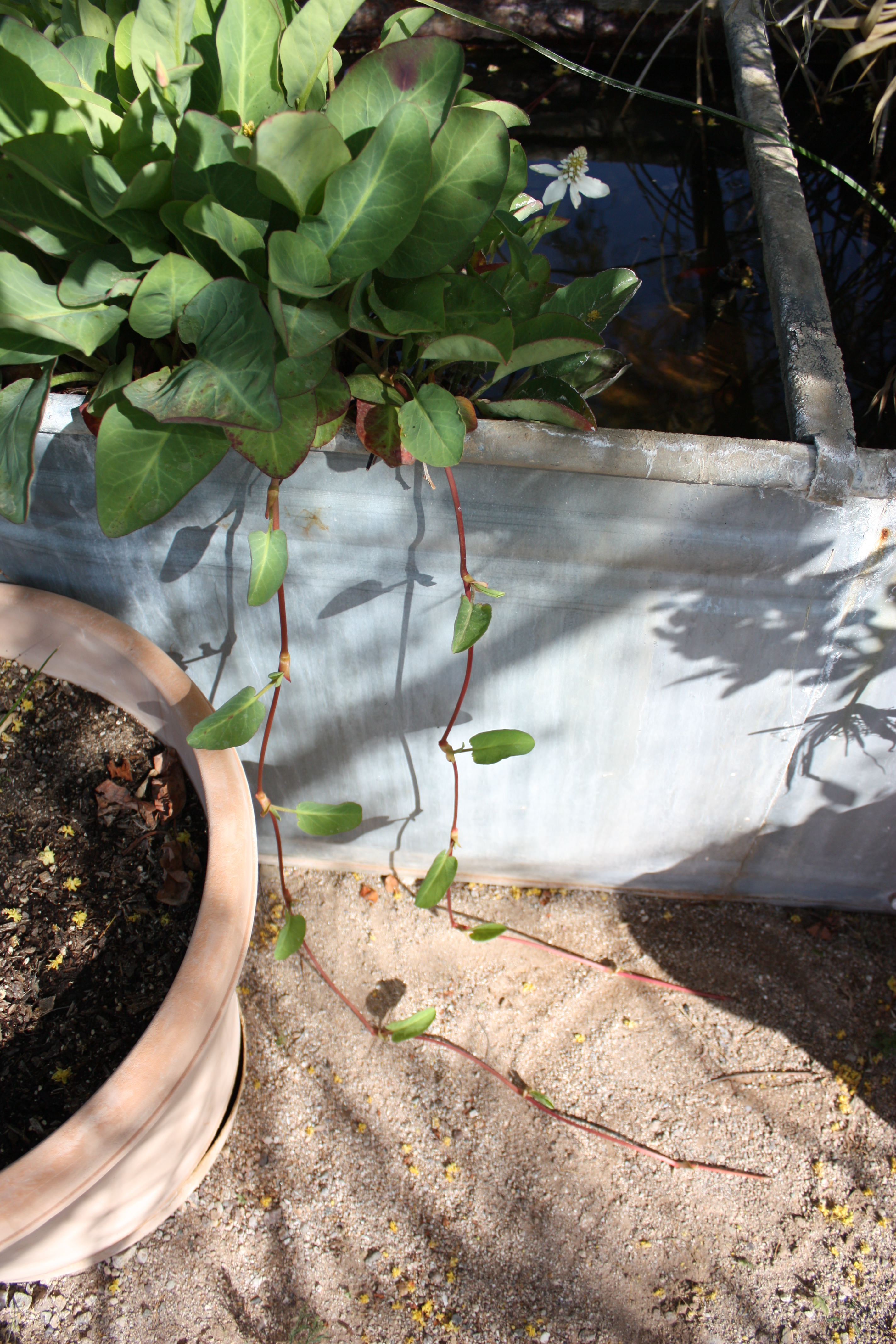
Yerba mansa will send out runners seeking to colonize new territory. It will not take root where there is not ample water – like in the desert outside the water garden!

In our area the plant is gaining popularity and can now be found in a number of nurseries that carry water garden plants.

Harvesting and Use.

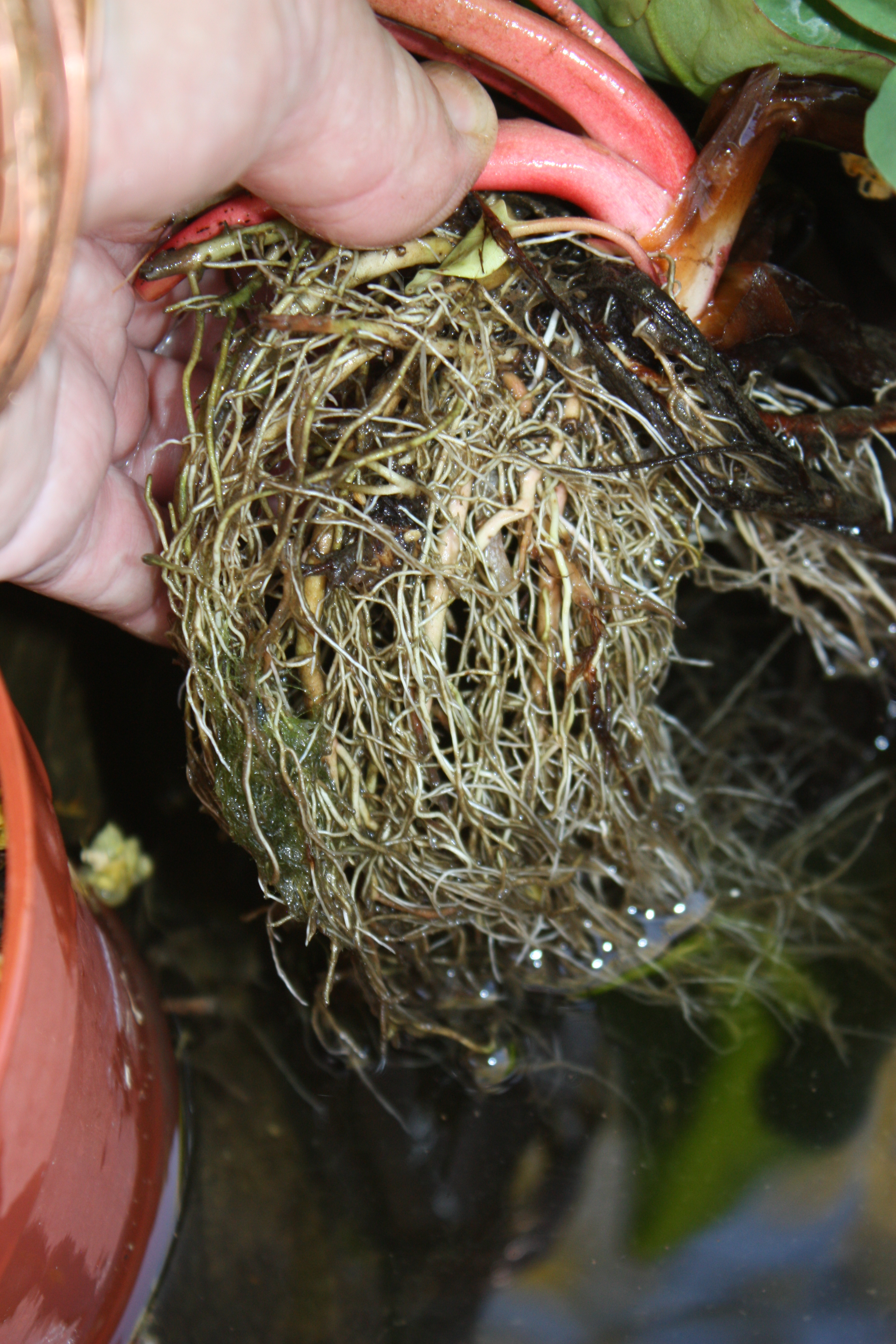
Roots for medicinal purposes should be collected in the fall preferably after the first freeze. After the first freeze the plant will begin to store the useful chemicals in its root system. Harvest the thick fleshy roots under the main part of the plant, not the thin roots on the runners.
yerba mansa IMG_6212 (5)

The smaller white roots are the ones harvested and dried for their medicinal properties.

Wash roots to remove clay and silt, then set them to wilt for several hours before cutting them into small pieces (roughly 1/4 inch square). Continue to dry the chopped roots until firm and dry.

About Jacqueline Soule

If you live in Southeastern Arizona, please come to one of my lectures. Look for me at your local Pima County Library branch, Steam Pump Ranch, Tubac Presidio and more. After each event I will be signing copies of my books, including the latest, “Southwest Fruit and Vegetable Gardening,” written for Arizona, Nevada and New Mexico (Cool Springs Press, $23).

All text and all photos (except where noted) are copyright © 2015 by Jacqueline A. Soule. All rights reserved. I receive many requests to reprint my work. My policy is that you may use a short excerpt but you must give proper credit to the author, and must include a link back to the original post on our site. Photos may not be used.
Lovely Lavender

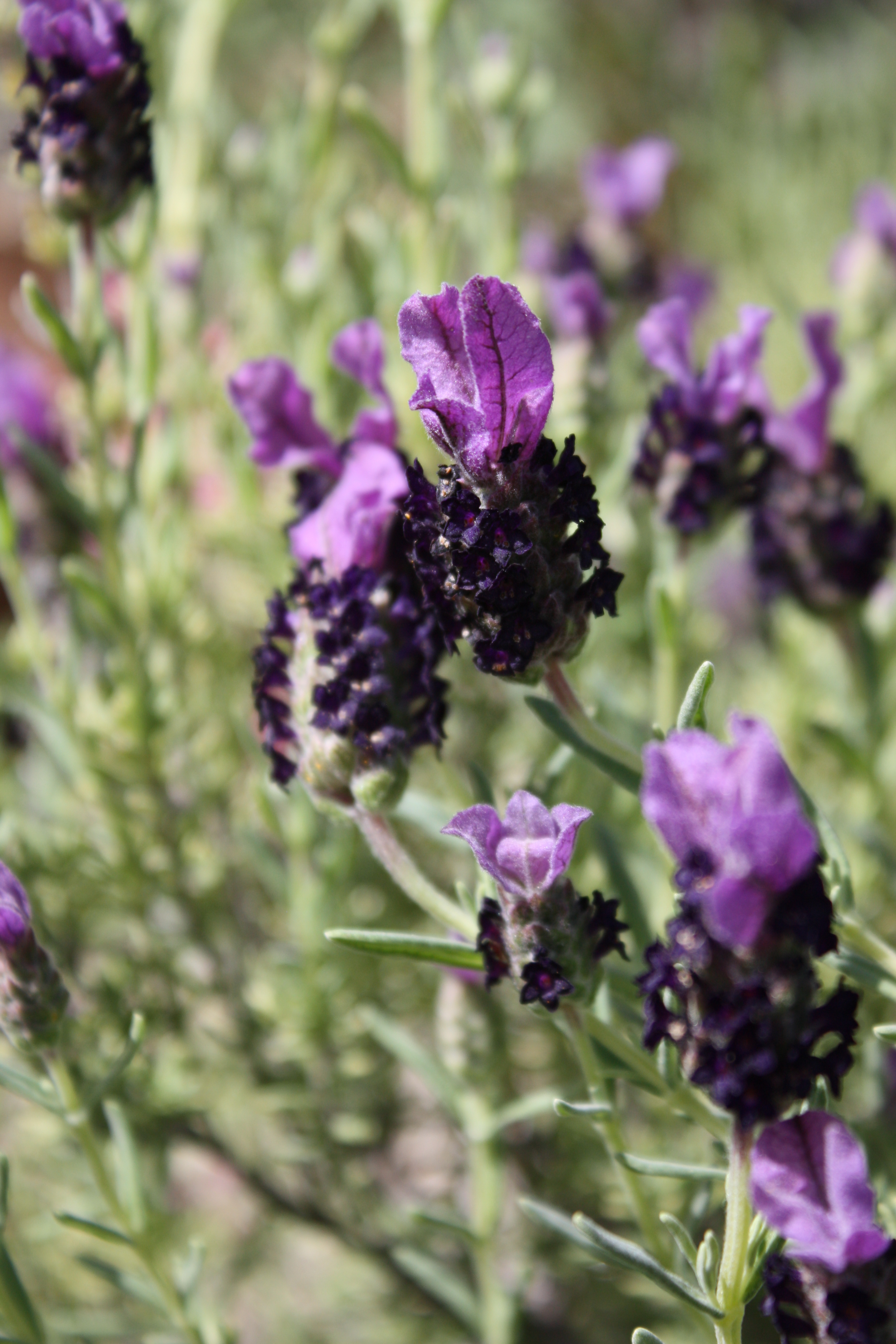
lavandula _5487

by Jacqueline A. Soule, Ph.D.

If you want to grow and use your own herbs, or if you simply desire an attractive plant for the landscape, you can’t beat lavender. Cultivated for centuries, this charming low growing perennial has wonderfully fragrant flowers and leaves.

lavandula _5175

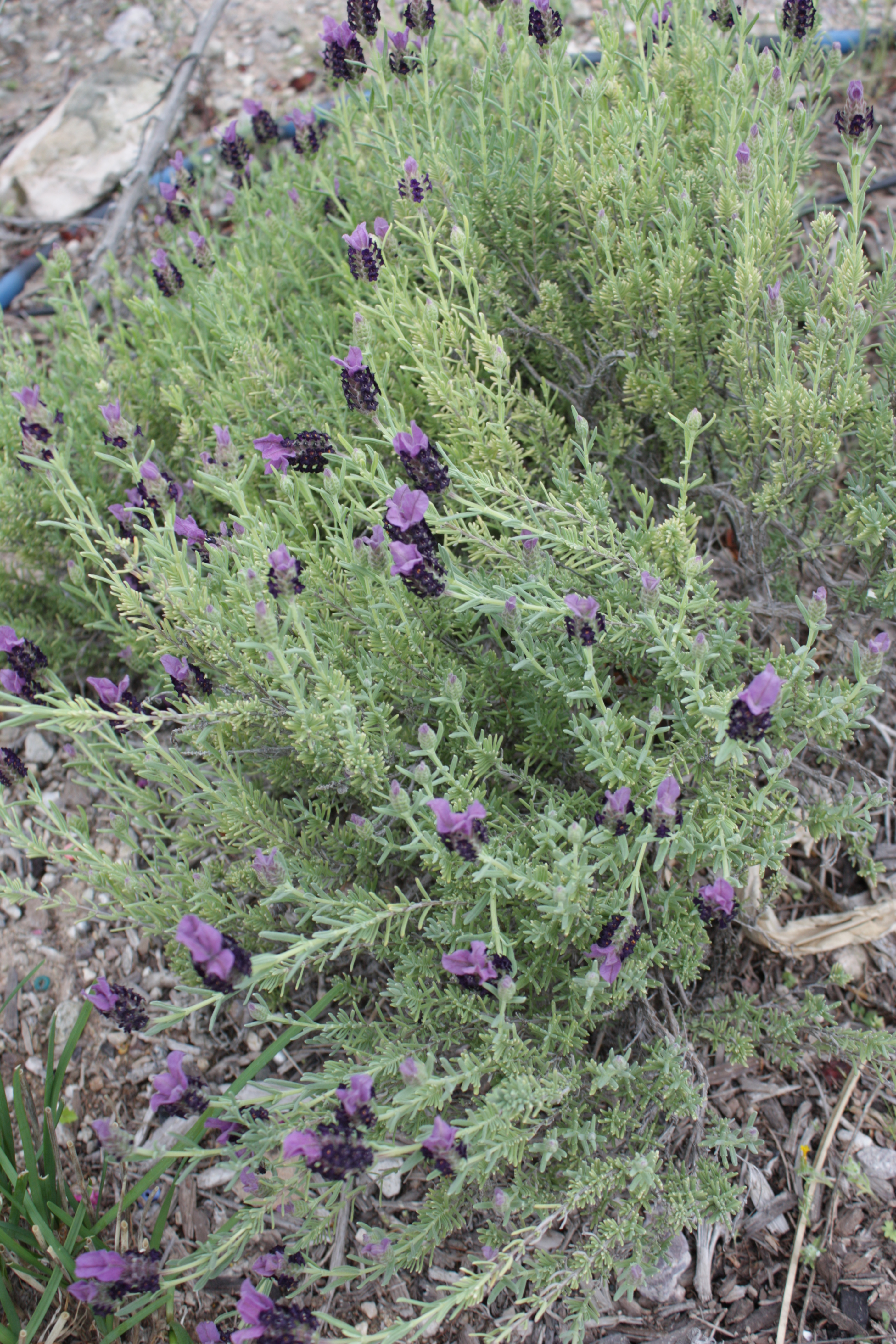
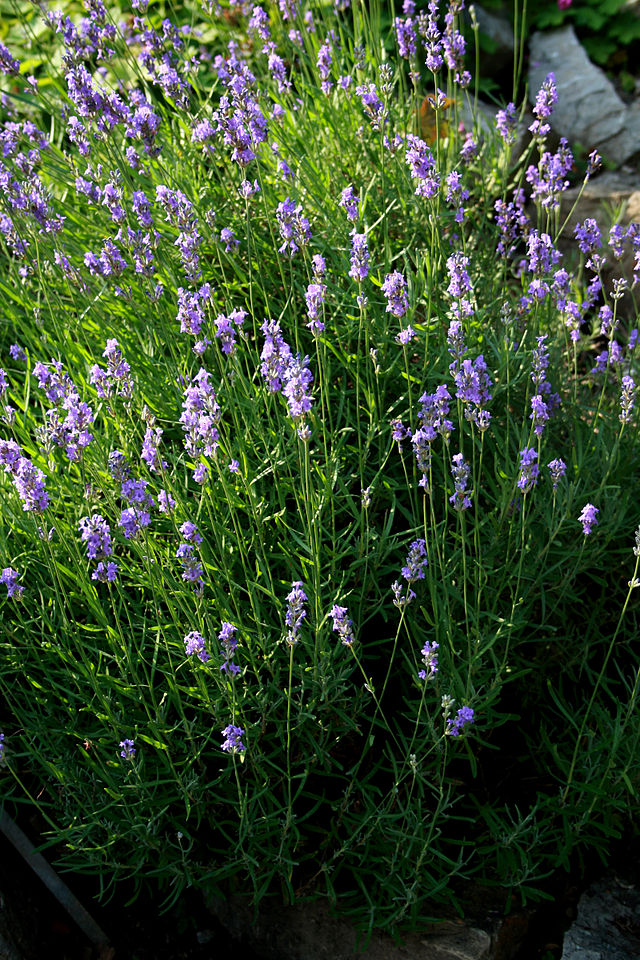
Lavender is forms a fragrant mound and can bloom for months with some added water.

Lavender Uses

The name of the plant is derived from the Latin “lavare,” meaning to wash. Leaves and flowers have been used for several millennia to do just that, wash. Fragrant baths, hair rinses, to cleanse and treat skin ailments, and, in the past, to help eliminate lice and bedbugs from the household. Lavender essential oil is popular in aromatherapy. Tea made from leaves and flowers has been used to treat sleeplessness, restlessness, headache, flatulence, and nervous stomach. At this time, Commission E, a German-based group which scientifically studied herbal medicines, recommends using lavender for insomnia and circulatory and gastrointestinal disorders.

lavandula _5331

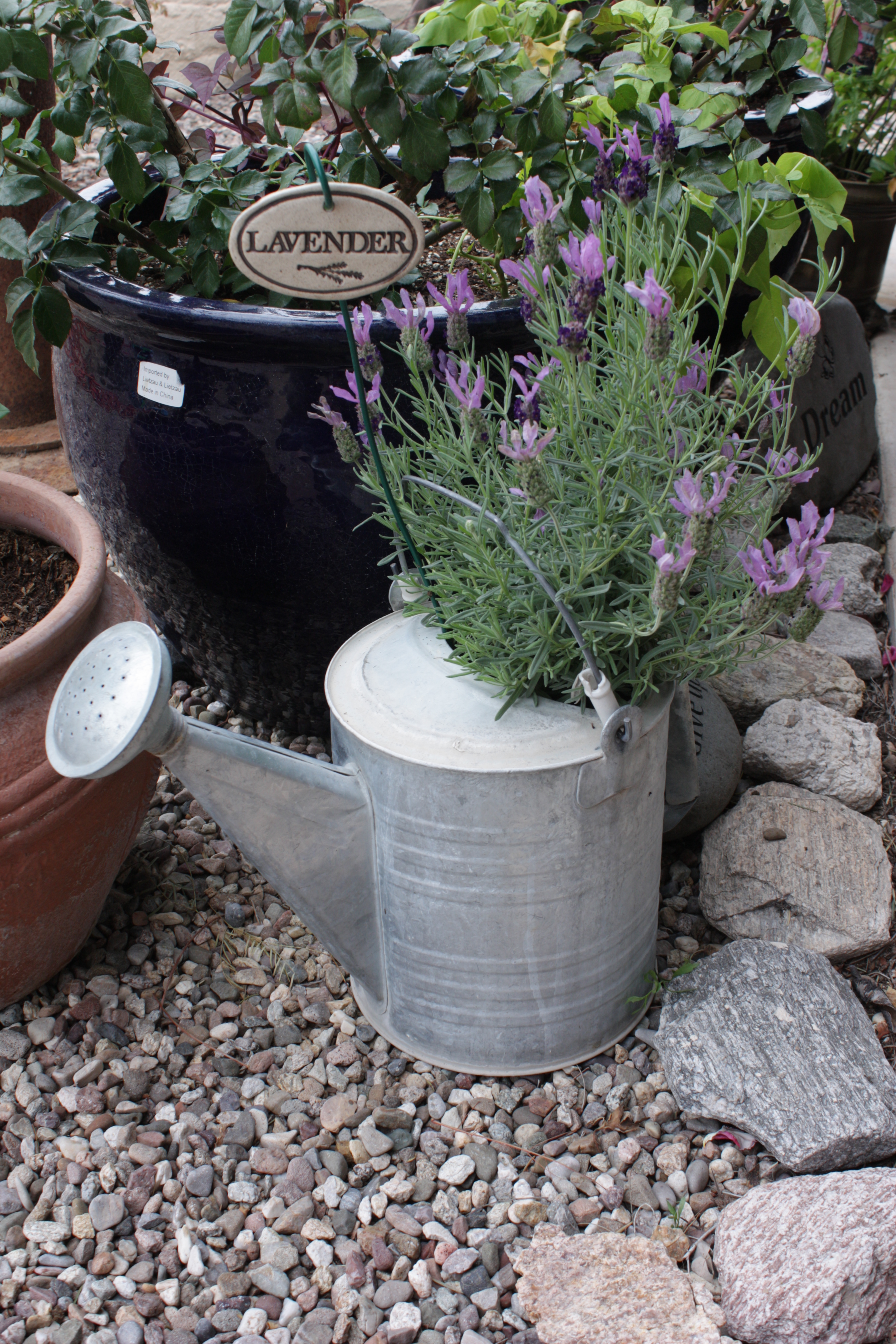
Lavender also grows well in containers, but unlike many herbs, is fussy about being moved.

Growing Lavender

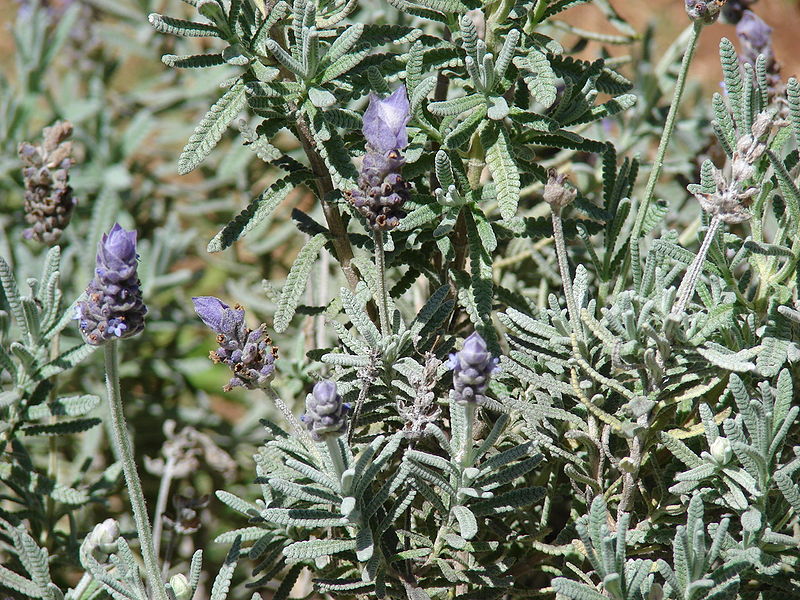
Lavender is easy to grow in our area. There are a number to choose from. English lavender (Lavandula angustifolia) and Spanish lavender (Lavandula stoechas) both tend to be stressed by our summers, but grow well in a garden that gets only morning sun. The French or toothed lavender (Lavandula dentata) does best in my yard in full sun with some noon-time summer shade. Perhaps the fuzziness of the leaves helps reflect sunlight and reduce water loss.

Lavandula_angustifolia_prg_1

English lavender has difficulty surviving the Southwest summer. Photo by Karelj

Lavandula_dentata_plant

French lavender is more tolerant of the heat than its’ English cousin.

Like most herbs, all of these lavenders do best in well drained soil. They will need watering during the dryer months, but can often survive on rainfall during monsoon or winter months. Fertilize in moderation or not at all to encourage greater production of the fragrant oils. Harvest and prune often. Like most herbs, lavender should be trimmed two to three times per year to control rampant growth and keep the plant producing quality blooms.

Native Lavender

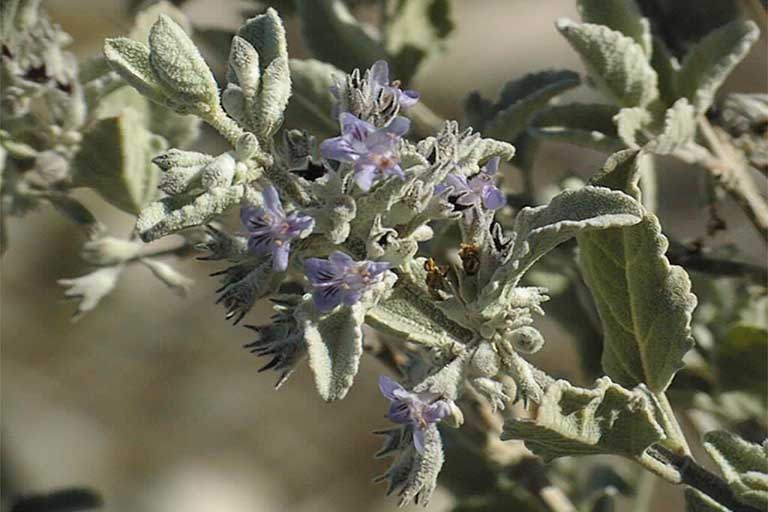
Ideally however, plant the native desert lavender (Hyptis emoryi), a shrub often found growing along area washes. Desert lavender is a shrub reaching 4 to 6 feet high and covered with fragrant gray green leaves. Summer brings spikes of fragrant purple flowers that butterflies adore.

Hyptis emoryi_flowers_001

The native desert lavender is more of a shrub than its’ European cousins.


Harvest Lavender

Harvest stalks of lavender blooms as the lower-most flowers open. This gives you buds with optimum fragrance.

Dry your lavender, like all herbs, out of direct sunlight.

lavandula_2015_5108

It is delightful

lavandula_2015_5106

to watch over time

lavandula _5487

as the flowers unfurl.

Live Green

No matter what species of lavender you plant, you’ll be living green. Growing your own lavender reduces lavender imported from half a globe away, usually southeastern Europe. Growing your own also insures that you have a good source of quality organic lavender. For those exploring the energetics (chi) of products, growing your own lavender and harvesting as needed offers the many benefits of strong chi.

Native desert lavender or European species, lavender adds refreshing fragrance to your living spaces, both indoors and out.

lavandula and penstemon_5174

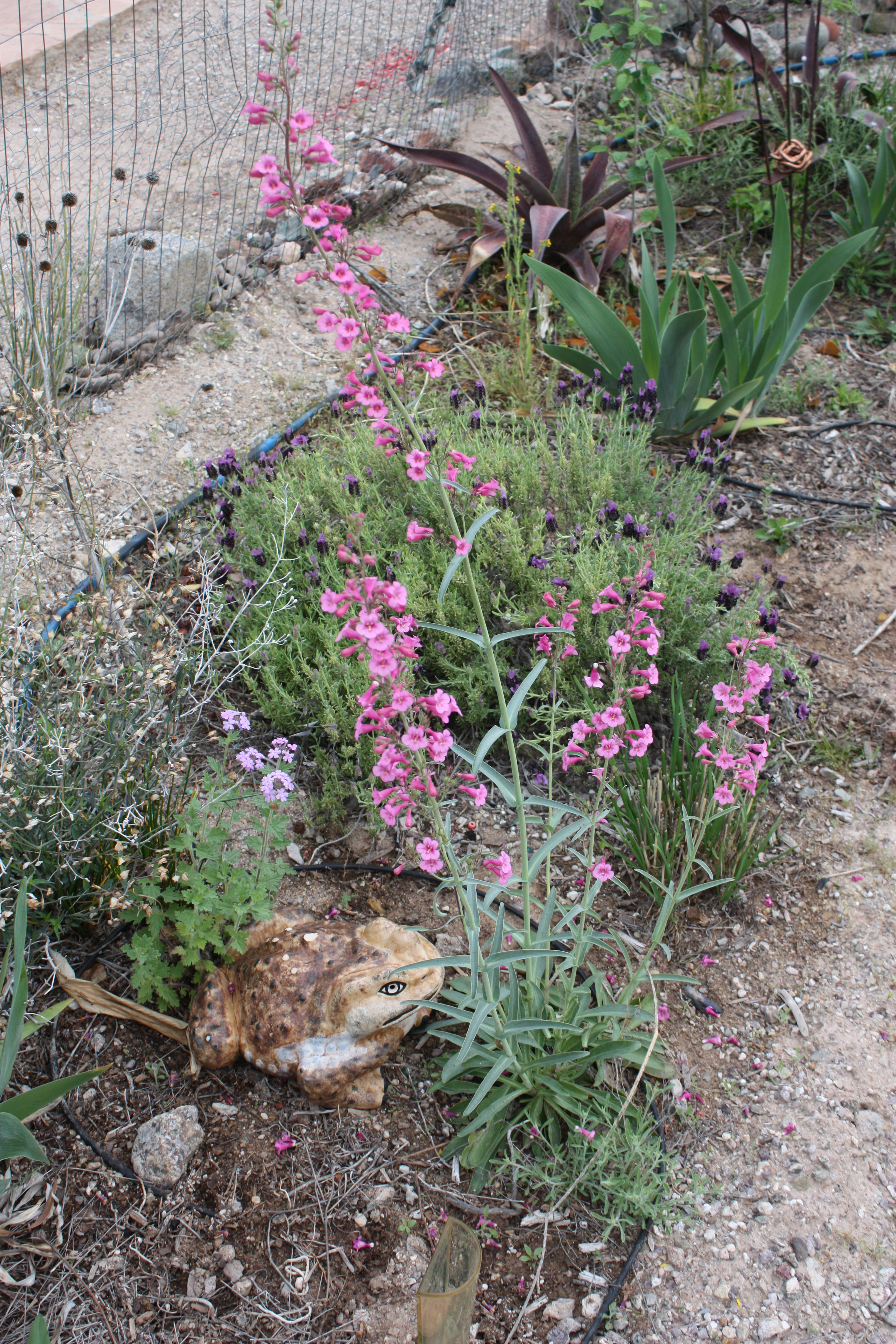
Lavender and Parry’s penstemon grow well beside one another and attract many native pollinators to the garden.


Special Book Signing:

Eastside Costco, Saturday April 4, from 12 noon to 3 pm

Northwest Costco, Saturday April 11, from 12 noon to 3 pm

If you live in Southeastern Arizona, please come to one of my lectures. Look for me at your local Pima County Library branch, Steam Pump Ranch, Tubac Presidio, Tucson Festival of Books and more. After each event I will be signing copies of my books, including the latest, “Southwest Fruit and Vegetable Gardening,” written for Arizona, Nevada and New Mexico (Cool Springs Press, $23).

JAS avatar

All photos (except where noted) and all text are copyright © 2015, Jacqueline A. Soule.

All rights reserved. I receive many requests to reprint my work. My policy is that you may use a short excerpt but you must give proper credit to the author, and must include a link back to the original post on our site. Photos may not be used.
Luscious Lemons

IMG_0092

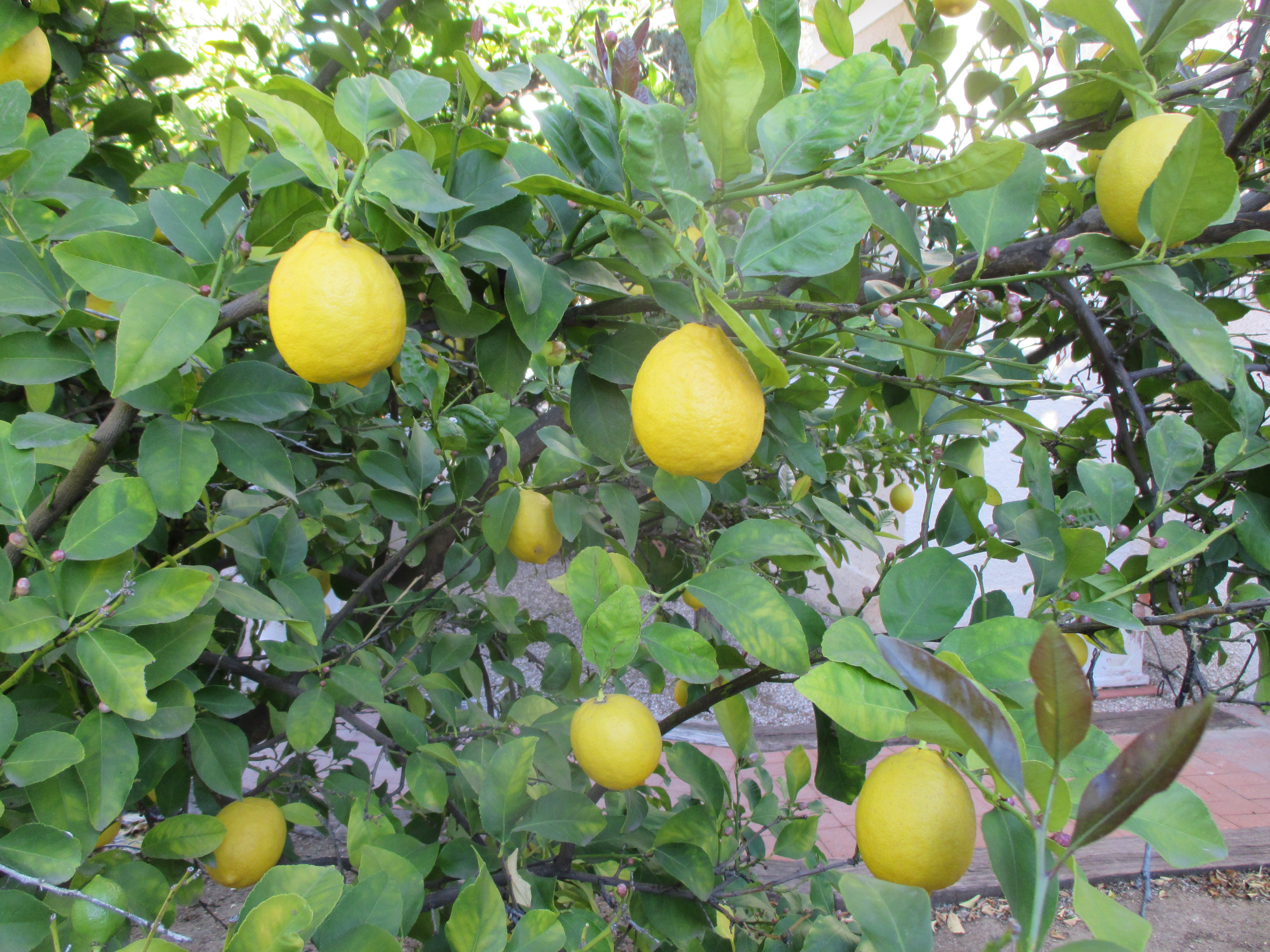
As I write, the citrus trees in my neighborhood are beginning to bloom and sending waves of  scented the air through my exuberantly flowering garden. This is the kind of experience poets rhapsodize about. The two big freezes we had in 2011 and 2013 affected most of Tucson’s lemon trees, and some gardeners went without lemons as the trees recovered. But this spring they came roaring back. It’s Carolyn this week giving you ideas for using lemons from your own trees, those you can beg from neighbors or buy at the farmers’ market.

Make Some Lemon Curd

The word “luscious” could have been invented to describe lemon curd. It’s sweet without being cloying; tart without being sour. Yum. I made it once before with so-so results. As with any recipe involving cooked eggs, there is always the chance of curdling if you don’t handle the ingredients delicately. This recipe, developed by Elinor Klivans from Fine Cooking reduces the risk. You can use your lemon curd on toast or scones or fill tiny tart shells for a dessert.

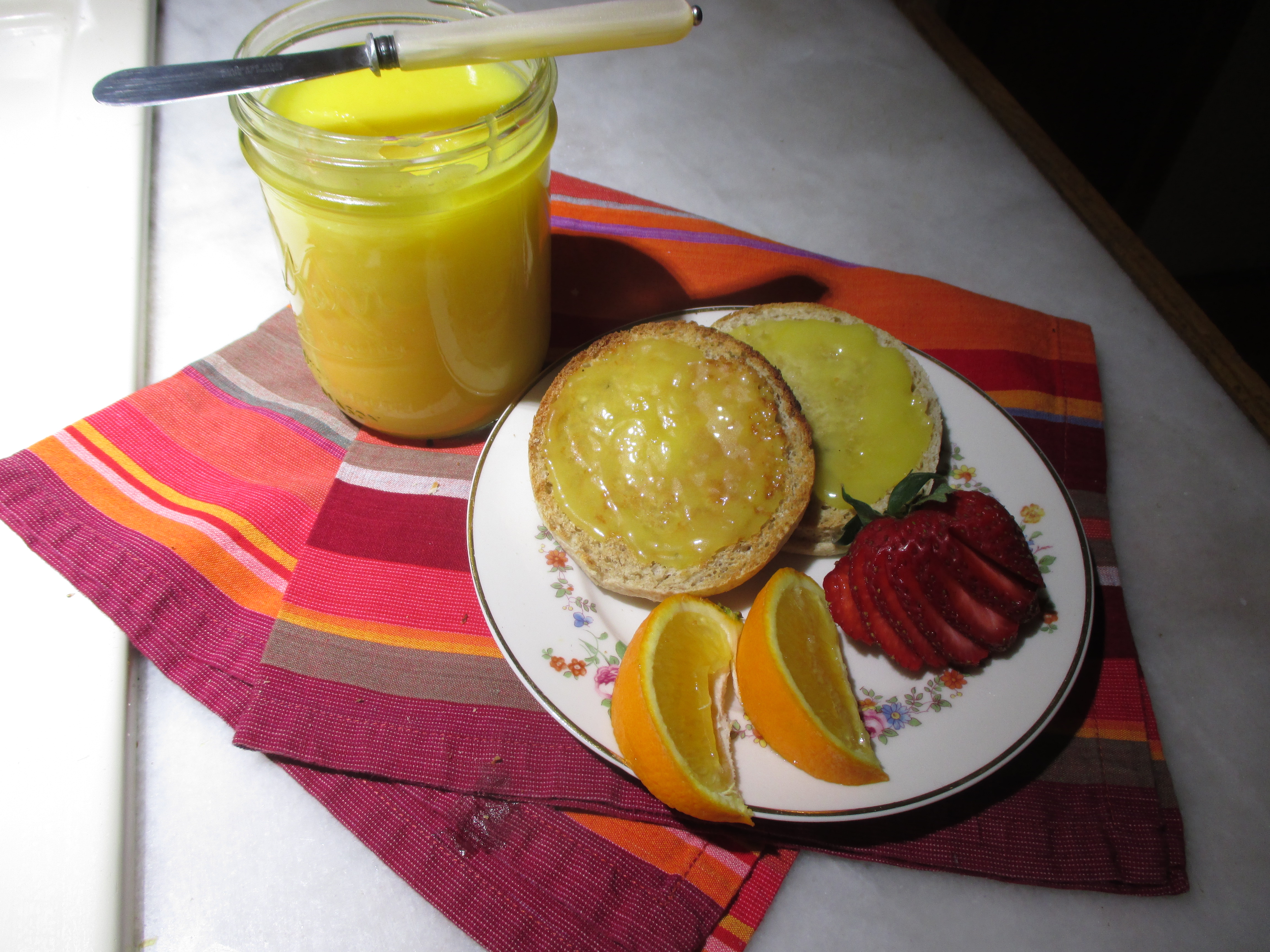
Lemon curd and English muffins make an elegant breakfast.

Lemon curd and English muffins make an elegant breakfast.

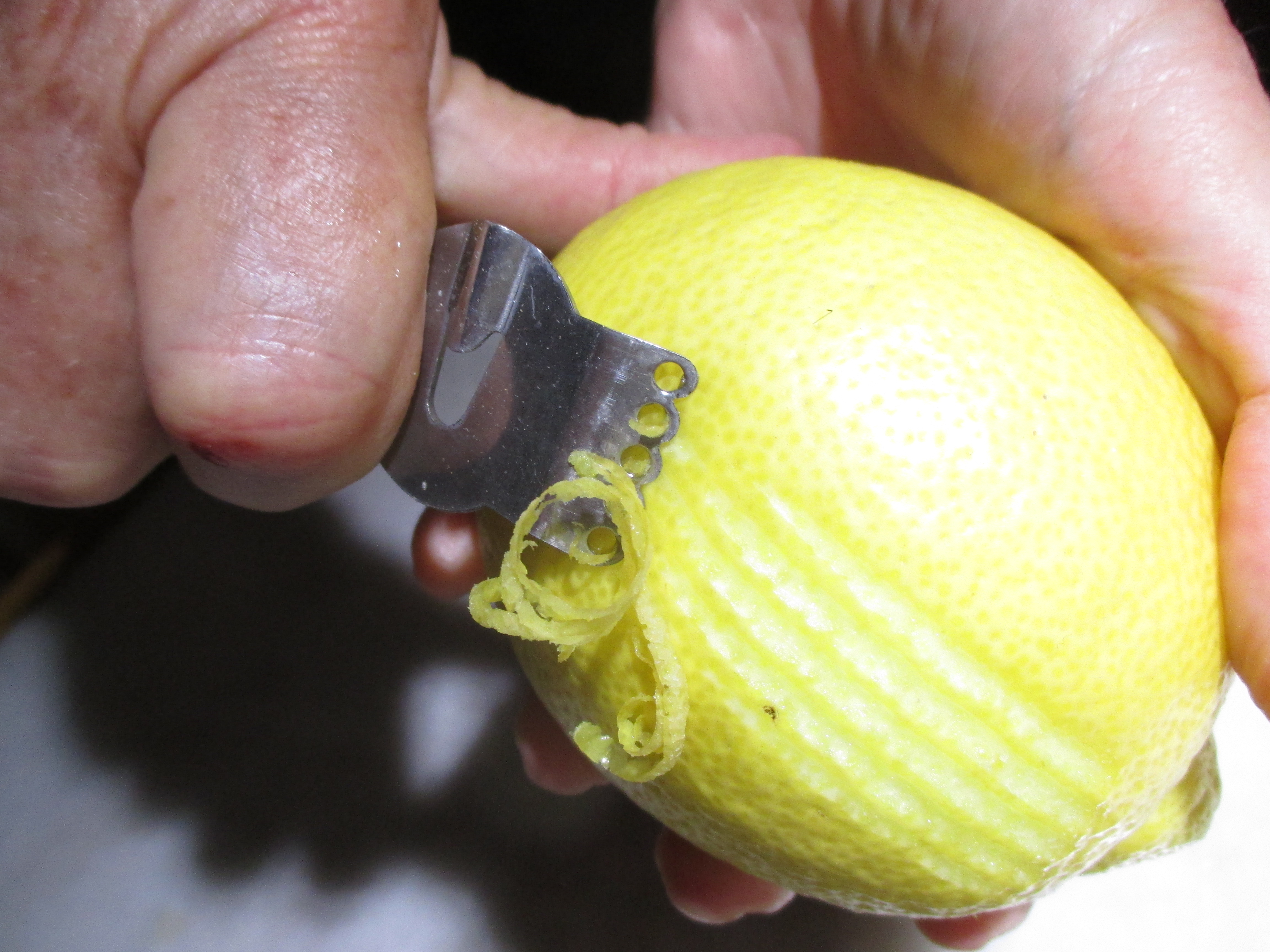
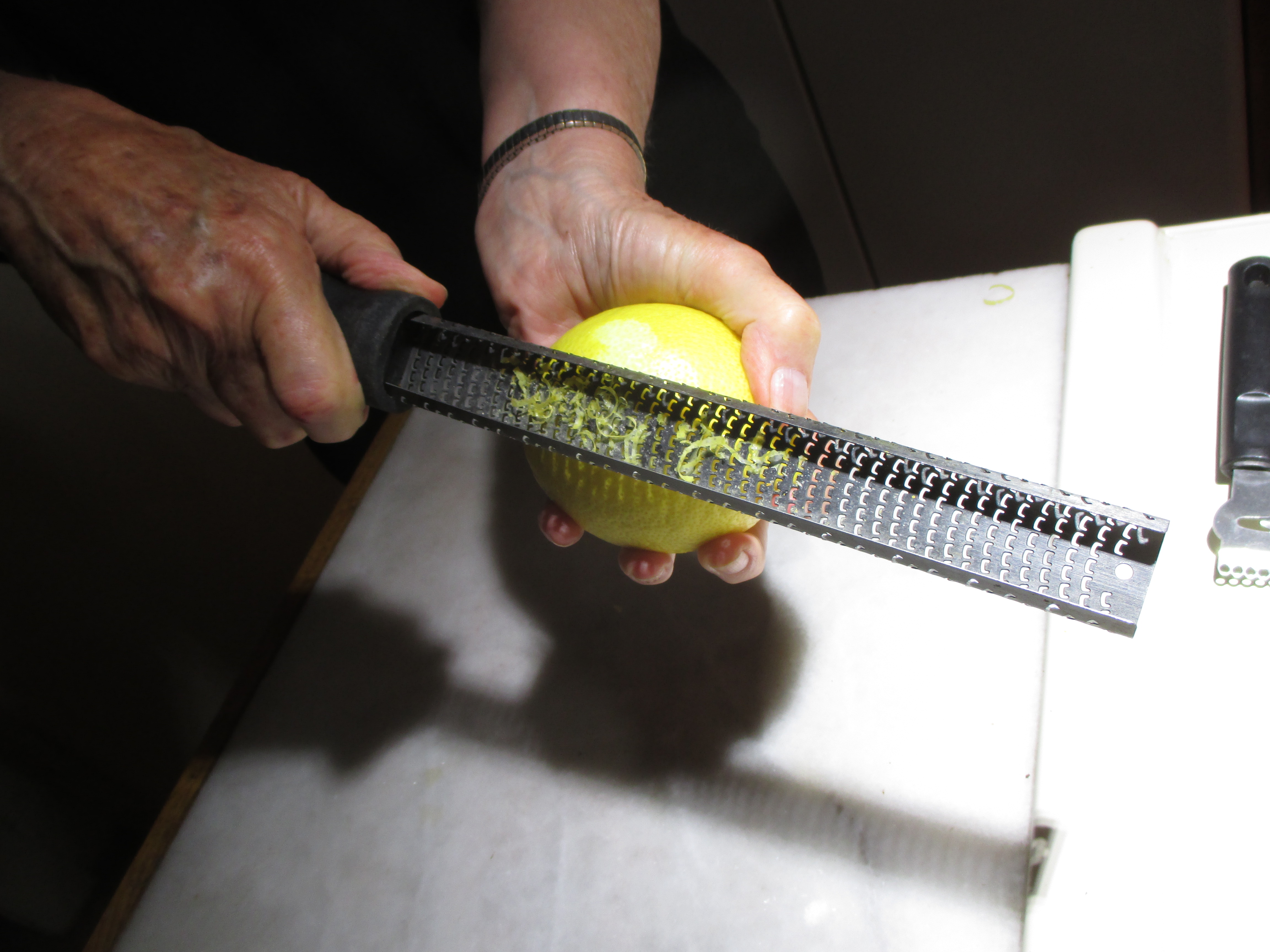
To make lemon curd, you’ll need to zest a lemon first. You only need a tablespoon of zest. You can use a lemon zester or get finer zest with a microplane.

Zesting with a simple lemon zester.

Zesting with a simple lemon zester.

Using a microplane to make lemon zest.

Using a microplane to make lemon zest.

Lemon Curd

by Elinor Klivans from Fine Cooking

6 tablespoons unsalted butter, softened at room temperature

1 cup sugar

2 large eggs

2 large egg yolks

2/3 cup fresh lemon juice

1 tablespoon grated lemon zest

In a large bowl, beat the butter and sugar with an electric mixer, about 2 minutes. Slowly add the eggs one at a time, beating between, then add the yolks. Beat for 1 more minute. Mix in the lemon juice. The mixture will look curdled. Don’t worry as it will smooth out as it cooks.

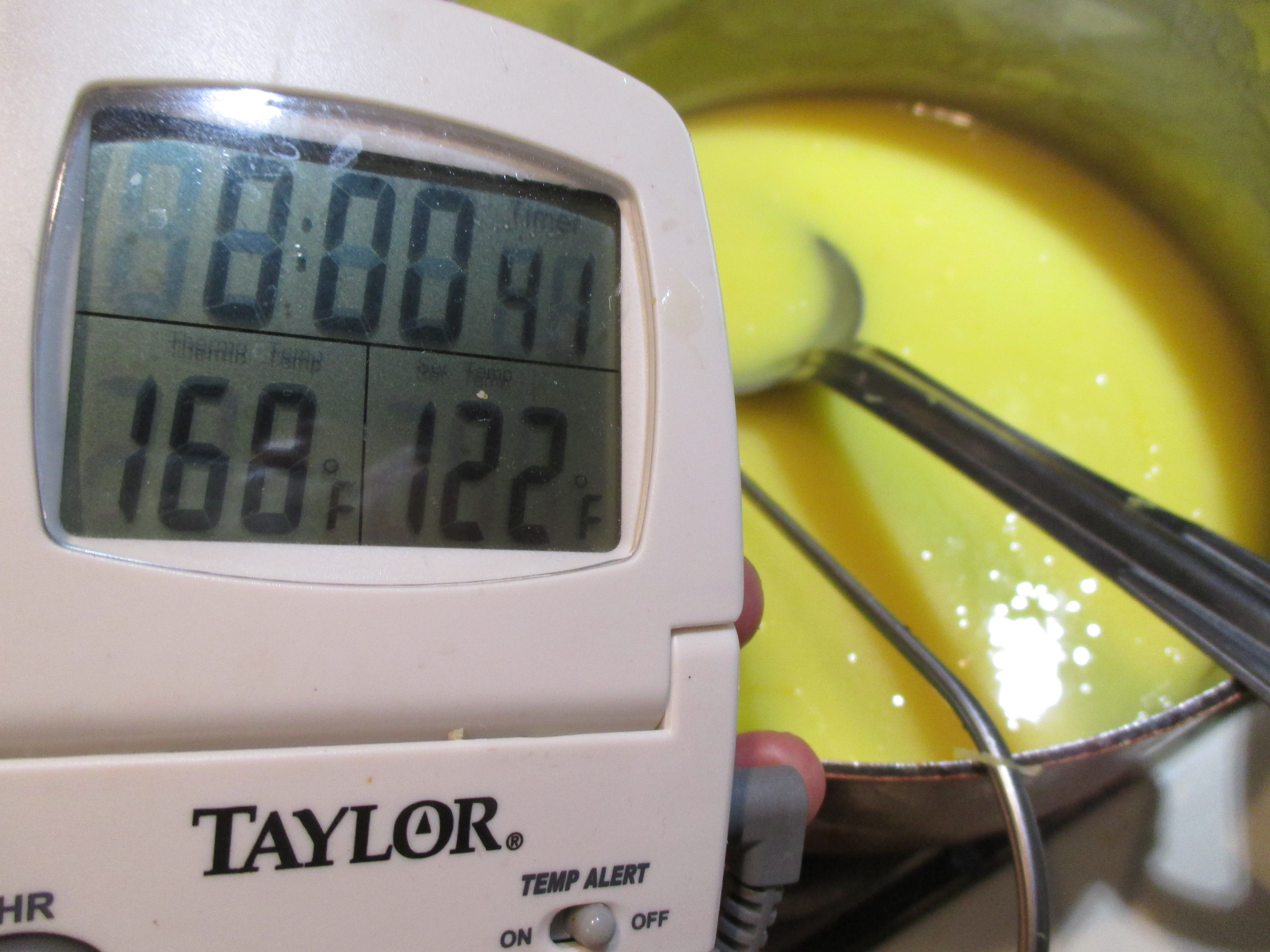
Transfer the mixture to  a medium, heavy-bottomed saucepan and cook the mixture over low heat until it looks smooth. You will find that the curdled appearance will disappear as the butter in the mixture melts. Increase the heat to medium and cook, stirring constantly, until the mixture thickens, from 8 to 15 minutes. Don’t try to rush this. Put on the radio or some music to entertain yourself. If you have a cooking thermometer, it should read 170 degrees F. when the curd is finished.

The curd is almost ready.

The curd is almost ready.

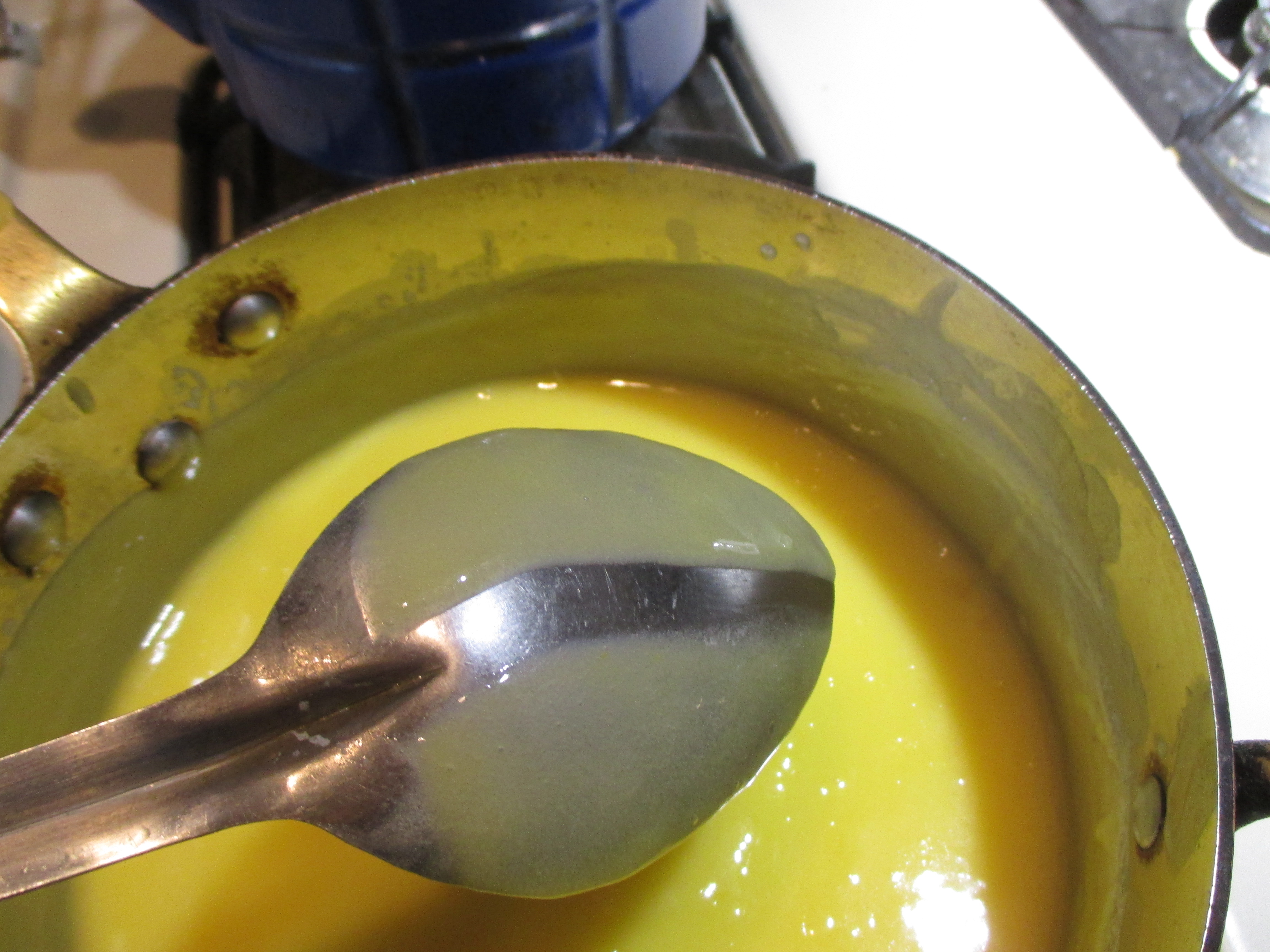
If you don’t have a thermometer, dip the back of a spoon into the sauce, and and run your finger through it. A path should remain. Most important:  Don’t let the mixture boil.

Test doneness without a thermometer.

Test doneness without a thermometer.

Remove the pan from the heat; stir in the lemon zest. Transfer the curd to a bowl. Press plastic wrap on the surface of the lemon curd to keep a skin from forming and chill  in the refrigerator. The curd will thicken further as it cools. Covered tightly, it will keep in the refrigerator for a week and in the freezer for 2 months. Each tablespoon has about 50 calories.

Limoncello: A Treat from Italy

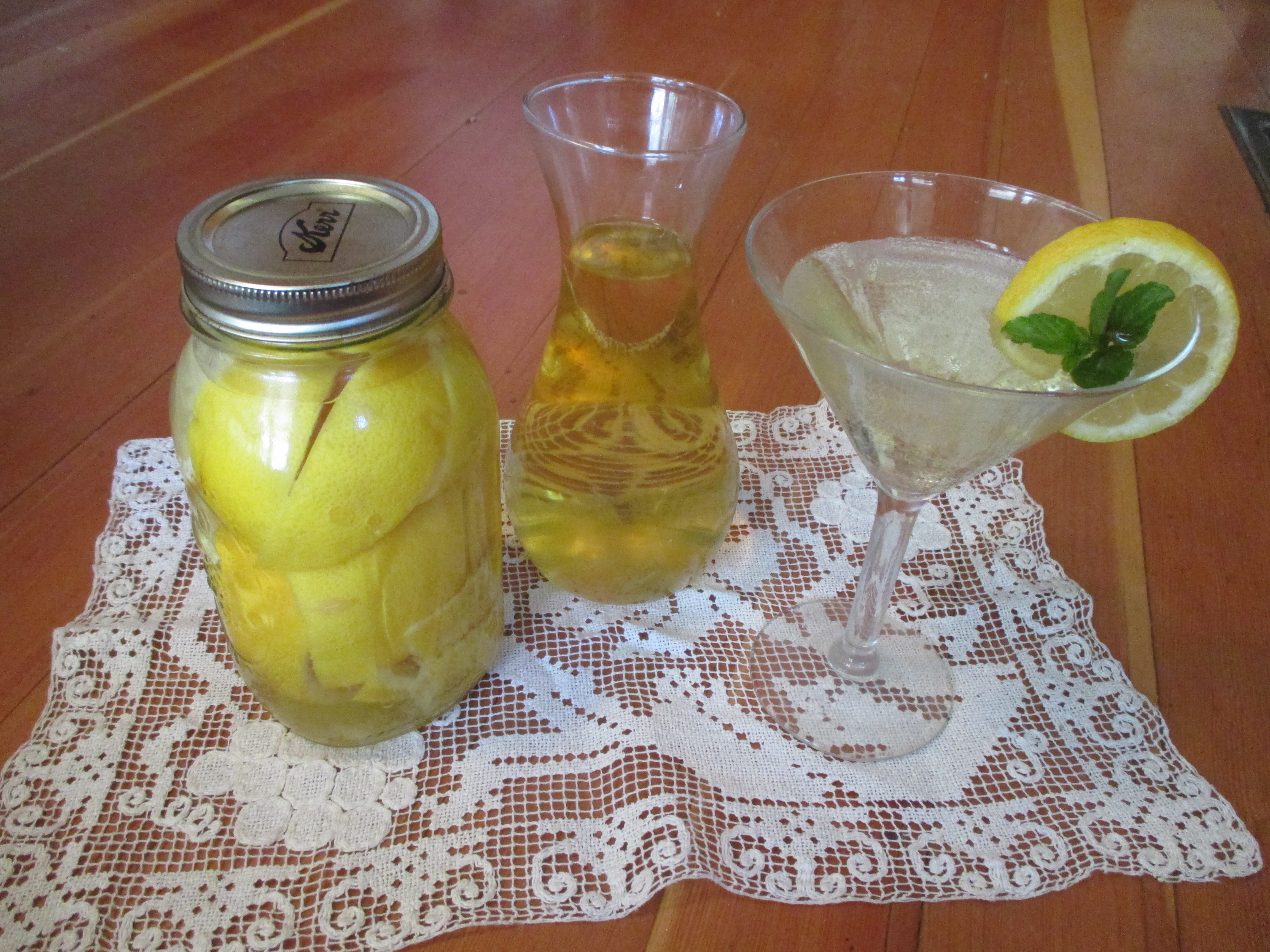
Italian limoncello is easy to make.

Italian limoncello is easy to make.

If you have ever been to Italy, you probably know about limoncello, the generic name for an Italian citrus-based lemon liqueur that is served well chilled in the summer months. All you need is lemons, vodka and sugar. When choosing lemons you want to use organic if possible to avoid wax and pesticides on the peel. This recipe is adapted from one given by the television cook Giada De Laurentiis.

Limoncello

10 lemons
1 (750-ml) bottle vodka
3 1/2 cups water
2 1/2 cups sugar

Start with a clean gallon jar. First, carefully peel the lemons in long strips with a vegetable peeler so there is no white pith on the peel. Use only the outer part of the rind. Put the rinds in the jar and cover with the vodka. Let it sit at room temperature for at least 10 days and up to 40 days in a cool dark place.

When you are ready to proceed, combine the water and sugar in a saucepan, bring to a gentle boil and let it boil 5 to 7 minutes. Remove from heat and let the syrup cool. Add to the limoncello mixture and let it rest from overnight to 10 days (the experts really differ on this. I just waited 2 days and it was fine.) Strain into bottles, seal and refrigerate.

Limoncello Cocktail

Mix half-and-half limoncello, seltzer water, tonic, or champagne and serve over ice.

Easier, Better Lemonade

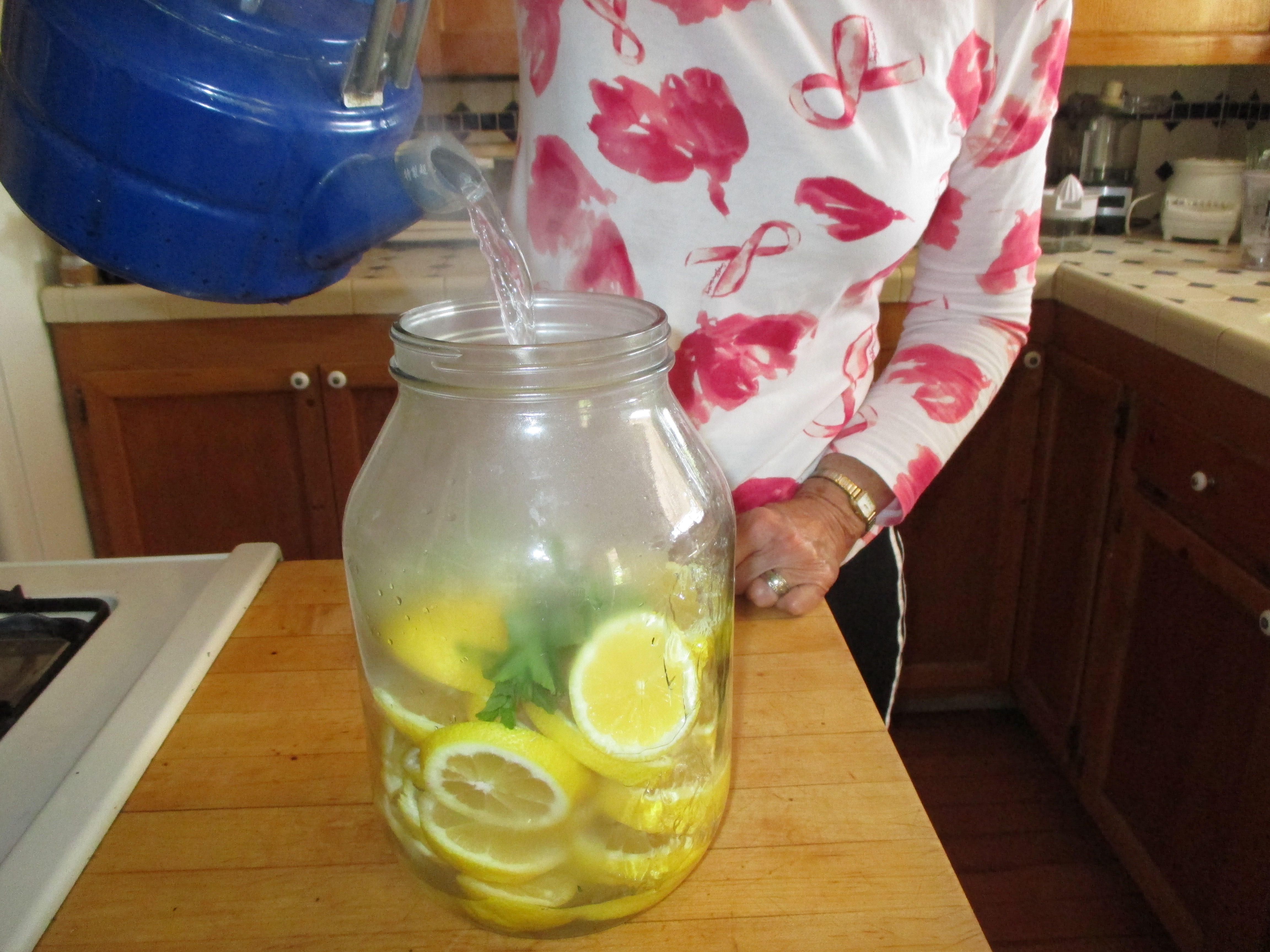
No squeezing needed when you pour boiling water over sliced lemons.

No squeezing needed when you pour boiling water over sliced lemons.

I learned to make the best lemonade from my friend Ann who lives in New Jersey. She learned it from a woman in Germany. Neither of these areas are lemon-growing regions so it may be a way of conserving. Rather than squeezing them, slice the lemons and pour boiling water over them. Let them steep for a couple of hours, pour off the water and repeat. You can keep adding water, letting it sit and draining until the taste grows too weak. This makes a juice with greater depth of flavor because it extracts the lemon oils from the rinds. Sweeten to taste with your choice of sugar, honey or agave syrup.

And Don’t Forget…

Tia Marta is running several classes in gathering and preparing cholla buds. This is a great year for desert plants and the cholla buds are fat and juicy.

Workshop Dates (find a downloadable flyer on the website http://www.flordemayoarts.com):
Saturday April 4, 2015, 7:30-9:30am—register at 520-907-9471
Wednesday, April 8, 8-11am, Pima Co Parks & Rec 520-615-7855 x 6
Saturday, April 11, 8-11am, Westside, sponsored by NativeSeeds/SEARCH, call 520-622-0830×100

Saturday, April 18, 8:30-11:30am, Tohono Chul Park, 520-742-6455 x 228

Time for Some Thyme

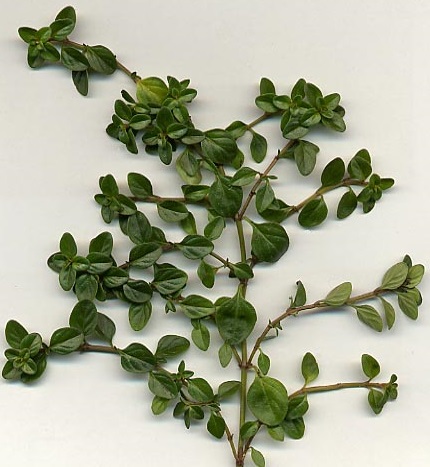
Thymus_vulgaris_branch crop

Common thyme (Thymus vulgaris)  is best grown with a dappled noon-time shade in the summer in the southwest.

Special for Savor the Southwest  February 2015
by Dr. Jacqueline A. Soule

Spring is springing out in my garden – and the little thyme cutting I got from Savor Sister Muffin Burgess back in at our anniversary party in November is finally starting to take off.  November was a terrible time to take cuttings of this warm climate herb – but the great thing about herbs is that humans have been mistreating them for 7000 years or so, and the weak ones have mostly died out.

Thymus_(zaatar)_Jerusalem_BG crop

There are many species of thyme, like this species in the Jerusalem Botanical Garden, used for the herb blend za’atar.

Thyme is a large and very popular genus, with over 350 species and countless cultivars grown around the world. Aside from looking lovely in the landscape, thyme is a strong herb used in cooking, and has some proven medicinal properties as well. It can also be grown indoors in bright, indirect light.

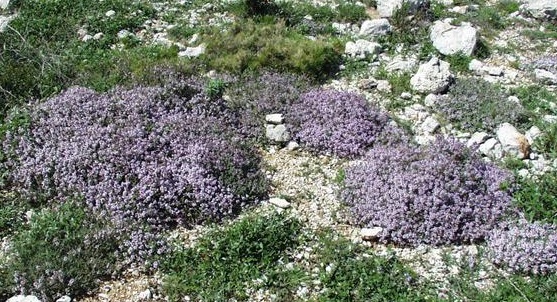
Thymus_vulgaris_habitat_003 crop

Many herbs that do in the Southwest are originally from a similar climate – like this Thymus vulgaris growing wild on the rocky hillsides of the Galilee.

This lovely, fragrant, tasty, and healthful herb in native to the rocky slopes of the mountains of the eastern Mediterranean region, in the area that is now mostly Greece. Since they are pre-adapted to low water conditions, most species of thyme can be grown here. I grow my thyme plants where they get roof run-off, thus I rarely need to water them; and yet they offer a lush look to my entryway with their glossy green leaves.

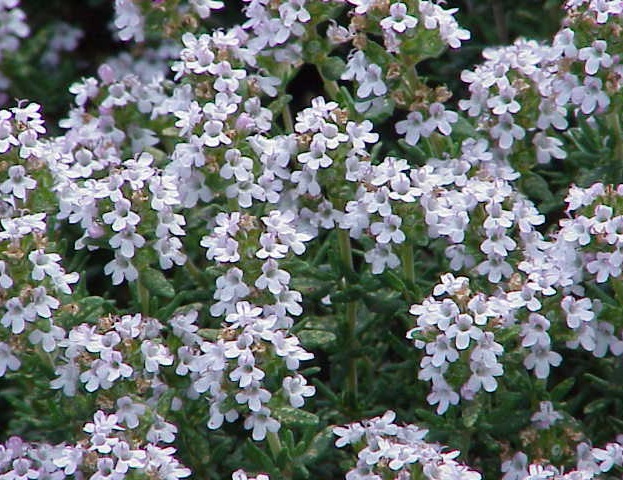
Thymus_vulgaris_bloom_001 crop

Not just tasty, thyme is also another pretty face in the garden! For peak flavor, it is best to harvest this (and most culinary herbs) just before they bloom.

Make sure you grow your thyme in well-drained soil. You may have to add some sand to your soil. I killed several thyme plants until I had finally added enough sand to their bed.

There are many thymes to choose from, but here are the species most commonly found in the nursery.

Common or culinary thyme (Thymus vulgaris) is a low woody plant barely reaching a foot tall. It quickly becomes leggy with bare wood showing so harvest and use or dry your thyme often. (You can give friends jars of your dried herbs as truly personal and unique gifts.)

Creeping thyme (Thymus praecox) makes an attractive and useful groundcover. It is culinary too! Harvest as needed.

Thymus_praecox crop

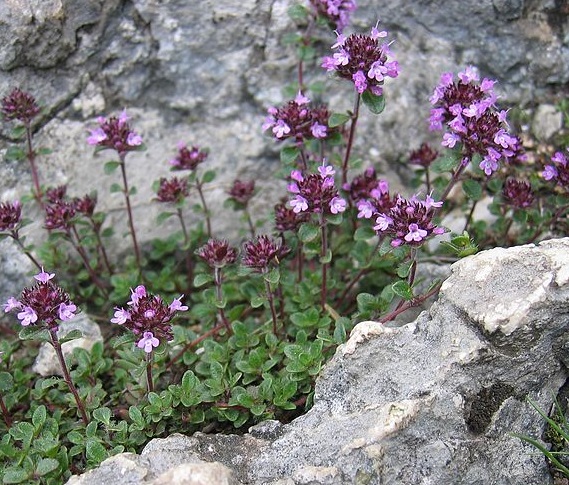
Creeping thyme, with tiny leaves and charming purple flowers, is perfect for a fairy garden.

Lemon thyme (Thymus X citriodorus) is a delicious and fragrant low-growing variety with glossy green leaves, and goes wonderfully with fish dishes.

Thymus_citriodorus_variegata_crop

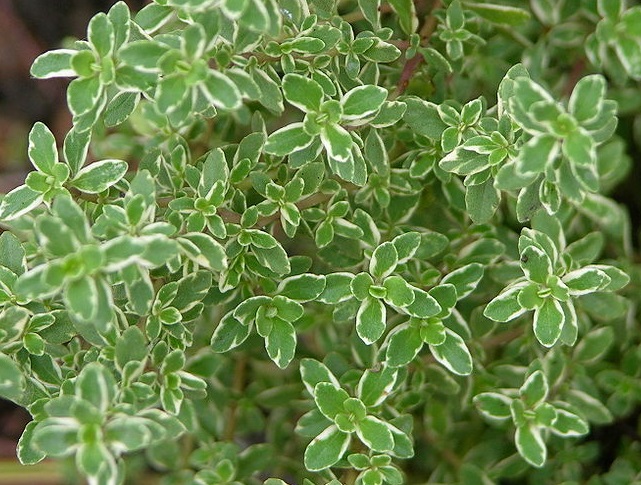
Lemon thyme is great for flavoring fish dishes – two flavors for the price of one!

Equally fragrant and delicious is the golden lemon thyme (Thymus X citriodorus ‘Aureus’). With wonderfully variegated leaves, it looks good in the landscape.

Not generally used as culinary herbs, two popular species of creeping thyme are useful in the landscape. Mother-of-thyme (Thymus serpyllum) and woolly thyme (Thymus pseudolanginosis) both grow well between shady flagstones, and smell great when stepped on.

Thymus_pseudolanuginosus_crop

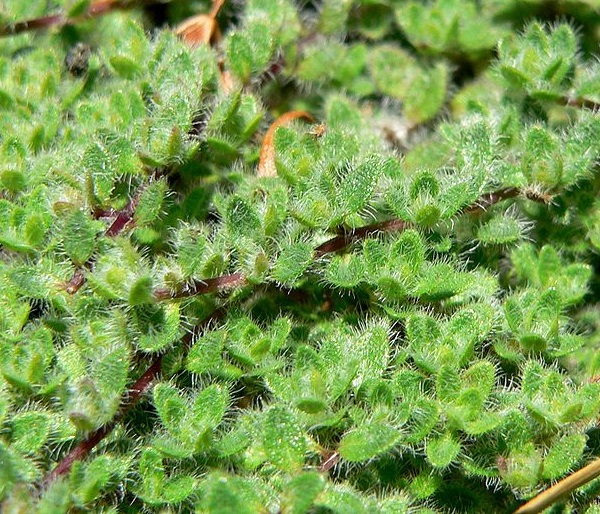
Add some fragrance to your landscape – plant this heat tolerant woolly thyme between the flagstones of your path.

Sprinkle thyme (either fresh or dried) in soups, salads, on meat dishes or use in herb breads. Use an ample number of sprigs in herbal vinegars and oils for an intense and refreshing flavor.

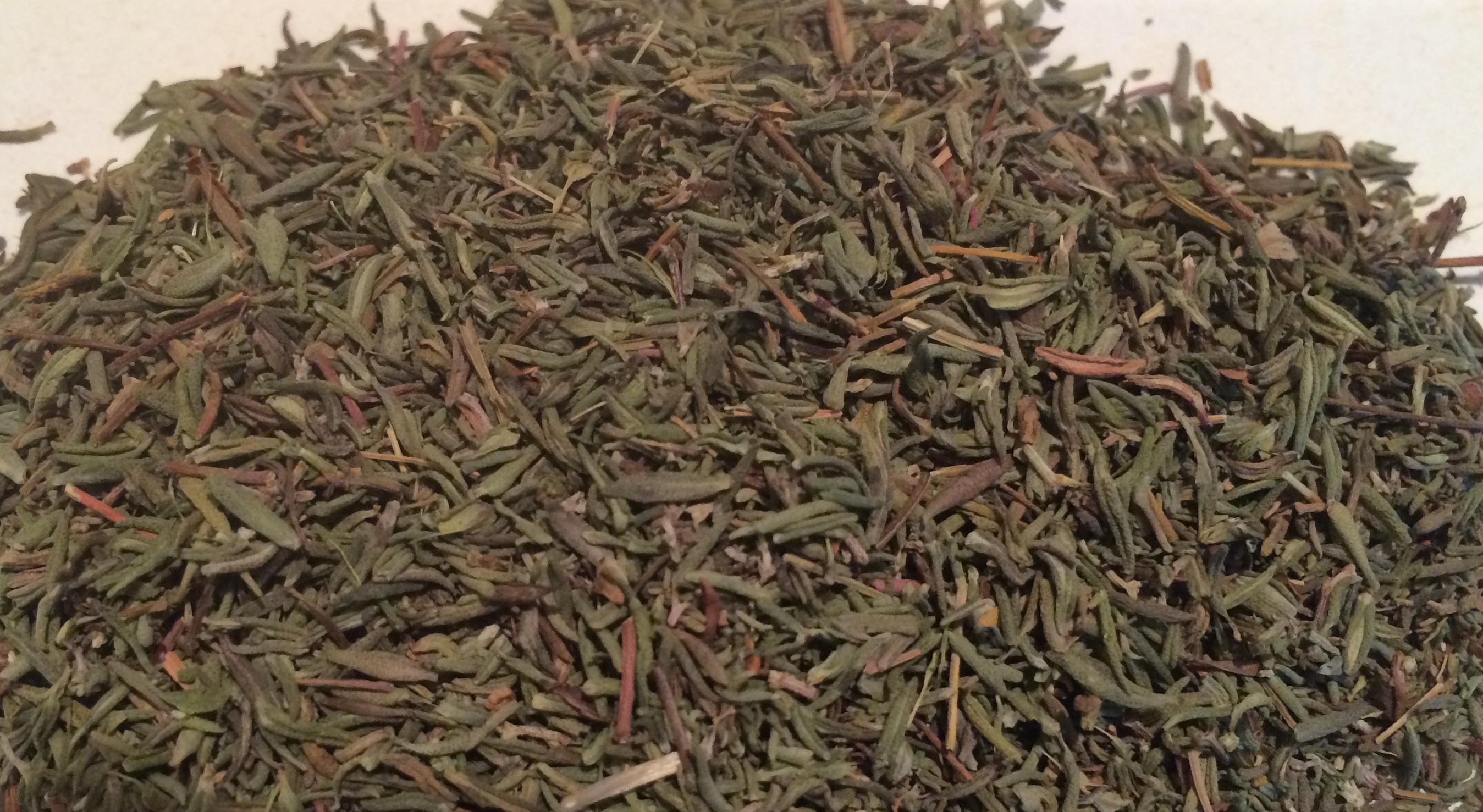
thyme IMG_2655 crop

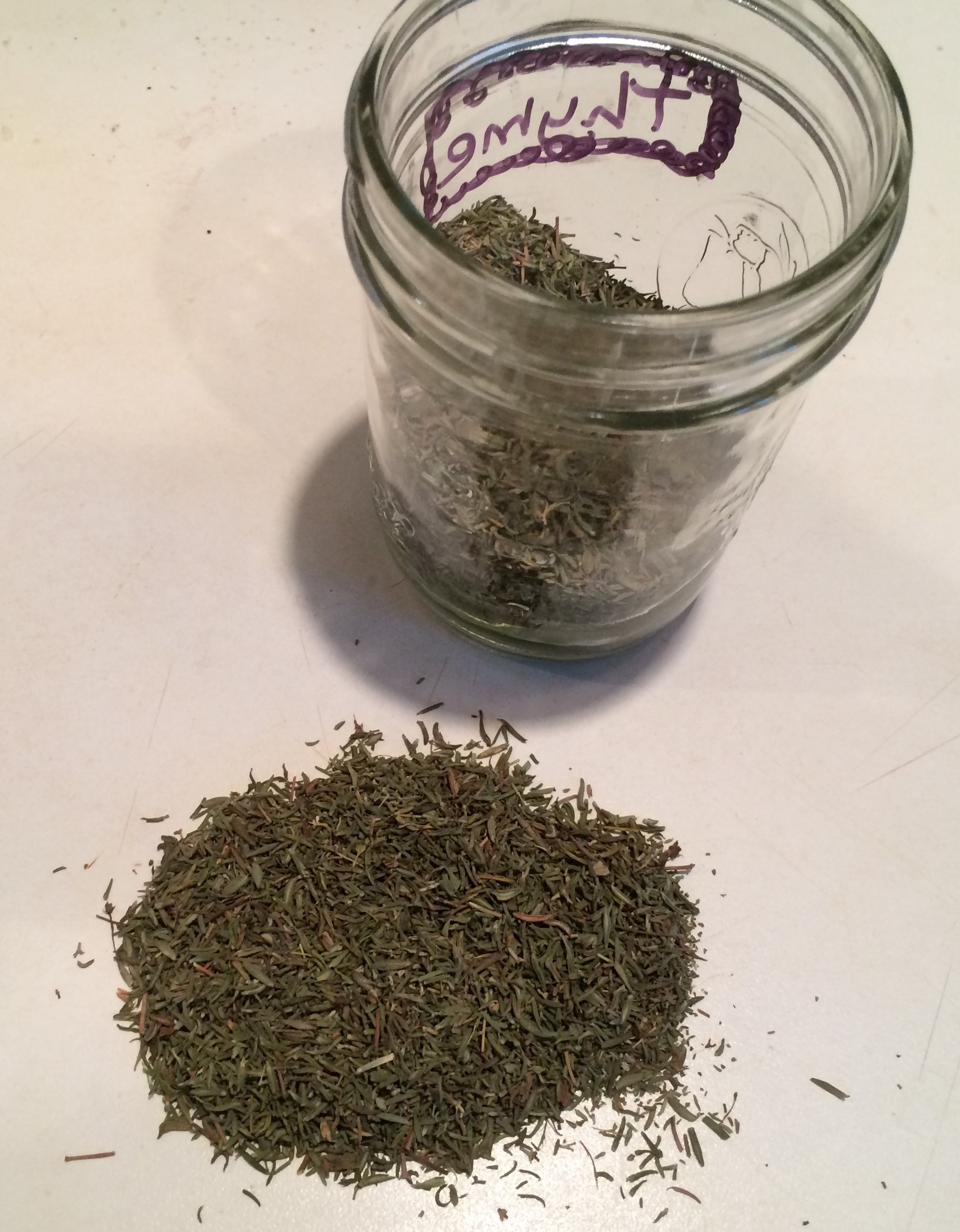
We use ample thyme in our cooking. This 8 ounce jar gets refilled several times a year.

For a quick meal at the end of a long day make Sopa de Farigola, or Thyme Soup, a dish popular in the Catalonia region of northeastern Spain, and thus part of our Sonoran heritage as well.  Fresh eggs and day-old bread are topped with a boiling broth made from water, sprigs of thyme and some olive oil. Great for replacing electrolytes after a day working in the garden!

More about thyme in my books which I will be selling and signing at the Tucson Festival of Books March 14 & 15 this year – Southwest Fruit & Vegetable Gardening (Cool Springs Press 2014, $23), and Father Kino’s Herbs: Growing & Using Them Today (Tierra del Sol Press 2011, $15) also available at Tucson area bookstores, nurseries, botanical gardens, and state parks.

JAS avatar  © 2015, Jacqueline Soule. All rights reserved. I have received many requests to reprint my work. My policy is that you are free to use a very short excerpt which must give proper credit to the author, and must include a link back to the original post on our site. Please use the contact me if you have any questions.

thyme IMG_2657 crop

On Emptiness, Filling, and Cups Overflowing: Chocolate–Chiltepin Cupcakes with Cool/Hot Frosting

IMG_9128

Aunt Linda here: Happy February ! The peak of February’s very gorgeous very Full moon was Tuesday.  Also easily visible with the naked eye, the planet Jupiter played flirtatiously around the moon for several days.

Today’s blog offers a little parable. So pour yourself a cup of tea, coffee, or whatever you prefer, and travel with me.

Once upon a time, during a moon such as this with Jupiter visible to the naked eye, in a land not so far away ….   a pilgrim, or a seeker, or a soldier, or an emperor, or someone just like you and me, crested the peak of a mountain having finally found the Wise One.  After many moons of seeking this particular Wise Person, the seeker arrives with high hopes of learning what they had so dearly yearned to learn.   They were in Search of Answers.

“Ah”, said the Wise One, “sit down and let us talk over some tea”. So, after warming the water and preparing tea, the Wise One began to pour the liquid into the cup of the One in Search of Answers.

The Wise One poured.

And poured.

And poured.

Until the tea cup overflowed. Spilling onto the table, the floor, the person.

IMG_9125

In some versions of the story, the more polite seeker, is startled, and exclaims: “Teacher! Perhaps you have not noticed that my cup is spilling over!”.  In another version, the tea spilled onto the robes of the (not so polite) emperor, who becomes angry, chiding the Wise One for ruining his robes.

In each version, the reply of the Wise One is the same:  “There is no room in the mind of the seeker, for the wisdom he/she says he wants, and has searched for for so many years. Emptiness, whether mind or cup, is needed before new insights can be received”. Being filled with opinions, speculations, habits of mind,  hinders the ability to take in of fresh insights/knowledge.

Temple Grandin ran into this phenomena in the world of animal husbandry. Having discovered extremely practical wisdom about how to work with large animals more efficiently and calmly. She developed methods that significantly decreased the stress on both animal and human, and other methods that significantly increased efficiency. Her ideas were practical. Her ideas were “humane” and efficient . They offered ranchers and industry alike, to save money.

And they were met with “full”-on resistance, if you pardon the pun.

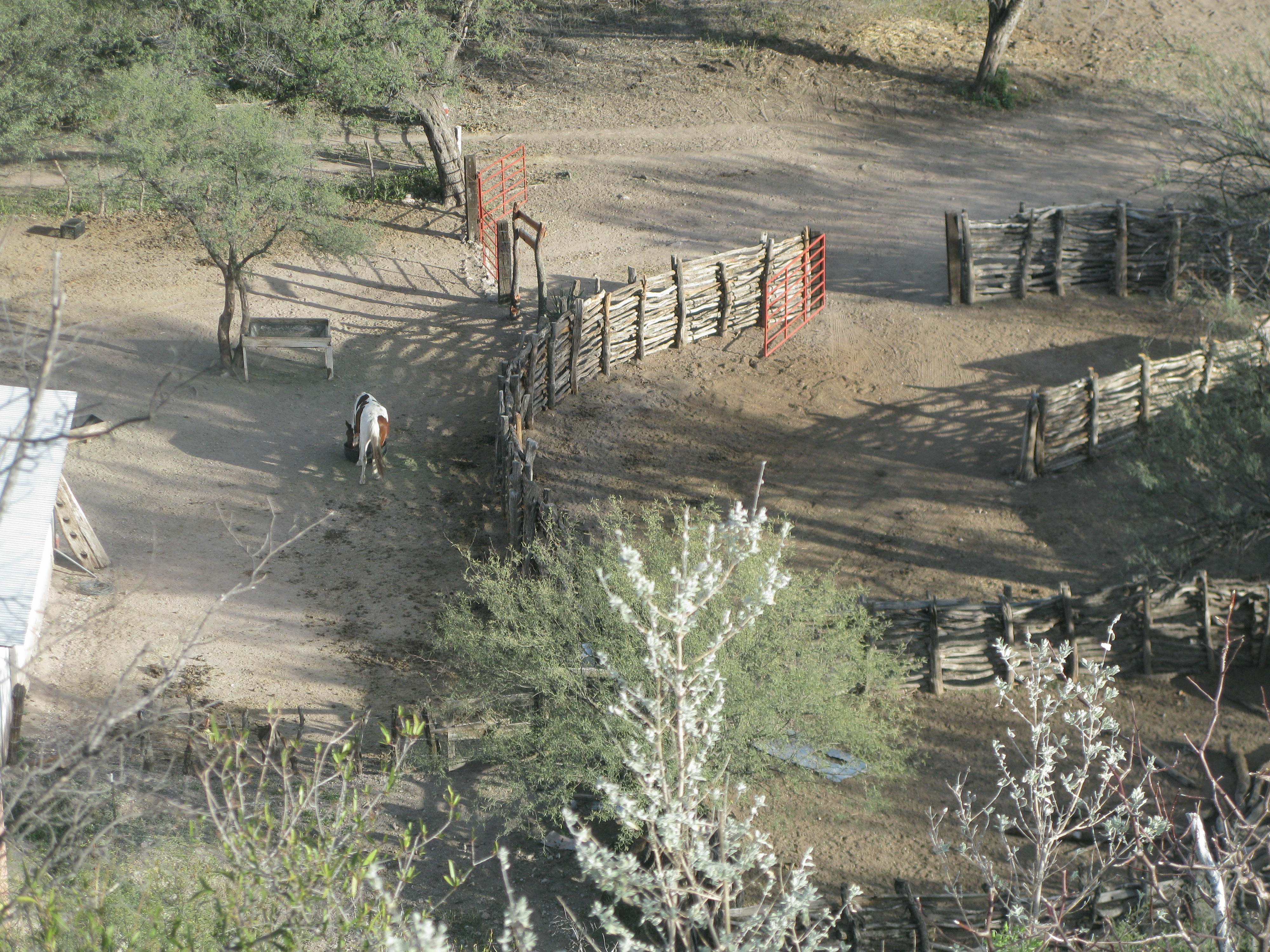
Rolling forward in time, the vast majority of ranchers, have integrated some if not all of her ideas of moving animals. Corrals and shoots have been redesigned. Transportation trailers for horses were redesigned (diagonal facing not front facing) . It goes on and on.  But before the “industry” could take in all this animal-human wisdom “it” had to empty It’s mind of preconceived ideas.

IMG_4614We redesigned our corrals. No more box shapes with corners. Curves allow flight animals such as cows and horses to feel safer and move as they would in the field.

On a personal level, when my mind is “full” of worry, I can sometimes miss the more innovative solutions available to me. Conversely, when I empty my mind enough, life gets easier. For me, “easier” is simply more practical.

One example from the week: I discovered a nest of baby mice in the feed bin this week.   I immediately felt stress. TO be clear, I am not “anti-mouse”.  I am just “anti-TOO MANY MICE that it becomes unhealthy”.  An occasional mouse is not uncommon around poultry, and the “girls” (the chickens themselves) or a king snake take care of them. Until recently, our cat was a good “mouser”, but she is 20 years old now and no longer on the job. So this issue of mouse nests is a new dilemma for me. I do not want unhealthy mouse droppings around the hens and eggs. I do not want mice eating the feed, and bugging the chickens all night long, as they nibble here and there. Follow the trail of mouse poop and you will be amazed at what acrobatics they are! I hate to use poison for a variety of reasons, one being fear that a predator such as a hawk or neighbors cat could be poisoned itself if it eats the bait-ridden mouse. And baby mice, despite knowing all of the above, are just so cute. I don’t Want to kill them!

IMG_9080

Adorable for sure, this nest of baby mice is nevertheless not welcome in the hen house.

I was full -on- fretting.  No space for innovative solutions to present themselves. Deciding to relax my mind, I went for a walk, switching mental channels from a litany of methods of killing mice, none of which I liked … to a question… How does Mother Nature do it?  Mice have a plethora of babies, presumably because there are a plethora of animals that eat/need those mice. What eats mice? Snakes came to mind. ( Just as I am not anti-mouse, I am not anti-snake either. All have their place. It is BALANCE that I am looking for). I sent out a text (modern world) and within minutes had a Python present itself. Then another snake owner said she was looking for a good source of mice for her reptile. Later this afternoon, a litter of mice, will be delivered to a Python. And I will be rid of the “seed” stock of multiple generations of mice. Whether or not the snake-owners will raise the mice and feed them as needed, or freeze them for later feeding, I do not know. Stay posted.

The Recipe:

Chocolate-Chiltepin Cupcakes with Cool/Hot Cream Cheese Frosting

IMG_7799

IMG_9137 IMG_8168 I Love the sensation(s) on my tongue as the cool of the mint in the frosting meets the heat of the chiltepin! And while it is my “go to” cupcake recipe all year long, it might be a Very fun Valentines Day treat, what with the Chocolate/Chile combination as well as the sensual mint-chile interaction.

Ingredients for Cupcakes:

1 Cup Milk (cow, almond, rice, coconut, etc)

1 teaspoon apple cider vinegar

¼ cup honey (local honey if you can; it is good for you and your local beekeepers)

½ cup oil of your choice

1 teaspoon vanilla extract

1 cup unbleached all purpose flour

1/3 cup cocoa

¼ teaspoon dried and crushed chiltepins, seeds removed if desired.

¾ teaspoon baking soda

¾ teaspoon baking powder

¼ teaspoon salt

How to:

Preheat your oven to 350 degrees and line 12 cupcake cups with paper liners.

Whisk together the milk and vinegar and in a large bowl and set aside to allow time to curdle. Once curdled, add the honey, oil, and vanilla extract and blend well.

Sift the dry ingredients together and slowly add to the wet mixture, stirring between additions. Divide batter among the cups, filling each about ¾ full.

Bake in preheated oven for 18-20 minutes.

Once the cupcakes have cooled, you can frost them with the Cool/Hot Cream Cheese Frosting that you have made while the cake-lets were baking. 

Ingredients for Frosting:

2, 8-ounce packages cream cheese, softened

2 tablespoons unsalted butter, softened

1 teaspoon vanilla extract

1 teaspoon mint extract

1 teaspoon chocolate extract

1 tablespoon cocoa powder

¾ cup powdered sugar

1-2 tablespoons milk (cow, nut, coconut etc)

¼ teaspoon dried and crushed chiltepins. Note: leave seeds of you are going to eat promptly or want the heat to remain stable. Remove seeds if you will be eating frosting in a few days and do not want the “heat” to increase. The “heat” from chile comes from the oils on the seeds, and with time, the heat will “grow”. Experiment and see what you prefer!

12 springs fresh mint – for an edible garnish atop the cupcakes.g

How to:

Combine all the ingredients except the fresh mint in a food processor bowl and mix well until combined. Add just 1 tablespoom of milk to begin, adding the rest by teaspoons if you want to thin the mixture.

IMG_8170

Frost the cupcakes; top each cupcake with a small sprig of mint for an edible garnish.

More Ideas for Wild Dates in Borderlands Towns

Washingtonia filifera near UA main gate (R.Mondt photo)

Our native fan palm, Washingtonia filifera, near UA main gate.  Original seed from Arizona’s KOFA Mountains.   (R.Mondt photo)

Yes, we can delight in the most fabulous wild dates right here in Baja Arizona. We don’t have to put out lots of energy into finding these tasty little morsels because they are now all over the urban landscape. Once, in olden times, they were confined to oases, but now they line every old neighborhood street in low-desert towns. Harvest at the right time and enjoy their bounty.

Our Native Fan Palm Washingtonia filifera, UA photo (Note the stout trunk)

Our Native Fan Palm Washingtonia filifera, UA photo (Note the stout trunk)

Tia Marta here to continue our culinary explorations of native fan palm fruit. Our street sentinels are more than vertical shade.  They bear other surprising gifts. Our so called California fan palms (“palma taco”) offer tiny sweet and plentiful fruits (the size of a plump pea), and were harvested and relished by Native People of the Sonoran and Mojave deserts long before Hispanics brought date palms (the pinnate-leafed palms) from the Old World.

Washingtonia robusta in a S.Tucson landscape

Washingtonia robusta planted in a S.Tucson landscape

When ripe in summer into fall, zillions of fruits hang from pendulous stalks of Washingtonia filifera, with 20 pounds or more of the little buggers in one cluster—talk about prolific! As mentioned in my blog-sister’s post two weeks ago, Carolyn and I were challenged by renowned ethnobotanist Dr Richard Felger to try our hands at creating some “contemporary” recipes for this ancient and well-adapted desert food—which is now disregarded as nothing more than a columnar street planting. We know from ethnographic accounts (see them summarized in Wendy Hodgson’s Food Plants of the Sonoran Desert, UA Press, 2001) that for the Native Cahuilla of Southern California, the fan palm meant survival—a staple in their diet, used both fresh or dried and ground, hard seeds and all, into a flour for cooking or griddling. Another ethnobiologist friend Dr. Amadeo Rea (1997) documented Pima children collecting fan palm fruits as snacks. Dr. Felger intends now to bring this native palm back into new, appropriate use as a sustainable desert food crop.

Fruits newly harvested from the California fan palm Washingtonia filifera (MABurgess photo)

Fruits newly harvested from the California fan palm Washingtonia filifera (MABurgess photo)

Washingtonia fruit is mostly seed, but the small amount of pulp has a group impact (MABurgess photo)

Washingtonia fruit is mostly seed, but the small amount of pulp has an impact in numbers (MABurgess photo)

Harvesting the high hanging fruit clusters proves challenging. Native harvesters used a lasso. More recently some harvesters fit a sharp can lid to the end of a pole to cut off the entire fruit stalk. A Tohono O’odham saguaro harvesting kuipaD might suffice—or a long-poled tree-trimmer—both worth a try.


In addition to their success as hot-desert food producers, both fan palms native to southwest North America, Washingtonia filifera (the stout, shorter one) and W.robusta (the super-tall, spindlier one), provide excellent nutrition. It has been estimated that one fan palm’s fruit could sustain one human’s nutritional needs for more than 200 days! Get a load of these figures from James W. Cornett (Principles Jour.Internat.PalmSociety,1987):  Protein 3.1%, Carbs 77.7%, Fiber 10.4%, Calcium 110 mg per 100g, VitaminA(Carotenes) 180mg per 100g.  Comparing these wild date nutritional figures with the commercial date palm (Phoenix dactylifera), our wild fan palm is way ahead on all counts except carbs (carbs 94.1% in standard dates).

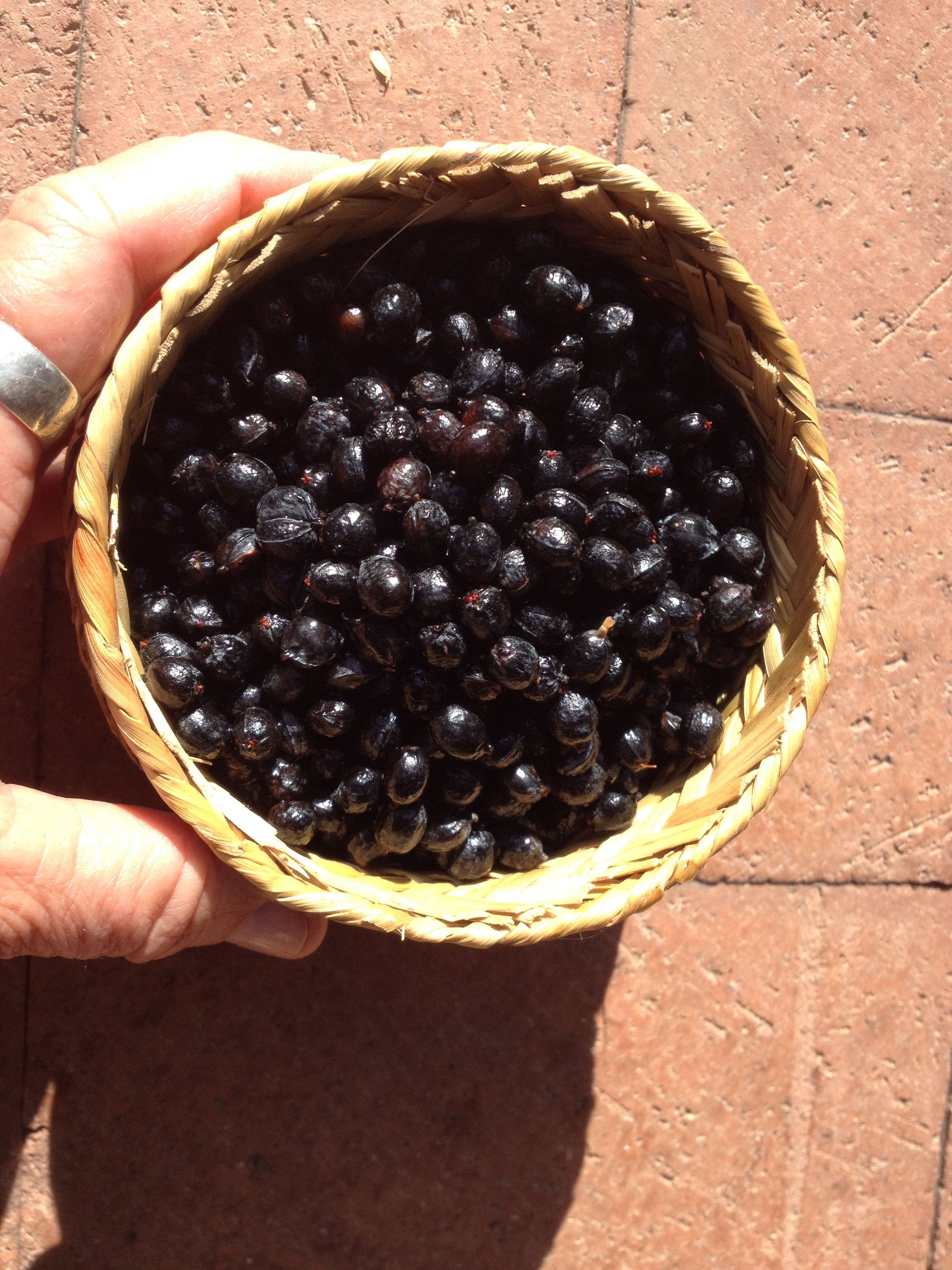
Washed and drained fruits of Washingtonia filifera ready for snacking! (MABurgess photo)

Washed and drained fruits of Washingtonia filifera in Tarahumara sifting basket, ready for snacking! (MABurgess photo)

Since the fruits of W.robusta (the tall one) are even tinier than W.filifera, I chose to do my foodie experiments with the latter one’s “bigger” datelets–both small.  Fruits of both are mostly seed, a stony seed surrounded by a thin layer of sweet skin and dry, date-like pulp. Here are two fun ideas I’ve come up with for using fan palm fruits, which can be done easily in any kitchen or patio. These ideas also might present interesting potential for commercial-scale food production. (I hope our wonderful local companies like Cheri’s Desert Harvest are listening to the significance herein!)                 So, here’s my first idea–really in three delicious parts:

Simmering fan palm fruits

Simmering fan palm fruitsSolar Fan Palm Syrup, Datil Molasses, or Datil Candy

SOLAR FAN PALM SYRUP

Directions:

Wash thoroughly and drain 4 cups desert fan palm fruits. Place in a saucepan with 8 cups drinking water to cover fruit well. On stove-top, gently simmer the fruits for at least 30 minutes, (if using solar oven, make it 1 hour). Add more drinking water to keep fruits covered. Let cool and stand in refrig for 1-3 days. This process is bringing out the complex sugars into solution. Again, when you have a little time, bring back to simmer 15-20 minutes. Taste the liquid. It should be deliciously sweet with a rich, almost smokey bouquet—but still thin. With a sieve, decant the sweet liquid from the cooked fruits, saving the fruits aside.

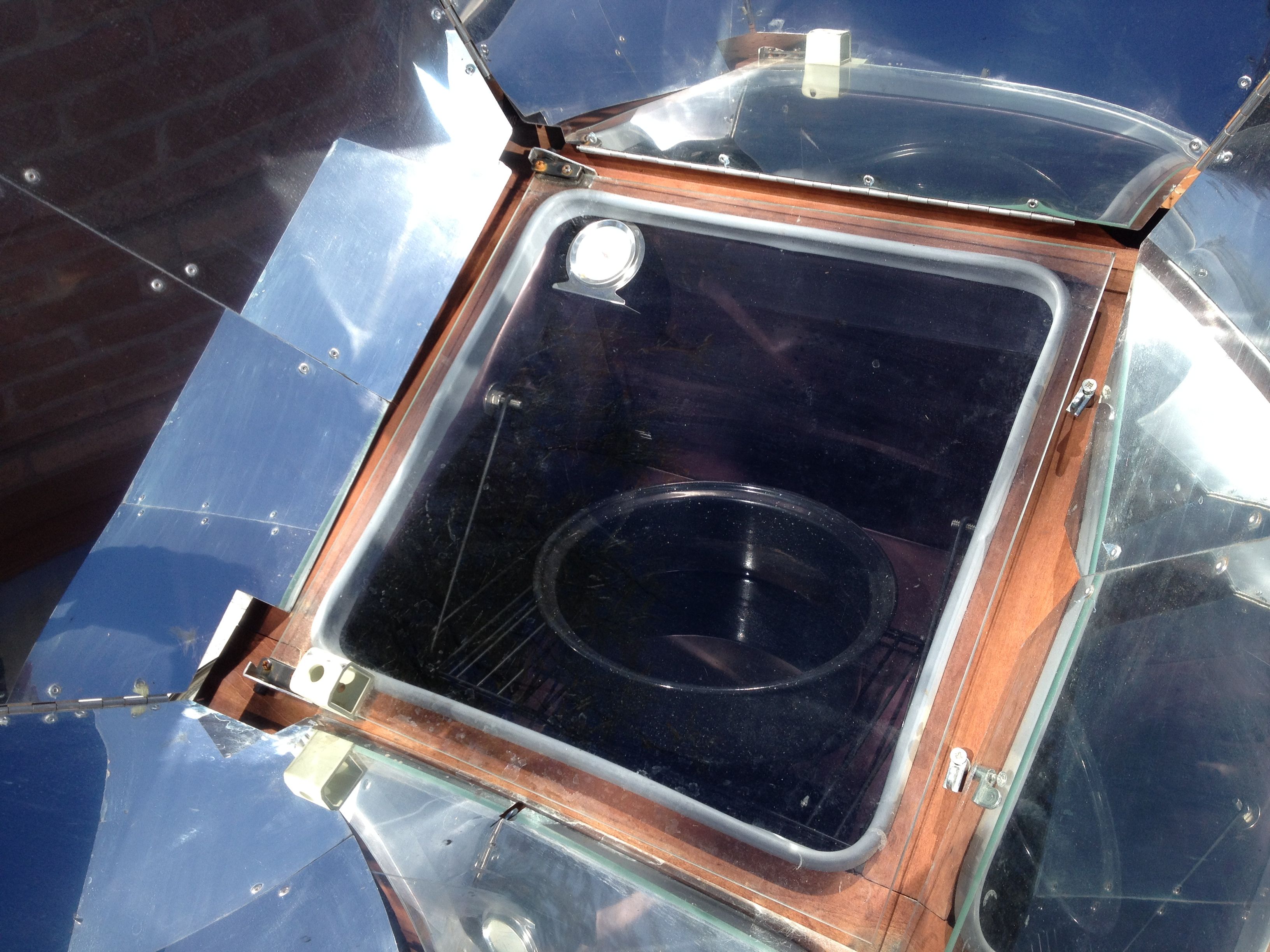
After sieving out the simmered fruit, the liquid is being concentrated in a solar oven with oven cover slightly open to release moisture (MABurgess photo)

After sieving out the simmered fruit, the liquid is being concentrated in a solar oven with oven cover slightly open to release moisture (MABurgess photo

[Here is where my experience reducing thin saguaro fruit juice kicked in. I knew that this thin, sweet liquid from the fan palm dates had to be cooked down slowly.]

Pour the juice into a solar-oven-worthy pan and put in preheated solar oven—without a lid on the pan. Let the glass cover of the oven be slightly open to allow steam/moisture to escape. Check after 15 minutes. If syrup is desired, check for correct syrup consistency.  Keep heating until thickened to pourable syrup.  Then, try this wonderful and healthful solar syrup over mesquite pancakes for the ultimate Southwestern breakfast!

Concentrated Solar Fan Palm Syrup--nothing added--just water and fan palm fruit!  (MABurgess)

Concentrated Solar Fan Palm Syrup–nothing added–just water and fan palm fruit!  Come taste it at the StPhil’s farmers market!(MABurgess)


“DATIL SYLVESTRE” MOLASSES

With more time and further moisture reduction, there are more delicious options….. Here’s one:  For the best, richest “Datil Molasses” you ever tasted, let the liquid cook down for another 45 minutes or an hour (depending on sun intensity).  Be careful not to overcook, which might leave a sweet glue on the bottom of your pan. (The same reduction of liquid can be done of course on the stove-top or over a fire, like reducing maple sap, but hey, this is a desert product. We’ve got our fuel overhead! Let’s use it.)

“DULCES DE DATIL SYLVESTRE”

Carrying the process of concentrating the syrup yet another step further…If an even more chewy candy is desired, you might use the concentrated sweet molasses in a candy mold or for gelling like a fan-palm gummy bear.

Here’s another totally delightsome, exotic yet simple idea for maximum pleasure from fan palm fruits…..

DESERT OASIS CORDIAL

Wild Fan Palm Liqueur (MABurgess photo)

Wild Fan Palm Cordial (MABurgess photo)“Desert Oasis Cordial”

It takes about 4-5 weeks to make this rich cordial liqueur, so plan ahead. With a fall harvest of wild dates you could start making your Desert Oasis Cordial by Thanksgiving and have it ready for Christmas-time celebrations. But don’t wait—when the fruits are ripe, go for it.

This is how I did it:

Wash, wash, wash and drain at least 2 cups of ripe native fan palm fruitlets (W.filifera), enough to pack firmly into a mason jar.  Into the packed jar, pour vodka of your choice, filling all the space between the little fruits to the brim to cover them. (You could use tequila or EverClear for differing degrees of delight.)  Screw on lid and place jar in a cool dark corner of your kitchen, where you can be reminded to agitate it. After a week, open it and add more vodka to cover fruits, as the fruit tissue will have absorbed some of the alcohol. Shake and turn over the closed jar every week.  For the herbalists among us, you will recognize this process is basically tincturing the wild dates. After 4-5 weeks, decant (i.e. separate) the liquid from the fruit. The decanted liquid will be a rich dark chocolate brown color like Godiva liqueur only translucent. Taste it and serve sparingly in small cordial glasses. Store any remaining liqueur in a closed decanter for the next festive occasion.

W.filifera fruit AFTER tincturing and decanting makes a fabulous alcoholic treat (seeds to be discarded)

W.filifera fruit AFTER tincturing and decanting makes a fabulous alcoholic treat (seeds to be discarded) (MABurgess)

Decanting the marinated fan palm fruits from the liqueur (MABurgess)

Decanting the marinated fan palm fruits from the liqueur (MABurgess)

After both your Fan-Palm Syrup-making and your Desert Oasis Cordial-making, you will have delicious fruits left over in the straining or decanting process.

Don’t forget the simple joy of snacking on little fruits, doing the pulp-from-seed separation maneuver with your tongue and teeth. Move over, sunflower seeds!  The boiled fruits after syrup-making are still tasty.  Better still–the vodka-soaked wild dates give an extra kick, so don’t overindulge.

Both can be briefly quick-whirled or mashed in a blender, meat grinder, or CuisinArt to begin the process of separating the remaining pulp from the hard seeds.

After decanting the cordial, remaining fruit is whirled and put thru colander to separate pulp from seeds

After decanting the cordial, remaining fruit is whirled and put thru colander to separate pulp from seeds

[If someone has a good idea of how best to separate seeds from pulp easily, please share it!] Fruit leathers, energy bars, jams, “datil newtons”, spreads, supplements—there are SO many ways the remaining fruit pulp could be used, so that none of the nutrients and fiber need go to waste. Even the hard seeds could be parched and ground into a nutritious flour—as Native People did in earlier times, to their advantage.


"Desert Oasis Cordial" from wild fan palm fruits (MABurgess photo)

“Desert Oasis Cordial” from wild fan palm fruits (MABurgess photo)

BTW, after snacking on Washingtonia fruitlets, be sure to check your smile in the mirror for black flecks of the yummy pulp between your incisors.  I can see it now—the next fad question after “Got milk?” will be “Got datil?”  That could make for a wild date experience. Enjoy!

For a taste of the native fan palm fruits, come by our Flor de Mayo booth at Sunday’s St Phillips farmers market, 9am-1pm. There we also have a demo of solar-oven cookery in action.  The cleverly designed solar ovens are for sale from us with a discount and no shipping costs. We’d like to see every household in Baja Arizona equipped with a solar oven for emergencies as well as for sustainable living.

You can find the perfect makings for the pancakes to eat with your Solar FanPalm Syrup for that Southwestern breakfast–mesquite flour and heirloom White Sonora Wheat flour— at the Native Seeds/SEARCH store (3061 N Campbell, Tucson) and at Flor de Mayo’s booth at St Phillips farmers market.  See you on Sunday! Have your taste-buds ready for a wild date.

Onion Planting Time!

allium BUR HPIM0665

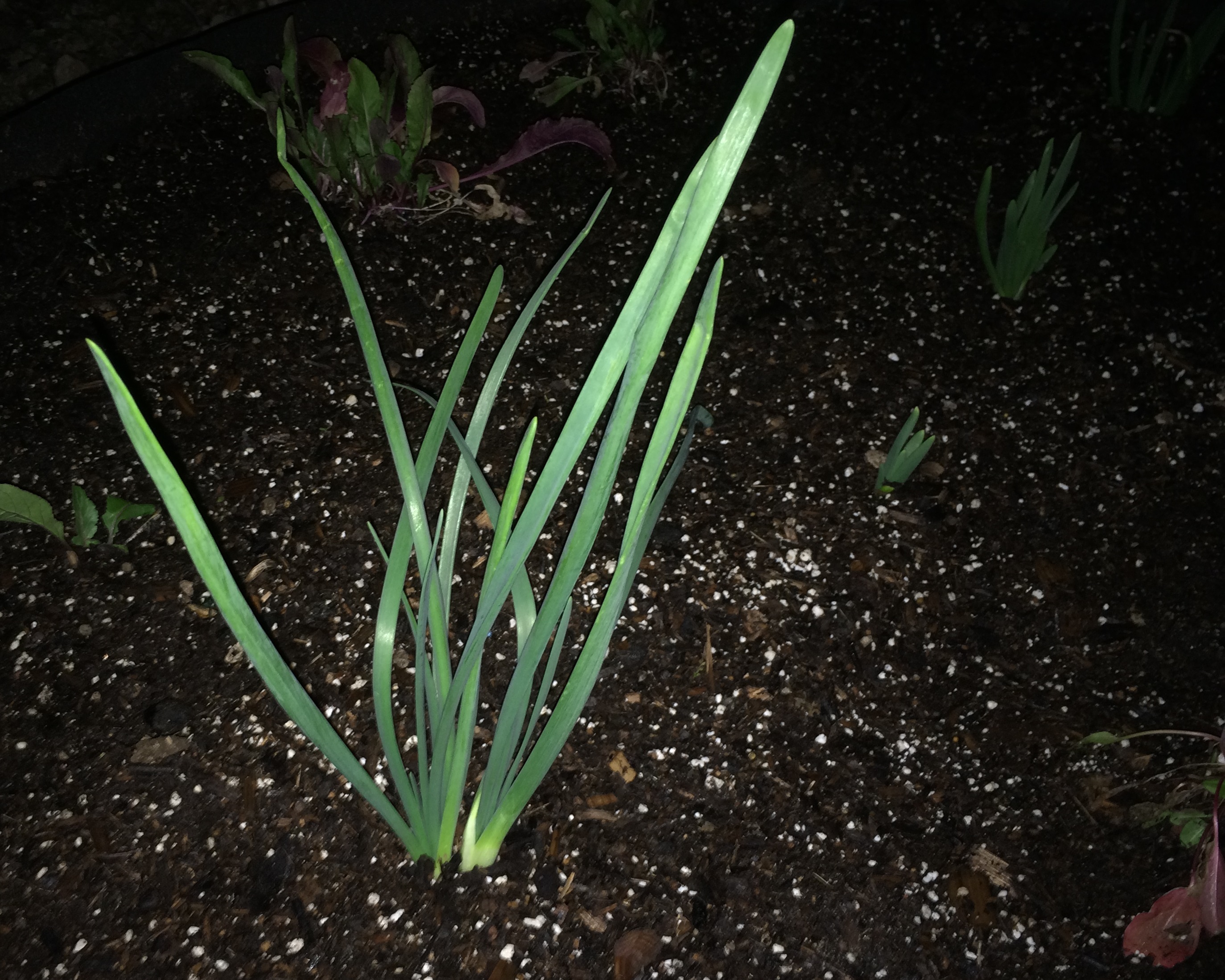
The Southwest is ideal for gardening all year long.

Jacqueline Soule with you here to share some timely planting tips.  Speaking as a gardener – one of the best things about living here in the Southwest is that every month is the month to plant something! Right now, in these cool months with short days and long nights, it is time to plant onions.

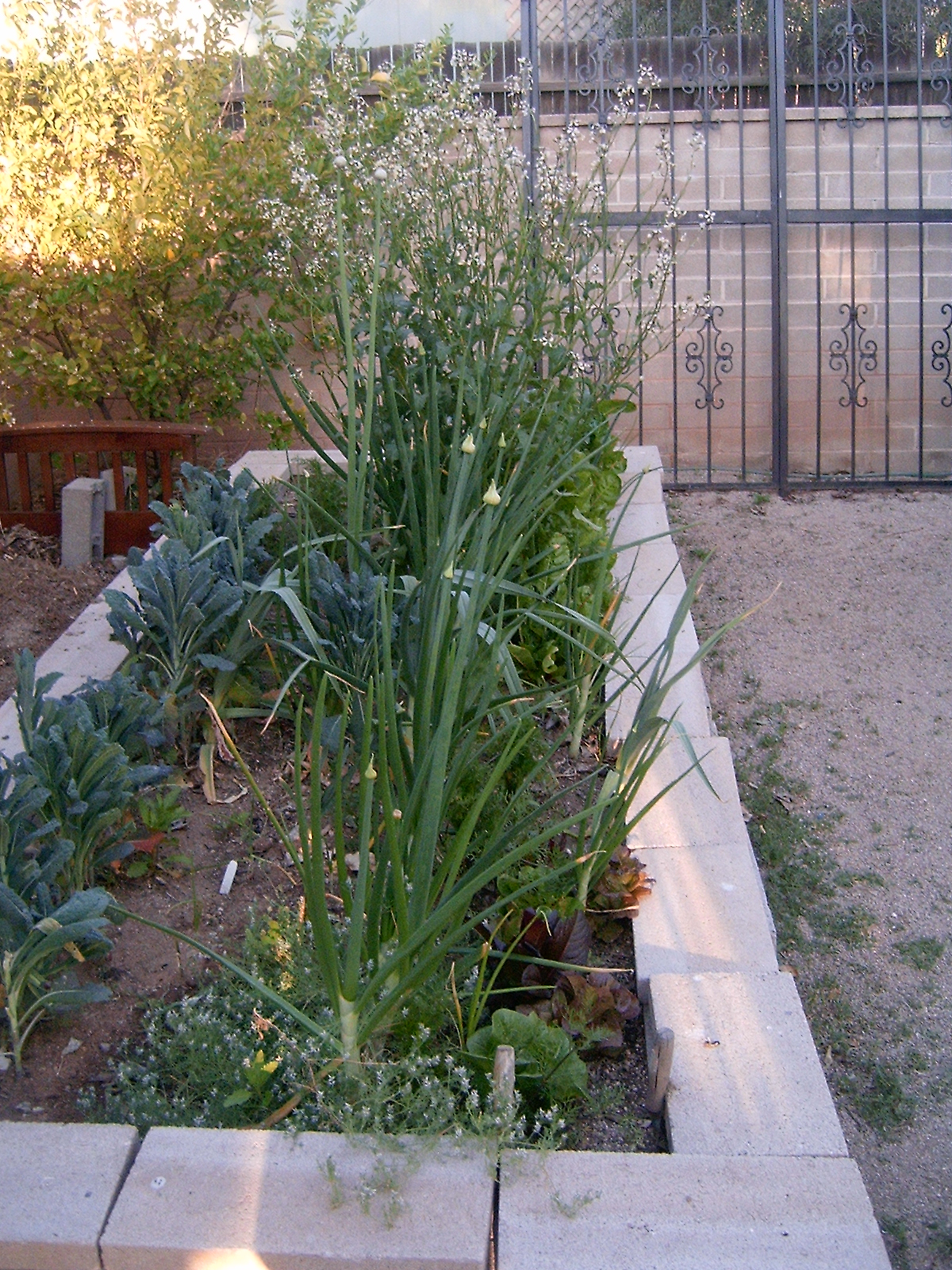
If you have never before had a vegetable garden, onions are a great way to start. Of all the garden vegetables, they are tolerant of abuse and forgiving of mistakes. In the ground, in large or small pots, under the shrubs in the front yard of your HOA home (the weed-police are mollified by “bulbs”), wherever you have a little space you can plant some onions. As long as we get rain every ten days, you may not even need to water them. Onions fresh out of the ground have so much more flavor you owe it to yourself to try them.

allium I'itoi BUR HPIM0664

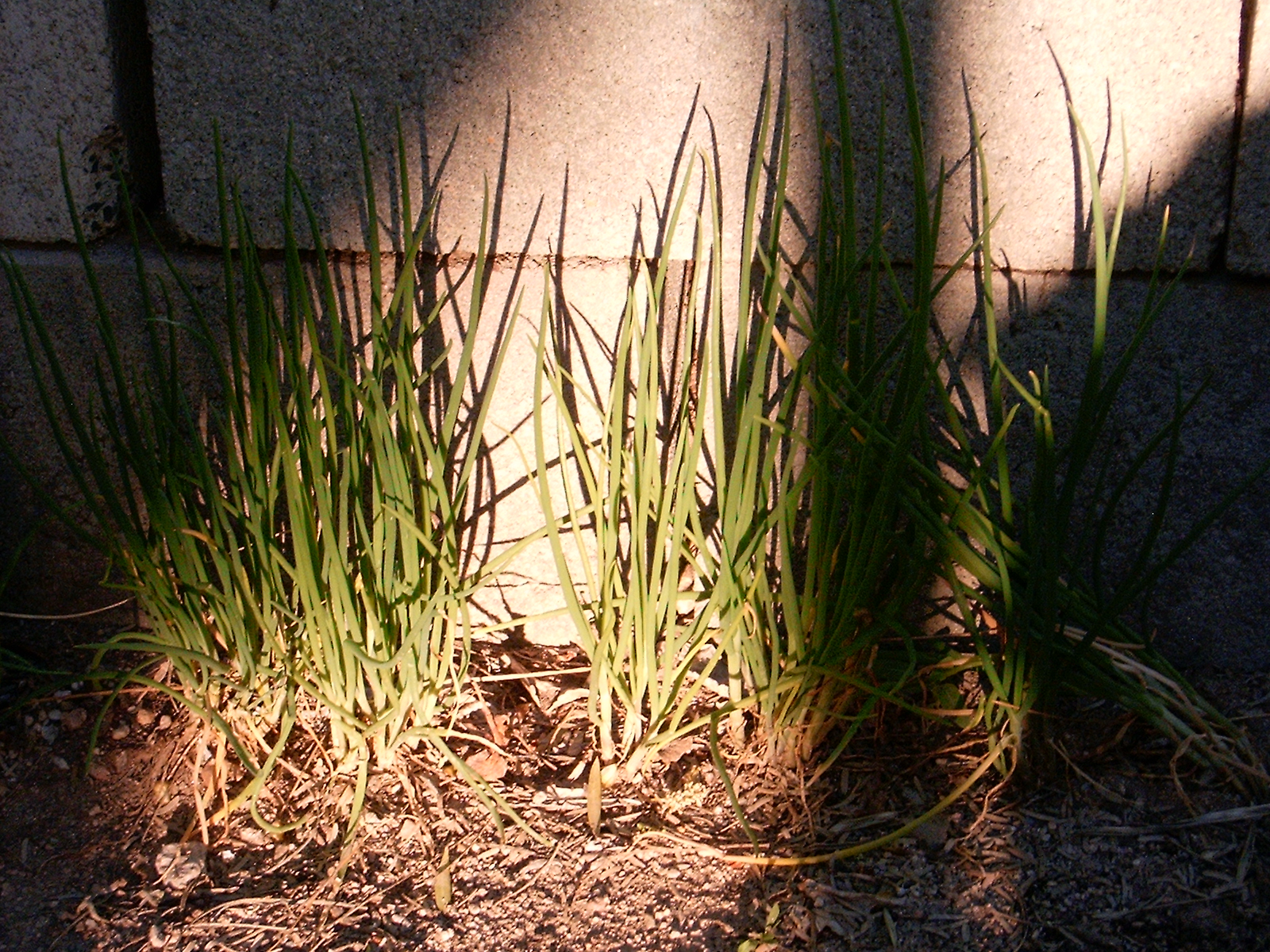
Onions can be tucked into almost any space in the yard. These I’itoi onions stay small.

Which ones? There are more varieties of onions than you can shake a stick at, a number of different types with conflicting names (bunching, bulbing, multiplier) and technically a few different species, but rather than start a discourse on all of that, lets just key into the fact that the days are short, thus you need to plant “short day” varieties.

allium AMP set 001

Onion sets can be planted in pots with potting soil.

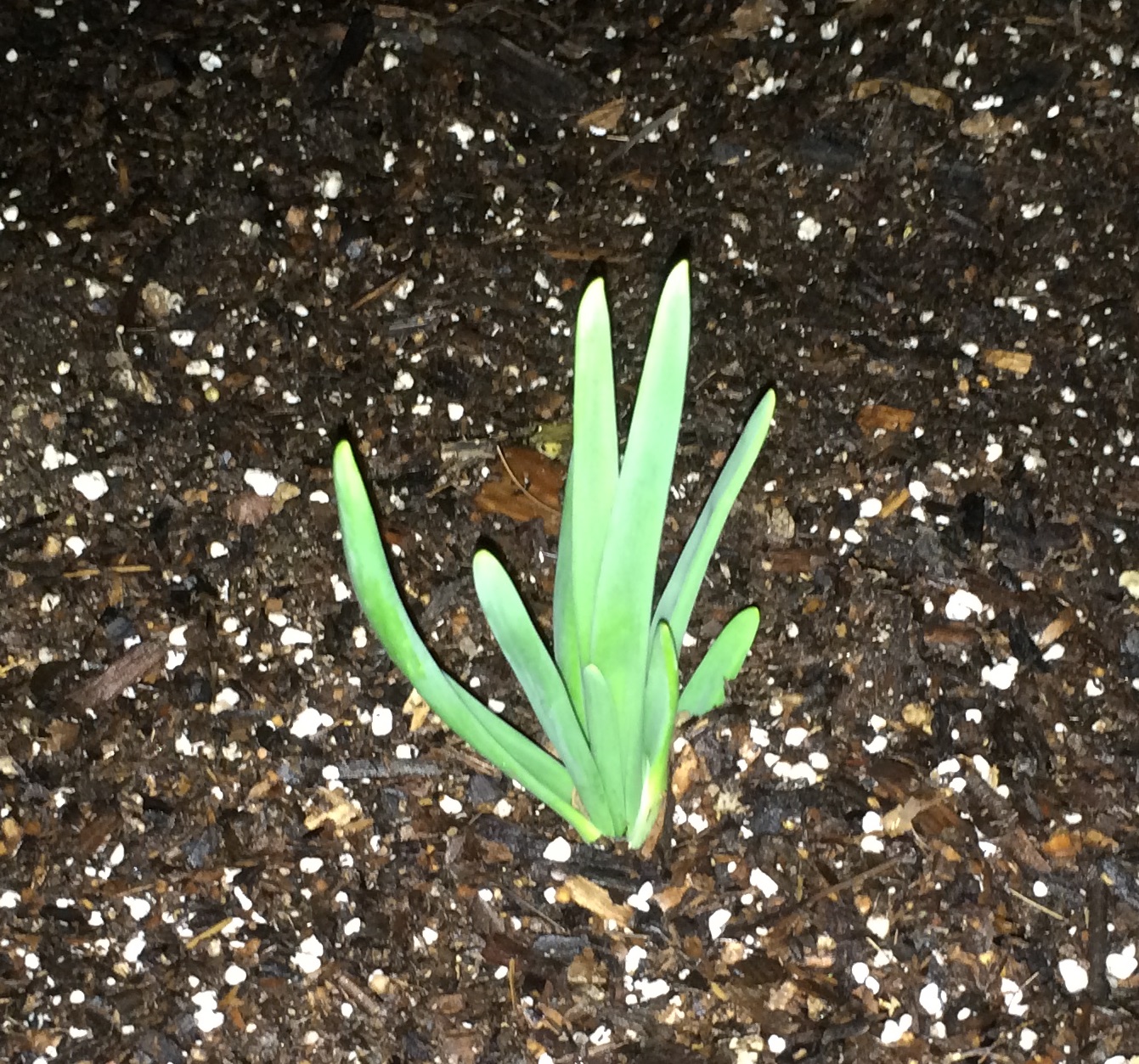
Now? In the coldest time of year? Yes! But you will plant “sets” not seeds. Sets are already started from seed onions, or, in the case of multiplier onions and garlics, they are divisions off a larger bulb.

How to plant sets? Just set them into the soil. (Sometimes gardening terminology makes sense.)  Plant with the green side up, the bulb entirely below the soil.

allium AMP set 002

Look in the background in this shot. Some varieties will grow faster than others.

Most of our local nurseries know that now is the time for onions and have a selection of sets to choose from. Big box stores don’t – just another reason to shop local. In past years some of the Farmer’s Market vendors also offered onion sets.

A general planting guide follows.

Light.  Remember the whole “short day” thing?  The short days of winter will mean that the onions will need as much as you can give them.

Soil is not as critical as with most vegetables. But for best overall health, plus full flavor and good final size of your crop, an improved garden soil is recommended. Or plain potting soil if you grow them in containers.

Water is needed on a regular basis for nice fat bulbs and succulent leaves. In general this means two or three times per week, but maybe more if the onions are in pots.

Fertilizer is not much needed by onions. If you want to, use one for root crops, high in nitrogen and potassium. Avoid fertilizer for flowers, like a rose or tomato food. Flowering takes energy away from creating succulent bulbs.

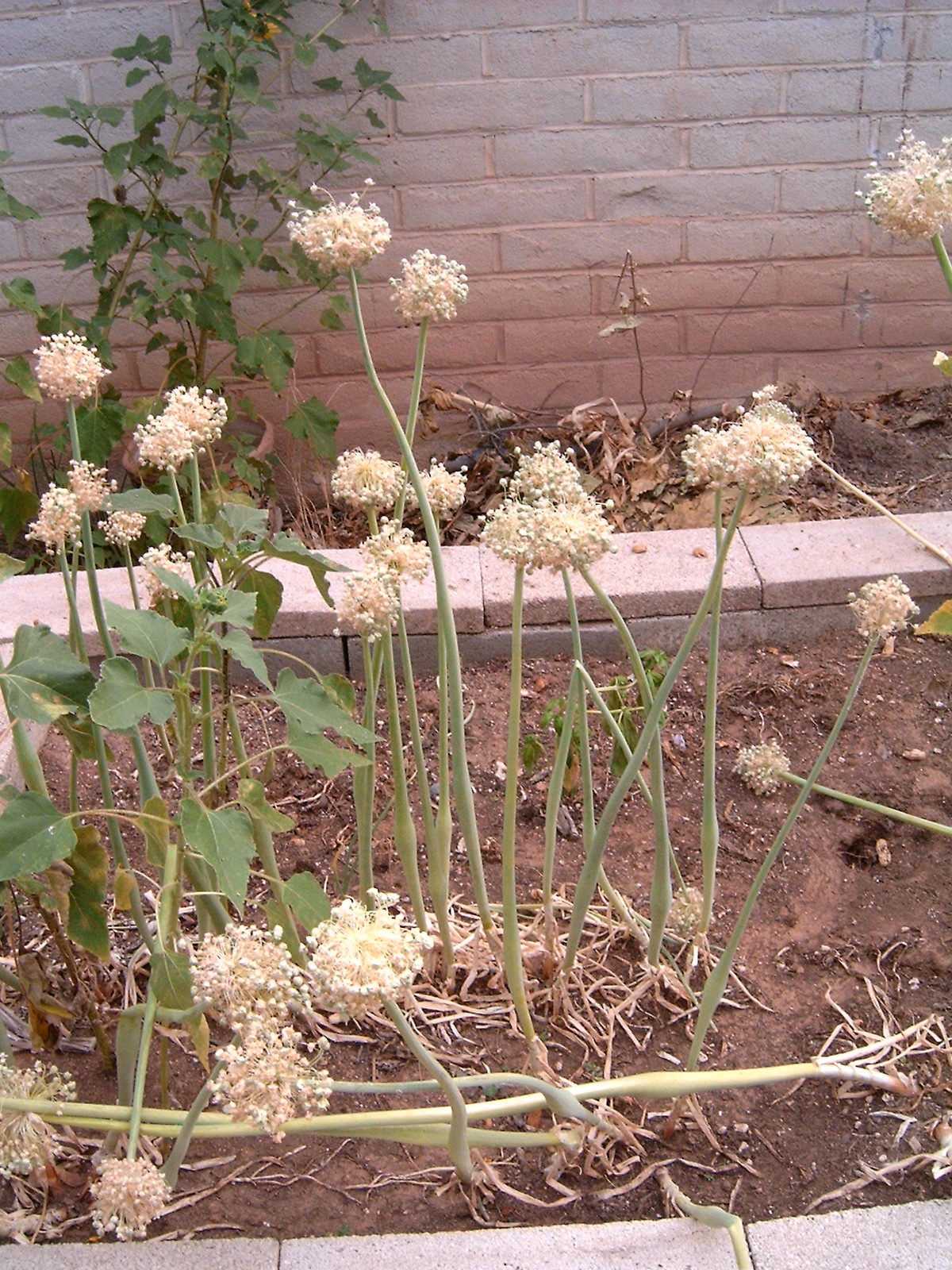
Allium_onion_flowers_J001

These onions got too much flowering fertilizer. Rather than develop good bulbs, they spent their energy producing flowers and seeds.

Harvest – once the tops die down and start to turn brown (usually in late May into June).  For long term storage the garden books from “back east” tell you to dry your onions in the sun – but don’t do that here!! – they will get sun scald and taste yucky. Dry onions in a cool dark place that does have good air flow. I put mine on screens in the laundry room and leave the ceiling fan on low for about three days. Once they have dried onions will store without rotting.

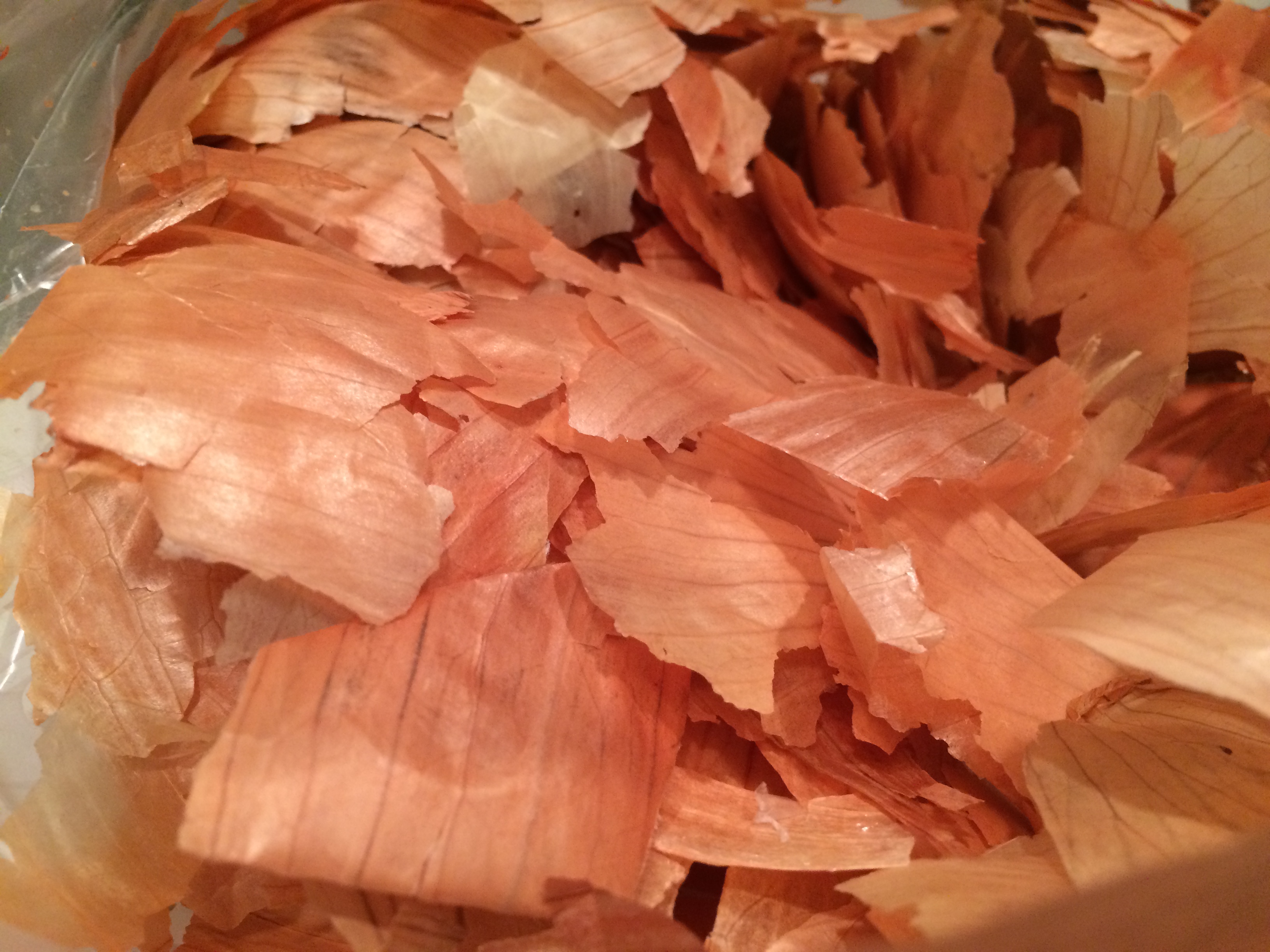
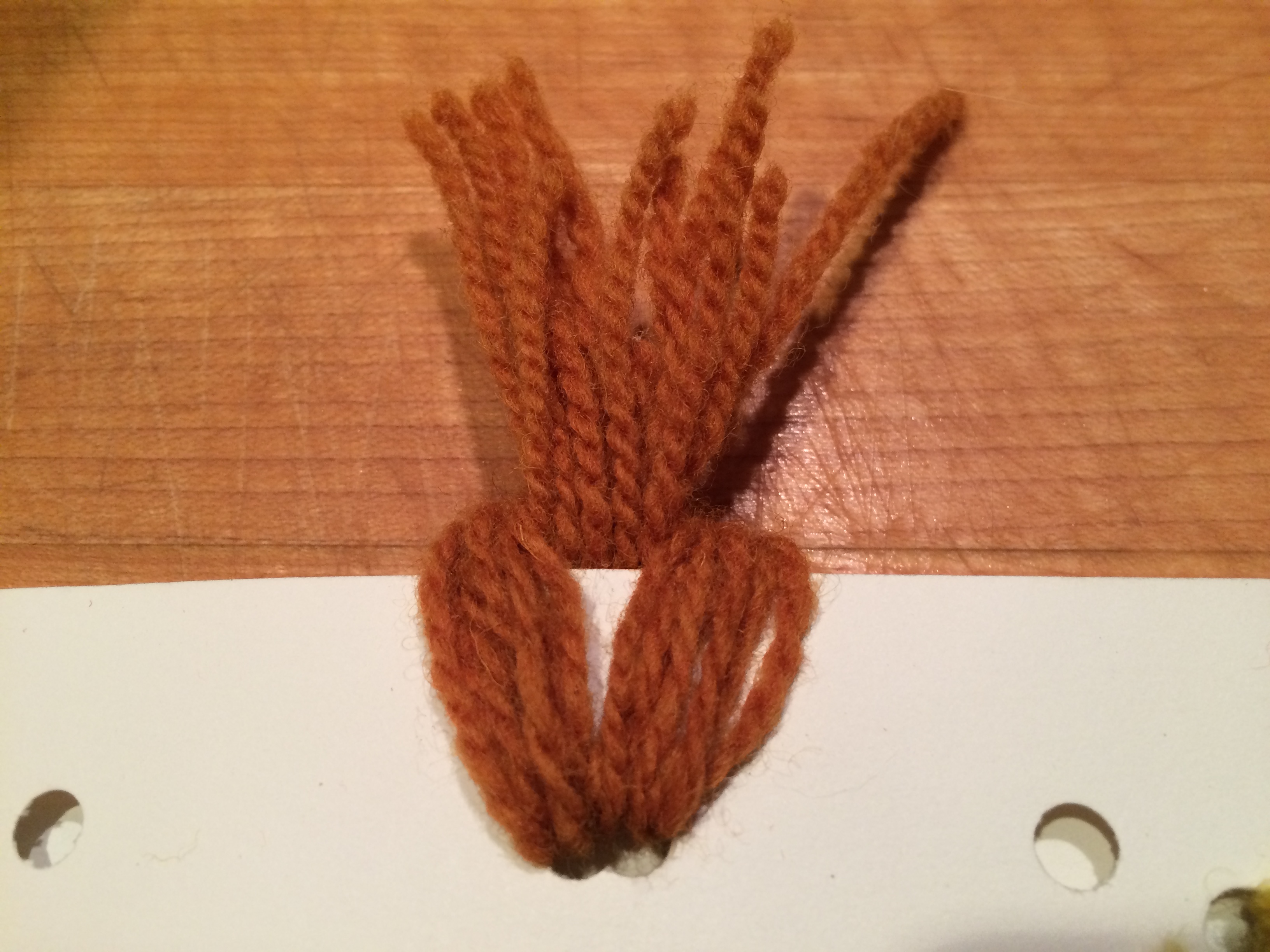
Storage & Use. Some varieties of onions store better than others. Plan on about four months maximum for best flavor and texture. (Ours are eaten so fast this is not an issue.) Don’t forget to save your onion skins to make a great natural dye for Easter eggs and textiles.

onion skin IMG_2348

I keep a bag to add my onion skins to every time I cook.

onion skin IMG_2349

Onion skins produce a warm brown dye.


For more about onions and other vegetables and fruits that will thrive in your Southwestern garden, please consider my book Southwest Fruit and Vegetable Gardening (Cool Springs Press 2014), available at Antigone, Arizona Experience Store, local botanical gardens, state parks, and nurseries.

© 2015, Jacqueline Soule.  All rights reserved. I have received many requests to reprint my work. My policy is that you are free to use a very short excerpt which must give proper credit to the author, and must include a link back to the original post on our site. Please use the contact me if you have any questions. JAS avatar


Parsley

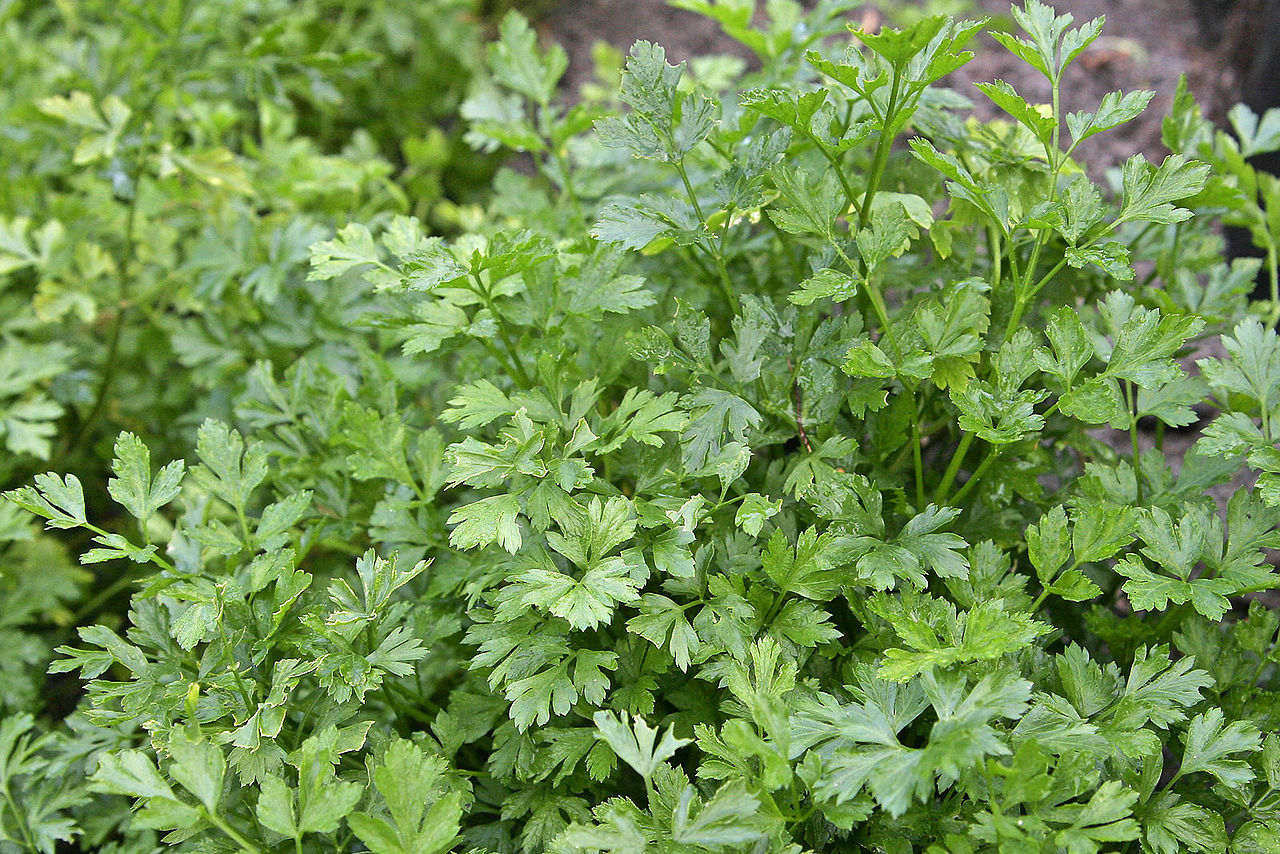
Petroselinum crispum flat leaf parsley

Flat leaf parsley grows well in the winter garden here in the middle desert regions of the Southwest.

Special for Savor the Southwest October 2014 by Jacqueline A. Soule, Ph.D.

Ever notice that restaurants often provide a sprig of fresh parsley on each dinner plate? They may not even know why, but it is a holdover from Victorian times and parsley’s reputed value as a digestive aid. Most diners avoid this strongly flavored green, but they shouldn’t! It may well be the most nutritious thing on the plate! Rich in vitamins A, B1, B2, B3, B5, B6 B9 (folate), C, and K as well as the minerals calcium, iron, magnesium, phosphorous, potassium and zinc. Parsley also helps the body in manganese absorption, a mineral important in building and maintaining healthy bones.

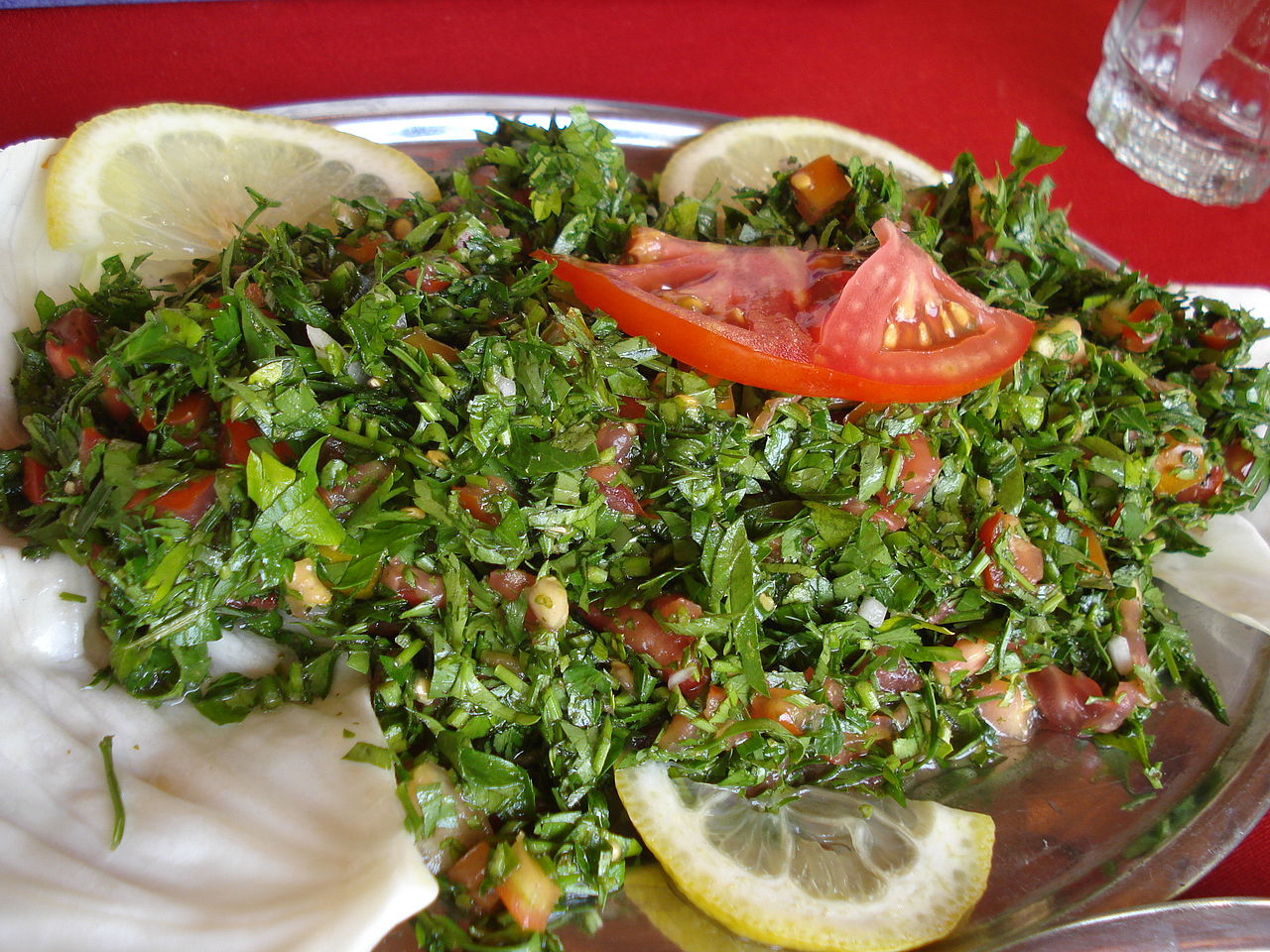
Petroselinum crispum salad

In Europe, salads may consist of parsley, onion and tomato, lacking the salad greens often seen in American salads.

Parsley is one of those plants that is easy to add to the garden, or even just a pot on the patio. And now is the time to plant them! First – there are several parsleys to choose from. Curly leaf parsley (Petroselinum crispum) or flat leaf parsley (P. neopolitanum), and popular for stews, parsley root (P. crispum var. tuberosum). All of these forms of parsley are members of the Carrot Family.   [[By the way, cilantro is als in the same family and can be grown just like parsley.]]


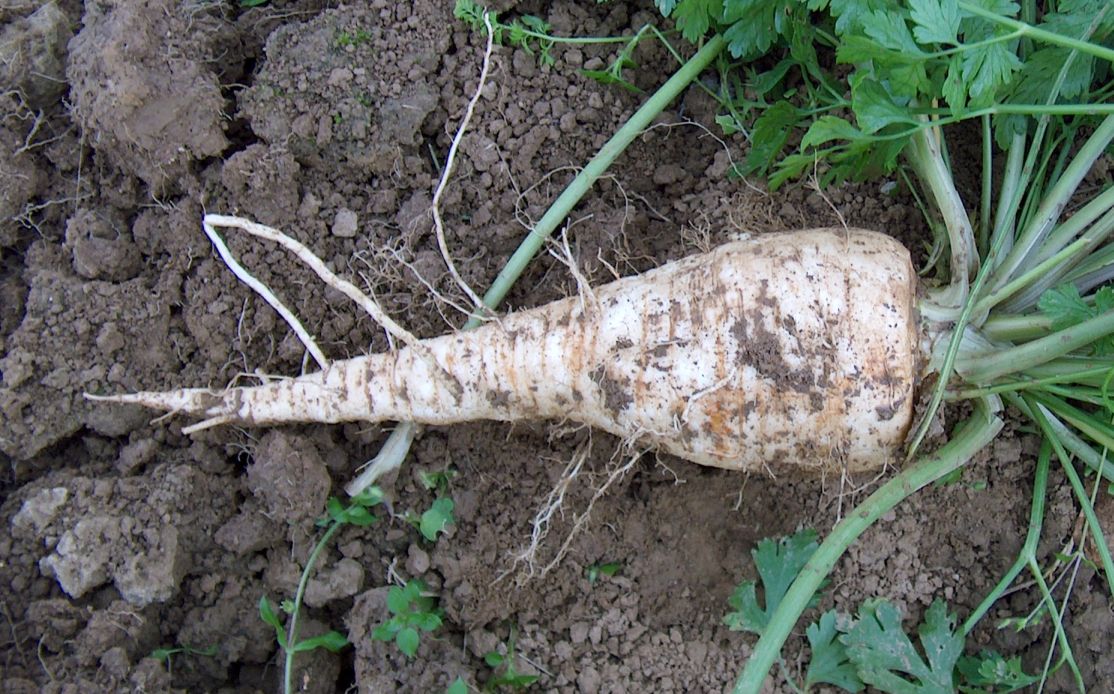
Petroselinum crispum var tuberosum root

One variety of parsley is grown for it’s root – tasty in stews and can be stored for months in a root cellar.

Soil. All carrot kin grow best in a well drained, even sandy, slightly acidic soil, rich in organic matter. That makes them easy to grow in containers. Use a pot one and a half feet deep. Potting soil with some added sand makes a good growing media.

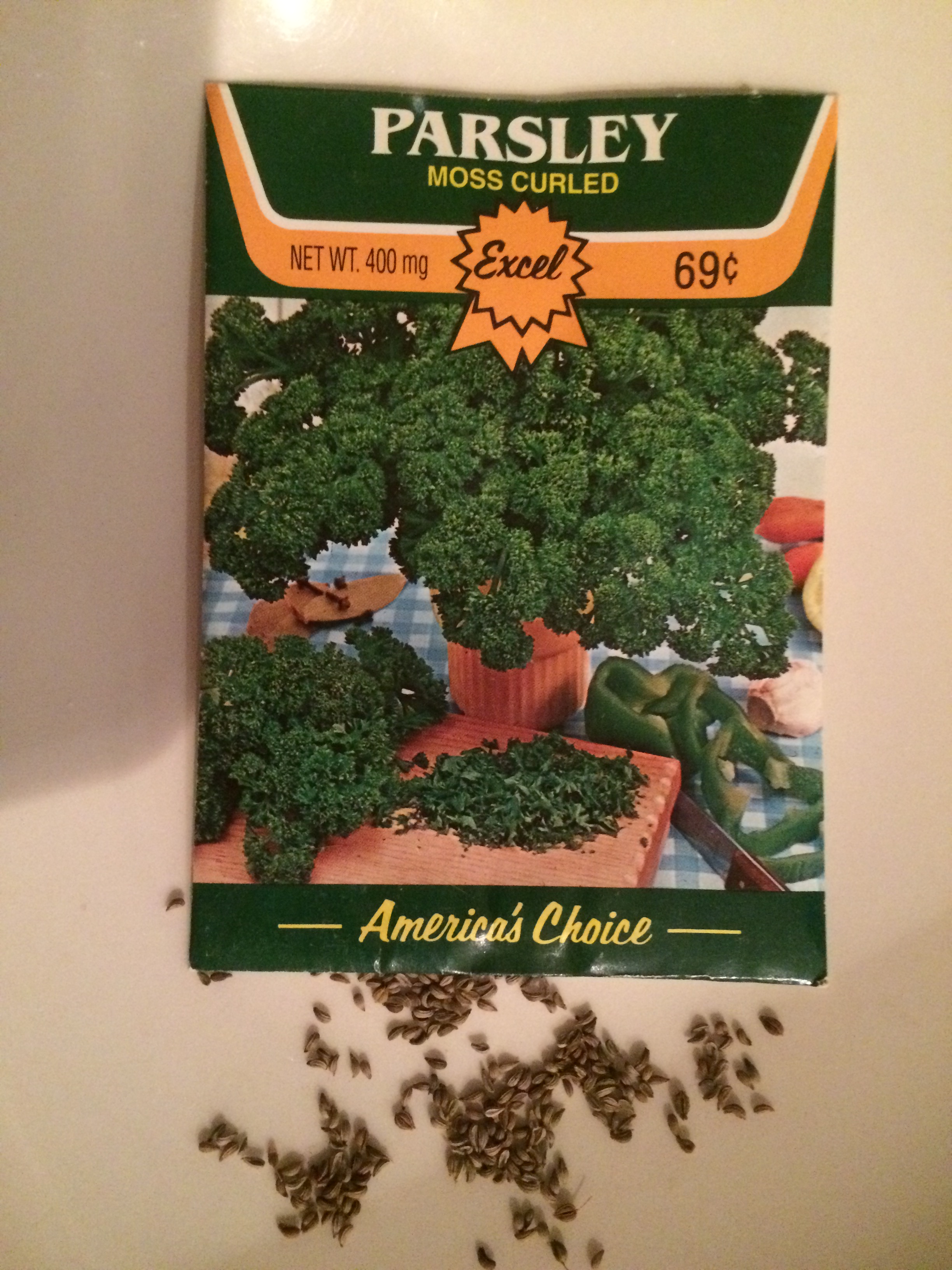
Petroselinum crispum IMG_1371

Just a few plants of parsley can be enough so you don’t need a giant package of seeds.

Light. Six or more hours of winter sun to do well.

Plant. Parsley can be bought as a seedling from a nursery or grown from seed. One or two plants are usually enough for most families so seedlings might be a better option.

Water. Keep the soil relatively moist during establishment. You can let parsley dry a little more between water once they get larger. Some people believe this makes their flavors stronger.

Fertilizer. Parsley gets very lush and full with some fertilizer. However, if you amended your soil at the start you don’t need to purchase fertilizer. Plus, avoid fertilizing anything when frosts are a possibility. Come late February you could apply a half strength general purpose fertilizer.

Petroselinum neopolitanum curley parsley_PA_08

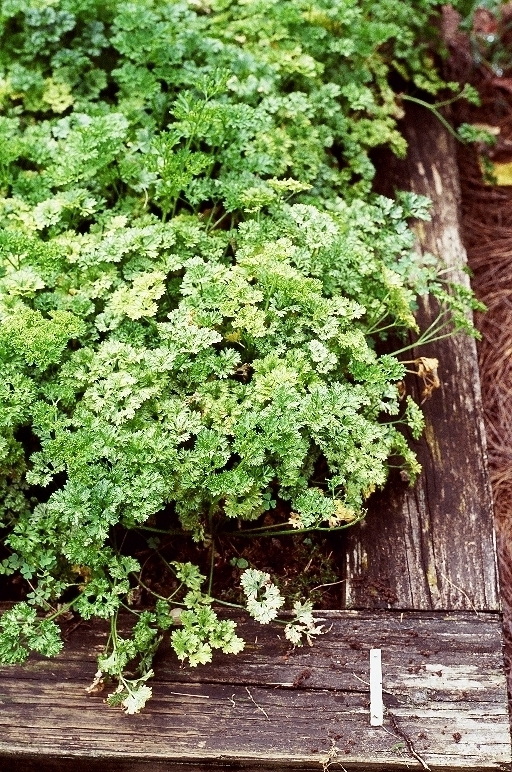
Curly leaf parsley grows well in the arid Southwest.

Harvest and Storage. Parsley tastes wonderful when fresh but loses much flavor when dried. Freezing the leaves retains more flavor. Select healthy leaves, rinse, pat dry but leave some moisture. Chop into roughly quarter inch squares and freeze in a labeled plastic bag or yogurt container. This can be used directly from the freezer.

Petroselinum_neapolitanum_flower

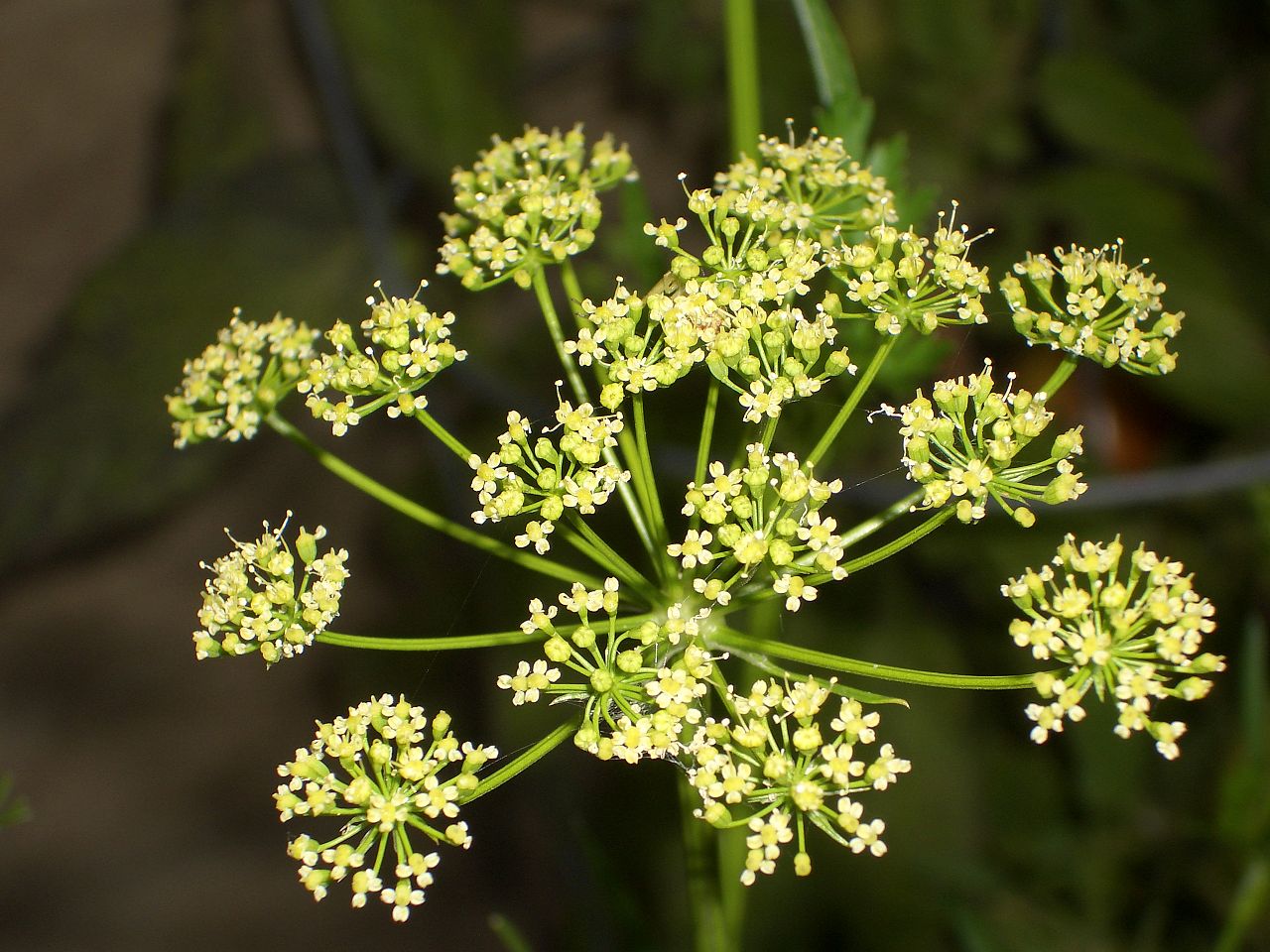
If you let your parsley flower, it should attract butterflies to your garden. Plus you will then get seeds to plant next year.

Not only does parsley look pretty on the plate and in the garden, it also attracts winged wildlife. Indeed, one species of swallowtail butterfly use parsley as a host plant for their larvae. Caterpillar are black and green striped with yellow dots, and will feast upon parsley for a brief two weeks before turning into lovely butterflies. Along with butterflies, bees visit the blooms. Seed eaters such as the lesser goldfinch also adore the seed. I let some parsley develop flowers and go to seed each year so the animals can enjoy it once I am done harvesting the leaves. And I save some seeds for replanting.

Petroselinum crispum seed crop

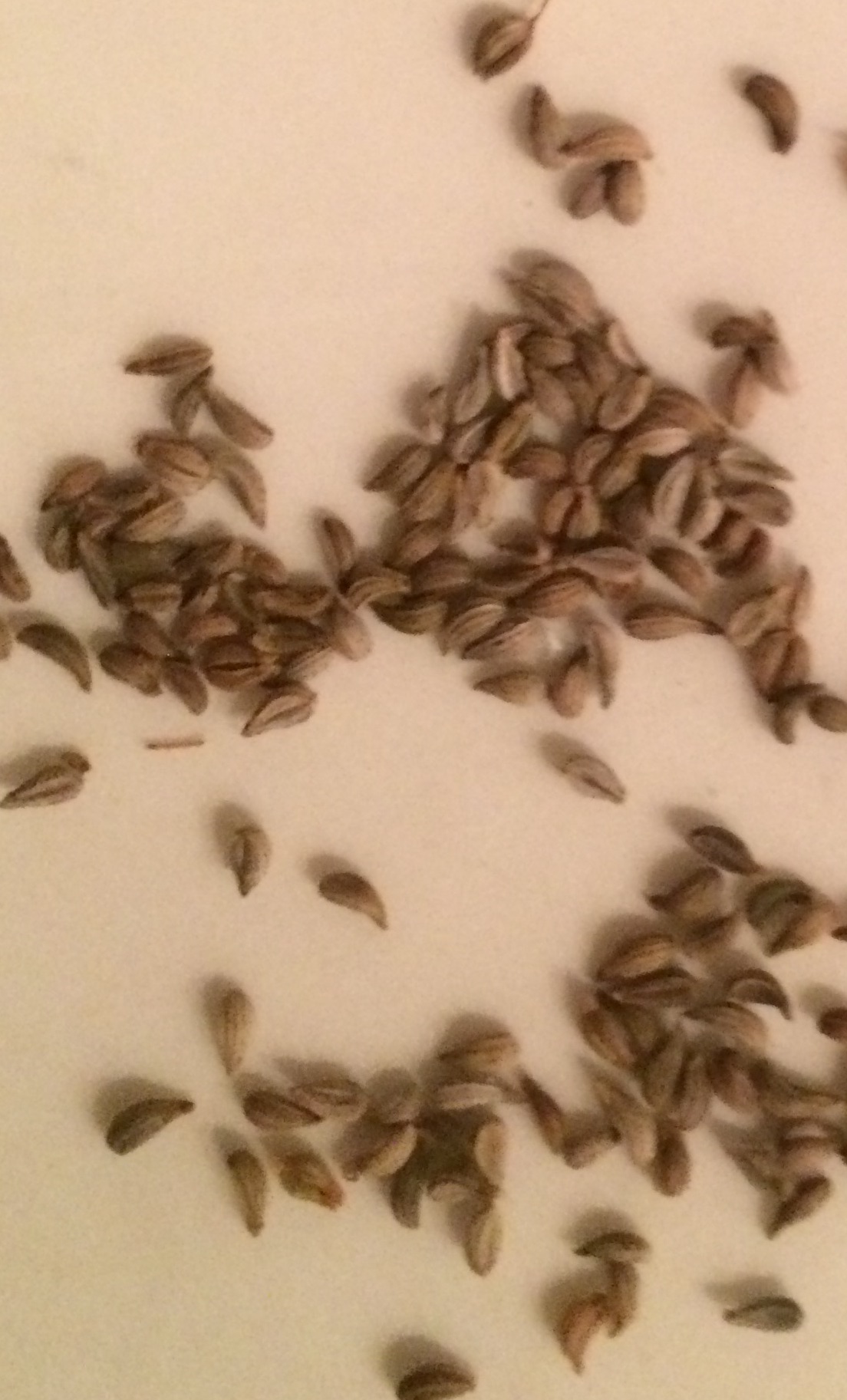
Do save some seed for next year. The best thing to plant in your garden is seed of what did well in your garden!

JAS avatarJacqueline A. Soule has been writing about plants and growing in Tucson for decades. Her latest book “Southwest Fruit and Vegetable Gardening” (Cool Springs Press $22.99) is available at local bookstores and botanical gardens. (Call first though, some venues have been selling out.)

©  Jacqueline Soule.  All rights reserved. I have received many requests to reprint my work. My policy is that you are free to use a very short excerpt which must give proper credit to the author, and must include a link back to the original post on our site. Photos may not be used.
Gifts from September Gardens–intentional and otherwise

Tia Marta here to share some culinary ideas happening now in Baja Arizona herb gardens, and to extend an invitation to visit el jardinito de hierbas at Tucson’s Mission Garden to experience the herbs in action!

Estafiate--all purpose Artemisia ludoviciana--in the herb plot, Mission Garden (MABurgess photo)

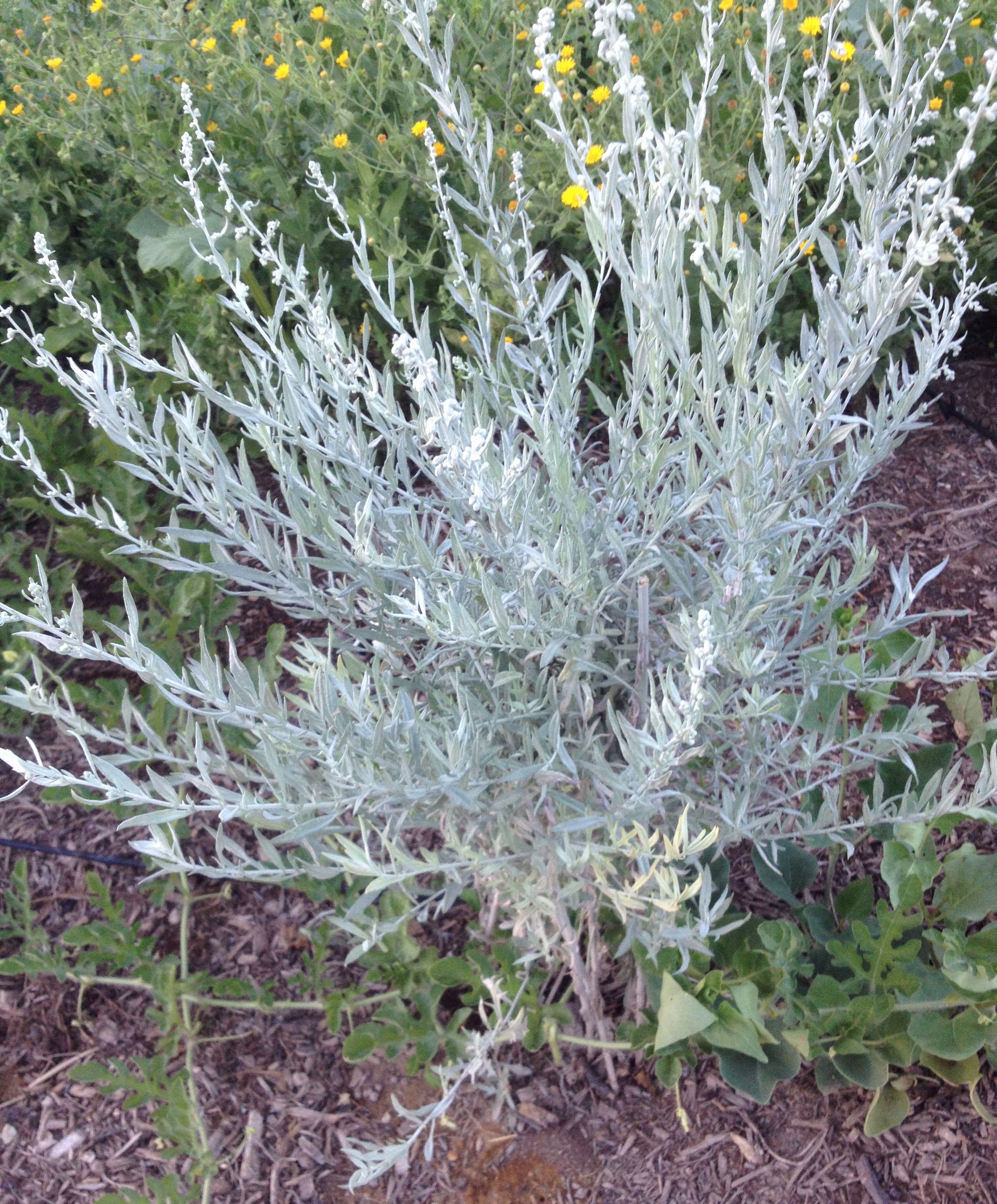
Estafiate–all purpose Artemisia ludoviciana–and Mexican arnica beyond (close-up of flower below), in the herb plot, Mission Garden (MABurgess photos)

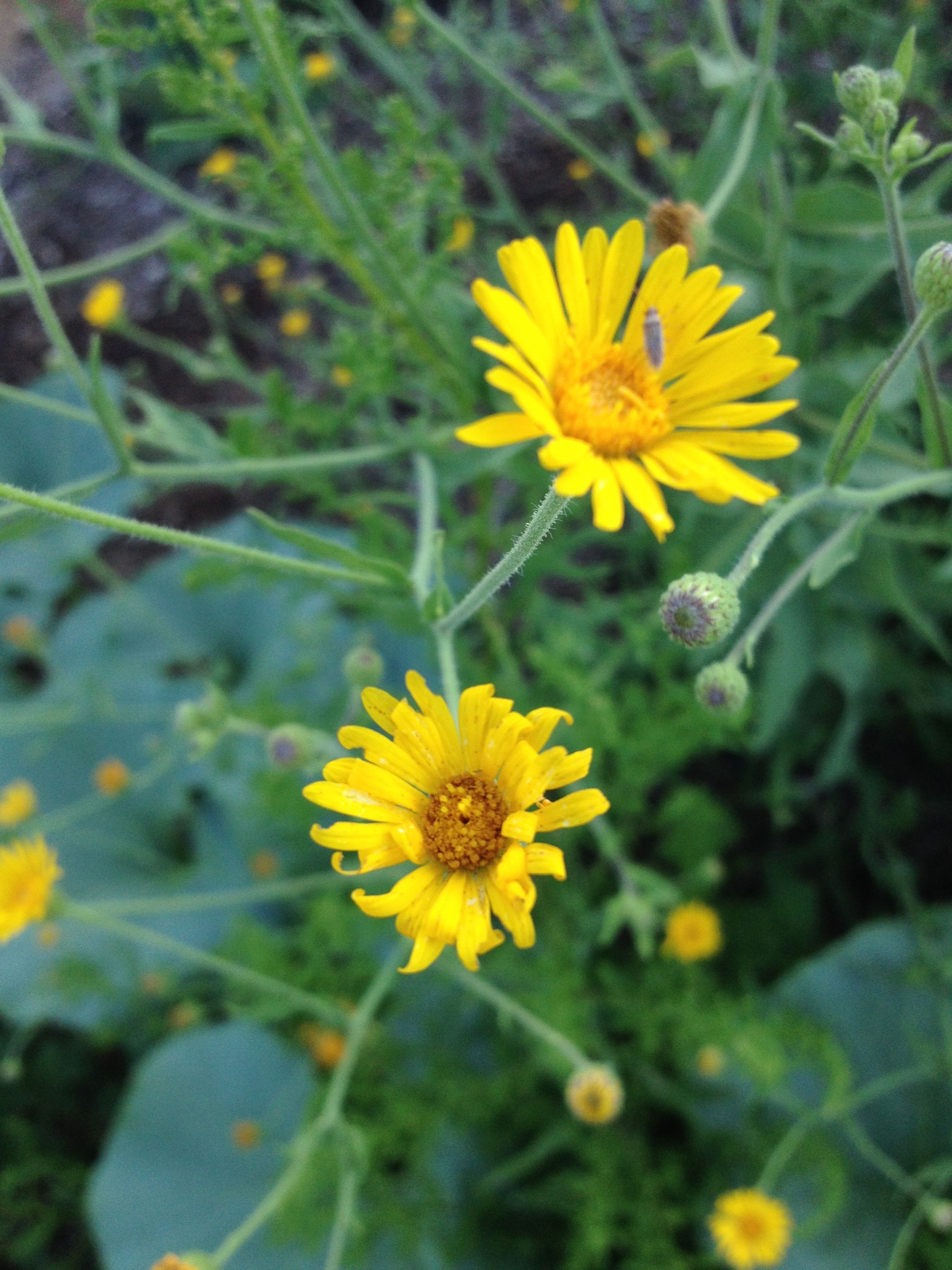
Heterotheca--Mexican arnica flower (MABurgess photo)

Of all the herbs in our Southwest summer gardens—presently rejoicing in monsoon humidity and in the soppy tail of Hurricane Norbert—I think the most exuberant has gotta be Mrs Burns’ Famous Lemon Basil……..

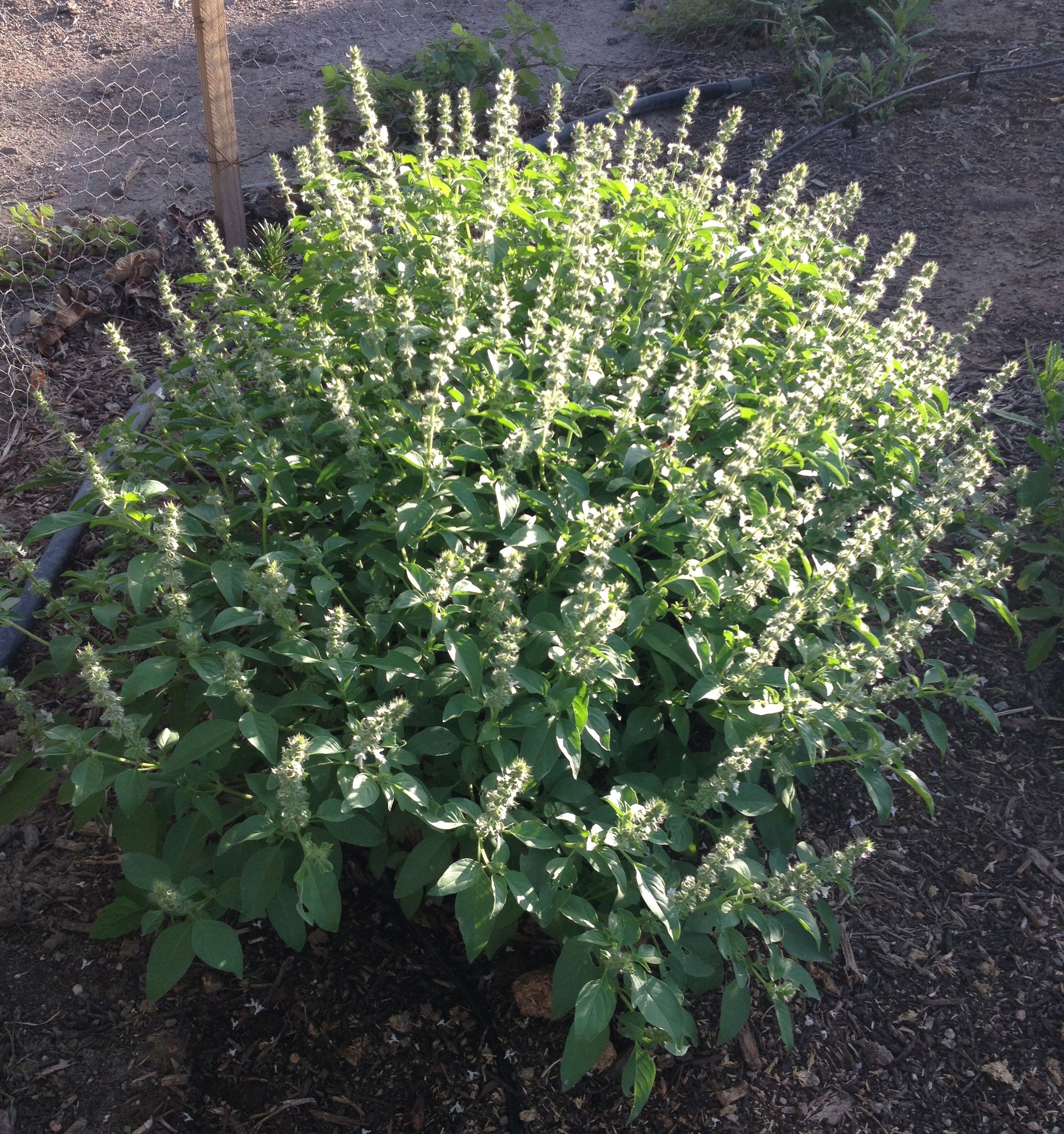
Mrs Burns' Famous Lemon Basil, at Mission Garden (MABurgess photo)

Mrs Burns’ Famous Lemon Basil, at Mission Garden (MABurgess photo)

In its versatility, Mrs Burns’ lemon basil provides many possibilities for the kitchen and the cosmetic chest, the first being olfactory delight. Brush its foliage lightly with your hands and you get an instant rush of enlivening yet calming lemon bouquet. Like Monarda or lavender, this lemon basil is definitely one to plant in a “moon garden” for nighttime enjoyment, or along a narrow walkway where you have to pleasantly brush up against it, getting a hit en route, always a reminder that life is good.

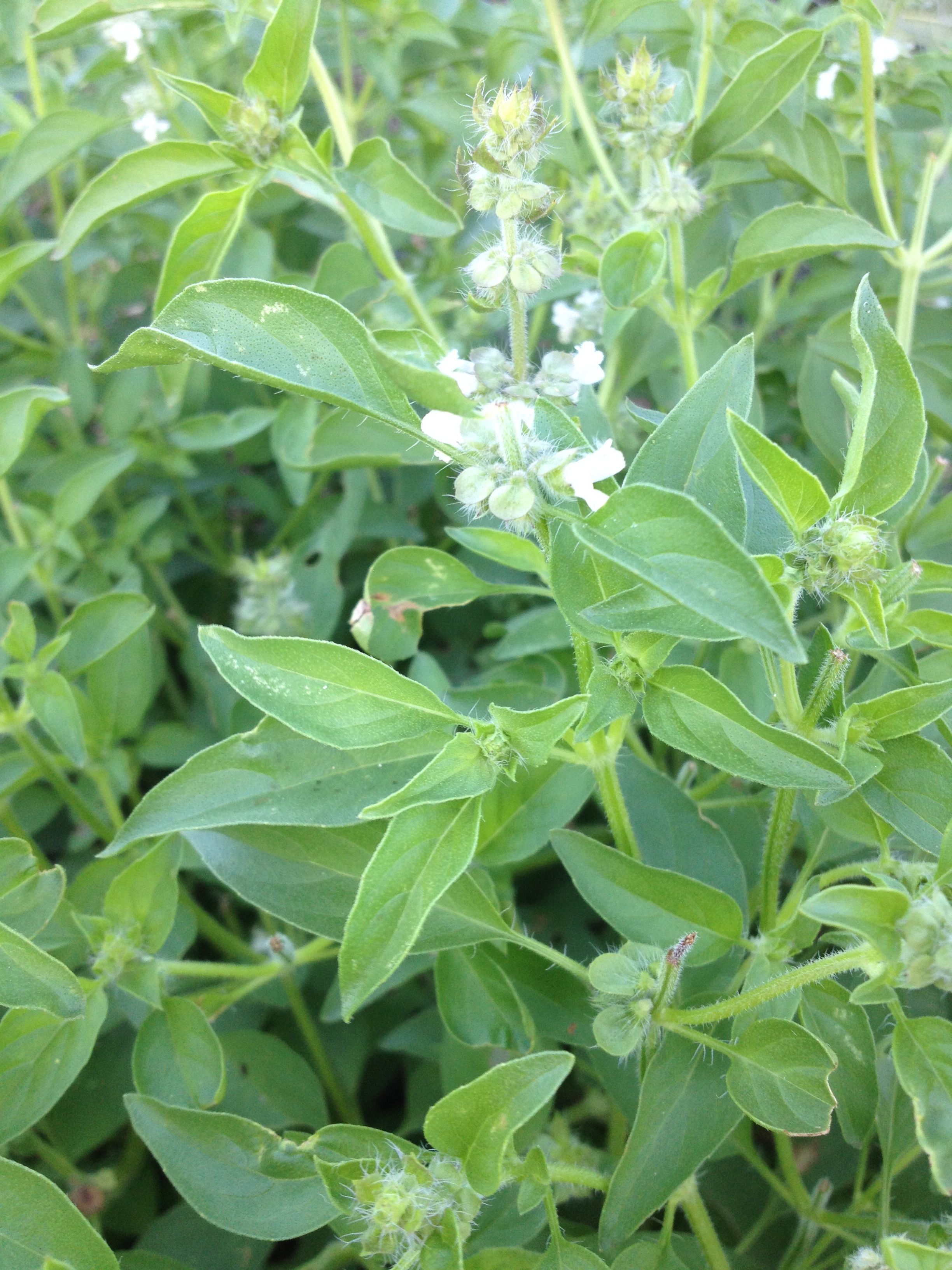
I wish this blog could be “scratch-and-sniff” so you could sense the sweet lemony aroma of this heirloom right now. Maybe technology can do that for us someday, but meanwhile, find a Native Seeds/SEARCH aficionado who has planted it and get yourself a sprig to sniff.   On any Saturday morning, come visit and whiff this desert-adapted basil at Mission Garden (the living history exhibit at the base of “A”-Mountain created by Friends of Tucson’s Birthplace). There, among Padre Kino’s heirloom fruit trees, in the monsoon Huerta vegetable plot, a group of herbalists known as Tucson Herbalist Collective (usually referred to as THC—like far out, righteous herbs, man, whatever) has planted a patch of traditional Mission-period medicinal and culinary herbs within reach of the fence. Lean over and touch Mrs Burns’ lemon basil for a real treat. At present (mid-September) “her” basil is a mound of dense smallish leaves and is sending up a zillion flower stalks sporting tiny white flowers. High time to snip the tops to encourage more foliage. Snippings can be used to zest a salad, to bedeck a platter of lamb chops, or to dry for a long-lasting potpourri.

Close-up view of Mrs Burns' Famous Lemon Basil flowers and foliage (MAB)

Close-up view of Mrs Burns’ Famous Lemon Basil flowers and foliage (MAB)

Mrs Burns’ lemon basil—not your typical, soft, floppy-leafed basil—is bred for desert living, with smaller, sturdier foliage. Yes, it does need water, but it can take the desert’s heat and sun. This heirloom’s history is worthy of note and relating it honors the Burns family. The person who put “Famous” into the name Mrs Burns’ Famous Lemon Basil was Dr. Barney T. Burns, one of the founders of the seed conservation organization NativeSeeds/SEARCH and an amazing seed-saver himself, whose recent passing we mourn and whose life we gratefully rejoice in. It was his mother, Janet Burns, transplanted from Canada to Carlsbad, NM, who, with a neighbor over several decades, continued to grow and select surviving, desert-hardy seed in Southwestern heat. Barney contributed her basil seed as one of the first arid heirlooms to become part of the NSS collection. Interestingly, these tiny seeds have since traveled around the globe. One year Johnny’s Seeds picked it up, grew it out for their catalog, and sent NSS a check for $600 in royalties, having profited considerably from its sale.

You can use Mrs Burns’ Famous Lemon Basil leaf in many marvelous dishes. Layer fresh leaves with slices of farmers’ market tomatoes and thin slices of feta or fontina cheese and droozle with flavored olive oil. (I like Queen Creek Olive Mill blood-orange.) And OMG—this basil makes phenomenal pesto. Include this lemon basil with roast chicken for the best lemon-chicken ever. Dry it and put it in stuffing. Add a few fresh leaves to salad for a taste surprise. Or, add a sprig to soups to add a tang. You can even bedeck a glass of V-8 or your Bloody Mary with a lemon basil sprig to fancy up your presentation.


Handmade soap with Mrs Burns' Lemon Basil-infused jojoba oil (MABurgess photo)

Handmade soap with Mrs Burns’ Lemon Basil-infused jojoba oil (MABurgess photo)

Once when I enthusiastically grew a 50-foot row of Mrs Burns’ basil, it produced for me bags of dried herb, inspiring some fragrant projects. I distilled the aroma-rich herb to make a gentle hydrosol spray which, I feel, carries medicinal/psychological qualities of soothing, pacifying refreshment. By first infusing this marvelous herb in jojoba oil, I create beauty bars—with Mrs Burns’ Famous Lemon Basil as the exfoliant in the soap—available at the NativeSeeds/SEARCH store, the Flor de Mayo booth at St Phillips Farmers Market, or at http://www.flordemayoarts.com.

In my mass planting of lemon basil, I observed bees going totally ecstatic over the profuse flowers and so wished that I had had bee boxes close-by. If any desert bee-keepers want to try a new gift to their bees and to us consumers of honey, I recommend they plant this one. Can’t think of anything finer than Mrs Burns’ Famous Lemon Basil honey!

Brush leaves of devilsclaw for a cooling sensation (MABurgess)

Brush leaves of devilsclaw for a cooling sensation (MABurgess)

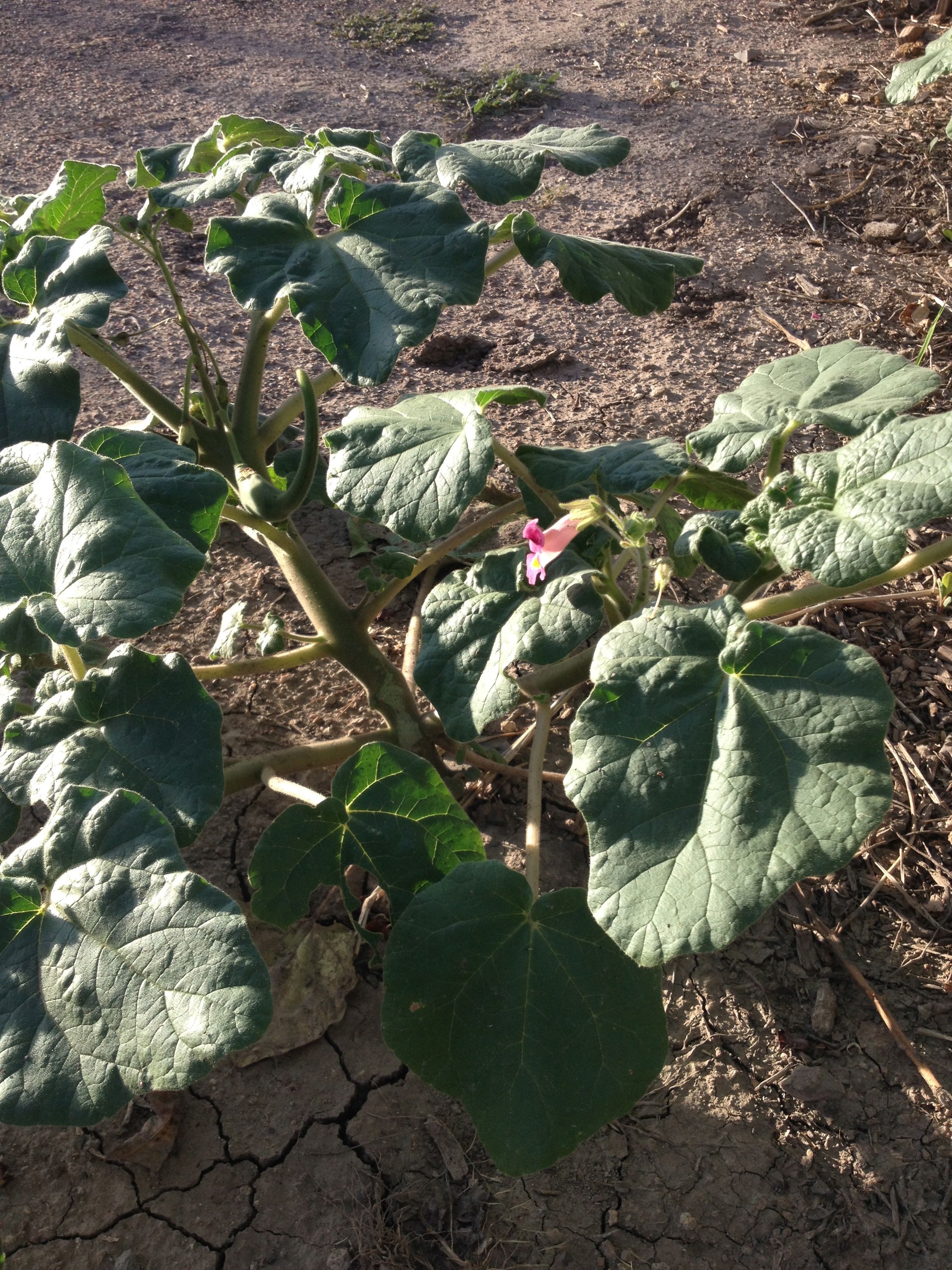
Here in culinarily-exciting Baja Arizona, as we promote the uniqueness of Tucson as an International City of Gastronomy, it is fun to consider another of our unique local food plants, a wild and unlikely weed which pops up with monsoon rains in low places, including at Mission Garden and is respectfully spared there. Known as i:hug by the Tohono O’odham (pronounced eee’hook), devilsclaw or unicorn-plant by Anglos, and Proboscidea spp by taxonomists, ours is not to be confused with the herb devilsclaw of commerce, Harpagophytum procumbens native to South Africa. Our native i:hug (of which there are a few species, some yellow-flowered, some pink) is a weed of many uses.

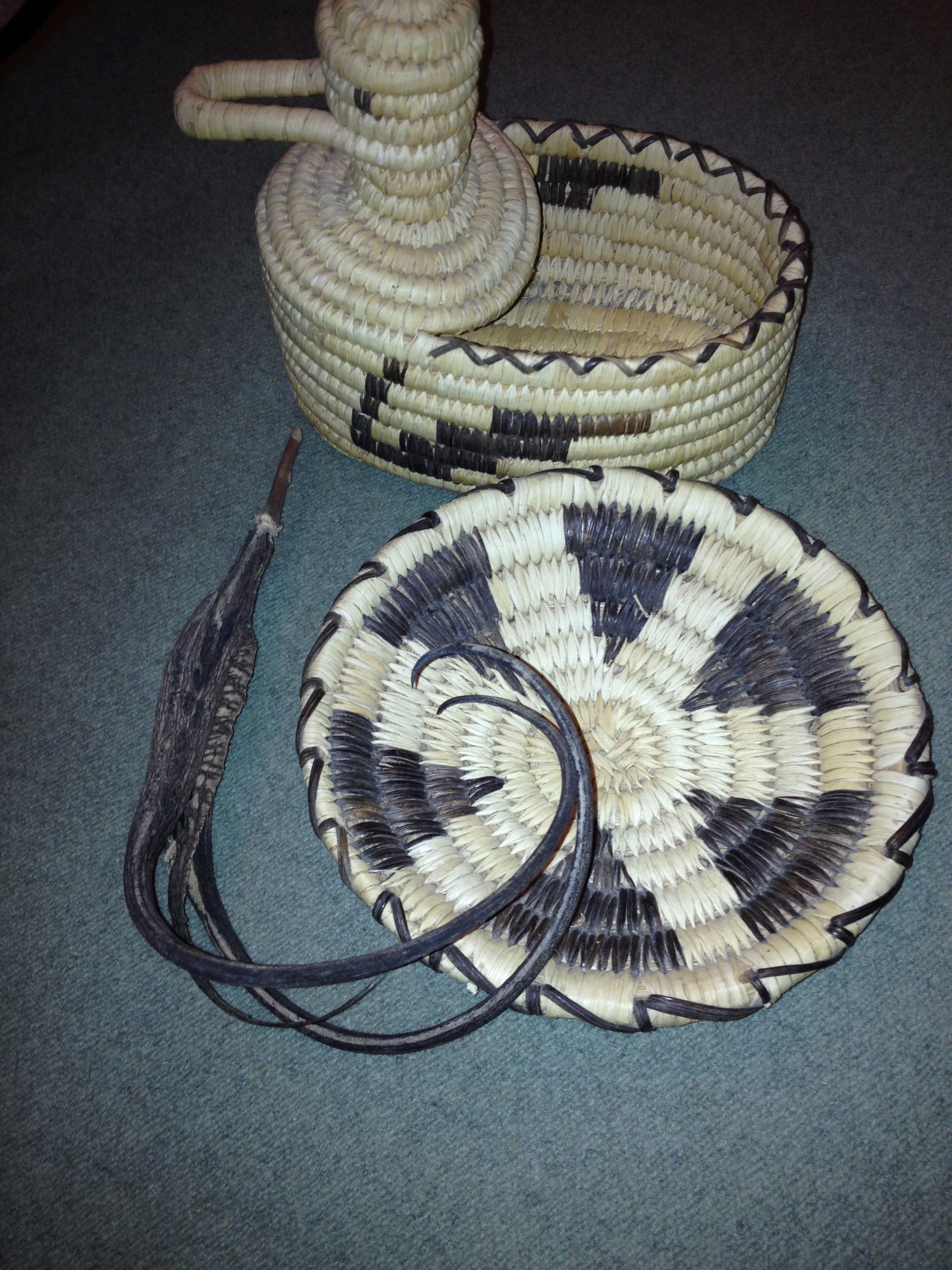
Tohono O'odham coiled basket by Juanita Ahil with domestic long-clawed i:hug (MABurgess photo)

Tohono O’odham coiled basket by Juanita Ahil with domestic long-clawed i:hug (MABurgess photo)

It is primarily known as the fiber used by Tohono O’odham, Akimel O’odham, and N’de weavers to create the striking black designs in their coiled basketry. Otis Tufton Mason’s tome Aboriginal American Indian Basketry, first published by Smithsonian Institution in 1904, shows beautiful specimens of unicorn-plant weaving, and mentions its use by many desert people including Panamint basket-makers of Death Valley.

I have a feeling that the devilsclaws that are volunteering now at Mission Garden are the children of plants that have been grown by Native People in that very place along the Santa Cruz for many centuries.

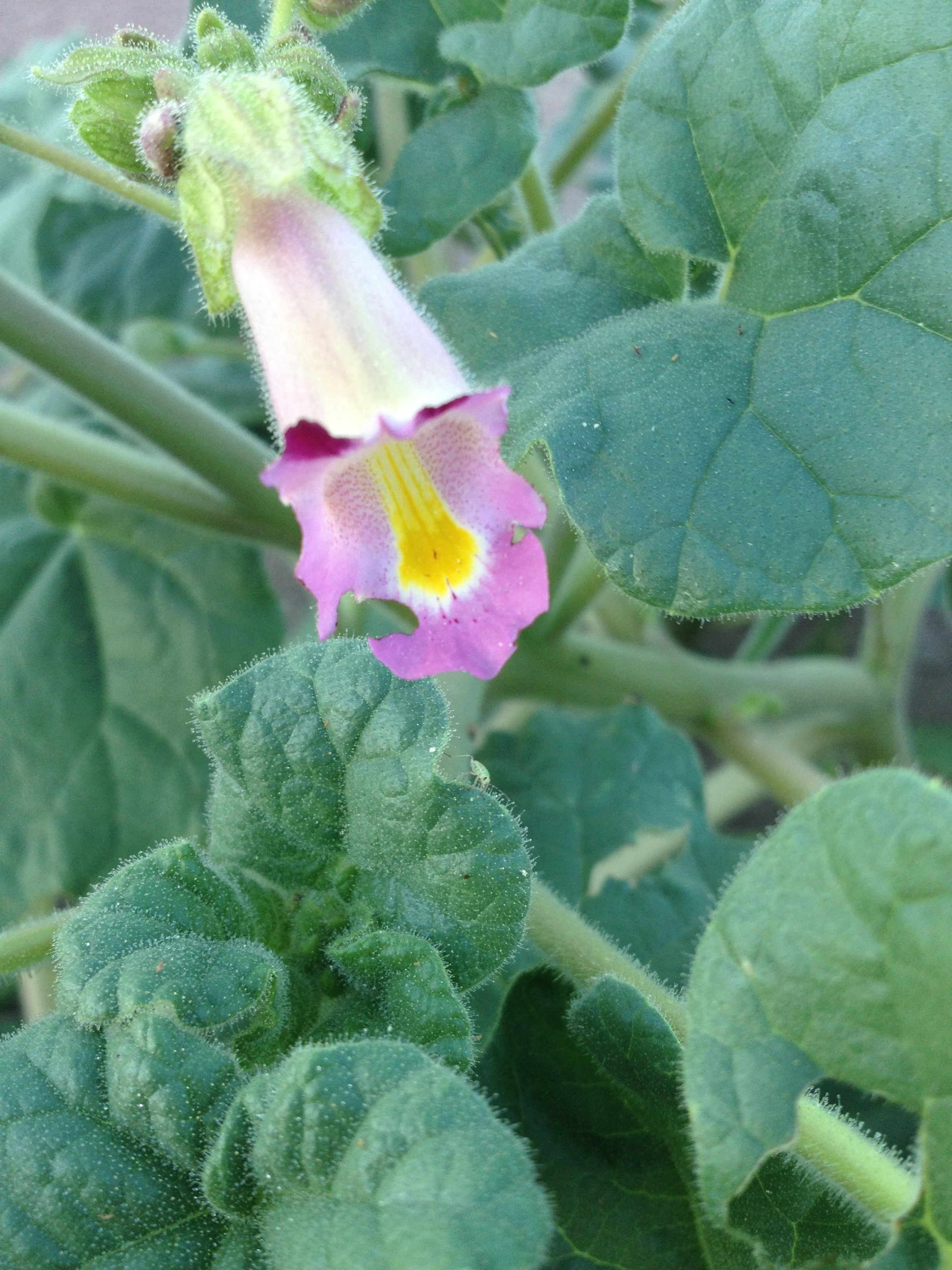
Devilsclaw (Proboscidea) flower close-up (MABurgess photo)

Devilsclaw (Proboscidea) flower close-up (MABurgess photo)

As an ornamental, unicorn-plant or devilsclaw can be a welcome surprise of greenery in late summer into fall, making a mound of large leaves sometimes 2’ high and 3’ wide. Tucked among its spreading fuzzy branches, under velvety maple-leaf-shaped foliage, will appear tubular flowers edged in pink. Should you need a cooling touch on a hot day, just lightly brush one of its big leaves and you are instantly refreshed. The velvety look of devilsclaw foliage is actually one of the plant’s defenses against water-loss. Each leaf is covered with fine hairs. At each hair tip is a gland containing a microscopic bead of moisture. Hair causes wind-drag, slowing evaporation from the leaf surface. What evaporates from the glands acts to cools the leaf—what remains can also cool our skin, should we touch it.

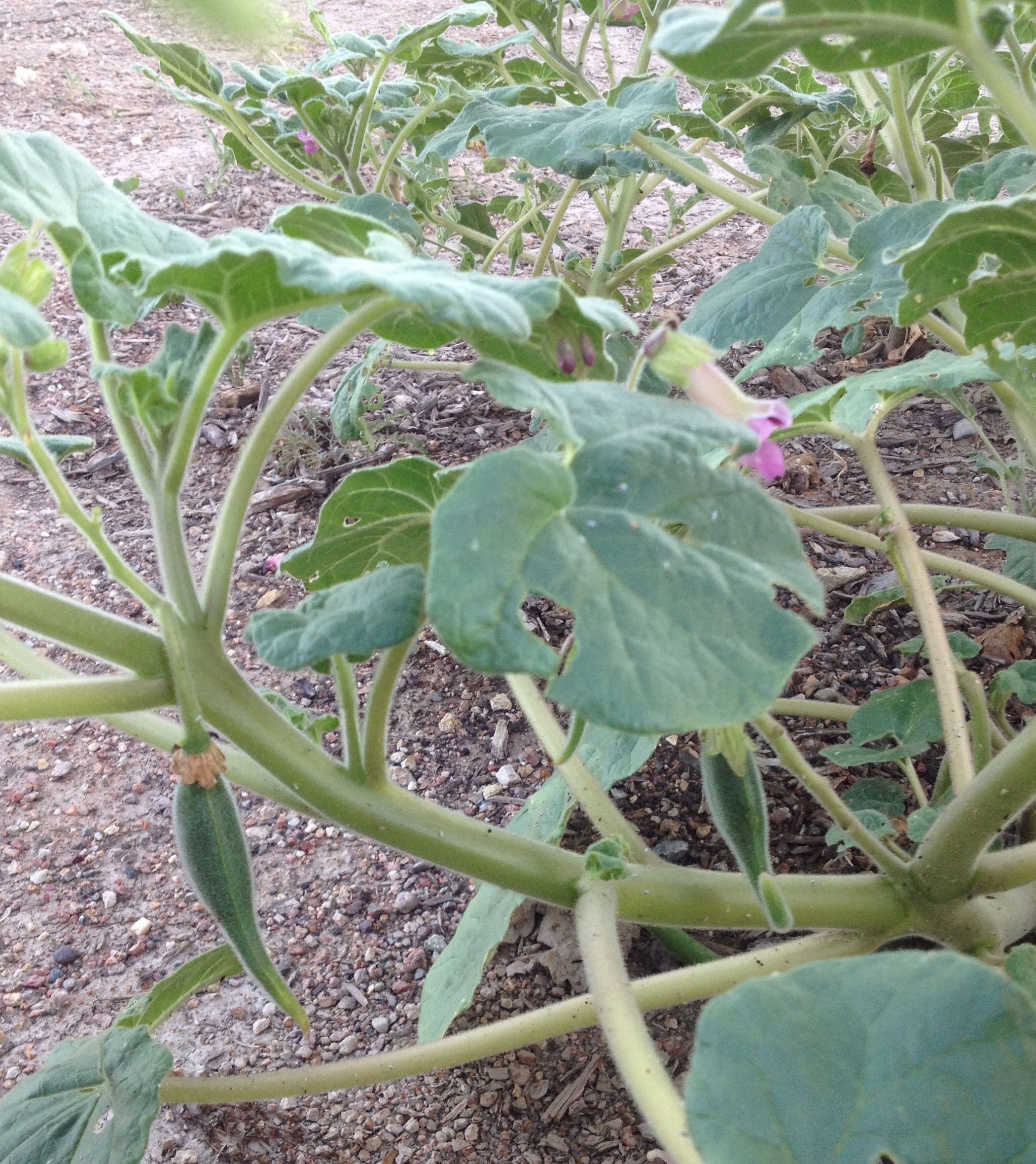
Young, harvestable devilsclaw pods (MABurgess photo)

Young, harvestable devilsclaw pods (MABurgess photo)

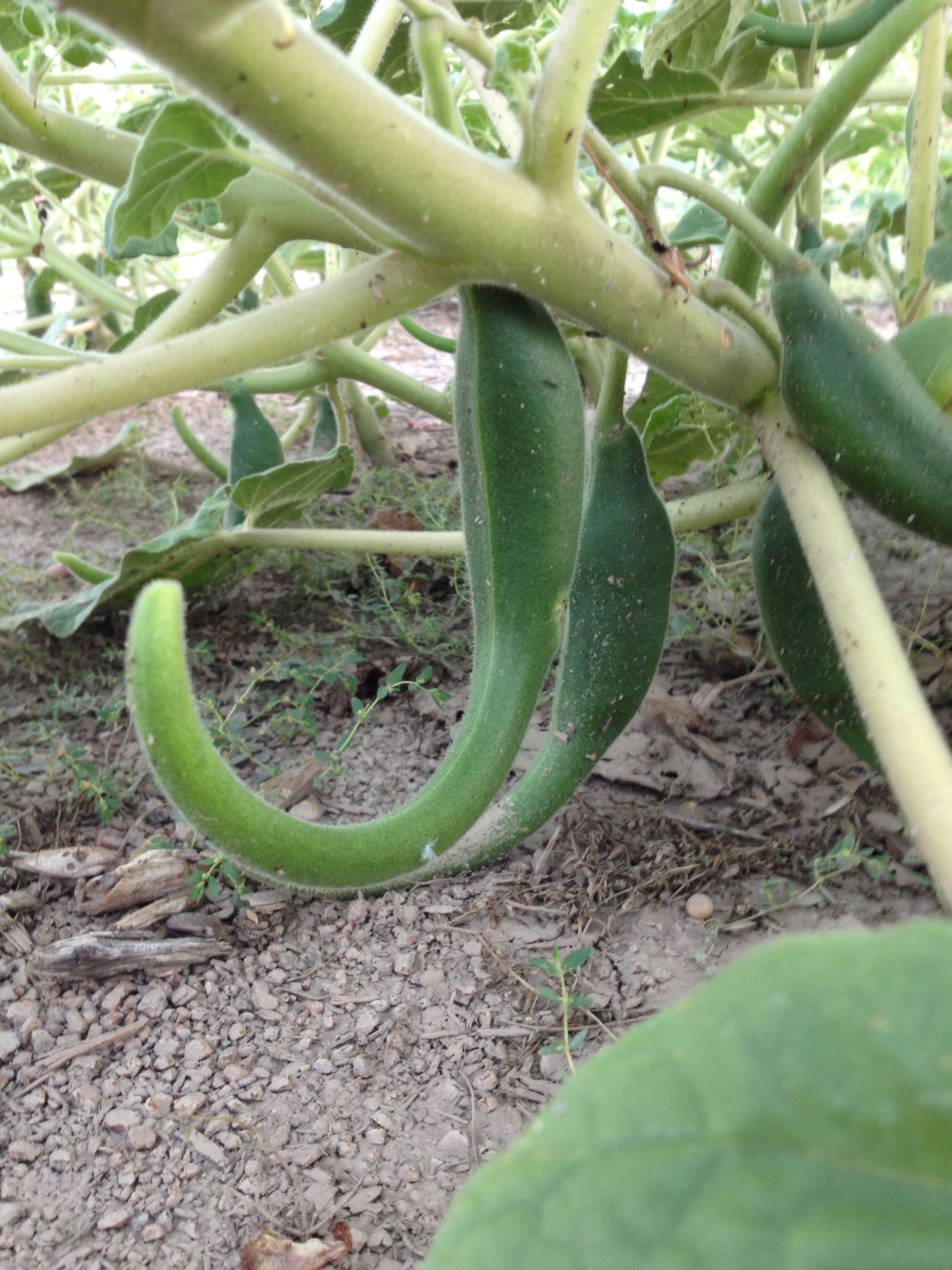
Most interesting of all are the foods that our native devilsclaw can provide. After pollination of the flower, a small green curved pod emerges like a curled, fuzzy okra. When young, that is, under about 2 ½” long, and before the pod develops woody tissue inside, these small green unicorns can be steamed as a hot vegetable, stir-fried with onion, green chile or nopalitos, or pickled for a Baja Arizona snack.

Maturing green devilsclaw pods beyond the food stage (MABurgess)

Maturing green devilsclaw pods beyond the food stage (MABurgess)

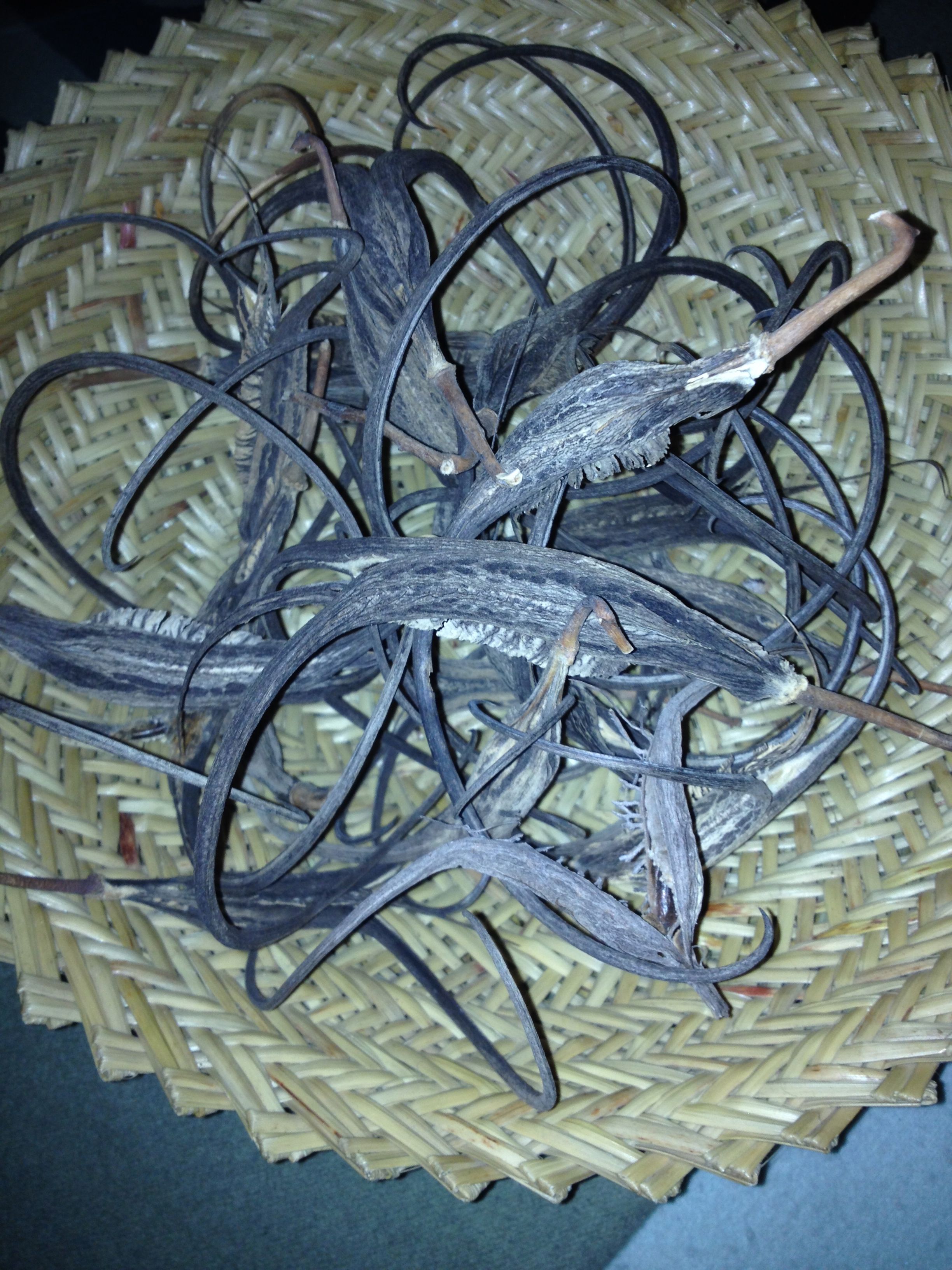
Tangled wild devilsclaw dry pods ready to split for basketry and seed harvesting (MABurgess)

Tangled wild devilsclaw dry pods ready to split for basketry and seed harvesting (MABurgess)

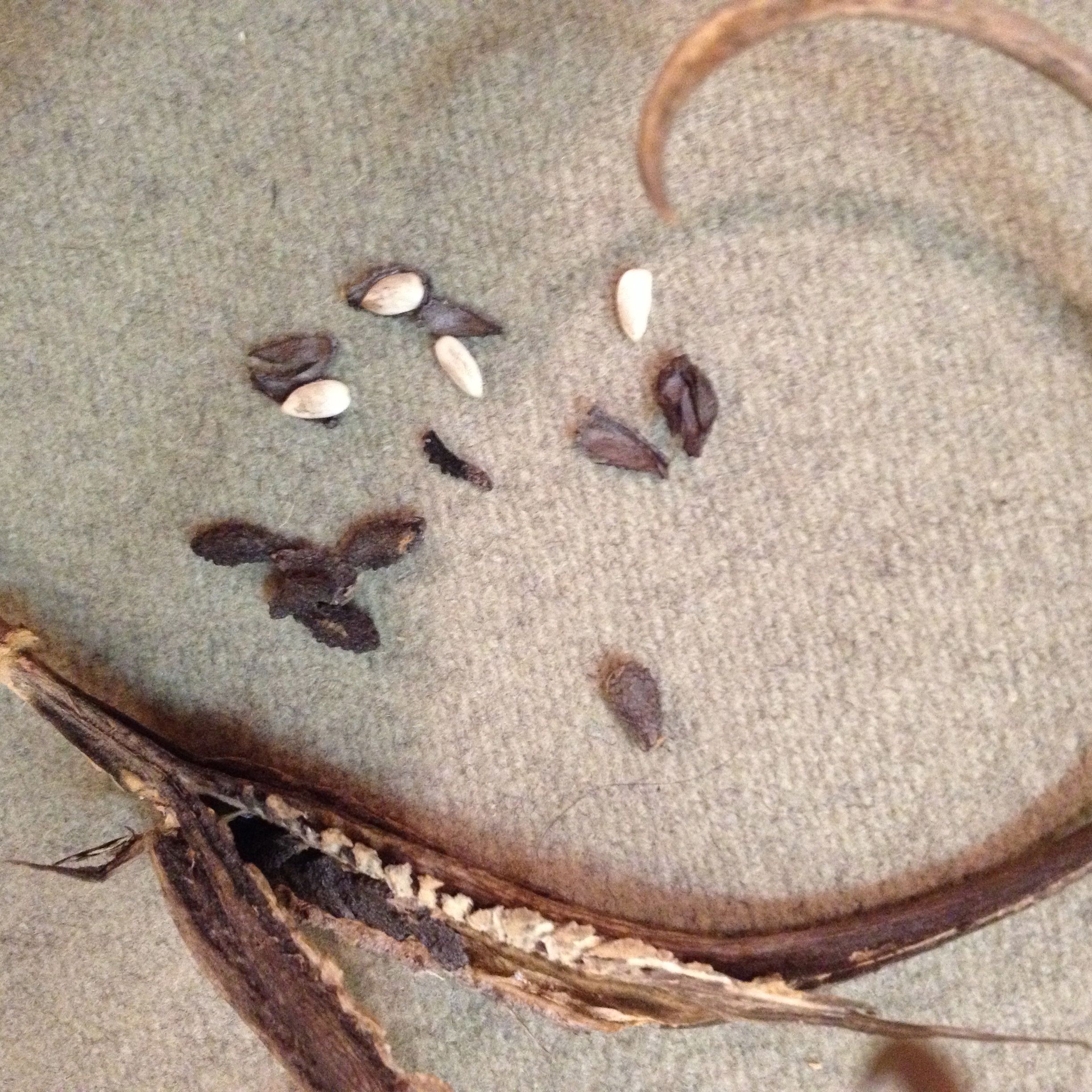
When the long green pods of devilsclaw ripen, the skin will dry and slough off leaving a tough, black, woody seed-pod that splits with very sharp tips. (Beware how they can grab—they were “designed” to hitch a ride on a desert critter’s hoof or fur and thus spread the seed.) With care, and sometimes the need for pliers, open the pod and out will come little rough-surfaced seeds. If your incisors are accurate, and if you have lots of time to get into meditations on i:hug, you can peel off the rough outer seed skin. Inside is a yummy, oil-rich and fiber-rich seed that looks like an overgrown sesame seed. (In fact, scientists at one point had classified Proboscidea in the same taxonomic family as sesame but it now stands in its own.)

Black seeds of wild devilsclaw from split pod.  White inner seeds delish after peeling (MABurgess photo)

Black seeds of wild devilsclaw from split pod. White inner seeds are delish after peeling. (MABurgess photo)

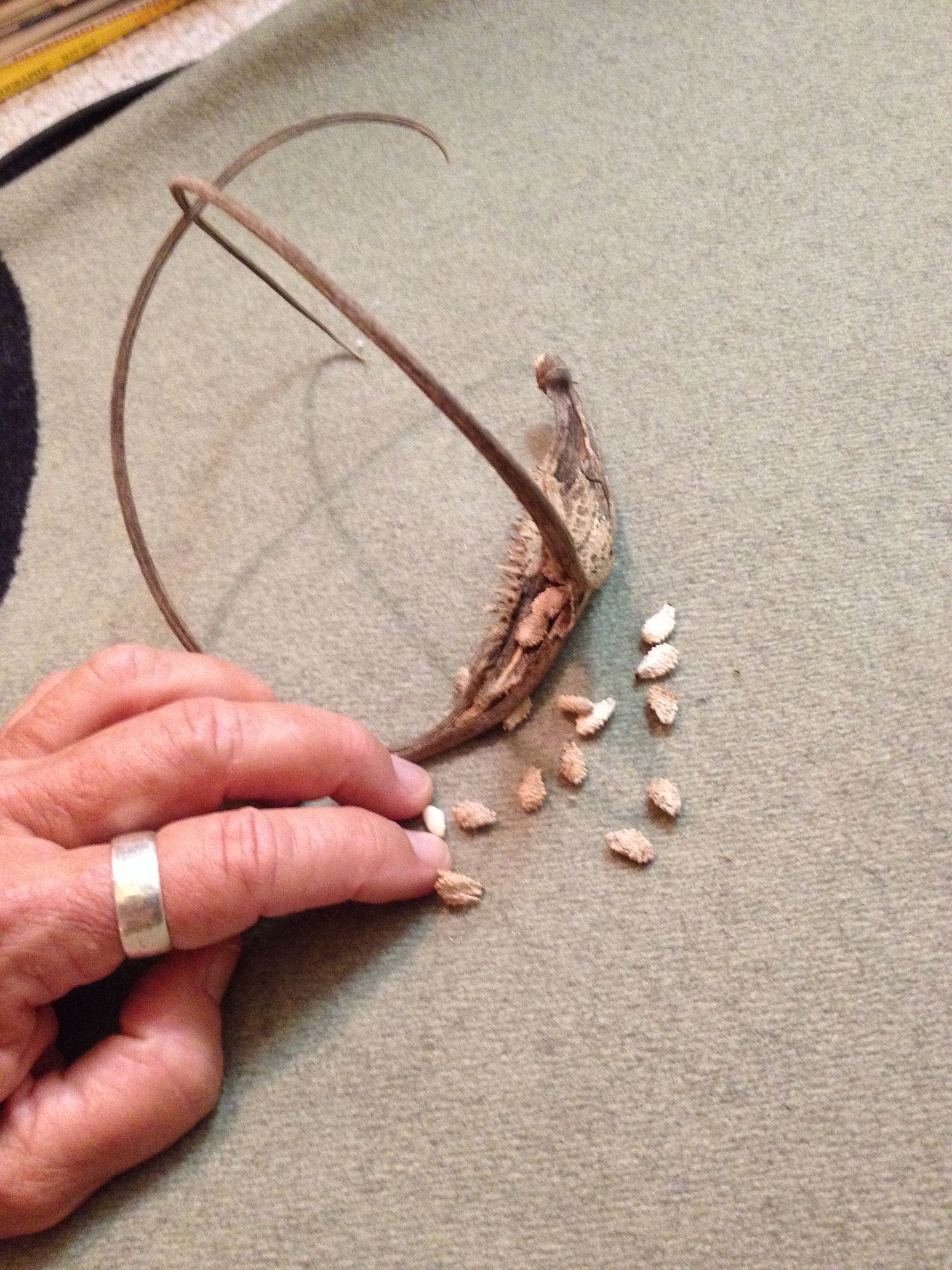
White-seeded domestic devilsclaw has slightly larger seeds like giant sesames (MABurgess photo)

White-seeded domestic devilsclaw has slightly larger seeds like giant sesames.  Peeled inner seed between fingers is ready to eat. (MABurgess photo)

When I see cutesy figurines of roadrunners or Christmas ornaments made with devilsclaw pods, my first thought is, wow, what a waste of a good treat, but then gladly, I realize that this unique plant produces more than enough fresh pods and mature pods to satisfy all the purposes of Nature or hungry and/or creative humans. Give i:hug a try!

Cool Summer Bean Dishes….with Heirlooms

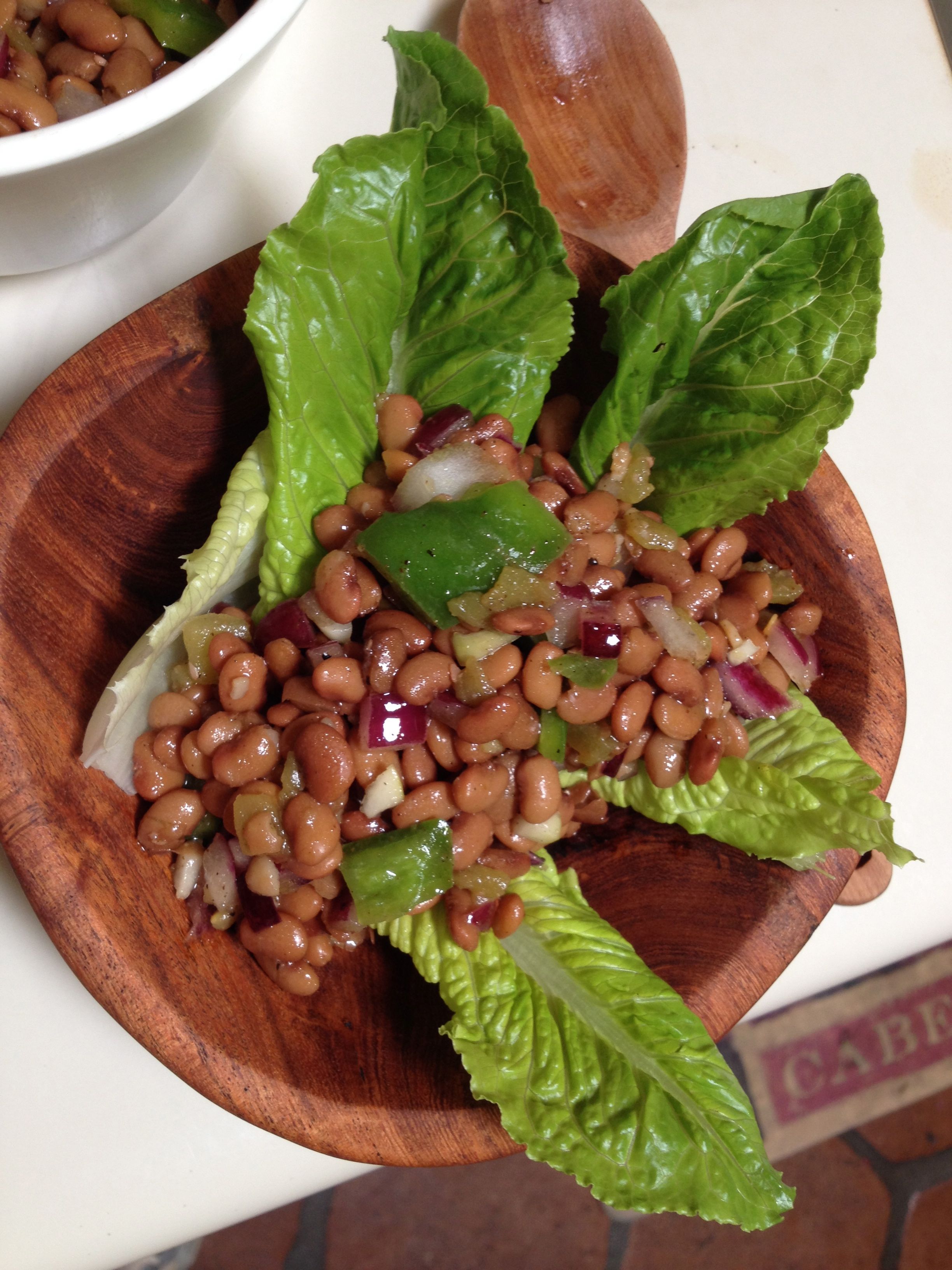
Sonoran Caviar in Mayo mesquite bowl (MABurgess photo)

Sonoran Caviar in Mayo mesquite bowl (MABurgess photo)

For picnics, barbeques or simple pick-me-ups, here are some fun ideas to bring a variety of heirloom beans into your summer fare.  We usually think of beans as winter food, but in the heat of August these tasty bean treats will help chill you out with gusto.

Tia Marta here to share ways of bringing the original “fast food” into your summertime menus.  Fast–that is, cook ’em first and have them “at the ready” for dressing them to suit any mood or occasion.  I am a founding member of the Heirloom Bean Fan Club, always amazed by the array of bean possibilities we have in the Southwest available to us.  Here in Baja Arizona we are blessed with inherited gifts of delectable, nutritious, desert-adapted beans from Native farmers, traditional Hispanic families, Black, Chinese, Anglo and other newcomers.  They grow well in our backyard gardens, bedecking our tables with colorful goodness.

All American sun oven set up on patio table-available thru Flor de Mayo (MABurgess photo)

All American sun oven set up on patio table-available thru Flor de Mayo (MABurgess photo)

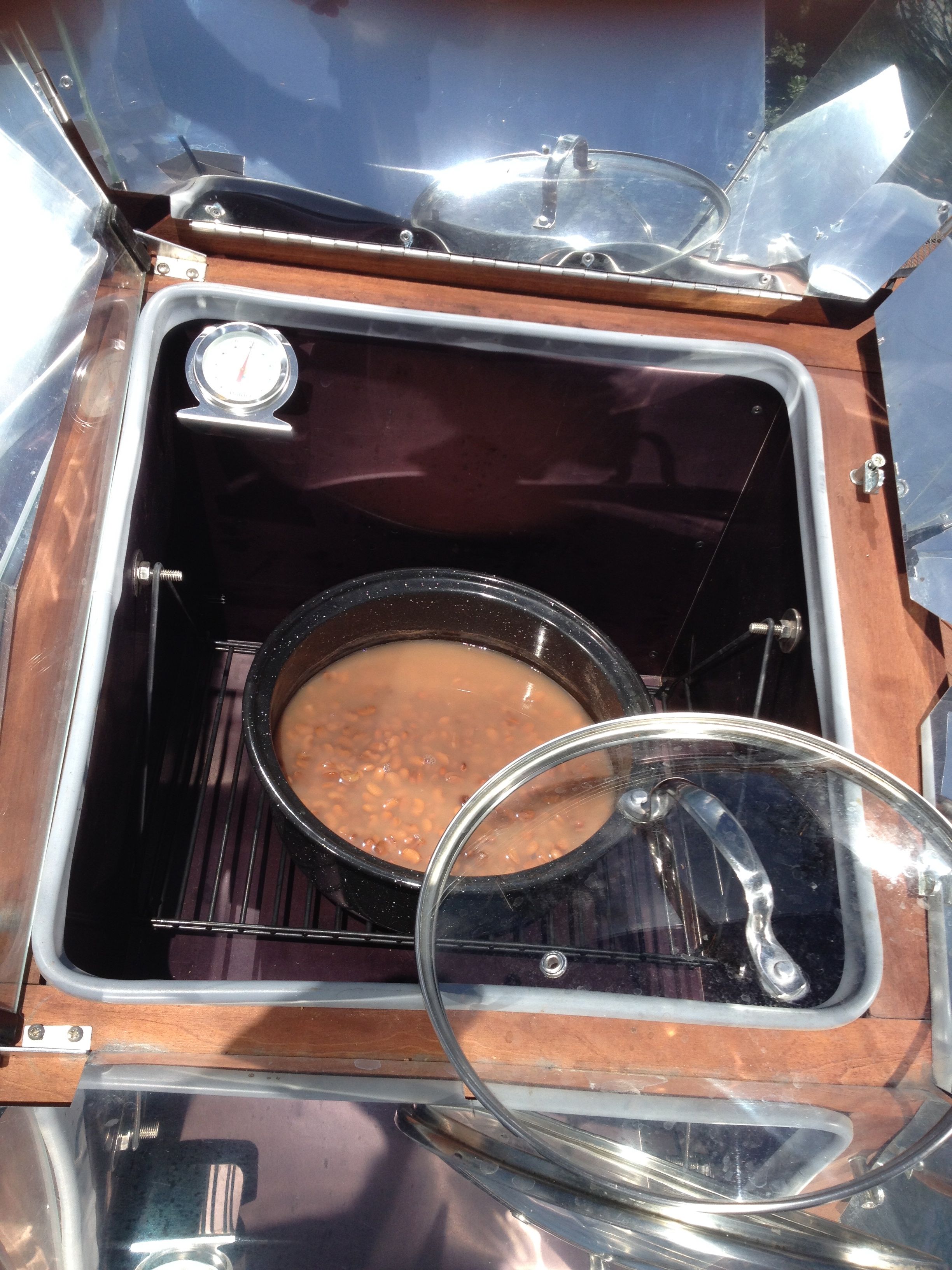
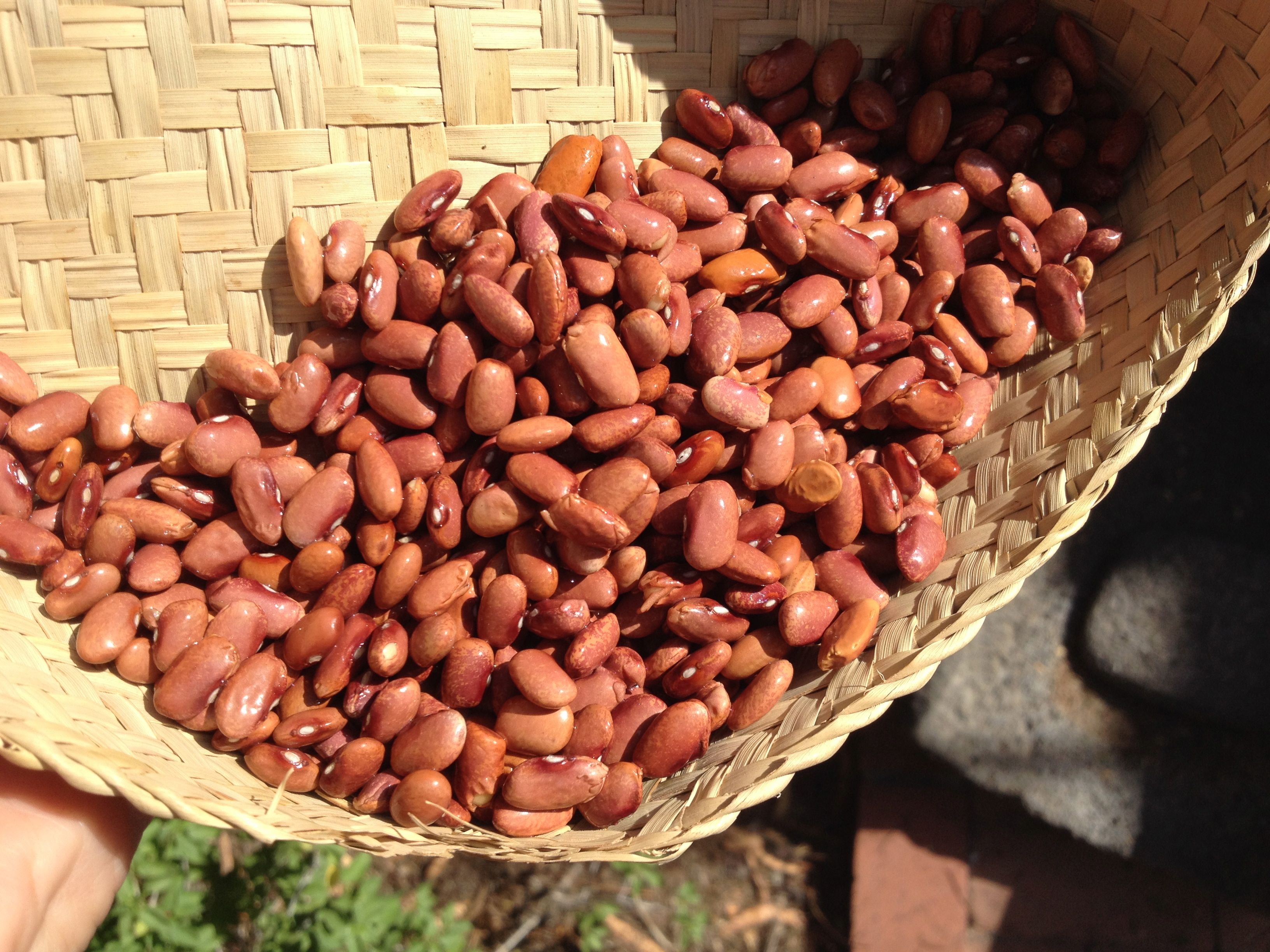
When the summer sun fully hits our porch about 10am, out comes our sun-oven to help us pull the heat of preparation out of the kitchen.  Unfolding its reflector “wings,” I place a saucepan of pre-soaked Native tepary beans–the ones the Tohono O’odham call s-wepegi ba:wi or red tepary–covered by plenty of drinking water, nothing else necessary.  About every half hour or hour (you don’t have to be too regimented if you don’t feel like it), I go out and re-adjust the orientation of the sun-oven, vertically and horizontally, to keep it as close to perpendicular to the sun as possible.  The teps will be smelling good and testing done about 2pm if the sky has remained relatively bright.

Tepary beans, done by 2pm in solar oven, temp 300 (MABurgess photo)

Tepary beans, done by 2pm in solar oven, temp 300 (MABurgess photo)

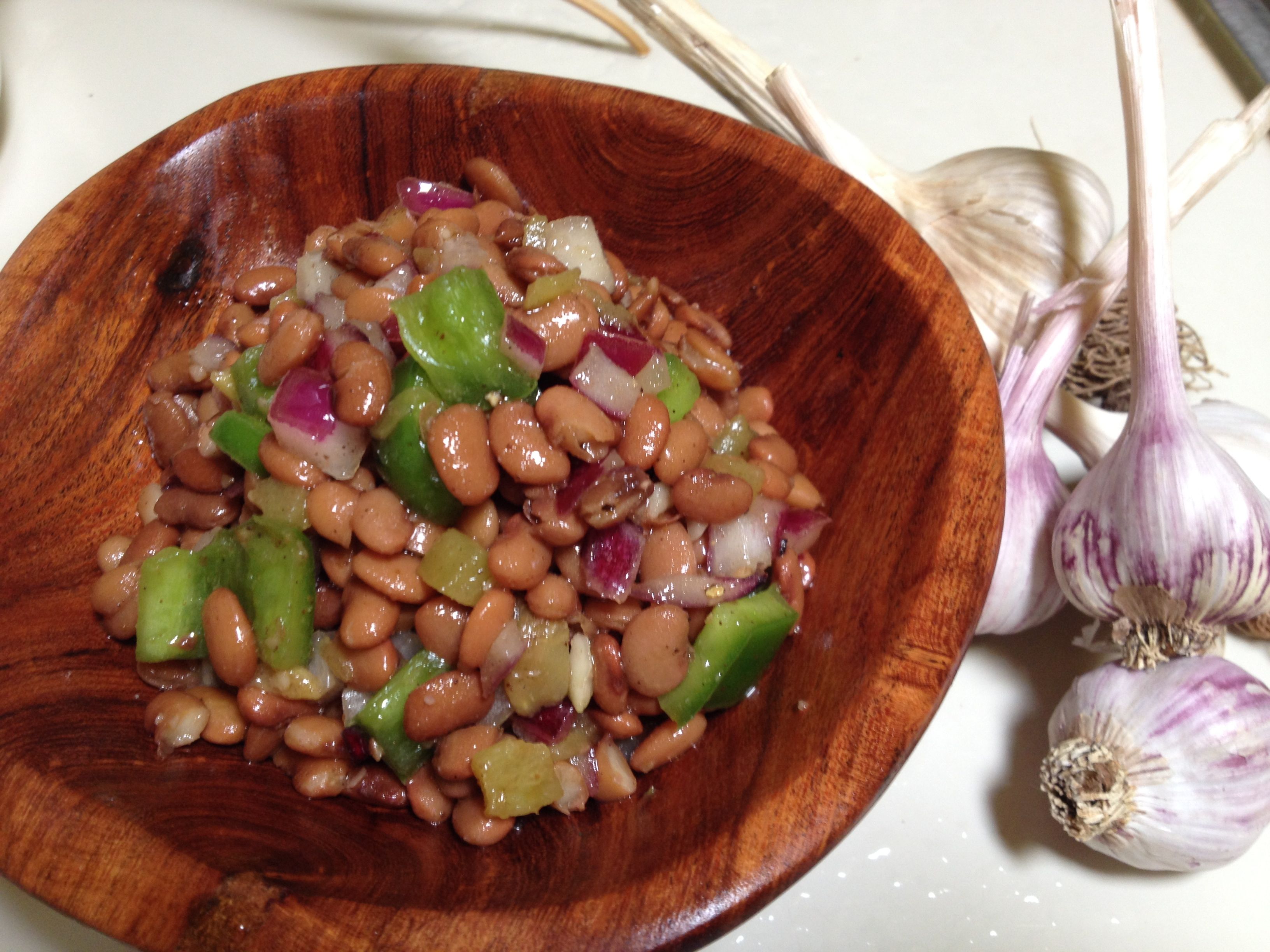
Now, with my well-cooked teparies, if I’m not ready for kitchen cookery action I let them cool down then store them labeled in the frig or freezer.  If I am in cook mode, I drain them, reserving the liquid for soup, and let them cool while I chop veggies.  My plan–“Sonoran Caviar”–the best salad ever invented for desert rats in need of a pinch of picante.  This is the culinary creation of desert survival instructor, raconteur, and one-of-a-kind character George Price, and my thanks go to him for bringing even more excitement out of teparies!  Give it a try.

George's Sonoran Caviar--teparies with NSS heirloom garlic (both available at St Phillips Sunday farmers market)

George’s Sonoran Caviar–teparies with NSS heirloom garlic (both available at St Phillips Sunday farmers market)

Sonoran Caviar recipe:

Ingredients:

4 cups cooked brown tepary beans, drained and cooled (from less than 1 lb dry beans)

1 cup diced red onion

1 red bell pepper, diced

2 crisp Anaheim Chiles, diced, skinned, and de-seeded

1 Tbsp crushed garlic

1 Tbsp Tony Chacere’s Original Creole Seasoning (to taste)

1/3 cup olive oil

1/3 cup red wine vinegar

1 tsp black pepper ground

Mix all ingredients thoroughly in a large bowl.  Chill in refrigerator for 24 hours, stirring occasionally.  Stir again before serving.  Buen provecho, George (Be advised that this one serves 6 hungry folks including teenage boys.)

[His Sonoran Caviar will get rave reviews at any pot luck or picnic.]

Flor de Mayo beans in Mayo palm basket (beans and baskets from Sunday St Phillips market)

Flor de Mayo beans in Mayo palm basket (beans and baskets from Sunday St Phillips market)

In the realm of cool summer dishes, I can always count on Heirloom Flor de Mayo Mixed Bean Salad (my namesake!).  When I was in college, Mother sent me a little book by Barbara Goodfellow, Make it Now Bake it Later from the ’60s.  It has inspired my hostessing ever since, especially my adaptation for this sweet recipe which delights in everything from your garden:

Marinated Mixed Bean Salad with Flor de Mayo heirlooms (MABurgess photo)

Marinated Mixed Bean Salad with Flor de Mayo heirlooms (MABurgess photo)

Heirloom Flor de Mayo Mixed Bean Salad Recipe:

(Fool-proof for picnics and barbeques–and it keeps well for days in the frig)

1 cup (or more) cooked heirloom Flor de Mayo beans for bright color (or another SW heirloom such as Ojo de Cabra, Rio Zape, Bolita, Cannellini–all taste wonderful in this marinated salad)

1 cup cooked green beans or snap beans from your garden (or organic canned)

1 cup cooked garbanzo beans (organic canned garbanzos/chickpeas) from your winter garden

1 cup cooked GMO-free corn kernels (off the cob or canned)

1/2 cup chopped green pepper

1 Tbsp chopped shallots, chives,  sweet onion, or I’itoi’s onion from the garden

1/2 cup organic sugar or agave nectar

1 cup organic cider vinegar

1/2 cup extra virgin olive oil

1 tsp sea salt

Drain cooked beans.  In mixing bowl dissolve sweetener and spices in liquid.  Add beans, chopped green pepper and onion, then mix.  Let stand in refrigerator overnight, mix again.  When serving, reserve liquid for other marinades.  Serves 6 generously.

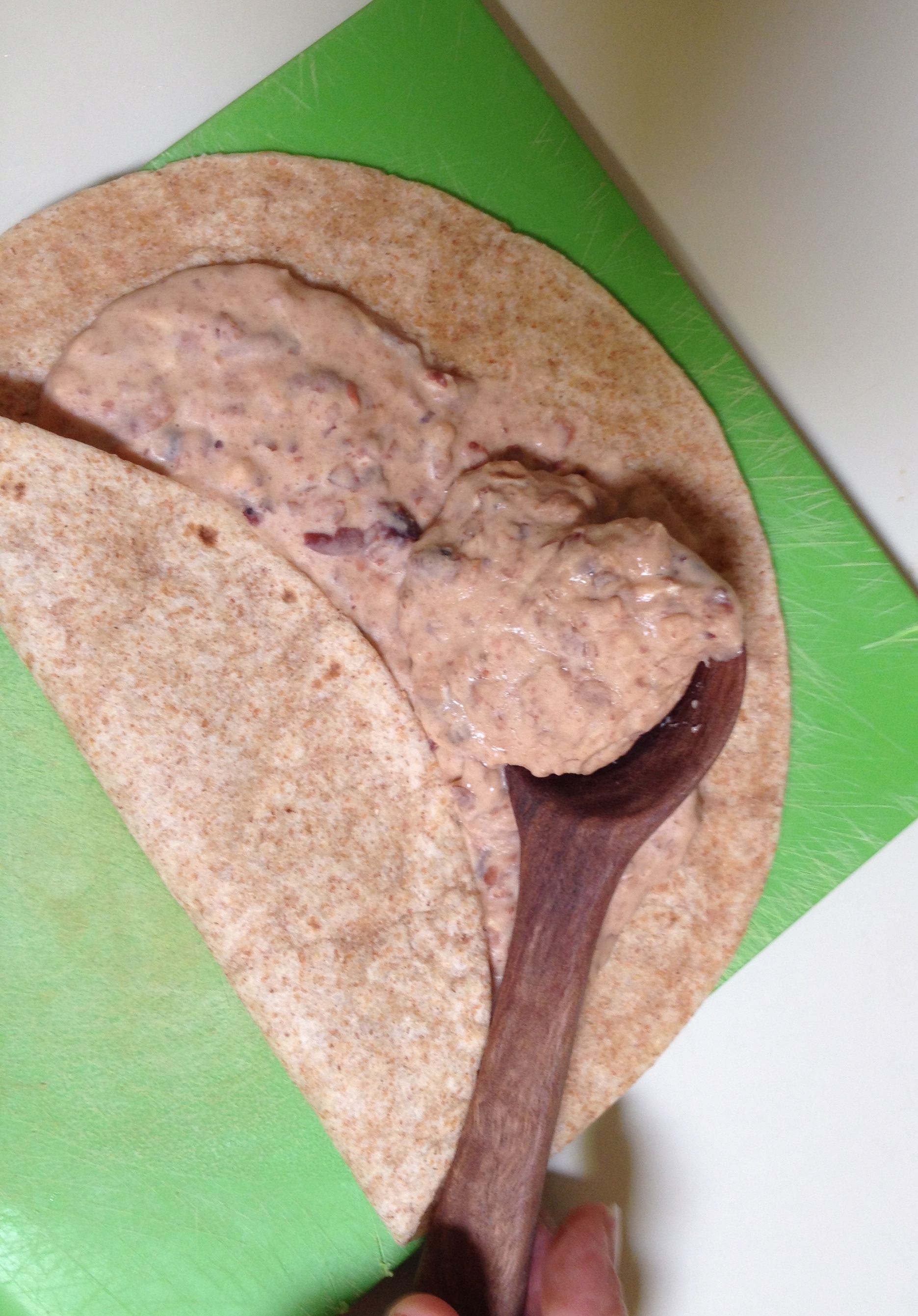
Mortgage Lifter burrito in whole wheat tortilla--first step for making heirloom bean roll-up appetizers

Anasazi Bean burrito in whole wheat tortilla–preliminary for making heirloom bean roll-up appetizers

Another fun way to get your complex carbs and vegetable protein is to make heirloom bean dips– then to get fancier using the dip, the next step is Easy Heirloom Bean Roll-ups.  For the fastest, most crowd-pleasing bean-spread, I use either Mortgage Lifter beans or Anasazi beans–both great.  Mortgage Lifter is a giant white runner bean, also known as Aztec white runner or Bordal.  Grown in your garden, it will vine over itself and its neighbor plants with big white flowers that attract hummingbirds.

Easy Heirloom Bean Roll-up Appetizers Recipe:

Ingredients:

2 cups cooked Mortgage Lifter beans, or purple & white Anasazi beans

4 oz low-fat cream cheese (1/2 block of neuchatel)

1 Tbsp Red Devil hot sauce

1 tsp ground cumin seed

pinches of sea salt, to taste

3 or 4 medium whole wheat tortillas

Drain cooked beans (reserving liquid if you need to make a thinner texture after mashing).  Mash beans and cream cheese together with pastry cutter or bean masher.  Mash in all other ingredients. [You can sometimes find traditional Tarahumara madrone-wood bean mashers at NativeSeeds/SEARCH or at Flor de Mayo.]  At this point you have the best dip ever, and also the filling for instant burritos ready to feed to drop-in visitors.  Read on for further Roll-up directions…..

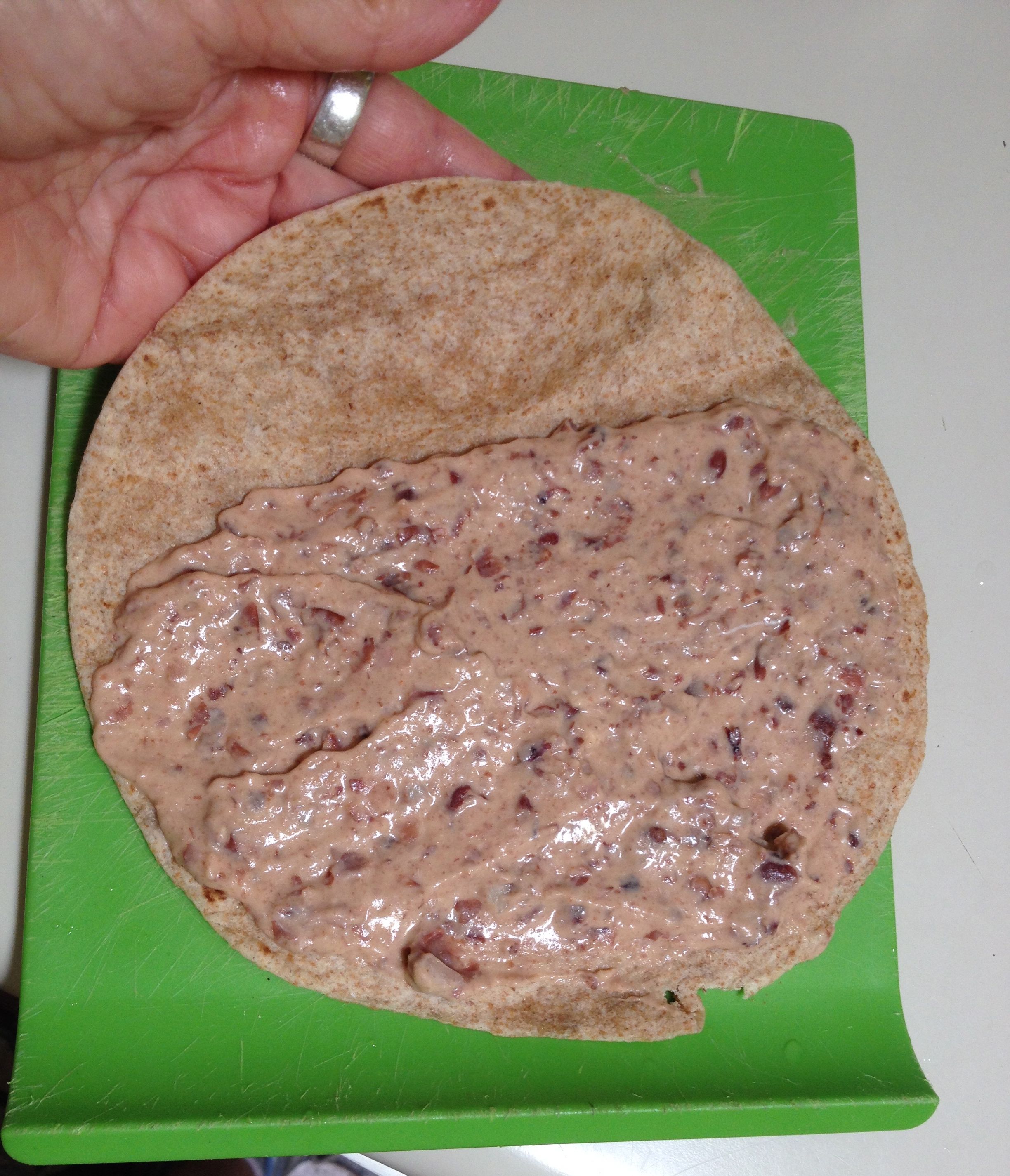
Heirloom bean "roll-ups" Step 1--with Anasazi beans

Heirloom bean “roll-ups” Step 1–with Anasazi beans

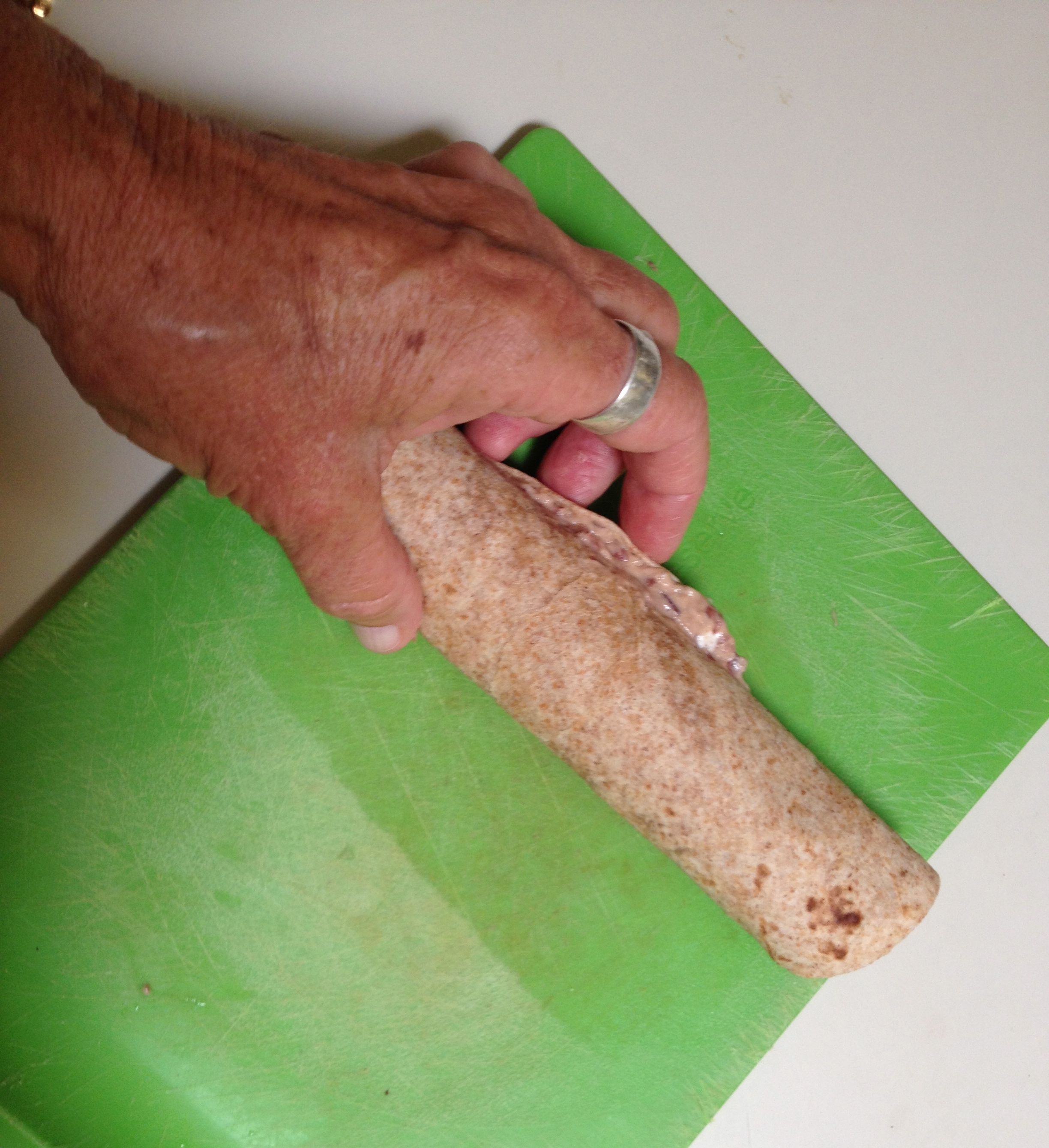
Rolling up heirloom bean hors d'oeuvres--Step 2 before cutting

Rolling up heirloom bean hors d’oeuvres–Step 2 before cutting

To finish these festive heirloom bean appetizers…spread the bean mixture onto 3/4 of one tortilla leaving a chord of the circle uncovered.  You will see why when you roll it up.  Begin rolling the tortilla tightly from the bean-covered edge and continue to roll snugly.  The bean spread will squeeze toward the unrolled edge, filling it.  The rolled tortilla will be held together by the bean spread.  Repeat with remaining tortillas and dip.

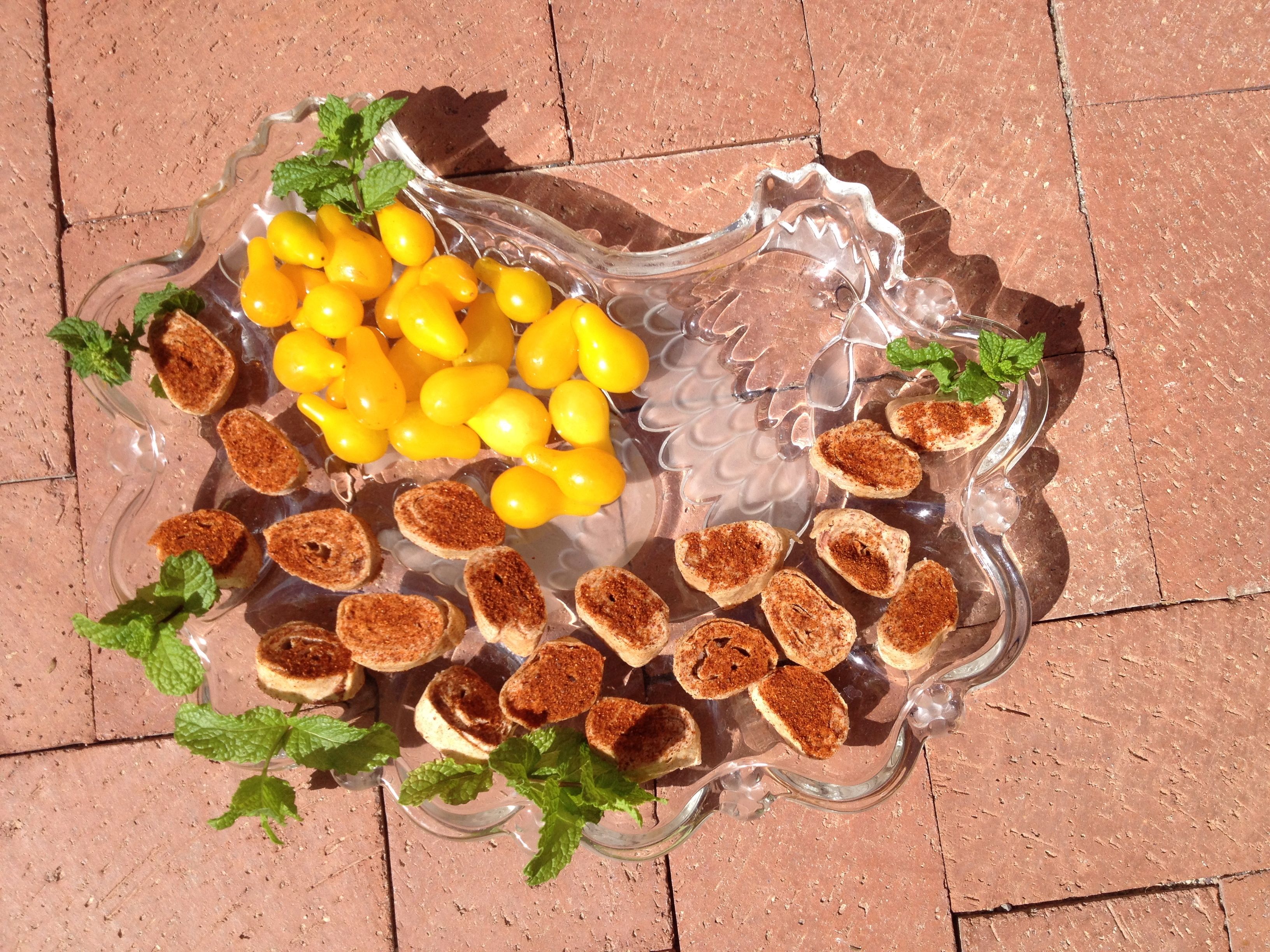
Place tortilla rolls on wax paper and chill in freezer or frig long enough to become firm for cutting.  Place chilled rolled tortillas on cutting board one at a time.  Slice in 1/2-inch rounds and place the disc-shaped spirals on a serving tray.  Chill until served.  Bedeck each Heirloom Bean Roll-up with a sprinkle of paprika or a cilantro leaf.  Each tortilla should produce about 6-8 roll-ups.  (With any leftover bean mixture, enjoy it as dip or in a burrito.)  These appetizers are a tasty celebration–and a tacit bow to Southwestern farming traditions.

Heirloom Bean Roll-up Appetizers and yellow pear tomatoes in chicken hors d'oeuvre tray (MABurgess photo)

Heirloom Bean Roll-up Appetizers and yellow pear tomatoes in chicken hors d’oeuvre tray (MABurgess photo)

By the way, you can find all of the wonderful Southwest heirloom beans to use in these recipes either at the NativeSeeds/SEARCH store, 3061 N Campbell Ave, Tucson, or at our Flor de Mayo booth at the charming St Phillips farmers market on Sundays in the shade of spreading sycamores and mesquites.

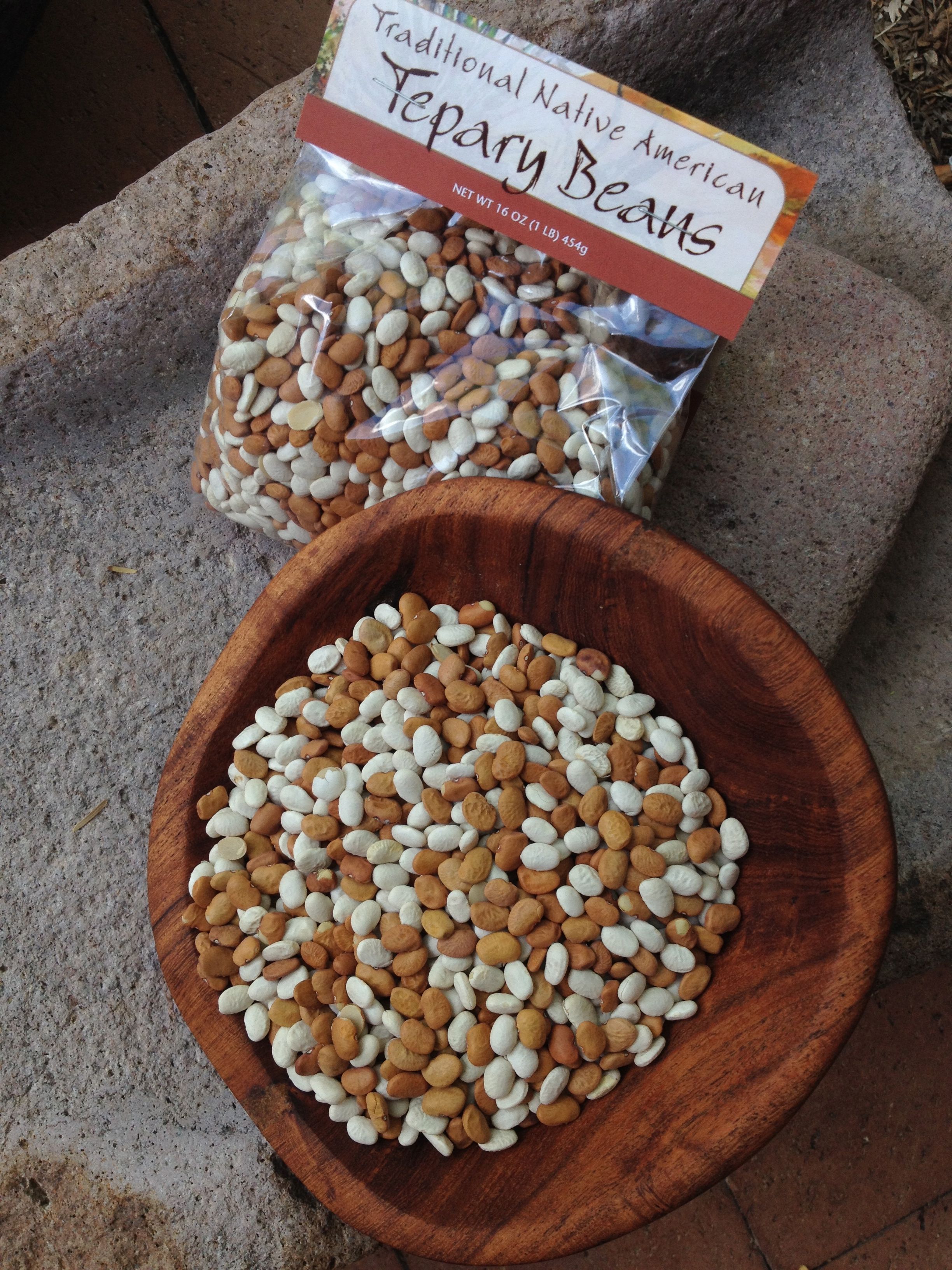
Traditional Native tepary beans--colorful mix available at Tohono Chul Park gift shop, NativeSeeds/SEARCH and Flor de Mayo booth at farmers market

Traditional Native tepary beans–colorful mix available at Tohono Chul Park gift shop, NativeSeeds/SEARCH and Flor de Mayo booth at farmers market

For the experienced or the novice desert gardener, now is the time to do the last planting in your monsoon garden.  One of my Tohono O’odham mentors taught me that the second week in August is really the last opportunity to put bean, corn, melon, or squash seed in the ground.  Even better to give your garden a jump-start by planting starts!  Right now at the NativeSeeds/SEARCH store you will find a variety of healthy seedlings hungry to be in the soil–and on sale.  Come give them a future–and a delectable future for your palette in the months to come….

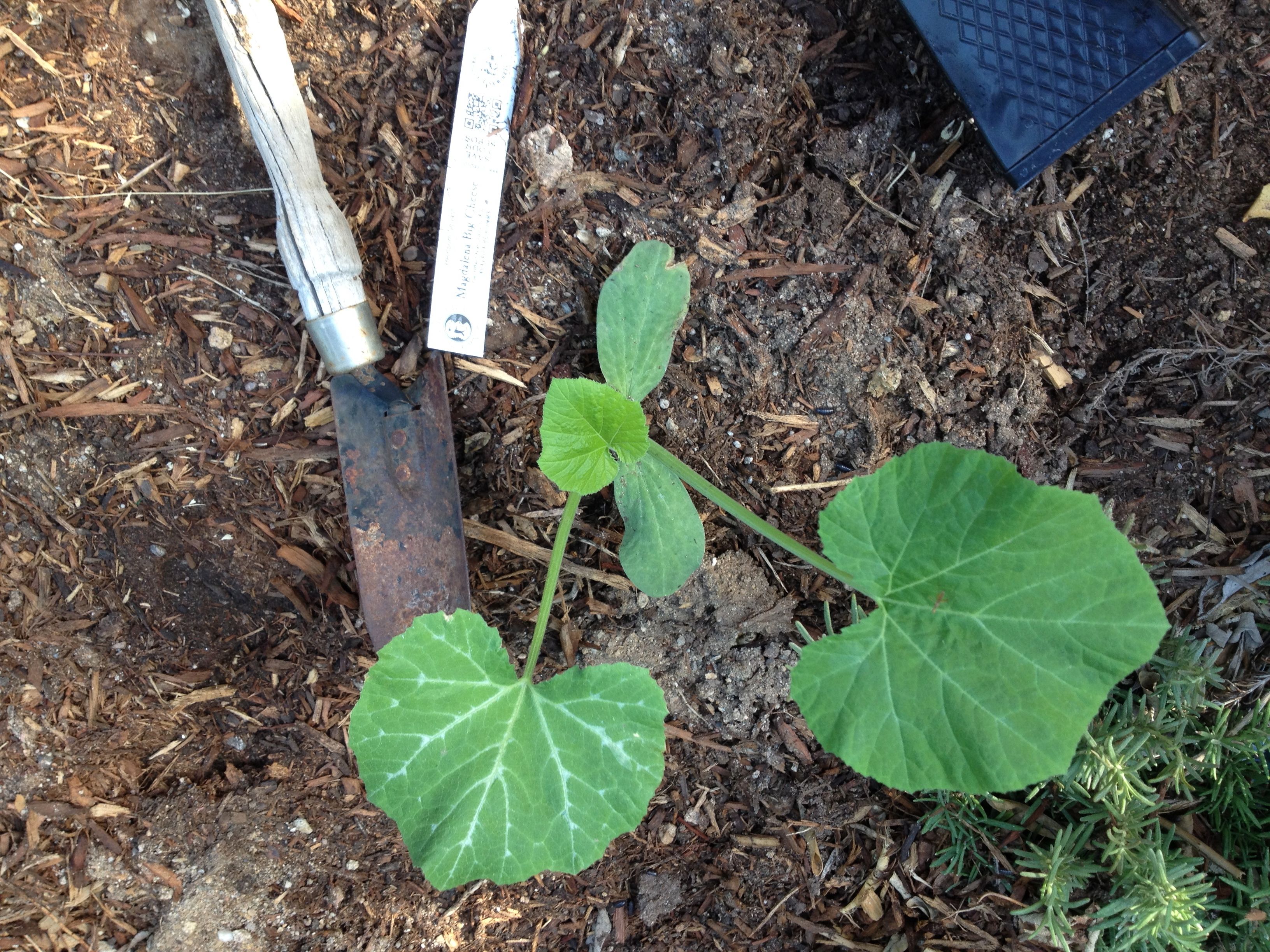
Happily planted--seedling Magdalena Big Cheese Squash seedling from NativeSeeds/SEARCH monsoon plant sale still on!

Happily planted–Magdalena Big Cheese Squash seedling from NativeSeeds/SEARCH monsoon plant sale (still going)

Happy gardening–and healthy eating to you from Tia Marta!