Gifts from September Gardens–intentional and otherwise

Tia Marta here to share some culinary ideas happening now in Baja Arizona herb gardens, and to extend an invitation to visit el jardinito de hierbas at Tucson’s Mission Garden to experience the herbs in action!
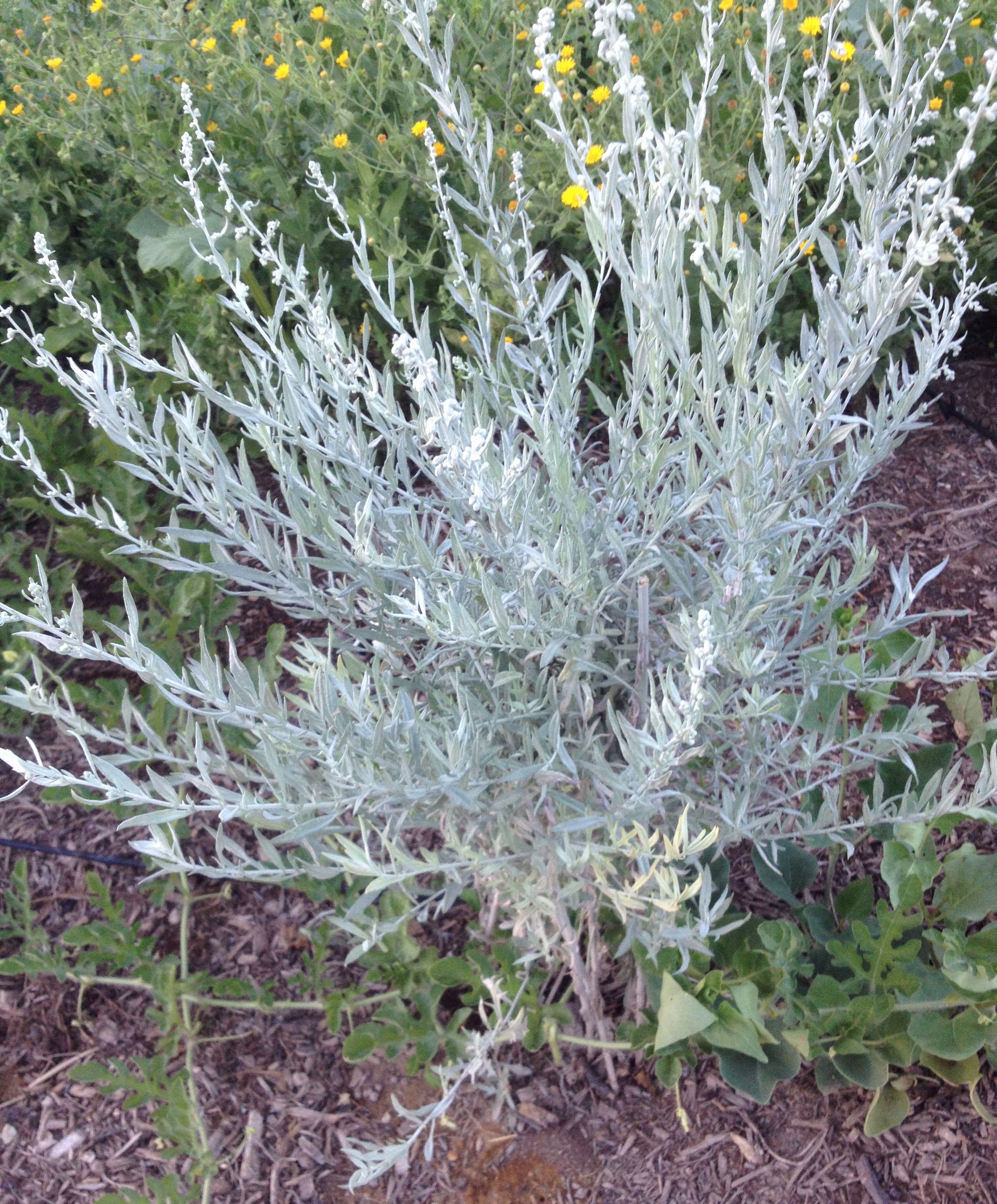
Estafiate--all purpose Artemisia ludoviciana--in the herb plot, Mission Garden (MABurgess photo)

Estafiate–all purpose Artemisia ludoviciana–and Mexican arnica beyond (close-up of flower below), in the herb plot, Mission Garden (MABurgess photos)
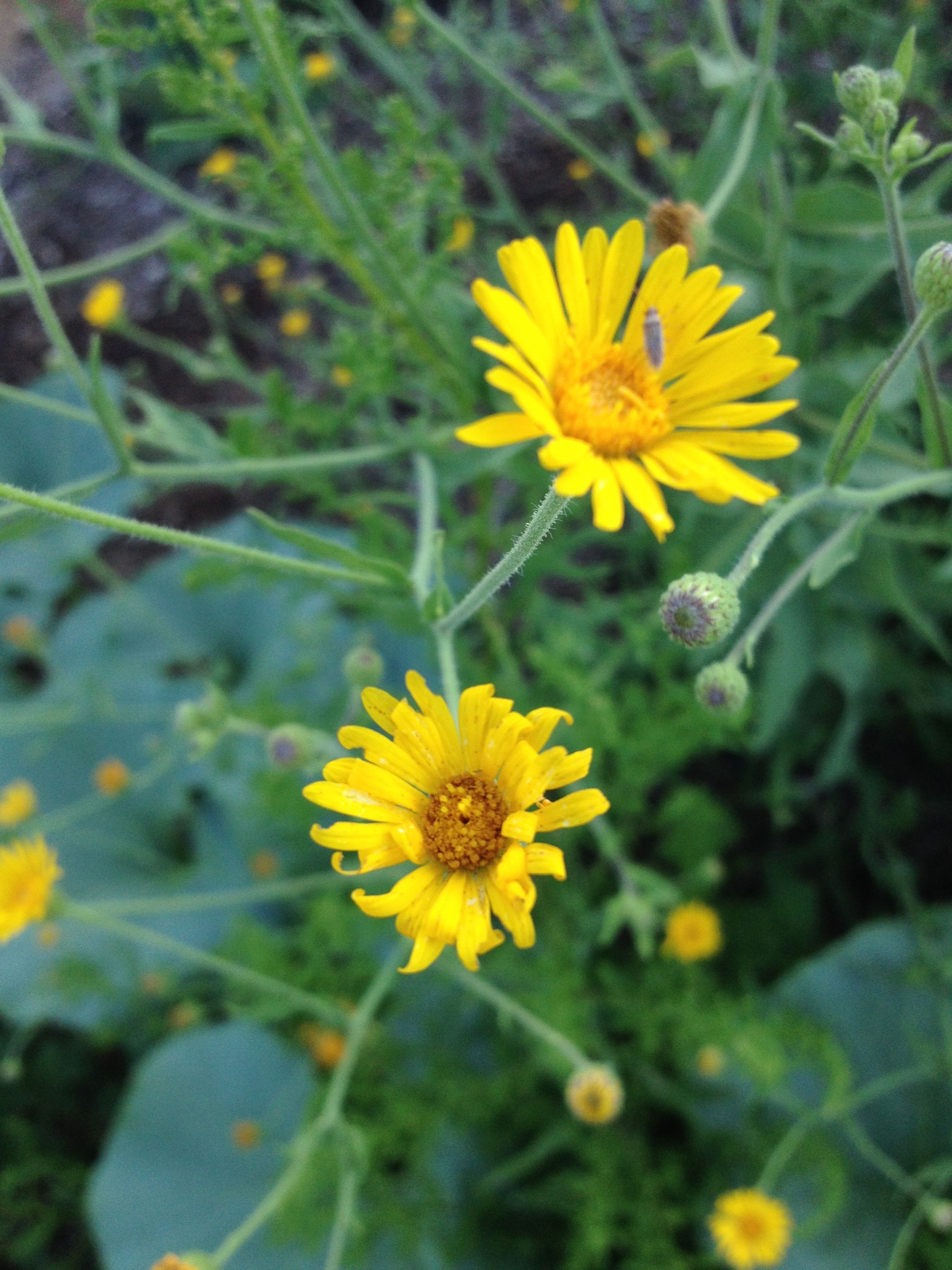
Heterotheca--Mexican arnica flower (MABurgess photo)

Of all the herbs in our Southwest summer gardens—presently rejoicing in monsoon humidity and in the soppy tail of Hurricane Norbert—I think the most exuberant has gotta be Mrs Burns’ Famous Lemon Basil……..
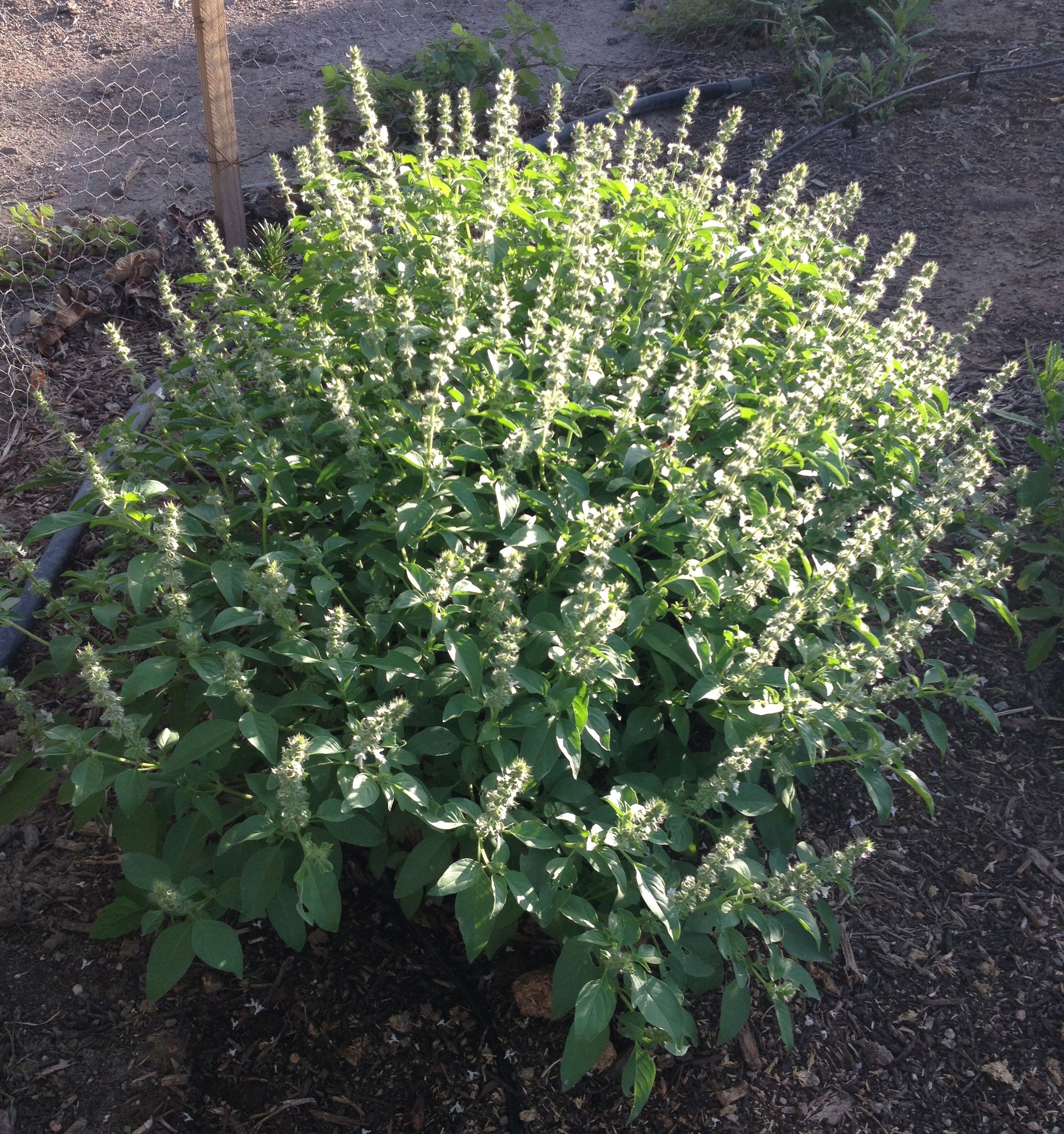
Mrs Burns' Famous Lemon Basil, at Mission Garden (MABurgess photo)

Mrs Burns’ Famous Lemon Basil, at Mission Garden (MABurgess photo)

In its versatility, Mrs Burns’ lemon basil provides many possibilities for the kitchen and the cosmetic chest, the first being olfactory delight. Brush its foliage lightly with your hands and you get an instant rush of enlivening yet calming lemon bouquet. Like Monarda or lavender, this lemon basil is definitely one to plant in a “moon garden” for nighttime enjoyment, or along a narrow walkway where you have to pleasantly brush up against it, getting a hit en route, always a reminder that life is good.

I wish this blog could be “scratch-and-sniff” so you could sense the sweet lemony aroma of this heirloom right now. Maybe technology can do that for us someday, but meanwhile, find a Native Seeds/SEARCH aficionado who has planted it and get yourself a sprig to sniff.   On any Saturday morning, come visit and whiff this desert-adapted basil at Mission Garden (the living history exhibit at the base of “A”-Mountain created by Friends of Tucson’s Birthplace). There, among Padre Kino’s heirloom fruit trees, in the monsoon Huerta vegetable plot, a group of herbalists known as Tucson Herbalist Collective (usually referred to as THC—like far out, righteous herbs, man, whatever) has planted a patch of traditional Mission-period medicinal and culinary herbs within reach of the fence. Lean over and touch Mrs Burns’ lemon basil for a real treat. At present (mid-September) “her” basil is a mound of dense smallish leaves and is sending up a zillion flower stalks sporting tiny white flowers. High time to snip the tops to encourage more foliage. Snippings can be used to zest a salad, to bedeck a platter of lamb chops, or to dry for a long-lasting potpourri.
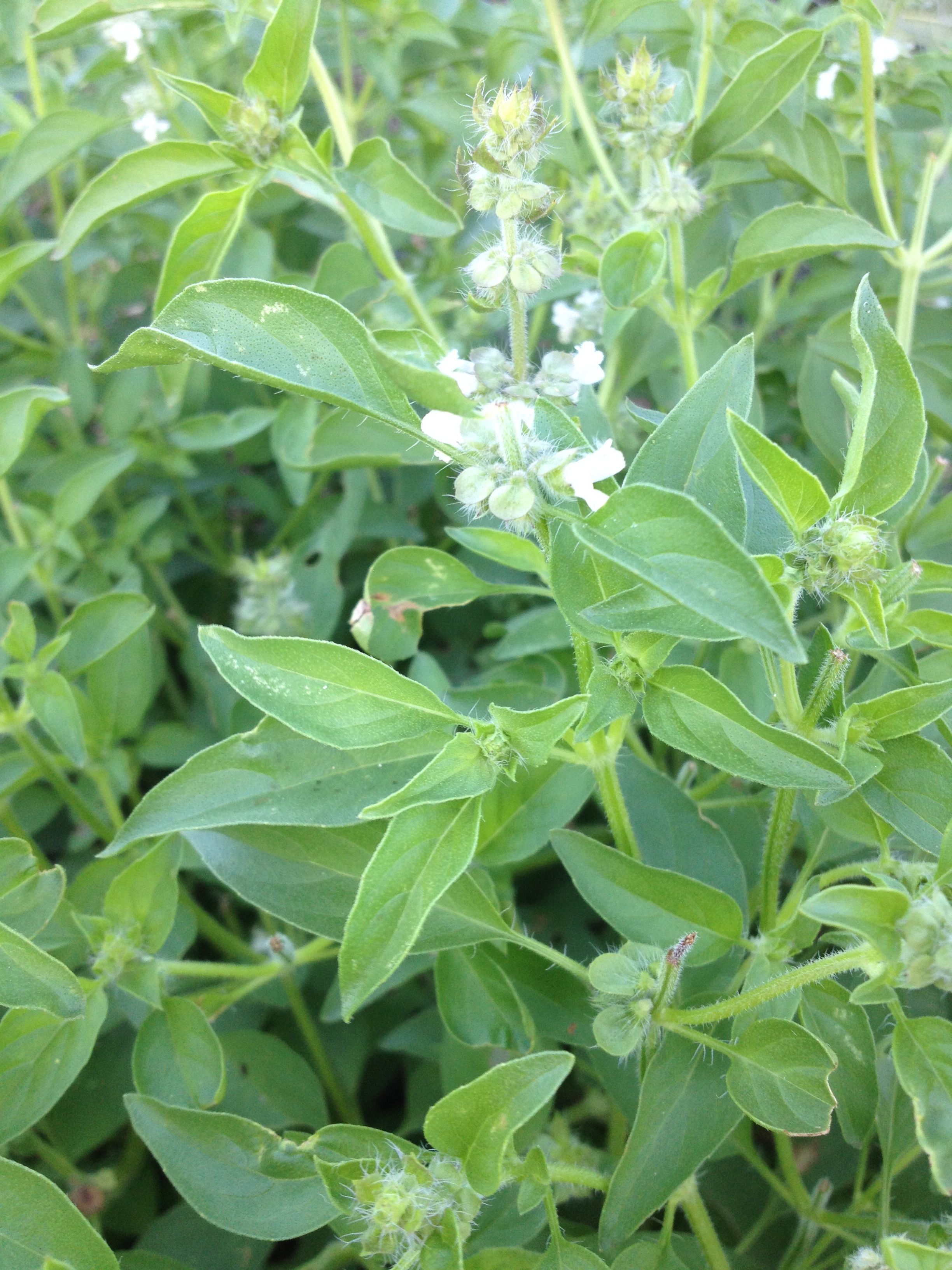
Close-up view of Mrs Burns' Famous Lemon Basil flowers and foliage (MAB)

Close-up view of Mrs Burns’ Famous Lemon Basil flowers and foliage (MAB)

Mrs Burns’ lemon basil—not your typical, soft, floppy-leafed basil—is bred for desert living, with smaller, sturdier foliage. Yes, it does need water, but it can take the desert’s heat and sun. This heirloom’s history is worthy of note and relating it honors the Burns family. The person who put “Famous” into the name Mrs Burns’ Famous Lemon Basil was Dr. Barney T. Burns, one of the founders of the seed conservation organization NativeSeeds/SEARCH and an amazing seed-saver himself, whose recent passing we mourn and whose life we gratefully rejoice in. It was his mother, Janet Burns, transplanted from Canada to Carlsbad, NM, who, with a neighbor over several decades, continued to grow and select surviving, desert-hardy seed in Southwestern heat. Barney contributed her basil seed as one of the first arid heirlooms to become part of the NSS collection. Interestingly, these tiny seeds have since traveled around the globe. One year Johnny’s Seeds picked it up, grew it out for their catalog, and sent NSS a check for $600 in royalties, having profited considerably from its sale.

You can use Mrs Burns’ Famous Lemon Basil leaf in many marvelous dishes. Layer fresh leaves with slices of farmers’ market tomatoes and thin slices of feta or fontina cheese and droozle with flavored olive oil. (I like Queen Creek Olive Mill blood-orange.) And OMG—this basil makes phenomenal pesto. Include this lemon basil with roast chicken for the best lemon-chicken ever. Dry it and put it in stuffing. Add a few fresh leaves to salad for a taste surprise. Or, add a sprig to soups to add a tang. You can even bedeck a glass of V-8 or your Bloody Mary with a lemon basil sprig to fancy up your presentation.
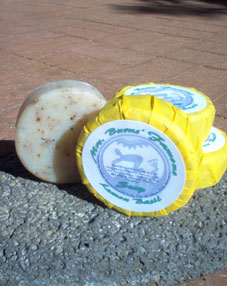
 

Handmade soap with Mrs Burns' Lemon Basil-infused jojoba oil (MABurgess photo)

Handmade soap with Mrs Burns’ Lemon Basil-infused jojoba oil (MABurgess photo)

Once when I enthusiastically grew a 50-foot row of Mrs Burns’ basil, it produced for me bags of dried herb, inspiring some fragrant projects. I distilled the aroma-rich herb to make a gentle hydrosol spray which, I feel, carries medicinal/psychological qualities of soothing, pacifying refreshment. By first infusing this marvelous herb in jojoba oil, I create beauty bars—with Mrs Burns’ Famous Lemon Basil as the exfoliant in the soap—available at the NativeSeeds/SEARCH store, the Flor de Mayo booth at St Phillips Farmers Market, or at http://www.flordemayoarts.com.

In my mass planting of lemon basil, I observed bees going totally ecstatic over the profuse flowers and so wished that I had had bee boxes close-by. If any desert bee-keepers want to try a new gift to their bees and to us consumers of honey, I recommend they plant this one. Can’t think of anything finer than Mrs Burns’ Famous Lemon Basil honey!
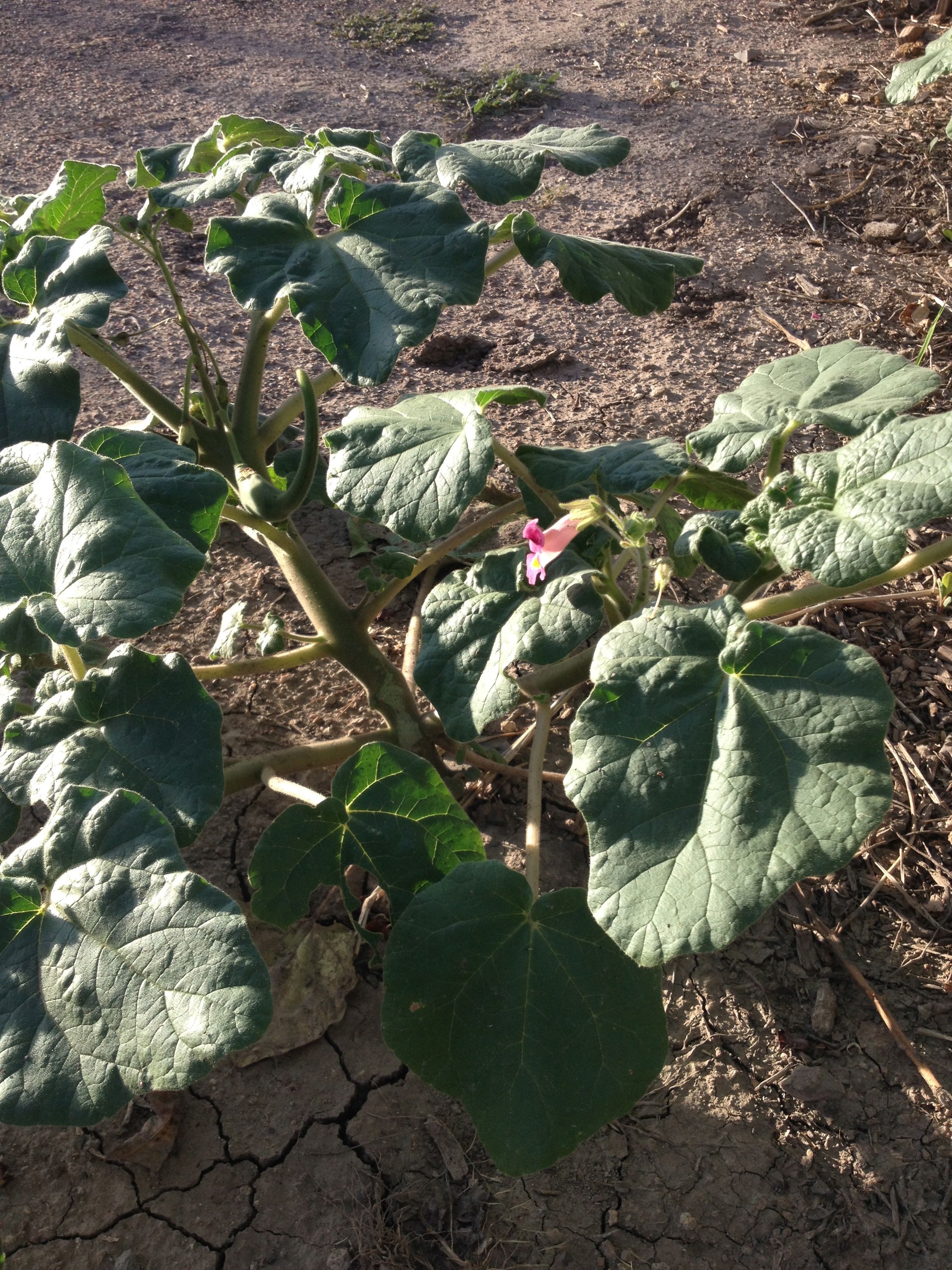
Brush leaves of devilsclaw for a cooling sensation (MABurgess)

Brush leaves of devilsclaw for a cooling sensation (MABurgess)

Here in culinarily-exciting Baja Arizona, as we promote the uniqueness of Tucson as an International City of Gastronomy, it is fun to consider another of our unique local food plants, a wild and unlikely weed which pops up with monsoon rains in low places, including at Mission Garden and is respectfully spared there. Known as i:hug by the Tohono O’odham (pronounced eee’hook), devilsclaw or unicorn-plant by Anglos, and Proboscidea spp by taxonomists, ours is not to be confused with the herb devilsclaw of commerce, Harpagophytum procumbens native to South Africa. Our native i:hug (of which there are a few species, some yellow-flowered, some pink) is a weed of many uses.
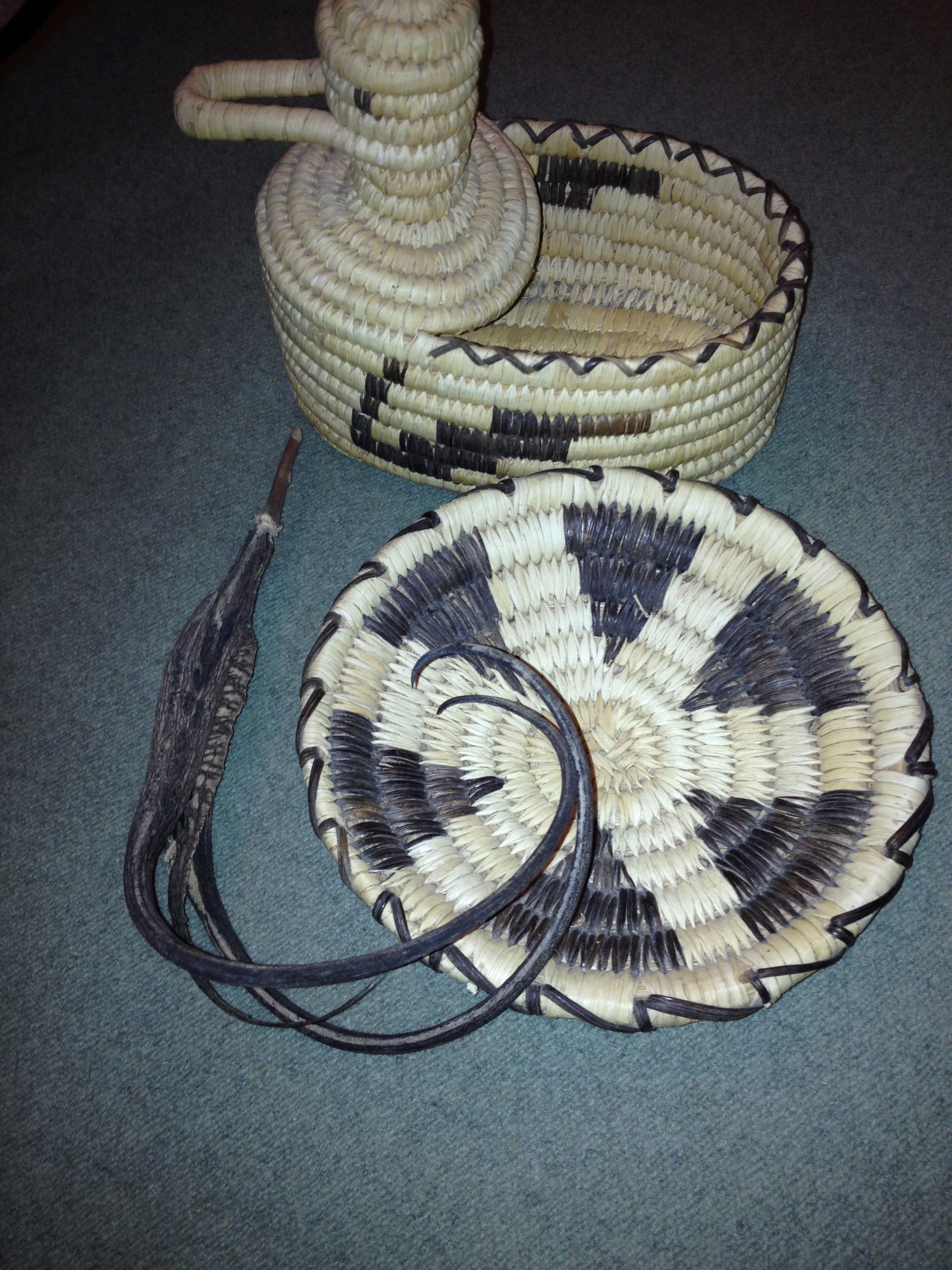
Tohono O'odham coiled basket by Juanita Ahil with domestic long-clawed i:hug (MABurgess photo)

Tohono O’odham coiled basket by Juanita Ahil with domestic long-clawed i:hug (MABurgess photo)

It is primarily known as the fiber used by Tohono O’odham, Akimel O’odham, and N’de weavers to create the striking black designs in their coiled basketry. Otis Tufton Mason’s tome Aboriginal American Indian Basketry, first published by Smithsonian Institution in 1904, shows beautiful specimens of unicorn-plant weaving, and mentions its use by many desert people including Panamint basket-makers of Death Valley.

I have a feeling that the devilsclaws that are volunteering now at Mission Garden are the children of plants that have been grown by Native People in that very place along the Santa Cruz for many centuries.
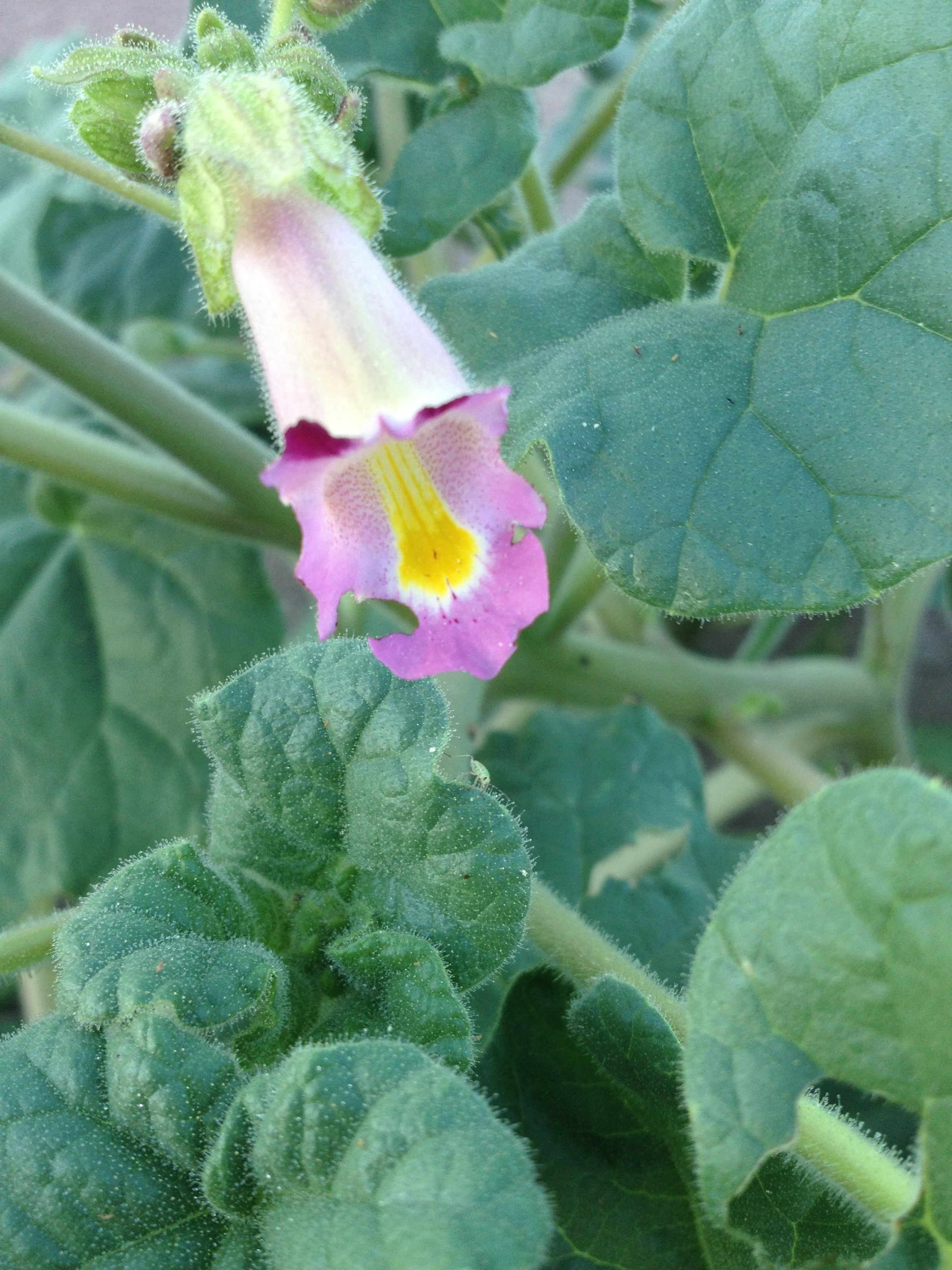
Devilsclaw (Proboscidea) flower close-up (MABurgess photo)

Devilsclaw (Proboscidea) flower close-up (MABurgess photo)

As an ornamental, unicorn-plant or devilsclaw can be a welcome surprise of greenery in late summer into fall, making a mound of large leaves sometimes 2’ high and 3’ wide. Tucked among its spreading fuzzy branches, under velvety maple-leaf-shaped foliage, will appear tubular flowers edged in pink. Should you need a cooling touch on a hot day, just lightly brush one of its big leaves and you are instantly refreshed. The velvety look of devilsclaw foliage is actually one of the plant’s defenses against water-loss. Each leaf is covered with fine hairs. At each hair tip is a gland containing a microscopic bead of moisture. Hair causes wind-drag, slowing evaporation from the leaf surface. What evaporates from the glands acts to cools the leaf—what remains can also cool our skin, should we touch it.
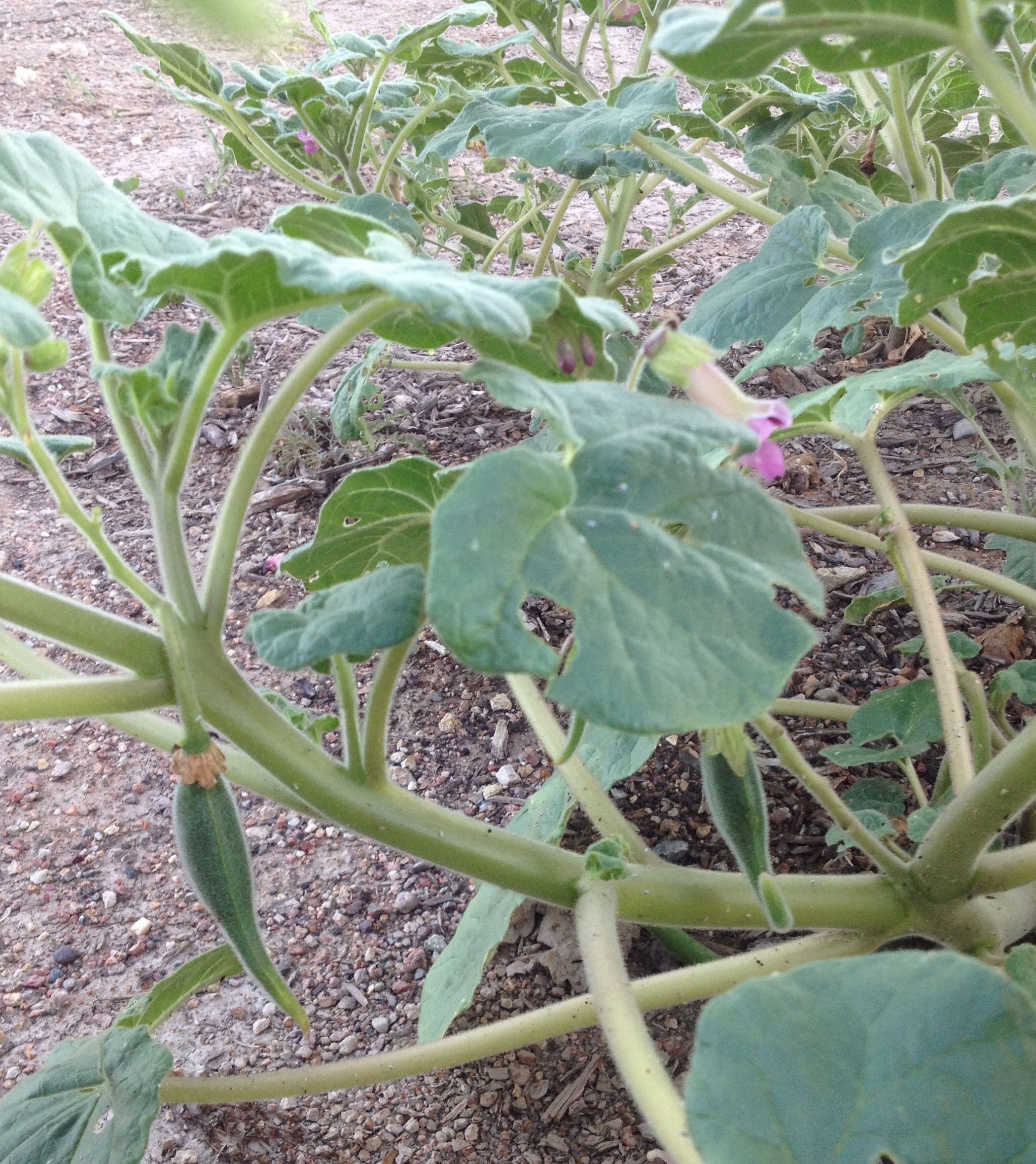
Young, harvestable devilsclaw pods (MABurgess photo)

Young, harvestable devilsclaw pods (MABurgess photo)

Most interesting of all are the foods that our native devilsclaw can provide. After pollination of the flower, a small green curved pod emerges like a curled, fuzzy okra. When young, that is, under about 2 ½” long, and before the pod develops woody tissue inside, these small green unicorns can be steamed as a hot vegetable, stir-fried with onion, green chile or nopalitos, or pickled for a Baja Arizona snack.
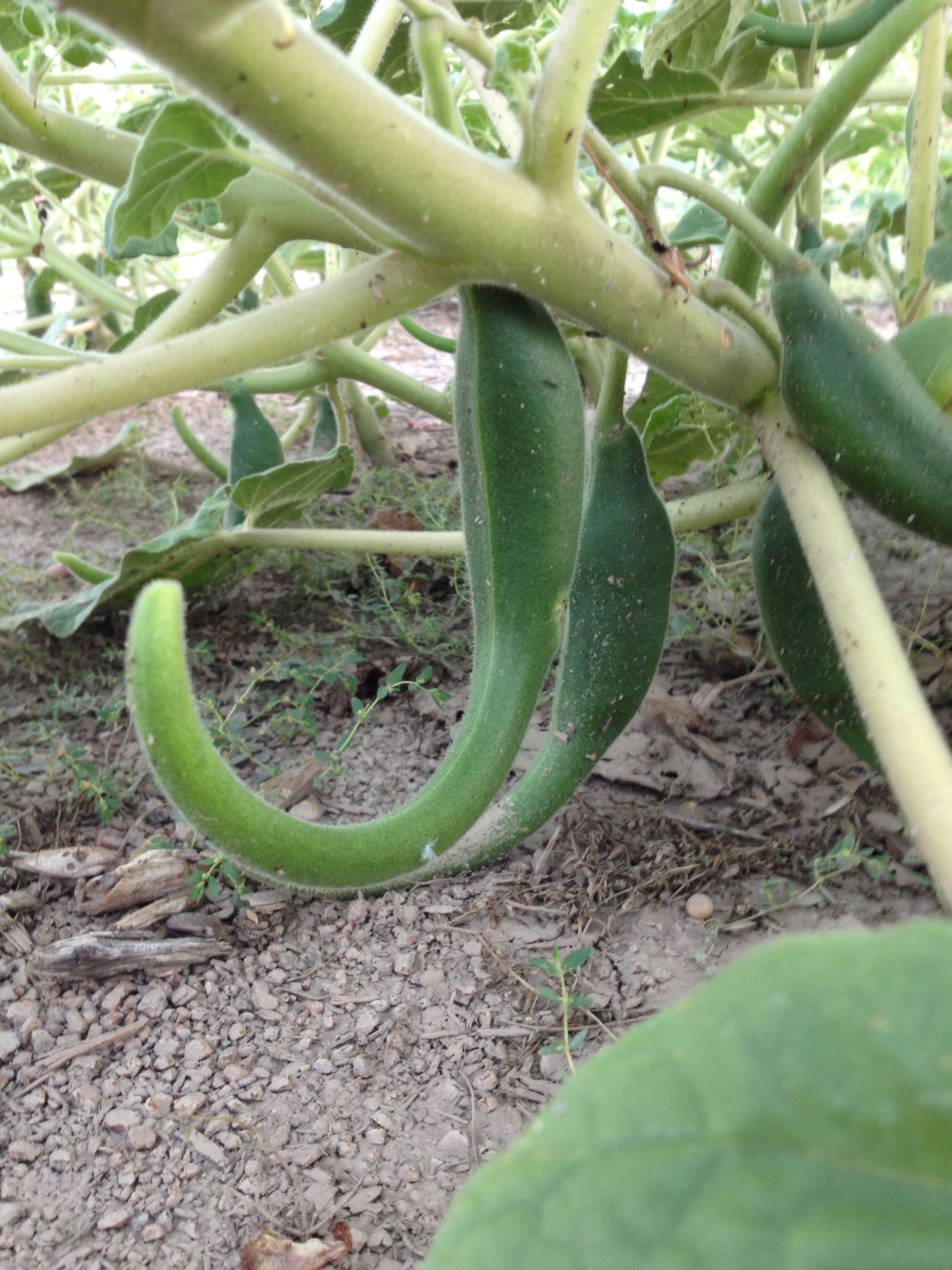
Maturing green devilsclaw pods beyond the food stage (MABurgess)
Maturing green devilsclaw pods beyond the food stage (MABurgess)

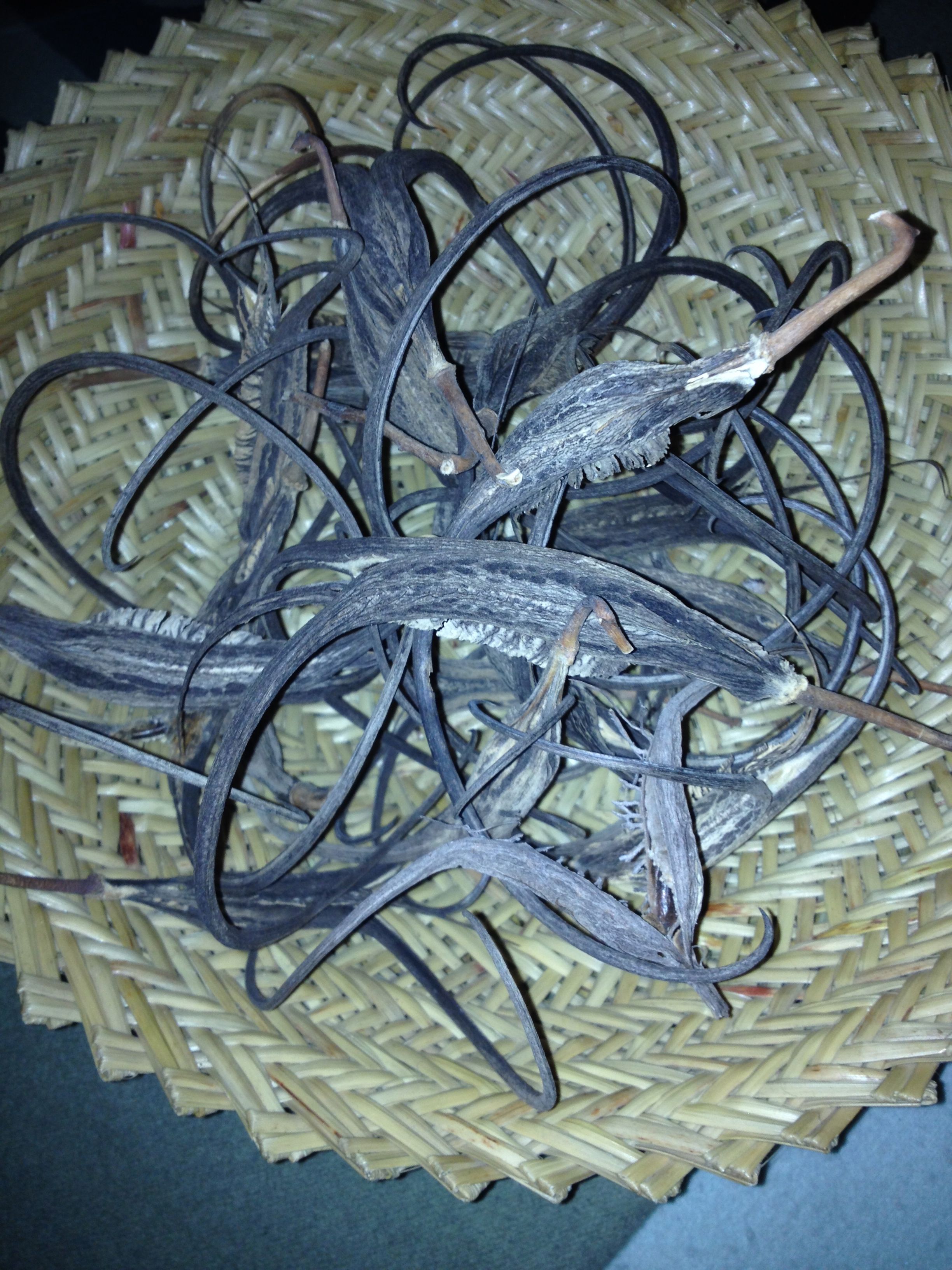
Tangled wild devilsclaw dry pods ready to split for basketry and seed harvesting (MABurgess)

Tangled wild devilsclaw dry pods ready to split for basketry and seed harvesting (MABurgess)

When the long green pods of devilsclaw ripen, the skin will dry and slough off leaving a tough, black, woody seed-pod that splits with very sharp tips. (Beware how they can grab—they were “designed” to hitch a ride on a desert critter’s hoof or fur and thus spread the seed.) With care, and sometimes the need for pliers, open the pod and out will come little rough-surfaced seeds. If your incisors are accurate, and if you have lots of time to get into meditations on i:hug, you can peel off the rough outer seed skin. Inside is a yummy, oil-rich and fiber-rich seed that looks like an overgrown sesame seed. (In fact, scientists at one point had classified Proboscidea in the same taxonomic family as sesame but it now stands in its own.)
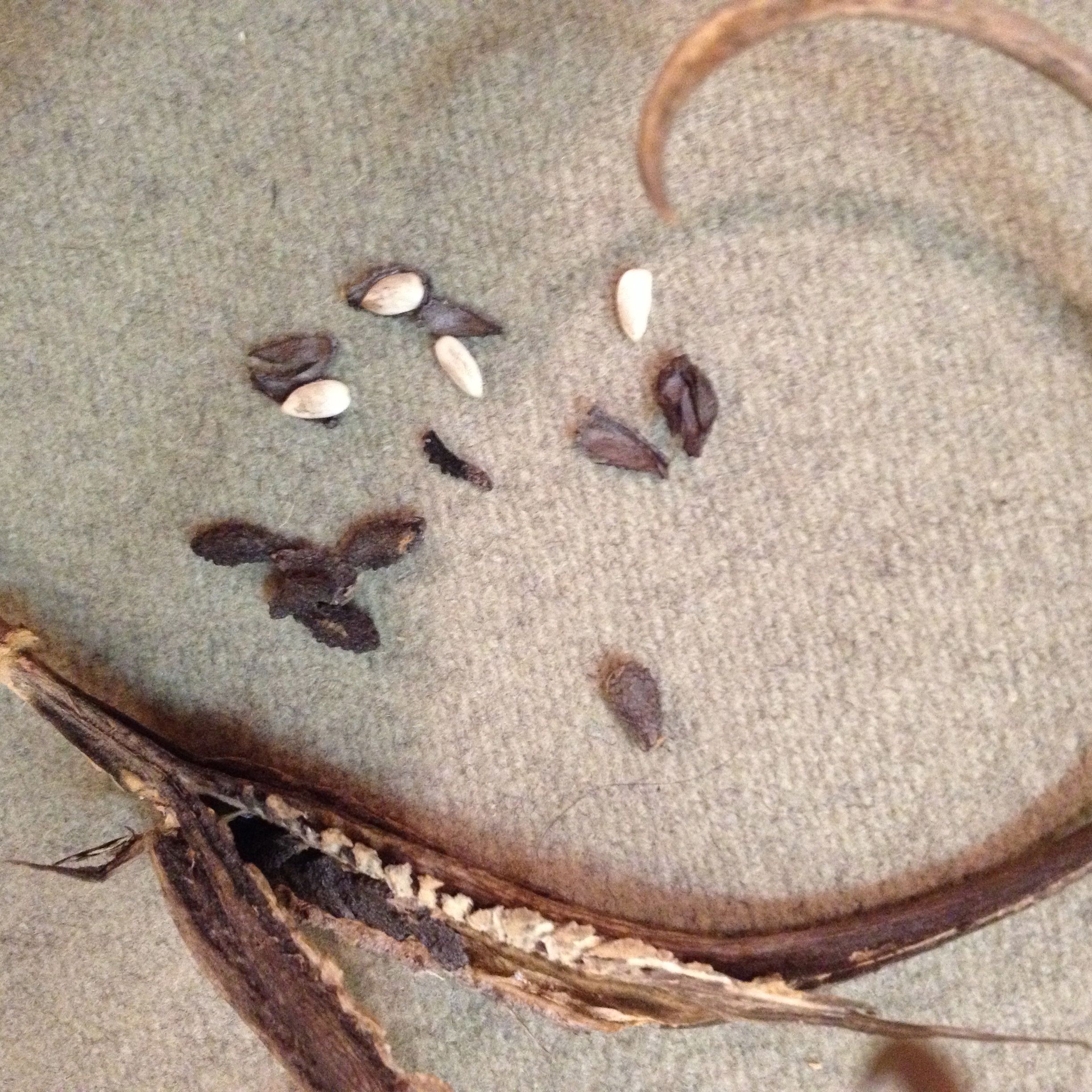
Black seeds of wild devilsclaw from split pod.  White inner seeds delish after peeling (MABurgess photo)

Black seeds of wild devilsclaw from split pod. White inner seeds are delish after peeling. (MABurgess photo)
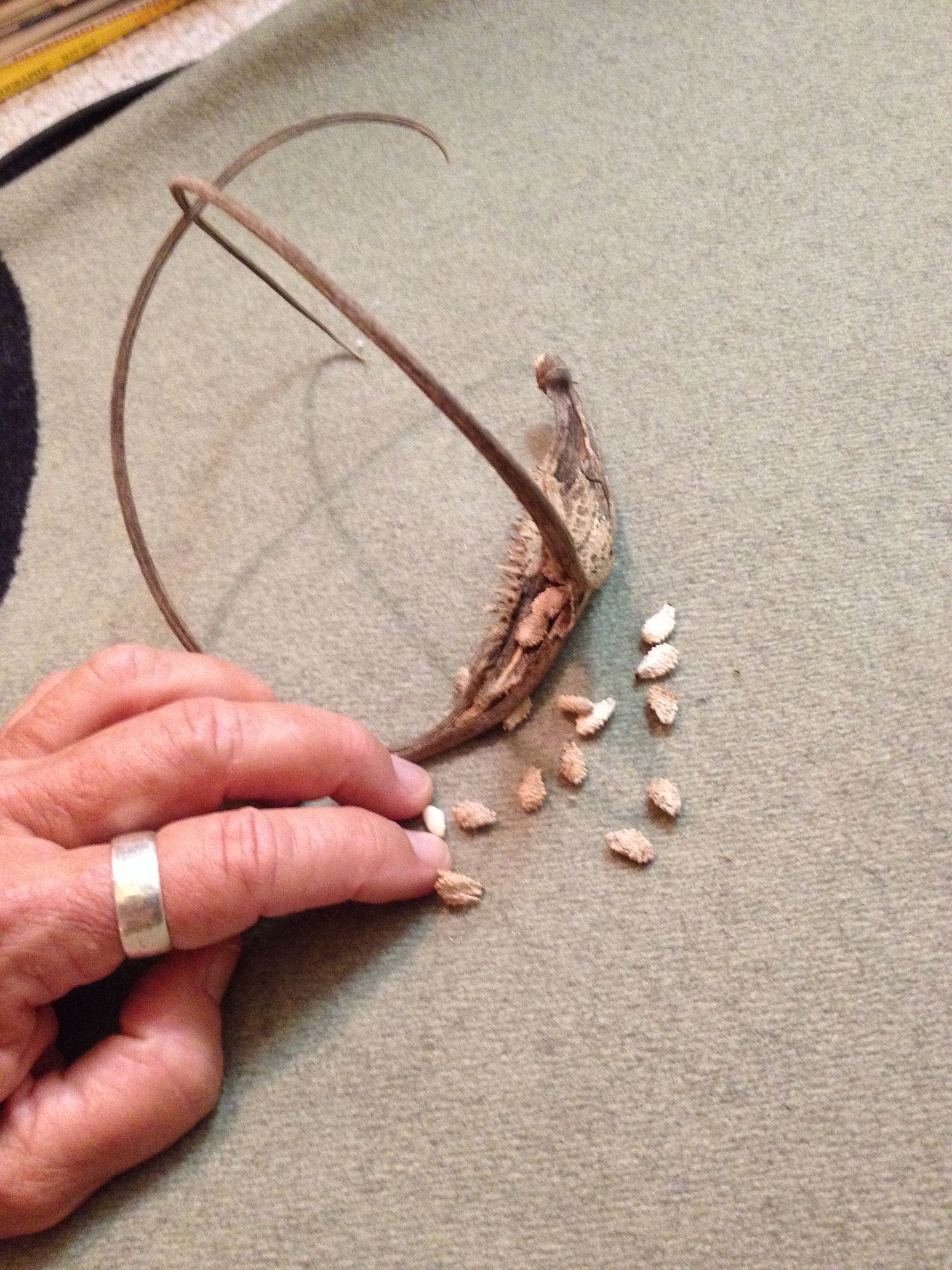
White-seeded domestic devilsclaw has slightly larger seeds like giant sesames (MABurgess photo)

White-seeded domestic devilsclaw has slightly larger seeds like giant sesames.  Peeled inner seed between fingers is ready to eat. (MABurgess photo)

When I see cutesy figurines of roadrunners or Christmas ornaments made with devilsclaw pods, my first thought is, wow, what a waste of a good treat, but then gladly, I realize that this unique plant produces more than enough fresh pods and mature pods to satisfy all the purposes of Nature or hungry and/or creative humans. Give i:hug a try!
Hearty Jojoba

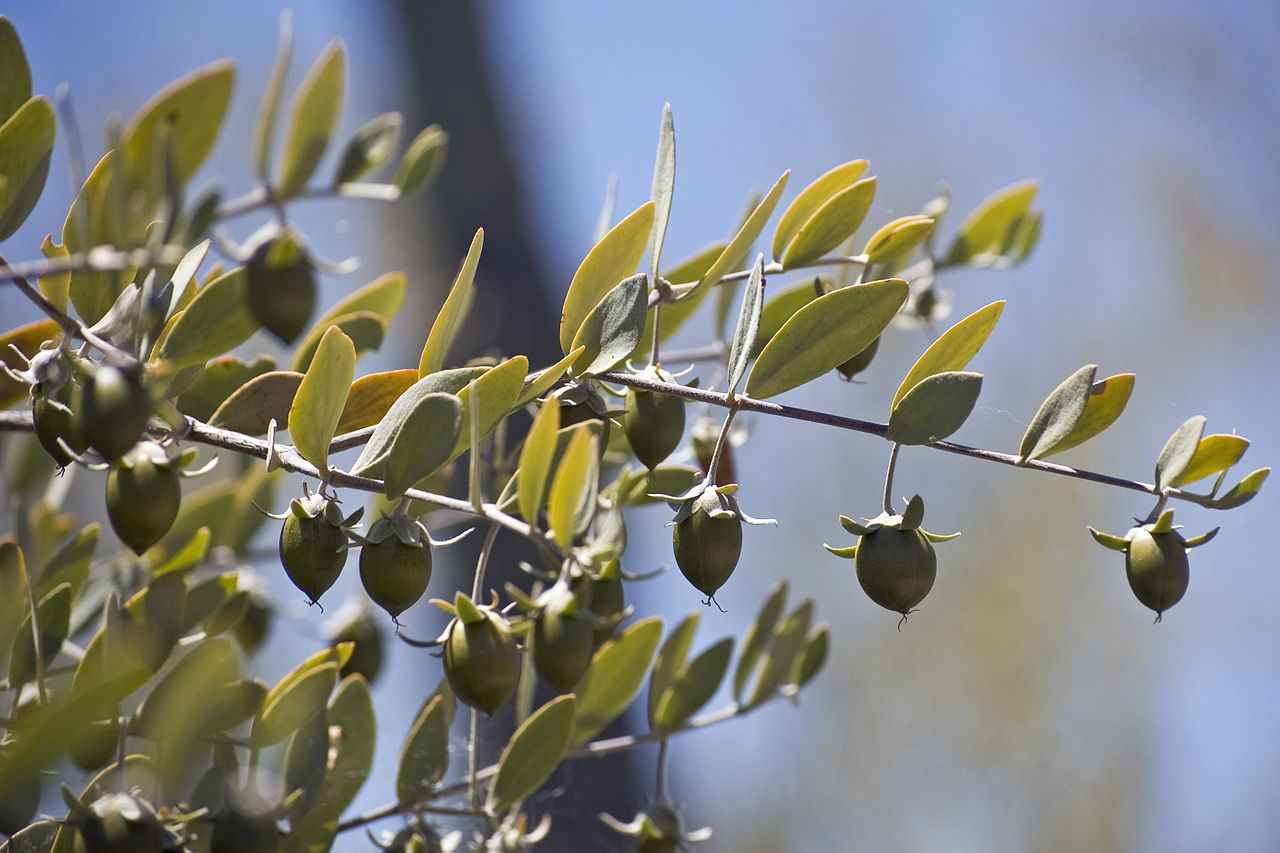
jojoba green fruit

Green jojoba fruit dangle below the branches, slowly ripening in the desert sun.

posted by Jacqueline A. Soule

If you know how I title most of my blogs, you now have a hint on how to pronounce jojoba – it’s pronounced ho-ho-ba. (The “j” is an “h” sound in Spanish. Which reminds me of the time at the busy health clinic when “Hakalina” did not recognize her name called out by the nurse – but that’s another story.)

Jojoba is the O’odham name for the plant (Simmondsia chinensis) and it came into Spanish via the work of Father Kino. Indeed, Father Kino wrote in his journals about the plant. In Bolton’s 1919 translation of Kino’s journals, Kino writes of a visit with “Pima Indians” (pg. 93) and states that, among other items “. . . they also have bezoar, the medicinal fruit called jojoba, blankets, cotton fabrics, curious and very showy baskets or pitchers, macaws . . . and other conveniences.” Later, Kino describes the fruit as “. . . like the almond, and with a very salutary and effective remedy for different kinds of sickness.”

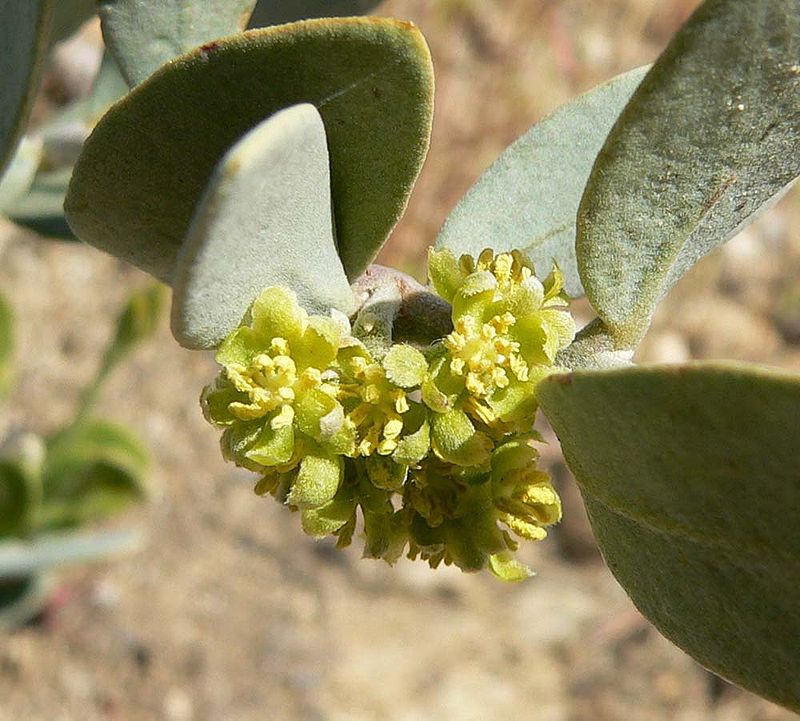
Simmondsia_chinensis_male_flower

Jojoba shrubs are either male or female. Here a male shrub offers it’s pollen filled flowers to passing pollinators.

Other common names for the plant include goat nut, deer nut, pignut, wild hazel, quinine nut, coffeeberry, and gray box bush. Although there are references to jojoba as nuts, they are, botanically speaking, a seed.

Jojoba was used in most areas where it is native. The uses varied with tribe. O’odham would crush the seeds to yield an oily paste useful for dry cracked skin, chapped lips, cuts, scrapes, and burns. Seeds were ground and pressed into cakes, and small portions were eaten in moderation as food. Too much jojoba has a laxative action. Seri used seeds as an emergency food, but more commonly as part of a shampoo process. Seeds can also be made into necklaces.

Jojoba-oil

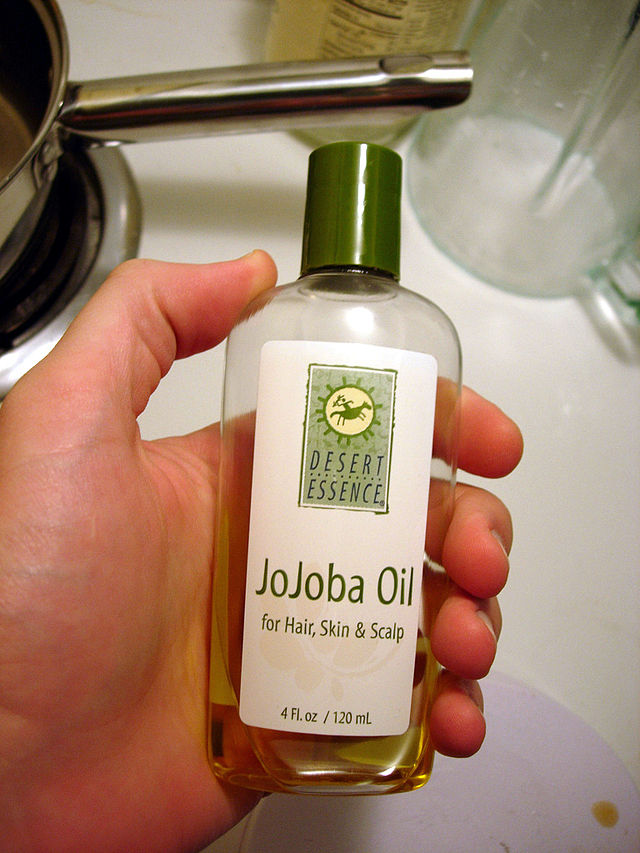
You can purchase pressed jojoba “oil” in many stores. I use the oil in making lotion.


Currently, jojoba is grown commercially for its “oil,” in reality a liquid wax ester, expressed from the seed. This oil is rare in nature. Technically it is an extremely long straight-chain wax ester and not a triglyceride, making jojoba and its derivative jojoba esters more similar to human sebum (body oil) and sperm whale oil than to vegetable oils. Jojoba oil is easily refined to be odorless, colorless and oxidatively stable, and is often used in cosmetics as a moisturizer and as a carrier oil for specialty fragrances. It also has potential use as both a biodiesel fuel for cars and trucks, as well as a biodegradable lubricant. Plantations of jojoba have been established in a number of desert and semi-desert areas.


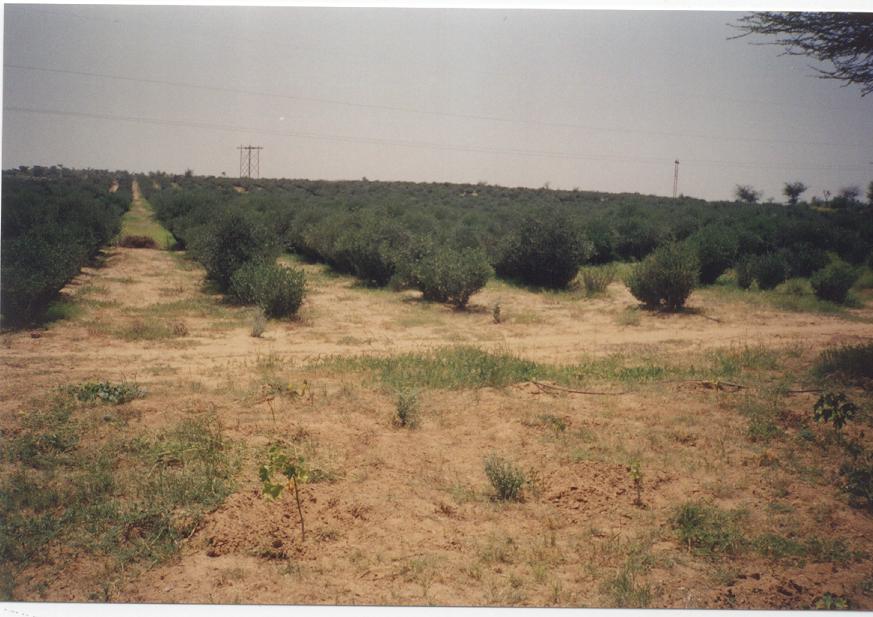
jojoba plantation in India

Jojoba plantation in one of the semi-arid areas of India.

Jojoba is currently the Sonoran Desert’s second most economically valuable native plant (overshadowed only by the Washingtonia palms used in ornamental horticulture). Plant breeders are doing selective breeding to develop plants that produce more seeds, seeds with higher oil content, and characteristics that will facilitate mechanical harvesting.

A few interesting taxonomic notes. Jojoba is the only species in its plant family, making it quite unique among flowering plants. While there are around 400 monotypic genera, this is the only monotypic flowering plant family. The scientific name, Simmondsia chinensis, is an example of the need for good penmanship. Jojoba does not originate in China! Johann Link, the botanist naming the species, misread Nuttall’s collection label “Calif” as “China.”

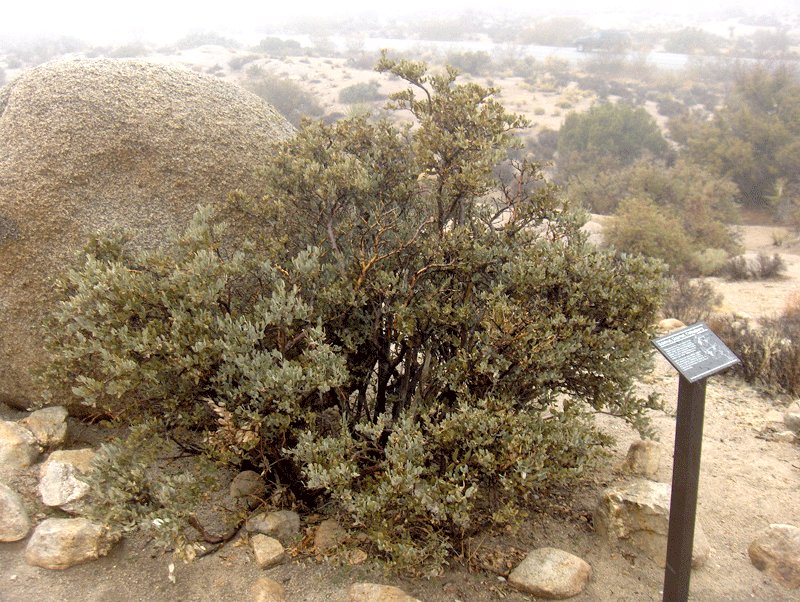
Jojoba habit

Jojoba shrubs live well in the desert.

Harvesting and Use.
Jojoba seed on a single bush will ripen slowly over several months. This is one of the traits breeders are seeking to change. Seed is ready to be harvested when the hulls easily fall off and a slight tug releases it into your hand. If it resists, it isn’t ripe.

Store harvested seed in jars or even in the freezer. Grind jojoba seeds in a mortar and pestle for topical use. Alternatively toast the seeds and munch as an occasional snack.

If you have the technology, you can harvest seeds and press them for the oil. Or simply plant them in your native landscape and let the native wildlife use the seed.

Planting and Care will be covered in a future blog.


To learn more about jojoba and other native plants used as herbs, please come to my free presentation “Father Kino’s Native Herbs” at the Main Library on Saturday Sept 13 at 1:30. More at http://www.library.pima.gov/calendar/?ID=26635

Some of the information in this article is excerpted from my book “Father Kino’s Herbs: Growing and Using Them Today” (2011, Tierra del Sol Press, $15). I hope you will consider purchasing a copy locally at Antigone Books, Arizona Experience Store, Magic Garden, Mostly Books, or Rillito Nursery.

© 2014, Jacqueline Soule.  All rights reserved. I have received many requests to reprint my work. My policy is that you are free to use a very short excerpt which must give proper credit to the author, and must include a link back to the original post on our site. Please use the contact me if you have any questions. JAS avatar

Cool Summer Bean Dishes….with Heirlooms

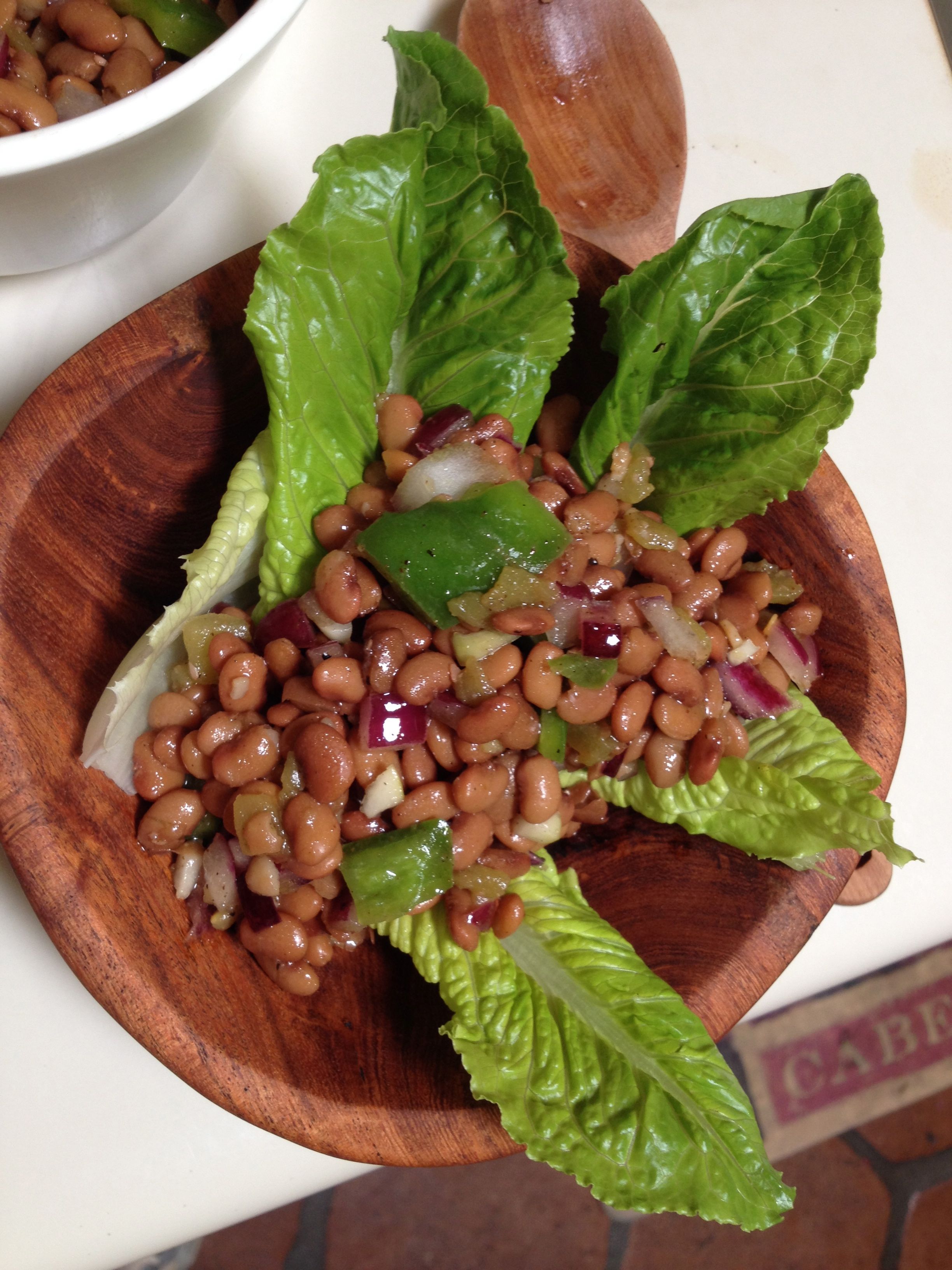
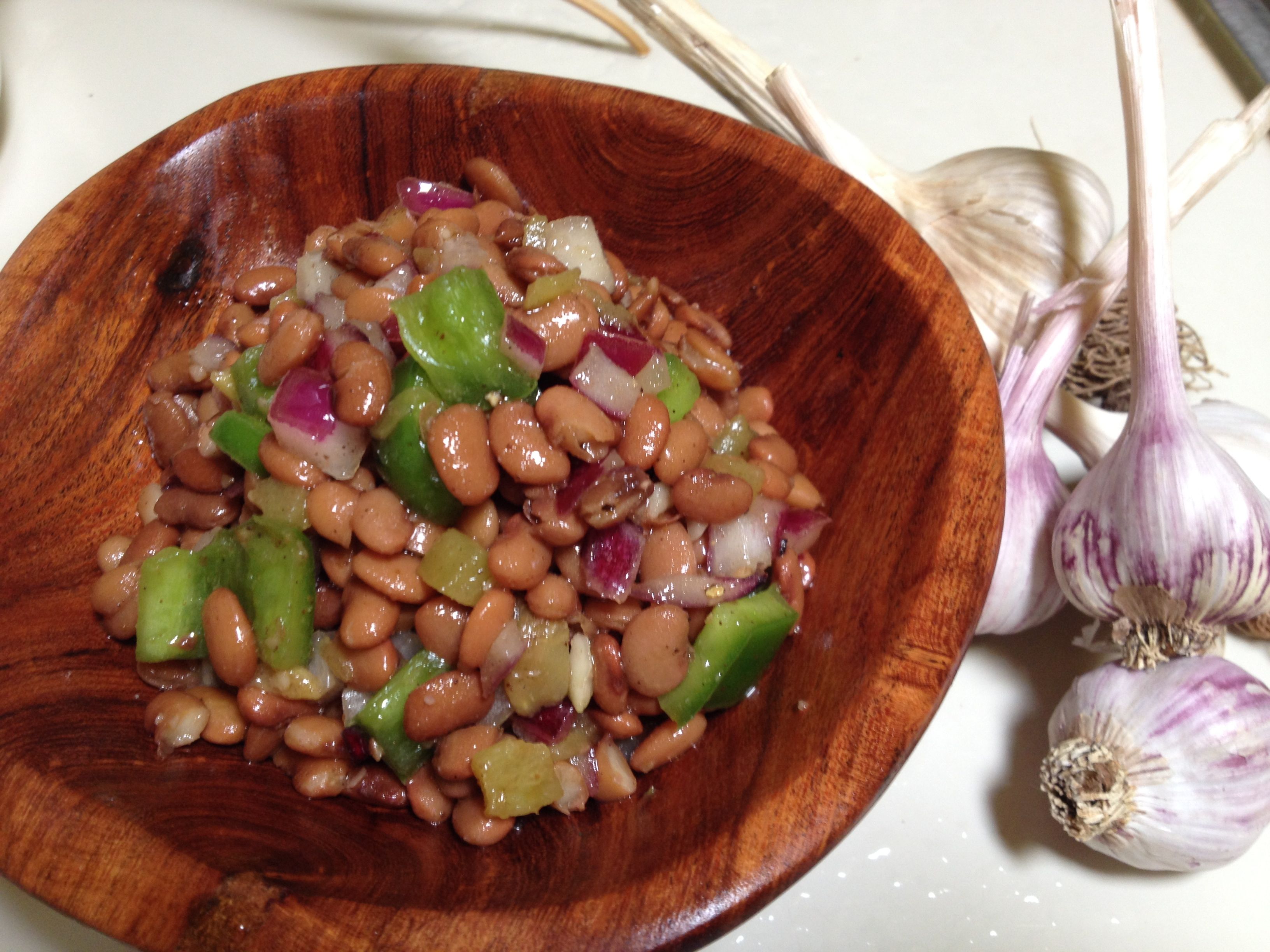
Sonoran Caviar in Mayo mesquite bowl (MABurgess photo)

Sonoran Caviar in Mayo mesquite bowl (MABurgess photo)

For picnics, barbeques or simple pick-me-ups, here are some fun ideas to bring a variety of heirloom beans into your summer fare.  We usually think of beans as winter food, but in the heat of August these tasty bean treats will help chill you out with gusto.

Tia Marta here to share ways of bringing the original “fast food” into your summertime menus.  Fast–that is, cook ’em first and have them “at the ready” for dressing them to suit any mood or occasion.  I am a founding member of the Heirloom Bean Fan Club, always amazed by the array of bean possibilities we have in the Southwest available to us.  Here in Baja Arizona we are blessed with inherited gifts of delectable, nutritious, desert-adapted beans from Native farmers, traditional Hispanic families, Black, Chinese, Anglo and other newcomers.  They grow well in our backyard gardens, bedecking our tables with colorful goodness.

All American sun oven set up on patio table-available thru Flor de Mayo (MABurgess photo)

All American sun oven set up on patio table-available thru Flor de Mayo (MABurgess photo)

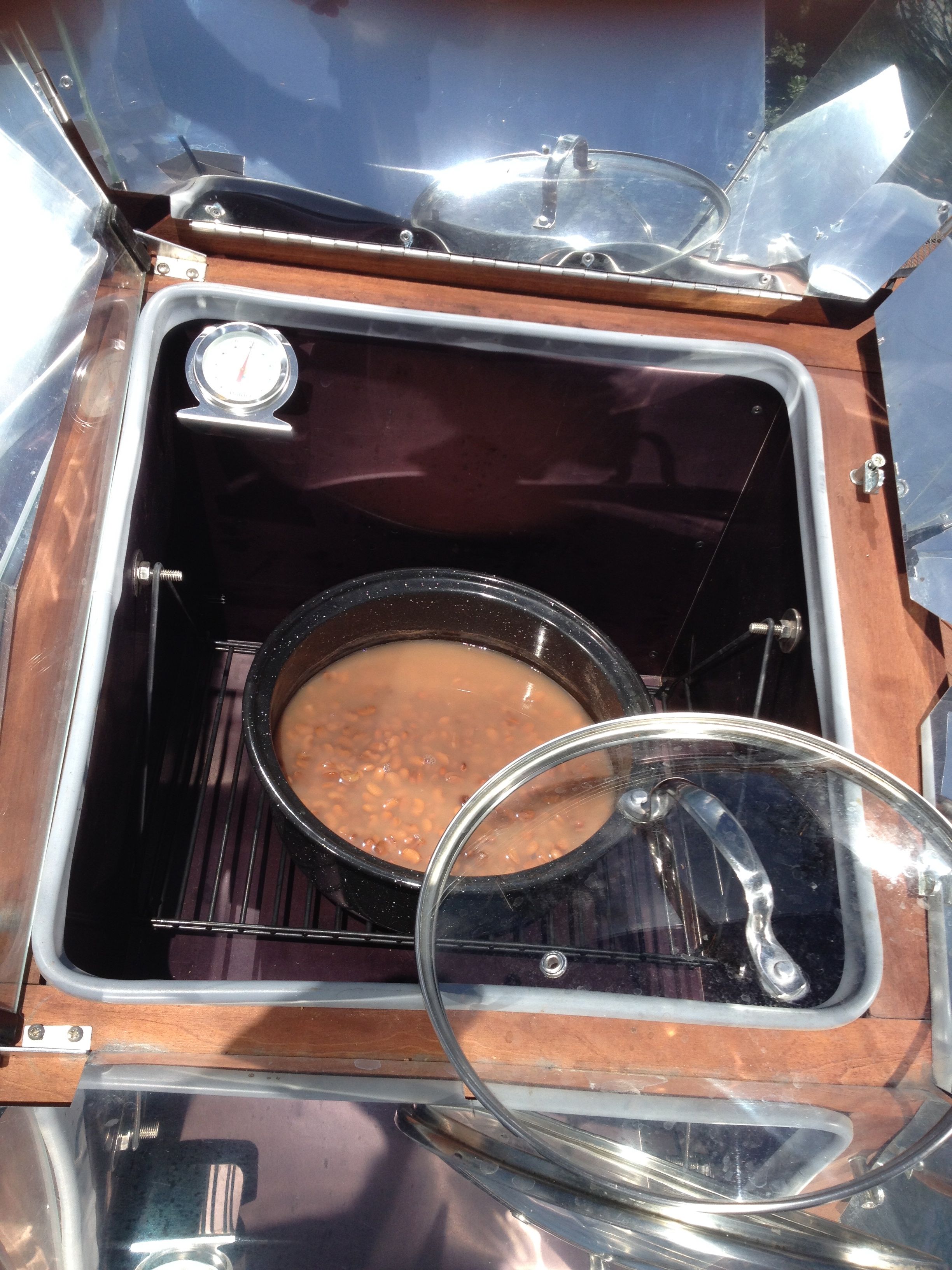
When the summer sun fully hits our porch about 10am, out comes our sun-oven to help us pull the heat of preparation out of the kitchen.  Unfolding its reflector “wings,” I place a saucepan of pre-soaked Native tepary beans–the ones the Tohono O’odham call s-wepegi ba:wi or red tepary–covered by plenty of drinking water, nothing else necessary.  About every half hour or hour (you don’t have to be too regimented if you don’t feel like it), I go out and re-adjust the orientation of the sun-oven, vertically and horizontally, to keep it as close to perpendicular to the sun as possible.  The teps will be smelling good and testing done about 2pm if the sky has remained relatively bright.

Tepary beans, done by 2pm in solar oven, temp 300 (MABurgess photo)

Tepary beans, done by 2pm in solar oven, temp 300 (MABurgess photo)

Now, with my well-cooked teparies, if I’m not ready for kitchen cookery action I let them cool down then store them labeled in the frig or freezer.  If I am in cook mode, I drain them, reserving the liquid for soup, and let them cool while I chop veggies.  My plan–“Sonoran Caviar”–the best salad ever invented for desert rats in need of a pinch of picante.  This is the culinary creation of desert survival instructor, raconteur, and one-of-a-kind character George Price, and my thanks go to him for bringing even more excitement out of teparies!  Give it a try.

George's Sonoran Caviar--teparies with NSS heirloom garlic (both available at St Phillips Sunday farmers market)

George’s Sonoran Caviar–teparies with NSS heirloom garlic (both available at St Phillips Sunday farmers market)

Sonoran Caviar recipe:

Ingredients:

4 cups cooked brown tepary beans, drained and cooled (from less than 1 lb dry beans)

1 cup diced red onion

1 red bell pepper, diced

2 crisp Anaheim Chiles, diced, skinned, and de-seeded

1 Tbsp crushed garlic

1 Tbsp Tony Chacere’s Original Creole Seasoning (to taste)

1/3 cup olive oil

1/3 cup red wine vinegar

1 tsp black pepper ground

Mix all ingredients thoroughly in a large bowl.  Chill in refrigerator for 24 hours, stirring occasionally.  Stir again before serving.  Buen provecho, George (Be advised that this one serves 6 hungry folks including teenage boys.)

[His Sonoran Caviar will get rave reviews at any pot luck or picnic.]

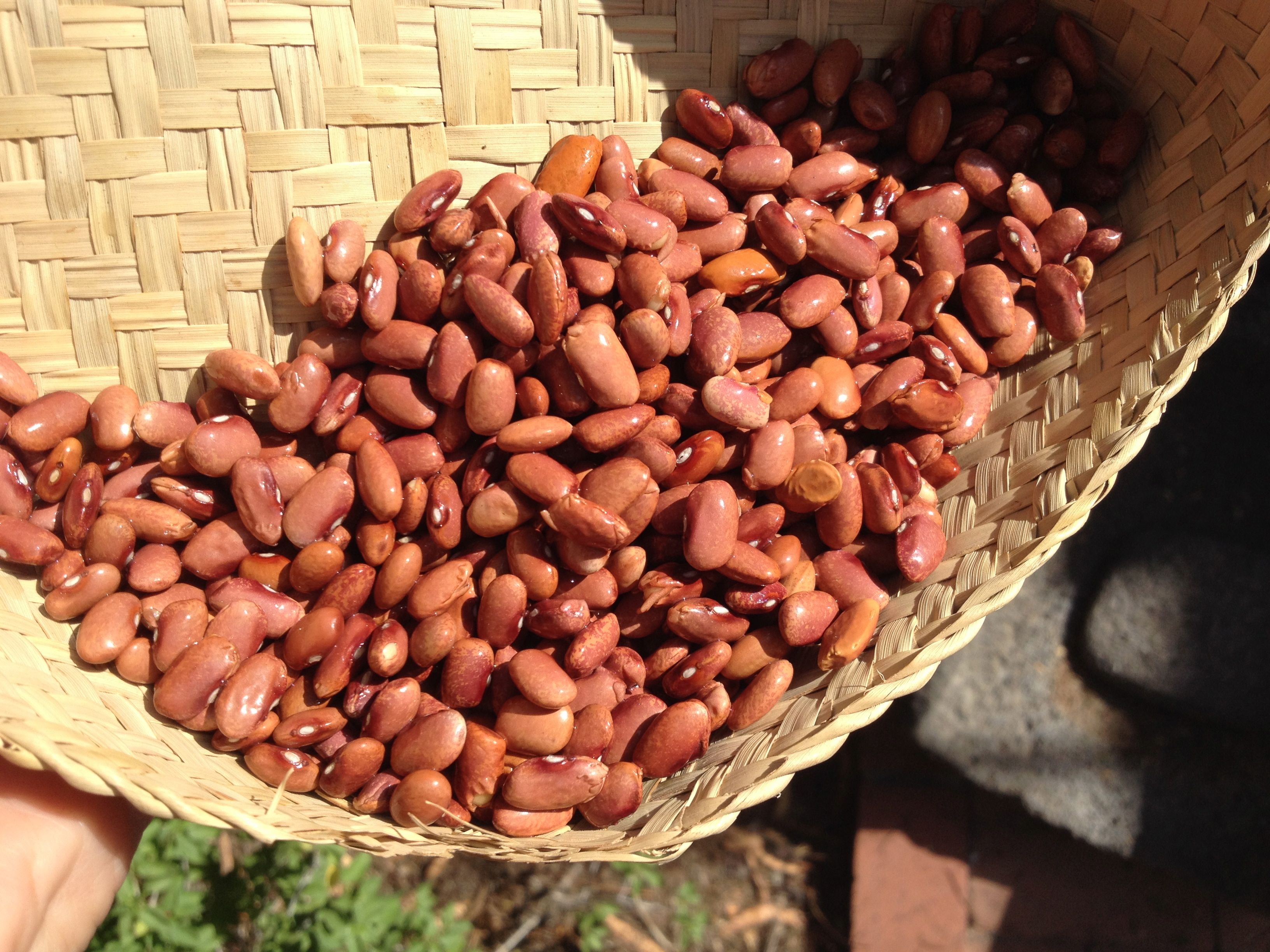
Flor de Mayo beans in Mayo palm basket (beans and baskets from Sunday St Phillips market)

Flor de Mayo beans in Mayo palm basket (beans and baskets from Sunday St Phillips market)

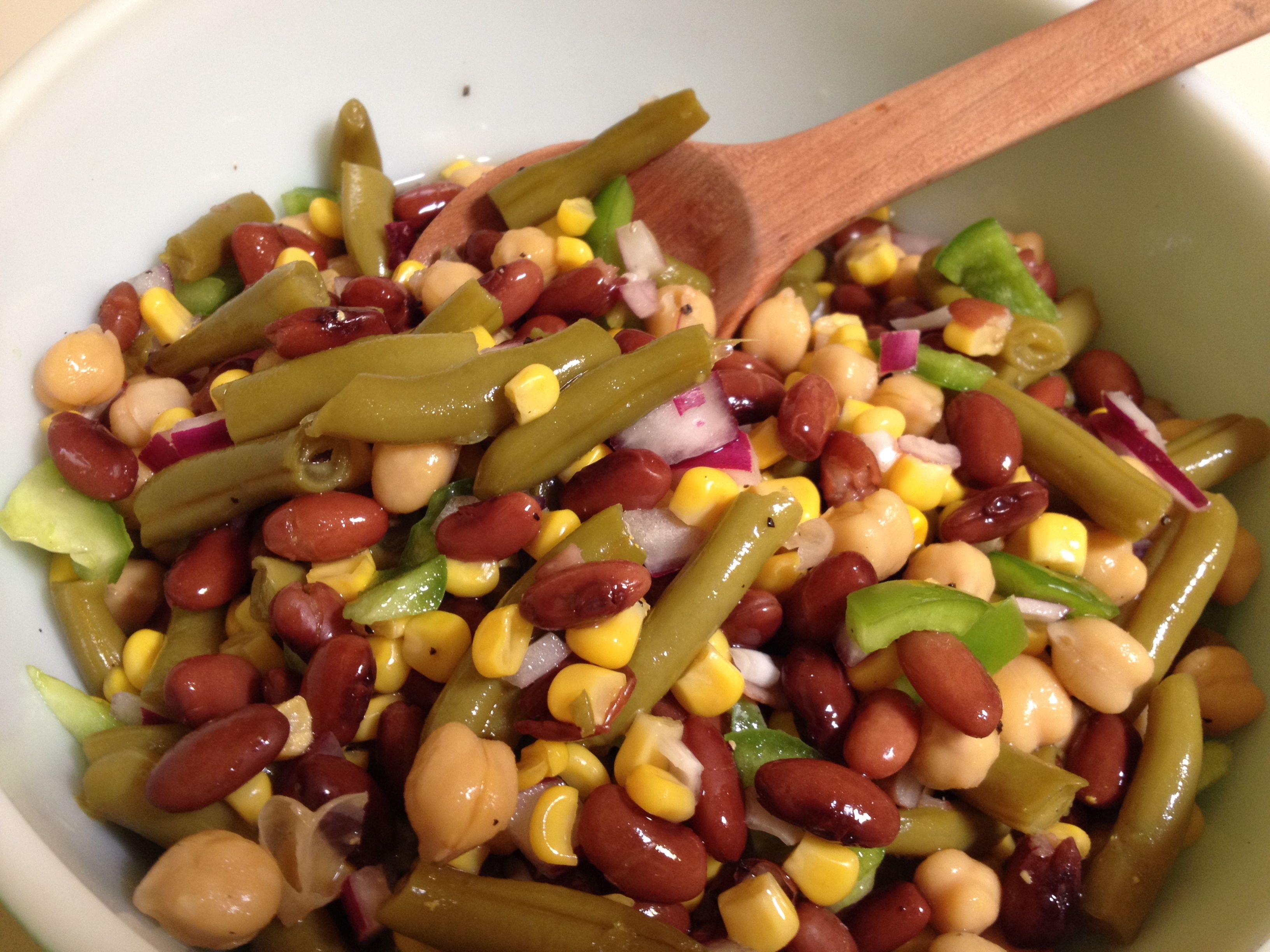
In the realm of cool summer dishes, I can always count on Heirloom Flor de Mayo Mixed Bean Salad (my namesake!).  When I was in college, Mother sent me a little book by Barbara Goodfellow, Make it Now Bake it Later from the ’60s.  It has inspired my hostessing ever since, especially my adaptation for this sweet recipe which delights in everything from your garden:

Marinated Mixed Bean Salad with Flor de Mayo heirlooms (MABurgess photo)

Marinated Mixed Bean Salad with Flor de Mayo heirlooms (MABurgess photo)

Heirloom Flor de Mayo Mixed Bean Salad Recipe:

(Fool-proof for picnics and barbeques–and it keeps well for days in the frig)

1 cup (or more) cooked heirloom Flor de Mayo beans for bright color (or another SW heirloom such as Ojo de Cabra, Rio Zape, Bolita, Cannellini–all taste wonderful in this marinated salad)

1 cup cooked green beans or snap beans from your garden (or organic canned)

1 cup cooked garbanzo beans (organic canned garbanzos/chickpeas) from your winter garden

1 cup cooked GMO-free corn kernels (off the cob or canned)

1/2 cup chopped green pepper

1 Tbsp chopped shallots, chives,  sweet onion, or I’itoi’s onion from the garden

1/2 cup organic sugar or agave nectar

1 cup organic cider vinegar

1/2 cup extra virgin olive oil

1 tsp sea salt

Drain cooked beans.  In mixing bowl dissolve sweetener and spices in liquid.  Add beans, chopped green pepper and onion, then mix.  Let stand in refrigerator overnight, mix again.  When serving, reserve liquid for other marinades.  Serves 6 generously.

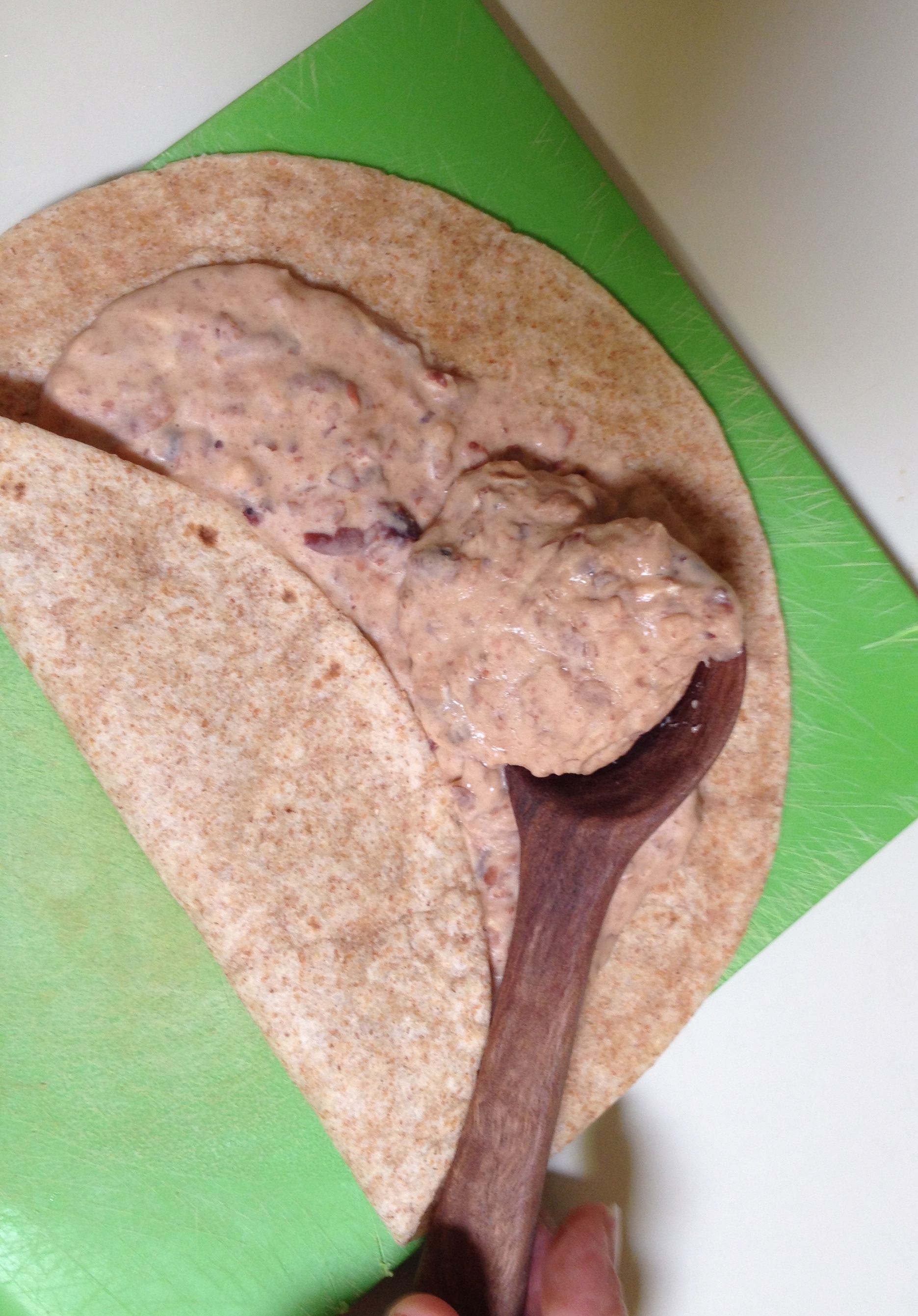
Mortgage Lifter burrito in whole wheat tortilla--first step for making heirloom bean roll-up appetizers

Anasazi Bean burrito in whole wheat tortilla–preliminary for making heirloom bean roll-up appetizers

Another fun way to get your complex carbs and vegetable protein is to make heirloom bean dips– then to get fancier using the dip, the next step is Easy Heirloom Bean Roll-ups.  For the fastest, most crowd-pleasing bean-spread, I use either Mortgage Lifter beans or Anasazi beans–both great.  Mortgage Lifter is a giant white runner bean, also known as Aztec white runner or Bordal.  Grown in your garden, it will vine over itself and its neighbor plants with big white flowers that attract hummingbirds.

Easy Heirloom Bean Roll-up Appetizers Recipe:

Ingredients:

2 cups cooked Mortgage Lifter beans, or purple & white Anasazi beans

4 oz low-fat cream cheese (1/2 block of neuchatel)

1 Tbsp Red Devil hot sauce

1 tsp ground cumin seed

pinches of sea salt, to taste

3 or 4 medium whole wheat tortillas

Drain cooked beans (reserving liquid if you need to make a thinner texture after mashing).  Mash beans and cream cheese together with pastry cutter or bean masher.  Mash in all other ingredients. [You can sometimes find traditional Tarahumara madrone-wood bean mashers at NativeSeeds/SEARCH or at Flor de Mayo.]  At this point you have the best dip ever, and also the filling for instant burritos ready to feed to drop-in visitors.  Read on for further Roll-up directions…..

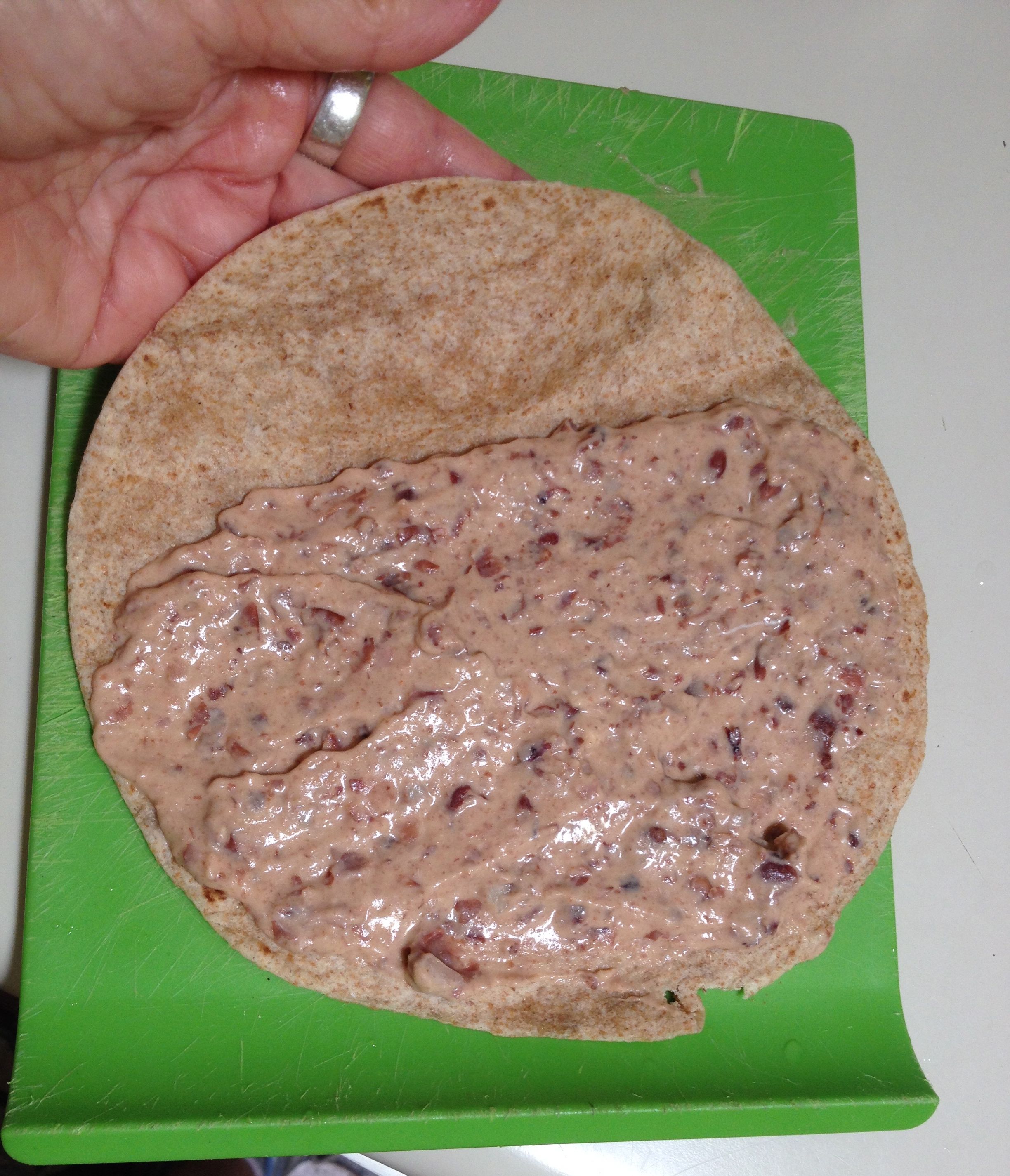
Heirloom bean "roll-ups" Step 1--with Anasazi beans

Heirloom bean “roll-ups” Step 1–with Anasazi beans

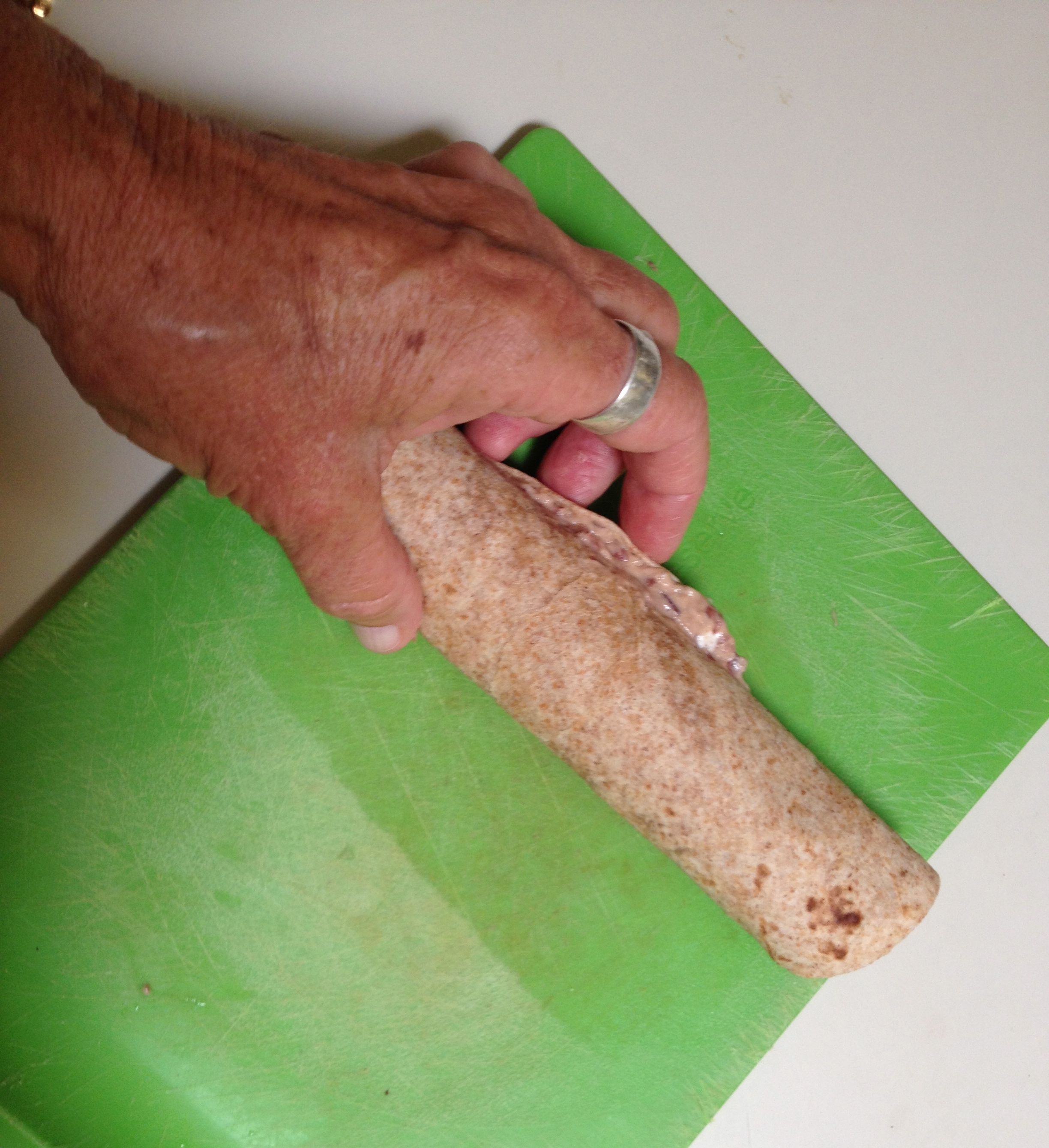
Rolling up heirloom bean hors d'oeuvres--Step 2 before cutting

Rolling up heirloom bean hors d’oeuvres–Step 2 before cutting

To finish these festive heirloom bean appetizers…spread the bean mixture onto 3/4 of one tortilla leaving a chord of the circle uncovered.  You will see why when you roll it up.  Begin rolling the tortilla tightly from the bean-covered edge and continue to roll snugly.  The bean spread will squeeze toward the unrolled edge, filling it.  The rolled tortilla will be held together by the bean spread.  Repeat with remaining tortillas and dip.

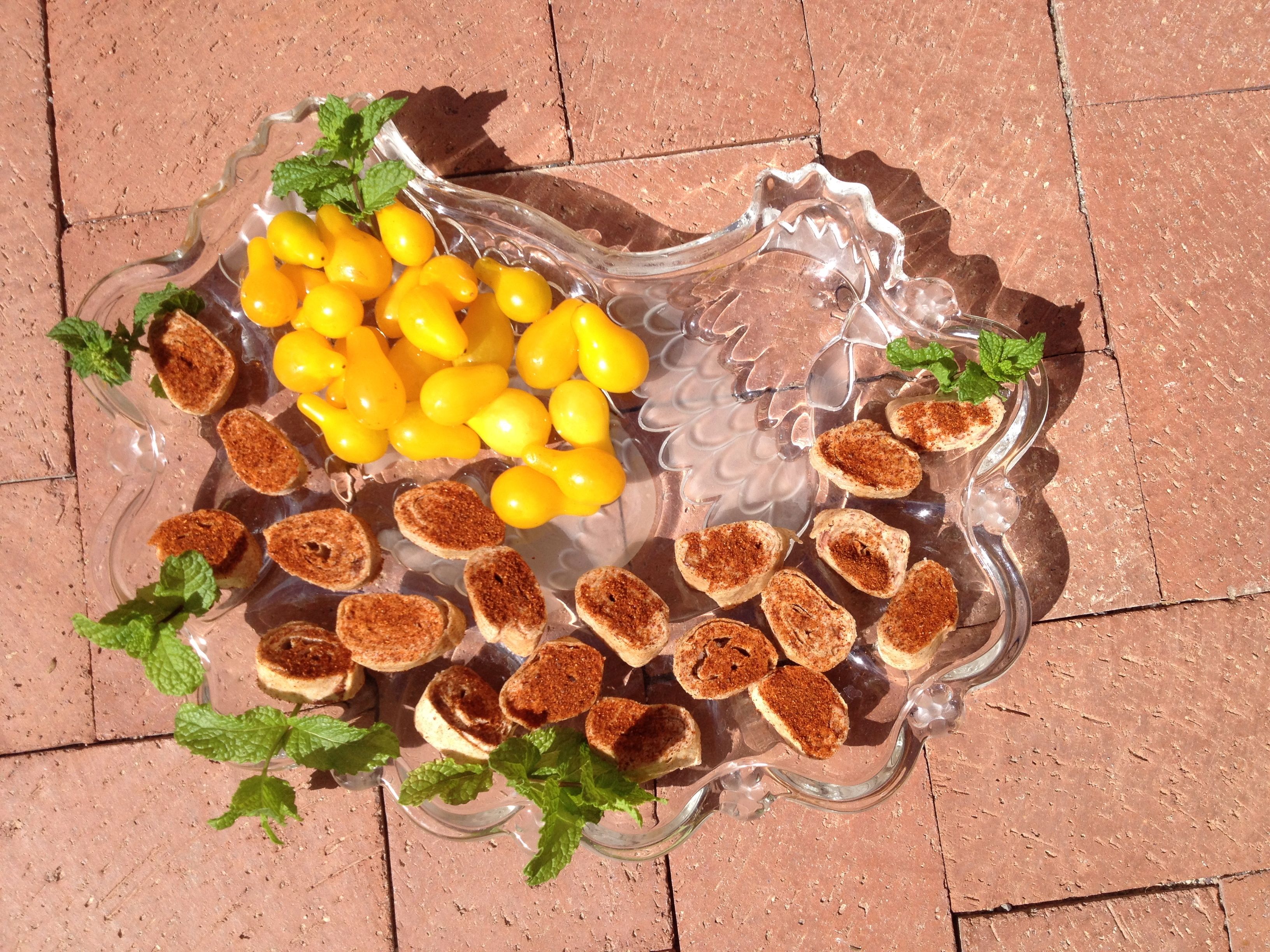
Place tortilla rolls on wax paper and chill in freezer or frig long enough to become firm for cutting.  Place chilled rolled tortillas on cutting board one at a time.  Slice in 1/2-inch rounds and place the disc-shaped spirals on a serving tray.  Chill until served.  Bedeck each Heirloom Bean Roll-up with a sprinkle of paprika or a cilantro leaf.  Each tortilla should produce about 6-8 roll-ups.  (With any leftover bean mixture, enjoy it as dip or in a burrito.)  These appetizers are a tasty celebration–and a tacit bow to Southwestern farming traditions.

Heirloom Bean Roll-up Appetizers and yellow pear tomatoes in chicken hors d'oeuvre tray (MABurgess photo)

Heirloom Bean Roll-up Appetizers and yellow pear tomatoes in chicken hors d’oeuvre tray (MABurgess photo)

By the way, you can find all of the wonderful Southwest heirloom beans to use in these recipes either at the NativeSeeds/SEARCH store, 3061 N Campbell Ave, Tucson, or at our Flor de Mayo booth at the charming St Phillips farmers market on Sundays in the shade of spreading sycamores and mesquites.

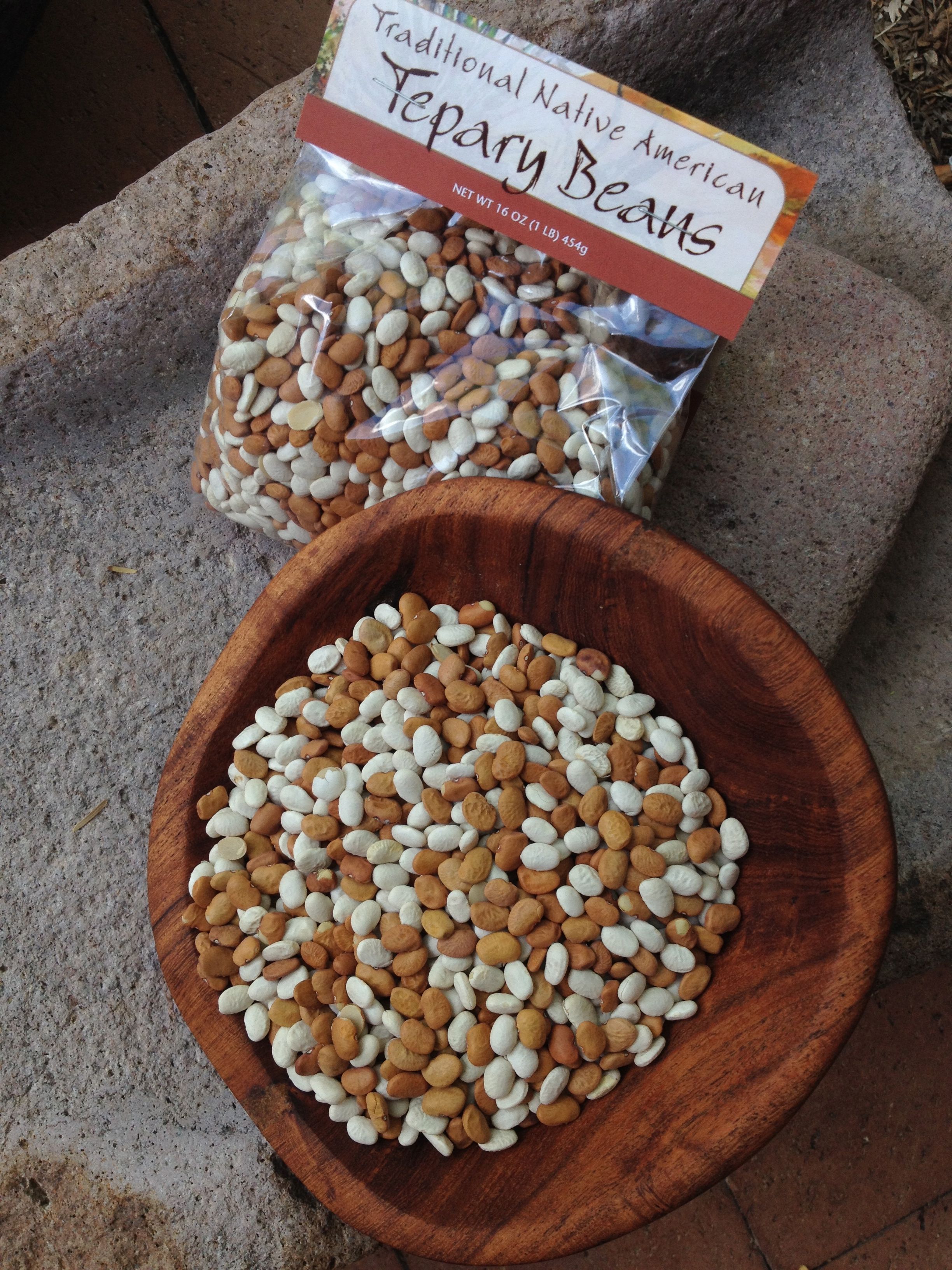
Traditional Native tepary beans--colorful mix available at Tohono Chul Park gift shop, NativeSeeds/SEARCH and Flor de Mayo booth at farmers market

Traditional Native tepary beans–colorful mix available at Tohono Chul Park gift shop, NativeSeeds/SEARCH and Flor de Mayo booth at farmers market

For the experienced or the novice desert gardener, now is the time to do the last planting in your monsoon garden.  One of my Tohono O’odham mentors taught me that the second week in August is really the last opportunity to put bean, corn, melon, or squash seed in the ground.  Even better to give your garden a jump-start by planting starts!  Right now at the NativeSeeds/SEARCH store you will find a variety of healthy seedlings hungry to be in the soil–and on sale.  Come give them a future–and a delectable future for your palette in the months to come….

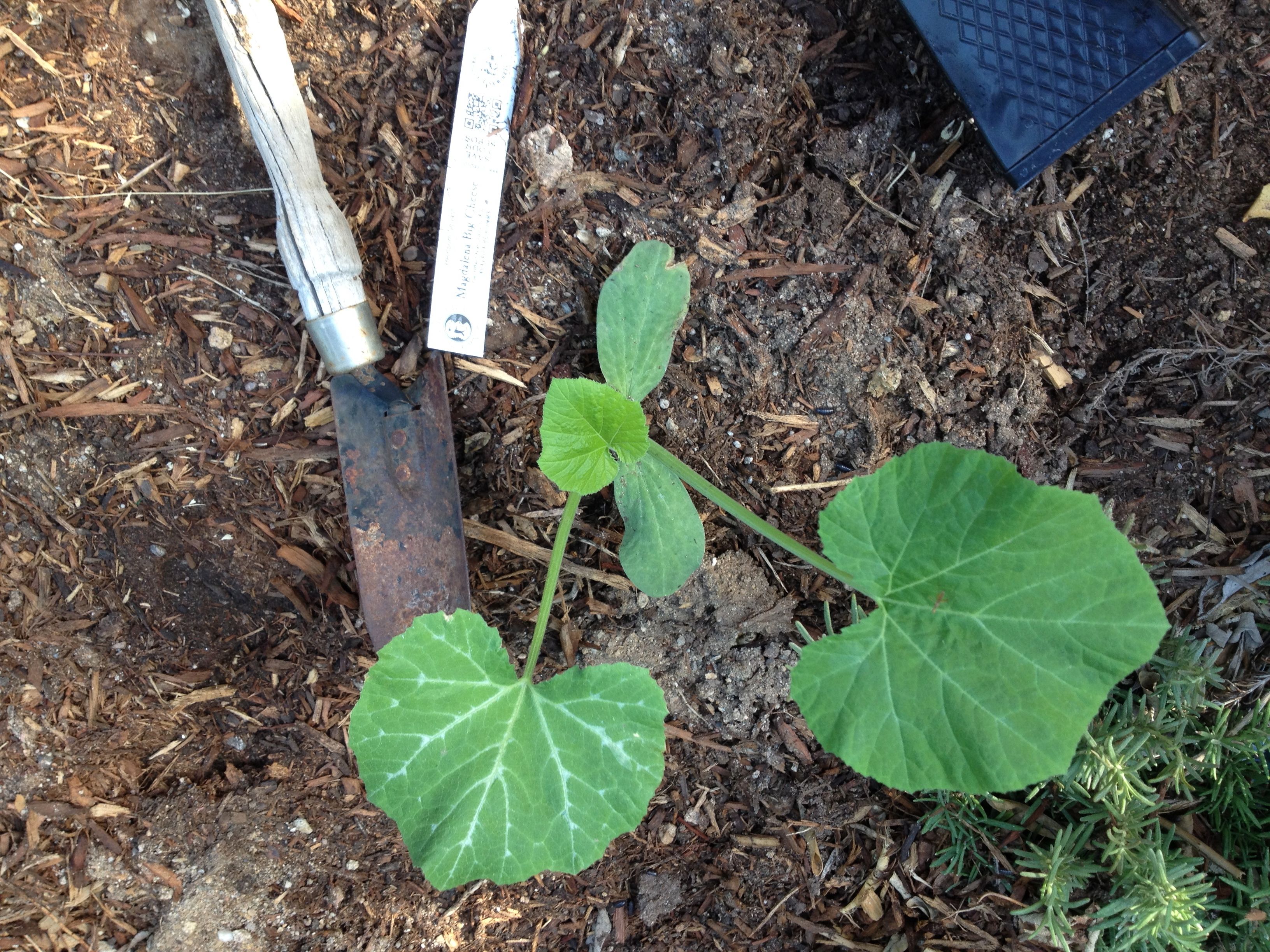
Happily planted--seedling Magdalena Big Cheese Squash seedling from NativeSeeds/SEARCH monsoon plant sale still on!

Happily planted–Magdalena Big Cheese Squash seedling from NativeSeeds/SEARCH monsoon plant sale (still going)

Happy gardening–and healthy eating to you from Tia Marta!

Desert Lavender

posted by Jacqueline A. Soule

In the days before indoor plumbing, daily showers, and sanitation in general, the clean fresh fragrance of lavender was highly welcome. The name lavender is derived from the Latin “lavare,” meaning to wash. Leaves and flowers have been used for several millennia to do just that, wash. Fragrant baths, hair rinses, to cleanse and treat skin ailments, and, in the past, to help eliminate lice and bedbugs from the household. Tea made from leaves and flowers has been used to treat sleeplessness, restlessness, headache, flatulence, and nervous stomach.


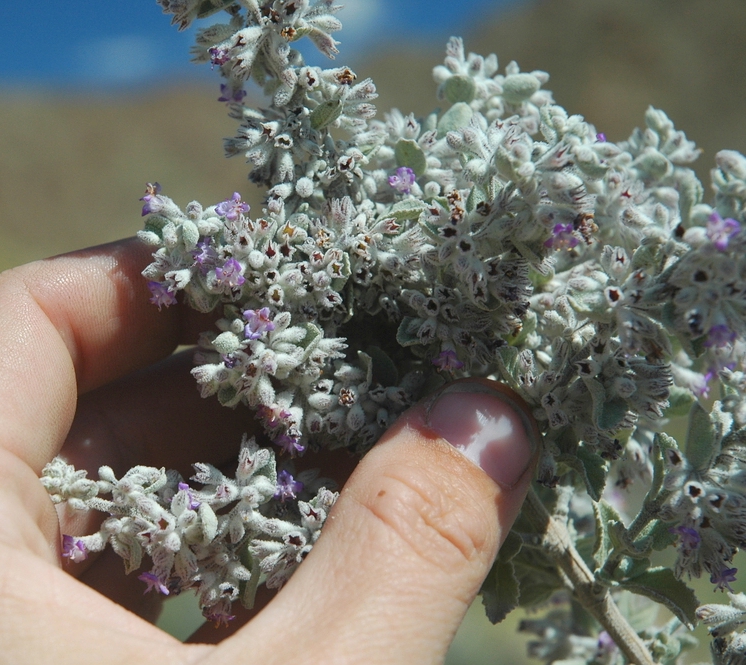
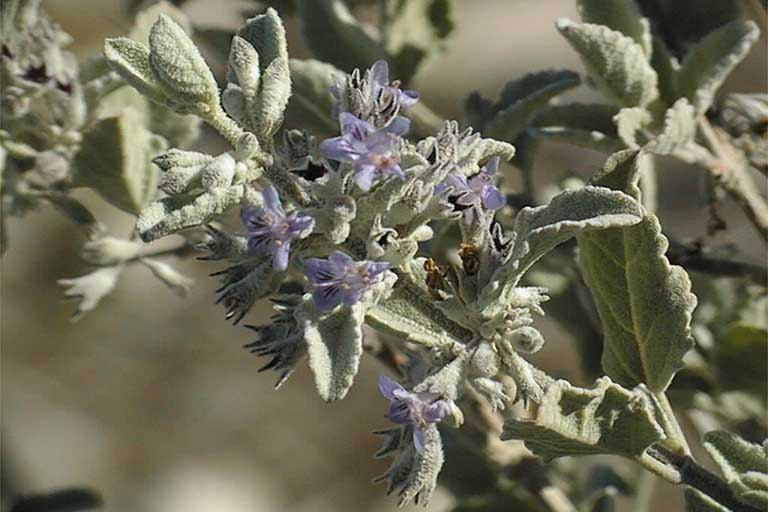
Hyptis_emoryi_flowers_002


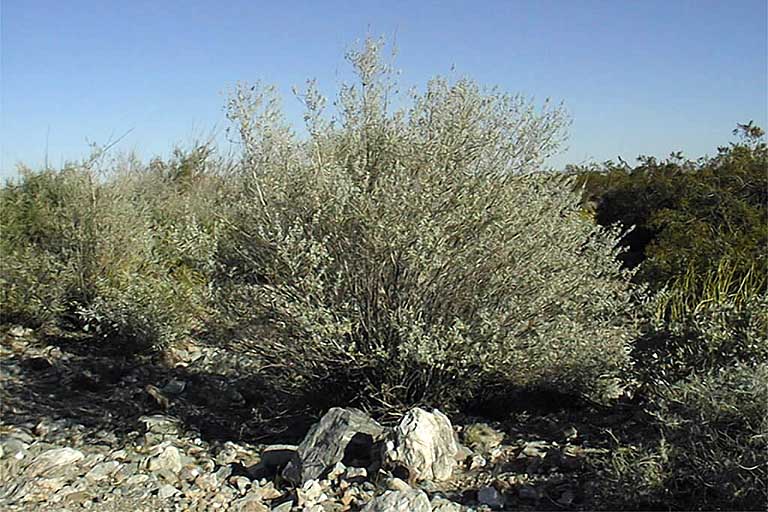
Hyptis_emoryi_habit


Imagine the delight the Europeans experienced when first encountering this fragrant desert plant in our area. Here they were, after an arduous sea voyage, months of horseback travel along dusty deer trails, riding into progressively odder lands – strange towering saguaros, bulging barrel cactus, pungent creosote bush – to come across a gentle evocative fragrance of their childhood home, the sweet scent of lavender. Some, like Father Kino, may have seen it as a sign from God that their journey was blessed.


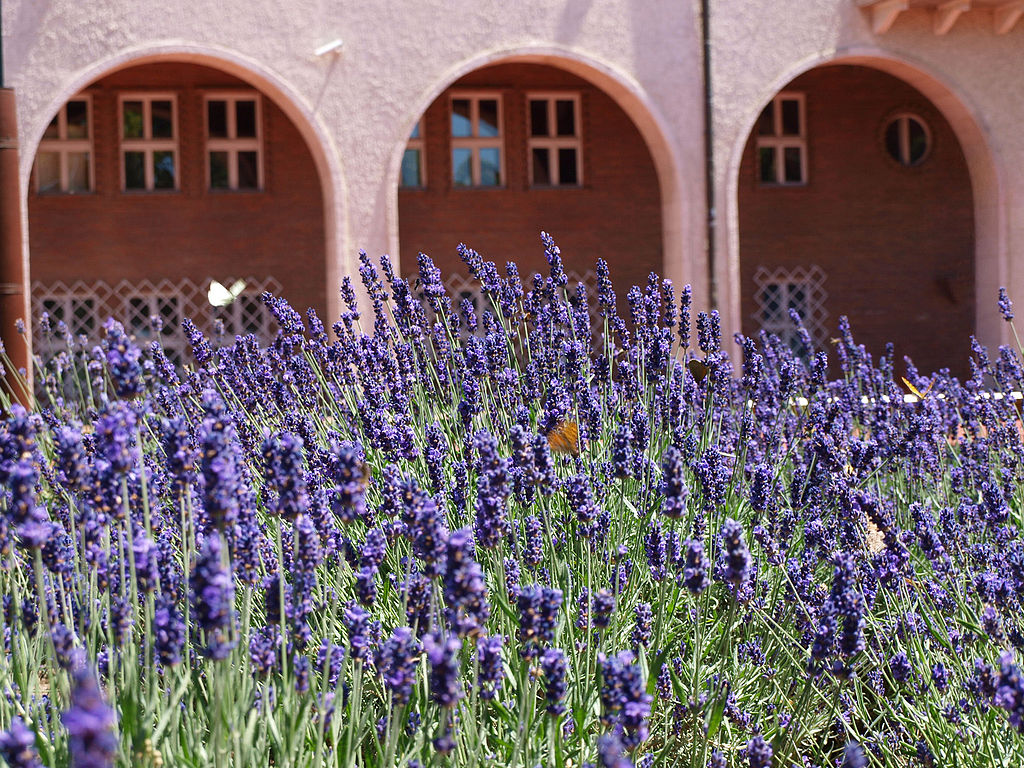
lavendula in Hungary


Hyptis_emoryi_flowers_001


Native Seri use a tea of desert lavender (Hyptis emoryi) to help treat a cold. The Franciscans (who came to the area well after Padre Kino) were known to have harvested and used the leaves and flowers in the sick room, to soothe the ill with the fragrance and to bathe fevered foreheads.

Harvesting and Use.
Harvest stalks of desert lavender as the lower-most flowers open. This gives you buds with optimum fragrance. Dry these, like all herbs, out of direct sunlight. I have used desert lavender in all the same external applications European lavender is used for with no observed ill effects. Here are three ways you can use desert lavender.


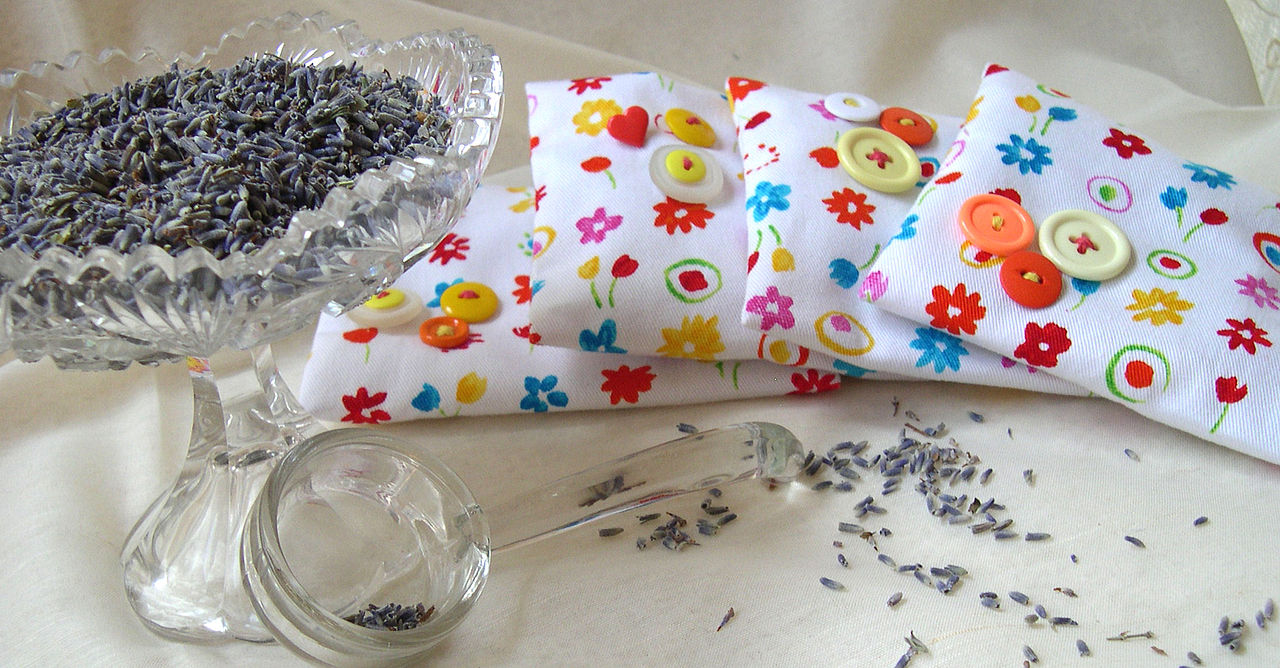
Herbal sachets can be made with desert lavender.

Lavender_Sachets


Herbal Tisane
“Tisane” is the general term for a herbal tea not consumed as a medicinal tea.
1 tablespoons dried herbs or 2 tablespoons fresh herbs
1 cup boiling water
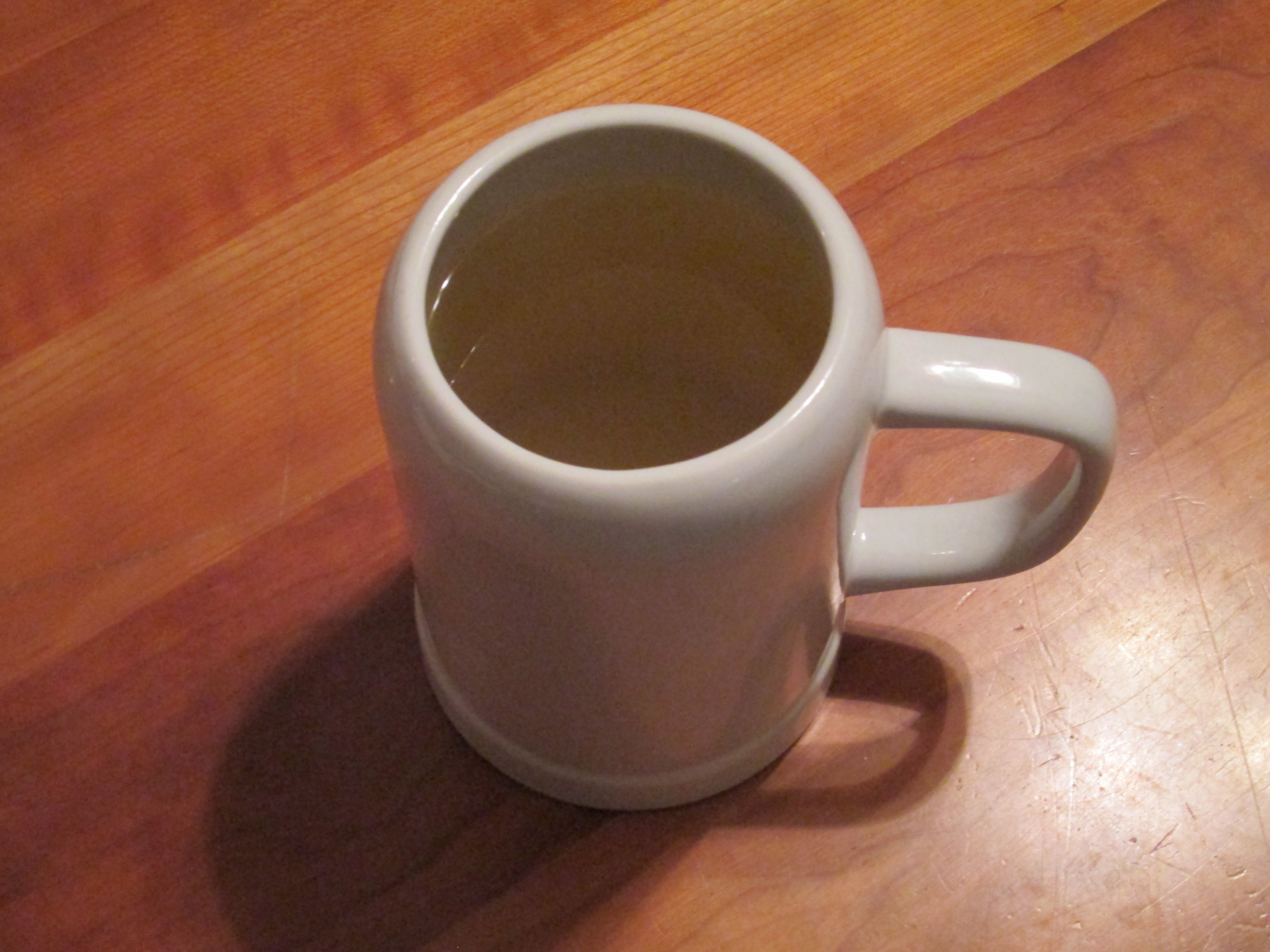
Pour boiling water over the herbs and steep for 3 to 5 minutes. Strain. Sweeten to taste. Serve warm or chilled. Serves 1.

herb_tea_JAS_004


Floral Water
In the Victorian age, floral waters became popular. Floral waters are made by steeping leaves and flowers in water until it becomes fragrant. The water can then be used in tea, pudding, cake, and pastries. There are a number of commercially available floral waters, such as rose water and orange water (made with orange blossoms).

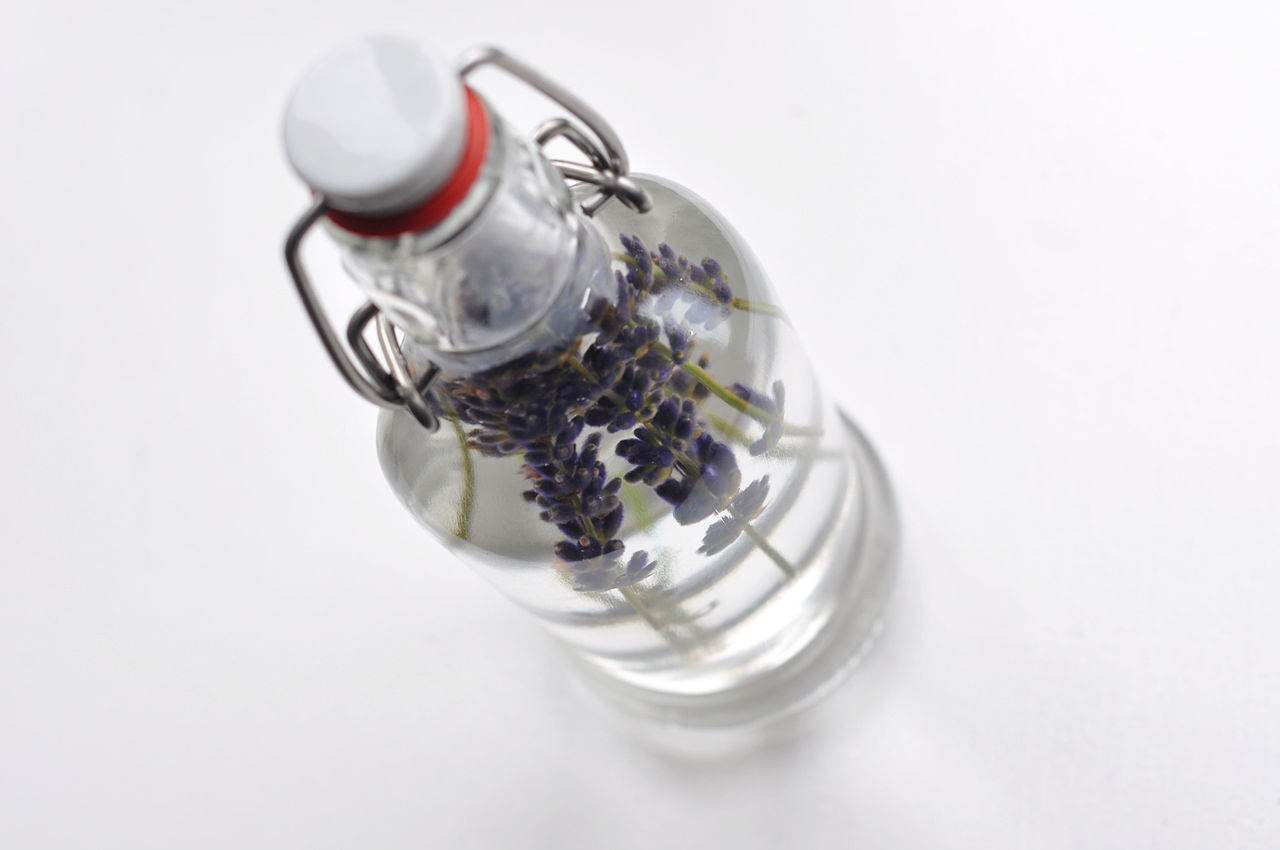
Lavendula in vodkaelsnaps_(4917058844).jp


Herb Syrup
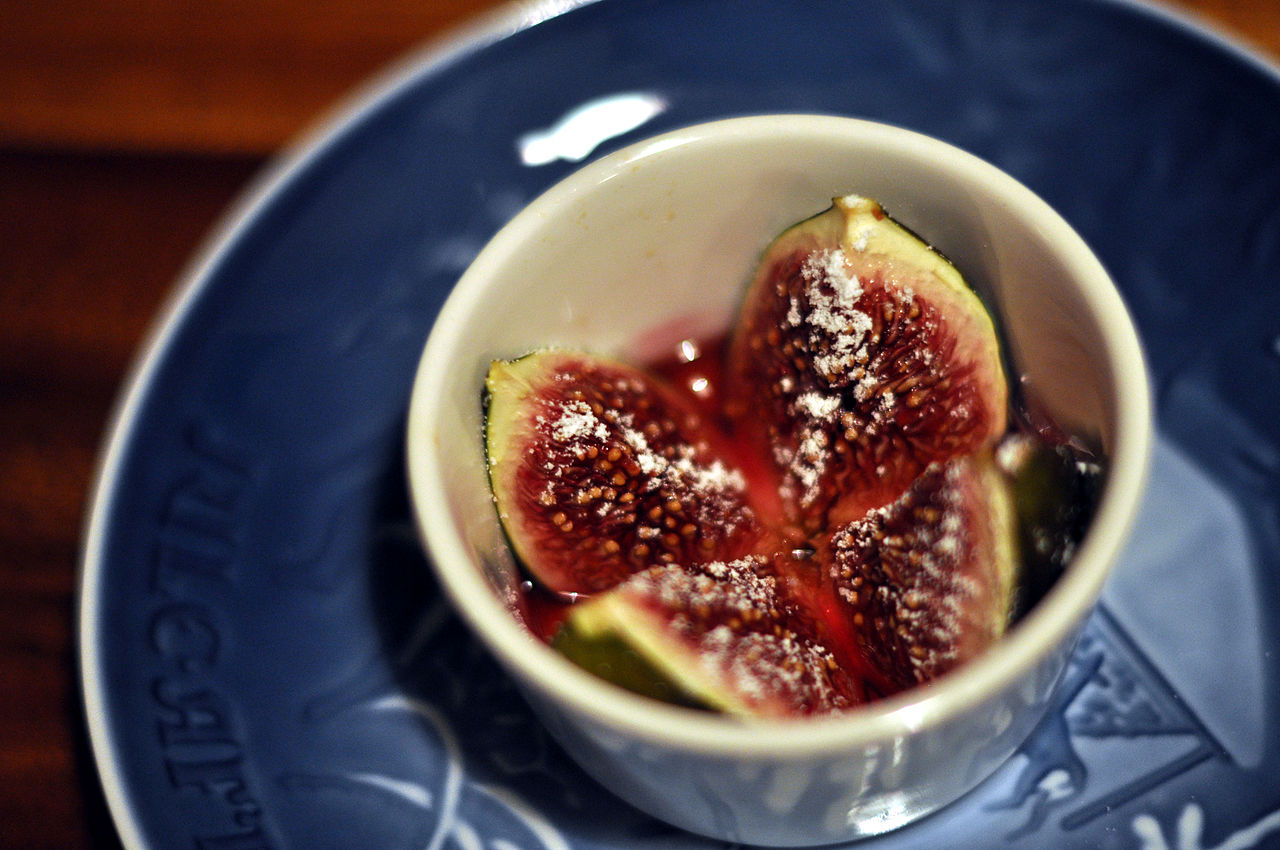
One of the more famous herb syrups is the mint syrup used in making mint juleps. But herb syrups can be used in many other ways, like topping cakes, ice cream, fruit, pancakes, waffles, or as a base in preparing other foods, like sorbet. In general herb syrups can be used to sweeten anything, including tea. Some herb syrups are used medicinally, like elderberry syrup. Desert lavender syrup makes a nice topping over poached pears, fresh figs or perhaps canned fruit for a quick yet elegant dessert.

1 cup water
3 cups sugar
1 cup chopped fresh herbs
or 1/2 cup crumbled dry herbs

Boil all ingredients together for 10 minutes, or until thickened into a syrup. Strain into a clean glass jar. Store in refrigerator for up to two weeks or preserve by canning.

lavendula syrup over figs


Planting and Care of this Sonoran native will be covered on August 17 in my blog on the Native Plants and Wildlife Gardens site.  The Sonoran butterflies that appreciate this shrub will be discussed in my blog on Beautiful  Wildlife Gardens site on August 5.  I will return to this site to post the links, or follow you can the thread on my Facebook page, Gardening With Soule.

Note:   This topic is covered more extensively in my book “Father Kino’s Herbs: Growing and Using Them Today” (2011, Tierra del Sol Press, $15).  If you live in Tucson, I hope you will consider purchasing a copy locally at Antigone Books, Arizona Experience Store, Magic Garden, Mostly Books, or Rillito Nursery.


© 2014, Jacqueline Soule.  All rights reserved. I have received many requests to reprint my work. My policy is that you are free to use a very short excerpt which must give proper credit to the author, and must include a link back to the original post on our site. Please use the contact me if you have any questions. JAS avatar

Marvelous – and Medicinal – Mesquite

The tall stately velvet mesquite tree (Prosopis velutina) is not what most people think of as a herb! But this graceful tree with durable wood was used as a medicinal herb as well as a source of food, tools, and building materials.


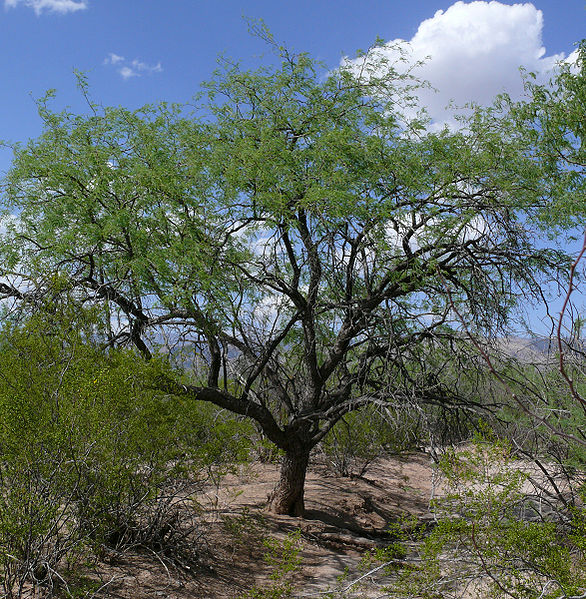
prosopis_velutina_habit_001

The velvet mesquite can grow into a lovely tree especially when given minimal pruning.


Sore throats were treated with a hot tea blend of the clear sap plus inner red bark, while stomach aches were treated with a tea made from the leaves. Toothache was treated by chewing the root. For flagging appetite, a tea made from the leaves was taken before meals. Along with medicinal uses, the bark was used for baskets and fabrics, the wood used for tools, building and firewood, and perhaps most importantly, the pods are a protein-rich food.

.

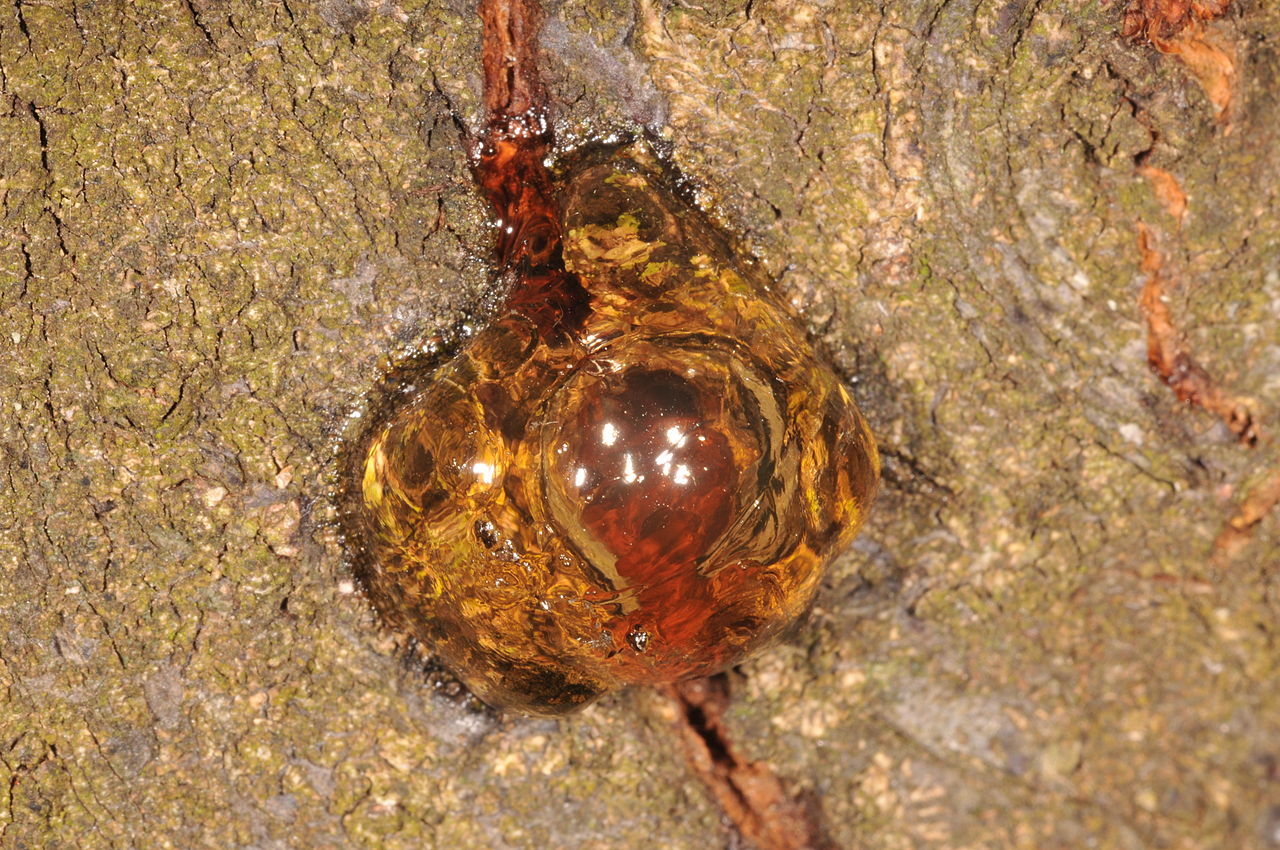
The clear mesquite sap (usabi in O’odham) is not only edible but a highly palatable treat, eaten right off the tree. It was often collected and saved, sealed in pottery vessels, and fed the ill (children especially) to help bolster flagging appetites.


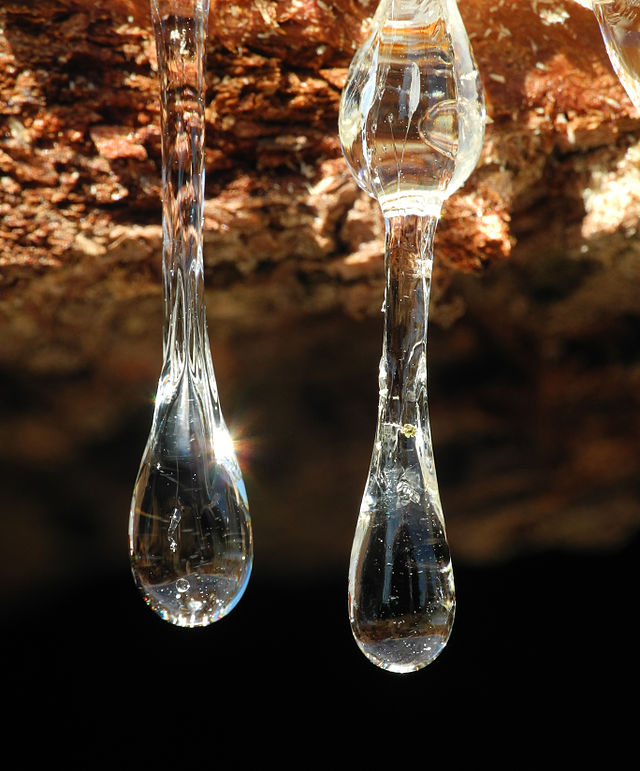
resin by t. bresson

Mesquite trees can produce a clear-ish sap, like this cherry sap, that has a sweet flavor. Photo by T. Bresson.

.

Mesquite seed pods (wihog in O’odham) were an important food source for the natives, and are becoming increasingly important today as research determines how healthful they are for humans. Mesquite pods, and their meal and flour, are considered a “slow release” food due to galactomannin gums which have been found to lower glycemic responses. Their glycemic index is 25 percent, compared to 60 for sweet corn, and 100 for white sugar. I believe some of my “Savor Sisters” will discuss this issue further. Today I am looking at the medicinal uses and how to grow this marvelous plant.

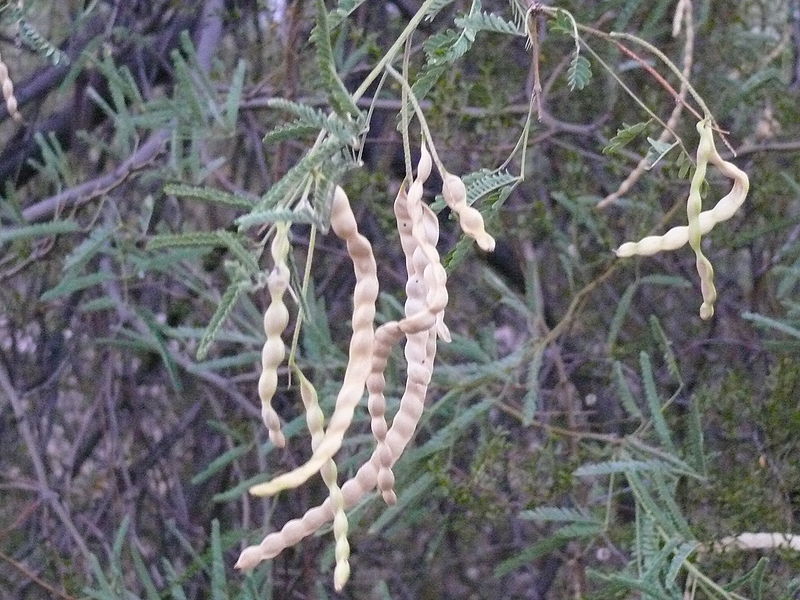
Prosopis_velutina_pods

Mesquite pods fresh off the tree are a tasty treat.

Of vital importance to a select number of folks was the use of mesquite against hair loss. This treatment was used by men only, and consisted of the black sap that oozes from mesquite wounds (not the clear sap) mixed with other secret herbs and applied to the scalp. Mesquite herbal soap for “macho” hair is still available in parts of Mexico..


resin_indet

. The dark sap that oozes from mesquite wood is said to be good against hair loss.

.

Planting and Care.

Our Sonoran Desert native velvet mesquite is slower growing than the grassland mesquite species from Argentina and Chile, but it is a far better choice for a number of reasons. Unlike the non-natives, velvet mesquite is well adapted to our climate, and it feeds the native animals. Leaves serve native butterfly larvae and Gambel’s quail. The pods nourish almost every Sonoran Desert inhabitant, from bunnies and squirrels to coyotes, javalina and humans. The velvet mesquite also has deep tap roots, making it much less likely than the non-natives to blow over in the swirling summer winds that often accompany the monsoon rains.

.

Since all mesquites can cross, it is now difficult to find pure velvet mesquite. If you go far from town you may get a pure species. Harvest a handful of seed pods, then plant them, pods and all, where you want your tree to grow. Water well and stand back. When about twenty little seedlings have several clusters of true leaves, select the one or two with the most velvety blue leaves. Keep watering but do not fertilize. We started a tree this way and in three short years it grew to a sturdy and robust 20 foot tall tree. In the same time frame, mesquite trees we planted from 15 gallon containers were scarcely any taller than when they were planted –about seven feet tall.

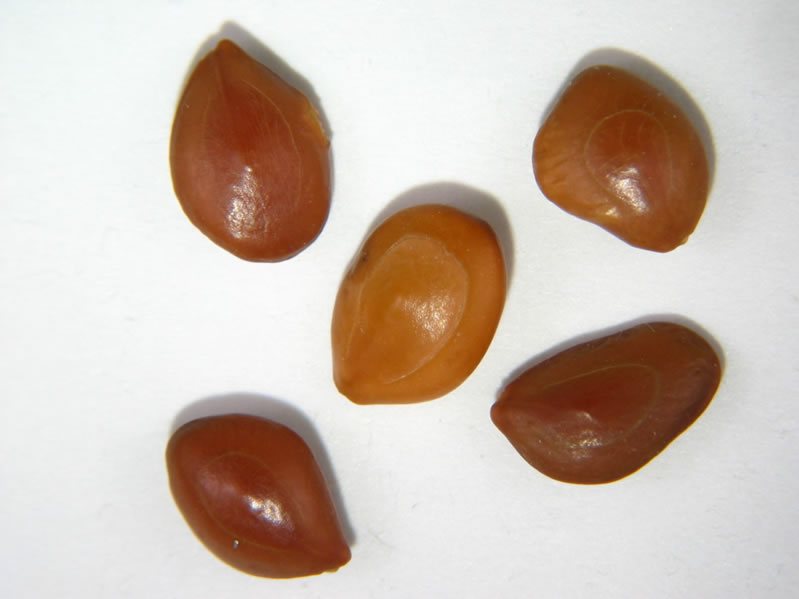
Prosopis_velutina_seeds

No need to remove the seeds from the pod prior to planting. Just put them into the soil, pod and all and keep evenly moist.

.

Mesquite are drought toleratant once they are established, but they grow more quickly and larger with a thorough soaking of root zone once every month or two during the warm months.

.

Do not fertilize mesquite trees or any plant in the pea family. They have a special relationship with bacteria that fix nitrogen out of the soil atmosphere. If you want to encourage more rapid growth of your mesquite, mulch it with an organic mulch, such as the leaves that have dropped off it or composted organic material from a nursery.

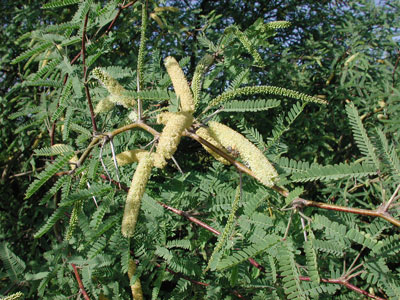
prosopis_velutina by MJ Plagens

Mesquite blooms are many flowers on a single stalk, termed a catkin. Photo by M.J. Plagens.To learn more about the native animals that use mesquite trees, visit my blog this month at: http://nativeplantwildlifegarden.com/vital-velvet-mesquite/

.

To learn more about how native animals use this plant, visit my blog on: http://nativeplantwildlifegarden.com/vital-velvet-mesquite/

.

This article copyright Jacqueline A. Soule, 2014. The topic is covered more extensively in my book “Father Kino’s Herbs: Growing and Using Them Today” (2011, Tierra del Sol Press, $15). If you live in Tucson, I hope you will consider purchasing a copy locally at Antigone Books, Arizona Experience Store, Magic Garden, Mostly Books, or Rillito Nursery.