Barrel Cactus Provide Ample Seed for Cooking and Baking

Today’s post is by Jacqueline A. Soule.

Back in November 2014, I introduced you to the pleasures of using barrel cactus fruits (Lovely and Lemony – Barrel Cactus Fruit), and I think it is time to revisit the topic.

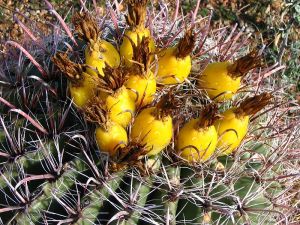
Barrel cactus is the generic term for a number of species of large barrel-shaped cacti.  The one with the most edible of fruit is the fish hook or compass barrel (Ferocactus wizlizenii).

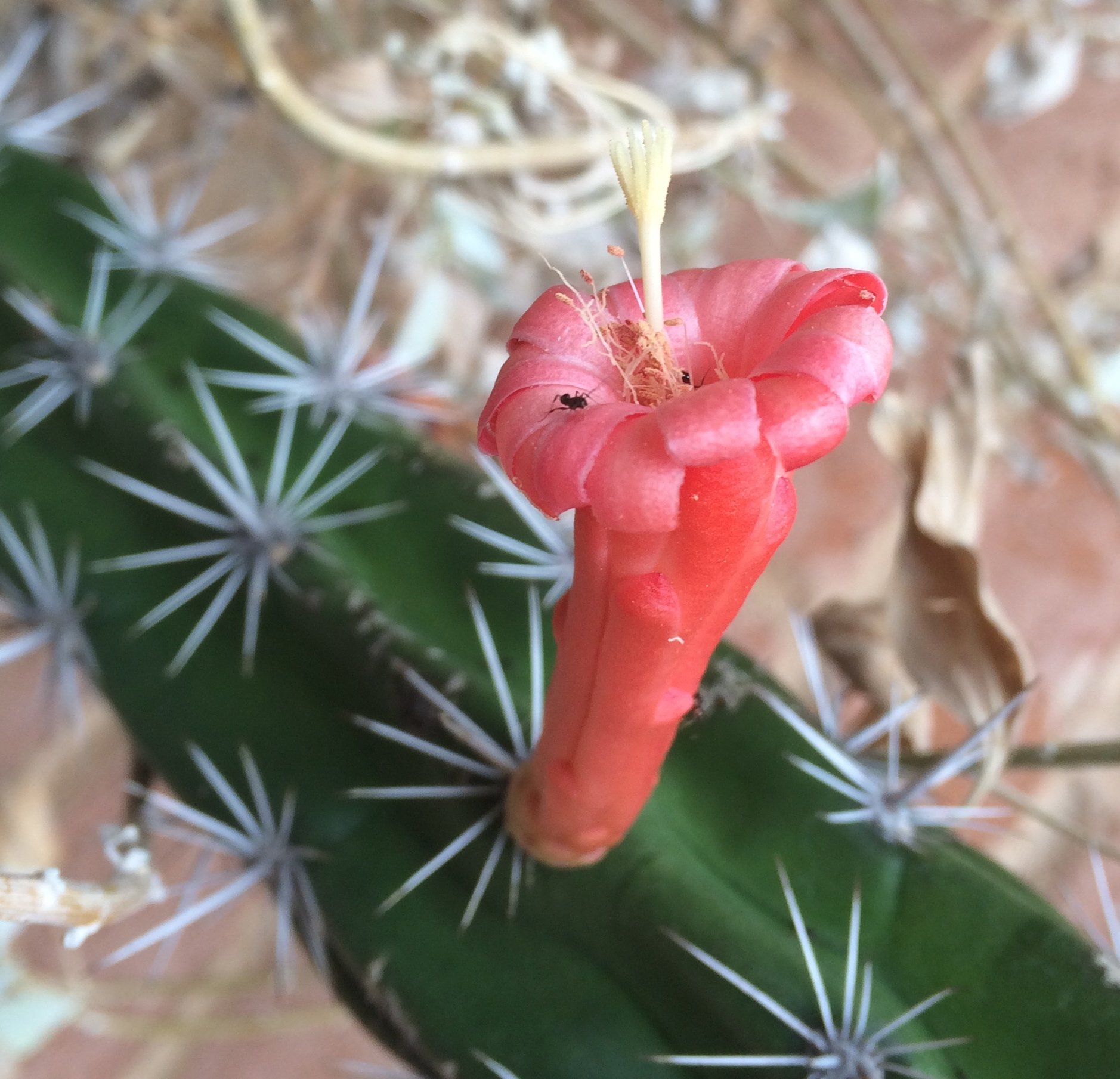
Ferocactus wislizeni and zeph JAS 06

This species of barrel cactus is unlike many other species of cacti in that it often blooms two or even three times per year, thus providing you, the harvester, with ample fruits, often several times a year.
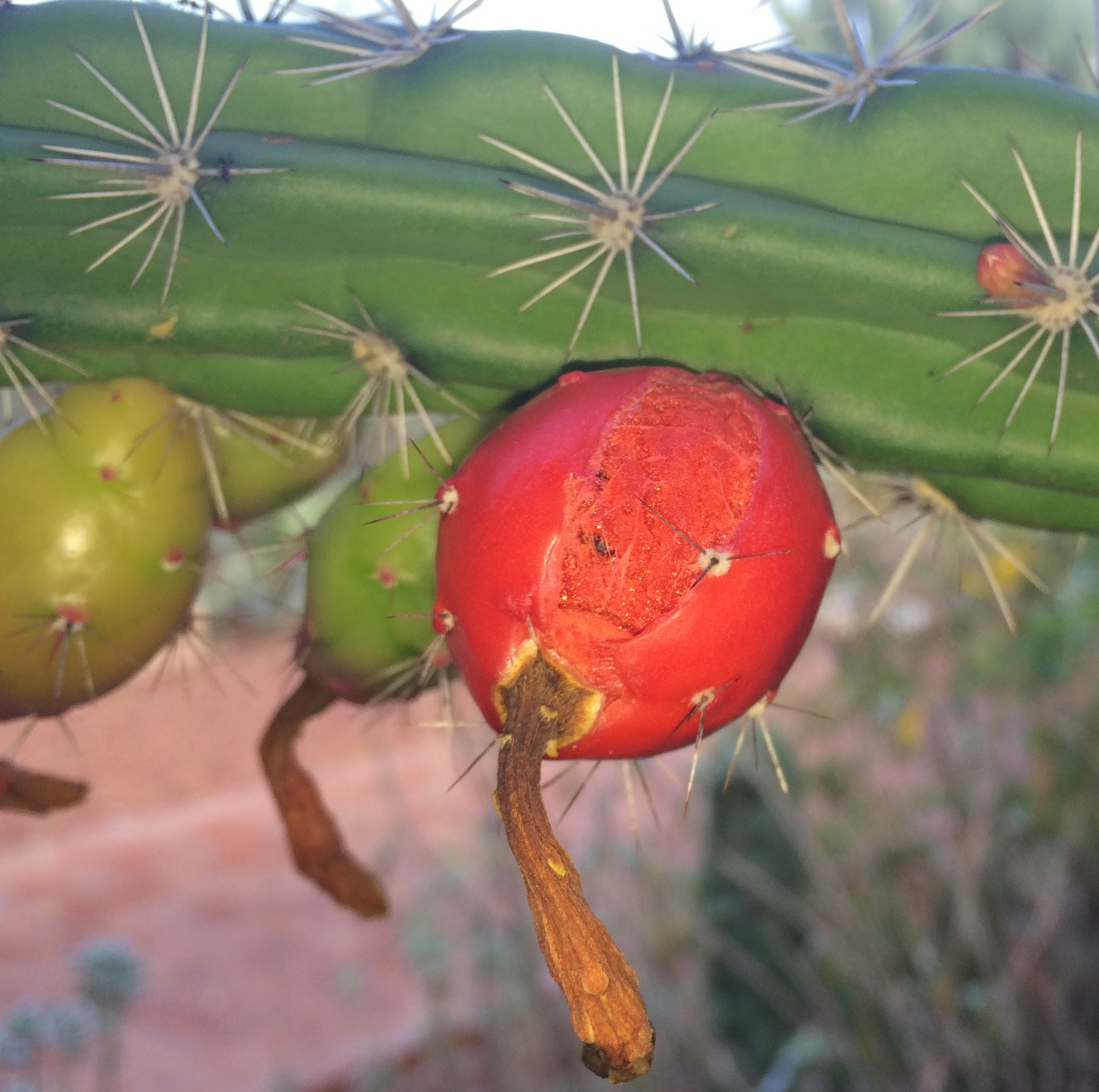
Ferocactus wislizeni fruit

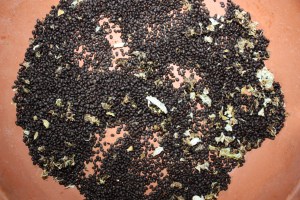
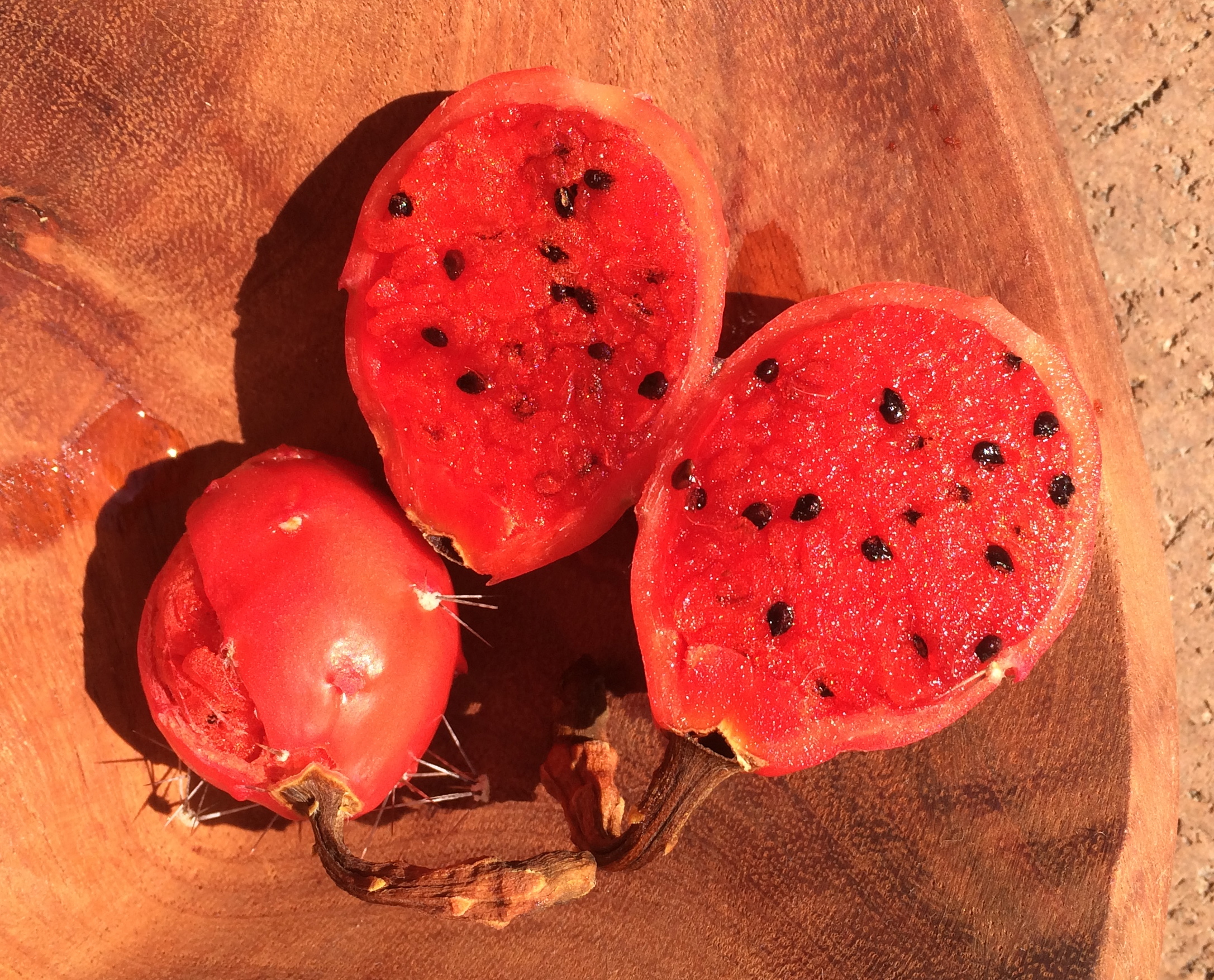
You can eat the lemony flavored fruit, but only in moderation.  Fruit is high in oxalic acid, which can be hard on human systems.  But the seeds are just fine to consume in quantity.  They are the size, texture and taste of poppy seeds and can be used anywhere you use poppy seeds.  They can also be cooked in with quinnoa or amaranth, or even eaten alone.

ferocactus fruit 1118

Barrel cactus seed are very simple to harvest in quantity because the seeds are easily removed from the fruit.

Harvest.
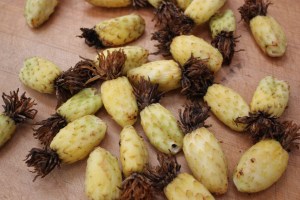
The average barrel cactus has 12 to 24 fruits ripe at once (unless the animals have been busy).  24 fruits yield roughly 1/4 cup of seed.

ferocactus fruit 1090
Prepare.  (10 minutes for 24 fruit).

Rinse the fruits.  This does two things.  First, this removes dust and contaminants (bird droppings etc.).  Second, the water softens the former flower petals on the top of the fruit, rendering them  gentler on tender fingers as you process them.

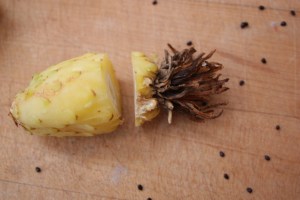
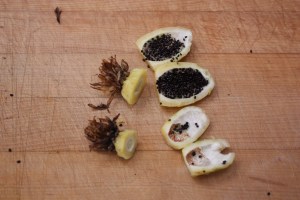
Cut tops off the fruits.  The seed filled chamber is surprisingly far down away from the flower petals.
ferocactus fruit 1099
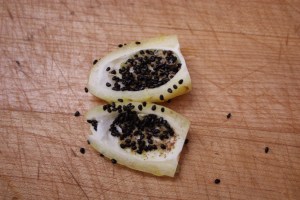
Cut fruits in half.

ferocactus fruit 1105
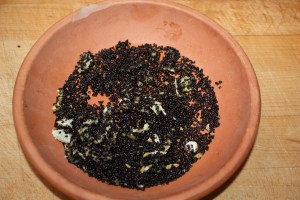
Scoop seeds into a terra cotta saucer.  Leave them 24 hours to dry.  This will help dry any bits of flesh clinging to them before you store them.  Alternatively you can put them right onto a baking sheet to toast them if you want to use them toasted.  I also keep a number untoasted and throw them in when I cook quinnoa or amaranth.

ferocactus fruit 1114

Processing tip:

ferocactus fruit 1091

Sometimes you find an empty fruit.  This is why we need our native pollinators!

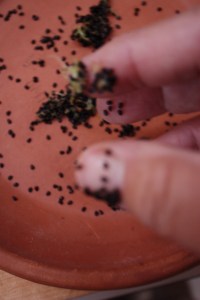
I like to make an assembly line and cut all tops off first, then cut all fruits open, then scoop all the seed. Why?  because the seeds inside the fruit may be gummed together and you want to leave the seed scooping to last, else you get sticky seeds everywhere and lose a portion of your crop all over everything.

ferocactus fruit 1095

JAS avatar

If you live in Southeastern Arizona, please come to one of my many free lectures.  Look for me at many branches of the Pima County Library, or possibly Steam Pump Ranch, Tubac Presidio, and more.  After each event I will be signing copies of my books, including the latest, (due out in September 2016) “Month-by-Month Guide to Gardening in Arizona,  Nevada and New Mexico (Cool Springs Press).

Mole Negro Grilled Burgers and Veggies

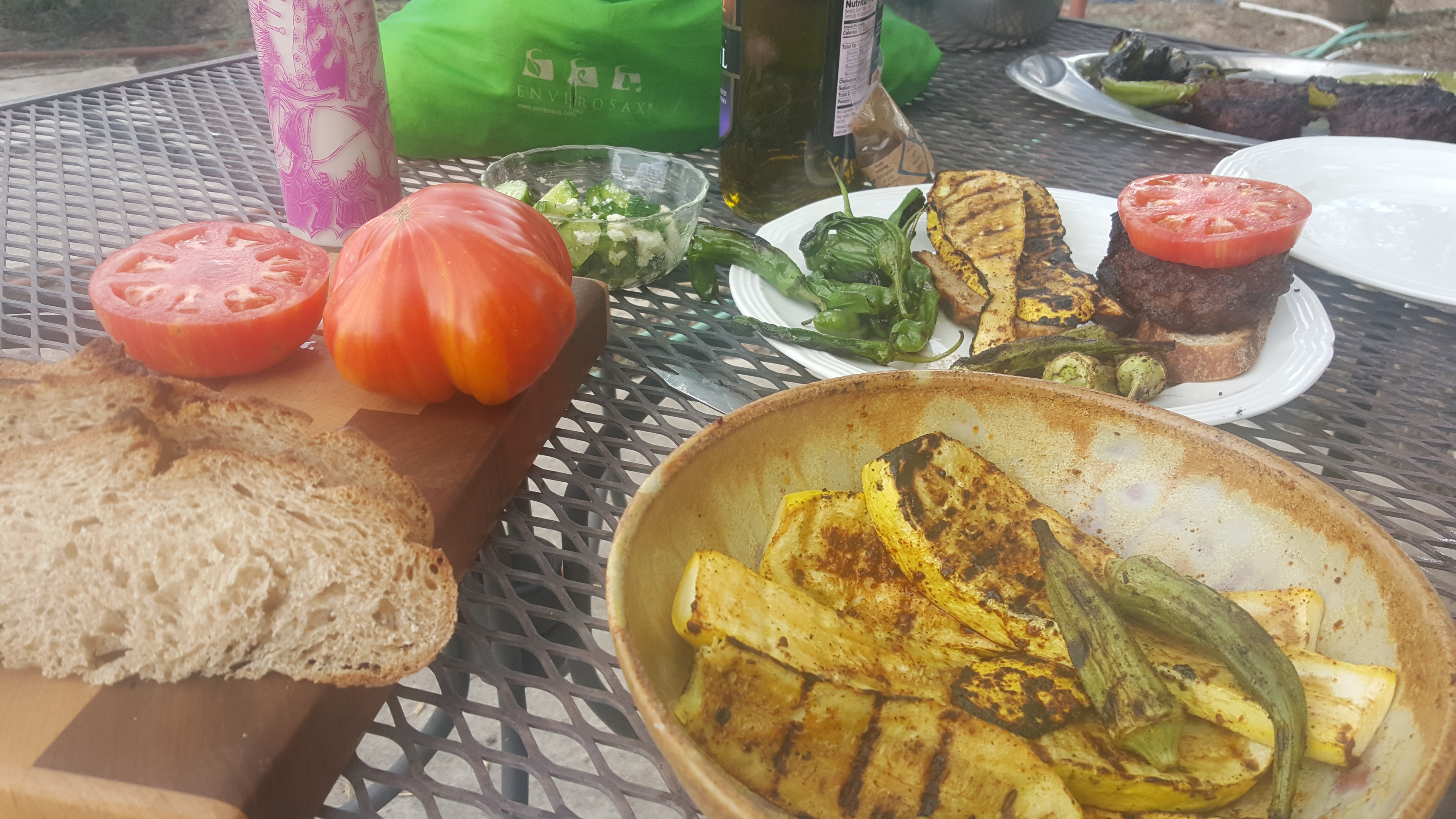
mealAmy here on a cloudy monsoon afternoon with a bounty of summer produce like long green chiles, Shishito peppers, okra, yellow squash and great tomatoes. It makes me want to grill and eat outside.

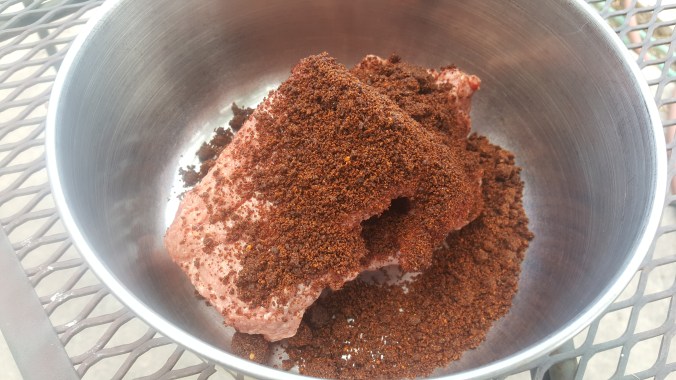
But my new friends want to try Mano Y Metate Mole, and the last thing I want is to make a formal meal. I wondered if burgers seasoned with mole powder would work…meat mix

Local pastured beef pairs well with the smoky, spicy, bold flavors Mole Negro in other forms, so that’s what I chose. I mixed the mole powder with not too lean meat and sent to the grill.

grilling burgers

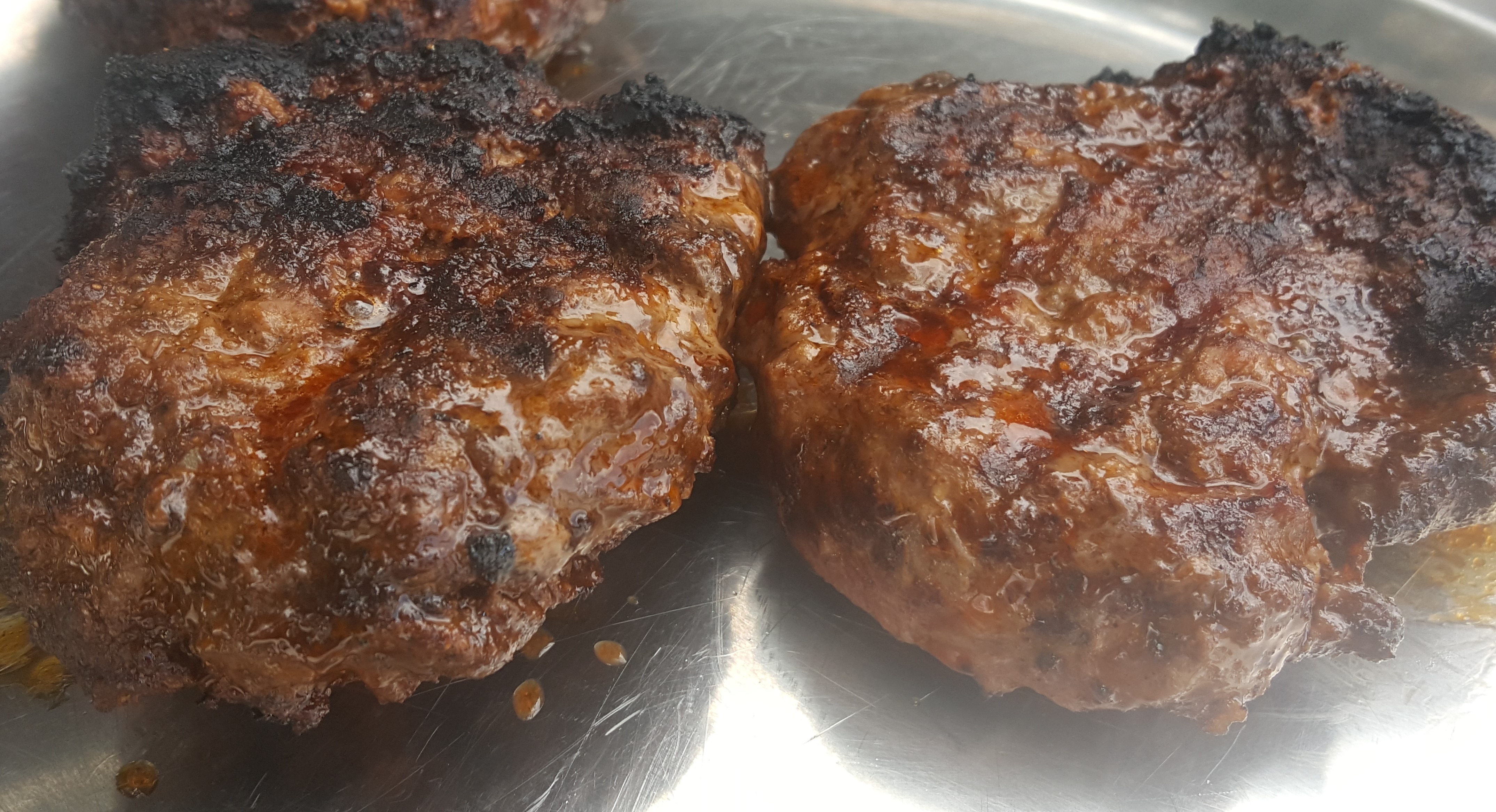
cooked burgers

The juices from the cooked meat were infused with Mole Negro flavors. It exceeded my expectations.

tomatoes

I was thinking of a nice leaf lettuce to top burger, but that’s definitely not in season. Oh, tomatoes!

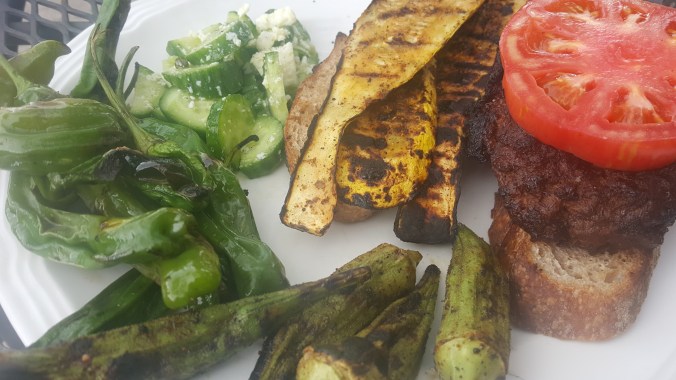
complete burger

Charred spicy meat, tomato, and a slice of sourdough whole wheat from Barrio Bread. Salt on tomato.

Without lettuce, I wanted something green in the meal. Wait, August means green chile!!!!!!

long green

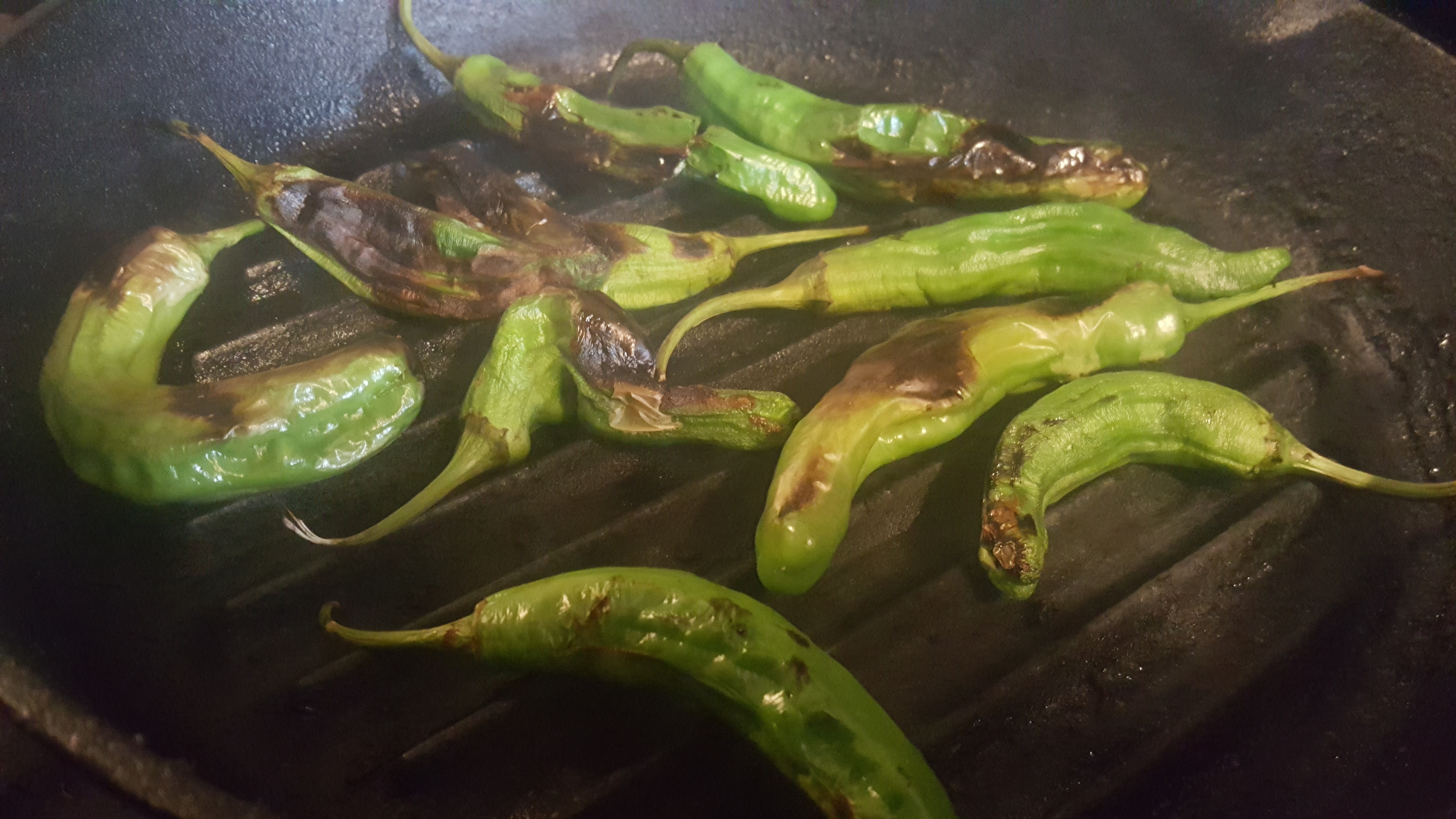
And Shishito peppers, too small for the grill but great in a grill pan. Most are completely mild, but about one in 20, surprise! The skin is so thin no need to peel, and the seeds so small no need to clean. Too easy and great flavor.

shishitoes

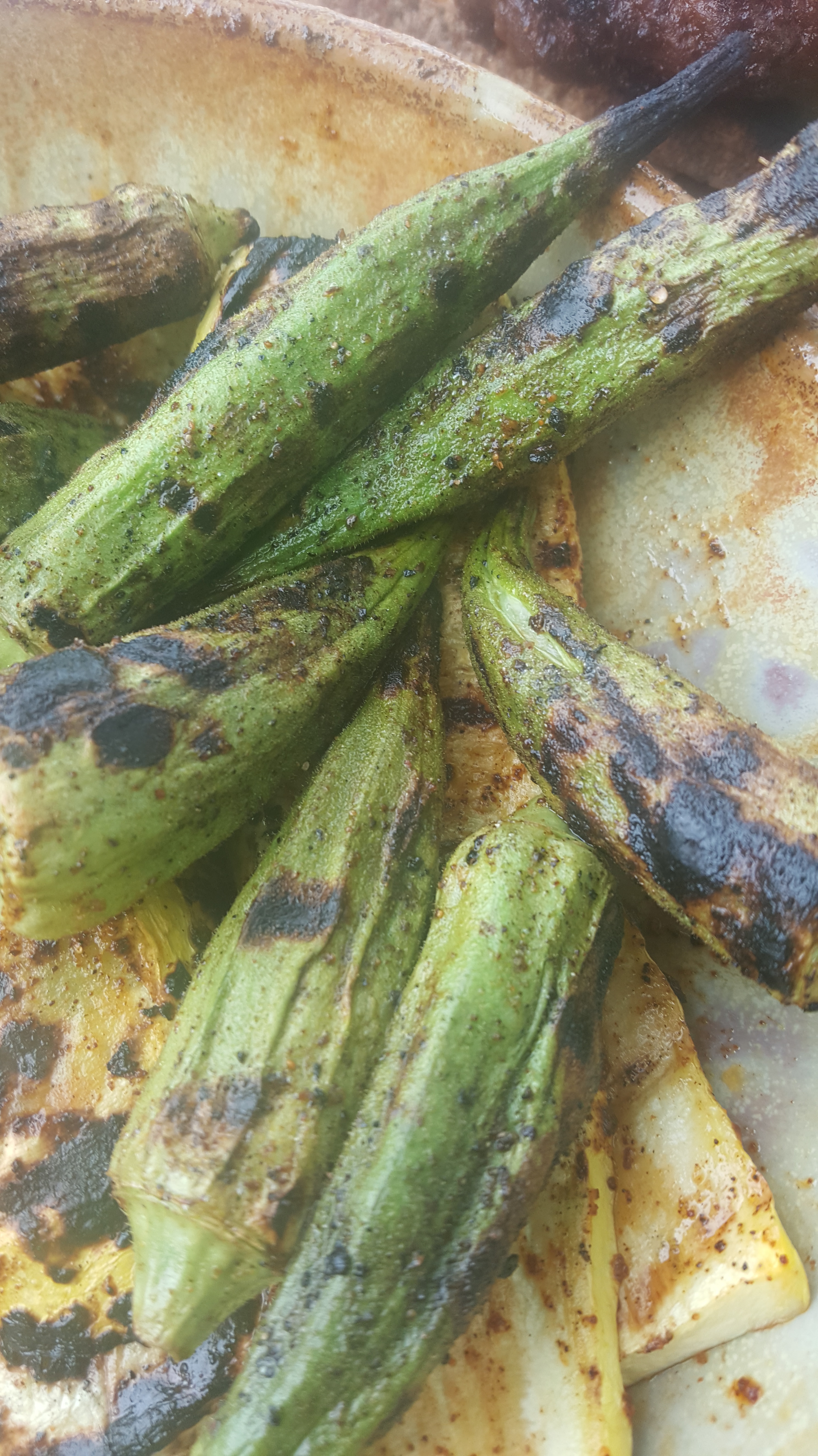
Also, I rolled some beautiful fresh okra in a splash of olive oil and Mole Negro powder.

grilling okra

cooked okra


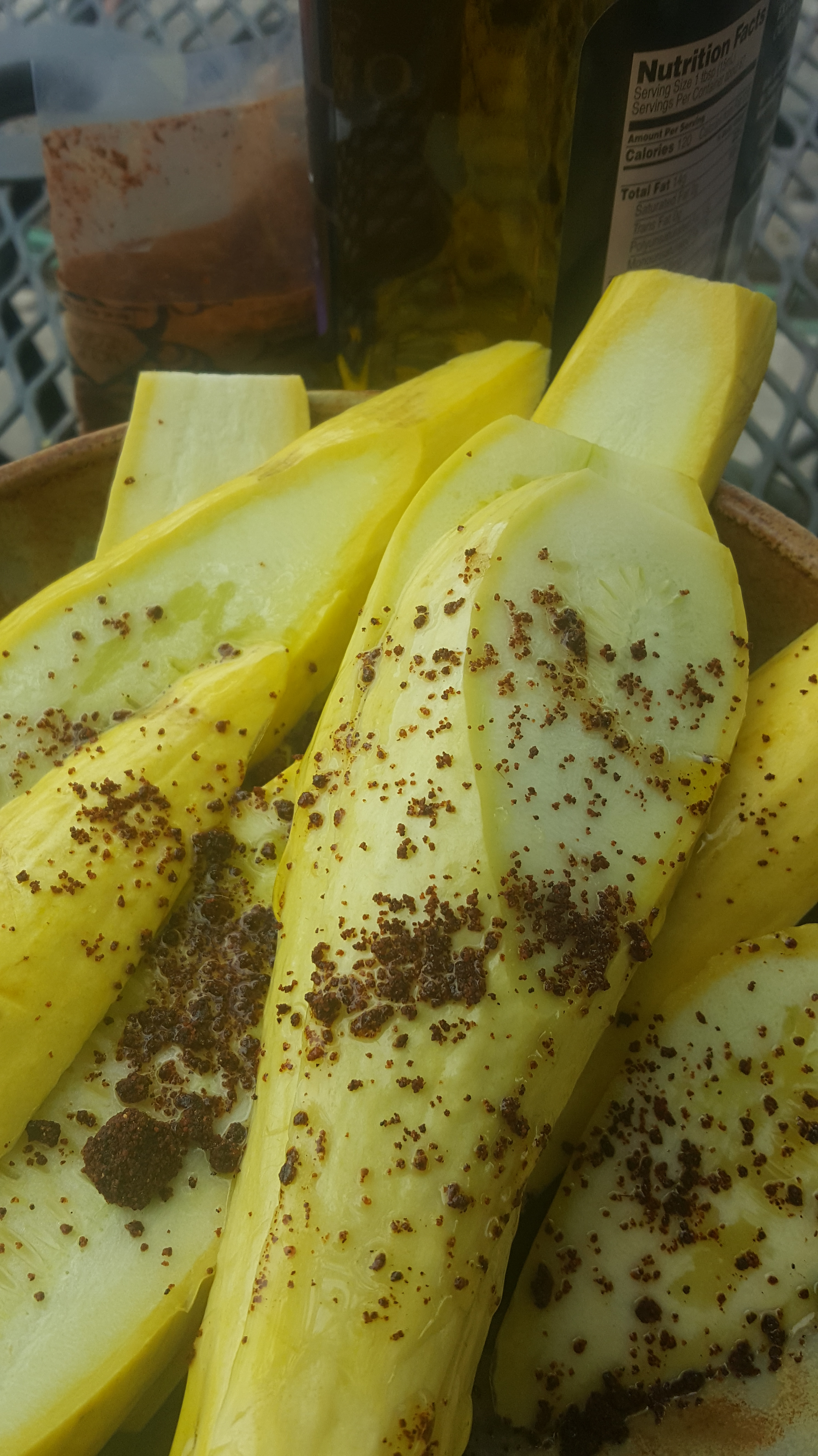
Grilled squash is one of my favorite foods in the whole world. I can’t grill without making some. First time with Mole Negro powder, though. It worked really well. Just toss with a splash of olive oil and sprinkle on mole powder to taste.

raw squash

grilling squashgriled squash2


cuke salad

For raw contrast, a quick cucumber salad with goat queso fresco, olive oil, black pepper and fresh basil.

Enjoy with prickly pear lemonade. Happy picnicking!

table

Promise, Preparedness, Present Fulfillment–with Fruits of the Desert

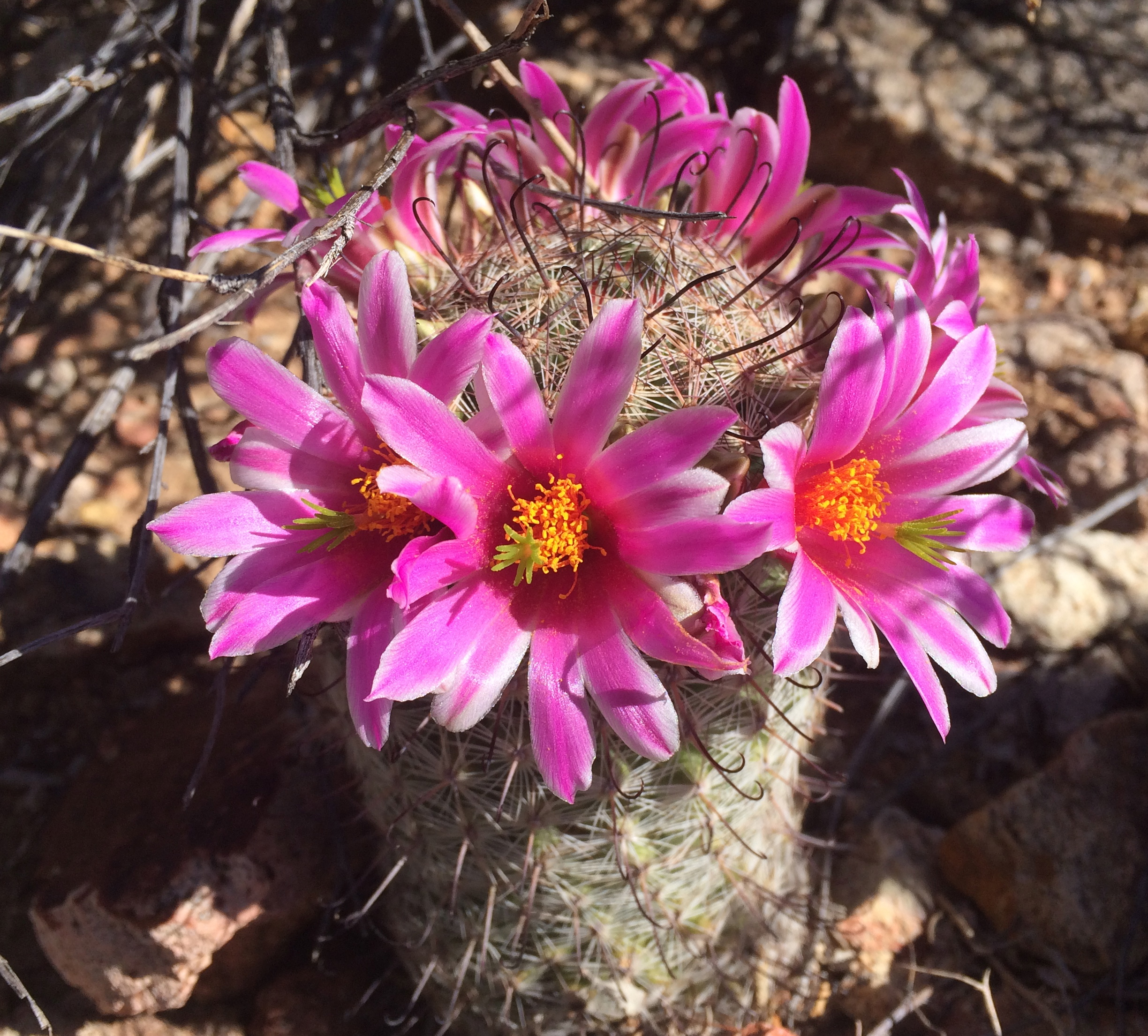
small fishhook Mammillaria microcarpa celebration the monsoon with a promise of future fruitlets (MABurgess photo)

Fishhook Mammillaria microcarpa celebrating the monsoon with a promise of future fruitlets (MABurgess photo)

Crowns of Mammillaria flowers make pink arches like miniature 4th of July fireworks now suddenly visible among desert rocks and under greening bursage.  They are rain celebrations–the PROMISES of fruits to come!  In a few weeks the little fishhook pincushions will sport a crown of shiny red fruitlets.  Keep watch for them.  Known in Sonora as pitayita de raton (little mouse’s pitaya), each long red droplet will give you a sweet tangy zing– like a mini-organpipe-cactus fruit.  Tia Marta here to share ways of enjoying the cornucopia that is beginning to spill out flavorfully all around us in town and out in the desert in this monsoon time.

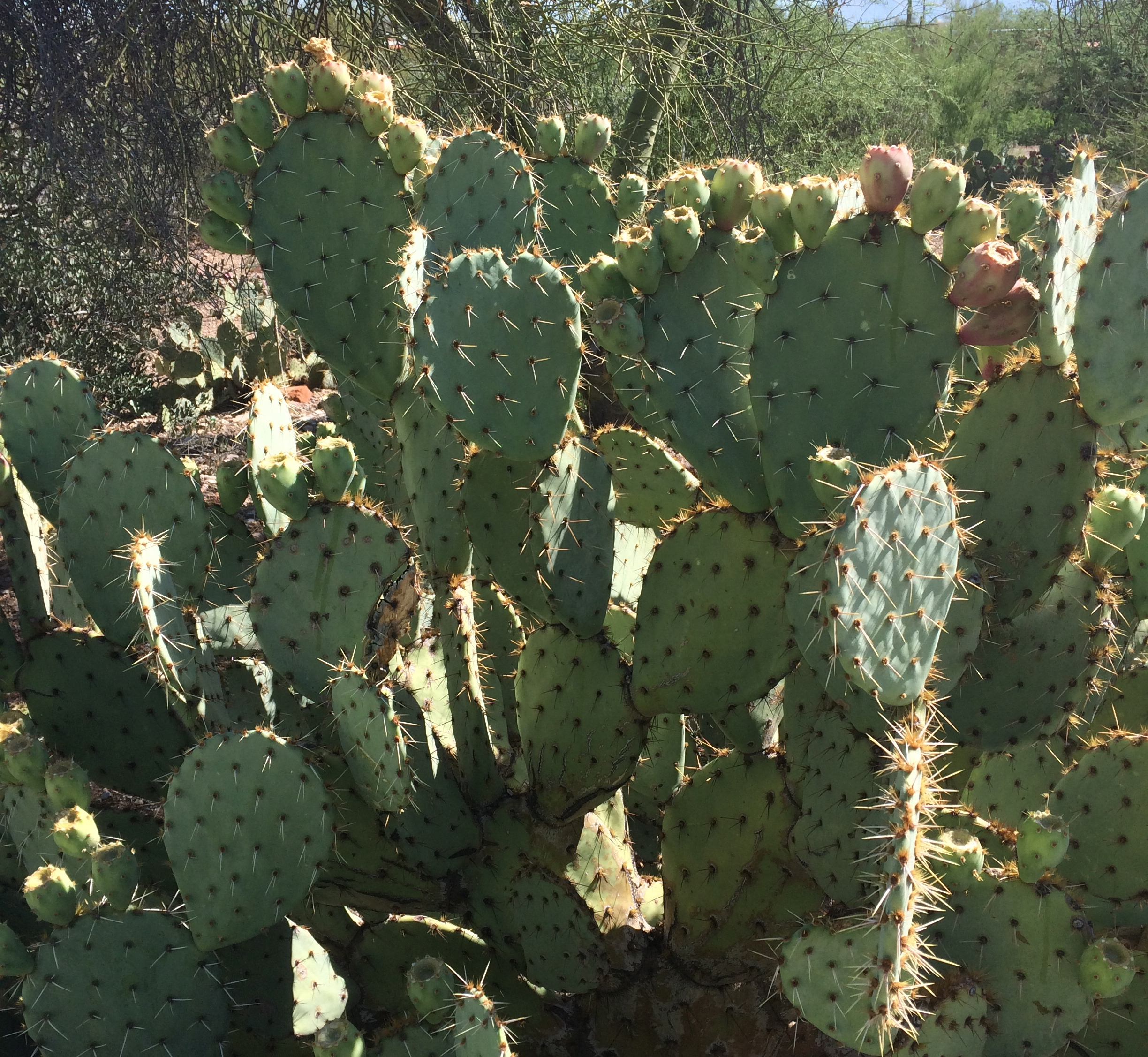
Late fruiting prickly pear--still green and full of promise

Late fruiting prickly pear–unripe green but full of promise this week (July 8)

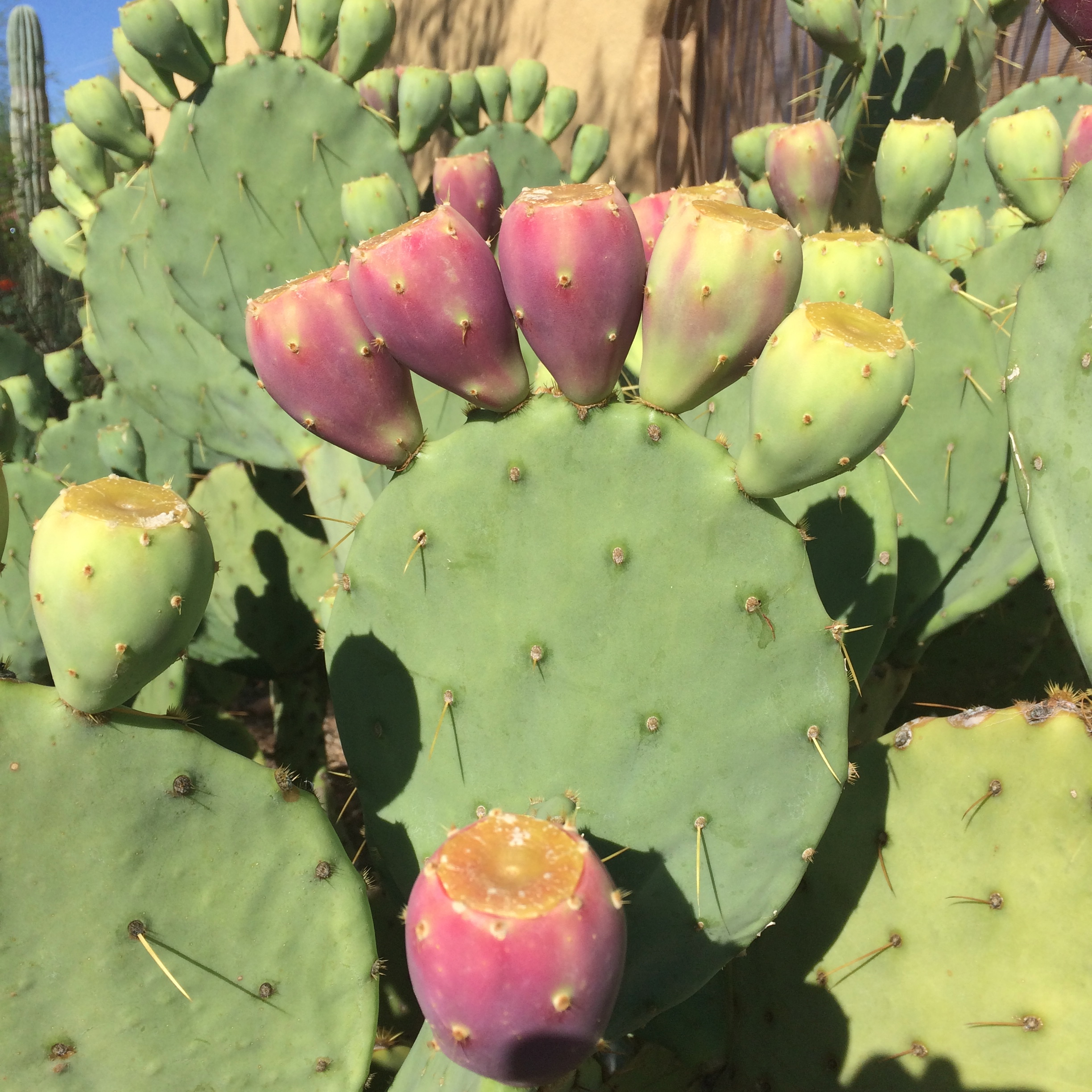
Opuntia lendheimeri alba barely turning pink--more promises...

Opuntia lindheimeri alba barely turning pink this week–more promises…(July 8)

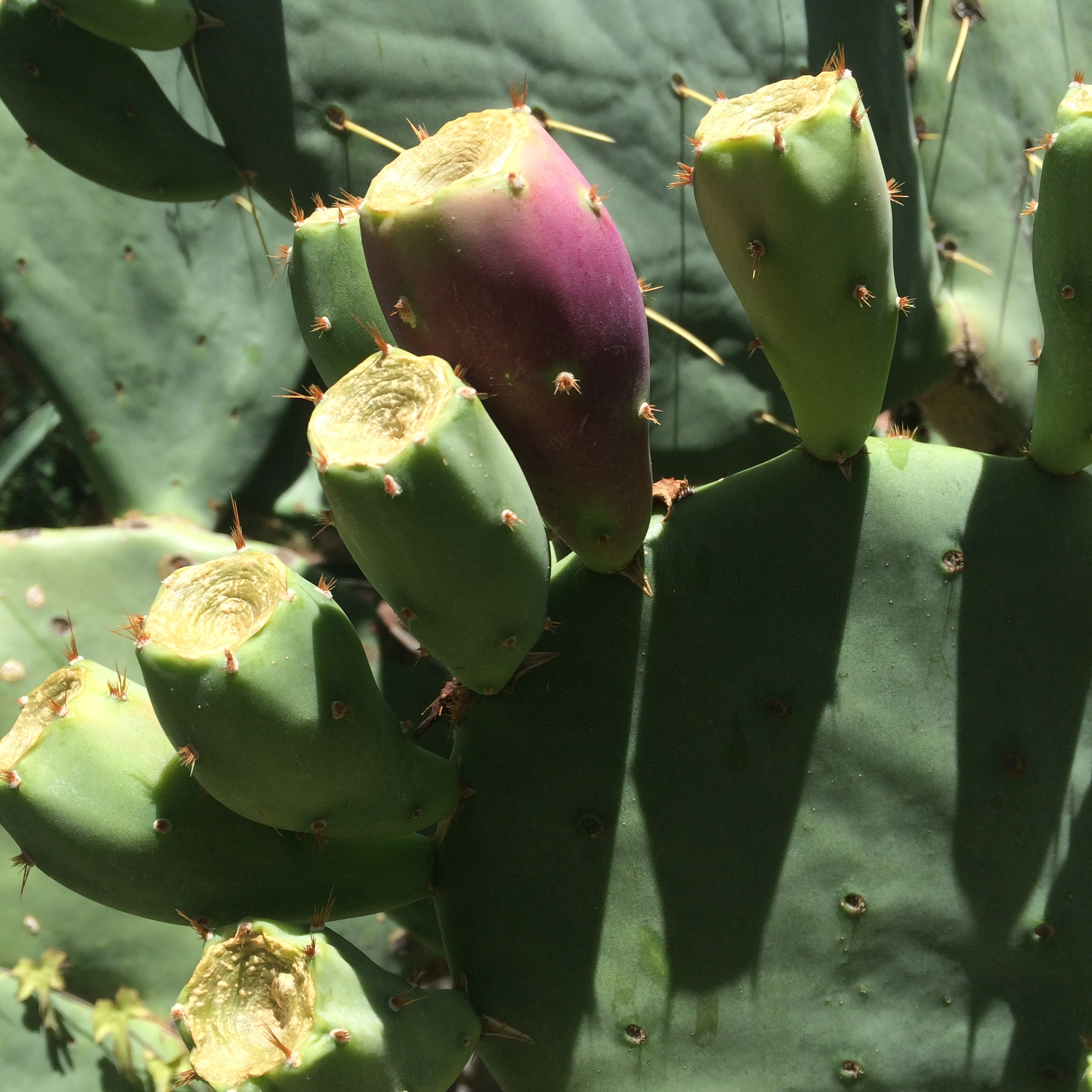
Opuntia engelmannii in first stages of ripening...

Opuntia engelmannii in first stages of ripening…not yet (week of July 8)

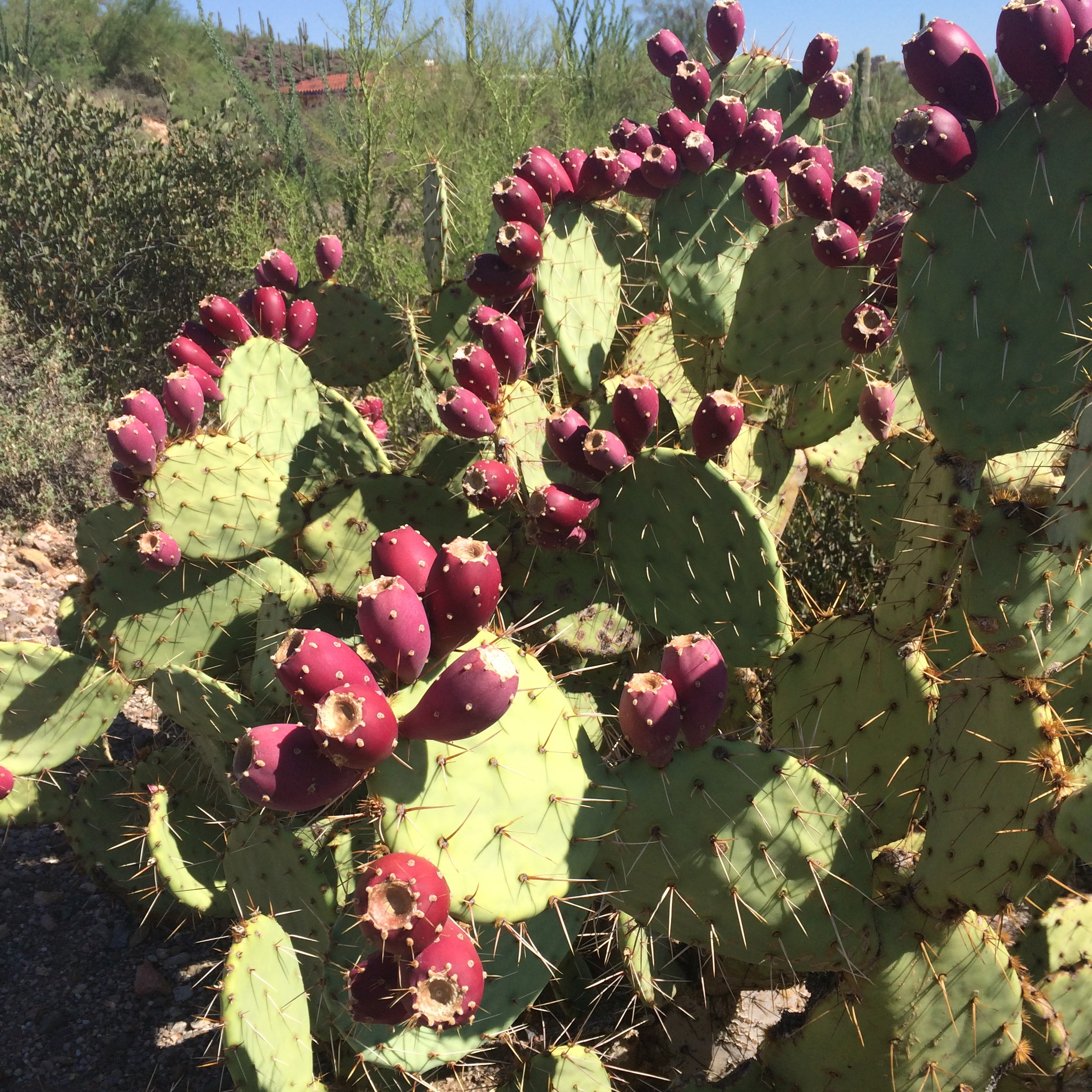
All around the desert and through every neighborhood, I see the promise of a good prickly pear harvest, inspired by our elongated spring and nurtured by good monsoon rain.  Each prickly pear seems to march to a different drummer.  Right now you can see every shade of color–unripe to ripening tunas–very green, to rosy, to deepening red.  These are PROMISES so don’t jump the gun!  They are not ready quite yet–but this is the signal to get your kitchen PREPARED.  Stay tuned–There will be more blog posts to detail prickly pear ideas in coming weeks.  Make space now in your freezer, and make time on your calendar for the August TUNA HARVEST.


Opuntia engelmannii in full ripening fruit--but not ready yet!

Opuntia engelmannii full of ripening fruit–But don’t salivate yet (week of July 8)!  Wait for a dark maroon color to extend all the way to the bottom attachment of the tuna AND through the tuna‘s entire interior before they are fully ripe and ready to eat or cook.

What a glorious monsoon our Sonoran Desert has enjoyed over the last couple of weeks!  The explosion of life in such a short time is astounding on the heels of record-breaking heat and drought.  This is when the desert shows its tropical heritage with a surge of energy, fecundity, productivity.  Isn’t it interesting that the “outsider’s” view of the desert is of hazardous scarcity?  More interesting instead is to understand and appreciate the waves of nutritious plenty that can erupt suddenly here in the Sonoran Desert.  Native People know how to rally, to harvest in the times of plenty and to store short-lived fruits of the desert against lean times–lessons worth exercising.   Plentiful foothills palo verde seeds (Parkinsonia microphylla) are a case in point.

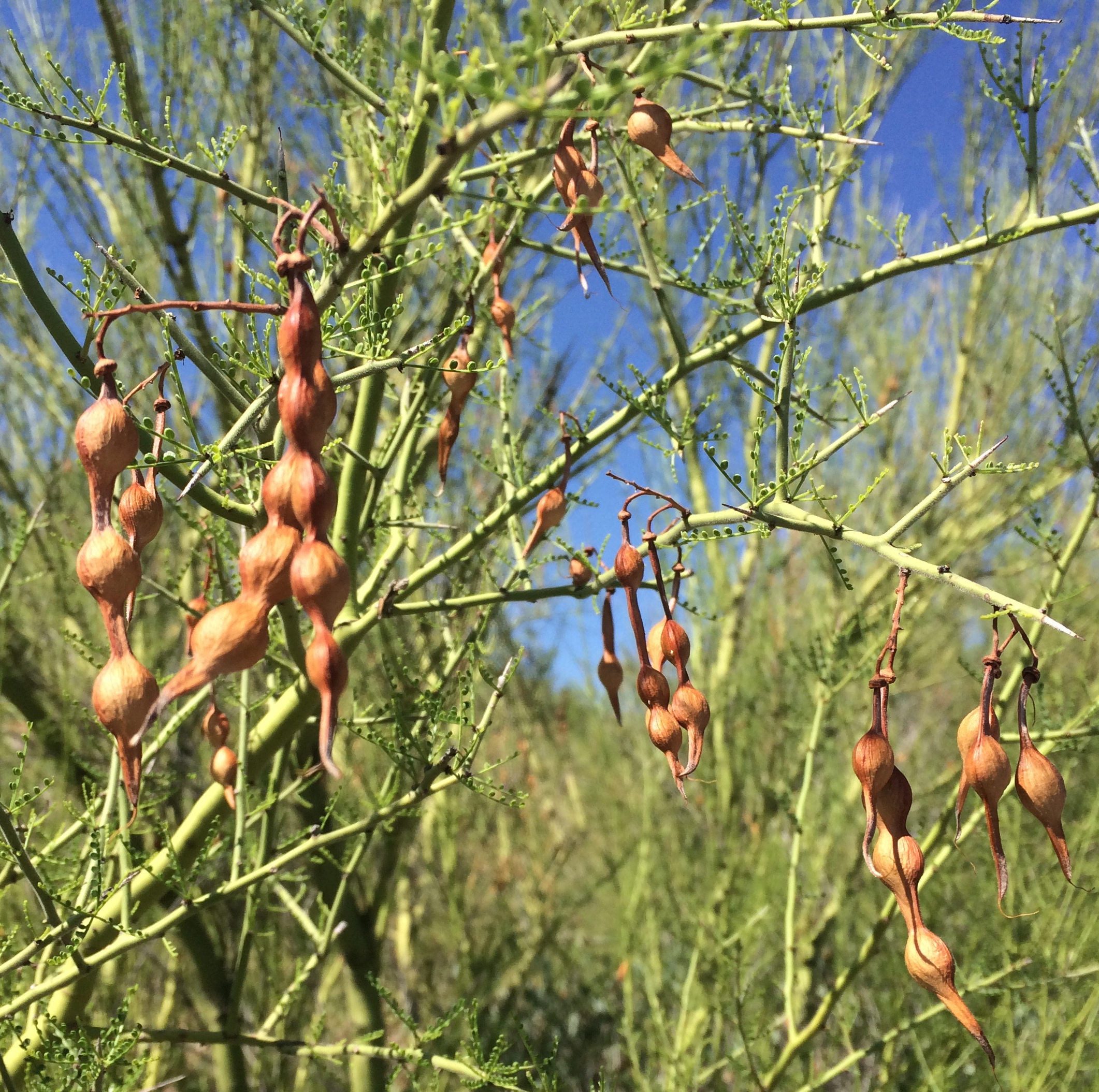
Mature dry pods of foothills paloverde--They have potential for making flour!

Mature dry pods of foothills paloverde–with potential for making nutritious flour!

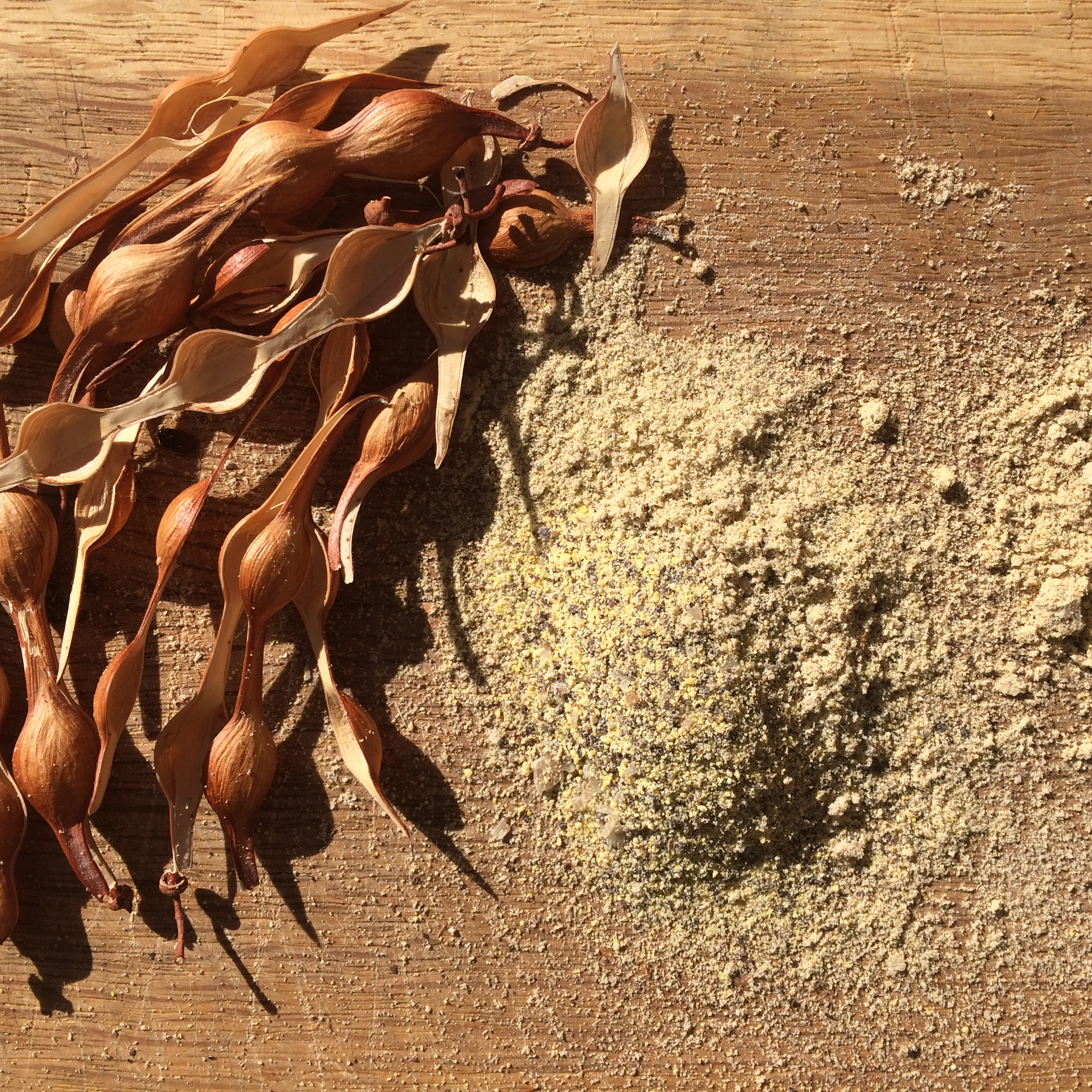
Foothills palo verde seed milled raw for baking

Foothills palo verde seed milled raw for baking

Seeds of foothills palo verde dry and hard as little stones

Seeds of foothills palo verde– dry and hard as little stones


At PRESENT, lasting perhaps through July, there are copious “fruits-of-the-desert” hanging on foothills palo verde trees (aka little-leaf paloverde) covering desert hillsides.  In early June, palo verde pods were offering soft sweetpeas for fresh picking (described in the June13,2015 Savor blog on this site).   Now in July, palo verde pods are rattling with shrunken stone-hard seeds.  When ground, or when toasted and milled, these little dry seeds can produce two fabulous gluten-free flours for adding to baked goods, hot cereal, gravies etc.

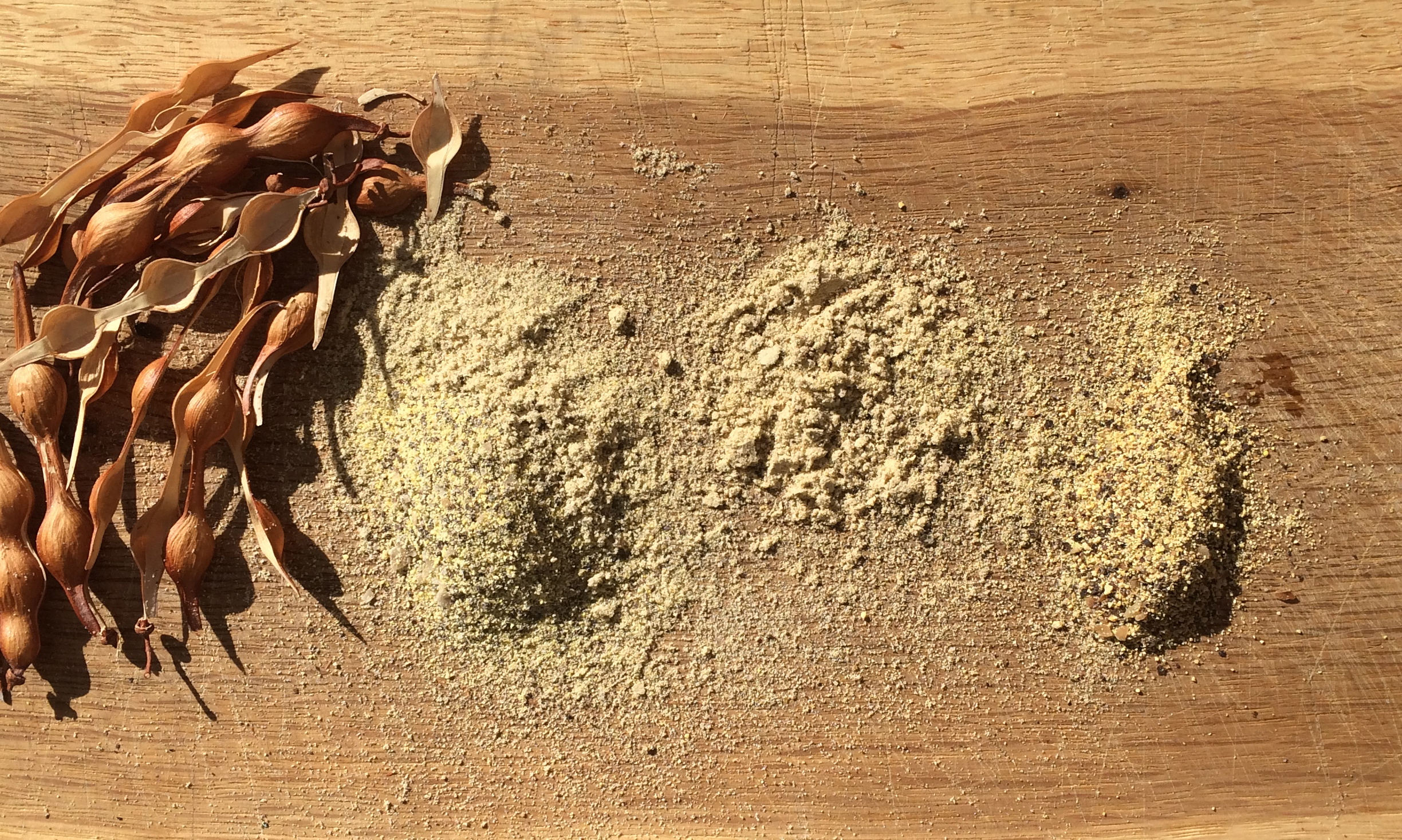
Dry foothills palo verde seed milled raw on L, toasted and milled fine in center, toasted coarse-milled on R

Dry foothills palo verde seeds:  milled raw-Left; toasted and milled fine-Center; toasted & coarse-milled-Right

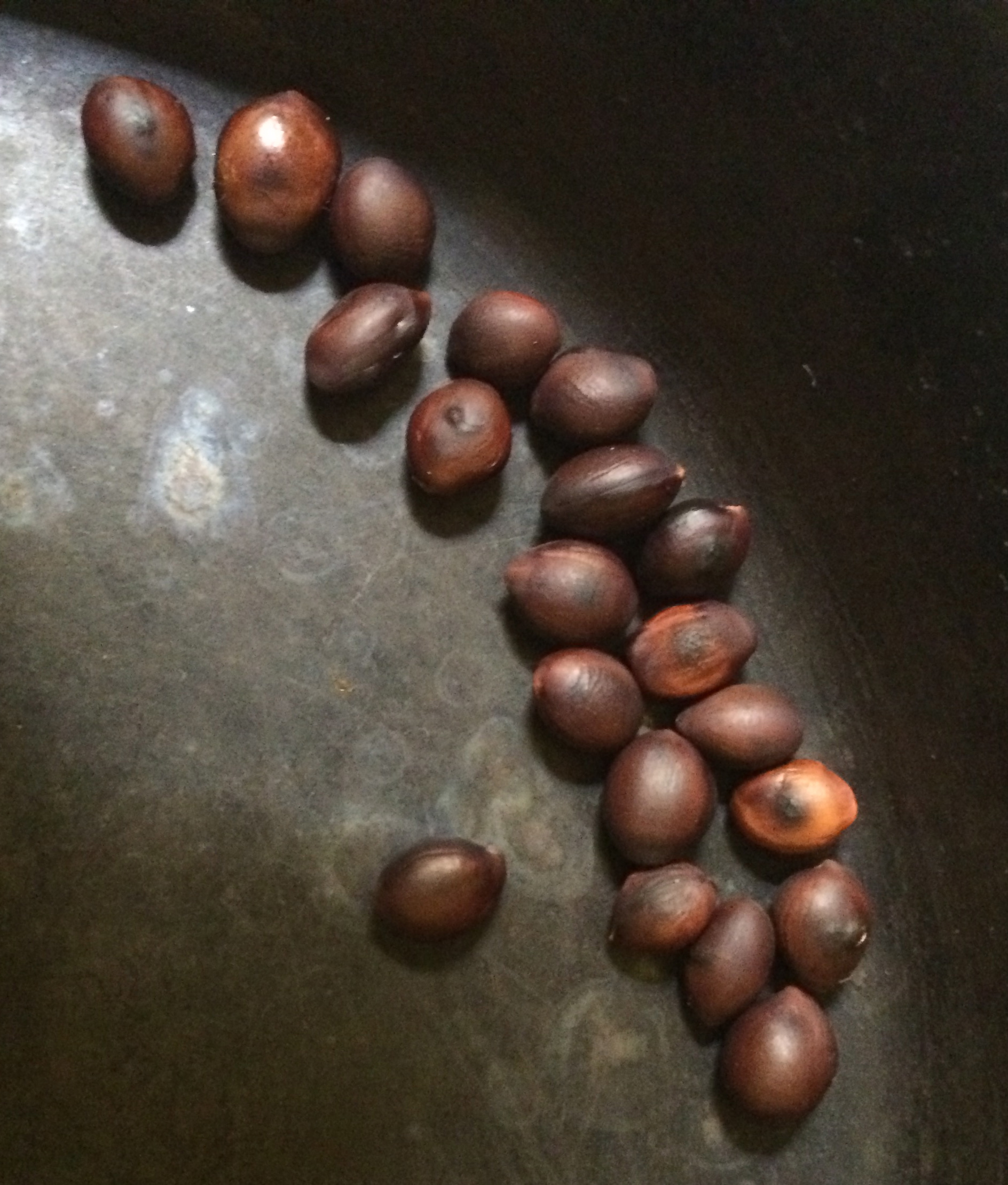
Foothills palo verde seed toasting in a dry iron skillet

Foothills palo verde seed toasting in a dry iron skillet

Oh how I wish that technology could keep up with our needs for scratch, sniff, and taste in this blog!!  The distinctly different flavors and textures of these two flours are so pleasant.  Desert People traditionally parched and ground these seeds in bedrock mortars.  I used a coffee mill to grind them.  The raw flour has a wonderful bean-i-ness bouquet coming through.  Then I toasted (parched) a separate batch of seeds in an un-greased skillet before milling, and WOW the roasty aroma of this gluten-free flour is rich.  I am using it to add flavor –not to mention high protein and complex carbs–to multigrain breads and biscuits.  So FULFILLING!  A friend who tried these different preparations for palo verde flour even wants to use it as a spice or seasoning!

With the monsoon (and with the help of many hummingbird pollinators) has come another edible surprise to my desert garden–octopus cactus fruit–that I just have to share with you:

Stenocereus alamosensis with hummer- and perhaps ant-pollinated flower, June26,2016 (MABurgess photo)

Stenocereus alamosensis with hummer- and perhaps ant-pollinated flower, June26,2016.  Note happy ant on petal.  (MABurgess photo)

Fruit of octopus cactus Stenocereus alamosensis, ripe and splitting July 4, 2016

Fruit of octopus cactus Stenocereus alamosensis, ripe and splitting July 4, 2016 (MABurgess photo)

Sliced octopus cactus fruit on palo chino bowl (MABurgess photo)

Juicy sliced octopus cactus fruit (Stenocereus alamosensis) on palo chino bowl (MABurgess photo)

Years ago I collected seed for it near Alamos, Sonora, and grew it out in Tucson.  Surviving frosty winters, and flowering in previous years, it never bore fruit before.  This year, fertilization happened at last, and voila–there are sensational, gently sweet delicacies to eat right off the cactus.  The fruit’s fresh crispy texture is like watermelon and its seeds are tiny protein crunches.  [Light bulb idea]–With climate change, this flavorful cactus fruit–and others like it–could become an appropriate specialty food to grow locally.

Keep your eyes peeled and prepare for more harvests from the latest new “promises” blooming for multiple times this season in the desert…..Check out these potential edibles:

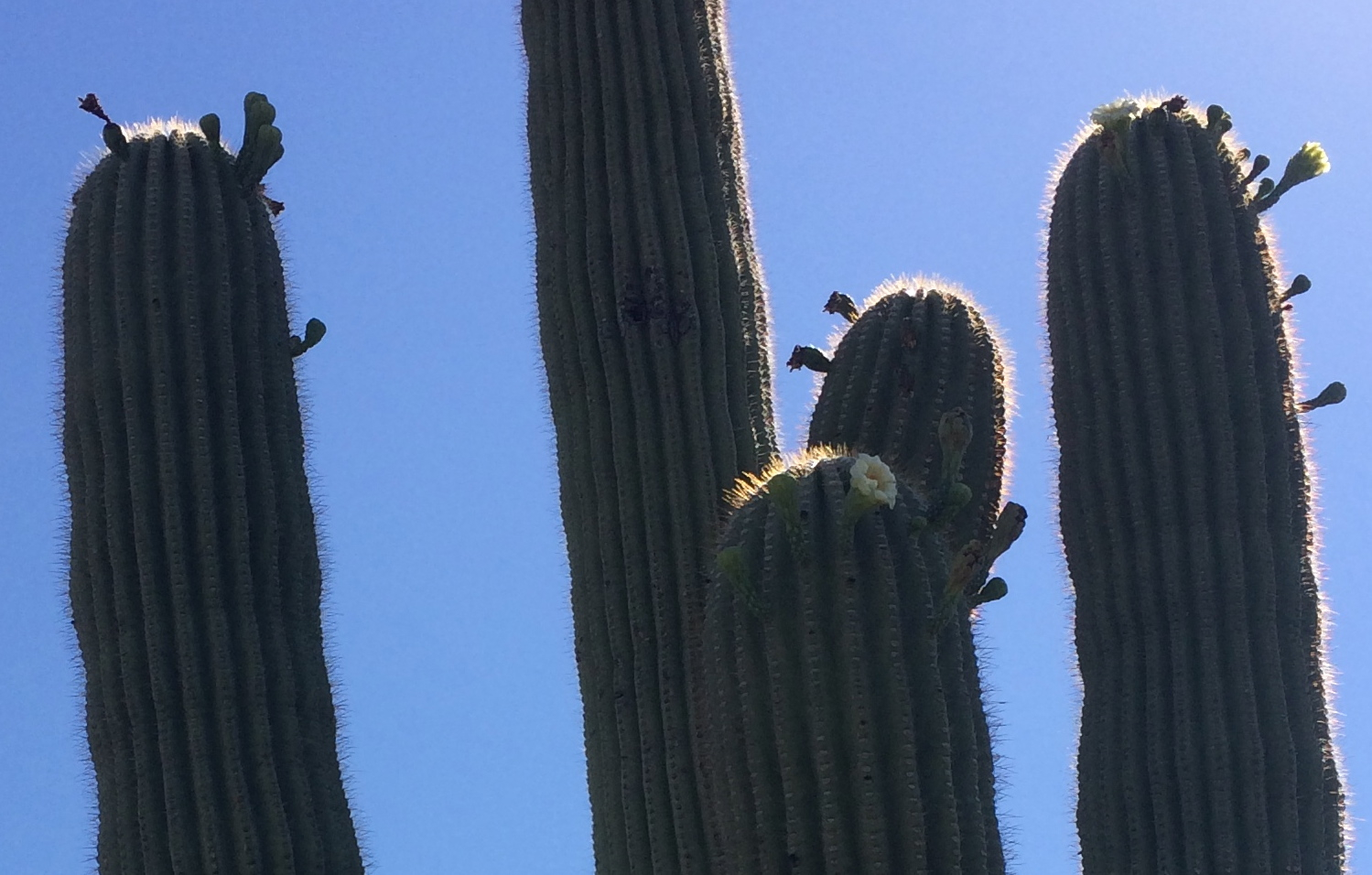
This is the third bloom of saguaros this season--with pollination may give another fruit harvest

This is the third bloom of saguaros this season–if  pollinated may give yet another fruit harvest

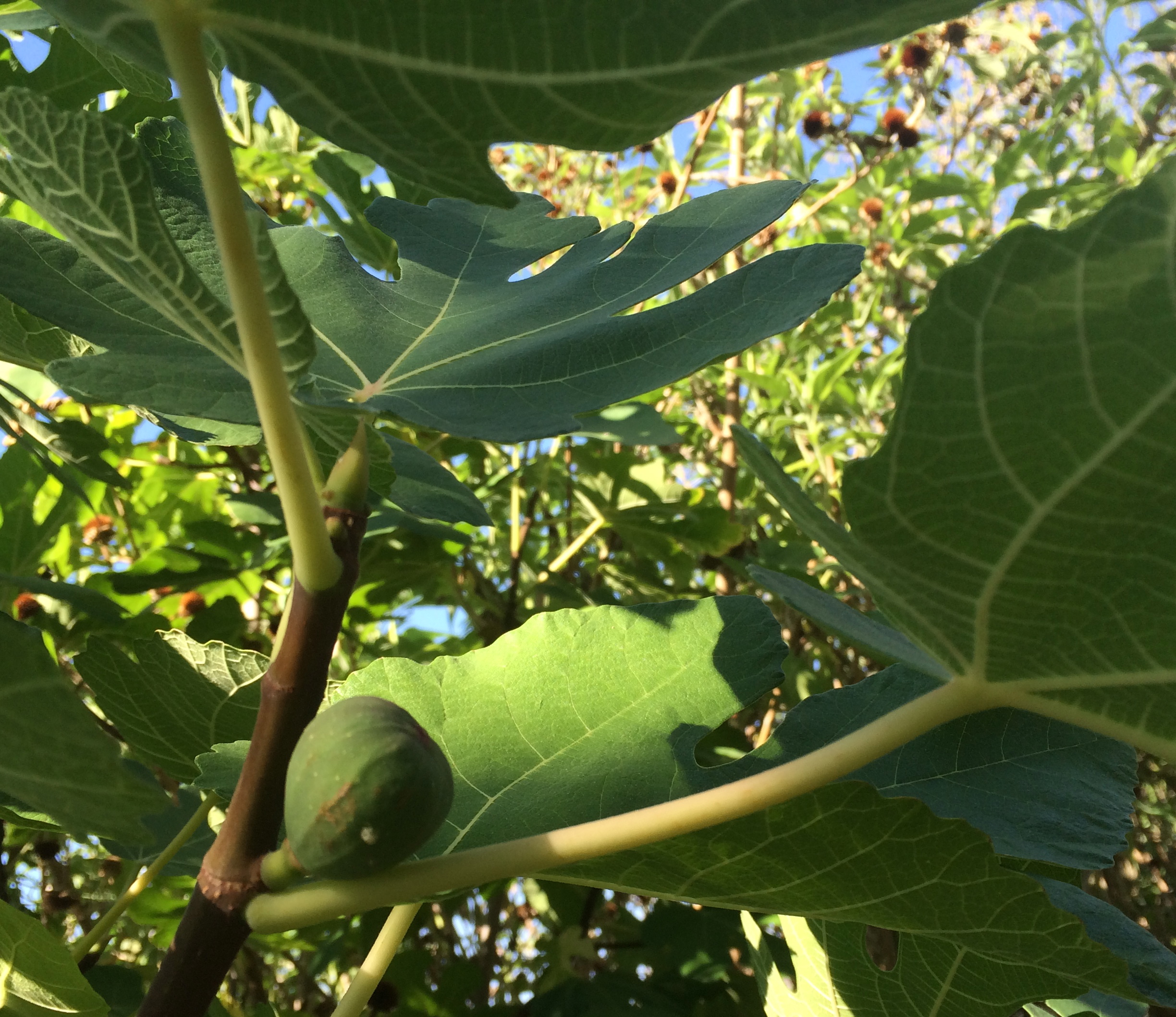
Green swelling Padre Kino fig--watch for preparing heirloom fruit ideas next month….

Green swelling Padre Kino fig–Young trees are available next week at the NSS plant sale!

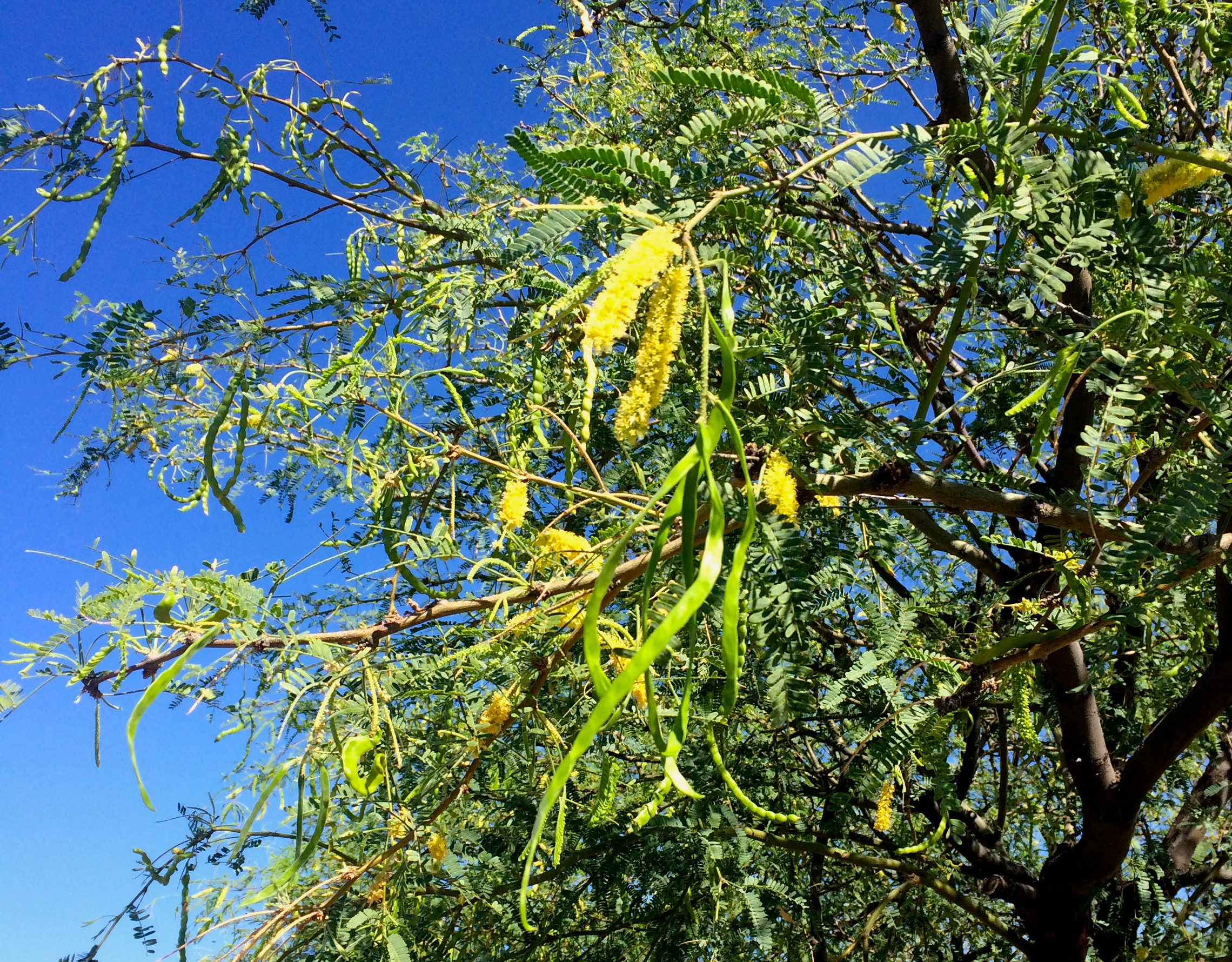
A new wave of mesquite flowers and green pods promise a second harvest this season.

A new wave of mesquite flowers and green pods promise a second harvest this season.

Don’t miss the NativeSeeds/SEARCH Monsoon Plant Sale this next weekend, Friday-Sunday, July 15-17, 2016!  For your own garden-to-table promises and preparations, check out the many starts of NSS heirloom summer vegetables and monsoon wildflowers.  There will be tomatillo plants, heirloom chile varieties, cucumber, many squash and melon varieties to give your garden a jump-start.  A few 5-gallon  Father Kino fig trees propagated at Mission Garden will be available for sale, so come early.

For well-seasoned ideas for desert cookery, two fabulously useful books continue to inspire:    Tucsonan Sandal English’s cookbook from the 1970’s Fruits of the Desert published by the Arizona Daily Star, and desert-foods aficionado (& Blog-Sister) Carolyn Niethammer’s book Cooking the Wild Southwest published by University of Arizona Press.  Borrow or buy, and use them with joy.

I wish you happy harvesting as the desert’s present promises become a cornucopia of fulfilling plenty!

[For anyone seeking heirloom foods and products made with wild foods, check out http://www.flordemayoarts.com and http://www.nativeseeds.org, or visit the Baggesen Family booth at Sunday St Philips farmers market.]


Desert Harvesters June Events

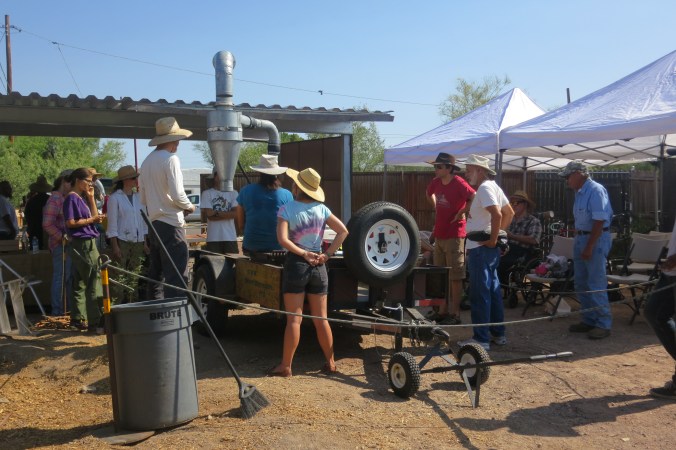
010Though newcomers to the Sonoran Desert sometimes miss the abundant fruits, berries, mushrooms, and greens of wetter forests, one Tucson organization wants you to know the desert is full of food: You just have to know where to look for it. Desert Harvesters is a nonprofit grassroots group that promotes the harvest of native, wild, and cultivated desert foods and also advocates for the planting of indigenous, food-bearing shade trees (such as the Velvet mesquite) and understory plantings within rainwater harvesting “gardens” in the landscapes where we live, work, and play. Funds raised at these events support the group’s educational efforts in the community, including demonstrations, publications, and tasting events.

The group announces its summer season of harvesting workshops and activities, which aim to help the public learn how to plant, harvest, process, and prepare wild, native, and local food items, including mesquite pods, ironwood & palo verde seeds, and saguaro fruit. Currently the group is raising funds to support the publication of a revised and expanded version of its 2010 cookbook Eat Mesquite! This new cookbook will include recipes for mesquite and other desert foods, as well as information about how to grow, harvest, and prepare native and local foods. Desert Harvesters is also seeking volunteers to help with (and learn from) these and other events.
041

June 18 & 19, 2016

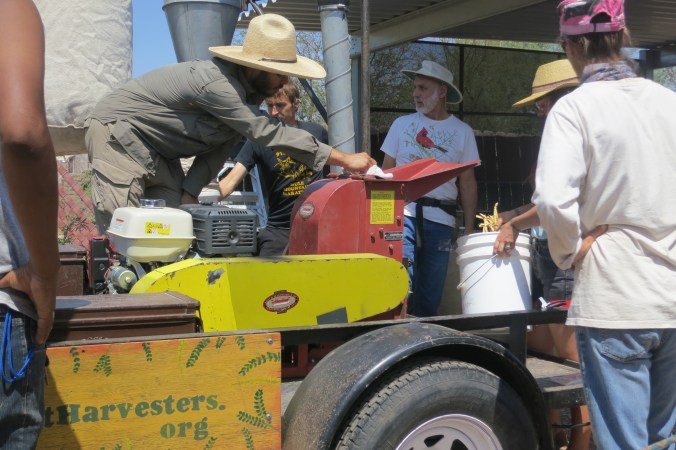
Workshops on Mesquite Pod Tasting, Inspection, and Ticketing and Hammermill Operation for those who want to become Desert Harvesters volunteers or staff, or others wishing to expand their mesquite-related skill sets. Visit http://www.DesertHarvesters.org or email volunteer@DesertHarvesters.org to learn more.


June 23, 2016

DESERT HARVESTERS’ 14th ANNUAL MESQUITE MILLING & WILD FOODS & DRINKS FIESTA Santa Cruz River Farmers’ Market at Mercado San Agustín, 100 S Avenida del Convento, Tucson

Bring your clean & sorted mesquite pods to be milled with our hammermill (fee applies) and taste an array of wild foods.

Harvesters can have their milled mesquite flour tested for aflatoxins (see below) at our 14th Annual Mesquite Milling on June 23, 2016, in Tucson. The cost per test will be a special subsidized fee of only $5.

We will also be serving craft beers (Smoked Mesquite Apple beer as well as a beer finished with creosote flowers) from Iron John Brewing Co. with proceeds going to Desert Harvesters.


June 24, 2016

Desert Harvesters’ Happy Hour at Tap & Bottle

403 N 6th Ave #135, Tucson

5–8 pm

Enjoy great regional brews, some infused with locally sourced native wild ingredients. A percentage of all happy-hour sales goes to Desert Harvesters! A local food truck will also be on site with delicious offerings including native wild ingredients.
IMG_2000

BE IN SYNC WITH THE SONORAN DESERT’S NATURAL PATTERNS

To encourage harvesting before the monsoons, and to be more in sync with the Sonoran Desert ecology’s natural patterns, Desert Harvesters has shifted its annual harvesting and milling trainings, along with its mesquite millings and fiesta, to the month of June—BEFORE the summer rains. This is also when our native bean trees (mesquite, desert ironwood, palo verde) are ready to harvest (they produce before the rains so their seed is on the ground ready to germinate when the rains arrive). Regularly check our Calendar of Events for more such event info.


FOOD SAFETY: Aflatoxin and how to avoid it

Aflatoxin is a toxic natural compound produced by certain molds; it can cause liver damage and cancer. Aflatoxin is found in many common foods, but only in small quantities is considered safe (U.S. ≤ 20 parts per billion (ppb), Europe ≤ 2 ppb). We at Desert Harvesters are specifically concerned with the invisible mold (Aspergillus flavus) that can produce aflatoxin B1 on mesquite pods, as well as on other food crops (legumes, corn, etc) that have been exposed to moisture.

HARVEST MESQUITE PODS BEFORE THE RAINS (at higher elevations, harvesting in dry autumn weather may be an option)

Desert Harvesters is now recommending that, as much as possible, harvesters collect mesquite pods BEFORE the monsoon rains. (This can be more difficult at higher altitudes due to later ripening. In these areas the best practice may be to only harvest in dry autumn weather.) The reason for pre-rain/dry-season harvesting is to reduce the pods’ exposure to moisture, and thus the risk of the development of an invisible mold (Aspergillus flavus) and the aflatoxin it can produce. Aflatoxin poisoning can have serious health consequences over the long term, so we want to harvest in a SAFE manner. To further avoid moisture issues with the pods we recommend you do NOT rinse or wash pods.

In the small number of batches of mesquite flour we have tested thus far…ALL mesquite pods we tested which were harvested BEFORE the rains have tested SAFE.

In other words, NO mesquite pods harvested BEFORE the rains had results with unsafe levels of aflatoxin. The U.S.-designated safe limit of aflatoxin is 20 parts per billion (ppb), so safe test results will be 20 or fewer ppb.

However, all test batches of mesquite pods that DID have results with unsafe levels of aflatoxin were harvested AFTER the onset of the rains. Again, in the U.S., safe aflatoxin levels of 20 or fewer parts per billion (ppb) are considered safe. However, many other batches harvested AFTER the onset of the rains tested SAFE.


We hope to continue to share more studies and best harvesting practices.


What to do with mesquite flour?

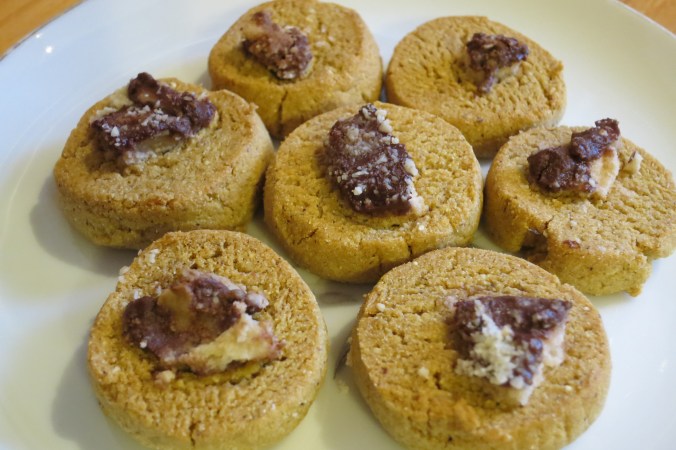
Sonoran Cookies

Here’s a truly classic recipe from the first EAT Mesquite! Cookbook.We’ve made hundreds of these cookies. The author of the original recipe is unknown. The ones in the photo below are topped with mesquite toffee.
mesq cookies toffee

.25 lb (one stick) butter

1 cup sugar (can be reduced to .75 cup sugar, plus .25 cup mesquite)

1 egg

2 teaspoon vanilla (or local lemon extract)

2 cup corn tortilla meal (or whole wheat flour)

1 cup mesquite meal

2 teaspoons baking powder

2 teaspoons baking soda

.5 cup pecans, finely chopped (optional)

Cream softened butter.  Mix in sugar, egg and extract.  Sift dry ingredients and add to the first mixture.  Add nuts (optional) and beat until smooth.  Roll dough into 2 inch balls and press onto ungreased cookie sheet.  Or, roll dough into thin logs, wrap in waxed paper, and refrigerate or freeze.  Slice cold logs into rounds and place on cookie sheet.  (Doubled cookie sheets or Airbake prevent bottoms from browning too fast.)  Place in preheated 375 F oven and bake 12 minutes or until golden.  Cool on racks until crisp, or eat warm and soft.  Makes up to 200 tiny (.75 inch) cookies.


Everybody Cooks Desert Wild Plants

It’s Carolyn Niethammer with you this April Friday, my favorite time of year when the Sonoran Desert is bursting with life. The rains weren’t as heavy as El Niño had promised, but there was enough moisture so that our arid-adapted plants could produce a colorful and abundant spring. When I was a young reporter for the Arizona Daily Star we used to have a feature called “Everybody Cooks.” I loved going out into the community and talking to good cooks from all walks of life — Mexican nanas, musicians, business owners, Jewish homemakers — about what they made for holidays and everyday family meals. I recalled those good times earlier this month at the Native Seeds/SEARCH Arid Abundance Potluck.

People arrived at the Arid Abundance Potluck with so many creative uses of the delicacies of a Sonoran desert spring that I just had to document the event.

Chad Borseth shows off his cholla bud appetizer.

Chad Borseth shows off his cholla bud appetizer.

Chad Borseth, the manager of the NS/S retail store, started us out with a cholla bud appetizer. There’s an old joke about how a cook made chicken soup in 1880. It starts: first you catch the chicken. This is sort of like that. You do have to harvest, clean (meaning remove the thorns) and dry the cholla buds. Or you can go the the NS/S store and buy some already cleaned and dried. Chad boiled the dried cholla buds for about 45 minutes, drained them and then chilled them in white balsamic vinegar overnight. When he was ready to serve them at the potluck he cut  each of them in half and arranged them on a plate and drizzled them with prickly pear syrup. Toothpicks are handy for picking up the delicious little morsels.


IMG_0658

Nancy Reid serves up  her rich and delicious  Green Chile-Cholla Bud Quiche

Nancy Reid, a retail associate at the NS/S store,  brought a green chile and cholla bud quiche that she had modified from a recipe in a wonderful but out-of-print NS/S cookbook. She began by melting a tablespoon of butter in the bottom of an 8-inch round pan. In a bowl, she beat 4 eggs. Then she added 3/4 cup cooked cholla buds, 3/4 cup chopped green chiles, 1 cup of cottage cheese, 2 cups of shredded colby/jack cheese, and a little salt. It went in the oven at 325 degrees F. for 40 minutes.


Laura Neff with her salsa.

Laura Neff , NS/S retail associate, with her salsa.


What’s a southwestern meal without salsa? Laura Neff’s version includes 1/2 cup dried cholla buds boiled for 45 minutes and drained, 1/2 cup diced tomatoes, 1/4 cup diced red onion, 1/4 cup chopped cilantro, 1-2 finely minced jalapenos, and 1 tablespoon of lime juice. She combined everything except the cholla buds in a food processor. The cholla buds were chopped by hand and added  at the end.


My friend Connie Lauth wasn’t at the potluck but she made this gorgeous quiche recently for company. Connie lives on the desert at the very end of a road into the Tucson Mountains. While Chad and Laura used dried and reconstituted cholla buds, Connie just walked out her door and picked some fresh ones. She used nopalitos from Food City but by now there are plenty of fresh, new-growth prickly pear pads ready for harvest.

Nopalito-Cholla Bud Quiche

Connie’s Nopalito-Cholla Bud Quiche

Here’s Connie’s recipe:

Connie’s Desert Pie

1 cup of cholla buds

1 cup of nopalitos

½ cup thinly sliced red bell pepper

4 large eggs

1/2 cup milk,

1 ½ teaspoons pico de gallo seasoning

1 tablespoon of chopped fresh cilantro

1 frozen deep dish pie shell

1 cup shredded Mexican cheese

Dethorn cholla buds by holding them with tongs and burning them off over a gas stove.. Rinse. Microwave in a covered dish on high for 4 minutes.

Cut gathered or purchased nopalitos into 1/4-inch dice. Microwave with red bell peppers for about 4 minutes.  In a bowl, beat eggs and milk, add seasonings.  Layer egg mixture with vegetables and cheese in the pie shell. Bake at 400 degrees about 40 minutes until a knife inserted in center comes out clean

________________

If  you are inspired to try your hand at more desert gathering and cooking, my book Cooking the Wild Southwest: Delicous Recipes for Desert Plants can be your guide to 23 easily recognized, gathered and cooked  desert edibles.  If you want to harvest some nopales (prickly pear pads), you can find lots of recipes in The Prickly Pear Cookbook. Both books  are available in the Native Seeds/SEARCH retail store at 3061  N. Campbell or on their website. The books are also available from Amazon and B&N.


Spring Salad

cholla 2016

Amy collecting cholla buds

Some years, spring seems to last about a week in the desert, going from winter to summer too fast. When the weather is beautiful, we know to celebrate these days outside!!!!

blog 20160415_100732

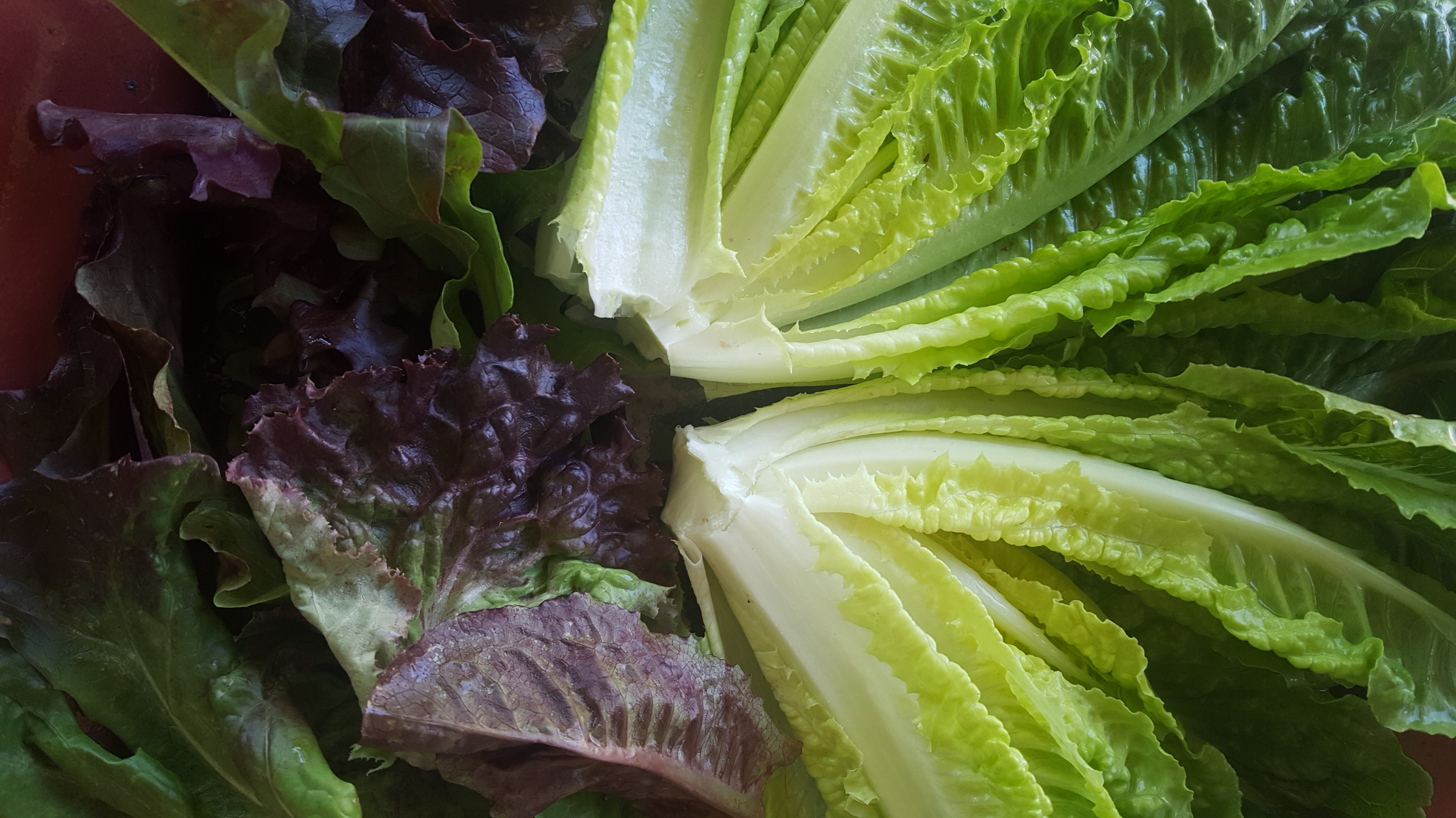
Romaine hearts and assorted red lettuces

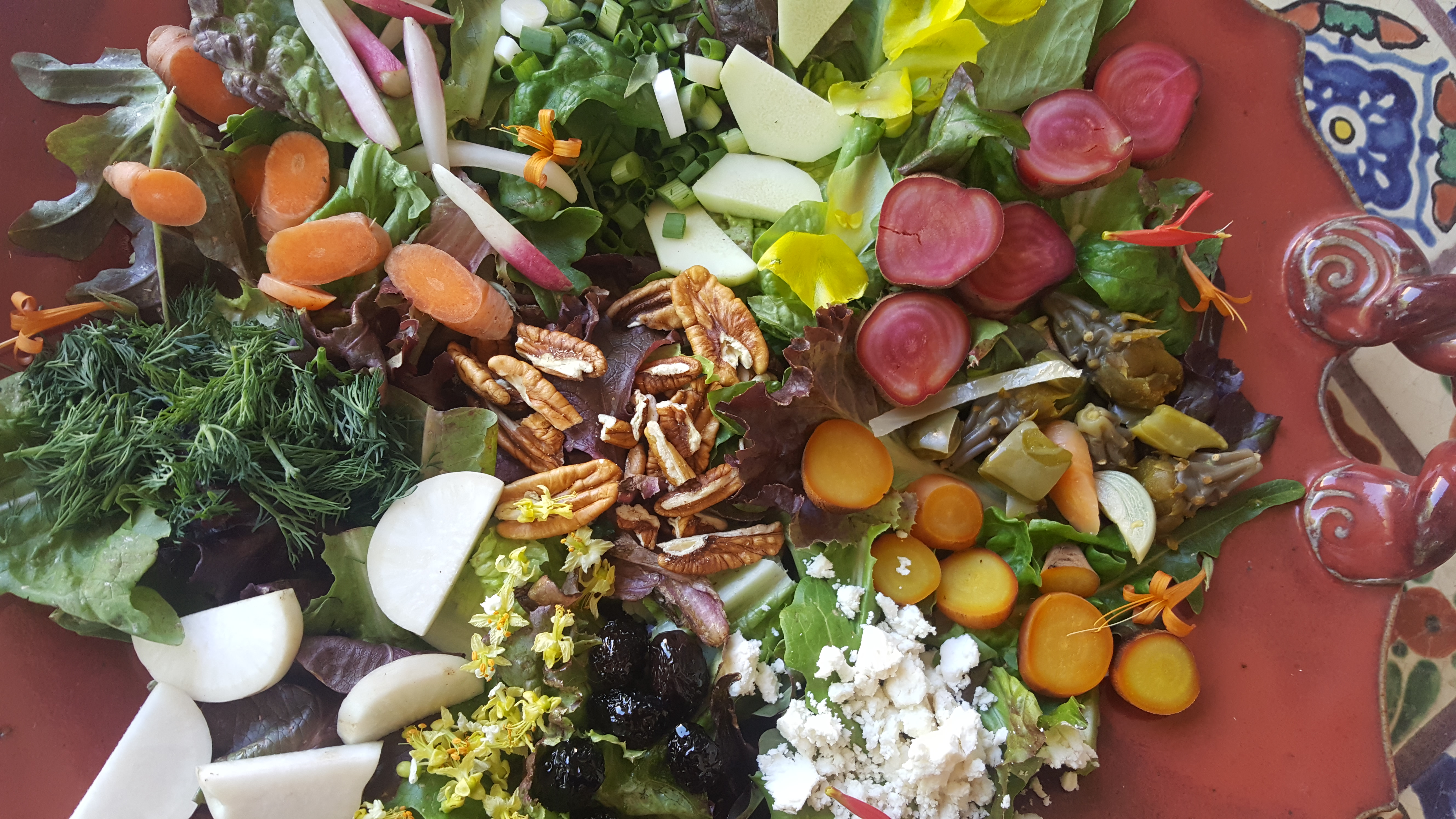
Winter lettuces are still around for a short time more, and the weather is finally warm enough that I feel like eating a salad. Here is a salad made with ingredients I had on hand. I traded for most items, the exceptions being the items I made. I hope this serves as an inspiration to go to a farmers’ market, use little bits of what you have in the refrigerator, go into the desert near your home, and forage in your yard.

blog 20160415_093007

Hakurei turnips, Chioggia and Golden beets, Carrots, Kholrabi, , and French Breakfast Radishes.

Hakurei “salad turnips” are so sweet and tender, they can win over stubborn turnip haters, and are a treat raw for turnip lovers.

I steamed and sliced the beets, peeled and sliced the kholrabi, and simply sliced the turnips, carrots and radishes.

I'itoi onions and dill.

I’itoi onions and dill.

For fresh herbs, I used dill and I’itoi onions. I like the green tops as much as the white parts.

Crusts of Small Planet Bakery Cottage Wheat make excellent croutons. Just chop, drizzle with olive oil, salt, and garlic powder (my guilty pleasure), then toast in a skillet until crunchy.

blog 20160415_104817

Heels of Cottage Wheat.

blog 20160415_104958

Cast iron skillet croutons.


blog 20160415_085613

Brined goat feta.

20150910_120612

Mango Salsa.

Last fall, I goat/house sat for a friend, and this is the feta I made from the milk. Mango the goat has mellowed over the years since I first learned to milk and she first learned to be milked.

IMG_3508

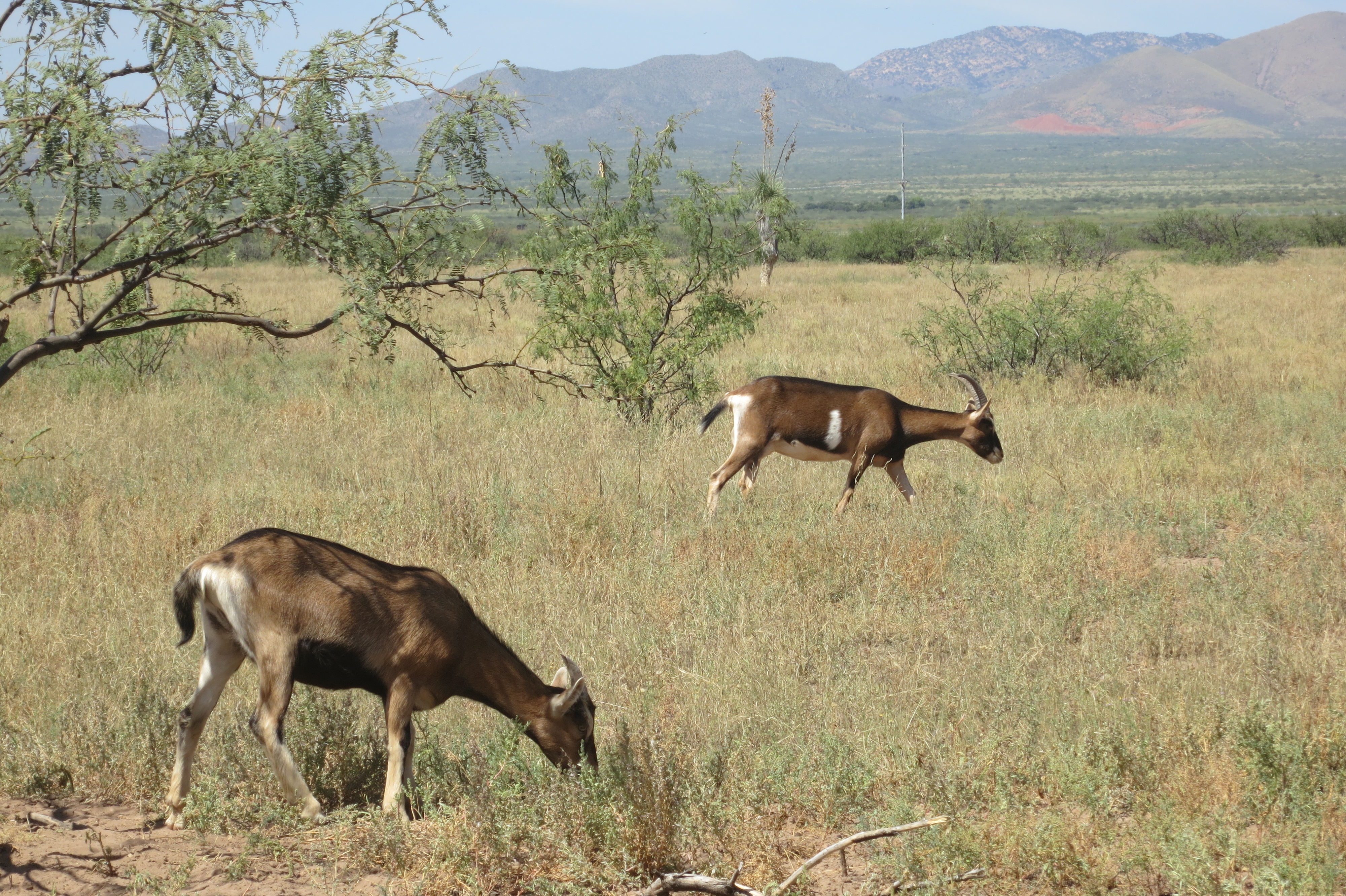
The heard on the grassland.


IMG_3517

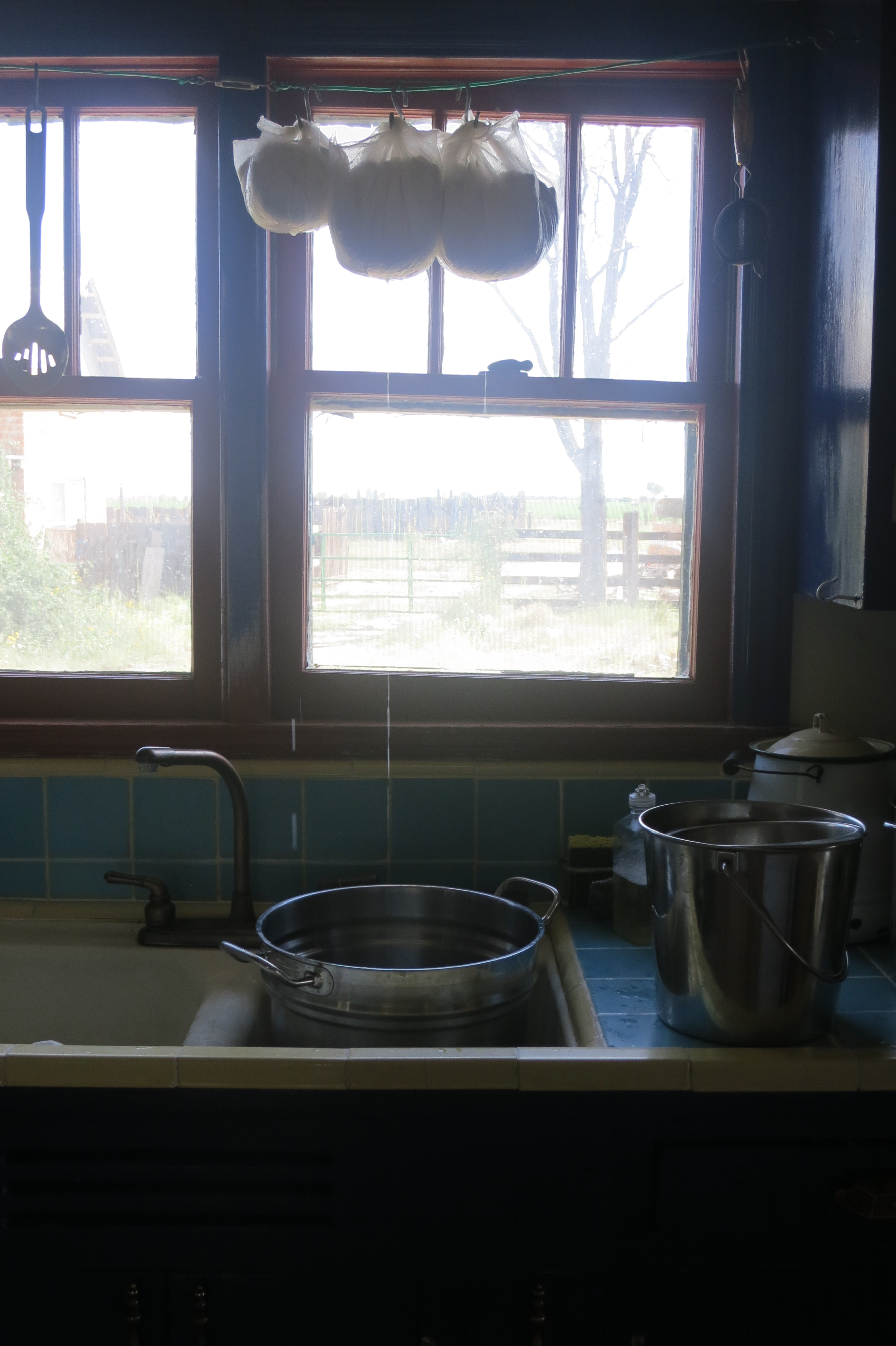
Fresh cheese curds draining whey.

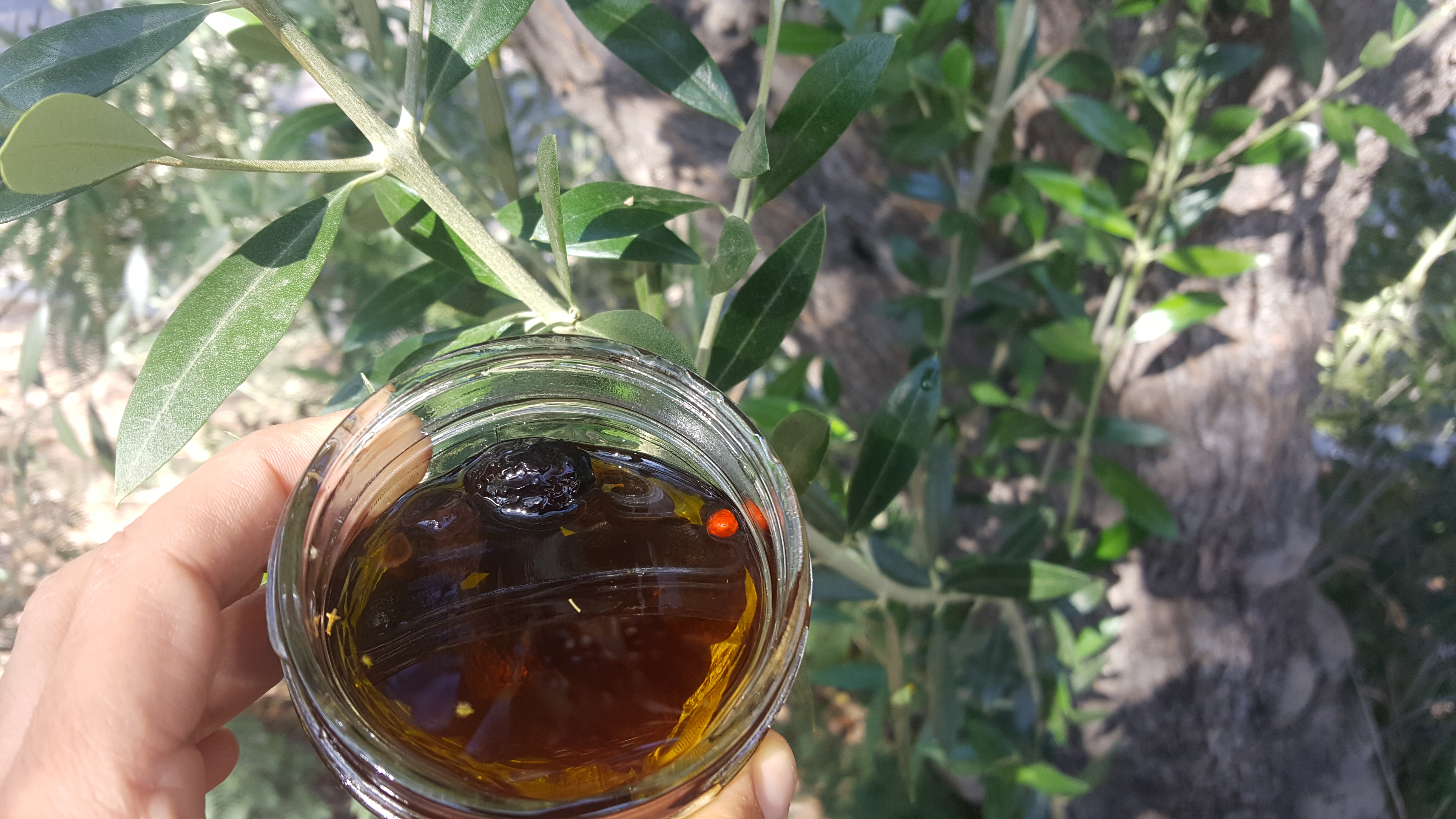
Solar cured olives from Bean Tree Farm.

Solar cured olives from Bean Tree Farm.

Pickles! Cholla buds and nopalitos en escabeche.

Pickles! Cholla buds and nopalitos en escabeche.

blog 20160415_103012

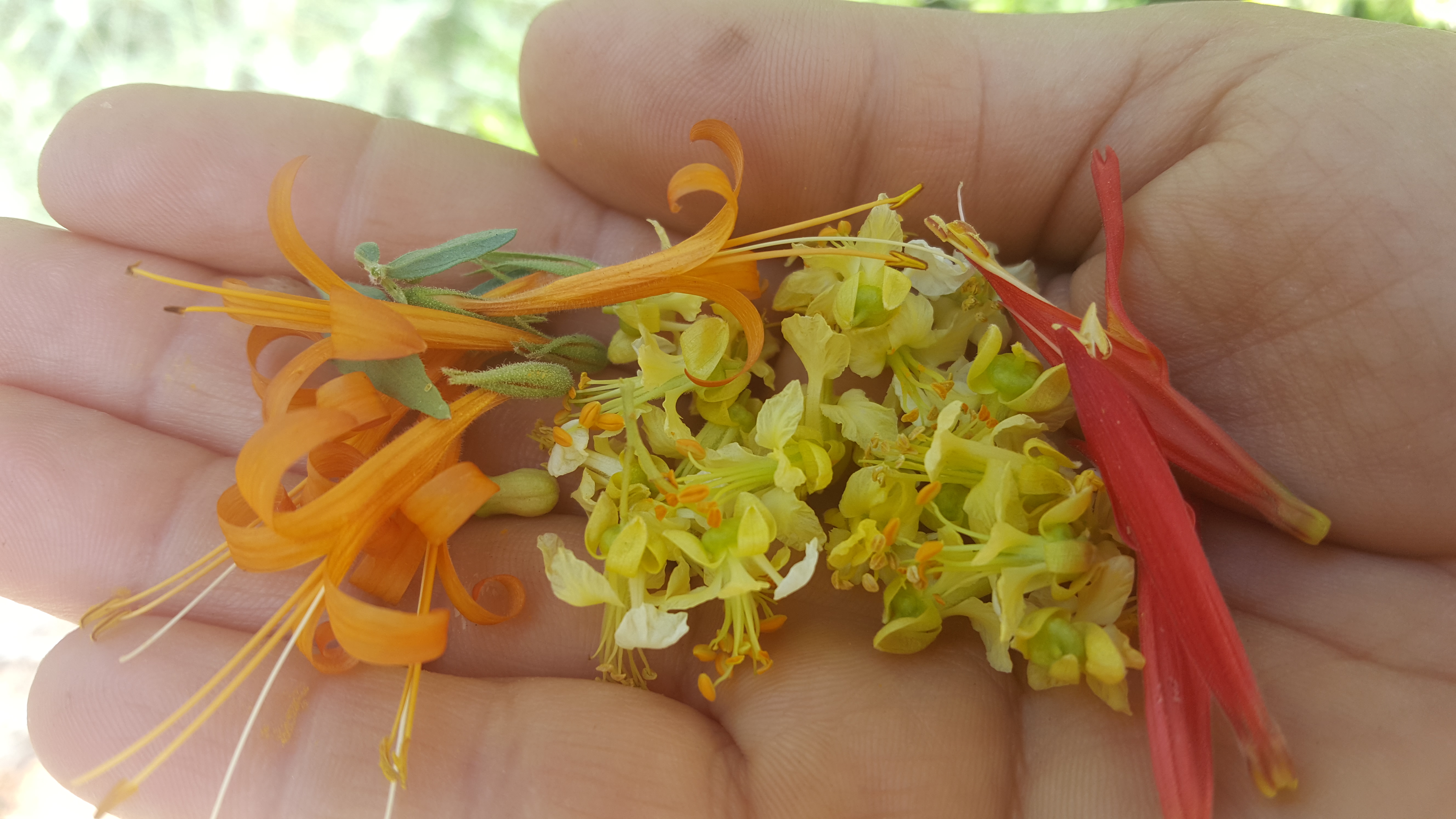
Fresh flowers for garnish.


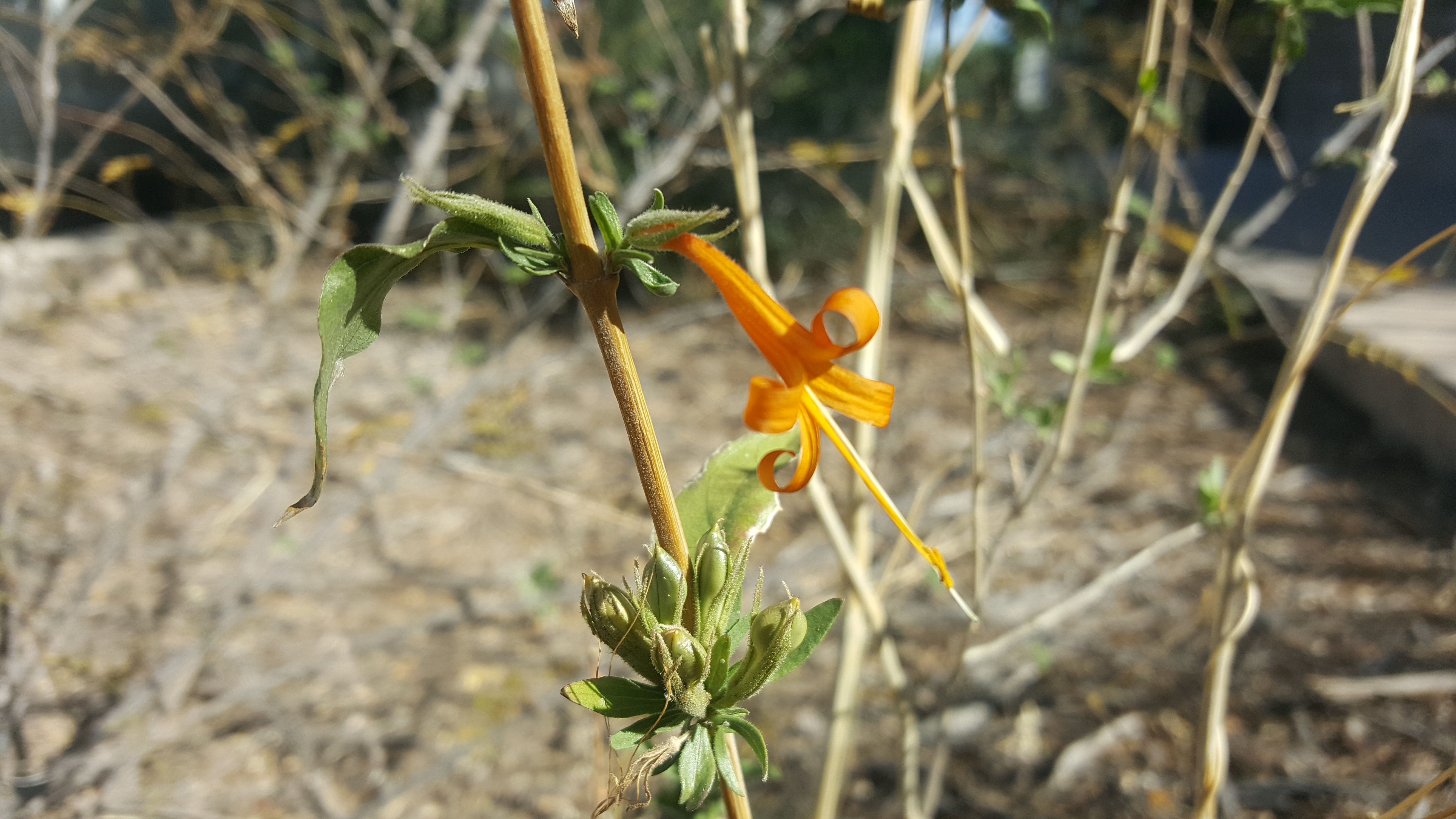
blog 20160415_090830

Desert Honeysuckle, Anisacanthus thurberi.

blog 20160415_104348

Foothills Palo Verde, Parkinsonia microphylla.

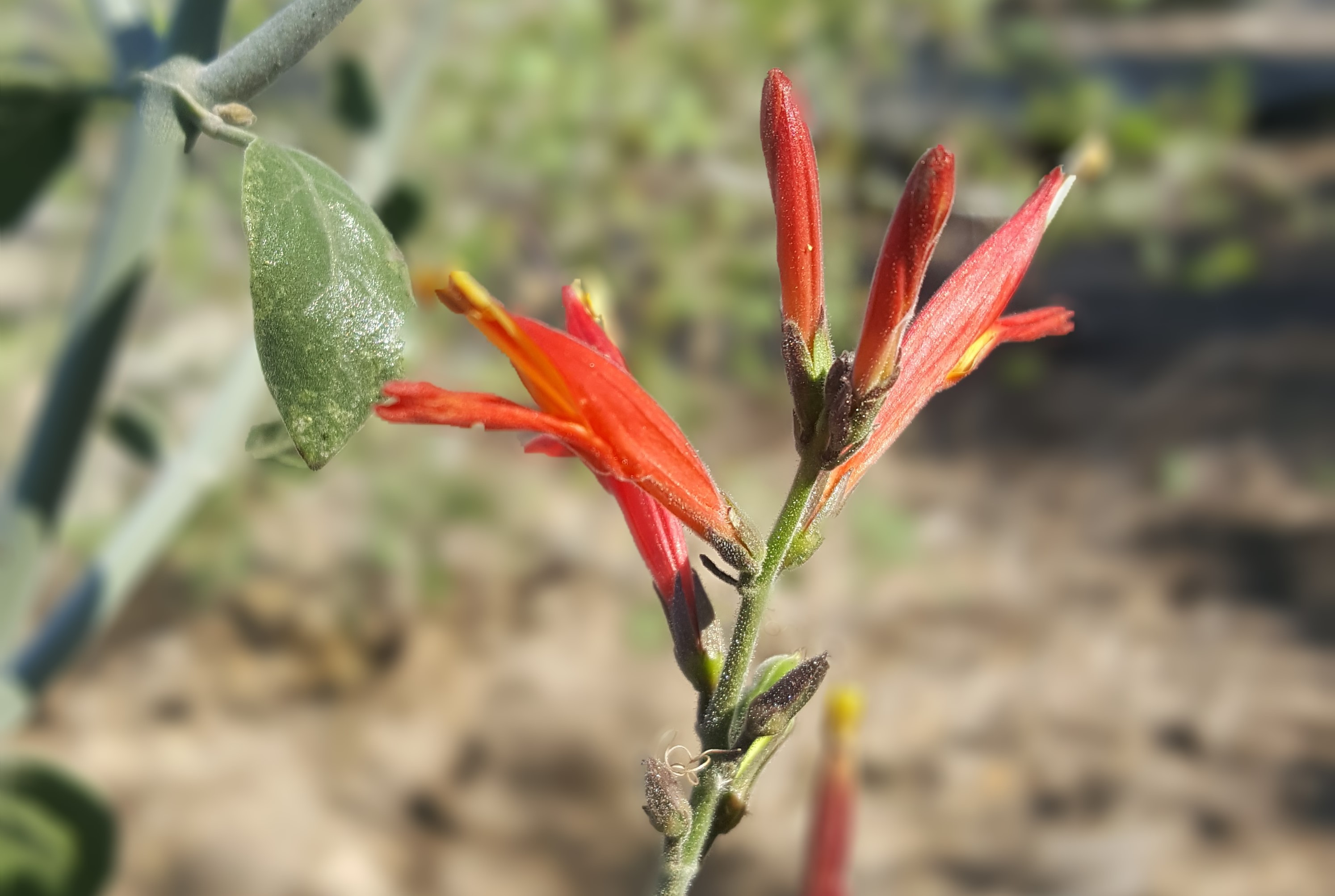
blog 20160415_091001

Chuparosa, Justicia californica.

Prickly Pear Cactus flowers are a fleshy, vegetal garnish. Opuntia engelmannii

Prickly Pear Cactus flowers are a fleshy, vegetal garnish. Opuntia engelmannii

blog 20160415_103501

Dress with olive oil and lemon juice. Enjoy!


On the Transformational Power of a Humble Pot


IMG_2487

View inside a  clay cooking pot made in Sonora, Mexico. Hand crafted several years ago, by an elder woman who digs the clay herself; each March.

Aunt Linda here this still, cool morning in the Old Pueblo. Today’s post is inspired by the tiny pots I discovered when removing a birdhouse filled with wasps, instead of  baby birds. Wearing my bee veil I safely peeked inside – immediately mesmerized by the sight of beautifully crafted, tiny mud pots. Potter Wasps I wondered?  And what on earth do they DO with these pots? I began to research these tiny pots.  English naturalist John Crompton  described them as “vases of earthenware that the Greeks might have envied.”

IMG_2477

Tiny mud pots

Eric Grissell, in his book BEES, WASPS, and GARDENS writes “unlike many wasps that simply place their egg on the prey or at the bottom of a cell, potter wasps suspend their eggs by a thread from the top of the pot. When it hatches, the wasp larva is hanging directly over it’s supper, and it remains attached safely to it’s line until the first caterpillar or two is consumed, then it is bold enough to drop down and feast among it’s hosts. Apparently, the reason for this odd behavior is that female potter wasps only partially paralyze their hosts, which are still capable of some movement. A tiny wasp larva might be crushed if it had no way to retreat from its twitching dinner plate, so it essentially becomes a trapeze artist.”(p177)

IMG_2524 (1)

insect potter in action

Potter Wasps may not cook per se; but they do collect mud, shape pots, and provide meals  in those pots for their larva. Which gets me thinking about pots. And how humans feed – and have fed ourselves – over time. How might such a simple thing as a fired clay pot have transformed our  lives?

IMG_2490

Simple Cook pot whose “insides” are shown in the top photo. 

Research offered by Michael Pollan in his book COOKED fascinates me. Before the technology of fired clay cooking pots humans heated stones (found in archaeological sites as ‘burned stones’) and fired clay balls. These “cooking stones” were added to the water held in animal skins or watertight baskets (which were not fire proof; that would come later with firing clay) to boil water. Boiling water – another thing we take for granted – allowed humans to transform previously inedible foods edible. This opened wide up our culinary and nutritional world – and seeds, nuts, grains, sometimes rendering some toxic plants safe to eat.

Pollan writes “the cook pot is a kind of second stomach, and external organ of digestion” … “these auxiliary clay stomachs made it possible for humans to thrive on a diet of stored dry seeds which in turn led to the accumulation of wealth, the division of labor, and the rise of civilization. These developments are usually credited to the rise of agriculture, and rightly so, but they depend as much on the cook pot as on the plow.” (154)

IMG_3099

Stew forming with vegetables and, yes you saw right,  some chicken feet; no part goes unused.

Todays Recipe is to add some reverence for the deceptively simple cook pot – (as well as for the act of boiling water) – to your very favorite ingredients. There is no need to use a clay pot; nor to even get complicated. You might add this reverence to making a pot of beans, your grandmothers favorite soup or stew, or even to jam making.


Beautiful Bay

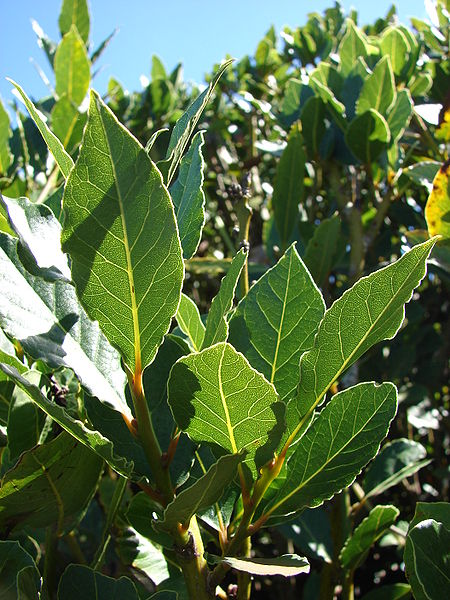
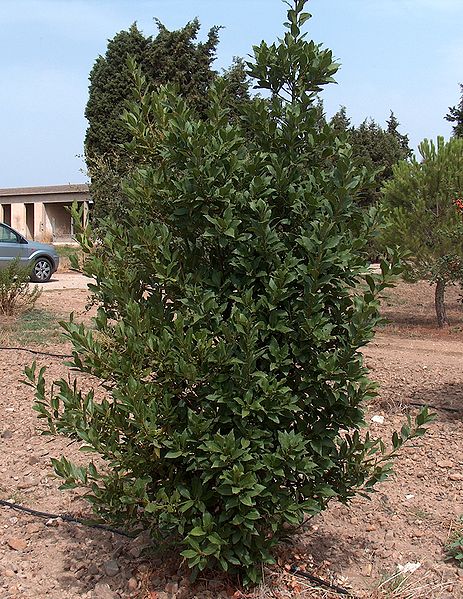
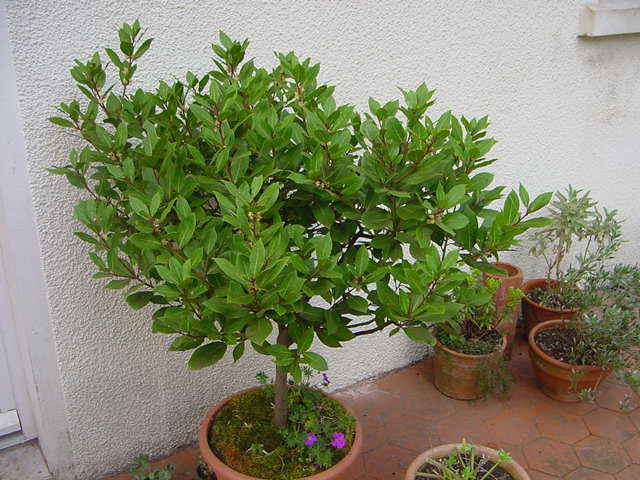
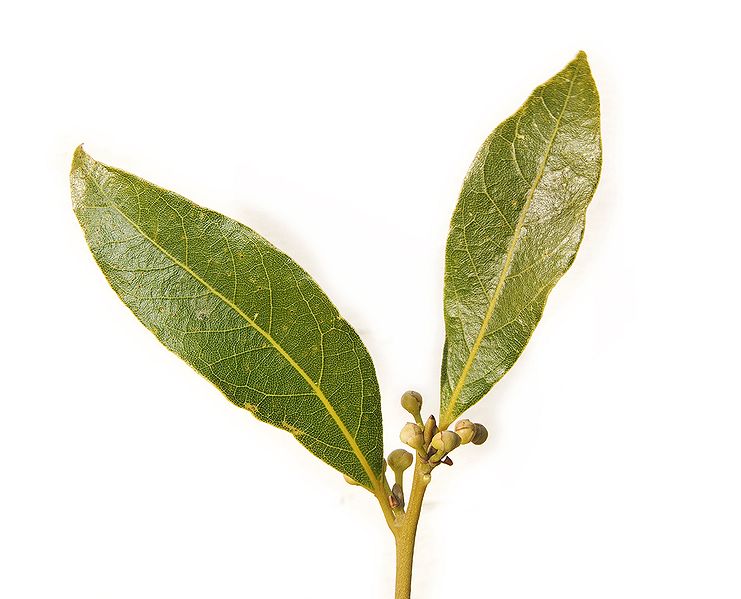
Laurus_nobilis_leaves_004Jacqueline Soule this week, to discuss an herb you can plant now. This herb is a large shrub/small tree that can even be used as a houseplant! I am speaking of bay (Laurus nobilis), also called laurel, or bay laurel. (In Spanish it is called laurel.) Bay is used for Craft, Culinary, Ornamental and Pest Control purposes.


Laurel_paintingHistory.

In ancient Greece and Rome, the bay tree was considered sacred to Apollo, the sun deity. Leafy branches of bay were woven into wreaths to crown the heads of kings and queens, priests, priestesses, poets, bards, and the victors of battles and athletic or scholarly contests. At the first Olympics in 776 B.C.E., laurel garlands were presented to the champions of each contest. During the Renaissance, doctors, upon passing their final examinations, were decorated with berried branches of bay. From this ancient custom derives the French word baccalaureate (from “bacca,” a berry, and “laureus,” of laurel); this has been modified into the term “bachelor” in referring to one type of college degree.


Laurus_nobilis_driedUses

Bay has been used medicinally for centuries. It has a reputation for soothing the stomach and relieving flatulence. Bay has also been used as an astringent, diuretic, narcotic, or stimulant. An infusion (tea) is prepared for these purposes.


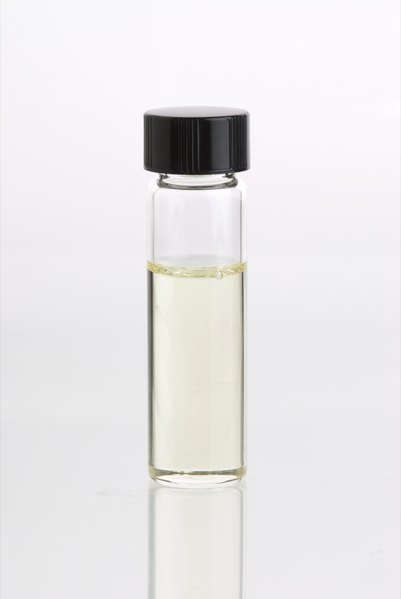
LaurusNobilisEssOilOil of Bay, extracted from the leaves, contains many components, including cineol, geraniol, and some eugenol. Studies of the purified essential oil have proven bactericidal and fungicidal properties. Use as a narcotic may be due to the eugenol found in bay (an oil also found in cloves), which has been shown to have sedative and narcotic effects in mice. Bay is used externally, and considered by some to be a healing agent for rheumatism. In such cases the essential oil is rubbed on the aching joints. A soothing bath soak is prepared from an infusion of the leaves, and added to the bath water. External use of bay may cause dermatitis in sensitive individuals. Always test a small patch of skin before widespread use.


Laurus_nobilis_landscape_01Planting and Care.
The bay laurel is an evergreen tree with glossy, deep green leaves. It grows well in arid climates such as Greece, Italy, southern France, and here in the Pimería Alta. Bay is a lovely tree for the yard or even poolside. Growing slowly to form a stately tree, in the very best conditions it will eventually reach 40 feet high (it takes decades). Like most herbs, soil with good drainage is required.
 

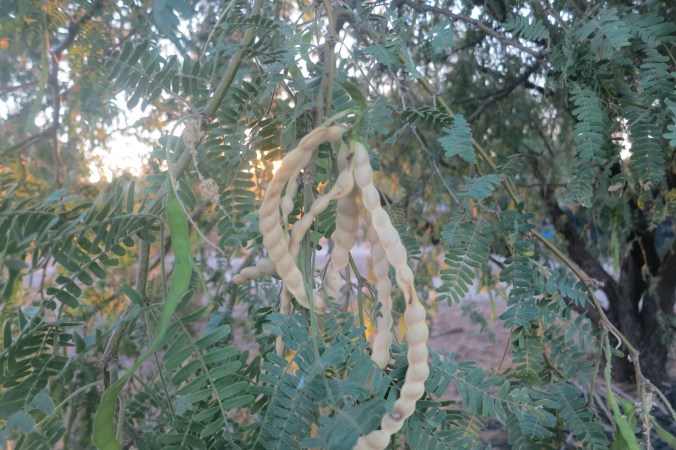
laurel-tree-5The only problem with bay is that young trees are frost tender, and must be protected much like a citrus tree. You can grow bay in a container when it is young and move it onto a protected porch for the winter. Plant it out once the plant has some size as it is less likely to freeze, or you can keep in a container for years.  Indeed, you can also grow bay indoors, if you have a well-lit space.

Be sure you buy true bay laurel. Landscape plants sold as “laurel” may be Prunus laurocerasus, also called the English or cherry laurel; a member of the rose family.


Laurus nobilis_lvs_01Harvesting and Use.
Bay as a flavoring herb is always used dried. There are several bitter tasting compounds which are lost with drying, leaving the flavorful and useful oils. Leaves are used whole and removed prior to serving as they leave a bitter taste if chewed. Add bay to your cooking, or prepare as an infusion base for soups.

Bay leaves are used as a pest repellent for flour weevils. Just add several leaves, ideally in a muslin bag, to your flour canisters. Change to fresh leaves every six months. Use the old leaves as organic mulch in the garden.

Bay leaves, either fresh or dried, can be used to create lovely long lasting herbal wreaths.


JAS avatarIf you live in Southeastern Arizona, please come to one of my lectures. Look for me at your local Pima County Library branch, Steam Pump Ranch, Tubac Presidio, Tucson Festival of Books and other venues. After each event I will be signing copies of my books, including the latest, “Southwest Fruit and Vegetable Gardening,” written for Arizona, Nevada and New Mexico (Cool Springs Press, $23).

© All articles are copyright by Jacqueline A. Soule. All rights reserved. Republishing an entire blog post or article is prohibited without permission. I receive many requests to reprint my work. My policy is that you may use a short excerpt but you must give proper credit to the author, and must include a link back to the original post on our site. Photos may not be used.

Oh Yum! Tasty Mesquite Meal Enhances Pie Crust and Waffles

Bodie Robins offers a selection of delicious gluten-free baked goods at farmers markets in Tucson and Sierra Vista.

Bodie Robins offers a selection of delicious gluten-free baked goods at farmers markets in Tucson and Sierra Vista.

For thousands of years, mesquite pods were the primary food of people who lived on the Sonoran Desert. It’s Carolyn here today recalling that when I first started researching and experimenting with mesquite in 1972, hardly anybody was eating this sweet nutritious food. Although a few Tohono O’odham kept up with the old ways, it was on the verge of being forgotten.

Until recently,  it wasn’t easy to process mesquite pods. Early Native women made mesquite meal by pounding the pods in bedrock mortars. By the 1970s it hadn’t gotten much easier. But fortunately for all of us someone (I recall it was at the Desert Museum) figured that the pods could be crushed and sifted by a hammermill, a common piece of farm equipment. After some years, Desert Harvesters took up the challenge and offered to grind the pods of all comers for a modest fee. Getting a beautiful, smooth tasty flour was now easy. And the world of mesquite baking opened up.

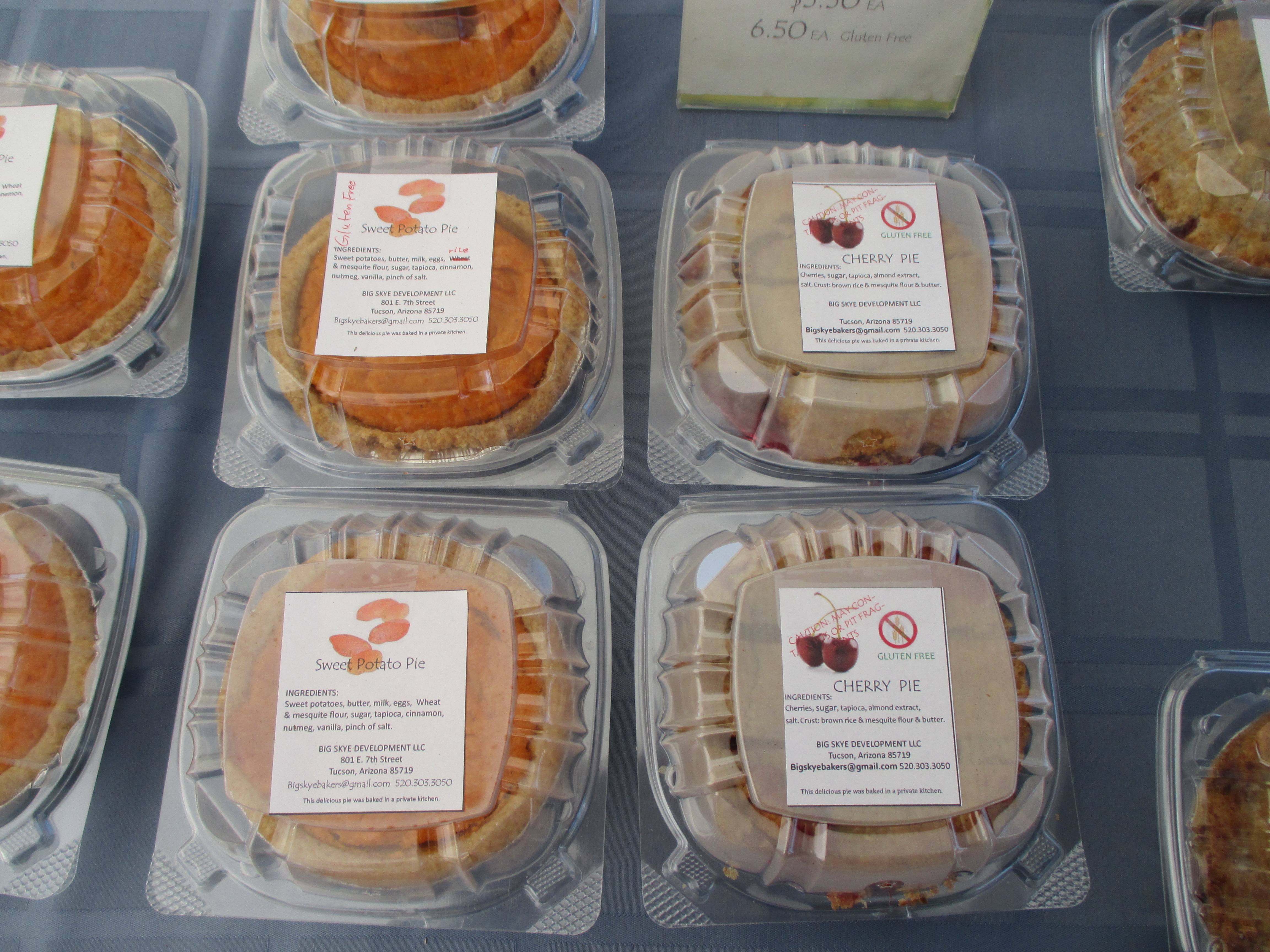
Mesquite crust adds extra deliciousness to Big Skye's fruit pies.

Mesquite crust adds extra deliciousness to Big Skye’s sweet potato and fruit pies.

Bodie Robins of Big Skye Bakers is one of the folks who have brought mesquite baking into the twenty-first century selling mesquite baked goods at farmers’ markets in Tucson and Sierra Vista.

Bodie, an architectural designer, began baking with mesquite as therapy in 2008 when construction took a dive with the recession. His first experiment produced some dog biscuits that he shared with his neighbors. He decided there might be a future in mesquite baking when his neighbors admitted they were eating the dog biscuits themselves. With salsa!

Bodie took his product to a farmers’ market. But it turns out not enough people were willing to pay for high-end mesquite dog biscuits (many dogs are willing to just chew the pods, unbaked), so he began to experiment with other baked goods, trying various combinations of flours until he produced a version he liked.

Today he sells pies with mesquite crust, cookies, and cupcakes. Many of his customers are attracted by the gluten-free nature of Bodie’s mesquite pie crust. One very grateful middle-aged customer was thrilled to find a pie crust he could eat and told Bodie he hadn’t been able to eat pie since he was 15 years old.

Bodie entices his customers with a little table setting at his farmers market booth. Personally, I'm ready to dig right in.

Bodie entices his customers with a little table setting at his farmers market booth. Personally, I’m ready to dig right in.

A perfect loaf of gluten-free bread eluded Bodie until recently when extensive experimenting has finally led to a mixture of mesquite meal, brown rice flour, tapioca and sweet potato flour that turns out a delicious loaf.

“My customers are particular about the foods they buy and eat,” he says .  “They like to learn about mesquite. There’s a romance to it – an arts and crafts movement about food. I get everything from savvy young college kids to the elderly.”

Bodie gathers the mesquite pods he uses himself and has them ground at the Baja Arizona mill at the Sierra Vista farmers’ market. He goes through up to 200 pounds a year and if he runs out, he can grind a few pounds in his Vitamix. He produces his goods in his home kitchen under the home baker cottage industry law.

You can find Bodie and his Big Skye specialty baked goods at the Rillito Farmers’ Market in Tucson on Sunday mornings from 9 a.m. to 1 p.m. and at the Sierra Vista Farmers’ Market on Thursdays from 10 a.m. to 2 p.m

Here’s a delicious recipe for waffles that Bodie developed. This recipe includes wheat flour, but if you are gluten sensitive, experiment with some other flours to find a mixture that works for you.

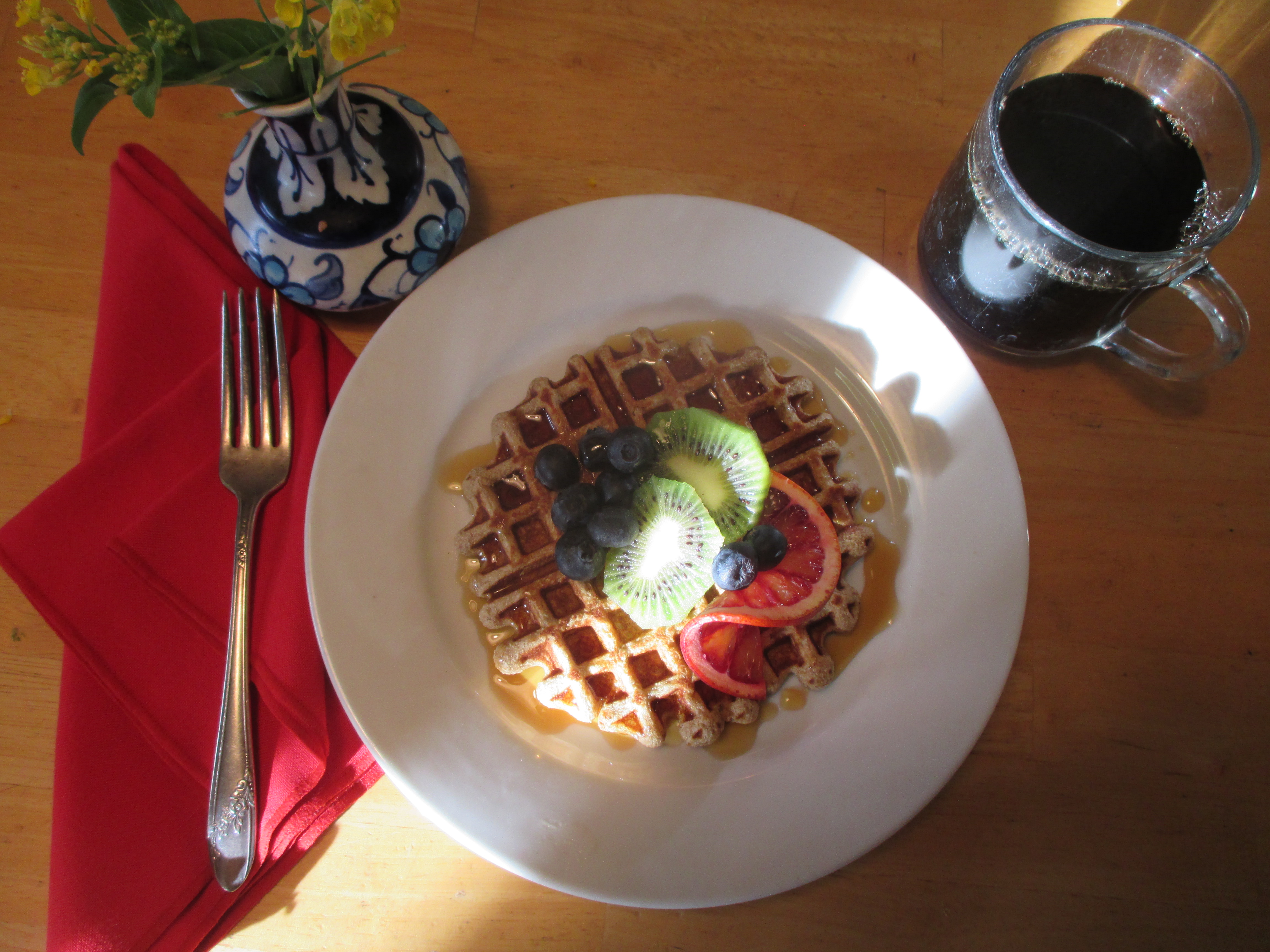
Mesquite waffles make a delicious breakfast or lunch.

Mesquite-Pecan waffles make a delicious breakfast or lunch.

Cinnamon-Pecan Mesquite Waffles

Ingredients

2 eggs separated

2 1/2 cups milk

¼ cup olive oil

1 cup all-purpose flour

½ cup whole-wheat flour

½ cup mesquite meal

1 cup finely chopped pecans

1 tablespoon cinnamon

1 tablespoon baking powder

½ teaspoon salt

1 tablespoon sugar

Directions

  1. Lightly oil and pre heat waffle iron.
  2. Separate eggs reserving the whites in a bowl and set aside. In another bowl mix egg yolks, milk and oil.
  3. Mix all dry ingredients together
  4. Add liquids to dry ingredients. Gently mix until smooth.
  5. Beat the egg whites until stiff.
  6. Fold in the egg whites to the waffle mix.
  7. Place 1/2 cup of batter onto hot waffle iron. Close lid. Bake until golden Repeat with remaining batter.

________________________________________________________________

Want more mesquite recipies? Check out my cookbook Cooking the Wild Southwest, Delicious Recipes for Desert Plants. You can buy it at the Native Seeds/SEARCH Store at 3061 North Campbell Avenue, in Tucson, or order it off the NSS website or from Barnes&Noble. If you need mesquite flour, buy it from Martha Burgess’s Flor de Mayo stand at the St. Phillip’s Farmers’ Market in Tucson on Sundays or order it here.


Glorious Garlic Chives

MICHO Mts near Uruzpan 6 Aug 90 050

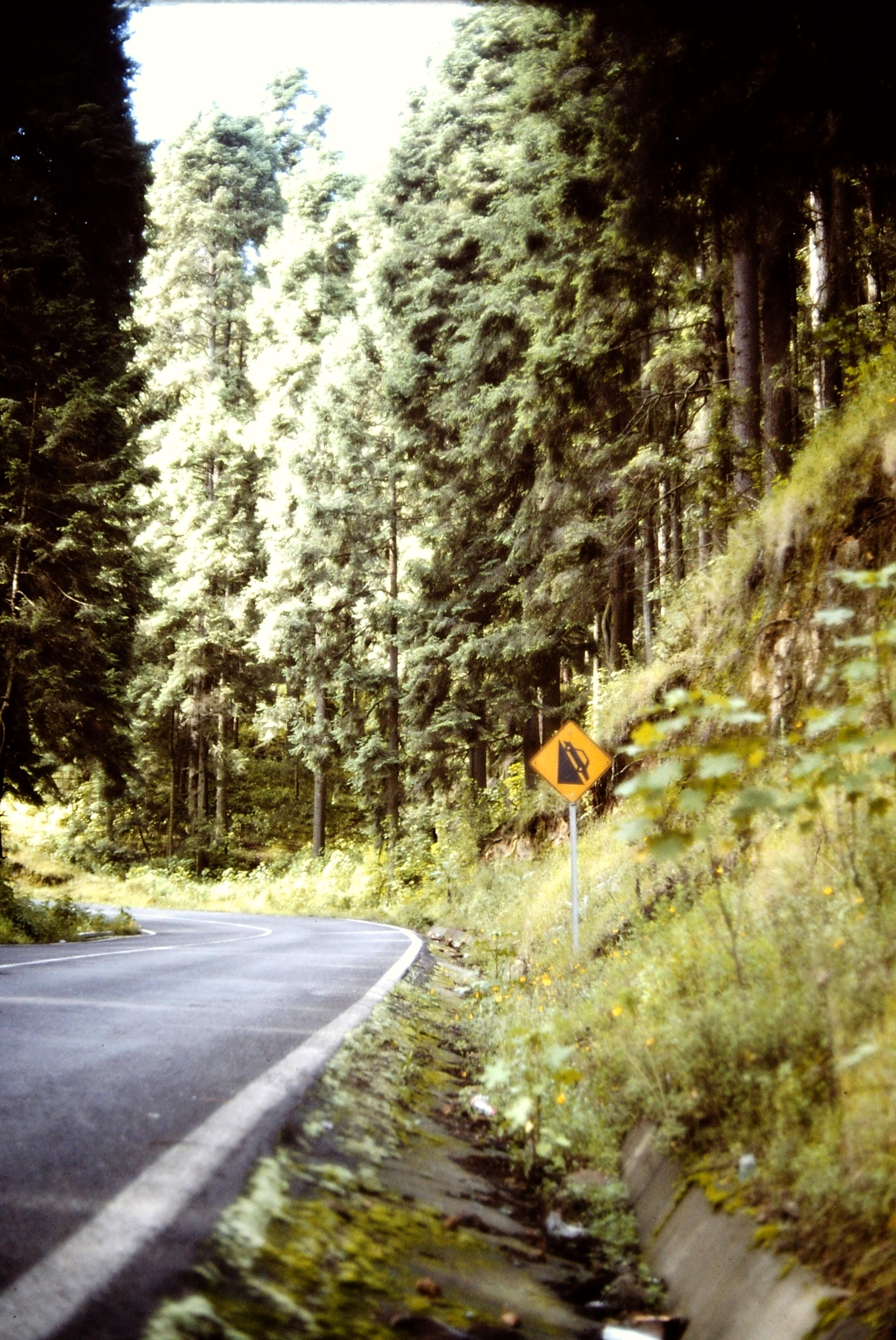
The mountains of Michoacan in 1990. That road sign is only a slight exaggeration.

Jacqueline Soule this week with a charming and easy-to-grow herb – garlic chives.  This herb offers a dish the hint of garlic and the fresh crispness of scallions. 

The first time I ate garlic chives that I know of was chopped and sprinkled on my soft tacos at a little roadside food stop in a forgotten town in Michoacan. The woman serving us was so taken with my questions about the plant that she sent her son scurrying home to dig up some bulbs to give me. Since I was on a plant collecting trip I had all the permits I needed to legally bring the bulbs back to the USA with me.  These tough perennials have been surviving in my gardens in various USDA zones and even indoors in pots for the next 30 plus years.

Allium tuberosum AMAP IMG_4640

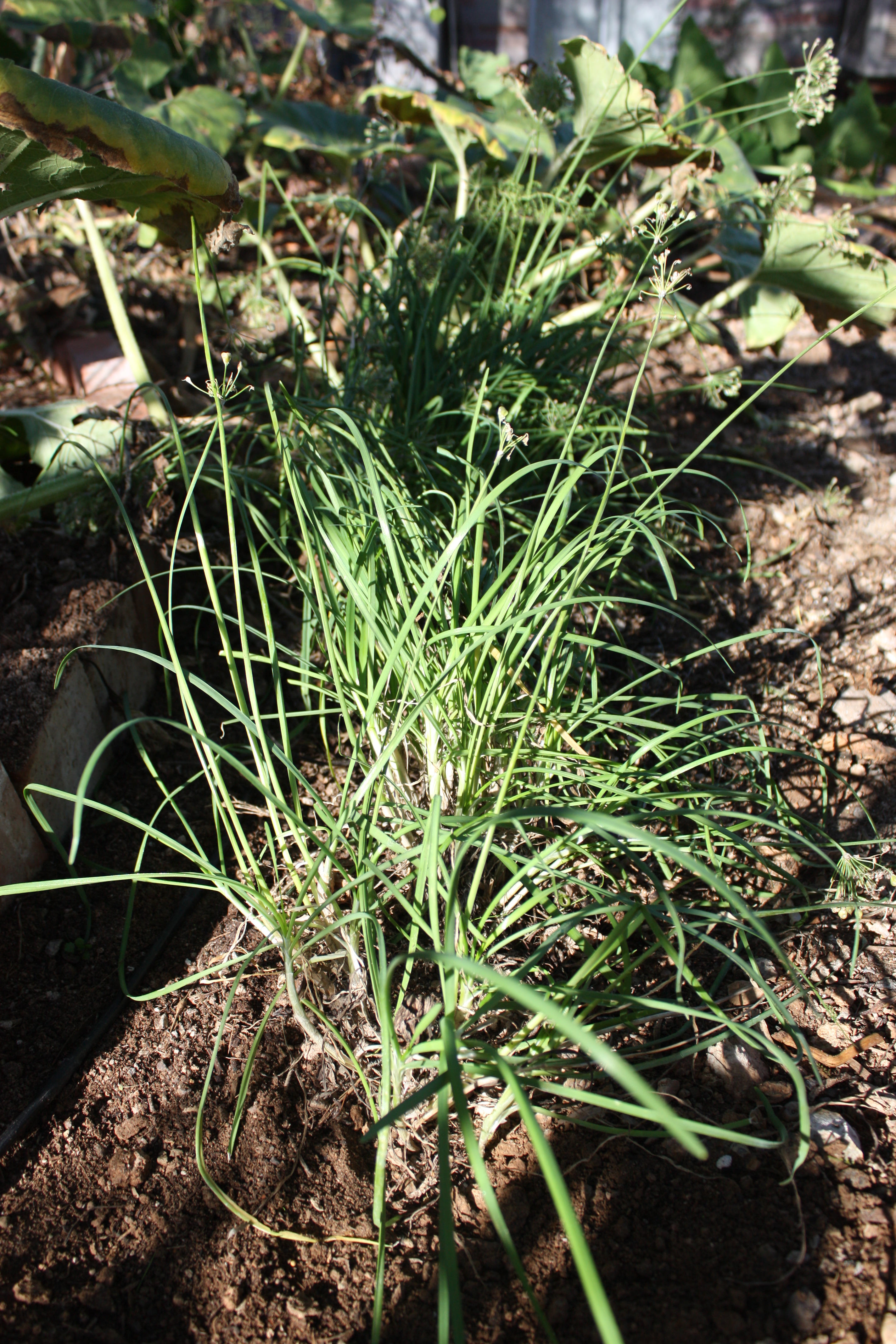
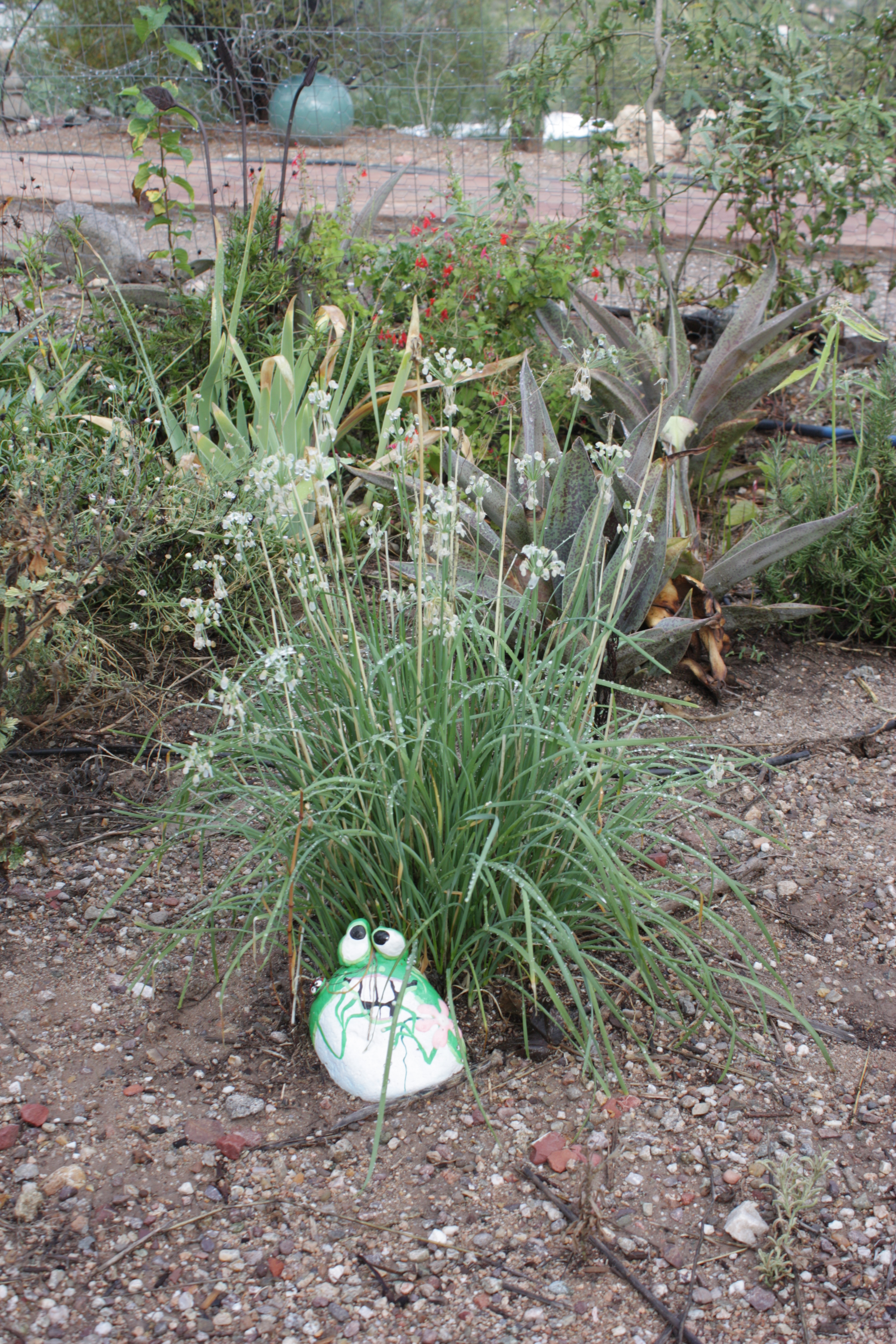
Garlic chives are tough plants that survive with little extra water and taste great.

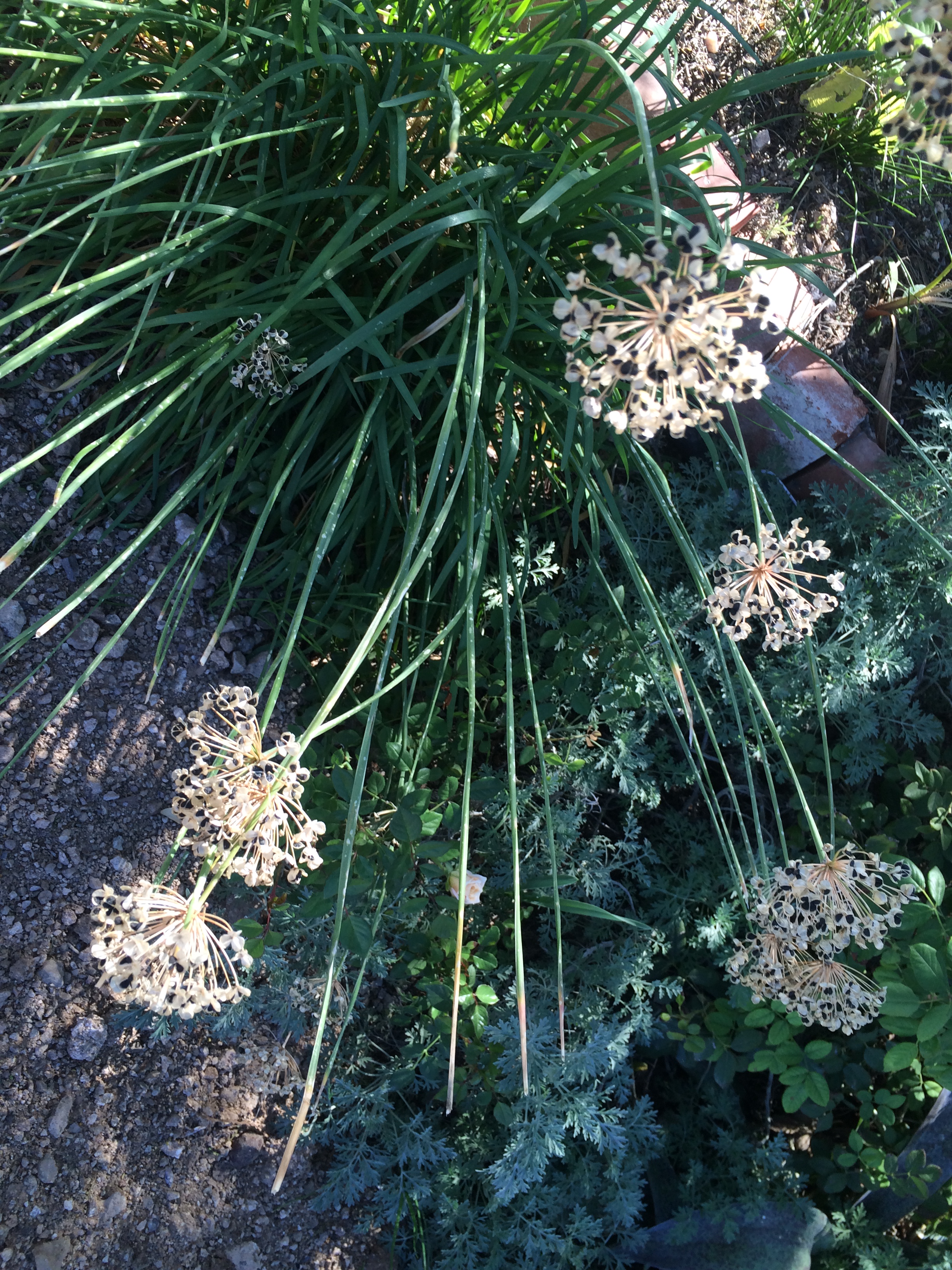
Garlic chives (Allium tuberosum) make a graceful green statement in the landscape, are low water users, and bloom in September and October with a fireworks-like burst of white bloom on a tall stalk held above the grassy green leaves.

Allium tuberosum AMAP c_4763

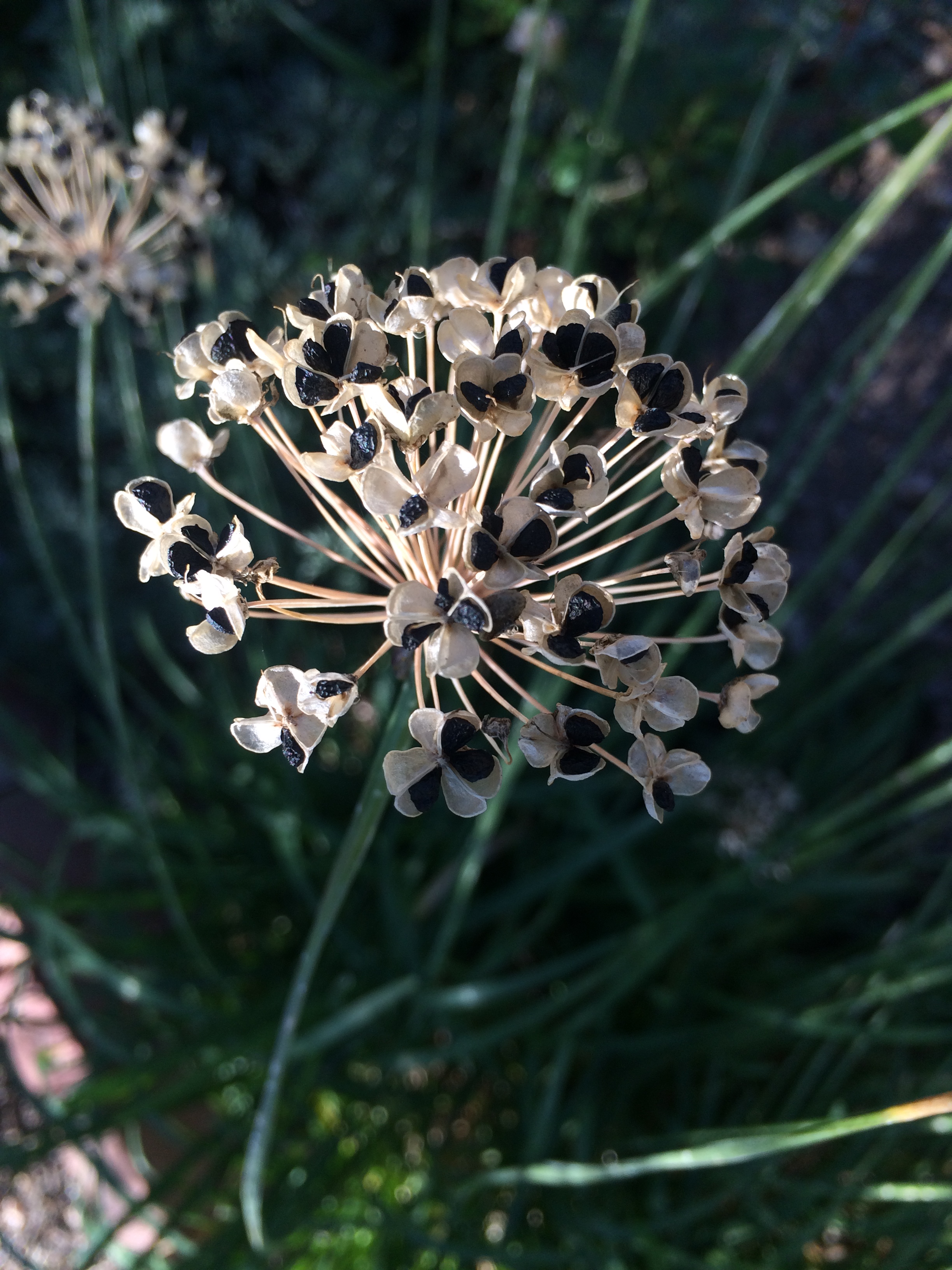
Blooms are white, followed by easy to harvest seed heads.

Originally from the Mongolian steppes, plants tolerate our alkaline soils and thrive in zones 10 to 4. Despite the tuberous name, the part you eat are the leaves. Harvest anytime to add raw or cooked to any dish where you desire a mild garlic flavor.

Allium tuberosum AMAP c_4761

Garlic chives are equally edible when vegetative, in bloom or in seed – quite unlike many other herbs.

Use garlic chive leaves how you would use scallions. We like them in stir-fry and omelets, or just a few to give zing to salad. They are also great in soup, even in simple soup made to hydrate and warm on a cool winter day.

Plant grow readily from seed, and can spread through the garden, appearing in watered areas. It is easily removed if it comes up where you don’t want it. If you are trying to eat only plants that are in season, these are always in season! Garlic chives great addition to the garden, even if you never plan to eat any.

Allium tuberosum AMAP IMG_4590

No matter what your garden style, garlic chives can fit right in.

JAS avatarIf you wish tips on gardening in the Southwest, please visit my facebook page Gardening With Soule.  If you live in Southeastern Arizona, please come to one of my lectures. Look for me at your local Pima County Library branch, Tumacacori (Fruits & Herbs of the Old Missions, 12:30, Thursday February 4th, 2016), Steam Pump Ranch, Tubac Presidio, Tucson Festival of Books and other venues. After each event I will be signing copies of my books, including the latest, “Southwest Fruit and Vegetable Gardening,” written for Arizona, Nevada and New Mexico (Cool Springs Press, $23).

© This article and these photos are copyright by Jacqueline A. Soule. All rights reserved. Republishing an entire blog post or article is prohibited without permission. I receive many requests to reprint my work. My policy is that you may use a short excerpt but you must give proper credit to the author, and must include a link back to the original post on our site. Photos may not be used.