Hi, I’m “Tia Marta” (Martha Ames Burgess) and I am honored to be welcoming you from my green patch of garden in the desert with some ideas for your own planting!
Amazing–our Sonoran Desert has THREE totally different seasons for growing delicious foods. Here comes “winter”– time to try these cool-adapted tantalizers:
Protein-packed Pulses
Peas–Peas to all who come here!–fresh peas, sweet Oriental peapods, dry peas for soup, flowering sweetpea…..winter is time to enjoy peas in the low desert. I recommend these heirloom Tohono O’odham peas from Native Seeds/SEARCH (NSS store 3061 N.Campbell Ave, Tucson) www.nativeseeds.org, or Pima peas from San Xavier Coop Association (520-295-3774).

Keep the faith–soon your Tohono O’odham green peas and I’itoi’s onions will be emerging!
Lentils—if you have a space protected from little herbivores and heavy freezes try any kind of lentil.
Fava beans aka “habas”—these large meaty beans lend themselves to marinated dishes or roasted for crunchy snacks. Plant in dappled sun protected from wind as they can grow tall with care. Available from Flor de Mayo booth at Sunday St Phillips farmers market and at NSS.

Here’s an idea for watering your garden rows with either ditches or leaky hose
Luscious leafy greens:
Spinach, kale, kolrabi, chard, fennel, Brussels sprouts—seed racks are full at every hardware. A good place for organic seed is NativeSeeds/SEARCH. Sunday’s farmers market also has starts and seeds.
Tarahumara mostaza roja—prolific, tastes great steamed, stir-fried or in salad. Find it online at www.nativeseeds.org.

Tarahumara mostaza roja will give you fresh delicious greens and flowers late winter into spring! (photo by Rod Mondt)
Lamb’s quarters—aka “chuales” and “orach,” these spinach relatives can grow in a low-desert garden or harvested wild, providing cool season greens. Find purple orach seed at Mission Garden, Friends of Tucson’s Birthplace (FOTB) www.tucsonsbirthplace.org, and NSS.
Sensational Spices/Healing Herbs:
Cilantro (coriander)—for salsa & salad–produces all season until spring hits, then save coriander seed! (available from FOTB or NSS)
Mrs Burns’ famous lemon basil—versatile! This fragrant basil leaf makes great tea, salad garni, lemon chicken, amazing pesto, honey. When weather gets hot, basil blooms–bees will thank you with a precious gift to beekeepers. (NSS and Johnny’s Seeds)
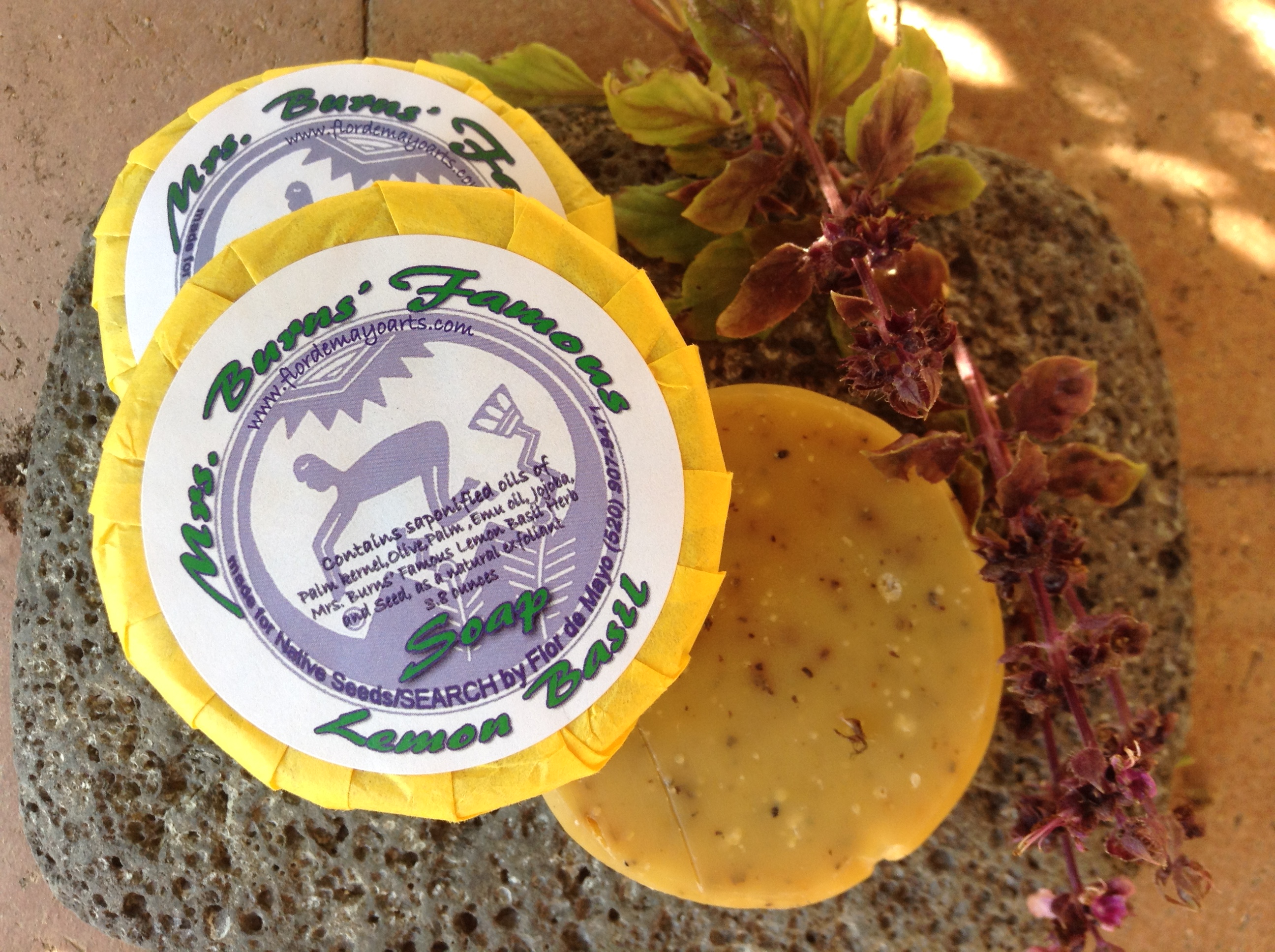
Look what I made with Mrs. Burns’ Lemon Basil–a luscious scented herbal soap! (photo by Jan Willkom)
Swain heirloom dill—butterflies will appreciate the flower umbels rising in your garden. Save seed and “dill weed” foliage for pickling and dressing–a good producer from NSS.
Raging Root Crops:
White, red, purple potatoes—Here’s a trick an old gardener taught me: before cooking, take thick peelings from your favorite grocery potatoes and plant them. Each peeling will have an “eye.” No need to use huge potato chunks! Keep mounding soil around your potato plants as they grow.
Onion sets—give yourself a headstart—plant “sets” are available in almost any nursery or home-store. Intercrop them to deter unwanted pests.
I’itoi’s onion—the best for low desert, a small shallot also great for chives. Find ready-to-plant bulblets at NSS.

A plentiful harvest of I’itoi’s onions at Mission Garden–a delicious shallot (photo by Bill O’Malley)
Here’s wishing you joy in your winter garden and great tastes at your table! By late winter you will be reaping nutrition and flavor from your labors.
Be sure to check out the new issue Vol 3 of Edible Baja Arizona for more winter gardening ideas (see pp 115-118).
I invite you to find native foods–and native foods in art– at my Flor de Mayo booth at Sunday St. Phillips Heirloom Farmer’s Market and on my website www.flordemayoarts.com




 So the first food offering to you from this blog is: Honeycomb. I offer it both as a food of interest, as well as to the departed bees that may visit my alter. If you have never eaten honey straight from the honeycomb, you have a real treat in store. It is the purest form of honey that we can eat. It is not processed by human hands at all. In fact, the last “hands” to touch it were those of the worker bees, as they placed the wax capping over hexagonal cells holding the honey.
 Jacqueline Soule has been writing about plants in the Southwest since the 1980’s, and growing and using them since even before that. An award-winning garden writer, she is delighted to be the instigator of this venture. She welcomes you to her free lectures at the Pima County Libraries.
