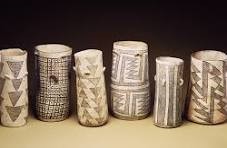
Chocolate drinking vessels found in Pueblo Bonito.
It may seem a stretch to discuss chocolate in a blog on Southwest food. But chocolate has been in the area since the 9th century. It’s Carolyn writing today and as a chocolate addict, I find the history of chocolate in our area fascinating. In the late 1800s, rancher Richard Wetherill was poking around in Pueblo Bonito in Chaco Canyon in the Four Corners area and excavated 111 cylinder jars. Archaeological technology has advanced greatly since then and researchers have dated the strata in which they were discovered to 1000 CE. Even more interesting, substances inside the jars and in pieces of broken jars indicate that the jars contained chocolate. Since the jars were all found in one room, scientists speculate that the chocolate was being used ritually. Archaeologist Dorothy Washburn also found residue that appears to be from chocolate in bowls from the site of Alkali Ridge, Utah, that date to 780 CE, even earlier.
Consider that the closest place chocolate was grown was 1,200 miles south in Mexico. This was before draft animals were used, so a trader or a series of traders carried chocolate all that way on their back, along with macaw feathers and copper bells. With all that travelling, chocolate must have required quite a bit of turquoise and other goods in exchange.
The Spanish Bring Chocolate to the Southwest
When the Spanish missionaries and soldiers came north to what we call the Southwest, they brought chocolate, one of their very few luxuries. Chocolate, being a New World crop, was much less expensive than tea, which had to come by a months-long trip across the Pacific Ocean from Asia. Their drink wasn’t the creamy concoction we now savor. Then chocolate was mixed with water and sometimes honey to sweeten it.
Father Phillip Segesser, one of the earliest priests at San Xavier Mission in Tucson, complained in a letter to his Swiss relatives that every non-Native visitor expected to be served chocolate. Father Segesser lived a very humble life, and he found this presumptuous. It is also interesting that provision orders from the day for both soldiers and priests listed both ordinary chocolate and fine chocolate, the later of which cost twice as much. We can guess what Segesser served his visitors.
During the 1781 Yuma uprising near modern day Yuma, Franciscan priest Fray Francisco Garces requested that he be allowed to finish drinking his chocolate before being beaten to death by the Quechans.
I was happy in two recent trips to learn more about my obsession. In the large green house at the Atlanta Botanical Garden, I saw a cacao tree up close and was amazed to learn that the flowers grow right from the trunk.
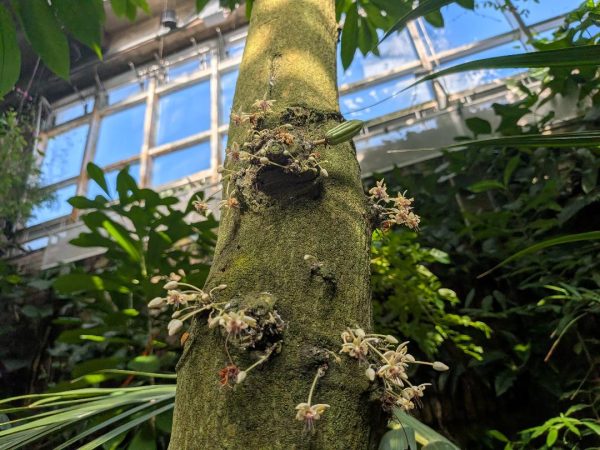
Cacao tree in flower in the Atlanta Botanical Garden. See a small green chocolate pod in the upper right.
In Guatemala, I visited an artisanal chocolate maker. I got to see all aspects of converting a cacao bean into a chocolate bar, from opening the pod, to cleaning the beans, then roasting them on a comal before grinding them to a paste and adding sugar.
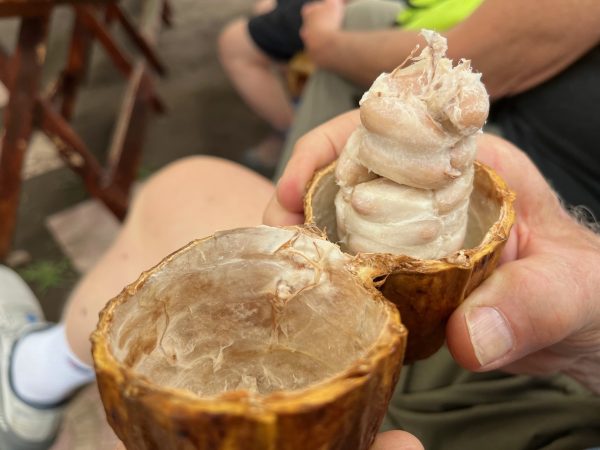
Just opened cacao pod. The seeds are inside the white covering.
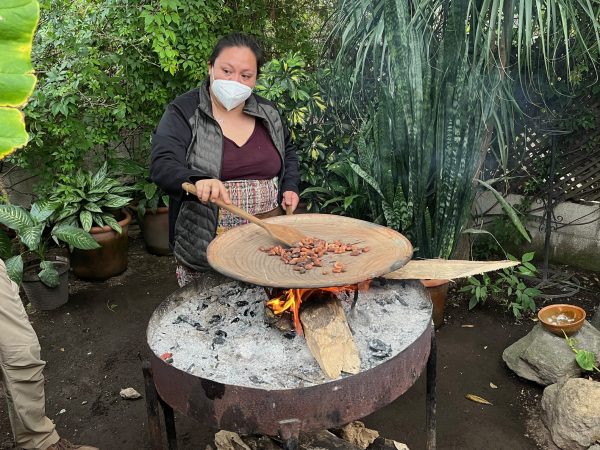
Guatemalan artisan chocolate maker roasts cacao beans over coals.
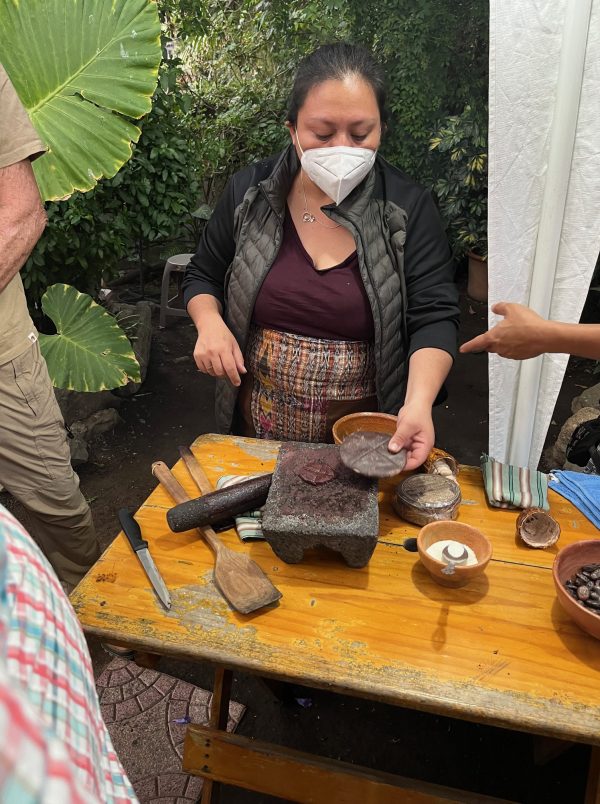
The roasted beans are ground, combined with sugar, and formed into a patty. They are surprisingly oily. Perhaps patties like this were what the early traders brought to Pueblo Bonito in Chaco Canyon.
Chocolate pairs so well with our mesquite meal–a perfect blend of tropics and desert. These waffles will make a holiday breakfast treat.
Chocolate Mesquite Waffles
½ cup all-purpose flour
½ cup whole wheat flour
½ cup mesquite meal plus 1 tablespoon
3 tablespoons cocoa
1 tablespoon baking powder
½ teaspoon salt
2 egg yolks
1 ¼ cup milk of choice
½ cup oil
2 egg whites beaten stiff
In a large bowl, sift together dry ingredients. In a small bowl, combine egg yolk, milk and oil. Stir the wet mixture into the dry ingredients. Fold in egg white, leaving some fluffs. Do not over mix. Pour batter into hot waffle maker and follow manufacturer’s directions.
Makes about 8 waffles.
Recipe adapted from Eat Mesquite (2011) by Desert Harvesters
__________________________________________________
 You can learn more about the history of food in Southern Arizona in my latest book A Desert Feast, the story of the last 4,000 years of food in the Sonoran Desert. Want more recipes using foods of the Southwest? You’d find ideas for collecting and using 23 easily recognized and gathered desert foods in Cooking the Wild Southwest: Delicious Recipes for Desert Foods. . Recipes from top Southwest chefs are collected in The New Southwest Cookbook. Just click on the titles for more information. You can learn more about me on my website.
 Savor the Southwest:
Fascinating! Thank you Carolyn. Can’t wait to try the mesquite cocoa waffles
LikeLike
This is a wonderful post, Carolyn! I, too, am a chocolate fan — I have never had coffee or tea, but drink hot cocoa every morning. (Yes, even in our summer heat!) I have had wonderful chocolate discs from México and further south — friends bring them back for me. I love grinding them to use in recipes like my Cinnamon Chile Chocolate Pork or an upcoming recipe for Mexican Chocolate Cake. Thank you for a great and ediucational read.
LikeLike